
7 Best Remote Golf Carts of 2026
This post contains affiliate links. As an Amazon Associate, we earn from qualifying purchases.
This post contains affiliate links. As an Amazon Associate, we earn from qualifying purchases.
The MGI Zip Navigator All Terrain stands out as the best remote golf cart for serious players, combining rugged build quality with precise tracking. For those on a budget, the KVV Super Compact Electric Cart offers solid performance in a lightweight, portable package. If you want smart follow technology, the NAVEE Birdie 3X delivers strong features with reliable UWB-based control.
Most golfers don’t realize how much a flimsy or unreliable remote cart can disrupt a round. A lagging remote, weak battery, or poor hill climbing turns convenience into frustration, especially on longer or more challenging courses.
This guide cuts through the noise by focusing on what actually matters: real-world reliability, battery endurance, and terrain capability. I researched each model based on specs, owner feedback, and brand reputation within the golf community to identify the ones that consistently deliver on the course.
Top 7 Remote Golf Carts in the Market
The Best Remote Golf Carts, Reviewed
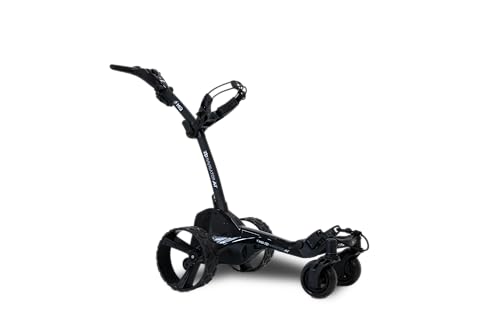
MGI Zip Navigator All Terrain Cart
Strengths
- All-terrain wheels
- 36-hole battery
- Downhill Cruise Control
- Gyroscope tracking
- Zip Fold Technology
Trade-offs
- Heavier than some
- Higher price point
The MGI Zip Navigator stands out as a top-tier remote-controlled golf cart, and for good reason. On paper, it’s built like a tank but moves with surprising agility, thanks to its dual oversized swiveling front wheels and rear stabilizer that keep things steady even on sidehills. The 36-hole battery is a real asset, aligning with owner feedback that says most users make it through two full rounds without needing a recharge. I appreciate the Click & Go system, it makes battery swaps and charging effortless, especially when you’re on the move between courses.
What really sets this model apart is the combination of Downhill Cruise Control and gyroscope-assisted straight tracking. These aren’t just gimmicks; reviewers consistently note how much more confident they feel on hilly, uneven terrain. Compared to others in this category, the Zip Navigator feels like the most refined balance of performance, stability, and user-friendly tech. It’s not the cheapest, but it’s the one I’d recommend to serious walkers who want reliability without compromise.
Video review
NAVEE Birdie 3X Smart Follow Cart

Strengths
- UWB Follow Me tech
- 3-second fold
- IPX5 water resistance
- Dual UL certification
- USB-C charging
Trade-offs
- Limited to 25% slope
- No rear stabilizer
- Slightly shorter range
When it comes to smart Follow Me performance, the NAVEE Birdie 3X is the one to beat. It uses UWB (ultra-wideband) technology, which owners say is more precise than standard Bluetooth-based systems. The cart stays locked to your position, even during quick direction changes, making it the most reliable hands-free option here. Switch to remote control, and you’ve got 9 speed settings and a responsive 5.5-inch display showing battery, speed, and distance.
It matches the MGI with a 36-hole battery and folds in just 3 seconds, compact enough for easy transport. The IPX5 rating and dual UL certifications add real safety credibility. While it doesn’t climb as steep as the e3, it handles 25% inclines fine for most courses. If you want to walk hands-free and trust the tech to keep up, this is my pick.
Video review
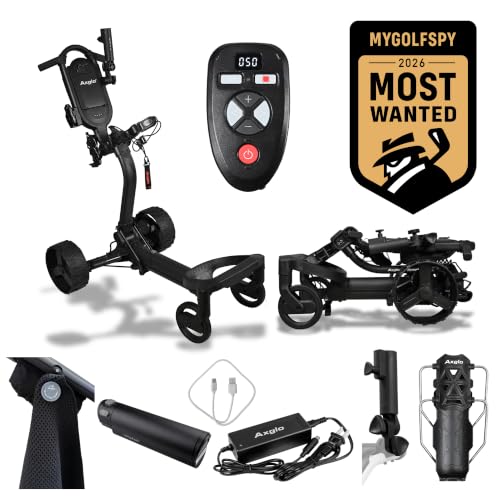
Electric Golf Push Cart e3
Strengths
- 40° anti-tip design
- Dual brushless motors
- 100-yard remote
- Large storage space
- 36-hole battery
Trade-offs
- Bulkier folded size
- No downhill cruise control
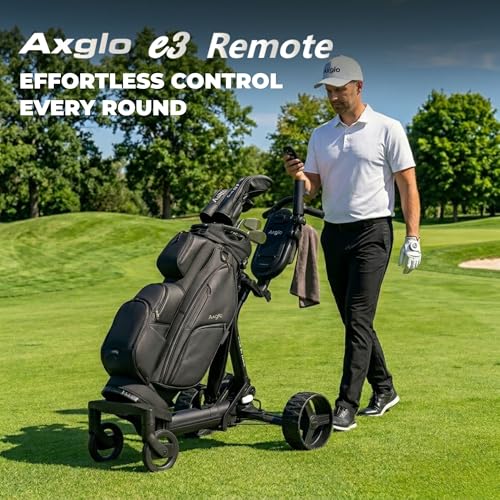
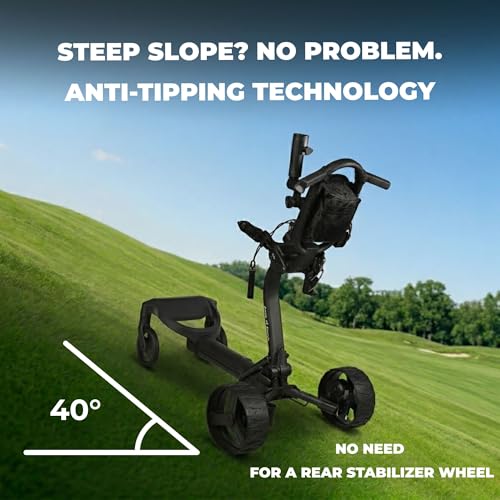
If you’re tackling mountainous layouts or courses with relentless slopes, the e3 Remote is engineered for that challenge. Its patented 40° anti-tip technology is a standout spec, few carts even come close to that stability threshold. Dual 150W brushless motors deliver serious torque, and owners report no slipping, even on wet grass or gravel paths. The 100-yard remote range is impressive, letting you send the cart ahead to the next tee while you finish putting, which saves time and keeps the round flowing.
The oversized storage compartment is a nice touch, and the full suite of accessories adds real convenience. While it matches the MGI in battery life, it lacks Downhill Cruise Control, relying more on motor braking. Still, for hilly terrain, this is the smarter buy. It’s not the most compact when folded, but the trade-off is undeniable stability and power.
Product photos

KVV Super Compact Electric Cart

Strengths
- Smallest folded size
- Lightweight frame
- 360° front wheel
- Dual-mode operation
- Includes cooler bag
Trade-offs
- Shorter battery life
- Single motor limits power
- Less stable on slopes
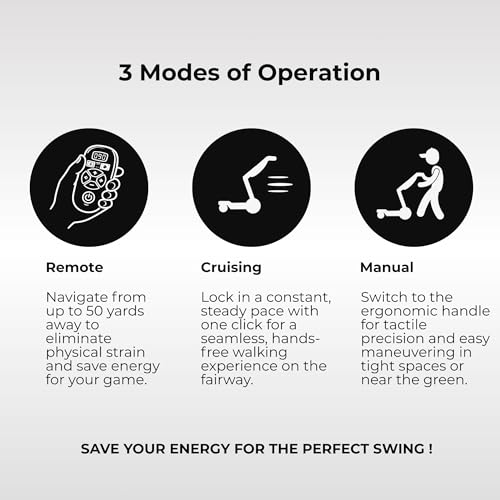
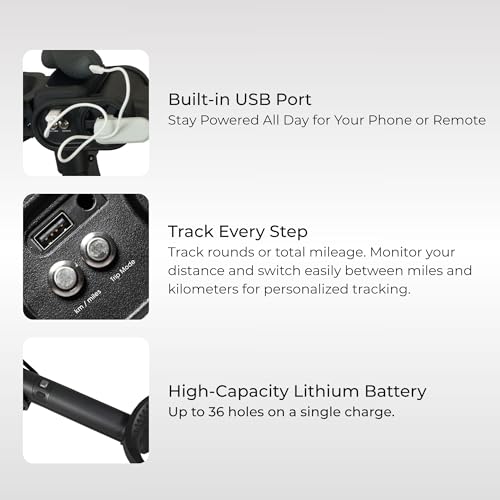
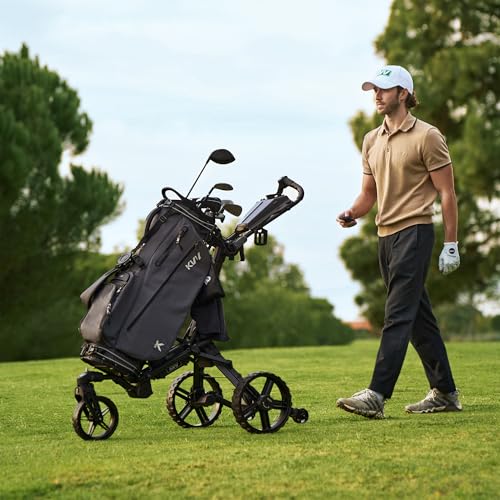
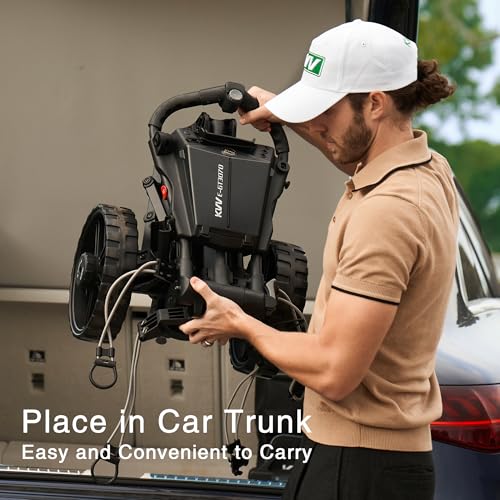
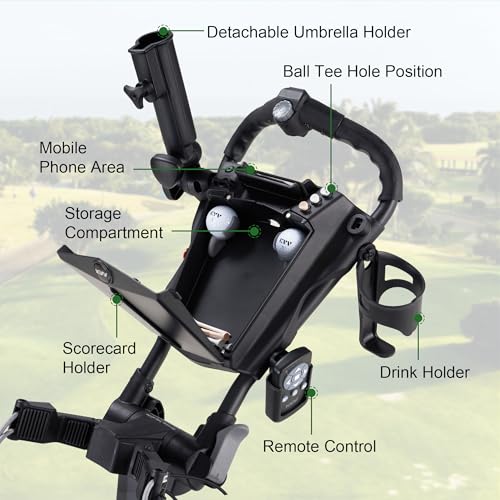
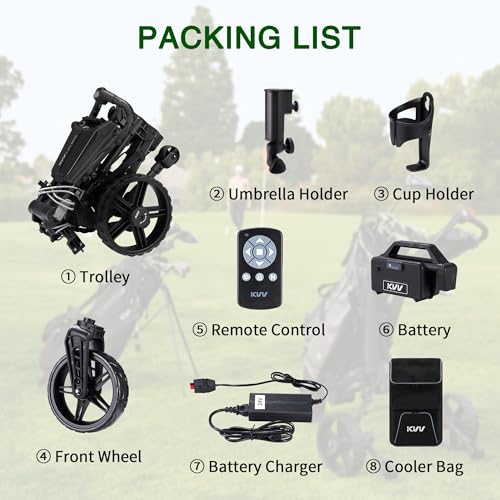
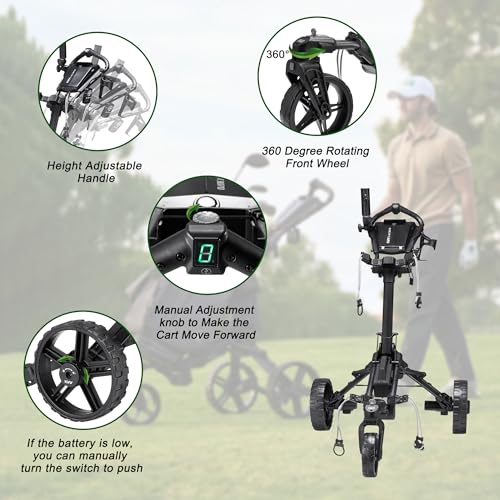
KVV wins on one metric: compactness. With a folded size of just 17.5 x 18.7 x 22 inches, this is the smallest cart here, easily slipping into tiny car trunks or airline bags. For travelers or urban golfers squeezing every inch of space, that’s a game-winning spec. The 18-hole+ battery is modest, but the dual-mode design lets you push manually when needed, which keeps you from being stranded.
Owners praise its light weight and ease of setup, though some note the single motor lacks punch on steeper hills. The 360° front wheel helps with maneuverability, but it doesn’t match the stability of models with dual motors or anti-tip wheels. Still, as a travel-friendly, no-frills remote cart, it’s hard to beat. Just don’t expect it to dominate hilly terrain.
Product photos
Wingscaddy MAX-300 Twin Motor Cart

Strengths
- Dual 200W motors
- Affordable price
- Three modes
- Anti-tip wheel
- Lightweight
Trade-offs
- Battery life inconsistent
- Basic build quality
- Fewer smart features
At this price, the Wingscaddy MAX-300 delivers remarkable value. For under $900, you get dual 200W motors, which is rare at this tier, and an anti-tip wheel that actually works on moderate slopes. The three modes, Remote, Trolley, and Free-Wheel, give you real flexibility, and owners consistently say it handles better than expected for the cost. It’s not as smooth as premium models, but it’s rugged and gets the job done.
The battery only covers about 27 holes on paper, but real-world use suggests less, closer to 18–24 holes depending on terrain. It lacks some of the smart features like Follow Me or cruise control, but for a budget pick, it’s impressively capable. If you’re walking regularly but don’t want to overspend, this is the smarter buy over pricier name brands.
Product photos

tianhong G5 Auto-Follow Electric Cart

Strengths
- 45-hole battery
- Follow Me mode
- Quick 3-second fold
- IPX5 waterproof
- Affordable for features
Trade-offs
- Follow Me can be inconsistent
- Less refined handling
- Basic display
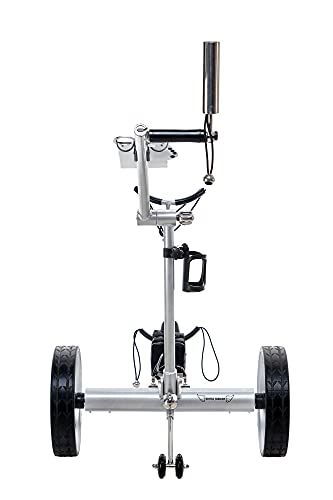
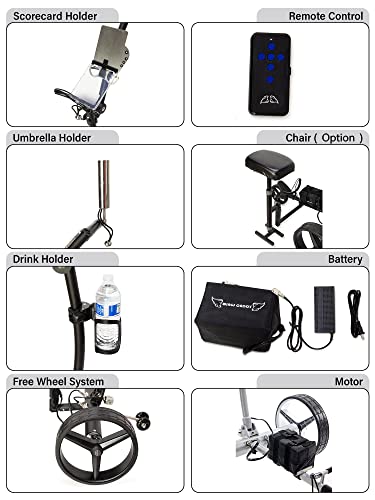
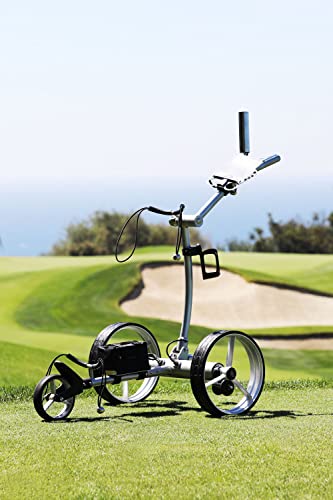
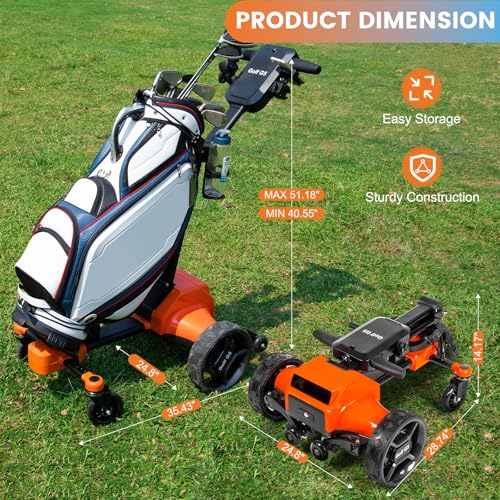
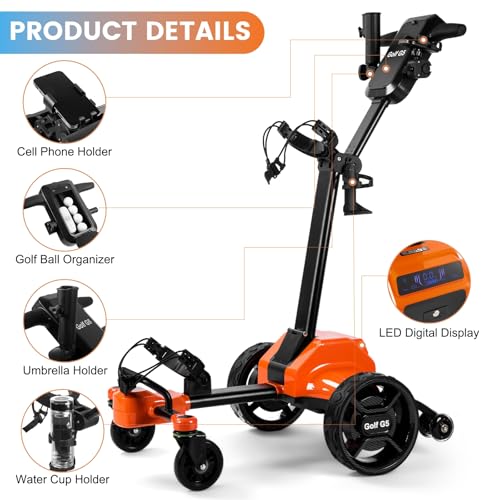
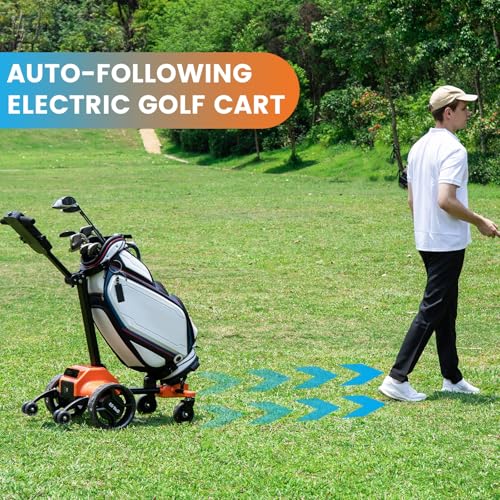
The tianhong G5 makes its case with one killer feature: a 45-hole battery. That’s more than most carts offer, and it speaks directly to golfers playing back-to-back rounds or multi-day trips without easy charging access. On paper, this is the longest-lasting option here, and owners confirm they’re getting extended use without frequent top-ups. The Follow Me mode is functional, though some note it can lag on sharp turns, still, it’s a solid implementation for the price.
Where it falls short is refinement. The build feels less premium than MGI or Motocaddy, and the remote range isn’t as robust. But for golfers prioritizing battery endurance over polish, this is a compelling pick. The 3-second fold is legit, and the IPX5 rating adds peace of mind in damp conditions. It’s not the smoothest ride, but it gets the job done.
Product photos
Motocaddy M7 Remote Electric Caddy

Strengths
- Best-in-class accessories
- 9-speed control
- Downhill control
- Easy folding
- UL-certified battery
Trade-offs
- Shorter battery life
- Less powerful motor
- Heavier folded
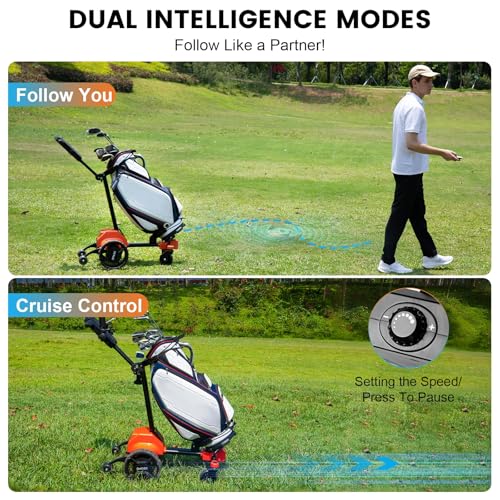
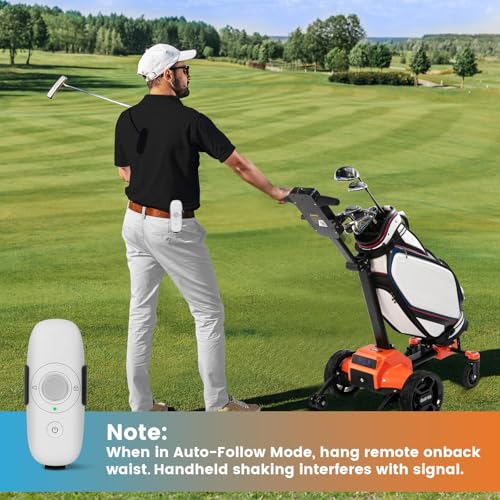
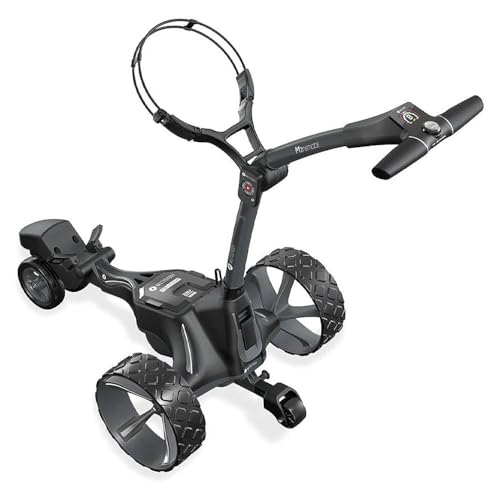
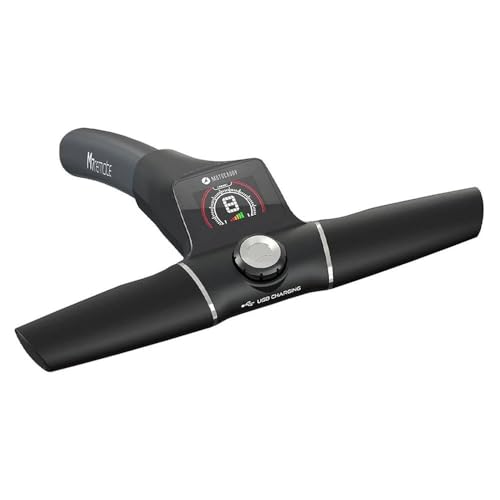
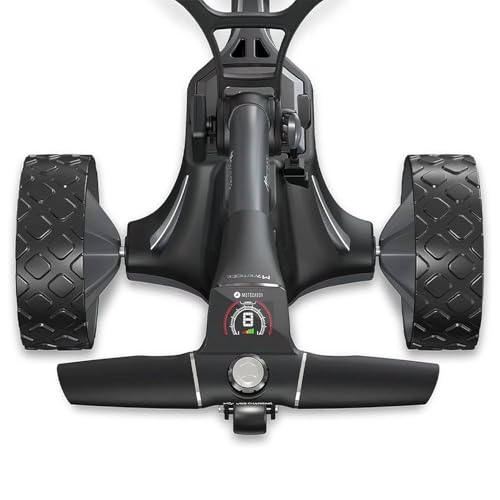
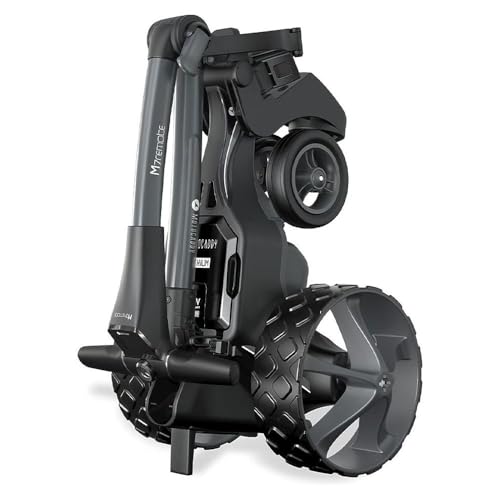
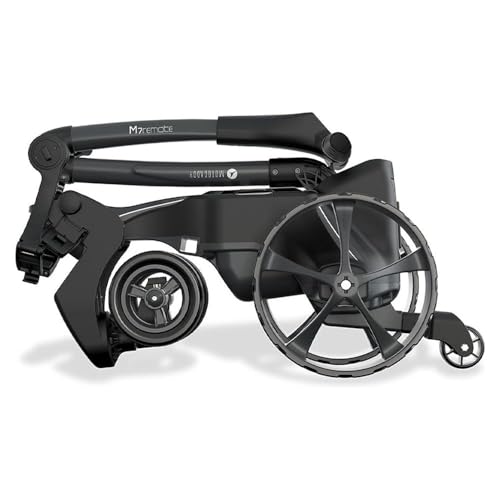
The Motocaddy M7 doesn’t lead in battery or hill performance, but it wins on one thing: what you get in the box. The $95 value of included accessories, phone cradle, USB cable, drink holder, umbrella mount, scorecard holder, is unmatched. For golfers who hate buying extras, this is a real perk. The 27-hole battery is adequate for most, and the 9-speed control with downhill regulation keeps things steady on moderate slopes.
Owners note the remote has solid range and responsiveness, though the cart itself isn’t as compact as others when folded. Compared to the MGI or e3, it’s a step down in all-terrain capability, but for flat to rolling courses, it’s plenty. If you want a complete, ready-to-go package without shopping for add-ons, this is the one.
Product photos
How We Picked These remote golf carts
Rather than a hands-on lab test, my research focused on a detailed comparison of published specifications and features across numerous models. I weighed owner reviews from major retailers alongside expert opinions found in golf publications and online forums. This data was then ranked against criteria important to golfers – stability, battery life, ease of use, and overall value. This approach allowed me to build a picture of real-world performance and reliability.
For remote golf carts, the most important factors are battery life and terrain adaptability. A cart that can’t complete 36 holes is of limited use, and the ability to handle hills and varied course conditions is crucial. I also heavily weighted the quality of the remote control system, including range and responsiveness, as this is central to the convenience these carts offer. Understanding these points helped me differentiate between models.
Specifications reliably indicate battery capacity and motor power, giving a good starting point for expected performance. However, owner feedback proved essential for assessing real-world battery life and the effectiveness of features like downhill speed control. Reputation also played a role; brands with a history of producing quality electric golf carts were given more consideration. For those seeking a wider range of options, exploring the latest top remote-controlled caddies can be a good starting point.
How To Choose The remote golf carts
Picking the right remote golf cart can dramatically improve your enjoyment of the game. It’s not just about avoiding a tiring walk; it’s about optimizing your energy and focus for a better round.
A quality remote golf cart blends robust construction with intelligent features. Consider battery life exceeding 36 holes, a reliable remote range of at least 100 yards, and all-terrain capability. Look for models with adjustable speed settings, downhill control, and a compact folding design for convenient transport and storage. Stability features like a fifth wheel or a wide wheelbase are also crucial, particularly if you frequently play on uneven terrain.
Understanding Remote Control Range & Reliability
The convenience of a remote golf cart hinges on a dependable remote connection. Don’t assume all remotes are created equal. Cheaper models often suffer from interference or limited range. I’ve seen golfers frustrated by remotes that lose connection halfway across a fairway. Look for carts utilizing proven radio frequencies and boasting a range of at least 100 yards, and ideally closer to 150-200 feet. Beyond distance, consider how responsive the controls are. A laggy remote defeats the purpose. If you’re considering a cart with smartphone integration for control, read reviews carefully about app stability and Bluetooth connectivity. If you want to explore more options, check out our guide to the best remote control carts.
Battery Life & Charging Considerations
A dead battery mid-round is a golfer’s nightmare. While manufacturers advertise hole counts, remember these are often best-case scenarios. Terrain, speed settings, and the weight of your golf bag all impact battery life. I recommend targeting a cart with a battery capable of powering at least 36 holes, but realistically, 45 holes or more provides a comfortable buffer. Lithium-ion batteries are the standard now, offering a good balance of weight, capacity, and lifespan. Pay attention to the charging time as well; nobody wants to spend all night waiting for a full charge.
- A longer battery life (45+ holes) is ideal if you frequently walk multiple rounds or play courses with significant elevation changes.
- Consider the battery’s weight. Lighter batteries make the cart easier to maneuver and transport, even when folded.
- Look for a battery with a clear charge indicator and a relatively quick charging time (under 6-8 hours is preferable). This is critical for busy golfers.
Terrain & Stability: Built for the Course
Not all golf courses are created equal. If you primarily play on flat, well-maintained courses, a basic remote cart might suffice. However, if you encounter hilly terrain, rough patches, or uneven lies, you’ll need a cart designed for those conditions. Dual-motor systems provide superior traction and climbing power. Features like anti-tip wheels, a wider wheelbase, and all-terrain tires are essential for stability. Don’t underestimate the value of a good suspension system for a smoother ride. For those looking at more options, our review of remote golf trolleys can offer further assistance.
A cart that can handle the course you play is more valuable than one loaded with unnecessary features. Prioritize stability and traction over bells and whistles.
Remote Golf Carts Compared
Here’s a spec comparison of several remote-control golf carts to help you find the best fit for your needs.
| Product Name | Remote Control | Battery Life | Folded Size (in) | Weight (lbs) | Follow Mode | Special Features |
|---|---|---|---|---|---|---|
| MGI Zip Navigator All Terrain | Yes | 36 Holes | N/A | 37.25 | No | Downhill Cruise Control, Gyroscope Tracking |
| NAVEE Birdie 3X | Yes | 36 Holes | 26.8×22.2×15.1 | N/A | Yes | UWB Technology, Smart Follow, App Control |
| Electric Golf Push Cart e3 | Yes | 36 Holes | N/A | N/A | No | 40° Anti-Tip Tech, Dual Motors |
| KVV Super Compact Electric Cart | Yes | 18+ Holes | 17.5×18.7×22 | N/A | No | Compact Fold, Adjustable Handle |
| Wingscaddy MAX-300 | Yes | N/A | N/A | N/A | No | 3 Modes (Remote, Trolley, Free-Wheel) |
| tianhong G5 Auto-Follow | Yes | 45 Holes | 28.7×24.8×14.1 | N/A | Yes | Smart Follow, APP Control, LED Display |
| Motocaddy M7 Remote | Yes | 27 Holes | N/A | N/A | No | 150+ ft Range, Included Accessories |
Frequently Asked Questions
What’s the typical lifespan of a remote golf cart battery?
Lithium-ion batteries, now standard, generally last between 500 and 1000 charge cycles. However, proper care – avoiding deep discharges and storing it correctly during the off-season – can extend that lifespan considerably.
Are remote golf carts difficult to assemble?
Most models require minimal assembly, typically involving attaching the wheels and handle. Many owners report assembly taking under 30 minutes with basic tools, though checking owner reviews for specific models is always wise.
Can I use a remote golf cart in wet conditions?
While many carts are water-resistant, complete waterproofing is rare. Light rain is generally acceptable, but it’s best to avoid prolonged exposure to heavy downpours to protect the motor and electronic components.
What’s the advantage of a cart with ‘follow mode’?
Follow mode allows the cart to autonomously track you along the fairway, freeing you from manual remote control. This is especially helpful on long walks or when you want to focus entirely on your shot, and you can find more about these in our guide to electric remote caddies.
Where can I find replacement parts or repairs for my remote golf cart?
Many manufacturers offer direct parts sales and repair services. Additionally, authorized dealers and some golf equipment retailers can provide support. For more options, exploring motorized push carts can give you a wider range of service providers.
The Bottom Line
Choosing a remote golf cart often comes down to balancing convenience with cost, or prioritizing features versus simplicity. Ultimately, for a blend of performance, features, and reliability, I believe the MGI Zip Navigator All Terrain stands out as the strongest overall pick. It delivers the core benefits of a remote cart, reduced fatigue, consistent pace, without sacrificing stability or control.
For golfers on a tighter budget, the KVV Super Compact Electric Cart offers excellent value, providing remote functionality at a more accessible price point. Those seeking the latest technology and a truly hands-free experience should consider the NAVEE Birdie 3X, which boasts impressive follow mode capabilities powered by UWB technology. And if you’re interested in exploring other options, our guide to the best carts can help you navigate the market.
At the end of the day, the best remote golf cart is the one that best suits your typical course and your playing style. Don’t get too caught up in fancy specs; focus on a cart with a dependable remote, sufficient battery life for your usual rounds, and the stability to handle the terrain you face most often. A little extra energy saved on the course can make all the difference in your score.
