
A Complete Guide to Game Improvement Irons Explained Simply
This post contains affiliate links. As an Amazon Associate, we earn from qualifying purchases.
This post contains affiliate links. As an Amazon Associate, we earn from qualifying purchases.
Game improvement irons are cavity-back clubs designed to help golfers hit the ball higher, straighter, and with more consistency on off-center strikes. They achieve this through perimeter weighting, wider soles, and stronger lofts, which collectively reduce the penalty for mishits. These irons are best suited for golfers with handicaps above 15 who prioritize forgiveness and easier launch over precise shot shaping.
That definition is the consensus, but it’s incomplete. The label “game improvement” now hides two very different design philosophies, and picking the wrong one can stall your progress. One type adds distance by lowering lofts and spin, potentially sacrificing stopping power on greens. The other focuses on forgiveness with more traditional lofts for tighter shot patterns. You need to know which is which.
This guide breaks down the three key specs that define a game improvement iron, unpacks the two competing design goals within the category, and gives you the data to match a set to your actual misses. You’ll learn what the numbers on a launch monitor really mean and when a “forgiving” iron might actually hold you back.
Key Takeaways
- Game improvement irons are defined by their cavity-back design and perimeter weighting, which moves mass to the club’s edges to stabilize off-center hits.
- The “strong loft” conversation is about controlling launch, not just inflating distance; a modern 7-iron can be as strong as 24 degrees to counter a low center of gravity.
- Not all game improvement irons are equal, spin rates can vary from 4,300 to over 7,000 rpm, a gap that directly affects your ability to hold greens.
- These irons are built to last; grooves and faces typically retain performance for 5 to 10 years of regular play before spin noticeably drops.
- The right test on a launch monitor isn’t your best shot’s distance, but the standard deviation of your carry yardage, lower deviation means more consistency.
What Are Game Improvement Irons?
Look at the back of a game improvement iron. Instead of a solid muscle of metal, you’ll see a hollowed-out cavity. That’s the core of the design. The removed weight gets pushed to the perimeter of the clubhead, creating a higher moment of inertia (MOI). A higher MOI means the head twists less on a toe or heel strike, preserving ball speed and keeping your shot online.
This isn’t subtle engineering. A toe strike that would lose 25 yards with a blade might only cost you 10 with a well-designed game improvement iron. The visual cues are just as important. You get a thicker topline and a wider sole at address. Some players find this look reassuring; others see it as bulky. The sole width helps the club glide through turf and lowers the center of gravity, making it easier to get the ball airborne.
A game improvement iron’s cavity-back design redistributes weight to the club’s perimeter, increasing the moment of inertia (MOI). This reduces head twisting on off-center strikes, maintaining ball speed and directional stability where a blade or players iron would show significant drop-offs.
Then there’s the loft. A traditional 7-iron might be 34 degrees. A modern game improvement 7-iron is often between 27 and 30 degrees. This “loft jacking” is frequently misunderstood. While it does add distance, you’re effectively hitting a 6-iron from a decade ago, its primary design purpose is often to control launch. When engineers push weight low and deep to help launch, the ball can fly too high with too much spin. Strengthening the loft brings the flight window back into an optimal range for distance and control.
The Two Flavors of “Game Improvement”
The category has split. Golf Digest’s 2026 robotic testing highlighted that “game improvement” now encompasses two distinct philosophies, a distinction most buyers never see. You’re either buying a distance-first model or a forgiveness-first model. The choice dictates your entire season.
Distance-first irons, like some highlighted in the 2026 tests, push lofts even stronger. A 7-iron might be 27 degrees or less. The goal is maximum ball speed and carry. The trade-off is often lower spin and a shallower descent angle. For a high-speed player, this can mean the ball runs out on the green instead of stopping. For the average player, it can mean struggling to hold firm greens at all.
Forgiveness-first models use more traditional lofts, closer to 30 degrees for a 7-iron, and prioritize a high, spinning flight that lands steeply. The focus is on reducing your dispersion, not maximizing your distance. Your 150-yard shot becomes reliably 150 yards, not 138 one time and 162 the next. This is the type of consistency that actually lowers scores.
Where this goes sideways: Choosing a distance-first game improvement iron when you already struggle with spin. The ball will carry far but release off the back of the green, turning potential birdie looks into difficult up-and-downs.
The data from FOGOLF makes this split undeniable. In their testing, spin rates for game improvement 7-irons ranged from 4,391 rpm (PXG 0311 GEN8 XP) to 7,060 rpm (Eleven 7-H). Descent angles varied from 42.1 degrees to 48.8 degrees. That’s not a minor variation; it’s the difference between a ball that checks up and one that skids. If your club fitter only talks about distance, ask about spin and descent angle.
Game Improvement Irons vs. Players Irons: The Real Trade-Offs
This is the classic fork in the road. It’s not about which is “better.” It’s about what you trade for help.
| Aspect | Game Improvement Irons | Players Irons / Blades |
|---|---|---|
| Primary Goal | Forgiveness & Consistency | Precision & Control |
| Miss-Hit Performance | Maintain ~85-90% of ball speed on strikes 10mm off-center | Severe drop in speed and direction on off-center strikes |
| Typical 7-Iron Loft | 27° – 30° | 34° – 35° |
| Workability | Designed to fly straight; harder to intentionally shape shots | Easier to hit draws, fades, and control trajectory |
| Best For Handicap | 15 and above | Below 10 |
The workability point is crucial. A blade or players iron has its mass centered behind the sweet spot. This gives a skilled player a direct connection to manipulate face angle and path, shaping shots on command. A game improvement iron’s perimeter weighting resists twisting, which is great for straightening out your bad shots but also makes it harder to intentionally curve the ball. If you’re a player who likes to work the ball around trees or into tucked pins, this is a real limitation.
Feel is the other intangible. The muted, consistent “thud” of a cavity back can feel dead to a player used to the crisp, informative “click” of a pure blade strike. That feedback is how better players gauge strike quality. With a game improvement iron, a slight toe shot might feel and sound almost as good as a center strike, robbing you of the diagnostic information you need to improve your strike pattern over time. For a detailed look at this fundamental divide, our guide on cavity back vs blades breaks it down further.
Who Should Actually Play Game Improvement Irons?
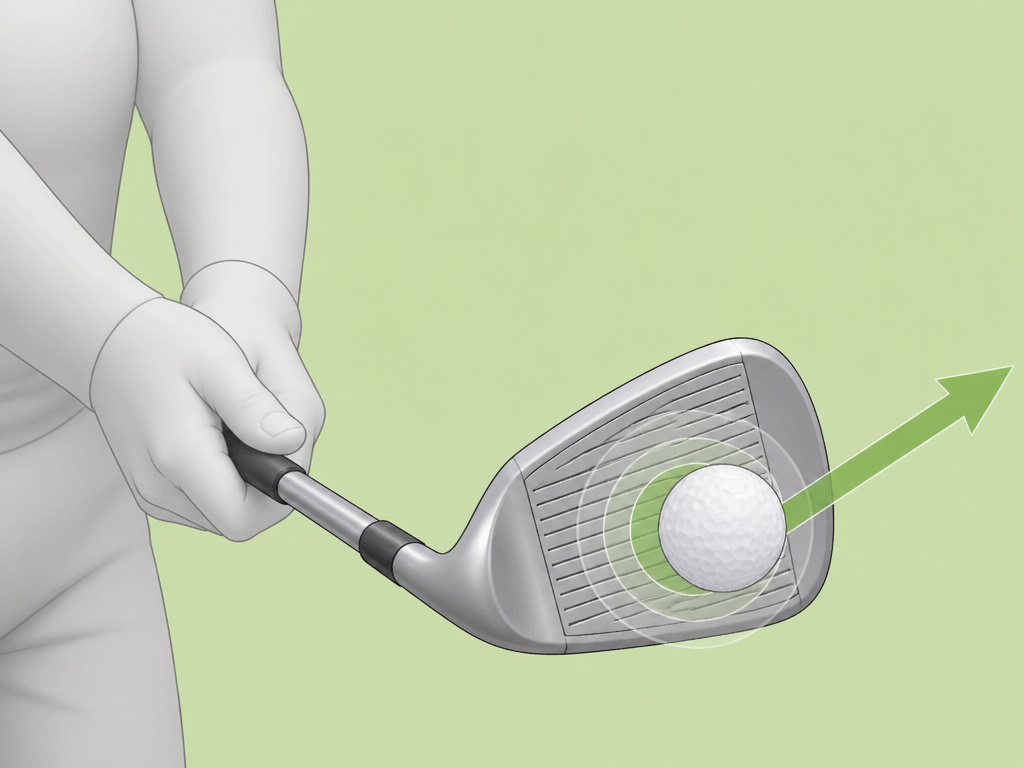
The handicap number is a guideline, not a law. The real question is about your miss pattern and your goals.
You are the prime candidate if:
- Your handicap is 15 or higher.
- Your most common miss is thin, off the toe, or low on the face.
- You struggle to get your mid and long irons airborne consistently.
- Your primary goal is more greens in regulation and fewer “disaster” holes.
- You value straight flight over shot-shaping.
This describes the vast majority of amateur golfers. For these players, a good set of forgiving irons for amateurs is the fastest path to lower scores and more enjoyment. The technology directly addresses their common faults.
You might be ready to move on if:
- Your handicap dips into single digits and your strike pattern becomes consistently centered.
- You find yourself wanting to hit knockdowns, fades into right pins, or control trajectory in the wind.
- The thick topline and offset start to bother you visually, affecting your confidence.
- Your distance control with wedges becomes erratic because your strong-lofted pitching wedge leaves too big a gap.
The transition isn’t always linear. Many golfers find a happy medium in players distance irons, which blend some forgiveness with a cleaner look. Understanding your iron set progression can help you plan this move when the time is right.
How to Test and Choose the Right Set
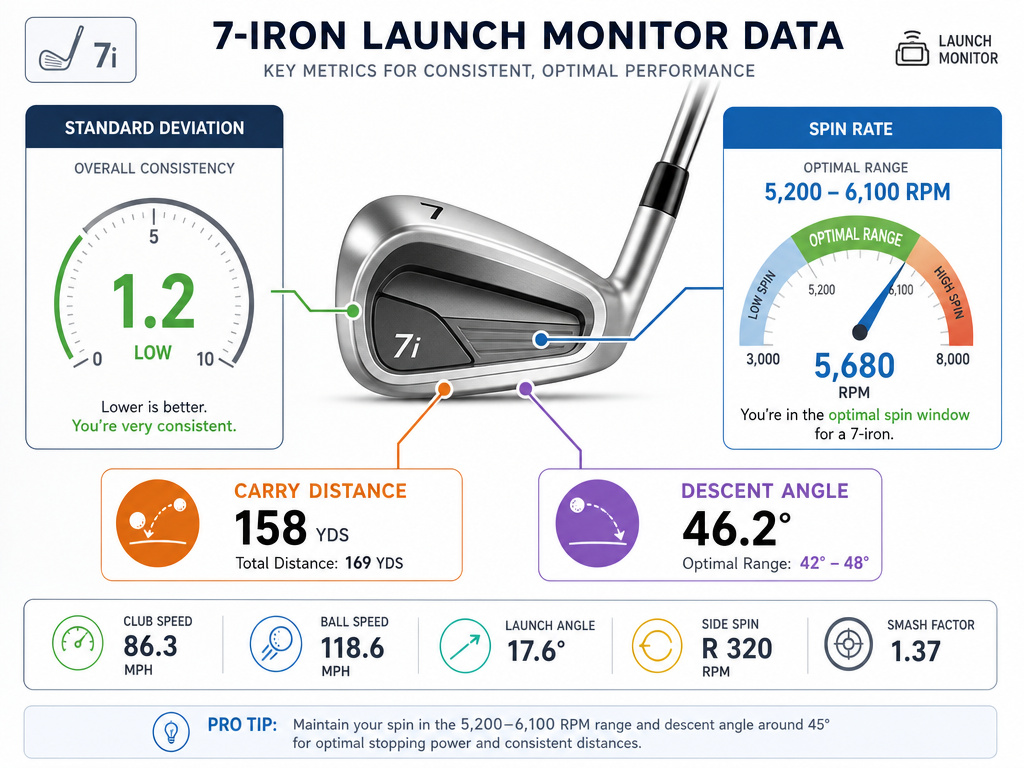
Forget hitting one perfect shot. The modern fitting process is about quantifying your bad ones.
- Find a fitter with a quality launch monitor. You need data on ball speed, launch angle, spin rate, and carry distance.
- Hit at least 10 shots with a 7-iron. Don’t cherry-pick. Include your typical mishits.
- Ignore the average carry. Look at the standard deviation of your carry distance. This number, often buried in the data, tells you how consistent the club is for you. A lower standard deviation is the holy grail of game improvement.
- Demand the spin and descent numbers. Ask the fitter, “What’s the spin rate and descent angle with this 7-iron?” Refer to a resource like the GolfSource equipment comparison guide for context. For a 75 mph swing speed, optimal 7-iron spin is between 5,200 and 6,100 rpm. If you’re below 5,000, ask about a different head or a loft adjustment.
- Hit your worst club. If you dread your 4-iron, test that. See how the game improvement design helps get it in the air.
A good fitter will use this data to steer you. They might strengthen or weaken the lofts, adjust the lie angle, or try different shafts to optimize your launch window. The goal is to find the set that gives you the tightest dispersion, not the longest single shot. For a broad overview of top performers that fit this bill, check our list of best golf irons.
The 3 Most Common Mistakes Buyers Make
Mistake one is buying with your eyes, not your game. Choosing a sleek players iron because it looks “pro” guarantees frustration if you’re a 20-handicap. The club should inspire confidence at address, not anxiety.
Mistake two is obsessing over the number on the bottom. So what if your new 7-iron goes the same distance as your old 6-iron? The important thing is consistent gapping. You need to know your new distances and then fill the gaps at the bottom of your bag with the right wedges. A strong-lofted pitching wedge might require adding a gap wedge you didn’t previously carry.
Common mistake: Not checking the actual loft of your new pitching wedge. A modern game improvement PW can be 43 degrees or stronger, leaving a massive 10-15 yard gap to a 52-degree sand wedge.
Mistake three is ignoring the used market. Irons from 2021 or 2022 deliver 95% of the performance of the latest 2026 models at a fraction of the cost. Technology in this category has plateaued. Unless you need a specific new shaft or loft option, a recent used set is exceptional value. This is especially true for starter irons, where the priority is learning, not chasing the last 1% of tech.
Frequently Asked Questions
Are game improvement irons only for beginners?
No. They are for any golfer who wants more forgiveness and consistency. Many mid-handicappers (10-18) play their best golf with them. The category includes models suitable for beginners all the way to players trying to break 80.
Do game improvement irons go further?
Yes, primarily due to stronger lofts. A modern 7-iron has the loft of an older 5 or 6-iron. Some models also have thinner, faster faces that boost ball speed on center strikes. The distance gain is real, but it’s largely a loft-for-loft comparison.
Can low handicappers use game improvement irons?
They can, but they often choose not to. A low-handicap player typically values workability, trajectory control, and precise feedback over maximum forgiveness. Some may carry a game improvement long iron (3, 4, 5) for easier launch while keeping players irons in the scoring clubs.
How long do game improvement irons last?
The grooves and the clubface are the wear points. With regular weekly play, you can expect 5 to 10 years before spin performance noticeably declines. The heads themselves are durable. You’ll likely replace them because your game outgrows them or you want new technology long before they physically wear out.
What’s the difference between game improvement and super game improvement irons?
Super game improvement (SGI) irons take the principles to the extreme. They have even larger heads, wider soles, more offset, and sometimes hybrid-like designs in the long irons. They are for players with very slow swing speeds or those who need the absolute maximum help getting the ball airborne and straight.
The Bottom Line
Game improvement irons exist for one reason: to make bad shots better. They are tools of forgiveness, not magic wands. The right set will shrink your dispersion, boost your confidence with long irons, and help you find more greens.
Ignore the marketing noise about distance. Focus on the data that matters for scoring: descent angle and spin for holding greens, and standard deviation for consistency. Test both the distance-first and forgiveness-first models within the category. Your ideal set is the one that makes your 150-yard shot the same reliable number every single time, regardless of how it feels off the face.
Start with a clear-eyed assessment of your current game, not the player you hope to be. For most golfers, that path leads directly to a well-fitted set of game improvement clubs. Play them until your ball-striking is so consistent that the club’s forgiveness becomes a limitation, not an asset. That’s the day you’ve earned an upgrade.
