
Unlock Your Swing: Top Golf Stretches for Ultimate Flexibility
This post contains affiliate links. As an Amazon Associate, we earn from qualifying purchases.
This post contains affiliate links. As an Amazon Associate, we earn from qualifying purchases.
Golf stretches for flexibility require a dynamic approach, moving through your range of motion, not holding static poses before you play. A 2009 study in the Journal of Strength and Conditioning Research found that adding 20 minutes of static stretching to a warm-up cut driver distance by 5.6% and accuracy by 31%. For lasting mobility and injury prevention, focus on dynamic movements pre-round and save deep static holds for post-round or dedicated off-day sessions.
That 5.6% distance loss is the difference between reaching the green in regulation or leaving yourself a tricky chip. The research is clear: the type of flexibility work you do, and when you do it, directly changes what happens on the scorecard.
What follows is not another generic list of poses. It’s the breakdown of why dynamic motion wins, which specific tests correlate with lower injury rates, and a sample routine built from the protocols that actually improved driver performance in peer-reviewed studies.
Key Takeaways
- Never do static stretching before a round. It reduces muscle stiffness and power output, costing you immediate clubhead speed and accuracy.
- Dynamic stretching is your pre-play ritual. Movements like torso rotations and leg swings prepare the muscle-tendon unit for the explosive, rotational demands of the swing.
- The shoulder reach test matters. A nationwide study of pro golfers found a “fair” grade in this test was linked to a 71% lower risk of lower back injuries.
- Combine methods for best results. A study on elite junior players found a mix of static and club-based dynamic stretches (SCS) produced the highest club speed and smash factor.
- Flexibility without balance is wasted. Research shows a strong negative correlation between balance errors and driving distance, especially for male golfers.
The Dynamic vs. Static Stretching Debate
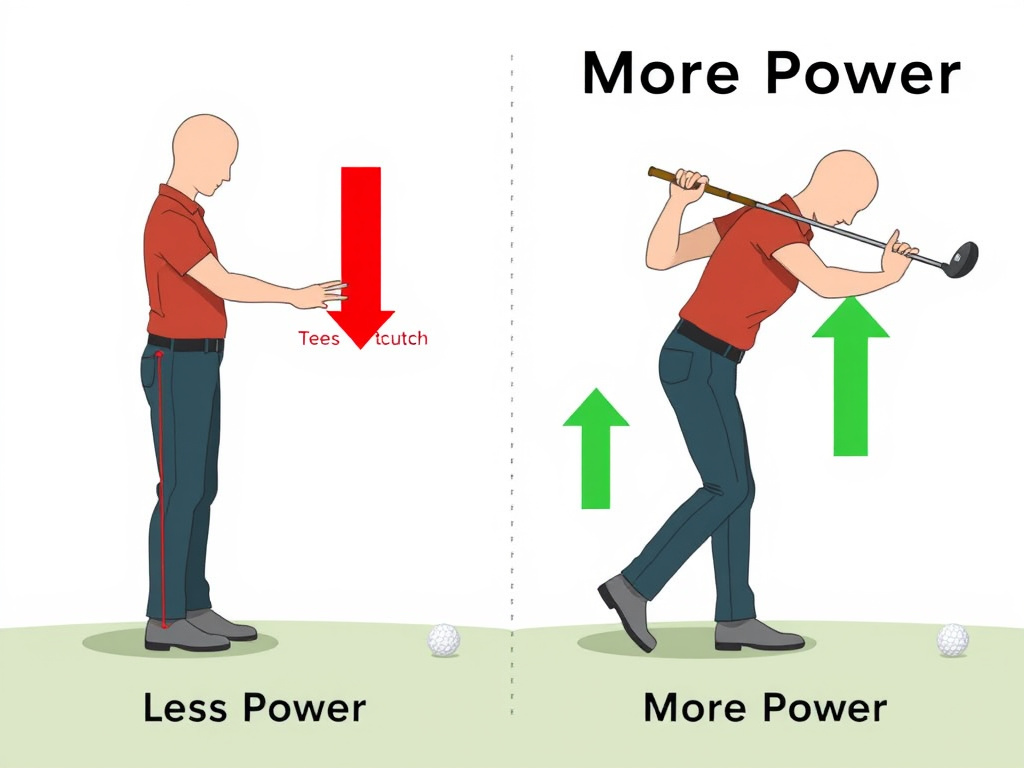
Most amateurs stretch the wrong way at the wrong time. They pull a hamstring hold for 30 seconds on the first tee and wonder why their drive feels sluggish.
The science behind this is mechanical. Static stretching increases muscle length but decreases tendon stiffness. For a movement as rapid and coordinated as a golf swing, you need that stiffness, it’s what allows the muscle-tendon unit to store and release elastic energy efficiently. A slack tendon is a slow tendon.
A 2009 study by Gergley had 15 competitive male golfers add a 20-minute full-body static stretch routine to their normal active warm-up. The result was measurable drops: 4.2% less clubhead speed, 5.6% less distance, and 31% worse accuracy with the driver compared to the dynamic warm-up alone.
Dynamic stretching avoids this pitfall. You’re moving through ranges of motion with control, which elevates heart rate, increases blood flow, and primes the nervous system for activity without sacrificing that crucial stiffness. Think leg swings, torso twists, and arm circles, not toe touches.
The takeaway isn’t that static stretching is bad. It’s that its role is for long-term mobility improvement, not acute performance. Save those deep, held stretches for after your round or on a dedicated recovery day. Your first tee shot will thank you.
Why Golf-Specific Flexibility Isn’t Just About Touching Your Toes
General flexibility is one thing. Golf-specific flexibility is about enabling the X-Factor, the separation between your shoulder turn and hip turn during the backswing, and maintaining a stable base throughout.
This is where a generic fitness test fails. The classic “floor touch” test showed no significant link to spinal injury risk in a study of 439 professional golfers. The test that did matter? The shoulder reach test.
Where this goes sideways: Neglecting internal shoulder rotation. A “fair” grade on the shoulder reach test (fingertips less than 5 cm apart behind your back) was associated with a 71% lower risk of thoracic/lumbar spine injuries in that pro golfer study. Limited shoulder mobility forces the lower back to over-rotate, and that’s a recipe for a stress fracture.
Your golf fitness training should build a body that can rotate in segments. The goal isn’t just a bigger turn; it’s a controlled, powerful coil that you can reliably unleash. This requires mobility in the hips and thoracic spine, and stability in the lumbar spine and core.
A study cited in the PMC flexibility and balance study made the connection explicit: better balance directly correlated with longer drives for male collegiate golfers. You can be as flexible as a gymnast, but if you can’t control your posture at the limits of your swing, you’ll leak power and risk injury.
A Sample Flexibility Routine That Works
This routine borrows from the most effective research-backed protocols. It takes about 10 minutes and is designed to be done after a 5-minute light aerobic warm-up, like a brisk walk or jog.
Phase 1: Dynamic Movement Prep (Pre-Round)
Do 10-12 controlled reps of each. 1. Torso Rotations: Stand with feet shoulder-width, knees slightly bent. Hold a club across your shoulders. Rotate your upper body back and through, letting your hips follow naturally. Feel the stretch through your mid-back. 2. Leg Pendulums: Hold onto your bag or a cart for balance. Swing one leg forward and back, then side to side. Keep the movement smooth to loosen the hips and hamstrings. 3. Arm Circles: Extend arms out to the sides. Make small circles, gradually increasing their size. Do 10 forward, 10 backward. This warms the shoulder girdle. 4. Walking Knee Hugs: Take a step forward, pull your knee to your chest, hold for a second, then step and switch. This integrates hip mobility with balance.
Phase 2: Integrated Power & Mobility (Practice Days)
This is where you blend techniques, like the SCS protocol that worked for elite juniors. * Club-Assisted Rotations: Use a club to guide your stretch. For example, hold a club upright in front of you and rotate around it, deepening the trunk stretch dynamically. * Lunge with Rotation: Step into a lunge, then rotate your torso toward your front leg. Return to center and step back. This builds rotational stability under load.
Phase 3: Static Development (Post-Round or Off Days)
Hold each stretch for 30 seconds, 1-2 sets. No bouncing. * Seated Trunk Twist: Sit on the ground, one leg straight, the other crossed over. Hug your knee and twist toward it. Targets the glutes and external rotators. * Sleeper Stretch: Lie on your side, arm bent at 90 degrees. Gently push your forearm down toward the ground with your other hand. Crucial for maintaining the shoulder internal rotation tested in the shoulder reach test. * Hip Flexor Lunge: In a lunge position, tuck your pelvis and lean forward. You’ll feel this in the front of your back-leg hip.
For older players or those with existing stiffness, incorporating gentle mobility exercises into daily life is more effective than one weekly marathon session. Consistency beats intensity.
What the Research Says About Performance & Injury
The table below summarizes key findings from the peer-reviewed studies that should guide your approach.
| Study Focus | Key Finding | Practical Implication |
|---|---|---|
| Static Stretch Before Play (Gergley, 2009) | Reduced driver distance (-5.6%) and accuracy (-31%). | Ban static stretches from your pre-round warm-up routine. |
| Dynamic vs. Static (Clinical Med. Journals, 2016) | Dynamic stretching increased carry distance and accuracy vs. Static in low-handicap players. | Your pre-play movements must be active. |
| Combined Method (SCS) (KSEP Journal) | Static + club dynamic stretches yielded highest club speed & smash factor in elite juniors. | Blend methods on practice days for maximum power training. |
| Injury Prevention (PMC Spine Injury Study) | A “fair” shoulder reach test score linked to 71% lower lower-back injury risk in pros. | Test and improve your shoulder internal rotation mobility. |
The PMC rotation warm-up study added a nuance: for older amateur golfers (average age 64), a dynamic rotation warm-up didn’t significantly improve X-Factor. This suggests that while the principles hold, the acute gains might be subtler for seniors, making the long-term injury-prevention benefits of a smart flexibility exercises for older golfers program even more critical.
The golfer spine injury study also found that pros who extended their warm-up time after a back injury were more likely to prevent their scores from worsening. It’s a clear signal: your body needs more preparation as you age or recover.
Building a Sustainable Flexibility Habit
This isn’t a quick fix. Real change comes from embedding smart stretching into your weekly rhythm, not cramming before a Saturday match.
First, assess your weak links. Can you perform the shoulder reach test? How is your balance on a single leg? Use these as benchmarks, not whether you can touch your toes. Your senior golf guide might emphasize different benchmarks than a guide for a 25-year-old.
Second, match your routine to the goal of the day. * Game Day: 5-minute walk, then the Dynamic Movement Prep list only. * Practice Day: Warm-up, then incorporate 2-3 of the integrated power/mobility drills like club-assisted rotations. * Recovery Day: Focus on the static holds and gentle foam rolling.
Common mistake: Stretching until you feel pain. You’re aiming for a mild tension, not a sharp burn. Pushing into pain triggers the muscle’s stretch reflex, causing it to contract and defend itself, the exact opposite of what you want.
Finally, consider your equipment. If you’re fighting restrictive clothing, you’re fighting a losing battle. Modern flexible golf pants or women’s golf pants made with stretch fabrics allow for a full, comfortable range of motion without binding. It’s a simple upgrade with a direct payoff.
Frequently Asked Questions
What is the best stretch for golf flexibility?
There isn’t one “best” stretch. The most important type is dynamic stretching before play, like torso rotations and leg pendulums. For overall golf health, prioritize exercises that improve internal shoulder rotation (like the sleeper stretch) and thoracic spine mobility, as these are directly linked to power and injury prevention.
How long should you hold a golf stretch?
It depends on the timing. Before a round, don’t hold static stretches at all. Use dynamic movements. After a round or on a rest day, hold static stretches for about 30 seconds per muscle group. Research shows this duration is effective for improving long-term range of motion without the performance drop associated with longer holds.
Can stretching improve my golf swing speed?
Yes, but indirectly and with the right kind of stretching. A dynamic warm-up preserves muscle stiffness, allowing for more powerful elastic energy transfer, which can maintain or even slightly boost swing speed. The KSEP warm-up effects study found a combined stretching program improved club speed in elite juniors. However, static stretching before swinging will reduce it.
I’m a senior golfer. Should I stretch differently?
The principles are the same, but the emphasis shifts. For seniors, the injury prevention and joint health benefits of consistent, gentle flexibility work outweigh the acute power gains. Focus more on stability and balance within your stretches. A dedicated program of senior golf exercises that includes seated and supported options can be more effective and safer than trying to mimic a tour pro’s routine.
How often should I do golf flexibility exercises?
For lasting benefit, aim for consistency over duration. A 10-minute dynamic routine before every round or practice session is non-negotiable. Add 2-3 longer sessions (20-30 minutes) per week dedicated to static stretching and mobility work, ideally on non-playing days. This mixed-frequency approach addresses both immediate performance and long-term adaptation.
The Bottom Line
Forget the old image of stretching. Effective golf flexibility is a strategic tool, not a passive habit.
Use dynamic motion to prepare your body to perform. Use targeted static work to rebuild your body’s potential for movement over time. Test yourself with the shoulder reach test, and understand that what you do in the 10 minutes before you tee off has a measurable impact on your first drive.
The goal is a swing that’s not just longer, but one you can repeat for years without pain. That starts with moving the right way, long before you ever pull a club from the bag.
