
The Science-Backed Guide on How to Handle Pressure in Golf
This post contains affiliate links. As an Amazon Associate, we earn from qualifying purchases.
This post contains affiliate links. As an Amazon Associate, we earn from qualifying purchases.
Handling pressure in golf requires three things: a pre-shot routine you can execute on autopilot, practice that deliberately injects specific types of stress, and the self-awareness to know which calming technique your body actually needs. The wrong kind of calm can hurt your score as much as raw panic.
Most advice tells you to just breathe and focus. That misses the point. Pressure is a collection of different triggers. A ticking clock feels nothing like the shame of letting your partner down, and your body reacts to each one uniquely. You can’t fight them all the same way.
What follows is the breakdown that matters: the three distinct pressure types confirmed by research, the one breathing technique with peer-reviewed data, and the practice method that builds a swing that doesn’t crack. This is how you move from hoping you’ll hold up to knowing you will.
Key Takeaways
- Not all pressure is bad. Research shows “team,” “goal,” and “shame” pressure can improve performance, while “time” and “difficulty” pressure hurt it.
- Slow-paced breathing (5-6 breaths per minute) boosts heart rate variability and relaxation, but a 2024 study found it increased lateral deviation on full swings under pressure, great for the mind, risky for fine motor control.
- To build a stress-resistant game, practice using the Challenge Point Framework. This means constantly adjusting practice difficulty so you’re failing 20-30% of the time.
- Your pre-shot routine is a physical anchor. Under pressure, your only job is to execute that routine at the exact same speed as on the practice tee.
- Know your game’s signature. Under pressure, lean into your natural shot shape and favorite club. Trying to be a different player is a guaranteed breakdown.
The 3 Types of Pressure That Actually Matter
You feel a knot in your stomach on the 18th tee. Is it the same knot you felt when you had 30 seconds to hit your last shot? Probably not.
A 2024 study published in ResearchGate isolated eight different pressure conditions and measured their effects. The results were counterintuitive. “Time” pressure and “difficulty” pressure (like a tucked pin over water) reliably hurt performance. But “team,” “goal,” and “shame” pressure actually improved it compared to a no-pressure control group.
Your brain and body treat these as separate events. Time pressure shuts down conscious processing, you swing faster, often recklessly. The shame of disappointing your foursome, however, can heighten focus and effort in a productive way. The first step in managing emotions is to name what you’re actually feeling.
Where this goes sideways: Using a “team” pressure mindset for a “time” pressure situation. If you’re up against the clock, trying to “rise to the occasion” for your partners will backfire. You need a script that simplifies decision-making, not amplifies emotional stakes.
| Pressure Type | Your Likely Feeling | Best Response |
|---|---|---|
| Time | Rushed, frantic, shallow breath | Ultra-simple routine. Pick a club, see the shape, go. No second guesses. |
| Difficulty | Fear, doubt, “I can’t do this” | Commit fully or don’t hit. Play the percentage shot to the fat part of the green. |
| Team / Goal | Determined, focused, accountable | Lean into the positive tension. This is the “clutch” energy you can channel. |
The study also measured swing kinematics. When conscious processing increased under pressure, putter swings became slower and more constrained. When it decreased (like under time pressure), swings became faster. Your mechanics change whether you want them to or not. This is why a robotic pre-shot routine is non-negotiable, it’s the one thing you can keep constant.
Does Breathing Actually Work Under Pressure?
Yes, but not how you think. Slow-paced breathing (SPB) integrated into a pre-shot routine (PSR) is the most studied method.
A 2024 study in The Open Psychology Journal had golfers use SPB+PSR before shots under pressure. The physiological results were strong: significantly higher heart rate variability (RMSSD) and lower heart rates. The golfers reported better mental clarity and relaxation. But the performance data contained a warning.
While swing distance improved, lateral deviation increased. The breathing protocol helped relaxation but hurt accuracy on full swings. The researchers suggested moderate arousal from the technique might impair the fine motor control needed for precision.
Integrating slow-paced breathing into a pre-shot routine significantly increased RMSSD and decreased heart rate in male golfers under pressure, according to a 2024 study. However, the same intervention also led to increased lateral deviation in swing performance, indicating a trade-off between autonomic regulation and shot accuracy.
So, do you breathe or not? It depends on the shot. – For putting and short game: The benefits likely outweigh the risks. Calm and clarity are king for feel-based shots. – For full swings with a narrow target: The risk to accuracy is real. If you use SPB, pair it with a simpler swing thought. Thinking “smooth tempo” while breathing is better than thinking “start it at the right edge.”
This technique is a tool, not a magic pill. It’s part of a larger mental game strategy, not the whole strategy.
Build a Routine That Runs on Autopilot
Your routine is your anchor. Under pressure, your conscious mind is a liability. You must hand control to a sequence of actions you’ve drilled thousands of times.
Justin Rose’s key is speed consistency. “Pressure forces you to speed up,” he says. His measure of being clutch is that it takes him the same amount of time to set up for a Sunday-winning drive as for a Thursday practice round shot. Your routine is part of the shot.
A solid routine has four non-negotiable steps, always in the same order: 1. See the shot from behind the ball. Pick a specific leaf or mark on your start line. If you can’t see it clearly, step back. Indecision here guarantees a bad swing. 2. Take one practice swing with feel.This step is to ingrain the tempo and feel of the swing you want. Make it a full, committed rehearsal. Step in, align, and settle. Place the club behind the ball, set your feet, and take one last look at the target.This is your point of no return. 4. Pull the trigger.** No extra waggles, no last-second adjustments. Trust the process and go.
Skipping any step, especially the practice swing, leaves a gap for doubt to flood in. That doubt manifests as a rushed setup or a flinch at impact. A consistent routine also directly supports consistent grip pressure, as your hands learn to settle into the same tension every time.
Your Practice Is Probably Wrong
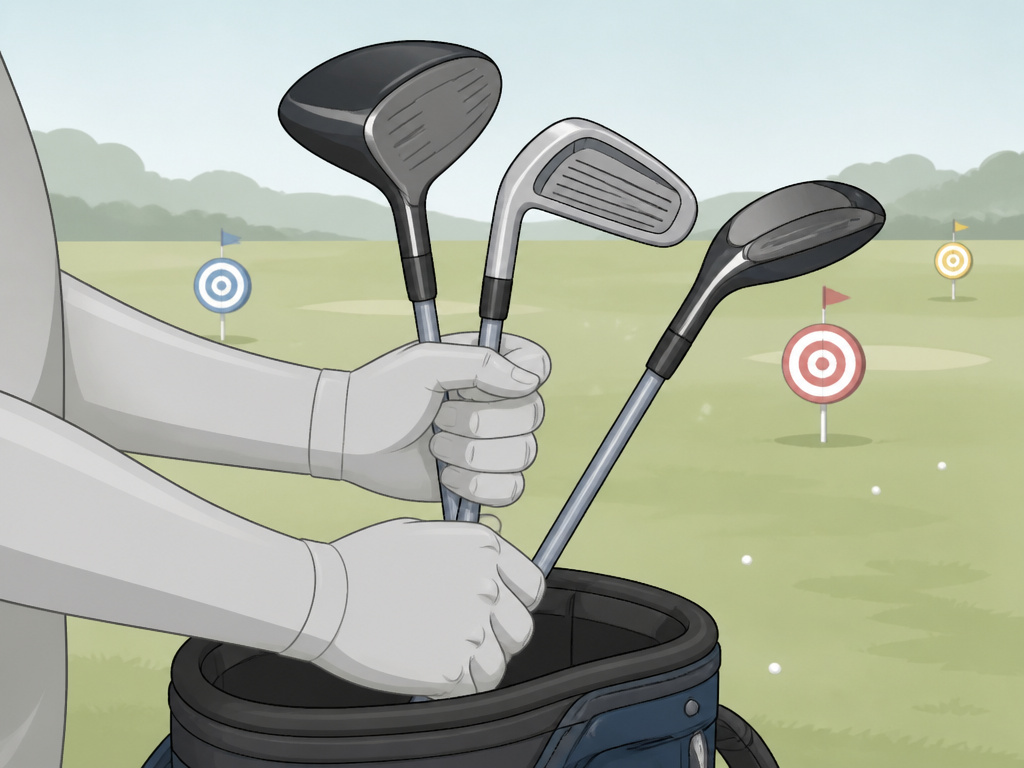 Hitting 50 perfect 7-irons in a row from a perfect lie feels great. It also builds a game that collapses on the first difficult shot you face on the course.
The Challenge Point Framework, a motor learning model referenced in the Golf Science Journal pressure study, explains why. It makes three critical predictions: 1. Good performance in practice does not mean learning is happening. 2. The ideal challenge point is specific to both the task and the learner. 3. The challenge point must change as the learner improves.
Most golfers practice in a “blocked” style, repeating the same shot. This is only appropriate for absolute beginners. For anyone who can make consistent contact, this is under-challenging. It feels successful but builds zero stress resistance.
Common mistake: Practicing until you stop making mistakes. Once you’re hitting it well, you’ve stopped learning. You’re just reinforcing a skill in a sterile environment that doesn’t exist on the course.
To practice for pressure, you need “random” or “variable” practice. This means constantly changing the challenge. – On the range: Don’t hit the same club twice in a row. Hit driver, then 9-iron, then 5-wood. Change your target every shot. Add consequences: “If I don’t hit this 6-iron within 10 yards of my target, I start over.” – For the short game: Use Justin Rose’s clock-face system with your wedges, but don’t just hit 10 shots from 9 o’clock. Mix distances and clubs unpredictably. Practice uneven lies constantly. – On the course: Play “worst-ball” or create specific, difficult challenges during casual rounds.
The goal is to be failing 20-30% of the time in practice. That level of difficulty optimizes the brain for learning skills that hold up under stress. This kind of deliberate practice is what builds true confidence, not the hollow confidence of a perfect range session.
The Physical Anchors: Grip, Stance, and One Go-To Shot
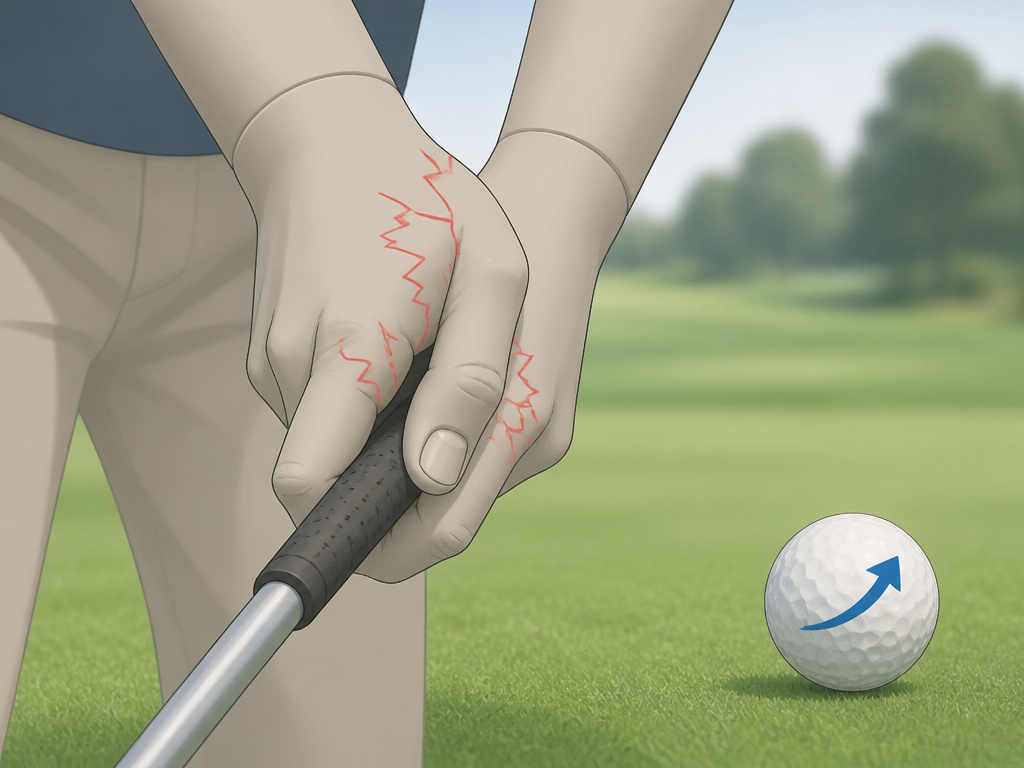 When the mind races, you must have physical defaults to fall back on. These are your non-negotiable fundamentals.
First, your grip is your connection to the club. Under pressure, tension creeps into your hands, causing a death grip that kills feel and clubhead speed. Your focus should be on maintaining the proper grip tension you’ve trained in practice, firm enough for control, loose enough for hinge. Whether you use an overlapping grip or interlocking, it must be automatic.
Second, your stance and setup are your foundation. A solid, athletic proper stance gives your swing a platform to work from. When nervous, people often narrow their stance or lock their knees. Your pre-shot routine must include a conscious check: weight balanced, knees flexed, spine angle set.
Finally, you need one go-to shot you can trust with your eyes closed. For Justin Rose, it’s a committed wedge. For you, it might be a smooth 3/4 8-iron or a fairway wood you always fade. This is your escape hatch. When everything feels shaky, fall back to this shot, even if it’s not the “perfect” play. Hitting your shot poorly is always better than hitting a shot you don’t own.
Frequently Asked Questions
How do I stop shaking when putting?
The shaking is adrenaline. Don’t fight it. Accept it as energy. Then, narrow your world to the routine. Look at the hole, look at the ball, and make your stroke. The shaking usually stops the moment you initiate the takeaway. Focusing on stopping the shake keeps your mind on the fear. Focus on the routine instead.
What if my pre-shot routine feels rushed under pressure?
That’s the pressure talking. Your job is to be the regulator. If you feel rushed, that’s your cue to slow down deliberately. Take a literal step back from the ball. Breathe. Start the routine over from the beginning. Taking 15 extra seconds to hit a good shot is always faster than hitting two bad ones.
Can you practice mental toughness?
Yes, but not by just thinking positive. You practice it by creating controlled pressure in practice. Bet a friend a coffee on your last five putts. Set a difficult challenge on the range with a consequence for failure. You’re hardening the neural pathways between the feeling of pressure and the execution of your skill. This is the core of applied sports psychology.
Why do I play well with friends but choke in tournaments?
With friends, the pressure is likely the positive “team” or “goal” type, which can enhance focus. In a tournament, it often shifts to “fame” or “shame” pressure (fear of looking bad), which triggers different, more paralyzing responses. Practice simulating tournament pressure by playing for something that matters to you.
Should I change my strategy under pressure?
No. Simplify it. Pressure narrows your focus and decision-making capacity. Now is not the time to try a heroic shot you’ve never practiced. Stick to your game plan, aim for the center of greens, and let your stress-resistant practice take over. Playing smart is a skill that holds up better than heroic talent.
The Bottom Line
Pressure is a signal. Your body is preparing for something important.The skill is in directing that energy instead of letting it direct you.
Forget about eliminating nerves. Build a game that functions despite them. That means a robotic routine, practice that embraces failure, and the wisdom to know that a smooth breath might steady your hand for a putt but could widen your drive. Handle the time pressure with simplicity, lean into the team pressure for focus, and always, always commit to the shot you own.
The players who look clutch aren’t immune to pressure. They’ve just done the work to translate that knot in their stomach into a repeatable action. You can build that translation. Start with your very next practice session.
