
Pros and Cons of Online Golf Lessons & The Hybrid Approach
This post contains affiliate links. As an Amazon Associate, we earn from qualifying purchases.
Online golf lessons offer flexibility, lower cost, and access to top coaches, but lack the immediate, hands-on correction of in-person sessions. In-person lessons provide real-time feedback and are better for establishing fundamentals, but are more expensive and less convenient. The most effective approach for sustained improvement is a structured hybrid model: periodic in-person check-ins combined with ongoing online coaching for practice and accountability.
The core difference isn’t about which is better. It’s about which tool solves your specific bottleneck right now. An online lesson can’t physically adjust your grip, but it can give you a drill to review fifty times before your next range session. An in-person pro can’t be there for your Tuesday evening practice, but they can spot the millimeter your hip slides forward during a live swing.
What follows breaks down the real trade-offs: the technology that makes online coaching work, the irreplaceable value of hands-on correction, and the specific, blended schedule that keeps players improving month after month. By the end, you’ll know exactly which format, or combination, fits your game, your schedule, and your wallet.
Key Takeaways
- Online lessons win on flexibility and cost (often 30-50% less than in-person), but demand high-quality video and self-discipline to implement changes alone.
- In-person lessons provide immediate, sensory feedback, a coach can adjust your feel in real-time, which is critical for beginners or major swing overhauls.
- The “hybrid model” is not a compromise; it’s a structured program. Use in-person sessions for diagnosis and setup, then online check-ins for deliberate practice and long-term momentum.
- Vet online coaches by their proven student results, not their social media followers. Look for PGA certification and coaches who explain the “why” behind every change.
- Your success with any format hinges on deliberate practice. One focused drill repeated with intent beats ten mindless buckets of balls.
The Core Difference: Flexibility vs. Hands-On Correction
Online and in-person lessons are built on different promises. One trades the clock for convenience. The other trades convenience for the clock.
Online golf instruction platforms like Skillest and GOLFTEC’s app are built on asynchronous communication. You upload your swing, and a coach provides a detailed video analysis, often within 24 hours. This model removes geographic and scheduling barriers but places the burden of video quality and self-guided practice on the student.
The appeal is obvious. You can get a lesson from a coach in another country, at midnight, in your backyard. The feedback is permanent, you can rewatch the analysis video as many times as you need. This is powerful for analytical players who learn by seeing and reviewing. The cost is usually lower, too, because the coach isn’t renting a bay or a range.
The trade-off is in the feel. There’s a lag between your effort and the correction. You might spend a week ingraining a misunderstanding of a drill before your next check-in. The camera angle can hide flaws, and without a launch monitor like TrackMan in the frame, the coach is working from ball flight and swing visuals alone.
In-person lessons flip that script. The value is concentrated in the hour you’re there. A PGA-certified professional uses eyes, ears, and sometimes hands. They hear the strike. They see the divot. They can place you in the correct posture. That real-time loop, swing, feedback, adjust, swing again, compresses learning. It’s essential for building a new motor pattern or fixing something that feels completely wrong.
But when the lesson ends, that loop breaks. You drive home with notes that make less sense each day. The next lesson might be weeks away, and life gets in the way. The convenience of online is the consistency of in-person’s kryptonite.
Weighing the Pros and Cons: A Detailed Breakdown
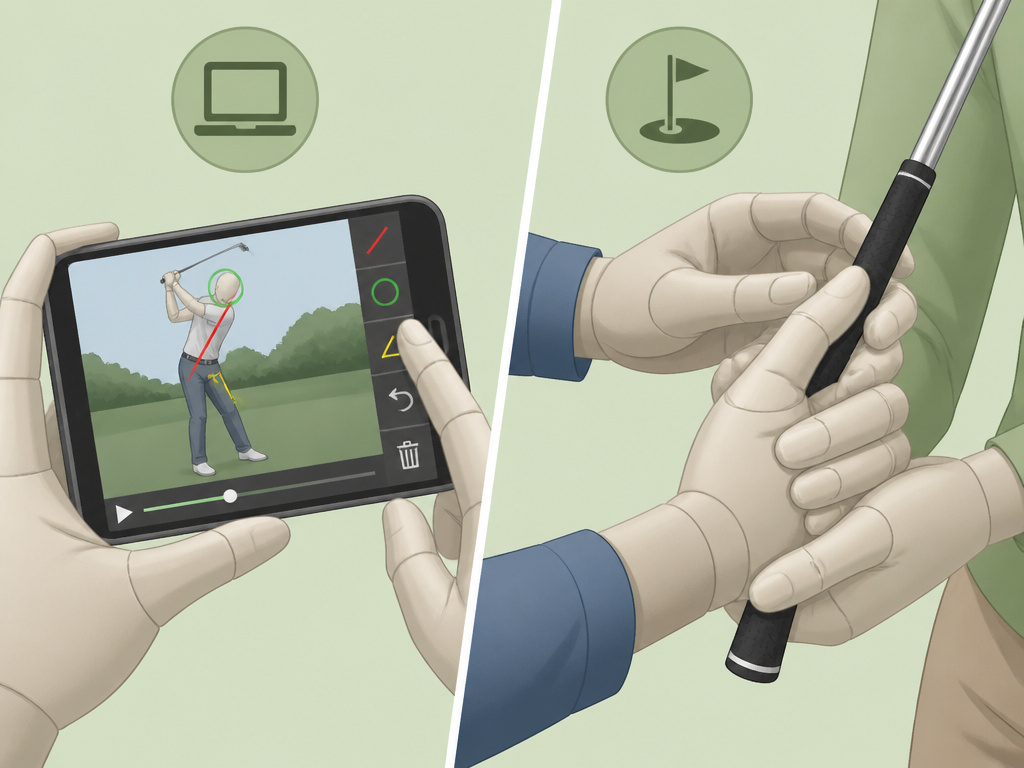 You need to see the trade-offs side-by-side to make a smart choice. This isn’t about good vs. Bad; it’s about matching the format to your current situation.
The Case for Online Golf Lessons
The pros are compelling, especially if you’re past the beginner stage.
| Advantage | What It Means | The Hidden Catch |
|---|---|---|
| Flexibility & Access | Lessons anytime, anywhere. Access world-class instructors outside your local area. | Quality hinges entirely on your video setup. Poor lighting or a bad angle renders feedback useless. |
| Lower Cost | Typically 30-50% less expensive per session than in-person coaching. | You often get what you pay for in turnaround time and detail. The cheapest option may be an automated AI review. |
| Reviewable Feedback | Permanent video analysis you can rewatch indefinitely. Builds a searchable library of your swing journey. | Requires high self-discipline. It’s easy to watch instead of do. |
| Ideal For | Travelers, busy schedules, players with solid fundamentals seeking refinement, analytical learners. |
The biggest pro is also the biggest con: you are in charge. You film the swing. You do the drill. You manage the timeline. This works brilliantly for self-starters and fails utterly for those who need external accountability.
Where this goes sideways: Submitting a single, poorly filmed swing video. If the coach can’t see your grip, your alignment, or the club’s path clearly, their feedback is a guess. You’ll then practice that guess for a week and wonder why nothing changes.
Platforms like Skillest have turned this into a science, with coaches using drawing tools on your video to show exact positions. But the foundation is your footage. A tripod and two angles (face-on and down-the-line) are essential.
The Case for In-Person Golf Lessons
For many problems, there is no digital substitute.
| Advantage | What It Means | The Hidden Cost |
|---|---|---|
| Immediate Feedback | Real-time correction. Feel a change, hit a ball, and get instant validation or adjustment. | You’re paying a premium for the coach’s hourly time and facility costs. |
| Hands-On Guidance | A coach can physically position your grip, posture, or turn. This is invaluable for kinesthetic learners. | Limited to local coach availability and quality. You might not have a good fit nearby. |
| Integrated Technology | Live data from launch monitors (TrackMan, GCQuad) provides objective feedback on club path, face angle, and strike. | Sessions are bound by the clock. The pressure to “get value” in 60 minutes can rush the learning process. |
| Ideal For | Beginners, players making major swing changes, those struggling with “feel,” anyone needing a trusted local guide. |
The sensory layer is what you pay for. The sound of a pure strike after a grip adjustment. The feel of proper hip clearance when a coach guides your turn. The immediate visual of ball flight changing on the range. That feedback loop builds muscle memory faster than any video review.
But it ends when you walk to your car. The golf mental game challenge of retaining that feel for your next solo practice is real. This is why even dedicated in-person students plateau, they lack a structure for the days between lessons.
The Hidden Dangers of Online Instruction (And How to Avoid Them)
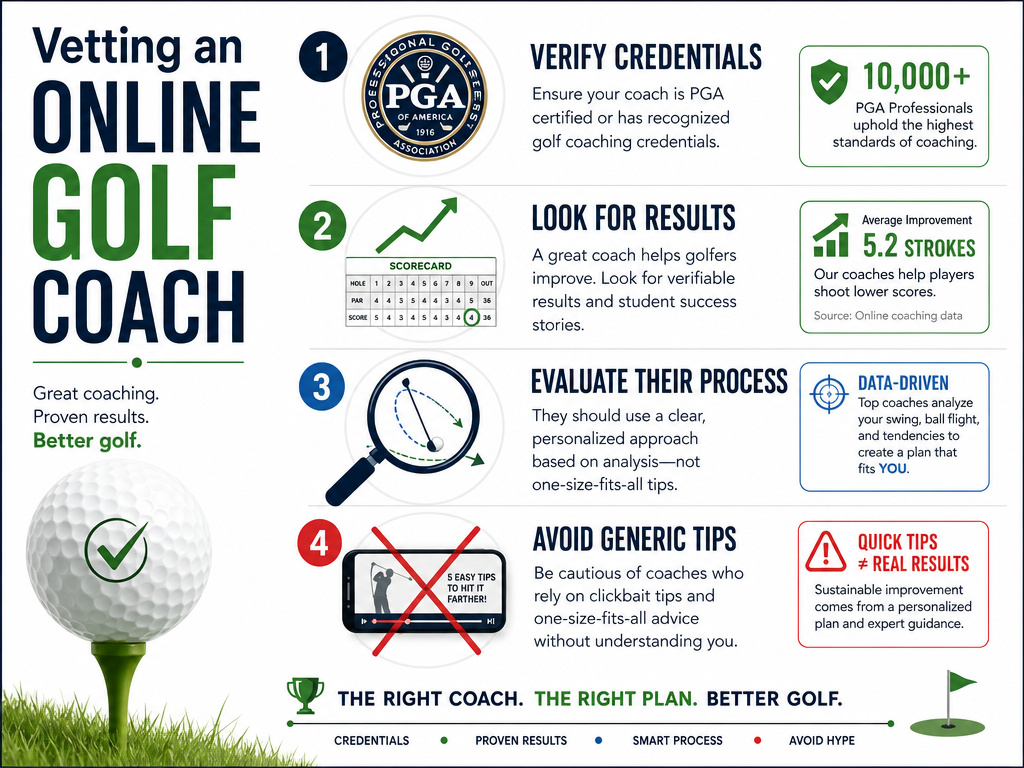 The open marketplace of online coaching is a double-edged sword. Accessibility is great. A lack of gatekeepers is not.
The golf.com article sourced for this piece highlights an “epidemic” of social media instruction where visibility is mistaken for expertise. An engaging personality with a slick video can rack up millions of views without ever having lowered a real student’s handicap. The algorithm rewards clicks, not proven results.
The danger is in the lack of personalization. A tip for an “over-the-top” swing might be perfect for one golfer and catastrophic for another, depending on the root cause. Online, you’re often self-diagnosing before you even seek help.
Easy to miss: Confusing a coach’s communication skills with their coaching skills. A great video presenter isn’t necessarily a great teacher. Look for a documented history of improving players, not just a polished trailer.
How to vet an online coach:
- Check Credentials: PGA certification is a baseline. It means they’ve met a professional standard.
- Look for Case Studies: Do they show student transformations with real data (handicap drops, improved stats)?
- Listen for “Why”: Do they explain the cause-and-effect in your swing, or just label positions “good” or “bad”?
- Avoid One-Size-Fits-All: Be wary of coaches who promise the same fix to every viewer. Good instruction is specific.
This vetting process is as important as how to find a golf coach locally. Don’t outsource your swing diagnosis to a popularity contest.
A 4-Week Roadmap for Online Success
If you choose the online path, you must treat it as a coaching program, not content consumption. Here is a concrete plan to get real results from your first month.
Week 1: The Baseline. Don’t ask for a fix. Submit your current swing with a simple question: “What is the single biggest thing holding my consistency back?” Your goal is to get one priority, not a list of ten flaws. Pair this with a session using a launch monitor if possible, to give your coach data alongside video.
Week 2: Deliberate Drill Work. Your coach should provide a specific drill for your priority. Your job is deliberate practice in golf. This means short, focused sessions with a clear goal. No full swings. Just the drill, maybe in your garage. Film yourself doing it and compare it to the coach’s example.
Week 3: Integration. Slowly blend the drill feel into slow-motion swings, then half-swings with a ball. The focus is on quality of movement, not distance. This is where most golfers fail, they rush to hit drivers and lose the new pattern immediately.
Week 4: Evaluation and Next Step. Submit a new swing video. Has the priority issue improved? Even a 10% change is a win. Based on this, your coach sets the next priority. This cyclical process of diagnose-drill-integrate-evaluate is how online coaching builds lasting change.
This roadmap forces the structure that online lessons lack. It turns a passive video review into an active practice golf effectively system.
Why the Hybrid Model Isn’t a Compromise. It’s the Best Tool
The most effective players I’ve coached don’t choose sides. They use both tools strategically. Think of it as a maintenance schedule for your game, not a series of random repairs.
The hybrid model works like this: 1. In-Person Foundation: Start with 1-2 in-person sessions. Use them for a hands-on setup (grip, posture, alignment) and a full diagnosis with technology. This sets an accurate baseline. 2. Online Momentum: Subscribe to an online coaching plan for the next 6-8 weeks. Submit swing videos every 10-14 days as you work on the prescribed drills. This maintains accountability and provides course correction between major sessions. 3. In-Person Tune-Up: Return for an in-person check-in every 4-6 weeks. Use the launch monitor data to measure objective progress. The pro can make fine, hands-on adjustments that are hard to communicate online.
This approach balances cost and consistency. You’re not paying for weekly in-person rates, but you’re also not drifting alone for months. The online check-ins are the glue. They turn a one-off lesson into a continuous program.
Platforms like GOLFTEC are built for this hybrid approach. Their in-studio lessons feed directly into their app, where you can review your swing comparison videos and assigned drills. It formalizes the connection between the lesson tee and your independent practice.
Which Format Is Right For You? A Decision Matrix
Stop wondering. Use this table to match your situation to the recommended starting point.
| Your Profile | Best Starting Format | Primary Reason | First Action Step |
|---|---|---|---|
| Total Beginner | In-Person | You need physical guidance on grip and posture. Feeling it right once is worth 100 videos. | Book a 3-lesson package with a local PGA pro focused on fundamentals. |
| Intermediate (Stuck) | Hybrid | You have basics but need a clear plan. Online provides the plan; an in-person tune-up ensures you’re on track. | Find an online coach you trust, then schedule one in-person session to confirm your swing feels match the video. |
| Advanced (Refining) | Online | You understand your swing and need expert eyes on specific details. The reviewable, detailed analysis is perfect. | Vet 3 coaches on Skillest with proven track records for your goal (e.g., driving accuracy, wedge play). |
| Limited Time/Budget | Online | Flexibility and lower cost allow for consistent touchpoints you wouldn’t get otherwise. | Invest in a phone tripod and good lighting. Then commit to a monthly online coaching subscription. |
| Struggling with “Feel” | In-Person | You need instant feedback to connect a mental thought to a physical sensation. | Find a coach who specializes in kinesthetic learning and uses training aids during lessons. |
Your choice isn’t permanent. Many golfers start in-person to build a foundation, then transition to online for long-term development. Others use online coaching for most of the year and book an in-person tune-up before a big trip or tournament. The key is intentionality.
Frequently Asked Questions
Are online golf lessons worth it for a beginner?
They can be, but with a major caveat. A complete beginner will progress faster with 2-3 in-person lessons to physically learn grip, stance, and posture. After that foundation is set, online lessons can be excellent for reinforcing those basics and providing affordable, ongoing feedback. Starting 100% online as a beginner risks ingraining poor fundamentals that are harder to fix later.
How do I ensure good video quality for an online lesson?
You need two angles: face-on (camera directly in front of you, in line with your hands) and down-the-line (camera directly behind you, in line with your toe line). Use a tripod to keep the camera steady at hip height. Film in bright, even light, outdoor shade is ideal. Show your entire body from head to toe and several swings. This is the bare minimum for useful golf swing analysis.
Can online lessons help me break 90 or 80?
Absolutely. Breaking scoring barriers is more about strategy and eliminating big mistakes than perfect swing mechanics. Online coaches excel at creating structured plans for course management, short game drills, and mental strategies. The accountability of regular video check-ins can be more effective than sporadic in-person lessons for sticking to a scoring-focused plan.
What’s the biggest mistake golfers make with online lessons?
Consuming lessons without deliberate practice. Submitting a video, getting feedback, and then going to the range to hit balls mindlessly is a waste. The improvement happens when you take the single prescribed drill and work on it with total focus, even if that means hitting no full shots for a week. This is the core of block practice vs random practice in golf.
How often should I submit a video for online coaching?
Every 10 to 14 days is a sustainable, effective pace. This gives you enough time to actually implement the changes from your last lesson through focused practice. Submitting more often doesn’t allow for real adaptation; submitting less often leads to loss of momentum and accountability.
Before You Go
The debate between online and in-person is a distraction. The real question is how you build a system for consistent improvement. For most golfers, that system is a hybrid one. Use in-person time for the things technology can’t do, hands-on setup and live data validation. Use online coaching for the things it does better, affordable, reviewable feedback and between-lesson accountability.
Your first move shouldn’t be to book a lesson. It should be to define your bottleneck. Is it a fundamental flaw you can’t feel? That’s an in-person fix. Is it a lack of a clear practice plan between weekends? That’s an online solution. Start there. The best format is the one you’ll actually use to put in the work.
