
Analyzing Rory McIlroy’s Swing Evolution and Speed Gains
This post contains affiliate links. As an Amazon Associate, we earn from qualifying purchases.
This post contains affiliate links. As an Amazon Associate, we earn from qualifying purchases.
Rory McIlroy’s swing evolution trades the “on-plane” consistency of his 2014 major wins for about 3 miles per hour of extra clubhead speed, achieved by a wider, flatter takeaway that can leave the club “across the line” and prone to a two-way miss. His current fixes focus on left-arm initiation to shallow the downswing and a deliberate re-centering of weight before starting down.
That speed-for-consistency trade is the thread that runs from his last major win to today. It’s not just about getting stronger; it’s about how added bulk changes the geometry of a movement he once did instinctively.
What follows breaks down the three technical pivots, the physical catalyst, the data-backed moves worth stealing, and the one drill I’ve seen work for a decade when players lose their own weight shift.
Key Takeaways
- McIlroy’s average clubhead speed is 3 MPH faster now than in 2012, but his SG: Off The Tee has dropped about 0.7 strokes as his swing plane flattened.
- The clearest technical change is a wider, flatter arm swing that often leaves the club “across the line” at the top, versus the “in-line” position of his 2014 swing.
- He actively fights a path that gets “too far to the right” by rehearsing cut shots to open his lower body, a feel amateurs can use to stop over-the-top moves.
- Re-centering, shifting up to 20% of weight back toward the target before the downswing, is a quantifiable, copyable move from his current action.
- For amateurs, chasing speed via a wider takeaway often worsens consistency. Focus on the weight shift and sequencing he uses to manage his power instead.
The Core Change: From “On-Plane” to “Across the Line”
The difference isn’t subtle when you freeze the video. In 2014, during his last major win, McIlroy’s backswing was a model of efficiency. His right arm stayed closer to his torso, and the clubhead tracked outside his hands. By the time his lead arm was parallel to the ground, the shaft was already on a steeper, more vertical plane. At the top, the clubshaft was typically in line with his hands when viewed down the target line.
Today, the move is wider and flatter. His arms stretch further from his body on the takeaway. The clubhead travels less outside his hands. This creates a shallower plane where, at the top, the clubshaft often points to the right of his target, what’s called “across the line.”
A club that is “across the line” at the top aligns the club’s weight in a direction that doesn’t match the intended downswing path. This can force a player to either re-route the club dramatically on the way down, leading to blocks, or aggressively rotate the wrists to square the face, producing hooks.
Why the shift? His coach since childhood, Michael Bannon, points to physiology. “He was less bulky back then,” Bannon notes. “More mobile.” That mobility let him rotate his torso more freely while keeping his arms in front of his chest. The added muscle from dedicated gym work changed his range of motion. The wider takeaway became a physical accommodation, not necessarily a technical choice.
This new top-of-backswing position is the root of his modern two-way miss. From here, if his lower body fires but his arms get stuck behind him, he has to flip his hands to catch up, sending the ball dead left. If his body stalls, the arms have no space to drop into, and he blocks it right.
The Physical Catalyst: The 2020 Bryson Effect
You can pin the acceleration of this change to a specific date: September 2020. That’s when Bryson DeChambeau muscled his way to a U.S. Open win at Winged Foot, showcasing a swing built purely for speed. McIlroy admitted he “got sucked into” the speed chase in the wake of that victory.
It worked, by the numbers. 2024 Rory McIlroy averages about 3 miles per hour more clubhead speed than 2012 Rory. He holds the second-best Power Percentage on the PGA Tour. The pursuit of raw distance fundamentally altered his swing’s intent. The wider, more around-his-body takeaway is a biomechanical lever for generating that speed, it allows for a bigger shoulder turn and a longer arc. But it came with a cost.
| Metric | Early Career (c. 2012-2014) | Current (2020-2024) | Consequence of Change |
|---|---|---|---|
| Average Clubhead Speed | Baseline (X) | X + ~3 MPH | Increased driving distance |
| Backswing Plane | Steeper, more “on-plane” | Flatter, often “across the line” | Introduces potential for two-way miss |
| SG: Off The Tee | Higher (Peak performance) | ~0.7 strokes worse | Slightly less consistent driving |
| Primary Swing Thought | Rotation, compression | Left-arm initiation, re-centering | Managing the flaws of the faster move |
The trade-off appears in the strokes-gained data. McIlroy’s SG: Off The Tee over the past four years is roughly 0.7 strokes worse than his first four years on Tour. Some of that is due to a field full of new bombers, but some is the inherent inconsistency of his current move.
The Modern Fixes: Left-Arm Initiation and Re-Centering
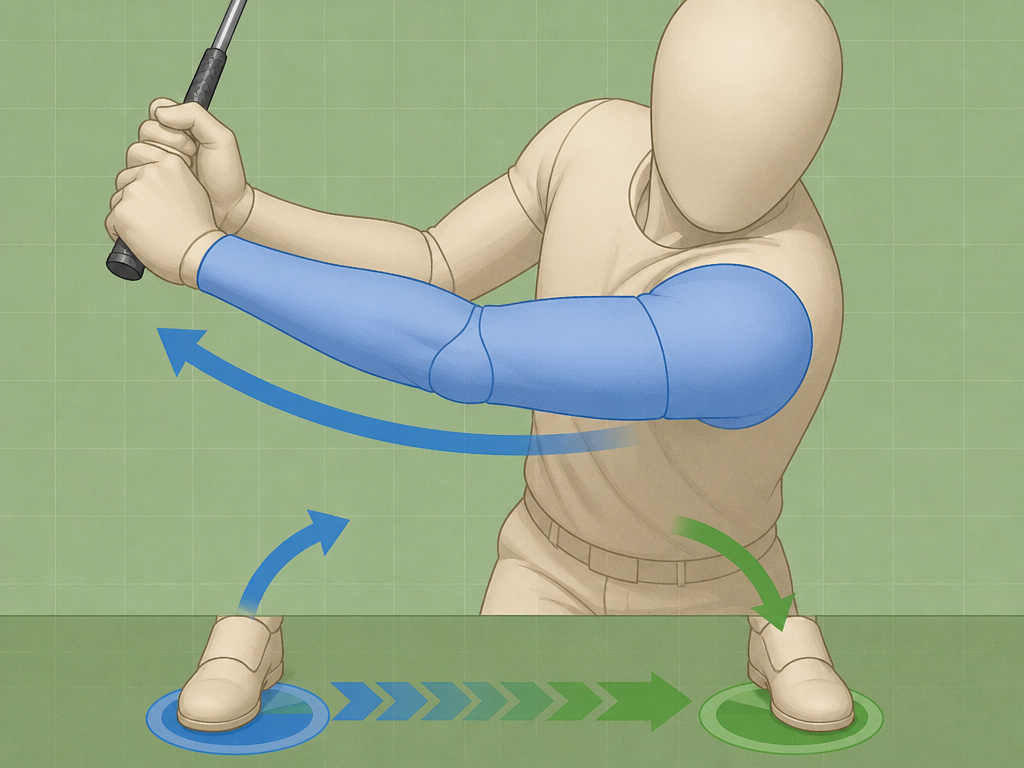
McIlroy knows the flaw. His recent work with Bannon is a conscious reboot, an attempt to graft old feels onto his new, powerful frame. The focus has shifted to two key sensations: starting the swing with the left arm and mastering weight shift timing.
“I felt like I got so right-sided in my thoughts recently,” McIlroy said. His new key feel is letting his left arm initiate the backswing, extending it wider and earlier. This isn’t about aesthetics; it’s a functional fix. By consciously extending the left arm, he creates space for it to rotate and “shallow” the club on the downswing, counteracting the “across the line” position. It’s a pre-emptive move to keep the club in front of him.
The second fix is quantifiable, thanks to technology like the GOLFTEC OptiMotion system used at the Masters.
Where this goes sideways: Amateurs let their weight keep moving away from the target until the top of the backswing. This forces a lateral lunge to start down, wrecking balance and contact.
The system showed McIlroy’s weight shifts 65% to his trail side when his lead arm is parallel. But then, before he even starts down, he begins re-centering. By the top of his swing, only 59% of his weight remains on his trail side. He’s already shifted 20% back toward the target. This “re-centering” is essential for elite ball-striking. It allows the downswing to be a rotational sequence around a stable lead side, not a desperate slide to get there.
What Amateurs Should (and Shouldn’t) Copy
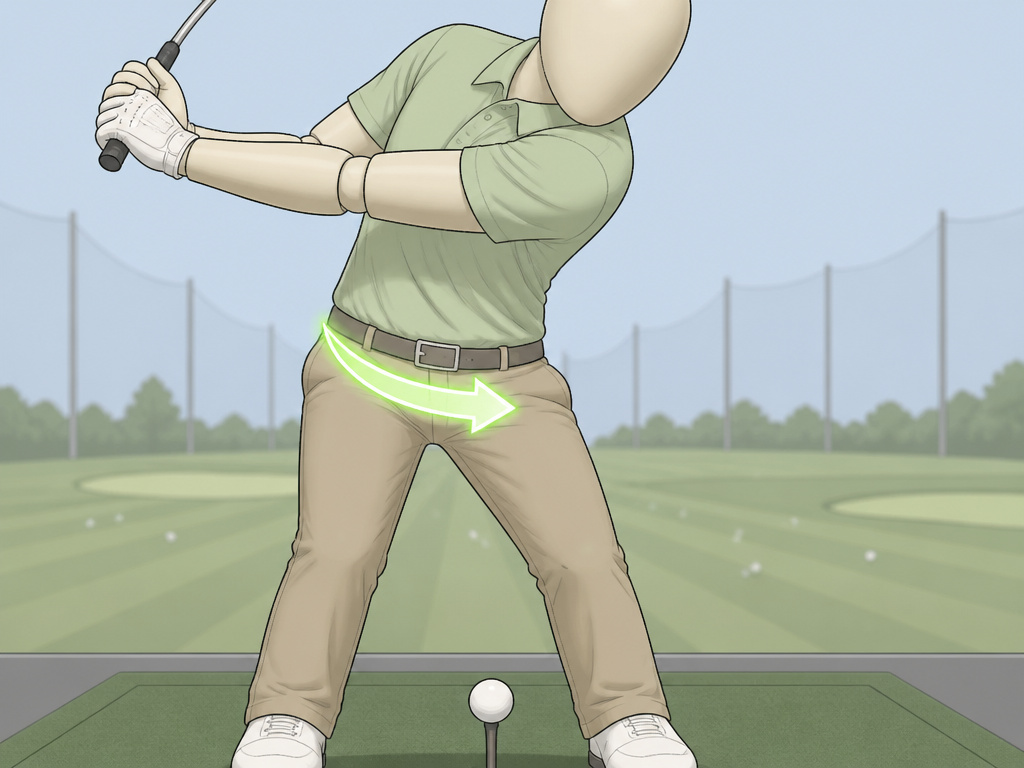
Blindly mimicking McIlroy’s wide takeaway is a recipe for disaster for the average player. You’ll almost certainly get the club stuck behind you without his elite athleticism to recover. Instead, steal the moves that manage his power: the re-centering and the functional practice feels.
The re-centering move is the single most transferable piece. On the range, practice starting your downswing before your backswing finishes. Feel your weight begin moving back to your lead foot as your arms are still completing their journey upward. This isn’t a slide; it’s a gentle recentering of your pelvis. This one change improves contact more than any backswing manipulation.
His on-course fix for a crooked path is also golden. When McIlroy finds himself hitting too big a draw, he doesn’t tinker with grip or stance. He hits cut shots. “I focused on really trying to open up my lower body through impact,” he explained after a recent win. Forcing a cut shot feel makes his lower body lead and stabilizes the face. If you fight an over-the-top slice, this same feel, trying to hit a cut, can paradoxically produce a straighter ball flight by sequencing your body correctly.
The ‘step-through’ drill for weight transfer is one I’ve recommended for years because it uses a natural walking motion anyone understands. I’ve seen players add 15 yards just by getting their weight to their front foot consistently. Take a 7-iron, hit a shot, and as you finish, let your trail foot step forward past your lead foot. Then hit another shot doing the same thing. That walking finish is the sensation of proper weight transfer. It’s about practical routines, not chasing the latest tip.
The Tools for Your Own Analysis
You don’t need a tour van to understand your own swing evolution. Modern golf swing analyzers and affordable slow motion cameras make what was once pro-only tech accessible. A basic 120fps camera on your phone can reveal if you’re “across the line” or losing your posture. A simple swing speed radar gives you the hard data on your own power quest.
The goal isn’t to achieve a perfect model swing. It’s to understand the cause and effect in your own motion, just as McIlroy’s team does. Are you chasing speed at the cost of balance? Is your weight stuck on your back foot? Good swing analysis should answer those questions with specific data, not just pretty lines on a screen. For a deeper look at the technology behind swing analysis, it’s worth understanding how these systems track the **[kinematic sequence](https://golfworldtrips.
Frequently Asked Questions
What is the biggest difference in Rory McIlroy’s swing now versus 2014?
The biggest difference is the plane of his backswing. In 2014, his swing was steeper and more “on-plane,” with the clubshaft in line with his hands at the top. Now, it’s flatter and wider, often leaving the club “across the line.” This change added about 3 MPH of clubhead speed but introduced more inconsistency, leading to his work on left-arm initiation and re-centering to manage it.
Why did Rory McIlroy change his swing?
The primary catalyst was a deliberate pursuit of more clubhead speed following Bryson DeChambeau’s 2020 U.S. Open win. Physically, added muscle mass from gym work also reduced his mobility, necessitating a wider, flatter takeaway to achieve a full shoulder turn. The change was a mix of intentional speed training and physiological adaptation.
What is “re-centering” in the golf swing?
Re-centering is the process of shifting your weight back toward the target before you start your downswing. Data from McIlroy’s swing shows he shifts 65% of his weight to his trail side mid-backswing, but by the top, he has already moved 20% back, leaving only 59% on his trail side. This creates a stable base for rotation and is a hallmark of elite ball-strikers.
Can amateurs benefit from copying Rory McIlroy’s swing?
Copy his feels, not his positions. Most amateurs lack the athleticism to recover from the “across the line” position he sometimes gets to. Instead, focus on copying his re-centering weight shift and his practice feel of hitting cut shots to sequence the body. These are functional fixes that work for any swing type.
What does “left-arm initiation” mean for McIlroy?
For McIlroy, “left-arm initiation” is a feel where he consciously uses his left arm to start the backswing, extending it wider away from his body. This feel helps him create space to shallow the club on the downswing, preventing his arms from getting stuck behind him, a common fault in his current, flatter swing.
The Bottom Line
McIlroy’s swing evolution is a masterclass in adaptation, not a blueprint for imitation. He traded the pristine, repeatable mechanics of his youth for explosive power, and now spends his practice time building guardrails to keep that power on the map. For you, the lesson isn’t in his top-of-backswing photo. It’s in his process: identify the miss (path too far right), find a functional feel (hit cuts), and use technology to measure what matters (weight shift). One rule most guides skip: if your pursuit of speed makes your bad shots unplayable, you’ve lost the trade. Distance is a tool. Consistency is the game.
