
Improve Now With These Powerful Short Game Practice Drills
This post contains affiliate links. As an Amazon Associate, we earn from qualifying purchases.
This post contains affiliate links. As an Amazon Associate, we earn from qualifying purchases.
Effective short game practice drills require a plan, a scoring system, and pressure. Since 60 percent of golf shots happen inside 100 yards, a structured 30 or 60-minute session that touches putting, chipping, pitching, and bunker play with specific scoring targets is the fastest way to lower scores. Aimless chipping is wasted time.
Most golfers get this backwards. They spend 80 percent of their practice time on full swings. The math never works, and neither do their scores. The feeling of hitting a driver is satisfying. A good chip looks boring. A solid lag putt is invisible. So practice gravitates toward what feels productive instead of what is productive.
What follows is the shift: from random reps to scored sessions. Two complete plans, the specific failure modes to avoid, and the single tracking metric that proves you’re getting better before you even step on the course.
Key Takeaways
- Score Every Drill. Aimless practice builds nothing. Use a target number, a par game, or a streak to create accountability for every shot.
- Touch All Four Areas. Every session must include putting, chipping, pitching, and bunker play. The proportions can shift, but skipping one creates a predictable weak spot.
- Practice Under Pressure. End every session with a game like Par-18 or an up-and-down challenge. Tour average is 21 on the Par-18 game; that’s your benchmark.
- Track One Number. Your practice scores lead your on-course scores by about 2–3 weeks. If your drill scores improve weekly, lower scores are already on the way.
- Vary Your Lies. Practicing only from a perfect flat lie is a trap. Find slopes, tight lies, and rough to build a toolkit, not just one shot.
The Non-Negotiable Framework for Short Game Practice
Good practice has structure. Bad practice is a bucket of balls and a vague hope. The difference isn’t time; it’s design.
You need three things most practice sessions lack: a plan for what to work on, a scoring system that creates consequence, and a way to track improvement. Without all three, you are just exercising. A 30-minute session with this framework beats 90 minutes of aimless chipping every time.
Effective short game practice is not one skill but four: putting, chipping, pitching, and bunker play. Each requires different mechanics and distance control. A complete practice plan allocates time to all four areas in every session, using scored drills with specific targets to measure progress instead of feel.
This changes your entire relationship with practice. You stop asking “did that feel good?” and start asking “did I beat my target?” Feeling is fickle. A number is truth.
Why Most Golfers Practice Short Game Wrong
The driving range is packed. The chipping green is empty. This is a dopamine problem. Hitting a driver provides instant, visible feedback. The ball goes far. A good chip shot lands softly and rolls a few feet. It’s quiet. It’s subtle. The brain craves the loud reward, so it pulls you toward the long game.
Even the golfers who do wander over to the short game area usually waste the time. They dump a bucket of balls on a flat lie and hit the same chip over and over. No target. No consequence for a bad shot. No plan. This is the golf equivalent of going to the gym and doing random exercises, you might sweat, but you won’t get stronger.
The fix is to manufacture the feedback the short game hides. You do that with games, scores, and stakes.
The 60% Rule That Changes Everything
Here is the sourced-number magnet that reframes your entire practice schedule: 60 percent of golf shots happen inside 100 yards. This isn’t an estimate; it’s the quantified reality of the sport, directly from short game coaching analysis.
If you currently spend 80 percent of your practice time on full swing, you are dedicating most of your effort to the part of the game that determines 40 percent of your score. Flip that ratio. Tour players spend 60 to 70 percent of their practice on short game and putting. Giving at least half of your practice time to the short game is the minimum effective dose.
This statistic makes your practice decisions simple. Does this drill address a shot that represents 60 percent of my rounds? If not, it’s a low-priority activity.
The 30-Minute “Lunch Break” Practice Plan
You don’t need a two-hour block. A focused half-hour, executed with intent, delivers more progress than a meandering afternoon. This plan from Scoring Zone is built for efficiency.
| Segment | Time | Drill & Target | Skip It & You’ll… |
|---|---|---|---|
| Putting | 8 min | Short Makes: 4 balls at 3,4,5,6 ft. Target: 12/16 makes. | Lose 2-3 strokes per round from inside 6 feet. |
| Chipping | 7 min | Up & Down Game: 10 balls, par 2 per ball. Target: 22 total or under. | Struggle to get up and down more than 20% of the time. |
| Pitching | 7 min | Distance Ladder: 3 balls to 20,30,40 yds. 2 pts (within 10 ft), 1 pt (within 20 ft). Target: 12/18 pts. | Have no feel for partial wedge distances, leading to long putts. |
| Putting | 5 min | Lag Putts: 10 balls from 20+ ft. 1 pt for within 3 ft. Target: 7/10 pts. | Three-putt consistently from long range. |
| Bunker | 3 min | Escape Drill: 5 bunker shots. Goal: get all 5 out onto the green. | Panic every time you see sand, adding multiple strokes. |
The entire system hinges on the targets. Don’t just go through the motions, try to beat the number. If you miss your chipping target, you know exactly what to focus on next time. This is goal-oriented training made simple.
Where this goes sideways: Practicing the same pitch distance back-to-back without a break. Your brain goes on autopilot after 5-6 reps. Rest for a minute between switching from 20 to 30 yards. The reset forces focus and better simulates the varied timing of a real round.
This plan is also perfect for at-home practice if you have a small net and a putting mat. You can adapt the chipping and pitching segments using practice golf balls designed for limited space.
The 60-Minute Scoring Zone Plan
This is the comprehensive session. It builds technique, adds pressure, and touches each skill twice. It’s the kind of structured practice used by players who don’t have time to waste.
Warm-Up: Gate Drill (5 minutes)
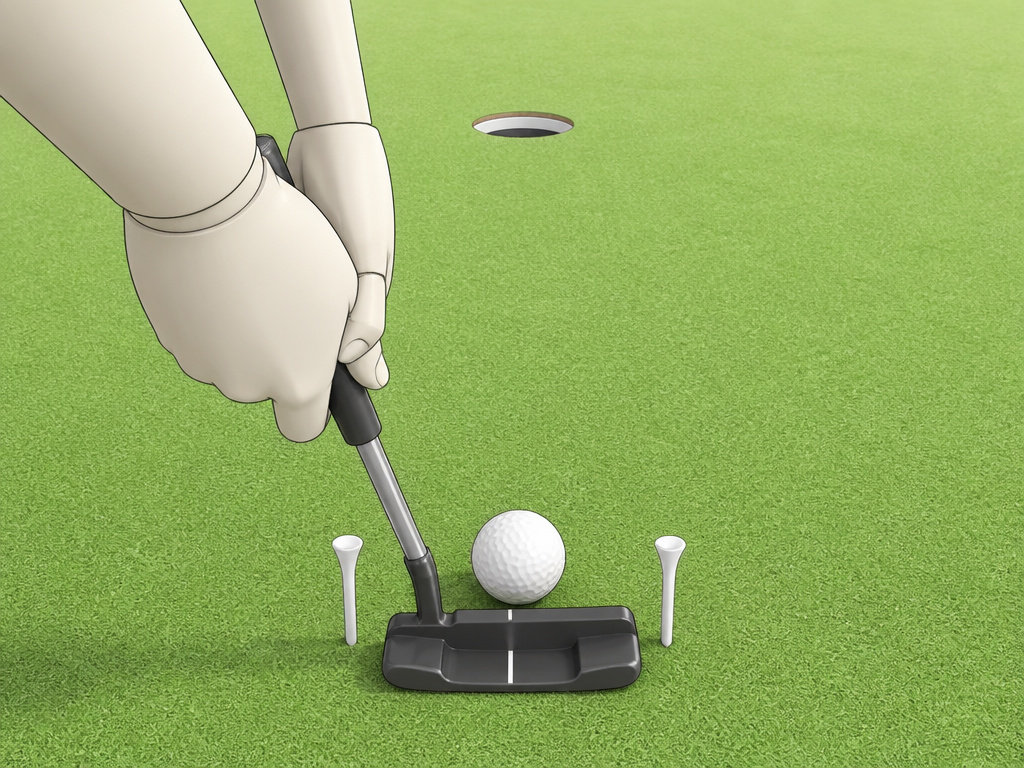
Set two tees just wider than your putter head, 3 feet from a hole. Make 10 putts in a row through the gate without touching a tee. This isn’t about making putts yet; it’s about training a square start line. Skip it, and your putting stroke will have compensations you can’t feel.
Putting: Clock Drill (10 minutes)
Place 8 balls in a circle around a hole at 4 feet. Your goal is to make all 8 in a row. If you miss, start over. Only when you complete the circle do you move back to 5 feet. This drill exposes mental fragility faster than any other. The pressure is entirely self-created.
Chipping: Three Clubs, One Target (10 minutes)
Pick a target 15 feet onto the green. Hit 5 balls with your sand wedge, 5 with your pitching wedge, and 5 with an 8-iron. Score how many finish within 6 feet of the hole. This teaches trajectory control and the bump and run shot, a low-risk option most amateurs ignore.
Pitching: Scoring Zone Ladder (10 minutes)
Set targets at 20, 30, 40, and 50 yards. Hit 5 balls to each. Score 2 points for inside 10 feet, 1 point for inside 20 feet. Target is 20 out of 40 total points. This is pure distance control work. Use a launch monitor like TrackMan if you have access; if not, use your eyes and write down your misses.
Bunker: Distance Control (8 minutes)
Place a towel 15 feet and another 30 feet from the bunker edge. Hit 5 shots trying to land each ball within a club-length of each towel. Score 1 point for each success. Target 5 out of 10. This moves you beyond mere escape to actual proximity.
Pressure: Par-18 Game (Final 15 minutes)
Play three short chips, three long chips, and three bunker shots. You must hole out each time. Par is 18. The tour average is 21. This is the test. It recreates on-course pressure by stringing together different shots with a concrete score to beat. It’s the ultimate form of random practice, which is far more effective for skill retention than hitting the same shot 50 times in a row.
Critical Drills for Specific Skills
Plans provide structure. Drills provide the technique. These are the tools that fix the most common flaws.
Fixing Fat and Thin Chips: The Towel Drill
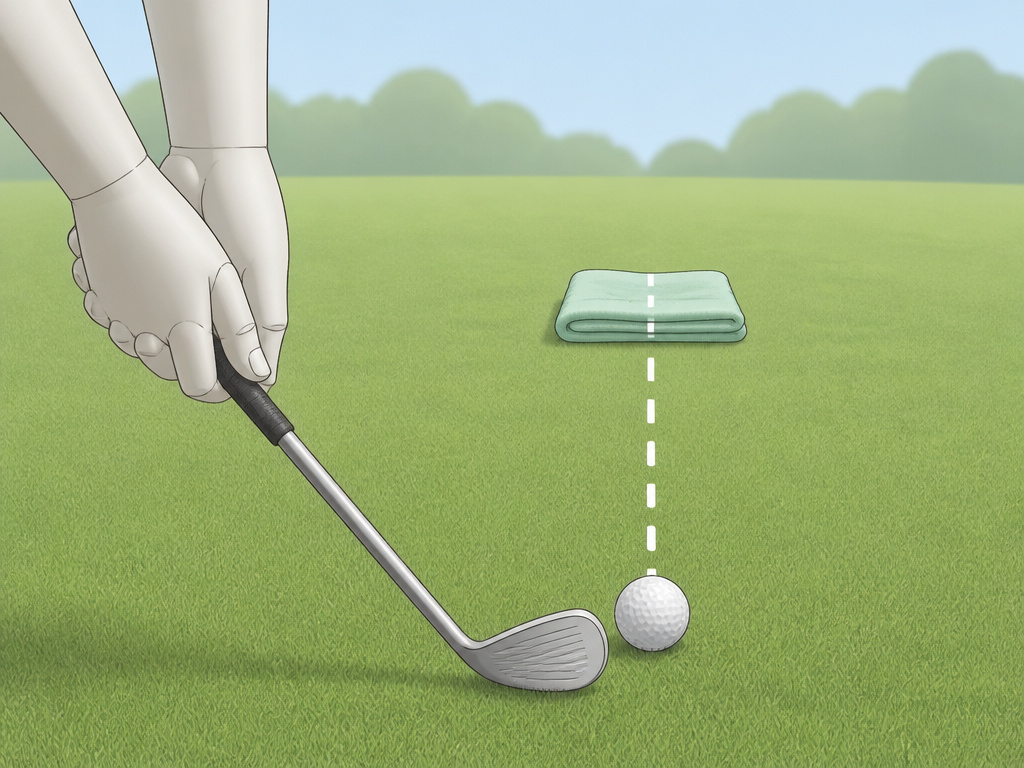
Place a towel 2 feet in front of your ball, directly on your target line. Your goal is to land every chip shot on the towel. This visually enforces the concept of a landing spot. If you hit the towel, you’ve struck the ball first. If you hit behind it, you’ll hear the dull thud of a fat shot. It’s immediate, unambiguous feedback.
Building Wedge Distance Control: The Ladder
You need three stock yardages. Not a vague feel, but known distances you can rely on. Hit 10 shots trying to carry the ball 40 yards. Note your average. Then do the same for 60 and 80 yards. Don’t just swing, use the same structured repetition for each. The goal is a 10-yard dispersion circle, not a single perfect shot. This is the core of a reliable short game strategy.
Practicing from Sloping Lies
PGA pro John Howells stresses that flat practice is a lie. On a downslope, if you keep your spine angle vertical, the club bottoms out too early. You must adjust your body so it is perpendicular to the slope. This utilizes the bounce and prevents the leading edge from digging.
Common mistake: Using the same technique on a slope as on flat ground. On a downslope, the ball will come out lower and hotter; you need less club. On an upslope, the ball flies higher and shorter; you need more club. Practice from these lies to build options, not just one shot.
How to Track Progress and Stay Motivated
You won’t feel better every day. Improvement is gradual. You need objective proof that the work is translating.
Track three numbers: 1. Practice Drill Scores: Did your Clock Drill need 5 restarts last week and only 2 this week? That’s progress. Did your Par-18 score drop from 28 to 24? That’s proof. 2. Up & Down Percentage: On the course, track how often you get up and down from around the green. This is the ultimate measure of strokes gained around the green. 3. Three-Putt Avoidance: Simply count how many three-putts you have per round. The goal is zero.
Check these metrics weekly, not daily. Daily results are noise. Weekly and monthly trends are signal. This process of focused feedback is what turns practice into permanent improvement.
If you’re just starting, build this habit with a practice routine for beginners that focuses on one skill per day. The key is starting, not perfecting.
Frequently Asked Questions
What is the best short game practice routine?
The best routine is a scored one that includes putting, chipping, pitching, and bunker play in every session. The 60-minute plan outlined above, culminating in a pressure game like Par-18, is a proven professional template adapted for amateurs. Consistency with a plan beats random “practice” every time.
How long should I practice my short game?
Aim for at least 30 minutes, 2-3 times per week. Quality and structure matter far more than duration. Practicing beyond 90 minutes often leads to fatigue and sloppy, counterproductive habits. A focused half-hour is a powerful block.
Can I practice short game at home?
Absolutely. Use a putting mat for gate and clock drills. Use a chip net or even a blanket as a target for chipping games. Practice golf balls like AlmostGolf or Callaway Foam Balls let you work on technique in a backyard. The principles of deliberate practice, focus, feedback, repetition, apply anywhere.
What is the most important short game skill?
Distance control. Knowing how far the ball will carry in the air with your wedges is the foundation of chipping, pitching, and bunker play. Without it, you are guessing. This is why the ladder drill is non-negotiable.
How do I make practice more like the course?
Introduce consequences. Play every drill with a score to beat. Use games like Par-18 or an up-and-down challenge where you have to hole putts. Change your lie and club after every shot to prevent block practice habits and engrain random practice, which better mimics the varied demands of a real round.
Before You Go
Short game practice isn’t about grinding until your hands blister. It’s about smart, structured repetitions with a scorecard. Start with the 30-minute plan. Beat the targets. Then graduate to the 60-minute session and stare down the Par-18 game.
Your scores won’t drop from a single session. They’ll drop because you tracked your drill scores this week and saw they were better than last week’s. That measurable gain is what builds the confidence to get up and down when it matters. Stop practicing shots. Start practicing scoring.
