
Golf Grass Types & Their Characteristics for Your Course
This post contains affiliate links. As an Amazon Associate, we earn from qualifying purchases.
This post contains affiliate links. As an Amazon Associate, we earn from qualifying purchases.
Golf course grasses are chosen for specific playing characteristics, ball roll, lie quality, and recovery, dictated by climate, maintenance budget, and mowing height. The primary types are Bermudagrass (warm-season, grainy, drought-tolerant), Creeping Bentgrass (cool-season, fine-bladed, for low-cut greens), Zoysiagrass (dense, wear-tolerant, slow-growing), Fine Fescues (low-input, shade-tolerant), and Poa Annua (invasive, variable, common on older courses). Your region’s climate and a course’s required mowing height, especially the 1-inch-or-less rule for fairways, determine which grass survives and performs.
That 1-inch rule is the agronomic gatekeeper. It’s not about preference; it’s a physical limit. A grass that can’t tolerate a 3/8-inch green cut is one thing. A grass that falls apart when mowed at one inch for fairways is a non-starter for most architects and superintendents. This single spec eliminates entire species from contention in certain roles and forces the selection of specific cultivars that have been bred or proven to handle the stress.
What follows is a breakdown of the major grasses, not as a botanical list, but as a set of playing surfaces you interact with. We will examine the warm vs. Cool season divide, the key species and their feel underfoot, the data behind their selection, and how to adjust your game when you step onto a different turf.
Key Takeaways
- The National Turfgrass Evaluation Program (NTEP) provides the 1–9 quality ratings superintendents use to compare cultivars; a rating below 6 on a relevant stress test usually means a grass won’t be selected for that region.
- Bermudagrass grain grows toward the setting sun (west), significantly affecting putt break, while bentgrass grain follows water drainage, making contour the primary read.
- Zoysiagrass ‘Diamond’ is susceptible to winterkill in northern climates and produces prolific seedheads that reduce ball roll consistency, two trade-offs for its excellent wear tolerance.
- The Transition Zone (roughly central U.S.) has winter temperatures too cold for warm-season grasses and summer temperatures too hot for cool-season grasses, making grass selection the most difficult and costly.
- Fine fescues are being evaluated for low-input golf courses, but adoption is slow due to weaker traffic tolerance and disease pressure under intensive play.
The Warm vs. Cool Season Divide: It’s About Temperature, Not Geography
The first cut isn’t by region on a map, but by the grass’s internal engine. Warm-season grasses (Bermuda, Zoysia, Seashore Paspalum) use a C4 photosynthetic pathway, optimized for temperatures between 80–95°F. They green up in late spring, peak in summer, and go dormant (turn brown) with the first fall frost. Cool-season grasses (Bentgrass, Kentucky Bluegrass, Fine Fescue, Perennial Ryegrass) use a C3 pathway, thriving in 60–75°F ranges. They peak in spring and fall, and often struggle, requiring more water and disease control, in summer heat.
This is why you find Bentgrass greens in Minnesota and Bermuda greens in Florida. But the line isn’t neat. The Transition Zone runs across the middle of the U.S., where neither type is perfectly suited. Winters are too cold for reliable Bermuda survival, and summers are too brutal for bentgrass without a massive water and fungicide budget. This zone is where grass selection becomes a high-stakes compromise, often involving costly overseeding or newer, hardier cultivars like certain zoysiagrasses or cold-tolerant bermudas.
Where this goes sideways: Planting a cool-season grass in a warm-season climate without a massive irrigation and cooling budget. The grass will demand water daily in summer, succumb to disease, and thin out, leaving a weedy, inconsistent surface within a single season.
The 1-Inch Fairway Rule and What It Reveals
Forget the putting green for a moment. The fairway is where grass selection gets brutally practical. As outlined in the University of Kentucky’s guide, the required fairway height of one inch or less is an essential constraint for modern playability and design. This single specification immediately disqualifies grasses that can’t tolerate such a low cut.
| Grass Species | Tolerates ≤1″ Mowing? | Primary Fairway Use Region | Key Limitation at Low Height |
|---|---|---|---|
| Creeping Bentgrass | Excellent | Cool-season zones, North | High water & disease pressure; poor traffic tolerance. |
| Bermudagrass | Good (down to ~0.5″) | Warm-season zones, South | Winter dormancy (brown); winter-kill in north. |
| Perennial Ryegrass | Good | Transitional, Overseeding | Bunch-type growth; doesn’t fill divots; thins in summer heat. |
| Kentucky Bluegrass | Poor | Limited, Northern roughs | Very weak at 1″; severe disease & grub problems. |
| Zoysiagrass | Fair (best ≥0.75″) | Transition & Warm zones | Extremely slow establishment; slow divot recovery. |
This table, informed by the University of Kentucky turfgrass report, shows why bentgrass and bermuda dominate. They can take the cut. Kentucky bluegrass, a classic lawn grass, is almost never used on fairways because it simply can’t survive at that height under traffic. This rule forces superintendents to pick grasses based on stress tolerance, not just aesthetics.
Breaking Down the Major Golf Grasses
Bermudagrass: The Grain Master
You feel Bermuda before you see it. The blade is stiff, and when you walk on it, there’s a distinct, almost crisp sound underfoot. Its most famous characteristic is grain, the direction the blades lie. Grain grows toward the setting sun. On a Bermuda green, a putt moving west (down-grain) will be significantly faster and break less than a putt moving east (into the grain).
- Advantages: Exceptional drought and heat tolerance. Recovers from damage quickly via stolons and rhizomes. Can be mowed very low for greens (hybrids like TifEagle).
- Disadvantages: Goes dormant and brown in winter. Can be invasive. Poor shade tolerance. Provides less spin and a firmer landing surface on approaches compared to bentgrass.
- For Your Game: On chips and putts, grain is a bigger factor than slope. A ball into the grain will check up quickly; down-grain it will release. When selecting golf wedges for Bermuda, consider sharper grooves to combat the grass’s slickness.
Creeping Bentgrass: The Putting Green Standard
Bentgrass feels soft and velvety. It’s the grass you associate with the smooth, fast, consistent roll of northern and championship greens. Its fine blade allows it to be mowed under 0.125 inches. Grain exists but is subtle and follows drainage, not the sun.
A properly maintained bentgrass green has a uniform, emerald color and a surface so tight your ball seems to hover on top of it. The putt rolls with a pure, quiet hum.
- Advantages: Unmatched tolerance for ultra-low mowing. Creates a true, consistent putting surface. Good cold tolerance.
- Disadvantages: High water requirement. Susceptible to a long list of diseases (dollar spot, brown patch). Poor heat and drought tolerance. Requires intensive management.
- For Your Game: Expect more spin and a softer landing on approach shots. The lack of heavy grain means your primary read is slope. The consistency rewards a pure stroke with 3-piece golf balls designed for control.
Zoysiagrass: The Dense, Patient Carpet
Zoysia is dense, slow-growing, and feels like a firm carpet. It’s a warm-season grass with better cold tolerance than Bermuda, making it a prime candidate for the Transition Zone. Cultivars like ‘Diamond’ are fine-bladed enough for tees and fairways. However, a peer-reviewed zoysiagrass study notes its susceptibility to winterkill and prolific seedhead production, which can affect ball roll.
- Advantages: Excellent wear and traffic tolerance. Good drought resistance once established. Lower fertilizer needs.
- Disadvantages: Extremely slow establishment from sod or sprigs. Slow divot recovery. Can build up thatch. Turns brown after the first frost.
- For Your Game: Lies are typically tight and clean. The surface is firm, so you won’t get much flier lie effect. Its toughness can be easier on forgiving irons for amateurs.
Fine Fescues & The Low-Input Future
Fine fescues (Chewings, hard, red) are cool-season grasses gaining attention for low-input roughs and native areas. They require less water, fertilizer, and mowing. The USGA golf course grass guide discusses their potential as the industry looks to reduce resource use. The barrier? Poor tolerance for heavy traffic and disease pressure under frequent play.
Poa Annua (Annual Bluegrass): The Uninvited Guest
Poa Annua is the weed that became a staple. It’s a cool-season grass that invades bentgrass greens, especially on the West Coast (e.g., Pebble Beach). It’s prolific, producing seedheads that create a bumpy surface in the afternoon.
- Why it’s used: It tolerates low mowing and heavy traffic. On courses where it has become the dominant grass, eradication is nearly impossible.
- The problem: Inconsistent surface, especially late in the day. It’s a variable that professionals often lament.
- For Your Game: Putts can bounce more, especially later in the day. Trust your line less and focus on a solid, repeating stroke.
How Superintendents Choose: The NTEP Scorecard
Superintendents don’t guess. They rely on data from the National Turfgrass Evaluation Program. The NTEP runs trials across the continent, rating grass cultivars on a 1–9 scale (9=best) for quality, density, disease resistance, drought tolerance, and traffic stress.
The part nobody mentions: A cultivar might have a stellar quality rating of 8 in the Pacific Northwest but score a 4 on winter survival in Quebec. The regional data is everything. A great grass in one place is a failure in another.
For example, the NTEP turfgrass trial results for bentgrass show how different varieties perform under traffic stress or dollar spot pressure. A superintendent in the humid Midwest will filter for cultivars with high dollar spot resistance scores. This objective data is why you see the same few grass varieties on top courses in similar climates.
What This Means for Your Game and Gear
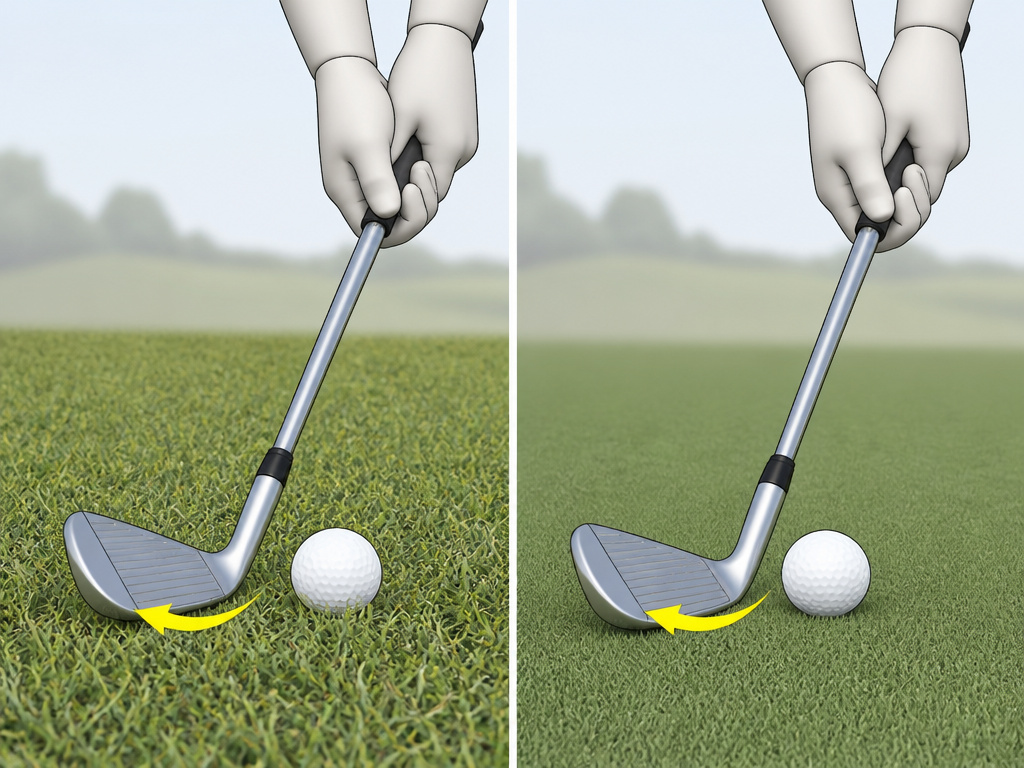 The grass directly changes how you should play and what equipment can help. On firm, grainy Bermuda, you need a steeper attack angle for chips and a wedge with bite. The firmer surface also means drivers with more forgiveness, like anti-slice drivers, can help maintain distance on less-than-perfect strikes where the ball doesn’t sit up.
Early in my career, I tried to overhaul a student’s entire swing in one lesson. We changed grip, posture, and takeaway. It was too much. They were overwhelmed, didn’t practice, and didn’t come back. I learned that one small, sustainable change beats a complete system overhaul every time. Grass is similar. Don’t try to relearn chipping for every grass type. Learn one adaptable technique, like using the bounce of your wedge, and adjust ball position and speed for the turf’s firmness and grain.
Your ball choice matters, too. A softer 70 compression ball can help generate spin on the firmer Bermuda surfaces, while a more durable 2-piece golf ball might be a smarter, cheaper choice for the abrasive zoysia rough.
Frequently Asked Questions
What is the most common grass on golf courses?
It depends entirely on the climate. Bermudagrass is most common in the southern warm-season zone. Creeping Bentgrass is the standard for putting greens in the northern cool-season zone. Poa Annua is incredibly common as an invasive species on greens in coastal and temperate climates.
What type of grass is used on PGA Tour greens?
The PGA Tour sees a mix. Southern events (e.g., The Masters, most Florida swings) use hybrid Bermudagrass greens (like TifEagle). Northern and classic events (e.g., U.S. Open at Pinehurst, The Open at links courses) use Creeping Bentgrass or Fine Fescues. West Coast events often feature Poa Annua greens.
Can you have a golf course with just one type of grass?
Almost never. A typical course uses a warm-season grass (e.g., Bermuda) for fairways, tees, and rough, but may overseed with a cool-season grass (like perennial ryegrass) in winter to maintain green color. Putting greens are almost always a different, finer grass than the fairways, such as bentgrass on a Bermuda course.
Why do some golf courses have brown grass in the winter?
This is the dormancy of warm-season grasses like Bermuda and Zoysia. When soil temperatures drop below about 55°F, these grasses go into survival mode, losing chlorophyll and turning brown. They are not dead. The courses are often overseeded with ryegrass to provide a green playing surface during the dormant period.
What is the best grass for a home lawn that looks like a golf course?
For a golf course look, you need a grass that tolerates low mowing. In the south, a hybrid Bermudagrass (sodded) is the choice. In the north, a Kentucky bluegrass blend or tall fescue can provide density and color. However, be prepared for the high water, fertilizer, and pest control requirements that come with this look, as detailed in resources like the Virginia Cooperative Extension guide. A true “golf course” lawn is a significant commitment.
The Bottom Line
Grass selection is a complex equation of climate, budget, playability, and maintenance. The next time you play, don’t just notice that the grass is different. Understand why. Is the fairway cut at one inch, revealing a stress-tolerant bentgrass? Is the grain on the green pulling your putt west, telling you it’s Bermuda? That knowledge is practical. It tells you to hit a more aggressive chip into a grainy lie, or to select a golf ball that performs in the conditions you actually play.
The industry is shifting toward grasses that use less water and chemicals. Fine fescues and newer zoysia hybrids point to that future. But the core principle remains: the right grass in the right place makes the game both sustainable and great to play. Your job is to learn its language.
