
The Solheim Cup: Defining the US vs Europe Golf Rivalry
This post contains affiliate links. As an Amazon Associate, we earn from qualifying purchases.
This post contains affiliate links. As an Amazon Associate, we earn from qualifying purchases.
The Solheim Cup is the premier biennial team golf competition for women professionals, contested between 12-player teams from the United States and Europe. It is the women’s equivalent of the Ryder Cup, using a match play format over three days where the first team to reach 14.5 points wins the trophy. If the score ties 14-14, the defending champion retains the Cup, a rule that decided the 2023 event.
That 14-14 tie rule is where the real drama lives. It’s not just about winning more points; it’s about holding the trophy when the clock runs out. The format creates a specific kind of pressure you don’t see in stroke play format events, where every putt carries the weight of a continent.
What follows is a breakdown of how this unique event works, its storied history punctuated by geopolitical shifts, and what makes it different from other team competitions like the Presidents Cup. By the end, you’ll understand why a single birdie putt, like Lilia Vu’s in 2024, can define a career.
Key Takeaways
- The Solheim Cup is a match play team event between the USA and Europe, with the first team to 14.5 points winning.
- If the match ends in a 14-14 tie, the team that won the previous Cup retains it—this decided the 2023 result.
- The competition’s schedule has shifted twice due to world events: to odd years after 9/11 and back to even years after the COVID-19 pandemic.
- Team selection combines automatic qualifiers from points lists and world rankings with captain’s picks, adding a strategic layer.
- The 2026 Solheim Cup will be held at Bernardus Golf in the Netherlands, with Angela Stanford (USA) and Anna Nordqvist (Europe) as captains.
The Solheim Cup Format Explained
The structure is designed for maximum drama and strategic depth. Since 2002, the event features 28 total matches across three days: eight foursomes and eight four-ball matches on Friday and Saturday, followed by 12 singles matches on Sunday.
One point is awarded for each match won. A halved match gives each team half a point. The first side to reach 14.5 points claims the Solheim Cup. If the score is locked at 14-14 after all matches, the defending champion keeps the trophy.
This “retain on a tie” clause is critical. It means a team can successfully defend the Cup without winning outright, which is exactly what Europe did in 2023 at Finca Cortesin. The home captain holds a key advantage on the first two days, deciding whether the morning session features foursomes or fourball.
| Match Type | Format | Scoring | Session Count |
|---|---|---|---|
| Foursomes | Alternate shot. Two-player teams share one ball. | Team with the lower score on each hole wins that hole. | 4 matches per session (8 total) |
| Four-Ball | Better ball. Each player plays their own ball; the best score counts. | Team with the best individual score on each hole wins that hole. | 4 matches per session (8 total) |
| Singles | Head-to-head match play. | One player vs. One player over 18 holes. | 12 matches (Sunday only) |
The captain’s role is paramount. They must pair players whose games and temperaments complement each other, manage rest, and decide who sits during the team sessions. Not every player competes in every match before Sunday, making those captain’s picks for the team roster especially consequential.
Origins and the Man Behind the Name
The event is named for Karsten Solheim, the Norwegian-American founder of PING golf equipment. He was the driving force behind creating a Ryder Cup-style competition for the top women professionals, which at the time did not exist. The inaugural matches were held in 1990 at Lake Nona Golf & Country Club in Florida.
The USA, captained by Kathy Whitworth, won decisively 11.5 to 4.5. The trophy itself is a piece of sports artistry: a 19-inch tall, 20-pound cut-glass Irish Waterford Crystal design by Billy Briggs, mounted on an 8-inch mahogany base. It’s a physical symbol of the prestige both teams fight for.
The Solheim Cup filled a major gap in the women’s game, providing a pinnacle team event that rivaled the men’s equivalent in passion and visibility. It quickly became a cornerstone of the women’s professional golf calendar, elevating the profiles of the LPGA Tour and Ladies European Tour (LET).
A Timeline of Key Moments and Schedule Shifts
The Cup’s history is uniquely intertwined with global events, forcing two major scheduling changes that every fan should understand.
The first shift came after the September 11 attacks. The 2001 Ryder Cup was postponed to 2002, creating a direct clash with the Solheim Cup, then held in even-numbered years. To avoid the overlap, the Solheim Cup moved to odd-numbered years starting in 2003.
The second shift was triggered by the COVID-19 pandemic. The 2020 Ryder Cup was pushed to 2021, again putting the two events in the same year. To re-establish an alternating schedule, the Solheim Cup was played in back-to-back years (2023 and 2024) before settling back into even-numbered years from 2024 onward.
This back-and-forth explains why you might see references to events in consecutive years. It’s a testament to the event’s resilience. The most recent editions have been classics: the historic 14-14 tie in Spain in 2023, followed by the U.S. Victory in 2024 clinched by Lilia Vu’s birdie on the 18th hole.
Where this goes sideways: Assuming the team with the most points always wins. The 2023 tie proved the defending champion can retain the Cup without a victory, a nuance that changes final-day strategy completely.
Team Selection: How Players Make the Squad
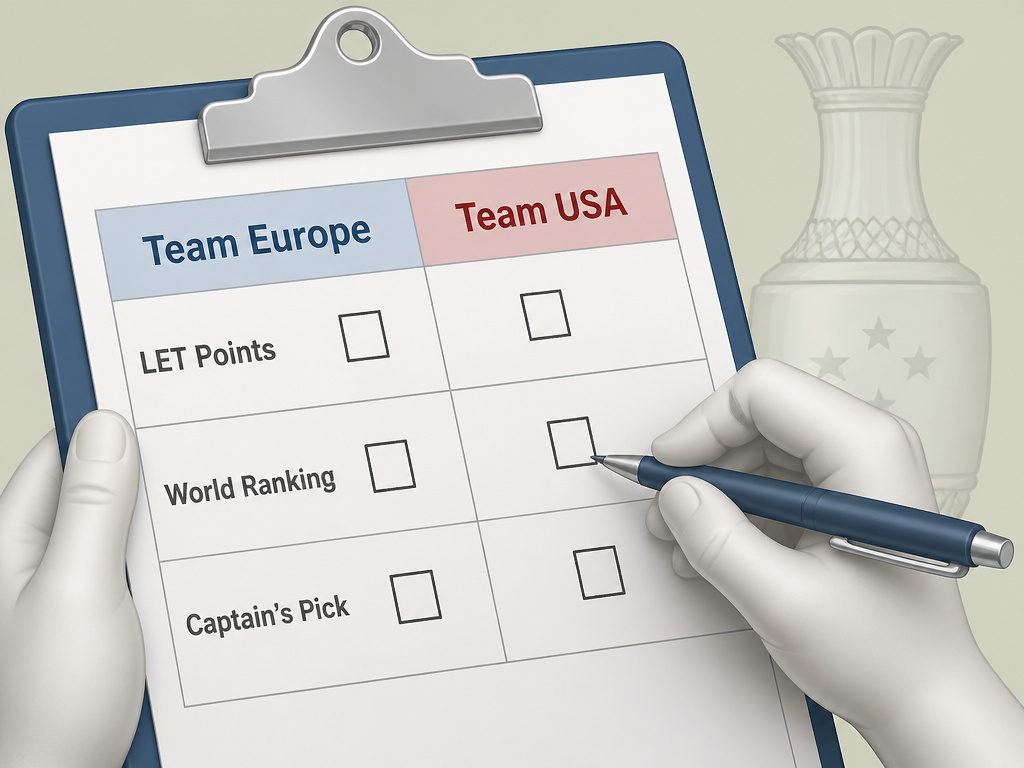 Making a Solheim Cup team is a career highlight. The selection process is a hybrid of season-long performance and captain’s judgment, differing slightly between the two sides.
Team Europe selects: 1. The top two players from the LET Solheim Cup points list. 2. The next six eligible players from the Rolex Women’s World Golf Ranking. 3. Four captain’s picks.
Team USA selects: 1. The top seven players from the U.S. Solheim Cup points list. 2. The next two highest-ranked eligible players from the Rolex World Ranking. 3. Three captain’s picks.
This system rewards both consistent play on tour (via points lists) and peak global performance (via the Official World Golf Ranking). The captain’s picks allow for strategic rounding-out of the team—adding a hot player, a veteran presence, or a specialist in certain formats. It’s where gut feeling meets hard data.
The 2026 and 2028 Venues: What’s Next
 The Solheim Cup never visits the same venue twice, ensuring a fresh challenge each time. The next chapter is set for Europe.
The 2026 Solheim Cup will be held at Bernardus Golf in Cromvoirt, Netherlands, from September 7-13. This marks the first time the Netherlands will host the event. The captains are set: Angela Stanford for the United States and Anna Nordqvist for Europe. Nordqvist will make history as the first playing captain in the modern era.
Looking further ahead, the 2028 Solheim Cup is scheduled for Valhalla Golf Club in Louisville, Kentucky. Valhalla will join an elite shortlist of courses to have hosted both the Solheim Cup and the Ryder Cup, a testament to its design and capacity for drama.
These future venues continue the event’s tradition of showcasing premier courses, from the parkland test of Bernardus to the major championship pedigree of Valhalla.
How It Stacks Up Against Other Team Events
The Solheim Cup occupies a specific niche. It’s crucial to distinguish it from other team competitions in golf.
Unlike the Presidents Cup (USA vs. Internationals excluding Europe) or the amateur Walker Cup, the Solheim Cup is exclusively for top women professionals from two specific continents. There is no equivalent “Internationals” event for women, though the LPGA’s biennial International Crown involves teams from multiple countries.
The format also sets it apart from Olympic golf, which is a 72-hole stroke play individual competition, or standard LPGA Tour events. The Solheim Cup is pure, pressurized match play, where the team dynamic and partisan crowds create an atmosphere unlike any other in the women’s game.
The intensity is closer to a Ryder Cup than a pro-am format outing. Every shot is for more than yourself.
Frequently Asked Questions
What happens if the Solheim Cup ends in a tie?
If the overall score is 14-14 after all 28 matches, the team that won the previous Solheim Cup retains the trophy. This is not a shared victory; one team keeps possession. This rule decided the 2023 event, where Europe retained the Cup after a 14-14 draw.
How often is the Solheim Cup played?
The Solheim Cup is a biennial event, meaning it is held every two years. Its schedule has shifted between even and odd years due to real-world conflicts with the Ryder Cup, but it is now firmly on even years (2024, 2026, 2028).
Who is leading the all-time Solheim Cup series?
The United States holds the overall advantage. According to the official Solheim Cup overview and history, the U.S. Leads the series 11 wins to Europe’s 8, with one tie (2023). The U.S. Regained the Cup with a 15.5–12.5 win in 2024.
Can a player from Asia or elsewhere play in the Solheim Cup?
No. Eligibility is strictly for players representing the United States or Europe. Top players from Asia, Australia, or South America are not eligible. The premier team event for a global field of women professionals is the LPGA’s International Crown.
Do all 12 players compete in every session?
No. During the foursomes and four-ball sessions on Friday and Saturday, only eight players from each team compete in each session. Four players “sit out” each session. All 12 players must compete in the Sunday singles matches.
Before You Go
The Solheim Cup’s magic isn’t just in the trophy or the points. It’s in the specific pressure of playing for your teammates and your continent, a pressure that has produced moments like the 2023 tie and Vu’s clinching putt in 2024. If you’re new to the event, watch the Sunday singles matches first—that’s where individual brilliance shines under the team spotlight.
Remember the threshold: 14.5 points. Everything in the format builds toward that number. And if the score ever lands on 14-14, know that the defending champion walks away with the Cup. That small rule changes every strategic decision on the final day.
