
The Secrets Behind What Makes Scottie Scheffler So Consistent.
This post contains affiliate links. As an Amazon Associate, we earn from qualifying purchases.
This post contains affiliate links. As an Amazon Associate, we earn from qualifying purchases.
Scottie Scheffler’s consistency stems from three integrated layers: a shot-by-shot mental process that ignores external results, elite and adaptable ball-striking mechanics with low clubface-to-path variability, and a relentless work ethic focused on solving the immediate problem in front of him. His 2024-2025 run isn’t about repeating a perfect swing, but about having more ways to produce the same great shot.
That last point is the key. Most analysis stops at “great swing” or “great mindset.” Scheffler’s coach, Randy Smith, uses a better analogy: he’s a handyman with a full toolbox. The job changes every hole, but he always has the right tool and knows how to use it. This is a built system, not innate talent.
What follows breaks down that system. We’ll look at the biomechanics that give him a margin for error, the mental shift that freed his putting, and the specific practice philosophy that turns preparation into performance. This is how the best player in the world stays there.
Key Takeaways
- Scheffler’s mental game operates on a shot-by-shot basis, treating each swing as its own isolated event disconnected from past results or future outcomes.
- Biomechanically, he uses more “degrees of freedom” in his swing, allowing his body to compensate mid-motion to deliver the clubface consistently, which is measured as remarkably low clubface-to-path variability.
- His celebrated iron play includes a unique “off-speed pitch” or “Scheffler Gapper” shot that maintains high launch and spin at lower speeds, a tool few possess.
- His putting transformation from 162nd to 22nd in Strokes Gained was fueled by working with coach Phil Kenyon to trust his instincts and adopt a claw grip on short putts, not by overhauling his stroke.
- His practice at Royal Oaks is almost never solitary; it’s crowded with kids and friends, reinforcing a comfortable, competitive environment that mirrors tournament pressure.
The “Shot-by-Shot” Mental Engine
Forget about beating the field. Scottie Scheffler isn’t even playing a 72-hole tournament. In his own words, his expectation is “almost more shot by shot.This is an operational directive, not a cliche about staying present.
“I’ve never been a guy that sets long-term goals. Like in terms of a season, I have what I would think of as dreams and aspirations, but my goal is to be as prepared as possible when I step up on the first tee, and then I want to have a good attitude when I go out and play over each shot. And that’s how I view success.”
This philosophy explains his famous reactions. He can lash out in frustration after a poor shot and be completely focused on the next one within three seconds. The previous shot is a closed loop. The obsession instantly transfers. A golf strategy analysis from The Athletic frames this as his core superpower: he plays only against the best version of himself on each swing.
This mindset directly enables consistency. When your success metric is “did I hit that shot as well as I could?” instead of “did I make birdie?”, you remove the noise of scoreboards and leaderboards. Bad breaks don’t spiral. Good rounds don’t lead to complacency. Every shot is a fresh puzzle, which is exactly how his coach describes his course management.
How does this translate for an amateur? You don’t need Scheffler’s skill to use his process. Your next round, try this: after every shot, good or bad, consciously mark it as complete. Take a breath, look ahead, and your only thought is executing your pre-shot routine for the next one. It cuts down on the double bogeys that follow a single mistake.
The 3 Mechanical Pillars of Scheffler’s Consistency
The mental game sets the stage, but the swing delivers. Scheffler’s ball-striking dominance, leading the tour in Strokes Gained: Approach, is built on three specific, measurable pillars.
1. Low Clubface-to-Path Variability (The Biomechanical Edge)
Leading biomechanist Sasho MacKenzie pinpointed this. Scheffler has an “amazingly low” variability in where the clubface points relative to the club path through impact. In simple terms, his face angle is incredibly consistent swing to swing. But here’s the non-commodity insight: he doesn’t achieve this by repeating the same robotic motion.
“Scheffler uses more degrees of freedom to accomplish his task. If one joint screws up, the other joints can step up and create the same overall outcome.”
This is the handyman toolbox in action. His swing has built-in redundancy. If his hips fire a millisecond early, his arms can adjust. If his wrist hinge is off, his torso rotation can compensate. He has multiple ways to solve the impact equation, which is why his bad shots are still so good, like missing a fairway by only 18 feet on average.
2. The “Scheffler Gapper” Shot (The Artistic Tool)
This is a specific weapon that breaks the standard procedure. Most players, when they need to take speed off a wedge to hit a number, see their shot height and spin drop. Scheffler can hit a smooth, knockdown shot that paradoxically launches higher and spins more.
PGA Tour pro Ryan Gerard, after playing with him, became “obsessed” with learning this shot. He described it as bridging the gap between full-swing yardages, making Scheffler “especially lethal on firm greens” like those at Augusta National or Bay Hill. It’s a feel-based shot that requires exceptional low-point and face control. You won’t find it in a standard golf swing mechanics manual.
3. Controlled Power (The Strategic Ceiling)
Here’s a surprising stat: Scheffler’s “Power Percentage”, how close to his max speed he swings, is around 93%, one of the lowest on tour. He is not swinging out of his shoes. He’s prioritizing a repeatable, controlled move that maximizes center-face contact over pure distance. This relates directly to the first pillar. A slower, more controlled motion has more time for those in-swing compensations, boosting consistency.
| Mechanical Pillar | What It Means | The Amateur Takeaway |
|---|---|---|
| Degrees of Freedom | Multiple body segments can adjust to correct impact. | Focus on a fluid, athletic motion, not locking into rigid positions. |
| The “Gapper” Shot | Can alter trajectory and spin independently of swing speed. | Practice hitting your 56-degree wedge three different heights to the same yardage. |
| Controlled Power | Swings within himself for better face control. | On the course, take one more club and swing at 80%. Your dispersion will tighten. |
From 162nd to 22nd: The Putting Transformation
In 2023, Scheffler was 162nd in Strokes Gained: Putting. It was the only hole in his game. By the 2025 Masters, he was ranked 22nd. This wasn’t a gradual improvement; it was a targeted overhaul with a clear timeline and a key collaborator.
Late 2024 / Early 2025: He began working with renowned putting coach Phil Kenyon. The fix wasn’t technical; it was psychological. Kenyon’s job was to get Scheffler “comfortable to release the putter better and trust his instincts.” Scheffler had lost faith in his green-reading. The work rebuilt that trust and simplified his stroke.
The Claw Grip: As part of this, Scheffler adopted a claw grip for shorter putts. This grip minimizes wrist action in the stroke, promoting a pure shoulder-rocking motion that starts the ball on line more consistently. It’s a tangible change anyone can see.
Where this goes sideways: Trying to copy the claw grip without addressing setup first. Kenyon’s work started with posture and alignment. If your alignment is off, no grip will save you.
The transformation underscores a broader principle: consistency across all facets of the game requires acknowledging and attacking your weaknesses. Scheffler, the world’s best ball-striker, didn’t just put in more putting time. He hired a specialist and changed a fundamental part of his technique. That’s the dedication you see in an AP News report on Scheffler’s mindset, a love for the work of improvement itself.
The Practice Environment: Noise, Kids, and Competition
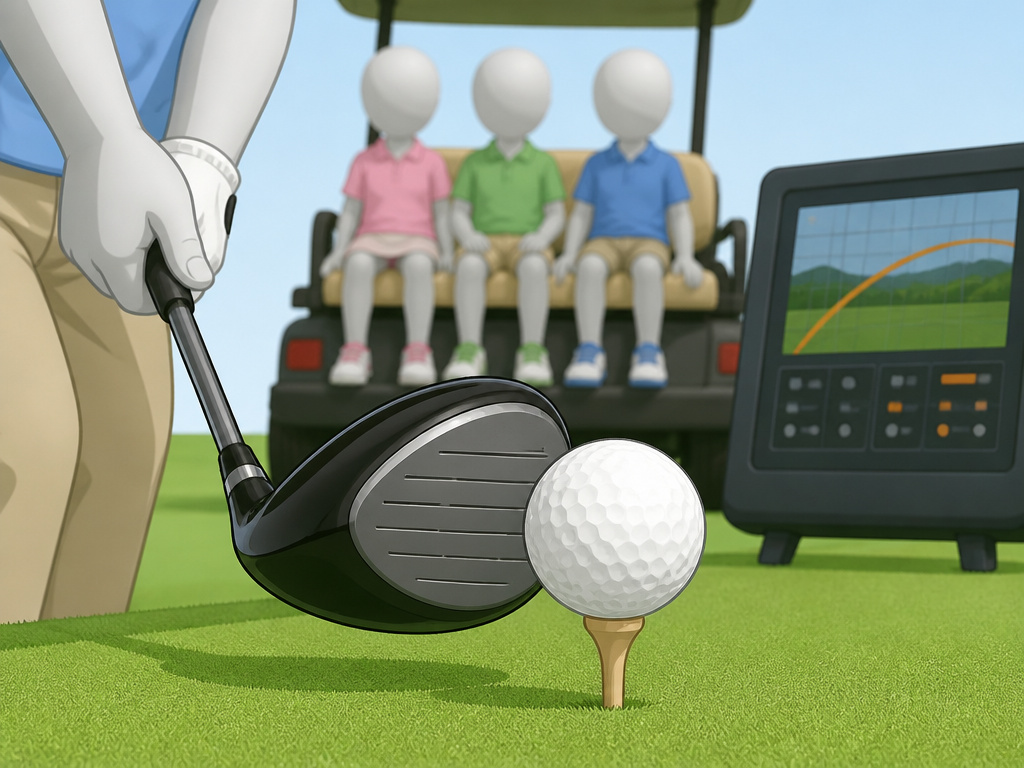
The imagery of elite practice is often a lonely figure on a pristine range at dawn. Scheffler’s world is the opposite. His swing coach, Randy Smith, notes that their sessions at Royal Oaks are almost never alone. “There will be at least one and up to six kids there, sitting on the back of my golf cart, laughing, reading TrackMan numbers.”
This environment is by design, not a distraction, and does two things.First, it replicates the noise and minor chaos of a tournament round, making the actual event feel more familiar. Second, it reinforces a love for the game’s social fabric. Scheffler was that kid once, absorbing knowledge from older players. Now he’s the one creating that environment.
This approach to practice, making it competitive, social, and focused on solving specific problems, builds a different kind of resilience. It’s practice that feels like play, which is why he never seems to tire of the grind. It’s the foundation of the consistent ball-striking required to compete at the highest level.
What Amateurs Get Wrong When Chasing Consistency

Most players seek consistency by trying to eliminate variables. They chase the perfect, repeatable swing position. Scheffler’s model shows that consistency comes from managing variables, not eliminating them.
The Grip Trainer Trap: I’ve seen players buy every grip trainer on the market, hoping a perfect hold is the silver bullet. If a grip trainer causes any discomfort in your fingers or forces your hands into an unnatural union, ditch it. A grip pressure of 4 or 5 on a 10-point scale should be comfortable and repeatable, not a contortion. This is why I’m cautious about blanket recommendations for beginners swing trainers; the tool must fit the individual.
Mistaking Repetition for Practice: Hitting 100 drivers in a row is not quality practice. Scheffler’s sessions are about shot shapes, trajectories, and specific yardages. He’s playing games within the game. Your practice should have a goal for each ball: “This one is a low fade with my 7-iron to that left pin.” That’s how you build a toolbox.
Ignoring the Mental Layer: You can have a solid swing and a great swing rhythm, but if you’re still stewing over a triple bogey from three holes ago, you’re inconsistent. The mental reset is a skill to be drilled as much as your putting stroke.
Frequently Asked Questions
Is Scottie Scheffler’s swing technically perfect?
No, and that’s the point. Biomechanists praise its use of “degrees of freedom,” meaning it’s adaptable. It’s not a machine-like replication of positions; it’s an athletic motion with built-in error correction. This adaptability is why it holds up under pressure.
What putter does Scottie Scheffler use?
Scheffler uses a TaylorMade Spider Tour X putter. While the model gets attention, his 2025 improvement was far more about his work with coach Phil Kenyon and his adoption of the claw grip on short putts than the equipment itself.
How has Scheffler stayed World No. 1 for so long?
His sustained dominance is a product of his system: elite, versatile ball-striking (1st in Strokes Gained: Approach), a vastly improved putting game, and a mental process that isolates each shot. This multi-faceted strength is reflected in the Official World Golf Ranking points system, which rewards high finishes in strong fields over a rolling two-year period.
Can amateurs learn his “shot-by-shot” mindset?
Absolutely, and it’s the most accessible part of his game to emulate. It starts with your pre-shot routine. Make it a fixed ritual that begins the moment you select your club. Its sole purpose is to bring your focus entirely to the shot in front of you, blocking out everything that came before.
What golf ball does Scottie Scheffler play?
Scheffler plays a Titleist Pro V1 golf ball. The choice between a Pro V1 and a Pro V1x (or any tour-level balls) is personal, based on feel and short-game spin preferences. For most amateurs, consistency comes more from playing the same ball model every round than from which specific model it is.
The Bottom Line
Scottie Scheffler’s consistency is a documented system, not a mystery. The mental shot-by-shot engine powers the mechanical swing with its redundant “degrees of freedom,” which in turn enables artistic shots like the “Gapper.” The system is maintained by a practice philosophy that embraces noise and competition.
For you, the lesson is to audit your own game for a single point of failure, not to copy his swing. Is it your mind, your mechanics, or your practice?Where is your inconsistency coming from? Then, attack it with Scheffler’s specificity. Hire a coach for your weakness. Change your grip if you must. Restructure your practice around problems, not mindless repetition.
Chasing a perfect swing is a dead end. Building a reliable system, however, is something you can start this weekend. Pick one thing. The consistency will follow.
