
When to Use a 3 Wood vs 5 Wood: The Critical Yardage Gap
This post contains affiliate links. As an Amazon Associate, we earn from qualifying purchases.
This post contains affiliate links. As an Amazon Associate, we earn from qualifying purchases.
Choose a 3 wood for distance and control off the tee on tight holes, and a 5 wood for high-launching, forgiving shots from the fairway, especially into par 5s. The median distance gap is about 12 yards, but the real difference is in launch angle and spin, a 3 wood needs a perfect strike from the turf, while a 5 wood is built to get the ball airborne from any lie.
That 12-yard gap is the Arccos Golf median. For most amateurs, the practical gap is wider because the 3 wood is harder to hit solidly from the ground. The choice isn’t about raw distance. It’s about which club you can actually launch when you’re 220 yards out in the fairway with a bunker fronting the green.
What follows: a breakdown of the specific shot windows each club owns, the data on why amateurs struggle with the 3 wood off the deck, and a clear decision matrix for the four most common on-course situations.
Key Takeaways
- The median distance gap between a well-struck 3 wood and 5 wood is only 12-15 yards for pros, but for amateurs it can feel like 25+ yards due to inconsistent contact.
- Use your 3 wood primarily as a driver alternative on tight par-4s and par-5s where the fairway is narrower than 35 yards. Tee it very low.
- Reach for your 5 wood for any long shot from the fairway or light rough. Its higher loft (typically 18°) and shorter shaft make consistent contact far more likely.
- Ignore the “versatility” marketing for 3 woods if your average swing speed is under 95 mph. The data shows most amateurs hit fewer fairways with it than they think and should use a 5 wood or hybrid for most second shots.
- Gapping is critical. If your 5 wood carries 200 yards, your 3 wood needs to carry at least 215 to justify its spot in the bag. Otherwise, the clubs are redundant.
The Core Specs: Loft, Length, and Lie
A modern 3 wood typically has 15 degrees of loft and a 43-inch shaft. A standard 5 wood carries about 18 degrees of loft on a 42-inch shaft. That three-degree loft difference is the main engineering spec, but it creates two entirely different clubs.
The 3 wood’s lower loft and longer shaft are designed for lower spin and more ball speed. This maximizes roll-out, making it a distance weapon. The 5 wood’s higher loft increases spin slightly, which helps the ball climb faster and stop quicker on the green. Its shorter shaft offers more control.
Technical Snapshot: The ideal 3 wood launch angle is 12 to 16 degrees with a spin rate between 2,800 and 3,500 rpm. A 5 wood targets a higher launch (14-18 degrees) with similar spin, which is easier to achieve for players with a moderate or steep angle of attack. This difference is why a 5 wood is more forgiving from a tight fairway lie.
The head design also diverges. Many modern 3 woods, like the TaylorMade Qi35 Max, have a shallower face to reduce drag and promote a piercing ball flight off a tee. A 5 wood, such as the Titleist TSR2, often has a slightly deeper face to help get the ball up from the turf. You’re not just choosing a number, you’re choosing a tool built for a specific job.
How Big Is the Actual Yardage Gap?
The marketing will tell you a 3 wood goes 240 yards and a 5 wood goes 225. On a perfect strike, that’s plausible. On the course, it’s mostly fiction for the average player.
Data from Arccos Golf paints a clearer picture. Across all skill levels, the median driving distance with a 3 wood is 214 yards. The gap to a driver is about 12 yards. Reliable 5 wood data is sparser, but fitting charts and player testing consistently show a 15-20 yard gap between a well-struck 5 wood and a well-struck 3 wood for the same player.
| Swing Speed (Driver) | 3 Wood Expected Carry | 5 Wood Expected Carry | Practical Gap |
|---|---|---|---|
| 85-95 mph (Moderate) | 190-205 yards | 175-190 yards | 15 yards |
| 95-105 mph (Fast) | 205-225 yards | 190-210 yards | 15-20 yards |
| 105+ mph (Very Fast) | 225-240+ yards | 210-225 yards | 15-20 yards |
The “Practical Gap” column is what matters. It’s the distance you can reliably expect on your average strike, not your best one. If your gaps are smaller than this, say, only 10 yards, one of the clubs is likely redundant. You need a clear, usable distance window for each club to justify its spot.
Where this goes sideways: Chasing 3 wood distance from the fairway. A low-face strike with a 3 wood spins up over 4,000 rpm, the ball balloons, and you lose all your carry. That 215-yard club suddenly goes 190. The 5 wood’s higher loft makes low-face contact more playable.
The 3 Wood’s Niche: Off the Tee
Your 3 wood is not a fairway club. For most golfers, it’s a specialist. Its primary value is as a controlled driver replacement on holes where the penalty for a miss is severe.
Think of a tight par-4 with out-of-bounds 25 yards left and a hazard 30 yards right. Your driver dispersion might put you in trouble 40% of the time. Arccos data shows the accuracy gain with a 3 wood is marginal, only about a 0.9% higher fairway hit rate. But the key is the dispersion circle shrinks. Your misses are smaller. A 3 wood miss might stay in the first cut of rough, while a driver miss finds the junk.
The tee shot is the only time you can guarantee a perfect lie for your 3 wood. You must tee it low, so low the ball barely sits above the grass. This allows a shallow, sweeping strike that maximizes ball speed and minimizes spin. A tee any higher promotes a high-face hit, which kills distance.
When does this strategy actually save strokes? Use this checklist: * Fairway width under 35 yards. * Penalty areas (water, OB) within 30 yards of the fairway edge. * Doglegs where driver carries through the fairway. * Par-5s under 530 yards where a good 3-wood tee shot still leaves a realistic second-shot chance.
If the hole doesn’t tick at least two of these boxes, you’re probably giving up too much distance. The driver is the better play.
The 5 Wood’s Domain: From the Turf
 This is where the 5 wood earns its keep. Its higher loft (18° or more) and shorter shaft make it exponentially easier to hit from a tight lie. You don’t need a perfect, sweeping strike. You can hit slightly down on the ball, the way you would with a mid-iron, and still get a high, soft-landing shot.
The 5 wood is your par-5 second-shot weapon and your long par-3 club. It’s for the 200-yard approach over a front bunker where you need the ball to stop. A 3 wood from that same lie would require a career-best strike to get enough height.
Common mistake: Using a 3 wood for a long second shot into a par 5 because “it’s the distance club.” The lie is rarely perfect. The margin for error is tiny. A mediocre 3 wood shot might advance the ball 180 yards into a bunker. A solid 5 wood will travel 200 yards in the air and land on the green.
Modern 5 woods are also shockingly good from light rough. The rounded sole glides through grass better than a hybrid’s leading edge or an iron’s sharp face. If the ball is sitting up even a little, the 5 wood is a viable option. The 3 wood, with its shallower face, is a disaster from any rough.
The Amateur Reality: Why the 5 Wood Often Wins
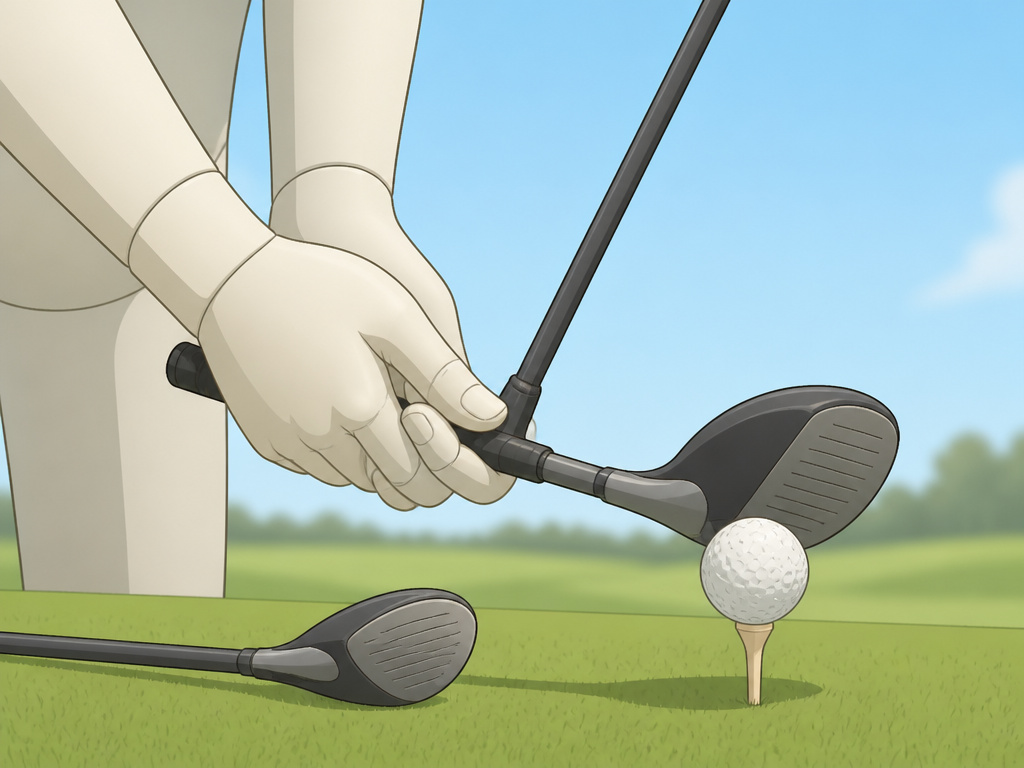 Tour pros use 3 woods from the fairway. They practice those shots for hours. Their swing speeds (110+ mph) and consistent delivery create the necessary launch conditions. For the amateur, the data is brutal.
Arccos analysis shows that for a 20-handicap golfer, hitting 3 wood off the tee only increases fairway hit percentage by about 2% over a driver, while sacrificing 15 yards. The strokes-gained math often doesn’t add up. From the fairway, the success rate plummets. Most amateurs deliver a steep angle of attack, which with a 3 wood produces low, spinning rockets that never reach their target.
The 5 wood fixes this. Its design is more forgiving of a steeper strike. It gets the ball airborne with less effort. For players with swing speeds under 95 mph, a strong 5 wood or a 7 wood is almost always a smarter choice than a standard 3 wood. The extra loft is your friend, not a sign of weakness.
I’ve seen countless players struggle for years with a 3 wood they can’t hit, convinced it’s a skill issue. It’s a tool issue. Swapping to a 5 wood or an 18-degree hybrid turns a dreaded shot into a confident one. The scorecard doesn’t care which club you used.
3 Wood vs 5 Wood: A Direct Comparison
This isn’t about which club is “better.” It’s about which tool is right for the job at hand. Let’s break it down head-to-head.
| Scenario | 3 Wood Winner | 5 Wood Winner |
|---|---|---|
| Tee Shot on a Tight Hole | Yes. Lower flight, more roll, better control. | No. Higher flight can be penalized by wind. |
| Second Shot into a Par 5 | Only from a perfect fairway lie with a fast swing speed. | Yes. Higher launch, softer landing, more forgiveness. |
| Shot from Light Rough | Rarely. Shallow face digs or skids. | Yes. Rounded sole glides through grass better. |
| Long Par 3 (200+ yards) | Risky. Requires perfect strike to hold the green. | Ideal. Designed for high, stopping approach shots. |
| Player with <95 mph Swing | Seldom. Lacks speed to optimize low loft from turf. | Almost always. The loft does the work for you. |
The verdict: For the majority of amateur golfers, the 5 wood is the more valuable and frequently used club. It covers a wider range of realistic on-course situations successfully. The 3 wood is a specialist, a brilliant option off the tee when conditions demand it, but not a fairway staple.
Building Your Bag: The Gap Test
You can’t decide in a vacuum. Your 3 wood and 5 wood must create a logical distance progression with your other clubs. Here’s the test:
- Find Your Driver Carry: Use a launch monitor or GPS to find your average driver carry distance, not your best.
- Find Your 5 Wood Carry: Do the same with your 5 wood from a fairway lie.
- Do the Math: Your ideal 3 wood carry should be roughly halfway between your driver and 5 wood carry. If your driver carries 230 and your 5 wood carries 200, you want a 3 wood that carries 215. If your current 3 wood only carries 208, it’s too close to the 5 wood. Consider a 4 wood (16.5°-17°) to split the difference perfectly.
- Check the Bottom: Ensure your 5 wood gaps properly into your next club (likely a 4-hybrid or 4-iron). A gap larger than 25 yards is too big.
If the gaps are messy, you might be better off with a driver, 4 wood, 7 wood setup. It’s simpler and often more effective. The goal is consistent, knowable distances, not carrying clubs you’re afraid to hit.
Frequently Asked Questions
Should a high handicapper carry a 3 wood?
Probably not. The data shows minimal accuracy gain off the tee and extreme difficulty from the fairway. A high handicapper is better served with a 5 wood or a 4 hybrid as their longest fairway club. The extra loft and forgiveness will lead to more good shots and lower scores. Focus on a great driver vs fairway wood strategy first.
What is easier to hit, a 3 wood or a 5 wood?
The 5 wood is significantly easier to hit for almost every golfer, especially from the fairway. The shorter shaft improves control, and the higher loft makes it easier to launch the ball high and straight. This is a major reason why forgiving club sets for beginners often include a 5 wood and skip the 3 wood entirely.
Can I use a 5 wood off the tee?
Absolutely. A 5 wood is an excellent club off the tee on shorter or tighter par-4s. It provides plenty of distance for most players and will find the fairway more often than a driver. Tee it just like a 3 wood, very low, to promote a clean strike.
What about a 7 wood vs a 5 wood?
7 wood (typically 21-22°) fits between a 5 wood and a 4-hybrid. It’s a fantastic option for players who struggle with long irons and want maximum height and stopping power. If your fairway wood vs hybrid decision leans toward ease of use, a 7 wood is a top contender.
How do I hit a 3 wood off the fairway?
You need a shallow, sweeping strike. Play the ball just forward of center in your stance. Focus on brushing the grass after the ball, not taking a divot. This requires practice and is the reason most amateurs shouldn’t attempt it on the course. For a more reliable long shot, master the low punch shot with a hybrid or 5 iron for windy days.
The Bottom Line
Stop thinking of your 3 wood as a driver. Think of it as a specialist for tight tee shots. Stop thinking of your 5 wood as a short 3 wood. Think of it as your go-to long club for any shot that must travel over 180 yards and land softly.
For most players, the bag makeup is clear: a driver for distance, a 5 wood for fairway heroics, and a hybrid to bridge the gap to your irons. Only add the 3 wood if you have the swing speed to launch it from the deck and a specific need for its piercing ball flight off the tee. When in doubt, take the loft. Your scorecard will thank you for choosing the club you can actually hit.
