
What Are Aeration & Topdressing on Golf Greens? Learn Here
This post contains affiliate links. As an Amazon Associate, we earn from qualifying purchases.
Aeration and topdressing on greens is a two-part agronomic process. First, aeration creates holes in the soil to relieve compaction and improve air/water movement. Second, topdressing applies a layer of sand to fill those holes and dilute organic matter (thatch). Together, they create firmer, smoother, and healthier putting surfaces that drain properly and withstand traffic.
Golfers see the temporary mess. Superintendents see the essential reset. The gap between those views is where the actual agronomy lives, a set of physical interventions with measurable specs and timelines.
What follows is a breakdown of the why, the how, and the specific numbers that separate a cosmetic fix from a structural one. You’ll see the standard protocol, the edge cases that break it, and the one rescue technique for courses that can’t meet the ideal schedule.
Key Takeaways
- It’s a soil reset, not just a surface fix. The core goal is managing the sponge-like layer of organic matter (thatch) that builds up and causes soft, wet, and diseased greens. Timing and specs are critical.** For bentgrass, research targets 40–50 cubic feet of sand per 1,000 sq. Ft. Annually, typically via three aerations with 5/8″ tines on 2″x2″ centers.
- Topdressing sand quality dictates results. Sands with less than 20% fine particles and over 60% medium-coarse particles are ideal for long-term drainage, though some superintendents prefer finer sand for faster healing.
- Recovery is faster than you think. With good weather and proper brushing, greens can heal in 7–10 days, though they may play a bit bumpy until the grass grows through the sand.
- If you can’t aerate enough, you have a backup plan. Using solid tines or a Hydro-ject every three weeks can supplement oxygen and drainage, but it’s not a replacement for core removal.
The “Why”: Thatch is the Real Enemy
A putting green isn’t just grass. It’s a living system built on a sand-based rootzone, and its worst enemy is something you can’t easily see: organic matter, commonly called thatch.
This layer builds up naturally from decaying grass stems, roots, and clippings. Left unchecked, it acts like a sponge at the surface. Water gets trapped, roots stay shallow, and the entire green becomes soft, prone to disease, and slow to drain. Your putts bobble not because of bad grass, but because the foundation has turned to mush.
Common mistake: Thinking aeration is just about poking holes for water. The primary job is thatch management. The holes are the delivery system for the sand that dilutes the organic layer.
Aeration and topdressing are the one-two punch against this. Aeration creates the space, and topdressing fills it with inert sand. Over years, this process physically replaces the spongy organic material with a stable, granular matrix. This is the core of all green maintenance. Without it, even perfect mowing and watering can’t save the surface.
The Two-Part Process: Aeration First, Then Topdressing
The work happens in a strict sequence. You can’t topdress effectively without aeration, and aeration without topdressing misses half the point.
First, Aeration. The superintendent chooses a method and a schedule. The most common is core aeration, using a machine with hollow tines to punch holes and physically remove plugs of soil and thatch. The size and spacing of these tines are critical specs.
- 5/8-inch diameter tines on 2-inch by 2-inch centers is a standard prescription for bentgrass greens. This spacing removes about 15-20% of the surface area in one pass, creating enough room for the sand that follows.
- Timing is planned around the golf calendar, weather, and grass type. Bentgrass often gets aerated twice in spring and once in late summer. Ultradwarf bermudagrass might be aerated just once in mid-summer.
The process is loud, messy, and typically takes a full two days for a full set of greens. The pulled cores sit on the surface before being swept away.
Then, Topdressing. Once the holes are clean, sand is applied. A spreader moves across the green, dropping a precise, even layer of sand. The sand is then aggressively brushed or dragged into the aeration holes, filling them completely.
This is the transformative step. The sand in the holes creates permanent vertical channels for drainage and roots. The sand on the surface works its way down over time, further diluting the thatch layer with every mowing pass. For a detailed look at how different grasses react, our guide on grass types covers the nuances.
A properly executed topdressing leaves the surface visibly sandy but uniformly filled. You shouldn’t see empty holes. The sand layer is thin enough that the grass blades are still visible, ready to grow through it.
The Specifics That Matter Most
This is where commodity advice stops and actual agronomy starts. General concepts like “use sand” aren’t helpful. The type of sand, the amount, and the frequency are everything.
| Variable | Ideal Spec (Bentgrass Example) | Why It Matters |
|---|---|---|
| Annual Sand Volume | 40–50 cubic feet per 1,000 sq. Ft. | This is the total annual “dilution” target from combined aeration and topdressing. Less than this and thatch management loses ground. |
| Tine Spacing | 2 inches by 2 inches | This spacing removes enough surface area (15-20%) to allow for meaningful sand incorporation without overly damaging the plant. |
| Topdressing Sand | <20% fines, >60% medium-coarse sand | Coarser particles maintain pore space for drainage. Fines clog those pores, defeating the purpose. |
| Healing Timeline | 7–14 days for full recovery | Depends on grass type, weather, and how well the sand was incorporated. The surface is playable before it’s fully healed. |
The sand spec is a great example of where theory and practice sometimes split. The USGA aeration guide recommends those coarse particles for long-term drainage. But on the ground, some superintendents prefer slightly finer sand. It incorporates faster with less disruption to play and can still be effective when applied lightly and frequently, a method supported by USGA topdressing benefits research.
A seven-year peer-reviewed topdressing sand study quantified this trade-off. It found that a higher application rate of a medium-coarse sand increased the amount of unincorporated sand in the profile, directly improving the soil matrix. With a finer sand, the higher rate didn’t make as much of a difference. The choice isn’t just “good sand vs. Bad sand.” It’s a calculated decision based on your management style and tolerance for surface disruption.
What Happens When the Standard Plan Isn’t Possible?
Every superintendent’s ideal schedule meets the reality of tournament calendars, budget constraints, and bad weather. So what’s the backup plan when you can’t core aerate as deeply or as often as you’d like?
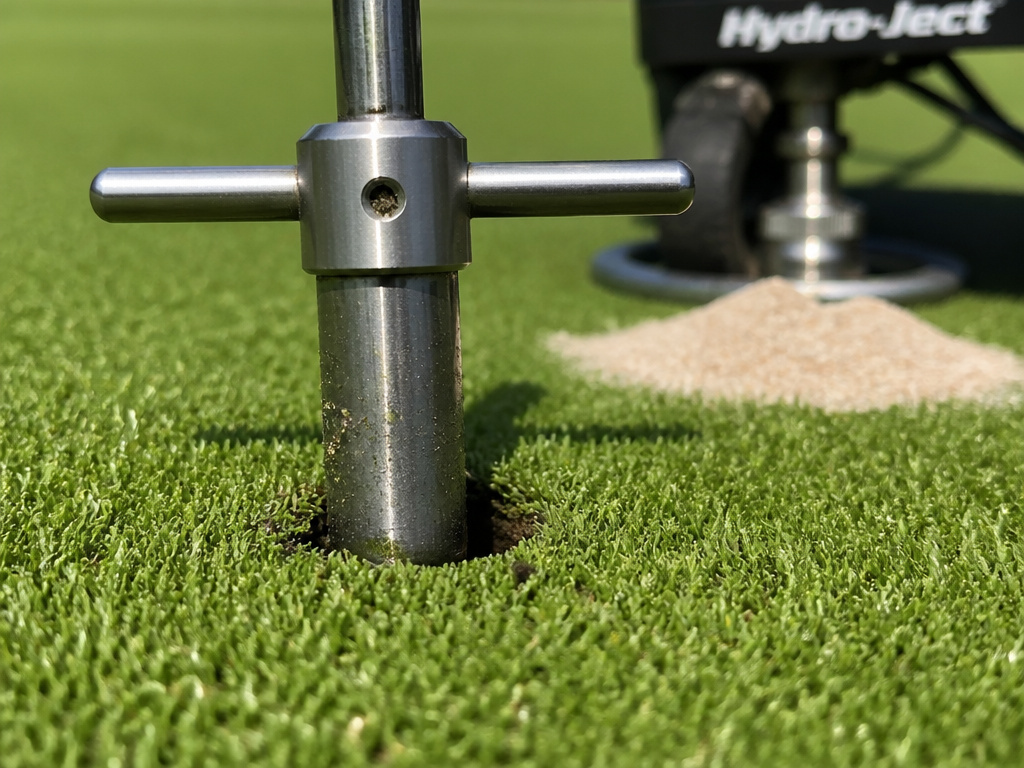
The rescue technique is supplemental aeration. This means using solid tines (which poke holes but don’t remove cores) or a tool like a Hydro-ject (which injects high-pressure water and sand) every two to three weeks during the growing season.
Where this goes sideways: Treating supplemental aeration as a full replacement for core aeration. It isn’t. Solid tines improve oxygen levels and water infiltration in the short term, but they do nothing to remove thatch. You’re treating a symptom, not the disease.
This approach is a holding pattern. It keeps the greens alive and functional until you can execute the real soil-reset work of core aeration and sand topdressing. It’s a testament to the problem-solving required in modern sustainable maintenance.
How This Affects Your Putts (The Golfer’s View)
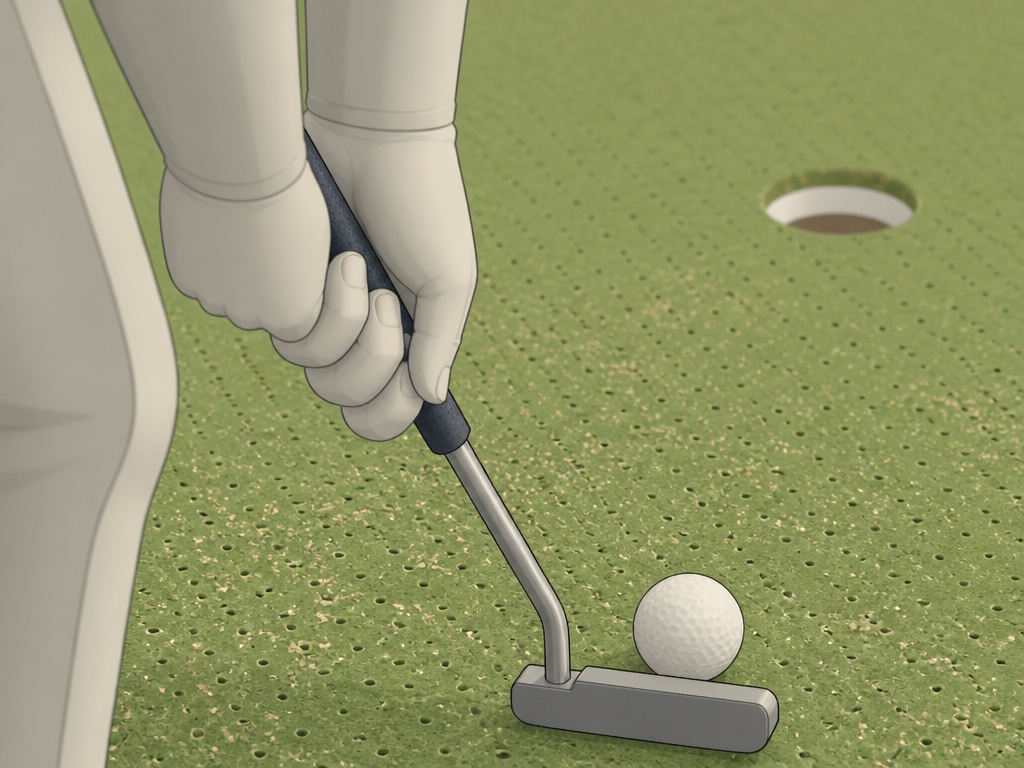
You walk onto a recently aerated green and see a speckled, sandy surface. Your first thought is probably not charitable. But knowing what’s happening underneath changes what you should expect above.
- Surface Feel: For the first 5-7 days, the surface will be firmer and a bit bumpy. The sand particles haven’t fully settled or been worked down by mowing. Your ball will make a slightly crisper, harder sound on impact.
- Speed: Green speed, often measured with a Stimpmeter, will be slower initially. The sand adds friction. As the grass grows through and the sand is incorporated, speed returns to normal, often on a firmer, truer surface.
- Break: Don’t overthink it. The small aeration holes have a negligible effect on a golf ball’s roll. The bigger influence is any minor surface unevenness before the sand is fully brushed in. Play standard break.
- Your Job: Repair your pitch marks. Always. But it’s especially critical now, as the green is healing. A unrepaired ball mark on a newly sanded surface is a divot in the making.
The healing is visual. You’ll watch the green shift from a sandy brown speckle back to uniform green as the grass blades grow up through the sand layer. This is also when paying attention to grain becomes easier, as the grass’s growth direction becomes more apparent.
Before You Go
The math is simple but non-negotiable. If your course’s greens are built to USGA specifications, they require roughly 50 cubic feet of sand per 1,000 square feet every year to stay healthy. That’s the budget. Whether it comes from three deep aerations or a program of light, frequent topdressing is a management decision.
Your takeaway as a golfer shouldn’t be frustration. It should be a recognition of good stewardship. A course that aerates aggressively is investing in the quality of its putting surfaces for the entire season. The week of bumpy putts is the price for months of firm, true rolls.
One rule I’ve learned from superintendents: if the greens heal perfectly in under a week, they probably didn’t aerate deeply enough to make a lasting difference. The temporary disruption is the proof of work being done. The next time you see those holes, know that the goal isn’t to annoy you. It’s to make sure your approach shot lands on a surface that holds, and your putt rolls on one you can trust.
Frequently Asked Questions
How long after aeration are greens back to normal?
Playability returns almost immediately, though the surface will be sandy and firm. For the greens to be fully healed, meaning the grass has grown through the sand and the surface is uniform, expect 7 to 14 days, depending on weather and grass type.
Why do they use sand and not soil?
Sand is granular and doesn’t break down. It maintains pore space for water and air to move. Soil, especially clay, would compact and clog the aeration holes, defeating the entire purpose of improving drainage.
Can you topdress without aerating?
Yes, in a practice called “light and frequent topdressing.” Superintendents may apply very thin layers of sand every 7-14 days without aeration. This slowly dilutes thatch with minimal disruption. It’s a supplement to, not a replacement for, core aeration.
Does aeration hurt the grass?
It’s a controlled injury. The process temporarily sets the grass back, but the removal of thatch and improvement in soil conditions lead to healthier, deeper roots in the long run. The grass quickly grows back into the sand-filled holes.
What’s the difference between hollow and solid tine aeration?
Hollow tines remove a core of soil and thatch. Solid tines just poke a hole, compacting the soil slightly around the edges. Hollow tining is for thatch removal and soil amendment. Solid tining is for short-term relief of compaction and improving water infiltration.
How does this affect my Greens in Regulation (GIR) statistic?
It shouldn’t, unless you let the visual mess get in your head. A properly topdressed green is actually firmer and may hold a well-struck shot better. Focus on hitting your target; the surface will do its job. For more on that metric, see our explainer on Greens in Regulation.
