
Essential Golf Course Hydration Strategies to Avoid Fatigue
This post contains affiliate links. As an Amazon Associate, we earn from qualifying purchases.
Start a round properly hydrated, urine the color of light lemonade, and keep fluid losses below 2% of your body weight. That’s it. Below 2%, you putt with a steady hand. Above it, your decision-making blurs and your score inflates.
Most players focus on swing tips. They should focus on their water bottle first. Your brain and muscles run on fluid, and a golf course in the sun drains both. We’ll strip it back to three things: the threshold where performance drops, the math for your personal sweat rate, and the one mistake with electrolyte drinks that costs more than it helps.
What follows is the difference between feeling sharp on the 18th green and wondering why your last three approach shots came up short.
Key Takeaways
- A body weight loss of just 2% from dehydration increases average score by 3-4 strokes in elite players, the effect is larger for amateurs.
- Check your urine color before you tee off; light yellow means you’re hydrated, dark means you’re already behind.
- Calculate your sweat rate: weigh yourself naked before and after a practice round. The difference in pounds is your hourly sweat loss in fluid ounces.
- Electrolyte drinks need more than flavor, look for at least 300mg of sodium and 100mg of potassium per serving (brands like LMNT or Nuun Sport).
- Drinking 1000ml (about 34 oz) per hour is the International Golf Federation’s baseline for high heat; adjust up from there based on your sweat rate.
The 2% Dehydration Threshold
The number isn’t a suggestion. It’s a line. Cross it, and your game pays a tax.
A review of elite collegiate golfers found that those who started a round dehydrated, defined by a urine specific gravity (USG) over 1.020, averaged nearly four strokes more than their hydrated peers. Their average score was 79.5 versus 75.7. The study is clear: all the dehydrated players failed to drink enough during the round to catch up. They teed off in a deficit and never recovered.
That’s the physical consequence. The cognitive one hits sooner. Research with amateur golfers shows that tasks like judging distance and picking a club suffer with a body weight loss of just 1.1 kg, roughly 1.5% for a 165-pound player. Your brain is one of the first organs to feel a water shortage. The mechanism is straightforward: reduced blood volume means less oxygen and glucose reach your frontal cortex. Your focus narrows, your reaction time slows, and your confidence in a shot wavers. That’s not speculation; it’s physiology.
Common mistake: Assuming thirst is a reliable guide. By the time you feel thirsty, you’re already 1-2% down. Your body’s thirst signal lags behind the actual need, especially when you’re concentrating on a game.
So how do you know if you’re crossing the line? You track two things: your starting point and your losses.
The Pre-Round Litmus Test
Look at your urine color the morning of a round. It should be a pale, light yellow, like lemonade, not apple juice. The International Golf Federation heat guidelines list this as the first checkpoint for players. Dark yellow or amber means your kidneys are conserving water because you don’t have enough. You’re starting in a hole.
If it’s dark, drink 16-20 ounces of water with a pinch of salt (literally a few grains from your shaker) over the next 90 minutes. The salt helps your body retain the fluid instead of sending it straight through you. This simple fix is more effective than chugging a gallon of plain water an hour before your tee time.
Calculating Your Personal Sweat Rate
Your buddy might sweat twice as much as you do. Following a generic “drink every hole” plan might drown you or leave him parched. You need your own number.
Here’s the field test. You’ll need a precise scale, like a digital bathroom scale.
- Weigh yourself naked, just before a practice round.
- Play your round. Drink normally, but track exactly how many ounces of fluid you consume.
- Weigh yourself naked again immediately after the round, before using the bathroom.
Now, do the math.
| Variable | How to Calculate |
|---|---|
| Weight Lost (lbs) | Pre-round weight – Post-round weight |
| Fluid Consumed (oz) | Total ounces drunk during the round |
| True Sweat Loss (oz) | (Weight Lost x 16) + Fluid Consumed |
| Hourly Sweat Rate (oz/hr) | True Sweat Loss ÷ Round Duration (hours) |
Let’s say you lost 2 pounds over 4 hours and drank 40 ounces of water. True Sweat Loss = (2 lbs x 16) + 40 oz = 72 oz. Hourly Sweat Rate = 72 oz / 4 hrs = 18 oz per hour.
That’s your target. On a similar day, you need to drink roughly 18 ounces per hour to stay even. This number changes with temperature, humidity, and your own fitness. Re-check it in different conditions.
What to Drink and When
A bottle of water with a secure, leak-proof cap is a good start. For rounds under two hours in mild weather, it’s often enough. But for a full 18 holes, especially if you’re walking and carrying your bag, you need a strategy. Your body isn’t just losing water; it’s losing salts that keep your nerves firing and muscles contracting.
The Electrolyte Question
Sodium and potassium are the two you care about most. When you sweat, you lose them. Replacing just water dilutes what’s left in your bloodstream, which can lead to muscle cramps, headaches, and that heavy, sluggish feeling.
The trick is in the dose. Many “sports drinks” are mostly sugar with a token sprinkle of electrolytes. You want the opposite.
Look for a mix that delivers at least 300mg of sodium and 100mg of potassium per 16-ounce serving. Brands like LMNT or Nuun Sport hit these numbers. The sodium drives fluid absorption, and the potassium helps prevent cramping.
I’ve used impact tape for years because it gives undeniable feedback. A mix containing sodium, potassium, and magnesium does the same for your energy levels. The first time I switched from a sugary drink to a high-electrolyte one during a summer tournament, the difference wasn’t subtle. No mid-round crash, no fuzzy thinking on the back nine. My hands just felt steadier over those four-footers.
Caffeine is a separate call. A little can sharpen focus, but it’s also a diuretic. If you rely on it, consume it early, like in your pre-round coffee, so its diuretic effect wears off by the turn. Drinking caffeine-loaded energy drinks on the course is a fast track to dehydration and an energy cliff.
Your On-Course Hydration Schedule
Think of this as a pit stop plan, not random sipping.
| Timeframe | Action | Why It Works |
|---|---|---|
| 2 Hours Before | Drink 16-20 oz of water with electrolytes. | Gives your body time to fully absorb fluid and top off reserves. |
| First Tee | Have a full bottle (24-32 oz) in your bag. Sip 4-6 oz every hole. | Small, frequent intake matches your absorption rate and prevents gut sloshing. |
| Turn (Hole 9) | Refill your bottle. Consume a small, carb-rich snack (half a banana). | Replenishes fluid and maintains blood glucose for mental stamina. |
| Final 3 Holes | Keep sipping. Do not stop because you’re “almost done.” | Fatigue masks thirst. Finishing strong requires fuel right to the end. |
A common failure point is the turn. Players grab a hot dog and a soda. The heavy meal pulls blood to your gut for digestion, and the soda’s sugar spike leads to a crash. A banana, a handful of nuts, or a plain protein bar with a few swigs of electrolyte drink is a far better play. It’s about steady energy, not a feast.
The Mental Game of Hydration
Your brain is your most important club. Dehydration dulls it.
A systematic scoping review in Sports Medicine consolidates the evidence: cognitive tasks vital to golf, like judging distance, selecting a club, and reading greens, are impaired with even mild dehydration. This isn’t about physical weakness; it’s about your processor running slow.
When you’re dehydrated, your brain’s “executive function” bandwidth shrinks. Complex decisions, like whether to lay up or go for the green over water, require more mental effort. You’re more likely to default to a risky, low-percentage shot because you lack the cognitive resources to properly weigh the options. You stop managing the course and start hoping.
This ties directly to managing emotions on the golf course. Frustration builds faster when you’re dehydrated. A missed putt feels like a personal failure instead of a simple misread. Staying hydrated is the most basic form of emotional insurance you can buy.
The Sensory Signal
You can feel dehydration coming on before you see a scorecard blow up. Your mouth gets a little sticky. Your focus on the ball wavers for a split second longer at address. The grip of your glove feels just a bit less secure. These are your body’s check-engine lights. Ignoring them is how a single bad hole turns into a triple bogey.
Hydration and Gear
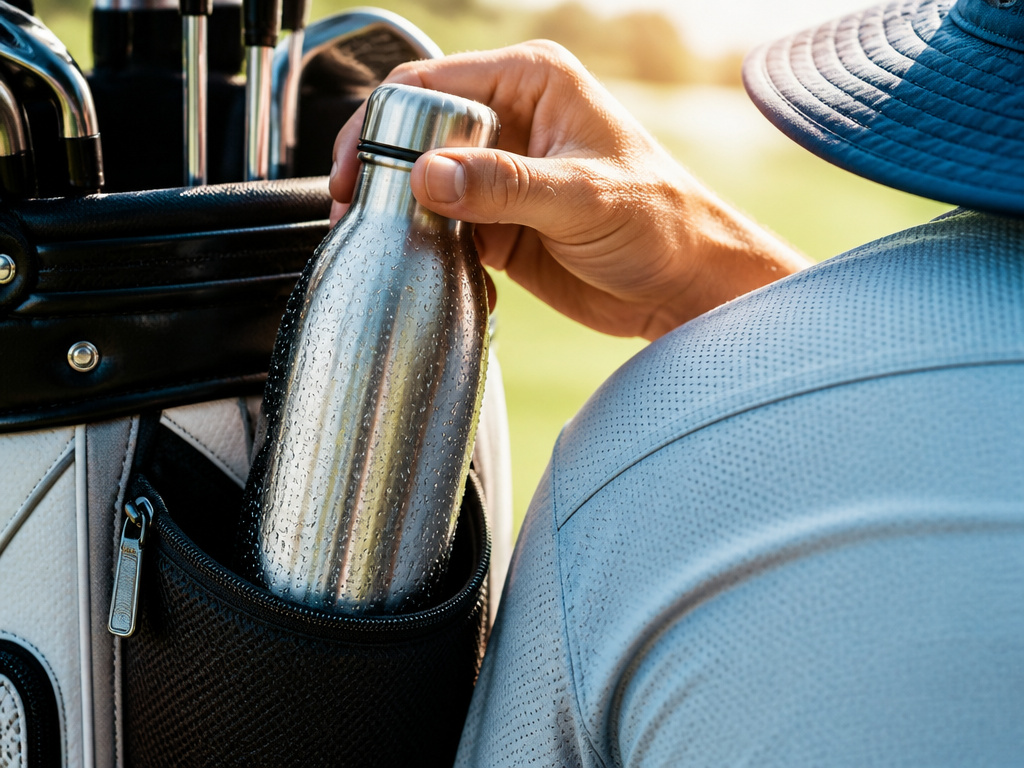
Your equipment choices can support or sabotage your fluid intake.
A lightweight, insulated water bottle is essential. It keeps your drink cool for hours, which makes you more likely to sip it. Tossing a warm, plasticky-tasting bottle of water is human nature. Stick it in your bag’s beverage pocket, or use a carabiner to clip it to your bag for easy access.
Your clothing matters immensely. A breathable, moisture-wicking polo and proper golf course attire help regulate your temperature and slow sweat loss. In direct sun, a golf bucket hat does more than look good, it keeps your head cooler than a baseball cap, reducing your core temperature and how hard your body has to work. Conversely, having the right golf rain gear for wet days prevents you from skipping a round that could be perfect for practicing your strategies for golf in the rain.
Layer smartly. A performance golf vest is perfect for cooler mornings; you can shed it as the day heats up without sacrificing mobility. The goal is to stay comfortable so your mind stays on your game, not on your discomfort.
Recovery: The 19th Hole Rule
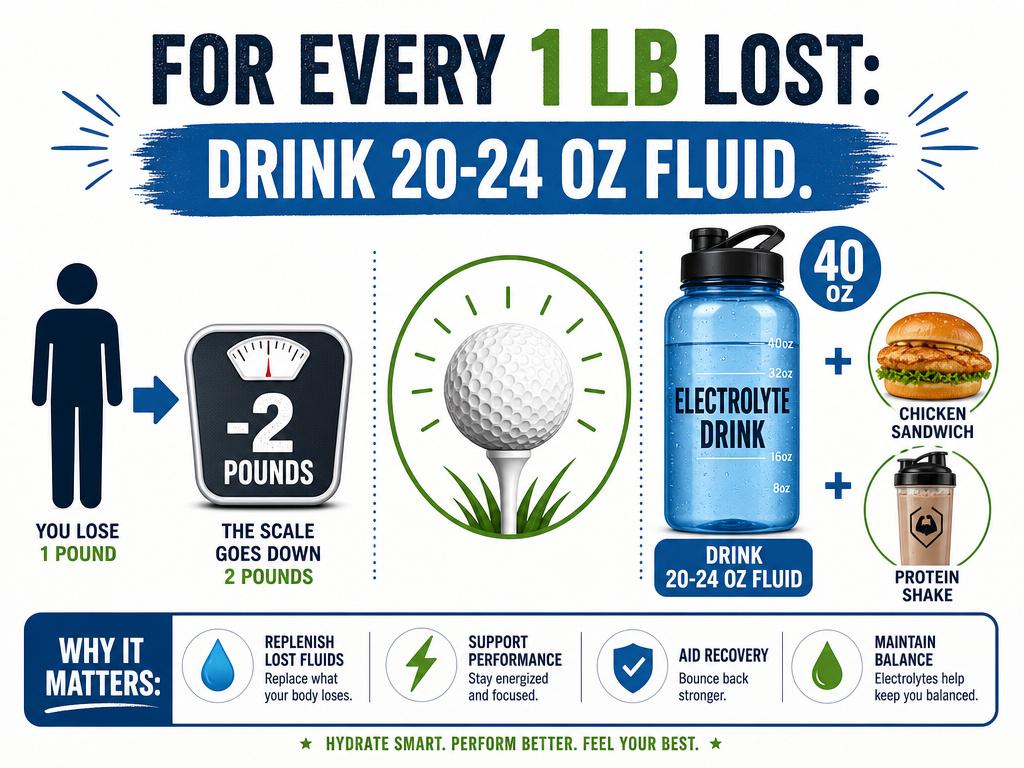
The round ends at the 18th green. Your hydration duty doesn’t.
For every pound of body weight you lost, you need to drink 20-24 ounces of fluid to properly rehydrate. If you lost 2 pounds, that’s 40-48 ounces. This is where an electrolyte drink really shines, as it speeds rehydration compared to water alone.
Pair this with a small, protein-rich meal within an hour of finishing. A chicken sandwich, a yogurt, or a protein shake helps repair muscle tissue, especially if you walked the course. This simple peer-reviewed nutritional guidelines review emphasizes that recovery nutrition is what lets you perform again tomorrow, or next weekend, without lingering fatigue.
This habit separates the casual player from the serious competitor. It turns golf from something that exhausts you into something that sustains you.
Frequently Asked Questions
Is plain water enough for golf?
For short rounds (under 2 hours) in mild weather, yes. For a full 18 holes, especially in heat or humidity, likely not. You lose sodium through sweat. Replacing only water dilutes your blood sodium levels, which can hinder performance and increase cramp risk. An electrolyte supplement is cheap insurance.
How can I tell if I’m dehydrated during a round?
Two clear signs: a sudden drop in energy or focus mid-round, and dark yellow urine when you use the restroom. A physical cue is a dry, sticky feeling in your mouth. Don’t wait for thirst; by then, you’re already dehydrated.
Do I need to drink if I’m riding in a cart?
Absolutely. While you expend less energy than walking, you’re still exposed to sun and heat, and you’re still sweating. The cognitive demands of the game remain high. Your fluid needs might be slightly lower than a walker’s, but the 2% dehydration rule still applies to your brain function.
What’s the best thing to drink after a round?
Beverage with electrolytes and a moderate amount of carbohydrates is ideal. Chocolate milk is a classic recovery drink, it provides fluid, electrolytes, protein, and carbs. Alternatively, an electrolyte mix in water followed by a balanced meal works perfectly. Avoid alcohol immediately after; it dehydrates you further and delays recovery.
Can I drink too much water?
Yes, though it’s rare in golf. Hyponatremia (dangerously low blood sodium) can occur if you drink enormous amounts of plain water without replacing electrolytes, over many hours. For a four-hour round, sticking to your calculated sweat rate (e.g., 16-24 oz per hour) virtually eliminates this risk.
Before You Go
Let’s be clear about one final thing. Hydration isn’t a magic performance pill. It’s the foundation that lets your skills work. A fundamentally sound swing, good club selection, and solid mental fundamentals all rely on a brain and body that are properly fueled.
Your first move isn’t to buy a new driver or try a fancy swing tip. It’s to check your urine color tomorrow morning. Then, during your next round, sip 4-6 ounces of water with a pinch of salt added at the turn. That single change, awareness followed by a simple action, will do more for your consistency than any equipment purchase this year.
Strip it back. Good golf comes from simpler, repeatable actions. Staying hydrated is the simplest one of all.
