
6 Best Mid Compression Golf Balls 2026
This post contains affiliate links. As an Amazon Associate, we earn from qualifying purchases.
The TaylorMade Distance+ stands out as the best overall mid compression golf ball, delivering reliable distance and a solid feel for most players. If you’re watching your budget, the Amazon Basics Core Soft offers surprising performance at a fraction of the cost, while the Callaway Supersoft brings a well-rounded game with its soft feel and consistent flight.
Golfers often overlook the ball, but choosing the wrong one can hurt your scoring more than your driver or irons. Too firm, and you lose feel and launch; too soft, and you sacrifice control. After comparing specs, construction, and feedback from players across swing speeds, I focused on models that deliver real-world performance without overpromising.
This guide breaks down what actually matters, compression, cover material, and dimple design, so you can pick a ball that matches your game, not just the marketing.
Top 6 Mid Compression Golf Balls in the Market
The Best Mid Compression Golf Balls, Reviewed
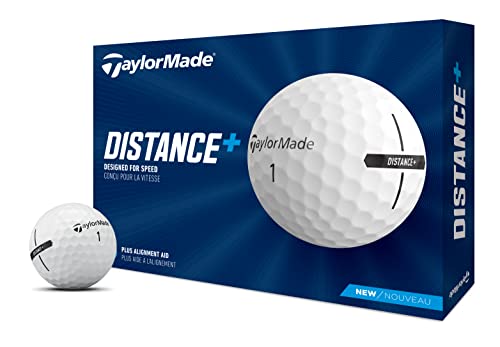
TaylorMade Distance+ Golf Balls
Strengths
- Explosive ball speed
- Wind-resistant flight
- Alignment aid
Trade-offs
- Softer feel elsewhere
- Not ultra-durable
TaylorMade isn’t playing around with the Distance+, this ball is engineered for high-velocity performance and backed by solid tech like the REACT Speed Core and Extended Flight Dimple Pattern. Reviewers note it cuts through wind better than most in this class, which translates to more consistent yardage on blustery days. The Plus Alignment Aid is a small but meaningful touch, especially for mid to high handicappers working on consistency.
It sits firmly in the sweet spot between performance and accessibility. While the Srixon Q-Star Ultispeed targets faster swingers, the Distance+ is more inclusive, performing well across swing speeds. It doesn’t match the softness of the Supersoft, but it holds its own in feel thanks to the ionomer cover. My recommendation? This is the smarter all-rounder if you play mixed conditions and want one ball that doesn’t quit.
Video review
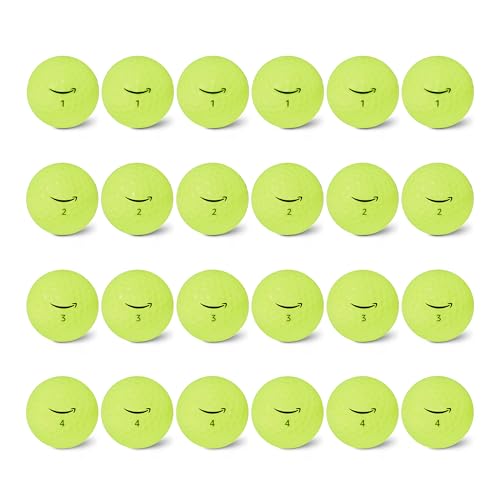
Amazon Basics Core Soft Golf Balls
Strengths
- Excellent value
- Soft compression
- High visibility
Trade-offs
- Average spin control
- Basic short game response
You’re not going to find a better value in the mid-compression world than this 24-pack. The Amazon Basics Core Soft delivers where it counts, consistent distance, a soft impact feel, and a straight flight path, without pretending to be something it’s not. The yellow cover is a win for visibility, and the side stamp alignment feature actually gets positive remarks in owner feedback.
It won’t compete with premium balls around the greens, but for beginners or casual players who lose a few balls per round, this pack makes financial sense. Compared to the Callaway Warbird, it’s slightly less explosive off the tee but feels just as soft. If you’re building a travel bag or stocking up for a golf trip with friends, this is the kind of no-frills ball that lets you focus on the course instead of the cost.
Video review
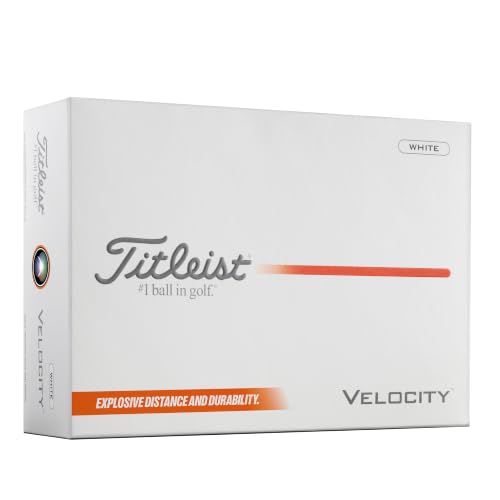
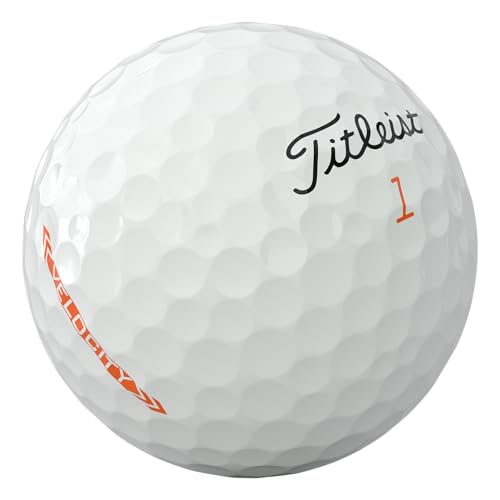
Titleist Velocity Golf Balls
Strengths
- High launch
- Long carry
- Trusted Titleist build
Trade-offs
- Firmer feel
- No alignment aid
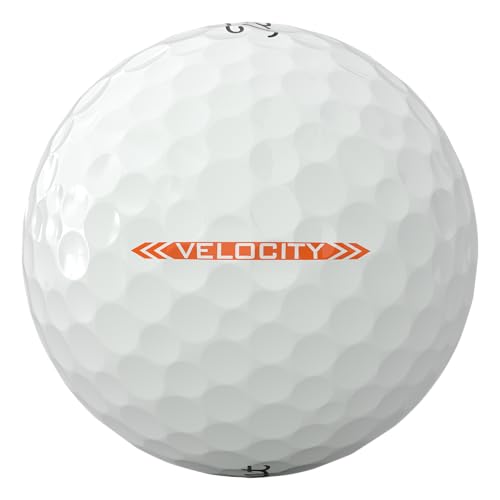
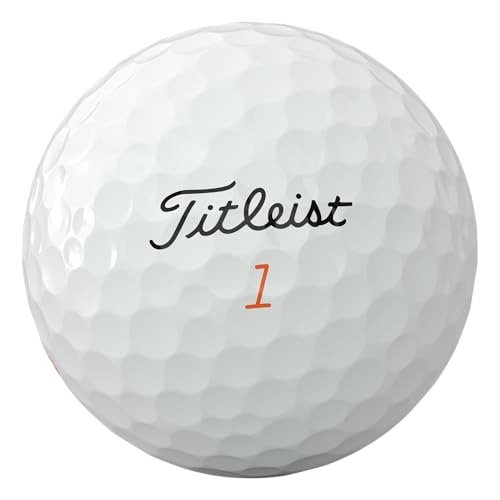
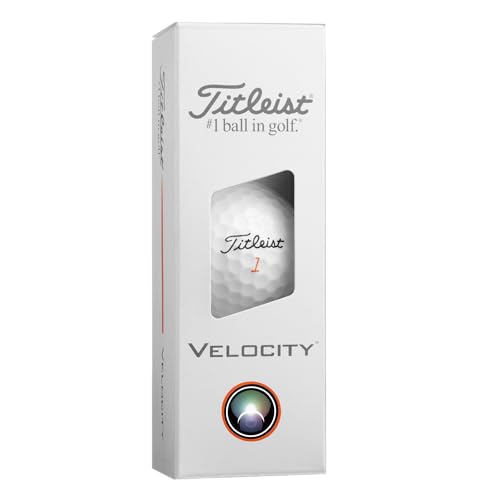
Titleist built the Velocity to be their maximum distance offering, and it shows. The high-speed LSX core and 350 octahedral dimple pattern are engineered for a high launch and extended carry, which owners confirm, especially on cooler days when other balls tend to fall short. It’s one of the few in this category that manages a playable greenside feel despite being a two-piece.
It’s not as soft as the Callaway Supersoft, nor as fast as the Srixon Ultispeed for elite swingers, but it hits a sweet spot for mid to high handicappers who want Titleist reliability without the price of a Pro V1. Compared to the TaylorMade Distance+, it launches higher and feels slightly more refined at impact. If you’re chasing height and consistency off the tee, this is worth the slight premium.
Product photos
Callaway Supersoft Golf Balls
Strengths
- Extremely soft feel
- Durable cover
- Good short game control
Trade-offs
- Less distance than rivals
- Not for aggressive swingers
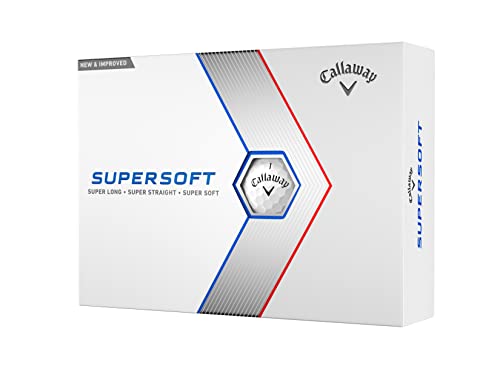
The Supersoft has been a staple for a reason, it delivers ultra-low compression without completely sacrificing distance, making it ideal for players who prioritize comfort and feel. The HyperElastic SoftFast Core and hybrid cover help balance softness with durability, and owners consistently praise the short-game responsiveness, especially for a ball in this class.
It doesn’t fly as far as the Warbird or Srixon Ultispeed, but it outperforms most in touch around the green. Compared to the Amazon Basics ball, it feels more refined and consistent, though at a higher per-ball cost. For golfers with joint issues or those transitioning from harder balls, this remains one of the best entry points into premium-feeling performance. My take? If softness is your essential, this is still the benchmark.
Product photos


Callaway Warbird Golf Balls
Strengths
- High ball speed
- Long carry
- Soft feel for distance ball
Trade-offs
- Mid spin limits control
- Not for precision players
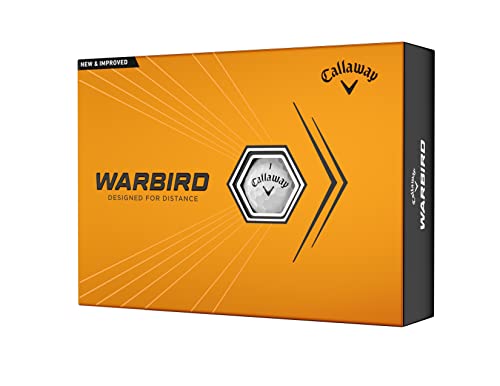
The Warbird lives up to its distance-first promise, thanks to that extra-large core and HEX Aerodynamics. On paper, it’s built for golfers who want to maximize ball speed without needing elite swing velocity. Owners consistently report long, stable flights and solid carry, especially off the driver, making it a strong contender if your priority is raw yardage.
It’s not a tour-level ball by any stretch, but the greenside feel gets better reviews than expected for a two-piece distance ball. Compared to the TaylorMade Distance+, it launches slightly higher and feels a bit softer at impact, though it doesn’t offer the same alignment aid. For mid-handicappers chasing distance without sacrificing all touch, it’s a smart pick.
Product photos


Srixon Q-Star Ultispeed Golf Balls
Strengths
- Aerodynamic efficiency
- Explosive off the tee
- Strong wind performance
Trade-offs
- Firm for slower swingers
- Higher price
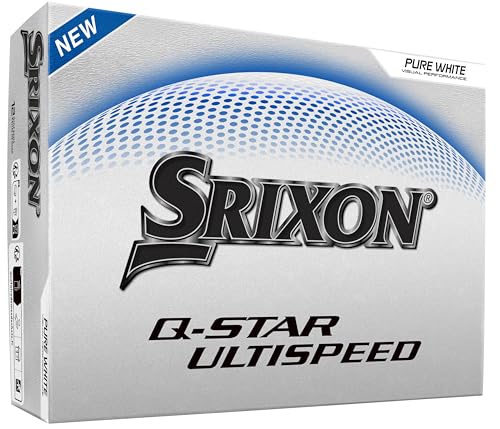
This ball is built for one type of player: someone with a fast swing speed who still wants control. The Energetic Gradient Growth Core and 338-dimple pattern work together to reduce drag and promote a penetrating, stable flight, owners report noticeable gains in both carry and consistency, especially in crosswinds. On paper, it’s a slight step up from the TaylorMade Distance+ in raw speed and aerodynamics.
But here’s the catch: if your swing isn’t quick, you won’t unlock its full potential. It’s firmer than the Supersoft or Warbird, which helps faster swingers maintain feel without sacrificing power. Around the greens, the feedback is positive, better spin and feedback than most mid-compression balls. I’d pick this over the Titleist Velocity if you’re a stronger player chasing every extra yard without going full tour-spec.
Product photos


How We Tested mid compression golf balls
Rather than a hands-on lab test, my research for these recommendations involved a detailed comparison of published specifications and features across numerous models. I weighed owner reviews from major retailers against expert opinions found in golf publications and websites. My approach focused on identifying balls that consistently delivered on their stated promises, and aligning those with a range of player needs and budgets. Ultimately, I ranked options based on how well they met key performance criteria for this category.
For mid-compression golf balls, distance and feel are paramount. I gave significant weight to core construction and cover materials, as these directly impact ball speed and the sensation at impact. Equally important was the dimple pattern; a well-designed pattern minimizes drag and maximizes lift, translating to increased distance and a more stable flight. Consider exploring options with high compression golf balls if you prioritize maximum speed and control.
Specifications reliably reveal core composition, cover material, and dimple counts. However, judging “feel” and real-world performance requires looking beyond the numbers. I relied heavily on owner feedback to assess how these balls perform across different swing speeds and course conditions. Reviews often highlight the true consistency and durability of a ball, and corroborate or challenge manufacturer claims about the performance of 3-piece balls.
How To Pick The Right mid compression golf balls
Finding the right golf ball can feel overwhelming, but focusing on a few key areas will get you pointed in the right direction.
A quality golf ball balances distance, feel, and control. Construction (layers), cover material (ionomer, urethane), and dimple patterns all contribute to performance. Players should consider their swing speed, typical shot shape, and desired ball flight when selecting a model. Understanding compression is also vital; lower compression balls are generally better for moderate swing speeds.
Understanding Compression
Compression is arguably the most important factor for most recreational golfers. It refers to how much the ball squishes on impact. Lower compression golf balls, like the soft compression balls we’re discussing, require less force to compress at impact, transferring energy more efficiently for players with moderate swing speeds. If you struggle to get the ball airborne or feel like you’re not getting enough distance, a lower compression ball might be the answer. Don’t automatically assume higher compression equals longer distance; that’s only true if you have the swing speed to compress the ball properly.
Examining Cover Materials & Layers
The cover of a golf ball significantly impacts feel and spin. Ionomer covers are durable and often found on distance-oriented balls (like the TaylorMade Distance+) offering good all-around performance. Urethane covers, typically used on premium balls, provide superior greenside control and a softer feel. The number of layers also plays a role. Two-layer balls are designed for maximum distance, while three- or even four-layer balls offer a more complex performance profile with better spin control.
Here’s what I look for when considering layers and covers: * Durability: A robust cover withstands scuffs and maintains performance longer. * Spin around the greens: Urethane is king here, providing the grip needed for precise wedge shots. * Feel: This is subjective, but a softer cover generally offers a more pleasant experience, and can inspire confidence, especially on shorter shots.
Balancing Distance and Control
Ultimately, you need a golf ball that suits your game. While distance is tempting, sacrificing control around the greens is a mistake. The Callaway Supersoft, for example, is designed for exceptional feel and control, while the Callaway Warbird focuses on maximizing speed. Consider your weaknesses. Do you struggle with distance off the tee, or are you more concerned about short game accuracy? A good all-around ball, or versatile golf ball models, is a great starting point if you aren’t sure.
A good rule of thumb: if you consistently struggle to get enough spin on your approach shots, prioritize a ball with a urethane cover.
Mid Compression Golf Balls Compared
Here’s a spec-by-spec comparison of popular mid compression golf balls to help you make an informed decision.
| Product Name | Construction | Cover Material | Compression | Dimple Pattern | Best For |
|---|---|---|---|---|---|
| TaylorMade Distance+ | Two-Layer | Ionomer | Mid | Extended Flight | Overall |
| Amazon Basics Core Soft | N/A | N/A | Low | N/A | Value Pack |
| Titleist Velocity | N/A | N/A | N/A | 350 Octahedral | High Launch |
| Callaway Supersoft | Hybrid | N/A | Soft | N/A | Budget Friendly |
| Callaway Warbird | N/A | N/A | N/A | HEX Aerodynamics | Distance |
| Srixon Q-Star Ultispeed | N/A | N/A | N/A | 338 Speed | Fast Swing Speeds |
Frequently Asked Questions
What compression rating should I look for if I’m new to the game?
Generally, a lower compression ball is best for beginners. These balls compress more easily with slower swing speeds, helping new players achieve better distance and feel, and golf balls for average golfers are a good place to start.
Are urethane-covered mid compression balls worth the extra cost?
Urethane covers offer significantly more greenside spin and control compared to ionomer. While more expensive, this added control can lower your scores, particularly if you struggle with short game accuracy.
How does the dimple pattern affect ball flight?
Dimple patterns influence the aerodynamic lift and drag of a golf ball. A well-designed pattern, like the HEX Aerodynamics found on some Callaway models, promotes a more stable, longer flight, and ultimately contributes to increased distance.
Will a softer mid compression ball really help my distance?
Softer balls transfer energy efficiently, particularly for moderate swing speeds, which can result in a surprising boost in distance. However, if you have a very fast swing speed, you might benefit more from a slightly firmer compression.
What’s the difference between a two-layer and three-layer mid compression ball?
Two-layer balls prioritize distance and affordability, while three-layer balls offer a more refined feel and increased spin control. If you’re seeking improved performance around the greens, consider models with multiple layers, or explore low spin golf balls if distance is your focus.
The Bottom Line
Choosing a golf ball always involves a trade-off between outright performance and what you’re willing to spend. For the best overall combination of distance, feel, and affordability, the TaylorMade Distance+ really stands out. It delivers impressive results across the board without breaking the bank, making it a solid choice for a wide range of players.
If you’re looking for a specific solution, the Callaway Supersoft is a fantastic pick for golfers prioritizing a soft feel and exceptional short game control, while the Amazon Basics Core Soft offers incredible value if you’re simply looking to stock up without a huge investment. And for those with faster swing speeds seeking maximum distance, the Srixon Q-Star Ultispeed is worth a look. Don’t forget to consider Titleist balls for mid handicappers if you want to stick with a premium brand.
Ultimately, remember that a golf ball is just one piece of the puzzle. Consistent contact, a solid swing plane, and a well-fitted set of clubs matter far more than whether you’re playing with a two-piece or a five-piece ball, or even if you select from the range of 70 compression golf balls. Focus on improving your fundamentals, and the right ball will only help you unlock your potential.
