
How to Hit Long Irons | The Tour Fitter’s Ball-Speed Rule
This post contains affiliate links. As an Amazon Associate, we earn from qualifying purchases.
This post contains affiliate links. As an Amazon Associate, we earn from qualifying purchases.
To hit long irons, you need three things: a shallow, sweeping strike with the ball positioned just inside your lead heel; a smooth tempo that maintains width and posture; and a swing thought focused on releasing the clubhead, not scooping the ball. The goal is ball-first contact with a low point just after impact, compressing the ball with a 1-2 degree downward angle of attack.
That shallow strike is the entire game. Most players get steep, dig the leading edge, and either chunk it or thin a line drive. The physics are simple: a long iron has low loft and needs speed to launch. A steep angle kills speed and exposes the small sweet spot.
What follows is the breakdown of that shallow strike, why it works, how tour fitters build bags around it, and the five adjustments that make it repeatable. By the last section, you’ll know whether to keep that 4-iron in the bag or replace it with something you can actually hit.
Key Takeaways
- Tour fitters prioritize ball-speed windows and descent angle over raw distance when building a long-iron setup. If your long irons fly low and run out, you likely need a larger clubhead.
- Place the ball just inside your lead heel and widen your stance by an inch. This promotes the shallow, sweeping strike a long iron requires, not the steep dig of a wedge.
- Your angle of attack should be only 1-2 degrees downward with a long iron, compared to 4-5 degrees with a short iron. Focus on brushing the grass after the ball.
- PGA Tour pro Michael Kim’s strategy is to hit only his stock shot with a long iron and aim for the center of the green. Trying to work the ball or attack pins adds unnecessary complication. If you consistently struggle, a hybrid is a smarter play rather than a compromise. A 4-hybrid is dramatically easier to launch and more forgiving on mishits than a 4-iron for the vast majority of golfers.
The Tour Fitter’s Ball-Speed Rule
Tour fitters don’t build long-iron setups around distance. They build them around ball-speed windows and trajectory control. This is the single biggest insight amateurs miss. We chase extra yards, while pros like Cam Young use different iron models to manage launch and spin.
Cam Young’s bag carries a Titleist T200 4-iron, a T100 5-iron, and the 631.CY model in his 6-9 irons. The T200 isn’t a “distance iron” for him; it’s a tool to generate the extra ball speed needed for proper launch and descent angle from 200+ yards.
The rule of thumb is a 5–6 mph increase in ball speed when moving into a larger, more forgiving iron chassis. That speed is what gets the ball up and stops it on the green. If your long irons fly low and run forever on the green, the issue is that your clubhead can’t produce the necessary speed window. You might need a utility iron or a hybrid.
This changes how you should think about your own bag. It’s not about carrying your 4-iron 210 yards. It’s about whether that 4-iron produces a high enough ball flight with enough spin to hold a green. If it doesn’t, the club is failing you, not the other way around.
| Clubhead Type | Best For | Compromise |
|---|---|---|
| Player’s Iron (Blade) | Maximum workability, precise feel. | Demands perfect strike; lowest forgiveness. |
| Player’s Distance (e.g., T100) | Controlled speed, consistent flight. | Less help on low-face misses. |
| Game-Improvement (e.g., T200/T350) | Added ball speed, higher launch. | Less shot-shaping precision. |
| Hybrid / Utility | Easiest launch, most forgiveness from rough. | Can produce a ballooning ball flight. |
The takeaway is diagnostic. Pay attention to your ball flight with a long iron on a launch monitor, or just watch where it lands on the green. Low and running? You need more speed, which likely means a different club. This is the first step before you even touch your swing.
Why Long Irons Are Different (The Physics)
A 4-iron is not a long 7-iron. The mechanics change because the tool does. Three factors make long irons the hardest clubs to hit consistently.
First, the loft is low, typically between 18 and 24 degrees. Low loft means less backspin, which gives the ball less lift. There’s also a smaller margin for error; a mishit won’t get airborne as easily as it would with a wedge.
Second, the shaft is longer. A longer shaft creates more clubhead speed, but it’s harder to control and time. It magnifies any flaw in your tempo or sequence.
Third, the sweet spot is small. The face is thinner, and the center of gravity is positioned to help better players. Strikes just a fraction off-center lose a drastic amount of distance and accuracy.
The required swing adjusts for these factors. You need a shallower angle of attack. With a wedge, you might hit down 4-5 degrees to create spin. With a long iron, that same steep blow digs the leading edge and kills speed. You want a 1-2 degree downward strike, more of a sweep.
Where this goes sideways: Trying to help the ball into the air by scooping or leaning back. This adds loft but removes compression. The result is a high, weak shot that falls out of the sky short, or a thin line drive. The club’s loft is designed to launch the ball; your job is to deliver it with speed and a clean strike.
This is why many players find a hybrid easier. The wider sole and lower center of gravity are built for this exact shallow strike, and they forgive the slightly fat or thin contact that plagues long iron play. The decision between a long iron and a hybrid is about what produces a reliable result for your swing.
The 5 Non-Negotiable Setup Adjustments
You cannot swing a long iron correctly from a mid-iron setup. These five adjustments create the foundation for that shallow, powerful strike.
1. Ball Position: Just Inside the Lead Heel
This is the most forward position for any iron. Not as far forward as a driver, but a full ball-width ahead of where you’d play a 7-iron. Placing it here ensures you catch the ball on a very slight downswing, with the low point of your arc occurring just after impact. Too far back encourages a steep chop. Too far forward leads to thin contact.
2. Widen Your Stance for Stability
Take your 7-iron stance and widen it by about an inch. A longer club needs a wider base to support the longer swing arc and maintain balance. This stabilizes your lower body and prevents excessive lateral movement, which is a common cause of fat shots with long clubs.
3. Align Everything Parallel
Because long irons travel so far, a slight alignment error is magnified into a big miss. Use a club on the ground to check that your feet, knees, hips, and shoulders are all parallel to your target line. This simple step eliminates one major variable.
4. Weight Forward at Address
Start with about 55-60% of your weight on your lead foot. This preset encourages the proper weight shift through the shot and makes it easier to achieve ball-first contact. Many players set up with weight centered or even on their back foot, forcing a compensation during the swing.
5. Light Grip Pressure
Tension is a speed killer. Hold the club firmly enough to control it, but with soft hands and relaxed forearms. You need every bit of clubhead speed you can generate; a death grip locks up your wrists and slows the release.
A proper setup for a long iron promotes a shallow, sweeping strike. The ball is forward, the base is wide, and the weight is ready to move forward. This eliminates the need for a major swing change, it lets your natural motion deliver the club correctly.
If you only work on one thing, make it ball position. It’s the fastest route to better contact. From this foundation, the swing itself becomes simpler.
The Swing: Tempo, Width, and Release
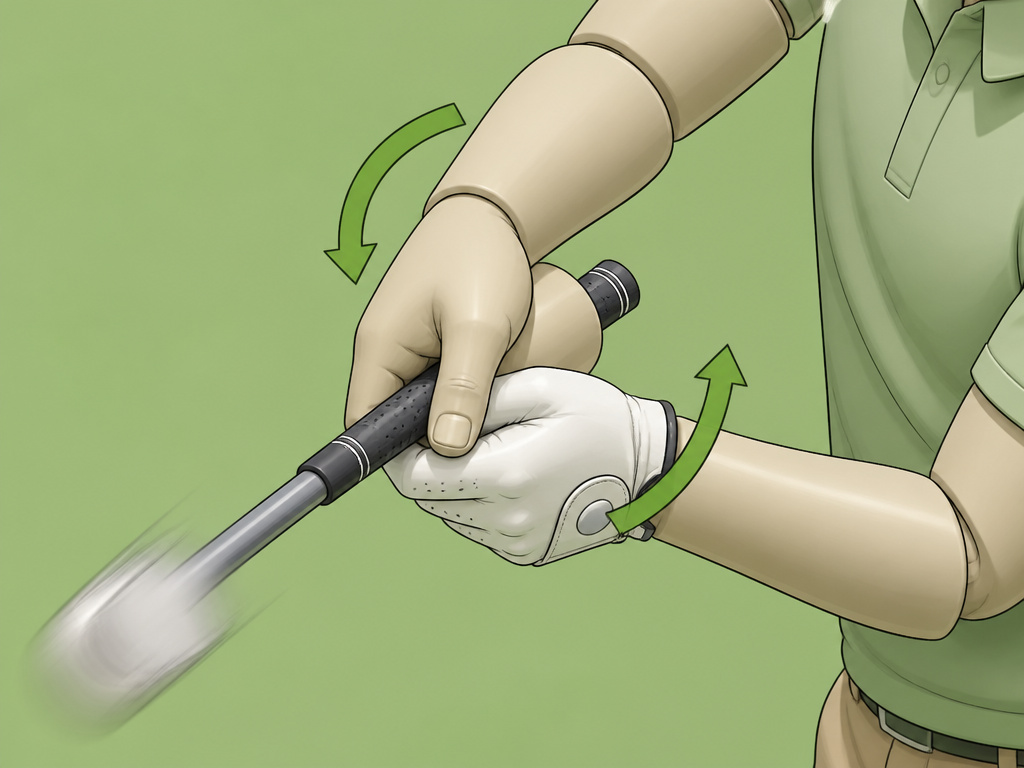
The long-iron swing is about rhythm, not force. The most common mistake is lashing at the ball from the top, which breaks tempo, narrows the swing arc, and guarantees inconsistent contact.
Focus on a Wide Takeaway
Initiate the backswing by turning your shoulders and extending your arms away from your body. Think of creating a wide arc. This wide arc stores energy and sets the club on a shallower plane. A narrow, armsy pick-up leads to a steep, out-of-sync downswing.
The Transition is Everything
The move from backswing to downswing must be smooth. There’s no yank, no jerk. Feel like your lower body starts moving forward while your arms are still completing the backswing. This “wide-narrow-wide” feeling, wide backswing, narrow at the transition, wide through impact, preserves lag and creates power without effort.
Release the Clubhead
This is the feel PGA Tour player Michael Kim emphasizes. With a long iron, you must fully release the club with your hands and arms through impact. You can’t “hold off” the shot like you might with a wedge.
“Personally, I have to focus on fully releasing it with my hands and arms once it gets to 6- or 5-iron. The longer the club the more I have to use my arms and hands to release it. You can’t hold on to it with the longer stuff.”
This release squares the face and delivers maximum speed. Trying to guide or steer the ball is a recipe for a weak block to the right.
Maintain Posture Through Impact
As you release, keep your spine angle and head steady. Do not dip your back shoulder or stand up to help the ball up. Trust the loft. Your weight should be moving decisively onto your lead side, but your upper body remains in its athletic posture. This is how you compress the ball.
A good drill is the Feet-Together Drill. Hit half-speed shots with a 5-iron with your feet touching. It’s impossible to lunge or over-swing. It forces perfect balance, tempo, and a centered strike. If you can hit a pure shot from this position, you have the sequence right.
Strategy: Playing the Percentages Like a Pro
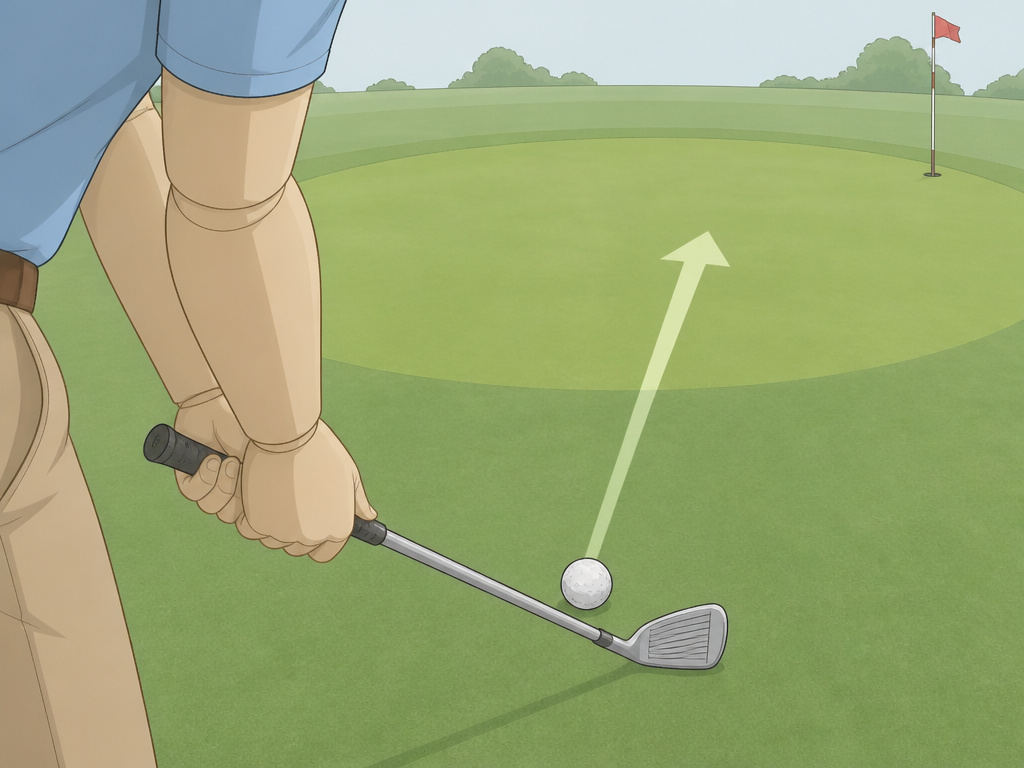
Once you have the technique, you need the right mindset. Long irons are scoring clubs, but not in the way a wedge is. Your goal shifts from attack to management.
Hit Your Stock Shot Every Time
Forget working the ball. Michael Kim’s rule is clear: “No butter cuts, no chip shots, no extra height, only stock shots. It’s a hard enough shot by itself.” Pick your most reliable ball flight, a gentle draw or fade, and commit to it. Adding shot-shaping introduces complexity and risk.
Aim for the Center of the Green
Pins are irrelevant from 200 yards out. Kim’s goal with a 4-iron is simple: “Hit the green and that’s it.” From that distance, any shot on the green is a win. If there’s trouble on one side, aim to the fat side of the green. The math is on your side, the center of the green is almost always the highest-percentage play.
When In Between Clubs, Swing Harder
Kim’s personal tendency is to leave the ball out to the right if he swings softly. His fix: “If I’m in-between clubs, I’m always taking the shorter club and swinging harder.” A fuller, more aggressive release promotes a straighter shot and maintains spin. A soft swing can cause the ball to knuckle and wander.
This pragmatic approach takes the pressure off. You’re not trying to be a hero; you’re trying to avoid a big number. This is where course management blends with technique to lower scores. For shots from tricky stances, like an uphill lie or a sidehill lie, this conservative strategy is even more critical.
The Hybrid Question: When to Make the Switch
This is the most important equipment decision in your bag. The data and professional opinion are unanimous: hybrids are easier for most people to hit.
Michael Kim states, “I think 90% of ams should be using hybrids or woods and the longest iron be a 6-iron. Woods are better from the rough, easier to get up in the air and better off mishits.”
A hybrid has a wider sole, a lower center of gravity, and more perimeter weighting. This design is built for the shallow strike a long iron demands, and it forgives the slightly fat or thin contact that ruins a long iron shot. It’s also superior from the rough, where its rounded sole glides through grass instead of digging.
The Test
Hit ten shots with your 4-iron and ten with a 4-hybrid. Compare: * Consistency of strike: Which club produces more centered contact? * Launch angle: Which gets the ball up easily? * Dispersion: Which club groups shots closer together?
If the hybrid wins in two categories, it belongs in your bag. Your scorecard doesn’t care how the ball gets to the green. This is the core of the long irons vs hybrids debate. It’s not about ego; it’s about results. The same logic applies when choosing between forged vs cast irons or cavity back vs blade irons, pick the technology that best fits your ability to deliver a consistent strike.
Frequently Asked Questions
What is the best drill for hitting long irons pure?
The Feet-Together Drill. Hit half-speed shots with a 5-iron with your feet touching. This forces perfect balance, tempo, and a centered strike by eliminating any possibility of a lunge or sway. If you can make solid contact from this position, your swing sequence is correct.
Should I take a divot with a long iron?
Yes, but it should be shallow, more of a brush or a scrape than a deep divot. A deep divot indicates too steep an angle of attack, which kills speed and launch. The ideal strike brushes the grass after the ball, taking a divot that starts just ahead of where the ball was resting.
How far should an average golfer hit a 4-iron?
Distances vary widely, but an average male amateur with moderate swing speed might carry a 4-iron around 170-180 yards. Faster players can add 20+ yards. However, carry distance is less important than consistency. A 4-iron you can reliably carry 175 yards is more valuable than one that sometimes goes 190 and often goes 160.
Why do I always top my long irons?
Topping usually comes from two causes: raising your upper body through impact to “help” the ball up, or having your weight stuck on your back foot. Focus on maintaining your spine angle and shifting your weight firmly onto your lead foot during the downswing. Trust the club’s loft to get the ball airborne.
Can I hit a draw or fade with a long iron?
You can, but it’s a low-percentage play for most amateurs. The longer shaft and lower loft make it harder to consistently curve the ball on command. Pros like Michael Kim advocate hitting only your stock shot with a long iron to eliminate complication. If you need to shape a shot, the mechanics for a draw shot or a fade shot are the same, but the margin for error is smaller.
What’s the number one mistake with long irons?
Swinging too hard. Effort destroys tempo. Long irons need clubhead speed, but that speed must be generated through a wide arc and a smooth transition, not a violent lunge from the top. Smooth and wide beats fast and tight every time.
Before You Go
Hitting a long iron pure is one of golf’s great feelings, but it’s not a mystery. It’s a shallow strike, built from a forward ball position and a wide, smooth swing. Remember the tour fitter’s rule: it’s about the ball-speed window and descent angle, not just distance.
If you struggle after working on the setup and swing, listen to the data. A hybrid isn’t a crutch; it’s smart equipment for the shot you’re actually trying to hit. The goal is to put the ball on the green from long range, and the best club for that job is the one you can hit with confidence. For the shorter, scoring shots that follow, mastering partial wedge shots is the next skill to build.
