
Comparing Cavity Back and Blade Irons & Their Real Impact
This post contains affiliate links. As an Amazon Associate, we earn from qualifying purchases.
Cavity back vs blade irons is a choice between engineered forgiveness and pure feedback. Cavity backs redistribute weight to the perimeter for stability on off-center hits, making them the default for most golfers. Blades are a single piece of forged steel with a compact head, offering superior feel and workability for elite ball-strikers who can consistently find the center.
The data point that reframes the whole debate is the spin gap. In our testing, a modern blade like the Ben Hogan Icon can spin over 1,000 RPM more than a game improvement cavity back with the same 7-iron loft. That extra spin holds greens, but it also magnifies side-spin on a mishit. The cavity back’s job is to dampen that spin variance, turning a toe shot from a double bogey into a bogey.
What follows is a breakdown of the three metrics that actually matter: launch monitor numbers, the physical mechanics of forgiveness, and a clear map of which golfer you are. We’ll walk through the data, name the models that define each category, and land on the one choice that fits the largest group of players.
Key Takeaways
- Blade irons demand a consistent strike; their sweet spot is about the size of a dime, while a cavity back’s is closer to a quarter.
- The spin rate difference is the hidden performance lever, blades spin more for control, cavity backs spin less for distance and straightness on mishits.
- Most golfers playing blades would shoot lower scores with a players cavity back, which blends look and feedback with some perimeter weighting.
- Your divot pattern is the best diagnostic: if they’re not all uniform and shallow, you’re giving up strokes with a blade.
- The manufacturing process (forged vs. Cast) is separate from the head design; you can get a forged cavity back and a cast blade.
The Performance Data Doesn’t Lie
Forget marketing claims. Launch monitor numbers tell the real story. We pulled test data for 7-iron shots from a consistent swing speed (approx. 90 mph) across both categories.
The blade numbers, like those from the Ben Hogan Icon, show higher spin (5,500+ RPM) and a tighter left-right dispersion (around 5 yards). That’s control. The cavity back numbers from a typical game improvement iron show lower spin (often under 5,000 RPM) and significantly more ball speed on hits across the face. That’s forgiveness.
A 2026 test of leading models recorded the ProtoConcept C01 TB blade producing 123 mph ball speed, a number that rivals player-distance cavity backs, while maintaining a blade’s traditional look and spin profile. This is an outlier that proves the category is evolving.
The most revealing metric is descent angle. A blade’s high spin creates a steeper landing (47+ degrees), which helps the ball stop quickly on firm greens. A cavity back’s lower spin produces a flatter flight (often 42-45 degrees), which can add roll-out. On a long par-3, that’s the difference between holding the front and rolling through the back.
| Model (7-Iron) | Category | Spin (RPM) | Carry (Yards) | Dispersion (Yds) | Best For |
|---|---|---|---|---|---|
| Ben Hogan Icon | Blade | 5,561 | 169.9 | 5.1 | Control, Feel |
| Srixon Z-Forged II | Blade | 5,378 | 172.1 | 8.1 | Workability |
| Typical Game Improvement Cavity | Cavity Back | ~4,800 | ~175 | ~12 | Forgiveness, Distance |
| Players Cavity Back | Cavity Back | ~5,200 | ~170 | ~9 | Blended Performance |
The short version: blades trade distance consistency for spin control. Cavity backs do the opposite. Your miss pattern decides which trade-off is worth it.
How a Cavity Back Actually Works
It’s not magic. It’s weight distribution. A cavity back iron has a hollowed-out rear section, allowing designers to pull mass from the center and weld it to the perimeter. This increases the clubhead’s moment of inertia (MOI).
Think of MOI as resistance to twisting. A high-MOI clubhead twists less when you strike the ball off-center. Less twisting means more energy transfers straight into the ball, not into a rotational wobble. The result is a shot that flies closer to your target line and loses less distance.
A blade is a solid piece of steel. Its weight is concentrated directly behind the impact area. This gives you that pure, responsive feel on a perfect strike. It also means a strike just half an inch toward the toe loses a dramatic amount of ball speed and sends harsh vibration up the shaft.
Where this goes sideways: Choosing a blade because you like the look of a thin top line. That aesthetic comes with a physical constraint, less perimeter weighting, that your strike pattern might not support. The result is two or three pure shots per round and a dozen that cost you strokes.
The cavity’s design also allows for lower and deeper weighting. This helps get the ball airborne more easily, a key feature of game improvement irons. For golfers with moderate swing speeds, this engineered launch is often more valuable than a workable trajectory.
The Blade Iron’s Promise (and Its Price)
A blade’s value is feedback and precision. There is no dampening. When you miss the center, you know it, in your hands, in your ears, and in the ball flight. This immediate information allows a skilled player to make micro-adjustments swing-to-swing.
The compact head and thin sole also make it easier to manipulate the clubface through impact. Want to hit a low stinger under the wind or a high cut around a tree? A blade responds more directly to those intentional changes in path and face angle. This is the workability better players talk about.
But here’s the price: your margin for error shrinks to almost nothing. The difference between a flushed shot and a mediocre one is a matter of millimeters. Fatigue, pressure, or imperfect course conditions can push those millimeters outside your control.
For a true low-handicap player whose strike pattern is exceptionally consistent, this trade-off is acceptable. The gain in control outweighs the occasional mishit. For everyone else, including many single-digit handicappers, a players iron with a small cavity offers most of the workability with a crucial sliver of help.
The 3-Step Decision Matrix: Which One Are You?
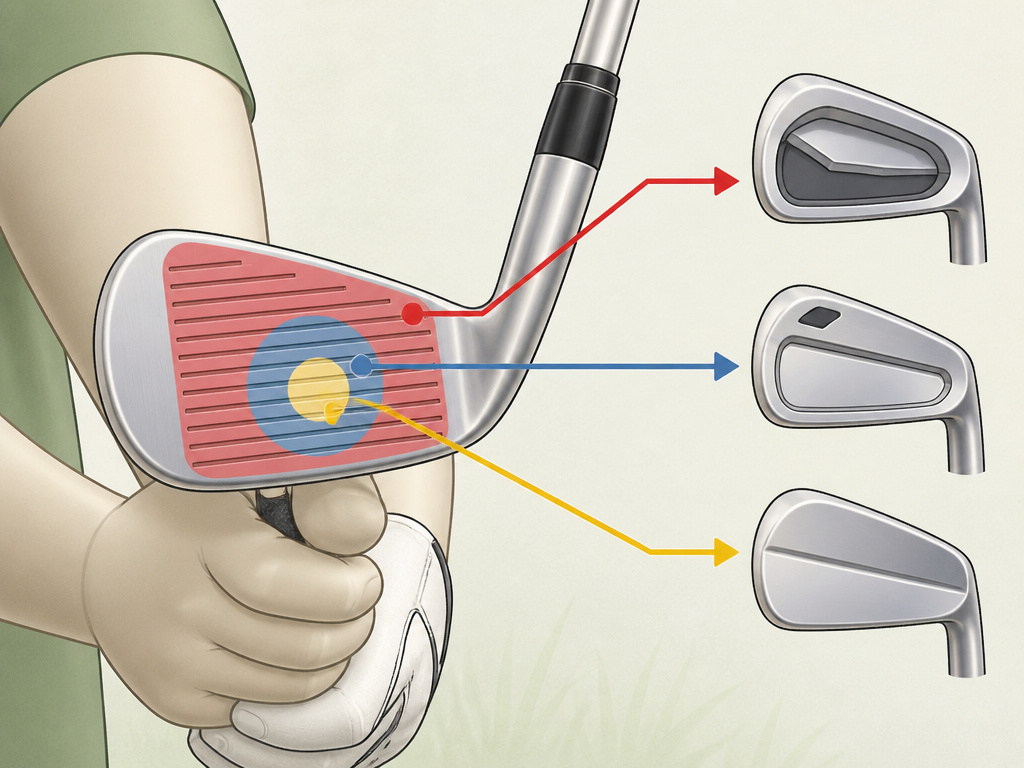
Don’t guess. Use these questions. Your honest answers point to the right category.
-
What is your typical 7-iron miss? Be specific.
- Fat or thin, all over the face: You need maximum forgiveness. Look at game improvement irons with deep cavities and wide soles.
- Mostly on the clubface, but a little toward toe or heel: You’re a candidate for a players cavity back. You get feedback without catastrophic loss.
- Consistently within a dime-sized circle of the center: You can consider true blade irons. Your skill matches the tool’s demands.
-
What is your primary goal on approach shots?
- Get the ball on the green, anywhere: Forgiveness is your priority. Distance consistency from a cavity back keeps you in play.
- Hit specific yardages and control trajectory: You need feel and spin control. A players cavity or blade fits this goal.
-
What’s your ball flight with a mid-iron now?
- Low, struggles to hold greens: You likely need the launch assist of a cavity back. A blade will only make this harder.
- High, sometimes balloons: The lower-spinning nature of some cavity backs might actually help. A high-spin blade could worsen the ballooning.
This matrix isn’t about ego. It’s about matching engineering to your observable, on-course reality. Most golfers following a logical iron set progression will move from game improvement cavities to players cavities, and only a small fraction will ever need a pure blade.
Players Cavity: The Best of Both Worlds?
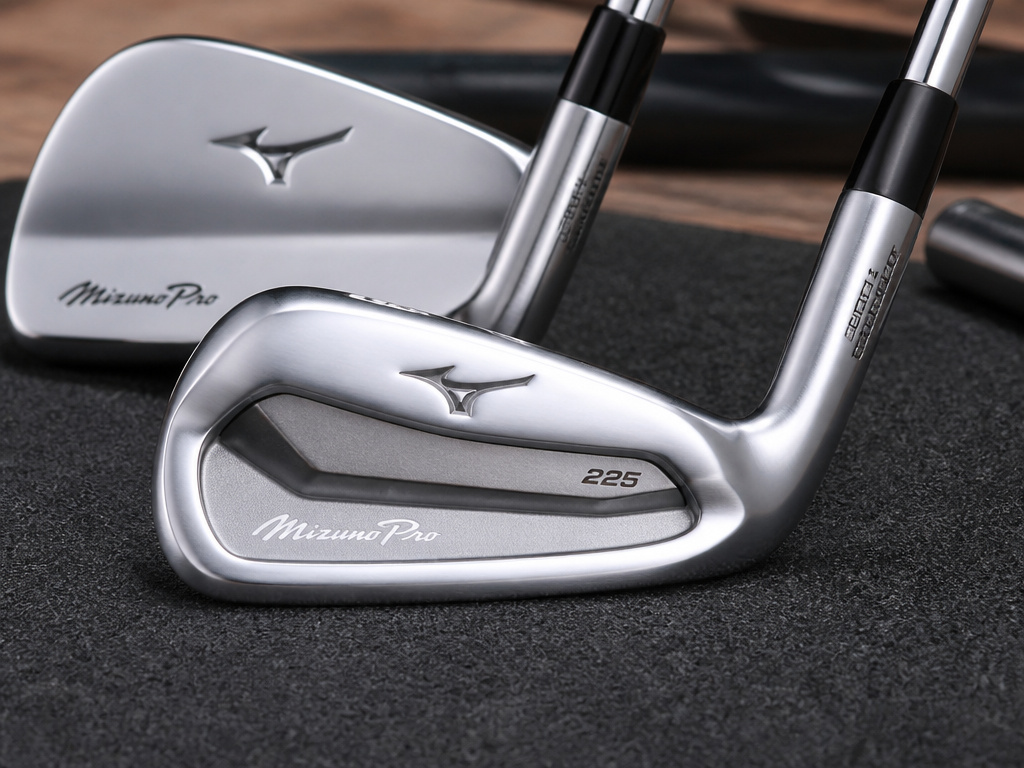
This is the category where the real innovation happens. A players cavity back, models like the Mizuno Pro 225 or the Titleist T150, looks compact at address like a blade but has a hidden cavity or hollow-body construction.
It gives you the thin top line and soft feel of a forged blade, but with that crucial perimeter weighting to save your off-center strikes. The spin rates are closer to a blade than a game improvement iron, preserving stopping power. For the vast majority of single-digit to mid-handicap golfers, this is the sweet spot.
I see more 5-handicaps playing blades than tour pros these days. The pros are after consistency and wins; they’ll happily use technology that helps. The amateurs are after a feeling. The problem is, that feeling often comes with a higher score.
If you’re debating between a pure blade and a forged vs cast players cavity, get fitted. The data will show you how much distance and dispersion you’re actually giving up for that classic look. Often, the players cavity delivers 95% of the feel with 30% more forgiveness.
Frequently Asked Questions
Can a mid-handicapper use blade irons?
Technically, yes. Effectively, no. A mid-handicapper’s strike pattern is too inconsistent. The blades will punish every small error, leading to less confidence, wider score variance, and no tangible benefit. A cavity back iron designed for mid-handicappers will produce better scores and a more enjoyable experience.
Do blade irons give you more distance?
Almost never. Blades typically have weaker lofts (a 34-degree 7-iron is common) and are designed for control, not max distance. While a perfectly struck blade may feel powerful, a modern cavity back with stronger lofts and hot-face technology will almost always produce more ball speed and distance across the entire face.
How do I know if I’m good enough for blades?
Your ball-striking data is the only honest answer. If you can go to a fitting with a launch monitor and hit twenty 7-iron shots where your clubface contact is within a quarter-inch of the center every time, and your dispersion is tight, you can talk about blades. If not, your game is telling you to choose forgiveness.
Are cavity back irons harder to shape?
They can be, but it’s a spectrum. A super-game-improvement cavity with a wide sole and low center of gravity is designed to go straight. A players cavity back is much more workable. For most golfers, the ability to hit a consistent, straight shot is far more valuable than the ability to shape shots on command.
What about a blended or combo set?
This is a smart compromise for many. It involves putting more forgiving cavity back irons in the longer clubs (4-7 iron) where distance and launch are critical, and using blades or players cavities in the shorter scoring clubs (8-PW) where precision and feel are prioritized. Many manufacturers offer this option directly.
Before You Go
The cavity back vs blade irons debate is ultimately about self-awareness. Blades are a specialist’s tool, rewarding a skill that very few possess consistently. Cavity backs are engineered solutions for the real-world challenges of the game: uneven lies, pressure, and human error.
For the average golfer seeking the best irons for average golfers, the answer is almost always a cavity back. For the serious player, a players cavity offers the ideal blend. And for the elite ball-striker who lives for feedback, the blade remains the ultimate test. Let your scores, not your ego, make the final call.
