
Regular vs Stiff Shaft Difference | The Tempo, Not Speed, Choice
This post contains affiliate links. As an Amazon Associate, we earn from qualifying purchases.
The difference between a regular and stiff golf shaft comes down to how much the shaft bends during your swing. A regular flex bends more, which can help a slower, smoother swinger load the shaft for more power. A stiff flex bends less, providing more control and stability for a faster, more aggressive swinger who would otherwise overpower a regular shaft.
That bend, the shaft flex, is a timing device. It’s not just a speed gate. The right match syncs the uncoiling of the shaft with the release of your hands, squaring the clubface at impact. The wrong one throws that timing off, costing you both distance and accuracy.
What follows: a breakdown of the actual construction differences, the swing profiles each flex truly fits, and the on-course consequences of a mismatch. By the end, you’ll know whether your swing calls for the load of a regular or the stability of a stiff.
Key Takeaways
- Flex is about tempo, not just speed. A smooth 95 mph swing might fit a regular flex better than a stiff, while a quick, aggressive 92 mph swing likely needs a stiff.
- The wrong flex amplifies your misses. A shaft too soft leads to high, spinning hooks; a shaft too stiff produces low, fading blocks.
- “Stiff” isn’t a standard. One company’s stiff can feel like another’s regular. Always test based on feel and ball flight, not the label.
- Shaft weight is often more important than flex. Heavier shafts promote control and tempo, lighter shafts can increase speed but may feel unstable.
- The only definitive test is hitting balls. Launch monitor data confirms what your hands and eyes tell you.
What Does “Stiff” Actually Mean in a Golf Shaft?
Shaft stiffness, or flex, is a measure of a shaft’s resistance to bending when force is applied. Think of it as a spring. A regular flex shaft is a softer spring; it compresses and releases energy more easily. A stiff flex shaft is a stiffer spring; it requires more force to bend and returns that energy more quickly.
This rating is engineered into the materials. Most modern steel and graphite shafts use a combination of material modulus (the inherent stiffness of the carbon fiber or steel) and layup design (the orientation and number of material layers) to achieve a specific bend profile.A manufacturer designs a shaft to have a certain amount of deflection, measured at the tip, mid-section, and butt, under a standardized load.
A shaft’s flex rating is a controlled measure of its bending resistance, engineered through specific material layups to influence the timing of the clubhead’s delivery to the ball.
The industry uses a general flex scale: L (Lady), A (Senior), R (Regular), S (Stiff), X (Extra Stiff). The critical point is that there is no universal standard for these letters. The Project X 6.0 shaft, labeled as a stiff, has a distinctly firmer feel than many other “stiff” offerings. This is why testing is non-negotiable.
The Physical Difference: More Than a Label
The construction difference between a regular and stiff shaft of the same model line is typically one of material density and wall thickness. To make a shaft stiffer, manufacturers might use a higher-modulus (more rigid) carbon fiber, add more layers of material in key sections, or adjust the resin content. In steel shafts, the alloy composition and step pattern (the changes in diameter down the shaft) are tuned to alter stiffness.
This physical change alters the shaft’s bend profile, how and where it flexes. A shaft can be stiff in the butt section but softer in the tip (a “high launch” profile), or firmer in the tip with a more active mid-section. This is where understanding shaft kick point becomes essential, as it describes the primary hinge point of the bend.
Regular vs Stiff: The Swing Profile Match-Up
Matching flex to your swing is the core of the decision. Forget the old, generic charts that only use swing speed. Your tempo and transition are the real deciders.
| Swing Characteristic | Fits Regular Flex (R) | Fits Stiff Flex (S) |
|---|---|---|
| Driver Swing Speed | Under 90 mph | 90-105 mph |
| Tempo | Smooth, even-paced | Quick, aggressive |
| Transition (Top of Swing) | Gradual, rhythmic | Sudden, forceful |
| Typual Ball Flight with Current Clubs | High, can be spinny | Mid-to-low, can be flat |
| Common Miss | Hook (left for righties) | Block or Fade (right for righties) |
Why tempo matters more than speed: A golfer with an 88 mph swing speed but a very quick, snappy transition from the top can easily overload a regular flex shaft. The shaft bends too much, too early, and can’t recover in time, leaving the clubface open. Conversely, a golfer with a 94 mph swing but a buttery-smooth, Greg Norman-like tempo can properly load and release a regular flex, maximizing energy transfer. This is why understanding your swing tempo is critical.
The Consequences of a Mismatch
Getting the flex wrong doesn’t just feel bad, it writes your miss into your ball flight.
Where this goes sideways: Using a regular flex with a quick transition. The shaft over-bends, delaying the clubhead. You instinctively compensate by releasing your hands early, shutting the face, and producing a low, diving hook that loses all carry distance.
Regular Flex Too Soft For You:
- Ball Flight: Extremely high, ballooning trajectory with excessive spin.
- Miss Pattern: Big hooks. The shaft kicks forward too aggressively, closing the face.
- Feel: “Whippy” or uncontrollable. You can’t feel where the clubhead is.
Stiff Flex Too Stiff For You:
- Ball Flight: Low, weak knuckleballs that fall out of the sky.
- Miss Pattern: Blocks and slices to the right. The shaft doesn’t release, leaving the face open.
- Feel: “Boardy” or dead. You feel like you’re swinging a piece of rebar, losing all sense of load.
The right flex should feel like an extension of your swing, loading and releasing in sync with your motion. You shouldn’t have to fight it or manipulate your hands to square the face.
Beyond the Letter: Weight, Torque, and Bend Profile
Flex is the headline, but three other specs determine the final performance: weight, torque, and bend profile. You can have two “stiff” shafts that play completely differently.
- Shaft Weight: This is arguably more influential on your swing than flex. Heavier shafts (e.g., 130g steel) promote a more controlled, deliberate tempo. Lighter shafts (e.g., 50g graphite) can help increase swing speed but may feel unstable and disrupt timing. The relationship between shaft weight and swing speed is a key fitting variable.
- Torque: Measured in degrees, torque is the shaft’s resistance to twisting around its axis. Lower torque (3.0°) means less twisting, promoting a straighter, more stable flight, often preferred in stiff driver shafts for better players. Higher torque (5.0°) can feel softer and more forgiving.
- Bend Profile: As mentioned, this defines where the shaft bends. A “low kick point” (bend nearer the head) helps launch the ball higher. A “high kick point” (bend nearer the hands) produces a lower, more penetrating ball flight. Your ideal profile depends on your angle of attack and desired trajectory.
How to Test and Choose: A Practical Guide
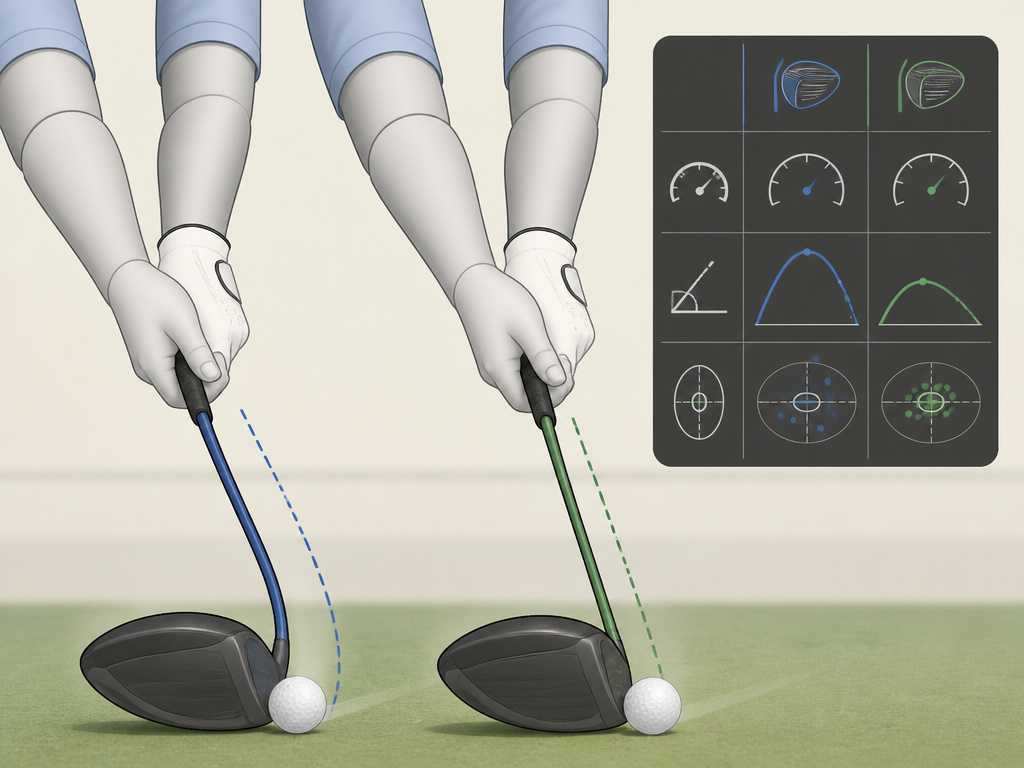
You can’t choose a shaft from a chart. You have to put it in play. Here’s a step-by-step approach.
Step 1: Gather Your Baseline. Know your average driver swing speed (via a launch monitor). Honestly assess your tempo: smooth or quick? Film your swing to see your transition.
Step 2: Hit Balls, Starting in the Middle. If your speed is 92-98 mph, test both a regular and a stiff flex in the same shaft model. Pay less attention to the letter and more to: * Feel: Does it load smoothly? Can you feel the clubhead? * Sound: A good strike should sound solid, not hollow or “clacky.” * Ball Flight: Look for your desired trajectory, not too high, not too low.
Step 3: Read the Launch Monitor. Key data points: * Launch Angle & Spin: A good match optimizes both for maximum carry. * Dispersion: Your left/right miss pattern should tighten with the correct shaft. * Smash Factor: This efficiency metric should be high (near 1.50), indicating solid energy transfer.
Step 4: When In Doubt, Err Stiff. A slightly too-stiff shaft will cost you a few yards but likely keep the ball in play. A too-soft shaft will wreck your accuracy and consistency. Most amateur men overestimate their need for a regular flex.
Common mistake: Choosing a stiff flex to reduce a slice. A slice is caused by an open face and out-to-in path. A stiffer shaft may make it worse by preventing the face from closing. Lessons fix slices, not equipment.
TL;DR: Test with a launch monitor. Let the data, and the feel of solid, straight shots, make the choice, not a preconceived notion of what flex you “should” play.
The Club Fitting Imperative

This entire discussion leads to one inescapable conclusion: you need a professional fitting. A qualified fitter has the expertise and the array of stiff shaft models and regular options to isolate the variable that works for your swing.
A fitting is about solving a physics problem. The fitter will combine head design, shaft weight, flex, and swing weight to build a club that maximizes your efficiency.The importance of club fitting is the single biggest equipment advancement available to any golfer.
If a full fitting is not possible, many retailers offer demo programs or have bays where you can test specific shafts. This is the next best thing.
Frequently Asked Questions
Can I mix regular and stiff flexes in my bag?
Yes, and many better players do. It’s called a “frequency-matched” set. Your longer clubs (driver, fairway woods) often benefit from a slightly softer flex to help with launch, while your irons, where control is paramount, might be stiff. Consistency through the set is ideal, but performance in each club is the ultimate goal.
Does age automatically mean I need a regular flex?
No. Age is a poor proxy for swing speed and tempo. A 65-year-old who has stayed flexible and athletic with a smooth, 92 mph swing might fit perfectly into a stiff flex. The decision should be based on your current swing characteristics, not your birth year.
How do I know if my current shaft is too soft?
The signs are clear: a ballooning ball flight that falls short, a persistent left miss (for right-handers), and a complete lack of feel for where the clubhead is during the swing. Your shots will feel “floaty” and lack any penetrating power.
What’s the difference between a “firm” regular and a “soft” stiff?
This is the gray zone where labeling fails. One manufacturer’s “Firm” or “R+” might be another’s “S.” This is why model names and specific designations (like Project X’s 5.5 or 6.0) are more reliable than letters. Always compare based on actual performance, not the flex category.
Do graphite shafts always play softer than steel?
Not necessarily. Modern graphite shafts can be engineered to be extremely stiff and stable. The perception comes from older, whippier graphite designs. Today, high-performance graphite shafts for better players, like the Fujikura Ventus or Mitsubishi Tensei lines, offer profiles as stout as any steel shaft, just in a lighter package.
The Bottom Line
The regular vs stiff shaft difference is a choice between two different timing mechanisms for your swing. The regular flex is for the smooth operator who uses the shaft’s bend to store energy.The stiff flex is for the aggressive player who needs a stable platform to control their power.
Stop guessing based on swing speed alone. Listen to your ball flight and your hands. If you’re spraying the ball left with no control, your shaft is probably too soft. If you’re hitting weak, low blocks, it’s likely too stiff.
The correct shaft feels like it isn’t even there, it just works. For the vast majority of golfers playing off a double-digit handicap, a proper driver shaft flex selected through testing or fitting is the fastest route to more fairways and more confidence on the tee. Get the flex right, and the rest of your game has a stable foundation to build upon.
