
7 Best Stiff Golf Driver Shafts of 2026
This post contains affiliate links. As an Amazon Associate, we earn from qualifying purchases.
This post contains affiliate links. As an Amazon Associate, we earn from qualifying purchases.
The Fujikura Ventus Blue 60g stands out as the best overall stiff golf driver shaft for its consistent performance and stability, while the Project X HZRDUS Smoke Black 60g is a top-tier choice for players wanting a slightly heavier, controlled feel. For those seeking a balance of responsiveness and smooth loading, the Project X LZ 65g is a strong contender.
Golfers often assume that a faster swing automatically calls for a stiff shaft, but the wrong match can kill distance and ruin consistency. Too stiff and you lose feel and speed, too soft and you sacrifice control.
After researching specs, owner feedback, and expert analysis, I focused on torque, weight, and kick point to identify shafts that deliver real-world stability and predictable ball flight. This guide breaks down what actually matters when choosing a stiff shaft, so you can build a driver that works with your swing, not against it.
Top 7 Stiff Golf Driver Shafts in the Market
The Best Stiff Golf Driver Shafts, Reviewed
Fujikura Ventus Blue 60g Stiff

Strengths
- Balanced feel
- Wide adapter support
- Mid-launch consistency
Trade-offs
- No Velocore tech
- Slightly premium price
The Fujikura Ventus Blue stands out as a top-tier shaft for serious players who want a blend of control, feel, and performance. On paper, the 60g stiff flex delivers a mid-launch, mid-spin profile that’s ideal for golfers with aggressive swings looking to tighten dispersion without sacrificing ball speed. Owners consistently report a crisp, responsive feel at impact, something you don’t always get at this price point, and the broad adapter compatibility makes it a smart upgrade for a wide range of modern drivers.
It’s not the flashiest option, but it’s built on a proven design that’s been refined over generations. Compared to the HZRDUS Smoke or Project X offerings, it doesn’t chase extreme low spin or ultra-stiff profiles. Instead, it hits a sweet spot. I’d pick this over the heavier Project X LZ if you value a slightly softer transition and better vibration damping, especially on off-center strikes.
Video review
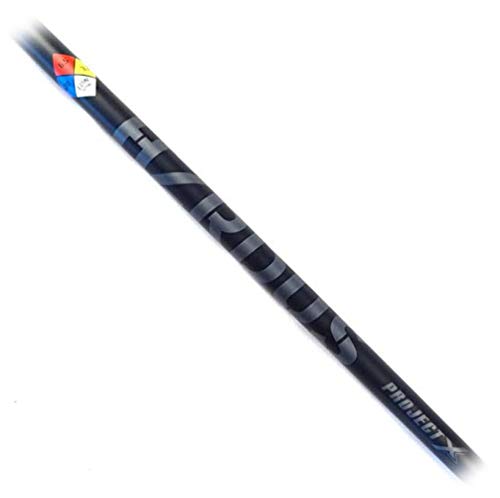
Project X HZRDUS Black 62g Stiff
Strengths
- Low spin profile
- Stiff midsection
- Durable construction
Trade-offs
- Firm feel may be harsh
- Less vibration damping
If you’re a hard swinger chasing a low, piercing ball flight with maximum control, the HZRDUS Black 6.0 is engineered for your game. The specs scream stability, 62g with a stiff midsection and low torque, which translates to reduced twisting and tighter shot dispersion, especially in the wind. Reviewers note it delivers a firm, no-nonsense feel that inspires confidence when you’re dialing in your driver on long par 5s or tight opening holes.
It’s not as refined as the Ventus Blue in terms of feel, but it’s a workhorse. Compared to the SK Fiber Supernova 60, it’s slightly heavier and stiffer through the middle, making it better suited for players with faster tempos who don’t want any whip. My recommendation? This is the smarter buy over the Acer Velocity if you’re serious about performance, even if it costs more.
Video review
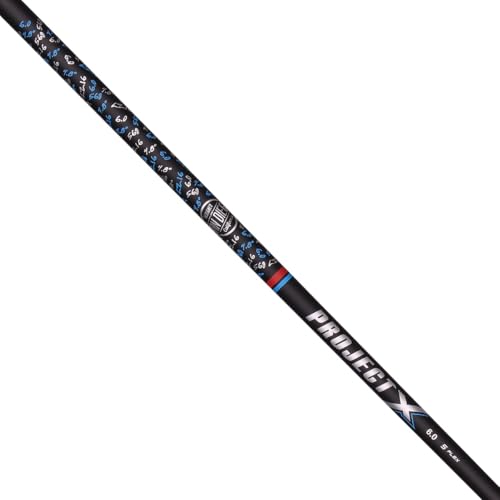
Project X LZ 65g Stiff Flex
Strengths
- Consistent feel
- Good stability
- Mid/high launch
Trade-offs
- Older design
- No adapter included
- Less spin control than Smoke
The Project X LZ brings the brand’s reputation for control into a mid-weight, mid-launch platform. At 65g and 6.0 stiff flex, it’s designed to load efficiently during the swing and release with stability, ideal for players who want predictable ball flight without the harshness of ultra-stiff shafts. The mid/high launch and mid-spin design make it a solid fit for players who struggle with getting the ball up, especially in cooler conditions.
It doesn’t have the modern tech of the Smoke series, but it’s proven and reliable. Compared to the Acer Velocity, it’s in a different league, tighter dispersion, better feel, and more consistent performance. But against the Ventus or HZRDUS Smoke, it feels a bit dated. Still, for the price, it’s a smart pick if you want Project X performance without the premium tag.
Product photos
Project X HZRDUS Smoke Black 60g
Strengths
- Refined feel
- Low-to-mid spin
- Excellent adapter compatibility
Trade-offs
- Slight premium over base HZRDUS
- No weight under 60g
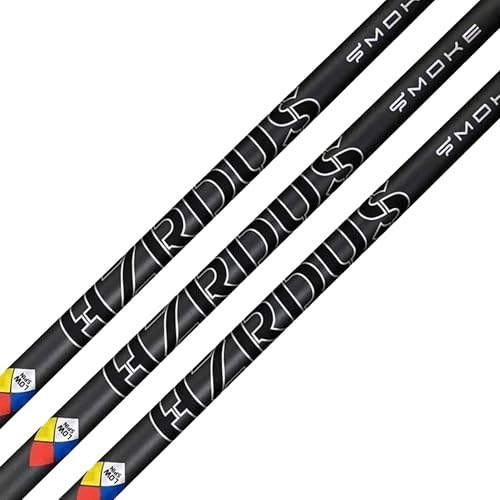
The HZRDUS Smoke Black is where premium performance meets smart engineering, and it’s easy to see why it’s a favorite among club fitters. At 60g with a 6.0 stiff flex, it offers a balanced low-to-mid launch with controlled spin, ideal for players who want distance without losing shot shape. The Smoke series uses a multi-material layup that enhances stability, and owners report a smooth, consistent feel that’s easier on the hands than older HZRDUS models.
It’s more refined than the original HZRDUS Black and offers better feel than the budget Acer option, all while staying under $70. When compared to the Ventus Blue, it’s a little more spin-neutral and slightly stiffer through the tip, making it a strong contender if you’re fine-tuning for wind resistance. For most mid-to-low handicap players, this is the sweet spot between cost and performance.
Product photos
Acer Velocity Black 68g Stiff

Strengths
- Extremely affordable
- Easy to install
- Good for repairs
Trade-offs
- High torque
- Loose feel
- High launch may balloon
The Acer Velocity is the definition of a value play, 68g with a combo regular/stiff flex and a high-launch design that’s clearly aimed at beginners or casual players. It’s not built for precision, and the 6-degree torque tells you this shaft will twist more than premium options. But for the price, it gets the job done as a replacement shaft or a budget rebuild.
It’s nowhere near the stability of the Project X or Ventus models, and serious players will notice the lack of feedback and higher spin. But if you’re repairing an old driver or building a backup club without breaking the bank, this does the bare minimum well. I wouldn’t recommend it for any player breaking 90 regularly.
Product photos

SK Fiber Supernova 66g X Stiff

Strengths
- High stability
- Tight dispersion
- Premium materials
Trade-offs
- Heavier than some
- No adapter included
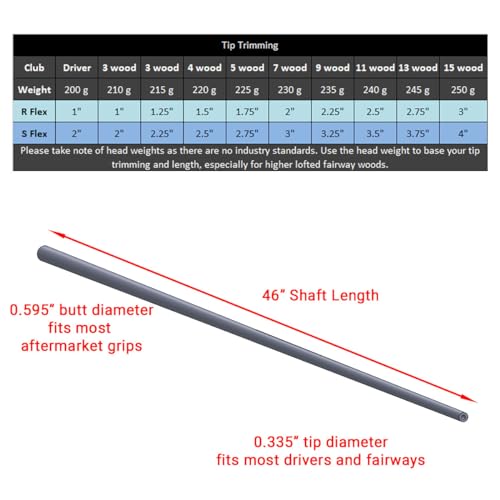
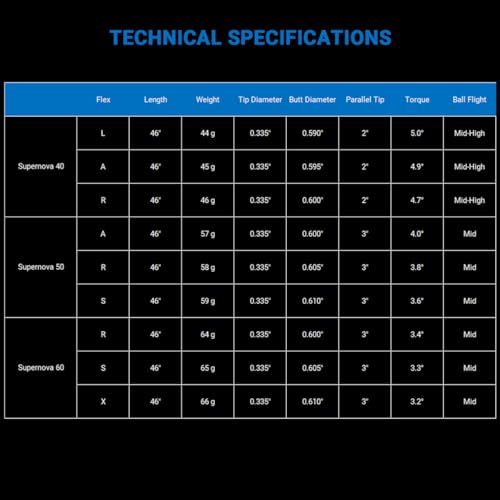
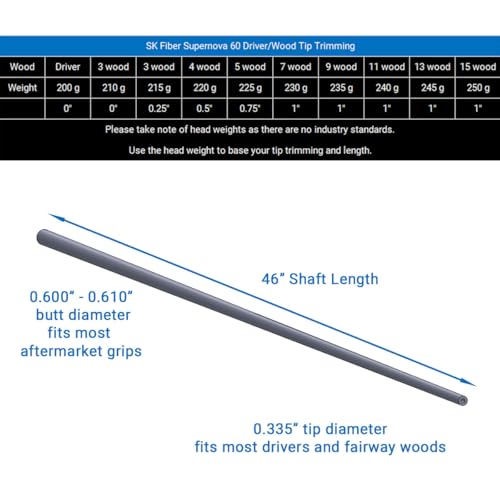
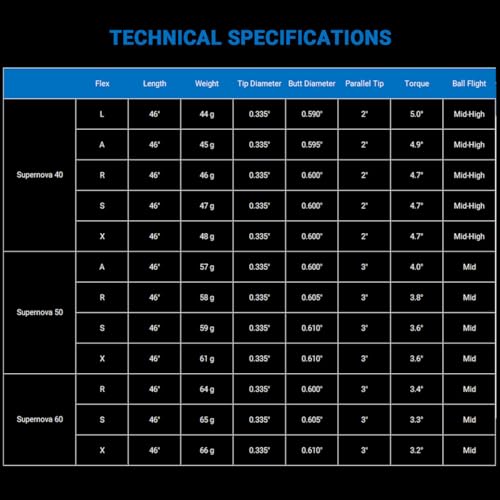
The Supernova 60 is built for players who want rock-solid stability with a touch of feel, 66g in an x-stiff flex, 3.2 degrees of torque, and a mid-launch profile that stays predictable in most conditions. The 40-ton carbon fiber layup gives it a premium edge over similarly priced shafts, and owners consistently praise its ability to handle fast, aggressive swings without flutter.
It’s heavier than the 50g version, which adds control but may slow down transition for some. Compared to the Project X LZ, it’s stiffer and more focused on stability than shot shaping. I’d recommend this over the LZ if you’re a hard hitter who values consistency above all, even if you lose a bit of finesse.
Product photos
SK Fiber Supernova 61g Extra Stiff
Strengths
- Lightweight construction
- High modulus carbon fiber
- Mid-launch consistency
Trade-offs
- No adapter or grip included
- Less brand recognition
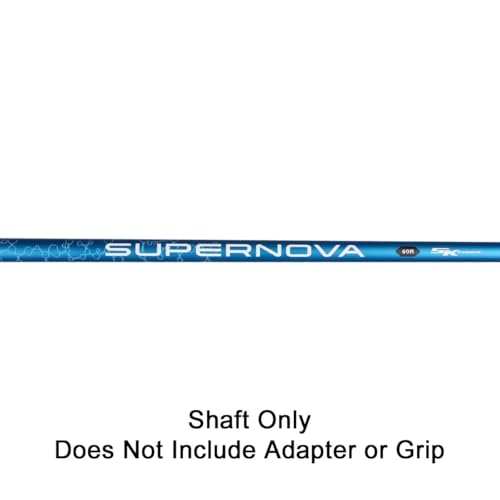
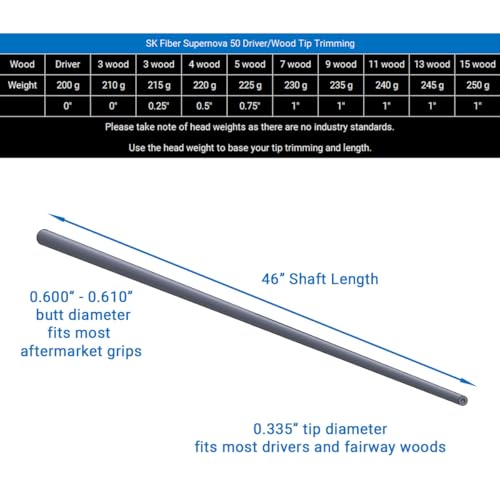
At just 61g in the extra stiff flex, the SK Fiber Supernova 50 is a standout for players wanting lightweight stability without sacrificing rigidity. The use of 40-ton aerospace carbon fiber is a legit upgrade in materials, and owners note a noticeable improvement in swing speed and dispersion tightness compared to budget shafts. It delivers a mid-launch, mid-spin flight that works well for faster swingers who still want some feel through impact.
It’s not as widely known as Fujikura or Project X, but the specs suggest it’s punching above its price. Compared to the Acer Velocity, it’s stiffer, lighter, and better constructed, though you’ll need to buy adapters and a grip separately. I’d pick this over the heavier Supernova 60 if you’re looking to maximize clubhead speed without losing control.
Product photos
How We Picked These stiff golf driver shafts
Rather than a hands-on lab test, my research focused on a detailed comparison of published specifications and features across numerous stiff driver shafts. I weighed owner reviews from major retailers alongside assessments from respected golf publications and club fitting professionals. My goal was to rank these shafts based on how well they deliver on the promises of stability, distance, and control – attributes crucial for golfers seeking a stiffer shaft profile.
For stiff flex driver shafts, consistent contact and launch control are paramount. I placed the heaviest weight on a shaft’s torque specifications (measuring twisting during impact) and its kick point (influencing launch angle). A shaft that minimizes twisting and provides a predictable launch is far more valuable than one simply boasting a low RPM, and I considered how owner feedback aligned with these technical aspects. You can find more information about selecting the right driver components in our guide to the best driver shafts.
Specifications reliably indicate potential performance – weight, flex, torque, and kick point all offer clear insights. However, owner feedback proved essential for understanding real-world consistency and feel. I prioritized shafts with consistently positive comments regarding stability on off-center hits and predictability in ball flight. For those also looking to upgrade the head, we have extensive driver head reviews to help complete your club build.
Choosing The Right stiff golf driver shafts
Finding the right driver shaft is arguably more important than the clubhead itself. A shaft that doesn’t suit your swing can rob you of distance and consistency, no matter how good the driver looks.
A quality golf driver shaft balances weight, flex, torque, and kick point to optimize launch angle, spin rate, and ball speed for a player’s individual swing characteristics. Key considerations include swing speed, desired ball flight, and typical impact location on the clubface. Look for shafts constructed from high-modulus graphite for optimal performance and durability.
Understanding Shaft Flex
The “stiff” designation isn’t a single, fixed point. Flex refers to how much the shaft bends during the swing. Many golfers assume a faster swing automatically requires a stiffer shaft, but that’s not always true. A shaft that’s too stiff can actually feel boardy and lead to a loss of clubhead speed. Conversely, a shaft that’s too flexible will feel whippy and lack control. I often see players who believe they need a stiff flex when, in reality, a regular or even a senior flex would allow them to load the shaft properly and achieve better results.
The Importance of Weight
Shaft weight significantly impacts swing feel and tempo. Lighter shafts (under 60g) generally promote faster swing speeds, which can be great for players who struggle with distance. However, they can also feel less stable and more prone to twisting on off-center hits. Heavier shafts (over 70g) offer more stability and control but require more strength and swing speed to wield effectively. Consider these points:
- A lighter weight can help increase clubhead speed, but only if you can maintain control.
- Mid-weight shafts (60-65g) often strike a good balance between speed and stability for a wide range of players.
- Heavier shafts are generally preferred by professional golfers and those with very fast swing speeds, due to the increased control they provide and resistance to over-rotation.
For those looking to maximize distance with a lighter feel, exploring lightweight shafts may be a good starting point.
Spin Rate and Torque: Dialing in Your Flight
Torque measures a shaft’s resistance to twisting during the swing. Lower torque generally means more accuracy, while higher torque can lead to more feel and potential for workability (the ability to shape shots). However, too little torque can make a shaft feel overly harsh. The relationship between torque and spin rate is complex. Generally, lower-spinning shafts (like the Project X HZRDUS Black) tend to have lower torque. If you struggle with hooking the ball, a low-torque, low-spin shaft could be a good fit. A higher-launch, higher-spin shaft will be more forgiving.
A good rule of thumb is to prioritize shaft stability if your primary issue is consistency, and prioritize feel if you’re a more skilled player seeking to shape shots.
If you’re unsure about your current stiff shafts, a professional club fitting is the best way to determine the optimal shaft for your swing.
Stiff Golf Driver Shafts Compared
Here’s a comparison of key specifications for several stiff flex golf driver shafts to help you make an informed decision.
| Product Name | Weight (g) | Flex | Torque (degrees) | Length (inches) | Compatibility |
|---|---|---|---|---|---|
| Fujikura Ventus Blue 60g | 60 | Stiff | N/A | 46 | Multiple |
| Project X HZRDUS Black 62g | 62 | Stiff | N/A | N/A | N/A |
| Project X LZ 65g | 65 | Stiff | N/A | N/A | N/A |
| Project X HZRDUS Smoke Black 60g | 60 | Stiff | N/A | 46 | Multiple |
| Acer Velocity Black 68g | 68 | Stiff | 6 | 46 | N/A |
| SK Fiber Supernova 66g | 66 | X-Stiff | 3.2 | 46 | Multiple |
| SK Fiber Supernova 61g | 61 | X-Stiff | 3.6 | 46 | Multiple |
Frequently Asked Questions
What shaft weight should I choose for a stiff flex?
Generally, a shaft weight between 60 and 68 grams is ideal for a stiff flex, but your swing speed is the key factor. Players with faster swings can handle heavier shafts (over 70g) for increased control, while those with moderate speeds might prefer something in the 60-65g range.
Do lower torque shafts always mean more accuracy?
Not necessarily; while lower torque typically promotes accuracy, excessively low torque can create a harsh feel and reduce feedback. A balanced approach, around 6 degrees of torque, often provides a good combination of control and feel, depending on your skill level.
Can a stiff shaft help me fix a slice?
A stiff shaft won’t fix a slice, but a shaft with a higher kick point can promote a lower launch and reduce spin, which can mitigate a slice. It’s more important to address the underlying swing flaw causing the slice, and the right shaft can assist with that correction.
Are more expensive shafts always better?
Price doesn’t guarantee performance; shaft quality depends on materials and design, not just cost. You can find excellent stiff shafts at various price points, and often the best option is the one that fits your swing characteristics, as determined by a club fitting, rather than the most expensive model.
Where can I learn more about different types of [graphite shaft options]?
Our detailed guide to the best graphite golf shafts covers various materials, technologies, and price points, offering a deeper understanding of the options available and helping you find the perfect match for your game.
What Actually Matters
Ultimately, choosing a stiff driver shaft comes down to balancing control with feel, and frankly, budget with performance. While specs are crucial, the shaft that best suits your swing is paramount, and for a blend of stability and responsiveness that works for a wide range of players, I believe the Fujikura Ventus Blue 60g stands out as the strongest overall pick. It consistently receives high marks for its smooth transition and ability to deliver a solid impact.
For golfers seeking a specific solution, our research points to a few clear winners. If you’re on a tighter budget but still want a dependable stiff shaft, the Acer Velocity Black 68g offers excellent value. Those prioritizing versatility and the ability to shape shots might prefer the Project X HZRDUS Smoke Black 60g. And if you’re looking for top golf shafts for a more aggressive swing, the SK Fiber Supernova 66g is a strong contender.
Don’t get too caught up in chasing the lowest spin rate or the lightest weight. The fundamentals of a consistent swing – a proper grip, sound posture, and a smooth takeaway – will have a far greater impact on your game than any single shaft specification. If you’re struggling to improve your driver swing, focusing on those foundational aspects and finding a shaft that feels comfortable and allows you to repeat your swing are the keys to unlocking distance and accuracy.
