
Basic Rules of Golf Explained | The 5 Core Principles
This post contains affiliate links. As an Amazon Associate, we earn from qualifying purchases.
The basic rules of golf are built on five core principles: play the course as you find it, play the ball as it lies, count every stroke, apply penalties honestly, and understand the form of play (match or stroke). A round consists of 18 holes, starting from a teeing area and ending when the ball is holed on the putting green. The official Rules of Golf, published by the R&A and USGA, provide the complete framework for administering the game.
That framework is dense, over 70 defined terms and 25 rules. But you don’t need to memorize the book to play correctly. The principles above are the skeleton. Everything else, from dropping in a penalty area to repairing a ball mark, hangs on one of those five ideas.
What follows is a breakdown of those principles, the critical differences between match and stroke play, and the specific situations, like a ball moved by wind or playing from the wrong tee, where knowing the rule saves strokes and arguments.
Key Takeaways
- Golf is governed by the official Rules of Golf, a joint publication of the R&A and USGA.
- The two primary forms of play are stroke play (count every stroke) and match play (win individual holes).
- You must play the ball as it lies and play the course as you find it, with specific exceptions for relief.
- Penalties escalate from one stroke, to two strokes (or loss of hole), to disqualification.
- A hole is completed only when the ball is holed on the putting green; failing to do so results in disqualification if not corrected.
The Five Foundational Principles
The rulebook is built on a handful of simple, strict ideas. Get these right, and the specifics make sense.
Play the Course as You Find It. You cannot improve your lie, your line of play, or your stance by moving, bending, or breaking anything growing or fixed, except in very specific ways allowed by the Rules. This includes not pressing down behind the ball in the rough.
Play the Ball as It Lies. Where your ball comes to rest is where you play it from. You can’t kick it out from behind a tree root or toss it from a puddle. The four exceptions are when the Rules allow you to take relief: from an abnormal course condition (like casual water), a penalty area, an unplayable lie, or an embedded ball.
Count Every Stroke. A stroke is any forward movement of the club made with the intent to hit the ball. A whiff counts if you were trying to hit it. Every stroke, including penalty strokes, must be added to your score for the hole.
Apply Penalties Honestly. If you know you broke a rule, you must add the penalty. Deliberately failing to apply a penalty you know you incurred is grounds for disqualification. This is the sport’s integrity clause.
Know Your Form of Play. Are you playing match play or stroke play? The scoring and some penalties differ fundamentally. In match play, you’re competing hole-by-hole against an opponent. In stroke play, you’re counting your total strokes against the entire field.
The Course: 5 Defined Areas
Every shot you take happens in one of five defined areas of the course. The rules that apply depend entirely on where your ball is.
| Area of the Course | Description | Key Rule Consideration |
|---|---|---|
| Teeing Area | The starting point for each hole, defined by the depth between two tee markers. | You must play your first stroke from within this area. Starting from outside it incurs a penalty. |
| General Area | Everywhere on the course that is not a defined as one of the other four areas. This includes the fairway, rough, and trees. | The standard “play it as it lies” rule applies here. |
| Bunker | A specially prepared area of sand, often a hollow. | You cannot ground your club in the sand before making a stroke. |
| Penalty Area | Areas marked by red or yellow stakes or lines, typically containing water or other hazards. | You have relief options, but they come with a one-stroke penalty. |
| Putting Green | The specially prepared area around the hole where the grass is cut shortest. | You may mark, lift, and clean your ball here. You may also repair ball marks and old hole plugs. |
Knowing whether you’re in the general area or a bunker changes everything. Ground your club in a bunker before your swing, and it’s a penalty. Do the same in the rough, and it’s fine. This is why the definitions matter.
Match Play vs. Stroke Play: The Critical Divide
The form of play isn’t a minor detail. It changes strategy, penalties, and even how you interact with other players.
Match Play is a head-to-head duel. You win a hole by completing it in fewer strokes than your opponent. The match is won when you are “up” by more holes than remain to play. The total number of strokes over 18 holes doesn’t matter, only the holes won. * Penalty: The “general penalty” in match play is loss of the hole. If you break a rule, you lose that hole immediately. * Concession: You can concede a hole, or a putt, to your opponent at any time. “That’s good” is a unique and strategic part of match play.
Stroke Play is what you see in most professional tournaments and weekend club competitions. Every stroke over the entire round is counted. The player with the lowest total score wins. * Penalty: The “general penalty” in stroke play is two strokes. * No Concessions: You must hole out on every green. There is no “gimme.”
Where this goes sideways: Starting a hole from outside the teeing area. In match play, your opponent can make you replay the shot, but there’s no penalty. In stroke play, it’s a two-stroke penalty, and you must correct the mistake by playing from inside the teeing area before starting the next hole. Fail to correct it, and you’re disqualified.
The scoring responsibilities are heavier in stroke play. You are responsible for the accuracy of your own scorecard. Sign for a score on a hole that’s lower than what you actually took, and you’re disqualified. Sign for a higher score, and that higher score stands.
Common Situations and How the Rules Apply

Let’s walk through three scenarios every golfer faces. The principle is simple; the application is precise.
Your ball moves after you address it. First, determine the cause. Did you touch it with your club? If yes, it’s a one-stroke penalty, and you must replace it. Did the wind blow it? Then no penalty, play it from the new spot. The rule recognizes only four causes for a ball at rest that moves: the player, the opponent, an outside influence (like a bird), or natural forces.
You hit your ball into a red-staked penalty area. You have three relief options, each costing one penalty stroke: 1. Play from where your last stroke was made (stroke and distance). 2. Drop back on a line keeping the point where the ball last crossed the edge of the penalty area between you and the hole. 3. Take lateral relief within two club-lengths of where the ball last crossed the edge, no closer to the hole.
You need to take free relief from casual water. Find your nearest point of complete relief, the closest spot where no casual water interferes with your stance or swing. Drop the ball within one club-length of that point, no closer to the hole. It must first strike the ground within that relief area. If it rolls outside, you re-drop.
Equipment and What You Can (and Can’t) Use
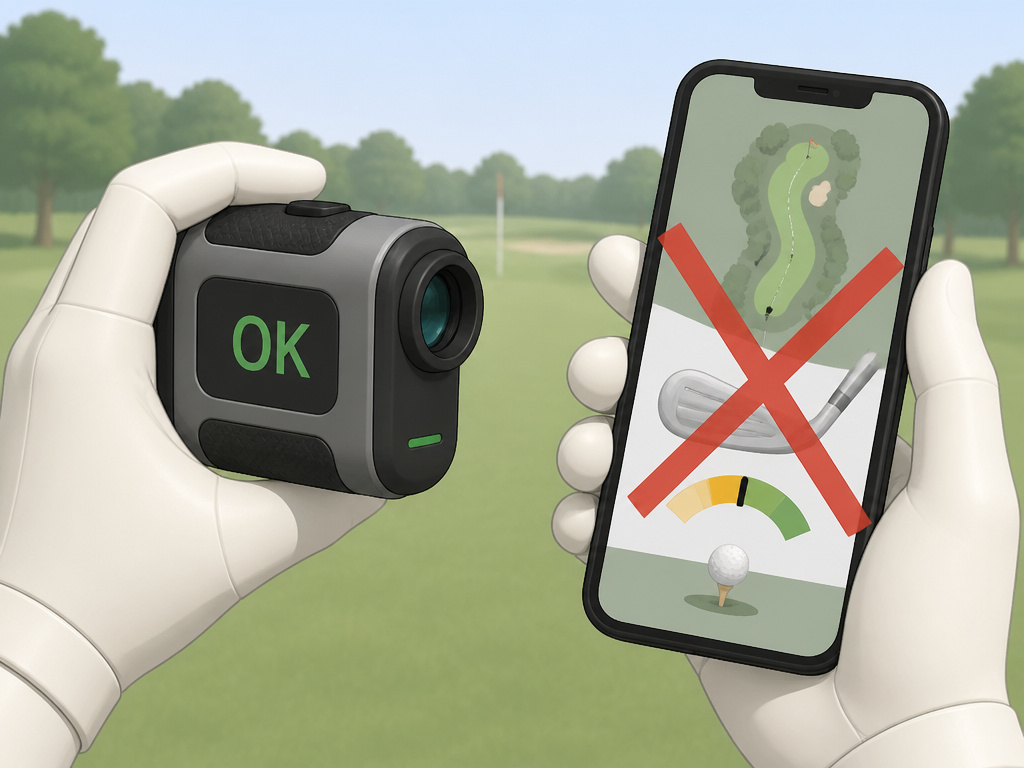
The rules limit tools that could reduce the game’s challenge. The principle is that golf is a test of skill, not technology.
You can use a distance-measuring device (like a Bushnell rangefinder) to get yardage, unless a local rule says otherwise. You can check a weather forecast on your phone for wind or temperature.
You cannot use a device that measures elevation change or suggests a line of play (like a slope-adjusted club recommendation). You cannot use an alignment rod on the ground to help you aim. You cannot toss grass or powder in the air to gauge the wind.
The line is between getting information and getting advice from an artificial source. When in doubt, stick to a simple laser rangefinder or GPS watch that only shows distance.
The Importance of Etiquette and Pace
While not penalty-bearing rules in the strictest sense, etiquette is part of the game’s fabric under Rule 1.2. It covers safety, consideration, and pace.
Pace of play is the biggest etiquette issue on public courses. The rule is simple: keep up with the group in front of you, not just ahead of the group behind. Be ready to play when it’s your turn. If you lose a ball, don’t search for five minutes, the limit is three.
The part nobody mentions: Raking a bunker. It’s not just polite; it’s a rule. You must smooth over all holes and footprints after you play from a bunker. Leaving it a mess for the next player is a breach of etiquette.
Other basics: repair your ball marks on the green (and one other), replace divots, and don’t stand in a player’s line of sight or putting line. Don’t talk or make noise during another player’s stroke. These aren’t just niceties; they’re how the game is meant to be played.
Frequently Asked Questions
What is the most important rule in golf?
The twin principles of “play the course as you find it” and “play the ball as it lies” are the most important. They define the game’s fundamental challenge. Most other rules exist to define the exceptions to these principles.
Do you get a penalty if you accidentally move your ball?
It depends on where you are and what caused it. On the putting green, if you accidentally move your ball, there is no penalty, just replace it. In the general area or a bunker, if you cause it to move, it’s a one-stroke penalty and you must replace it. If natural forces move it, play it from the new spot with no penalty.
What’s the difference between a yellow and red penalty area?
Both are penalty areas where you can take relief with a one-stroke penalty. The key difference is in your relief options. For a yellow (front) penalty area, your two main options are stroke-and-distance or dropping back on a line. For a red (lateral) penalty area, you have the additional option of lateral relief within two club-lengths, which is often the only practical play.
What happens if I don’t hole out?
In stroke play, you must hole out on every hole. If you realize you didn’t hole out before you start the next hole (or before you return your scorecard on the final hole), you are disqualified. In match play, your opponent can choose to concede the putt, but if they don’t, and you don’t hole out, you lose the hole.
Can I change golf balls during a hole?
Generally, no. You must hole out with the same ball you played from the teeing area, unless a rule allows substitution. You can change balls if the original is cut or cracked, if you are taking relief (like from a penalty area), or if it’s lost or out of bounds.
Where can I find the full, official rules?
The complete official Rules of Golf are published online by the R&A and USGA. For a deep dive into a specific situation like starting a hole, the USGA Rule 6 guide provides detailed explanations. The full R&A rulebook PDF download is the definitive document.
Before You Go
The rules aren’t there to punish you. They’re the fence around the game, keeping it fair and consistent whether you’re playing in Scotland or Arizona. Start with the five principles. Get a handle on match versus stroke play. Know your relief options from penalty areas and abnormal conditions.
Most disputes come from not knowing the form of play or not understanding the defined areas of the course. Spend ten minutes with the definitions section of the rulebook. It makes every other rule clearer.
Finally, pair this knowledge with good golf etiquette. Understanding pace of play and golf cart rules makes the round better for everyone. When you’re ready to dive deeper, the specifics of bunker rules and penalty areas will save you strokes. For anyone just starting out, our beginner’s guide puts it all together.
