
Golf Etiquette Rules Explained: Pace, Penalties & Courtesy
This post contains affiliate links. As an Amazon Associate, we earn from qualifying purchases.
This post contains affiliate links. As an Amazon Associate, we earn from qualifying purchases.
Golf etiquette rules are the unwritten code of conduct governing pace of play, course care, and respect for others. The official Rules of Golf formally separated etiquette in 2019, but the game’s governing bodies still expect players to follow key standards like the 40-second stroke pace recommendation and to avoid unreasonable delay, which carries a penalty of one stroke for a first breach.
That separation is where most confusion starts. Etiquette isn’t just “being nice.” It’s a set of specific, measurable behaviors that the Rules now reference but don’t enforce with stroke penalties, except in cases of serious misconduct or when a local Code of Conduct is in effect. The difference isn’t academic. It’s the line between a social frown and a tournament disqualification.
What follows is a breakdown of what the rulebooks actually say, the penalty structure for slow play, and the practical courtesies that separate a considerate player from a frustrating one. By the end, you’ll know exactly where the line is drawn and how to stay on the right side of it.
Key Takeaways
- The official Rules of Golf formally separated etiquette into its own section (Rule 1.2) in 2019. Breaches of etiquette alone no longer carry stroke penalties, unless a local Code of Conduct is adopted.
- Unreasonable delay of play (Rule 5.6a) is a Rule, not etiquette. The penalty is one stroke for a first breach, a general penalty (two strokes/loss of hole) for a second, and disqualification for a third.
- Players are recommended to make a stroke in no more than 40 seconds after it’s their turn to play. This is a guideline, not a hard rule, but it’s the benchmark for reasonable pace.
- Ready golf, playing when safe and ready regardless of honors, is explicitly permitted in stroke play to improve pace. It’s the single biggest habit change that speeds up a round.
- Your responsibility under The Game and Player Conduct rule is to act with integrity, care for the course, and be considerate. A Committee can still disqualify a player for “serious misconduct” that violates the spirit of the game.
The Official Rules vs. Etiquette Distinction
The Game, Player Conduct and the Rules (Rule 1.2a): “All players are expected to play in the spirit of the game by: Acting with integrity… Showing consideration to others… Taking good care of the course. There is no penalty under the Rules for failing to act in this way, except that the Committee may disqualify a player for acting contrary to the spirit of the game if it finds that the player has committed serious misconduct.”
This is the cornerstone. The current official Rules of Golf introduction makes a clear division. Etiquette, consideration, care, pace, is an expectation, not a punishable offense under the standard rules. This changed in the 2019 rules modernization. Before that, some etiquette breaches could technically incur penalties.
Now, the only way you get a stroke penalty for an etiquette issue is if the tournament committee has adopted a formal Code of Conduct under Rule 1.2b. Many junior, collegiate, and high-level amateur events do this. For the everyday round, the consequences are social, not numerical.
So what counts as “serious misconduct” warranting disqualification? It’s behavior “so far removed from what is expected in golf that the most severe sanction… Is justified.” Think club-throwing that damages the course, verbal abuse of other players or staff, or blatant, repeated disregard for safety. A single curse after a bad shot isn’t it. A pattern of threatening behavior is.
The practical takeaway: you are your own referee for etiquette. The group behind you glaring isn’t a rules official. But understanding this framework is the first step to navigating any golf rules confusion. It explains why you can’t call a penalty on someone for talking during your swing, but you can (and should) address it with them.
The Pace of Play Rules You Can Actually Be Penalized For
While general etiquette is expectation-based, slow play has teeth. Rule 5.6a, “Unreasonable Delay of Play,” is a black-and-white regulation with a escalating penalty structure. This is where etiquette crosses into enforceable law.
The R&A Pace of Play Manual outlines the exact penalty sequence for breaches of this rule: 1. First breach: One penalty stroke. 2. Second breach: General penalty (loss of hole in match play, two strokes in stroke play). 3. Third breach: Disqualification.
Where this goes sideways: Groups often think “keeping up” means staying ahead of the group behind. The rule is to keep pace with the group in front. If a clear hole opens ahead of you and the group behind is waiting, you are out of position, and potentially liable.
The rule also gives us the only official timing benchmark in the book: players are recommended to make a stroke in no more than 40 seconds after it is their turn to play. The clock starts when you have a clear line, it’s safe to play, and you can reach your ball without delay.
| Action | Official Guideline / Rule | Common Mistake |
|---|---|---|
| Time per stroke | Recommended ≤ 40 seconds after turn begins. | Taking multiple practice swings, over-consulting with a partner. |
| Starting time | An exact time (9:00:00 AM). Not “by” 9:01. | Arriving at the tee at the printed tee time. |
| Search time for lost ball | 3 minutes to search. Timer starts when player reaches area. | The entire group searching for 5+ minutes before declaring it lost. |
| Ready Golf | Explicitly allowed in stroke play to save time. | Waiting for the player farthest away who isn’t ready. |
Ready golf is your best defense against slow play penalties. In stroke play, the rule (6.4b Exception 2) allows you to play out of turn if it is safe and speeds up play. If you’re ready and someone else is fumbling in their bag, hit. This isn’t rude; it’s following the rules to maintain pace of play.
The Unwritten Rules That Actually Matter
The rulebook sets the floor. The unwritten rules define a good day on the course. These are the courtesies that, when followed, make the game enjoyable for everyone. They’re often covered in resources like the SCGA golf etiquette manual, which breaks them down for new players.
On the Tee & Fairway
- Be ready to play. Select your club while others are hitting. Have your tee, ball, and glove ready before it’s your turn.
- Watch all shots. Help spot errant balls. A simple “I saw it kick left near the white stake” saves a three-minute search.
- Park your cart or leave your bag smartly. Leave them on the path side of the green you’re walking to, not between the green and the next tee.
On the Green
- Mark your ball if it’s on anyone’s line. Use a coin or a marker. Don’t make someone putt around your ball.
- Avoid stepping on another player’s putting line. The imaginary path from their ball to the hole is sacred ground.
- Tend the flagstick promptly. If you’re closest to the hole, ask if they want it tended, pulled, or left in.
- Repair your ball mark plus one other. Every pitch mark damages the grass. A repaired mark heals in hours; an unrepaired one takes weeks.
Common mistake: Dragging your feet while walking off the green. Lift your feet. Those scuff marks are called “greens damage” and groundskeepers hate them.
Course Care is Non-Negotiable
- Replace divots. If the chunk of turf explodes, use the sand/seed mix provided on the cart.
- Rake bunkers properly. Enter from the low side, rake your footprints and your shot area, and leave the rake outside the bunker.
- Keep carts off collars and away from greens. Follow posted cart rules. Wet conditions often mean “cart path only.”
These actions show respect for the members who pay for the course, the staff who maintain it, and the players coming behind you. They are the essence of the golf course dress code for behavior.
Etiquette for Specific Situations & Players
Golf isn’t played in a vacuum. Weather, course conditions, and different types of players create edge cases where standard etiquette needs adjustment.
Playing Through & Letting Faster Groups Play
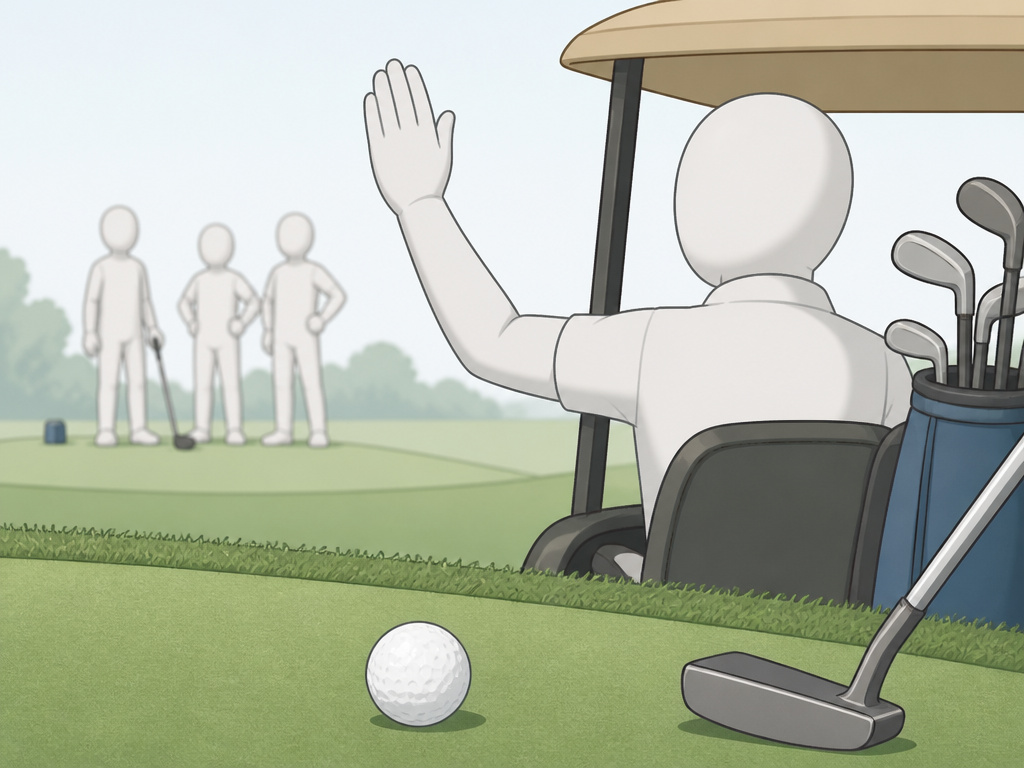
If your group is holding up a faster group behind and there is an open hole in front, the etiquette is clear: let them play through. The simplest method is to finish the hole you’re on, then wave the waiting group up from the next tee. Stand aside and let them tee off. Don’t make them hit into you.
Delayed Starts and Weather
Rule 5.3a is specific: if a start is delayed by weather, a ruling, or slow play ahead, there is no penalty for being “late” as long as you are present and ready when the delay ends. The clock doesn’t start until the course is clear for you to go.
Accommodations for Players with Disabilities
The Rules include modifications. For example, Model Local Rule M-4 allows players using wheeled mobility devices limited relief from bunkers. The spirit of etiquette here is inclusivity, offer assistance if asked, but don’t make assumptions. Every player’s situation is different.
The Beginner’s Dilemma
If you’re new, the best etiquette is transparency. Tell your group you’re a beginner, you’re learning the rules for penalty areas, and to please bear with you. Then, play ready golf, pick up your ball after a certain number of strokes (e.g., double par) to keep pace, and focus on the fundamentals outlined in any good guide for complete beginners. Most golfers appreciate the honesty and will be helpful.
Common Etiquette Breaches and How to Avoid Them
Even with good intentions, mistakes happen. Here are the frequent offenders and how to fix them.
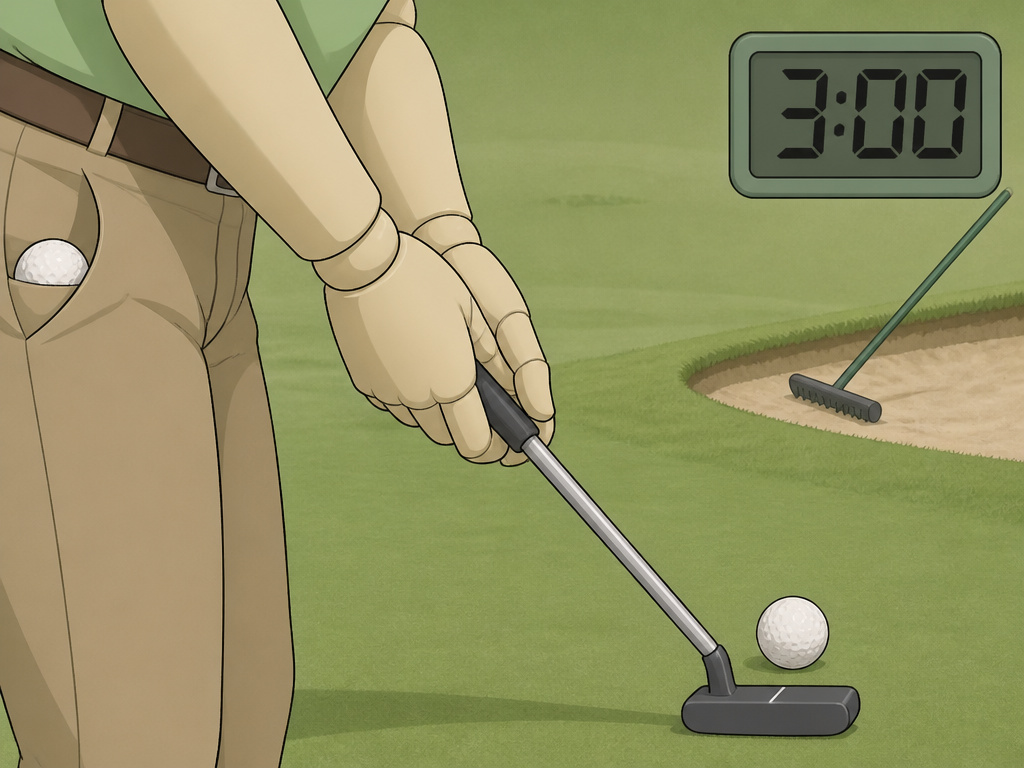
- The Phantom Practice Swing: Taking three full practice swings before every shot. Fix: Take one rehearsal swing, if any, focusing on feel, not mechanics. The range is for practice; the course is for play.
- The Cart Conundrum: Both partners driving to one ball, then to the other. Fix: Drop the first player with their club selection, then drive to your ball. The first player walks to the cart after their shot.
- Green Reading Marathon: Spending 90 seconds studying a 10-foot putt from every angle. Fix: Do your reading while others are putting. When it’s your turn, take one look from behind the ball and hit.
- The Lost Ball Saga: The entire group fanning out for a five-minute search. Fix: The player has three minutes to search. Help for a minute, but if it’s clearly gone, urge them to play a provisional or take a penalty. Have an extra ball ready in your pocket.
- Post-Hole Debrief: Standing next to the green recounting the hole’s events while the group behind waits to hit. Fix: Move to the next tee immediately to have your conversation. Clear the green.
Easy to miss: Not knowing the bunker rules. Always enter a bunker from the low side, rake your area smooth, and leave the rake outside the sand. Walking up the steep face causes erosion and is a major breach of course care.
Frequently Asked Questions
Are there actual stroke penalties for bad etiquette?
Under the standard Rules of Golf, no. The exception is if the competition has adopted a local Code of Conduct (Rule 1.2b) that attaches penalties to specific etiquette breaches, like not repairing ball marks. The only direct stroke penalties are for “unreasonable delay” (slow play) under Rule 5.6a.
What is “ready golf” exactly?
Ready golf means that in stroke play, you should play when you are ready to do so safely, even if it is not technically your turn based on distance from the hole. It is a formal exception to the “farthest away plays first” rule and is the single most effective way to improve pace of play.
How long should I look for a lost ball?
The Rules allow three minutes to search. The timer starts when you or your partner reach the area where the ball is likely to be. After three minutes, the ball is lost. This is why hitting a provisional ball when you think your original might be lost is a critical pace-of-play habit.
Can I be disqualified for yelling after a bad shot?
It’s highly unlikely for a single outburst. Disqualification for “serious misconduct” under Rule 1.2a is reserved for behavior severely contrary to the spirit of the game, repeated, aggressive abuse of the course, equipment, or people. A frustrated exclamation is poor form, but not disqualification material.
Do dress codes fall under etiquette or rules?
Dress codes are typically course dress code policies, not Rules of Golf. They are a condition of playing the course, set by the club or facility. Violating them means you might not be allowed to play, but you won’t get a penalty stroke. It’s a club rule, not a golf rule.
What should I do if someone in my group has terrible etiquette?
Polite, private word is best. Frame it around the shared experience: “Hey, just so you know, when we talk during someone’s backswing, it’s really tough to concentrate. Could we try to keep it quiet until after the shot?” Most people are unaware and will correct themselves.
Before You Go
Golf etiquette rules exist to preserve the game’s unique balance of competition and camaraderie. They’re not about arbitrary tradition. They’re about practical respect, for the course, for others’ time, and for the game itself.
The modern rules make it simple: care for the course, be ready to play within 40 seconds, and let faster groups through. Master those, and you’ve covered 90% of it. The rest is just being a decent person who understands that a four-hour round with good company is a pleasure, while a five-hour round spent waiting is a chore.
Commit to the principles of pace of play. Learn the basic rules so you don’t hold up your group. The game is hard enough without making it harder for everyone else.
