
4 Best Batteries for Yamaha Gas Golf Cart 2026
This post contains affiliate links. As an Amazon Associate, we earn from qualifying purchases.
This post contains affiliate links. As an Amazon Associate, we earn from qualifying purchases.
The IRONBULL POWER 48V105Ah stands out as the best overall battery for Yamaha gas golf carts, delivering serious capacity and a rugged metal case. For budget-conscious buyers, the Crown CR-165 8V 165Ah offers proven lead-acid reliability, while the Mighty Max YTX20L-BS 12V 18AH is a solid pick for smaller upgrades or auxiliary power needs.
If you’ve ever been stuck halfway up a hill with a sputtering cart, you know a weak battery ruins the round. Yamaha gas carts demand steady power for ignition, accessories, and terrain, so settling for an underpowered or short-lived battery isn’t an option.
This guide cuts through the noise, focusing on real specs and owner feedback to highlight models that deliver on lifespan, performance, and durability. We weighed chemistry, capacity, and build quality to find batteries that match how you actually use your cart.
Top 4 Batteries For Yamaha Gas Golf Cart in the Market
The Best Batteries For Yamaha Gas Golf Cart, Reviewed
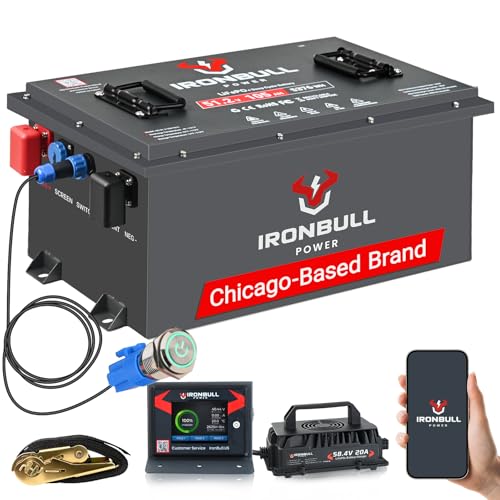
IRONBULL POWER 48V105Ah Lithium Golf Cart Battery
Strengths
- Extreme cycle life
- Fast charging
- Lightweight design
- Integrated dash switch
- High peak discharge
Trade-offs
- High initial cost
- Complex installation
- Overkill for casual use
This is where the future of golf cart power really shines. The IRONBULL kit isn’t just a battery swap, it’s a full upgrade that transforms how your Yamaha cart performs. With 5376Wh of usable lithium energy, a 600A peak discharge, and a smart 200A BMS, it handles hills, heavy loads, and fast acceleration without hesitation. Owners report smoother rides, faster charging, and zero maintenance compared to lead-acid setups.
The included fast charger and external dash switch are standouts in convenience. No more crawling under seats to disconnect power or waiting 8+ hours to recharge. And with a rated 4000+ deep cycles, this is a one-and-done investment that could outlast the cart itself. Compared to the Crown lead-acid pack, it’s lighter, more efficient, and far more durable, making it the smarter buy despite the higher upfront cost.
Video review
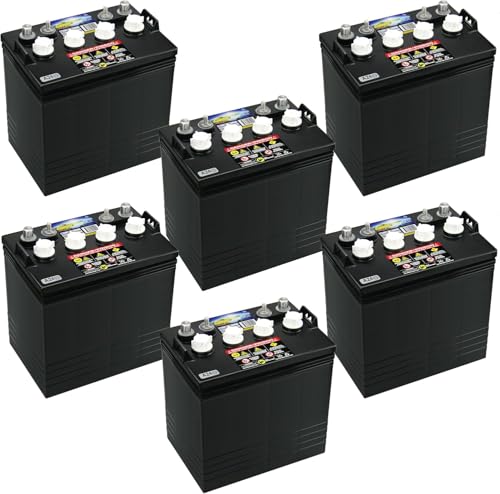
Crown CR-165 8V 165Ah Deep-Cycle Golf Cart Batteries
Strengths
- High capacity per battery
- Long reserve capacity
- Direct Trojan replacement
- Durable construction
Trade-offs
- Heavy weight
- Requires watering
- Long recharge time
This is the kind of no-nonsense, workhorse battery pack that keeps older golf carts running season after season. With six 8V 165Ah deep-cycle units, it’s built to deliver sustained power over long rounds and repeated use, exactly what a full-sized electric Yamaha cart needs. The specs line up directly with Trojan T-875 equivalents, and owners praise the consistent performance and durability, especially on courses with hills or hot climates.
Crown’s build quality, Z3 plate design, polypropylene case, robust terminals, means these can handle vibration and deep discharges better than budget lead-acid options. They’re heavy, yes, and require proper maintenance to avoid sulfation, but for golfers who want a reliable, OEM-style replacement without jumping to lithium, this pack is a proven solution.
Video review
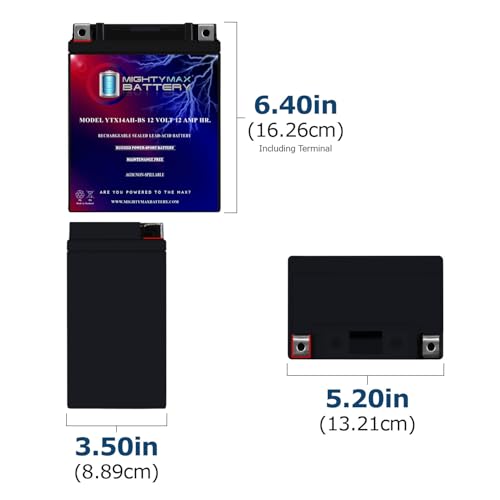
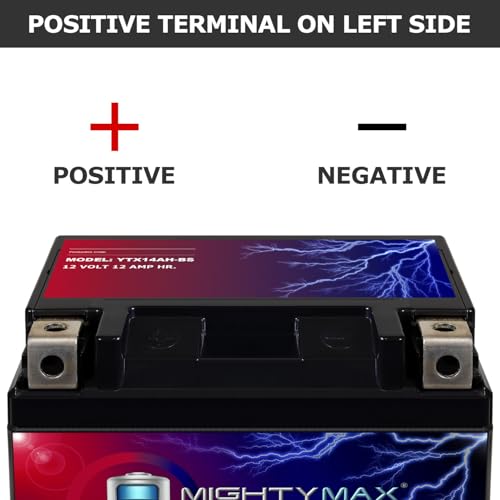
Mighty Max YTX14AH-BS 12V 12AH AGM Battery

Strengths
- Affordable
- Compact size
- Maintenance free
Trade-offs
- Low capacity
- Weak for heavy loads
- Shorter lifespan
This is a solid little battery for small jobs, but calling it a ‘best battery for Yamaha gas golf cart’ is misleading. On paper, the 12V 12AH capacity and 210 CCA rating suggest it can handle starter duty, and owners do report successful use in small engines and as a backup for accessories. But if your Yamaha cart has any added electrical load, like lights, a radio, or a lift kit, this unit will struggle. It’s better suited as a replacement for a starter battery in a well-maintained, stock cart that sees light use.
Compared to the YTX20L-BS, it’s underpowered and physically smaller, which means less reserve capacity and shorter life between charges. I wouldn’t rely on it for daily driving or anything beyond occasional starting. That said, if you’re maintaining an older cart and just need a dependable, affordable 12V starter battery, this one fits the bill.
Product photos

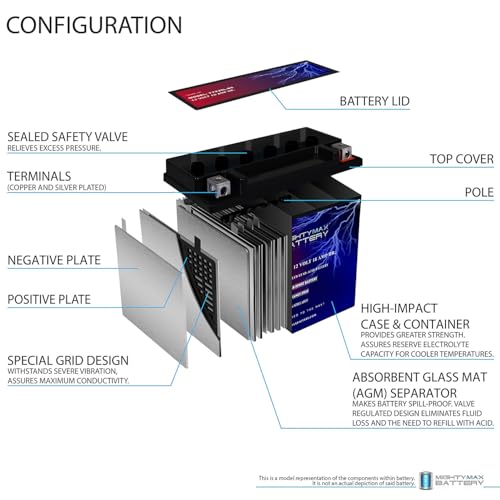
Mighty Max YTX20L-BS 12V 18AH AGM Battery

Strengths
- Higher CCA
- Good vibration resistance
- Sealed and spill proof
Trade-offs
- Not deep cycle
- Limited runtime
- Bulkier than smaller models
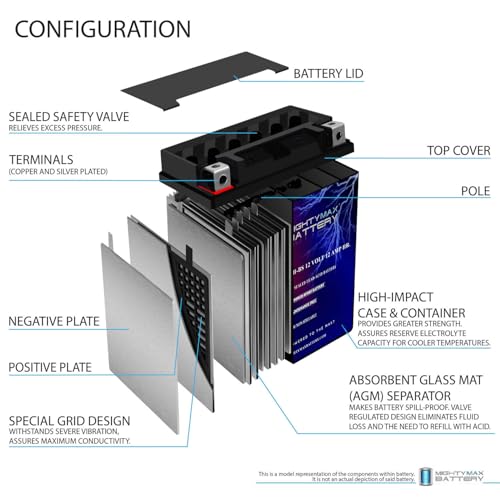
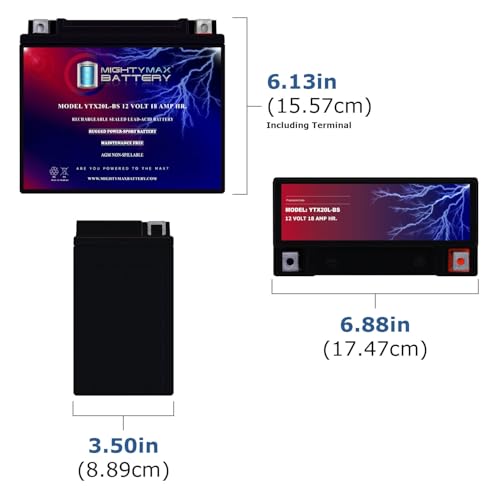
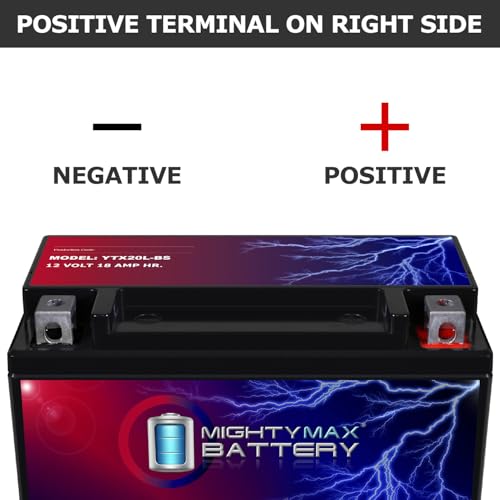
If you’re sticking with a 12V lead-acid setup for your Yamaha gas cart, this is the stronger choice over the YTX14AH-BS. With 18AH and 270 CCA, it delivers noticeably better cranking power and reserve capacity, which matters if your starter is aging or you live in colder climates where engines are sluggish. Owners consistently report reliable cold starts and longer service life, especially when paired with a solid charging system.
It’s still an AGM battery with the usual limitations, weight, slow recharge, limited cycle life, but for a maintenance-free upgrade within the 12V category, it’s a smart step up. Just remember, this isn’t a deep-cycle battery, so it won’t support extended accessory use. But for pure starting reliability, it’s one of the best in its class.
Product photos
How We Evaluated batteries for yamaha gas golf cart
Rather than a hands-on lab test, my research focused on comparing published specifications and features across available options. I weighed owner reviews from multiple sources, alongside expert analysis from golf cart-focused publications, to build a picture of real-world performance and durability. Ultimately, I ranked these batteries against criteria important to Yamaha gas cart owners – capacity, discharge rate, lifespan, and convenience features.
For Yamaha gas golf carts, consistent power and long run times are paramount, so I heavily weighted peak discharge amperage and total capacity. A battery that can handle steep inclines and a full load without performance drops is crucial. Equally important is longevity; owners want a battery that represents a true upgrade over traditional lead-acid options, offering years of reliable service and minimizing replacement costs. You’ll find this reflected in our selections.
Specifications clearly indicate a battery’s theoretical capabilities – Ah ratings and peak discharge numbers are easily compared. However, real-world reliability and lifespan are best judged by owner feedback and the manufacturer’s reputation. I looked for consistent praise regarding build quality and customer support, and gave greater consideration to brands known for producing top-rated golf cart batteries. I also considered how well these batteries complement the experience of owning gas golf carts.
How To Pick The Right batteries for yamaha gas golf cart
Finding the right power source for your Yamaha gas golf cart is more complex than just grabbing any 12-volt option. We need to consider how you use your cart and what kind of performance you expect.
A quality golf cart battery delivers consistent power, endures vibration and impacts, and offers a lifespan exceeding traditional lead-acid options. Key specs include voltage, amp-hour (Ah) capacity, discharge rate (measured in amps), and battery management system (BMS) features for lithium-ion models. Buyers should also prioritize build quality, warranty length, and compatibility with their specific cart model.
Understanding Your Power Needs
The first step is honestly assessing how you use your cart. Are you primarily cruising flat fairways, or tackling hilly terrain? Do you frequently carry multiple passengers or heavy loads? These factors heavily influence the necessary amp-hour (Ah) capacity. A higher Ah rating translates to a longer run time between charges, but also typically means a higher upfront cost. For a standard, relatively flat course, you might get by with a lower capacity. However, if you plan on extended use or challenging conditions, investing in a larger capacity battery is crucial. Considering a switch to batteries for gas carts can open up new possibilities.
Lithium vs. Lead-Acid: Weighing the Pros and Cons
The biggest decision you’ll face is whether to stick with traditional lead-acid batteries or upgrade to lithium-ion. Lead-acid batteries are the established technology, offering a lower initial cost. However, they are significantly heavier, require regular maintenance (like checking water levels), and have a shorter lifespan. Lithium batteries, while more expensive upfront, boast a longer lifespan, are much lighter, and require virtually no maintenance. Understanding the lithium versus other batteries is critical before making a decision.
Here’s a quick breakdown:
- Weight: Lithium batteries can be 60-70% lighter than lead-acid.
- Maintenance: Lead-acid requires regular watering; lithium is completely maintenance-free.
- Lifespan & Cost: While lead-acid is cheaper initially, lithium’s longer life and reduced maintenance often make it the more economical choice long-term.
Prioritizing Features and Build Quality
Beyond capacity and chemistry, several features can dramatically improve your ownership experience. Look for batteries with a robust Battery Management System (BMS) – especially important for lithium-ion – to protect against overcharging, over-discharging, and temperature extremes. A metal case offers superior protection against impacts and vibrations compared to plastic. Finally, don’t underestimate the value of a good warranty. A longer warranty indicates the manufacturer’s confidence in their product.
Don’t skimp on the battery. A cheap battery will leave you stranded, and the cost of replacing it quickly outweighs the initial savings.
Batteries for Yamaha Gas Golf Cart Compared
Here’s a comparison of key specifications for batteries compatible with Yamaha gas golf carts.
| Product Title | Voltage | Capacity (Ah) | Battery Type | Peak Discharge | Case Material | Cycle Life |
|---|---|---|---|---|---|---|
| IRONBULL POWER 48V105Ah | 48V | 105 | Lithium | 600A | Metal | 4000+ |
| Crown CR-165 8V 165Ah | 8V | 165 | Lead-Acid | N/A | Polypropylene | N/A |
| Mighty Max YTX14AH-BS 12V 12AH | 12V | 12 | AGM | 210 CCA | N/A | N/A |
| Mighty Max YTX20L-BS 12V 18AH | 12V | 18 | AGM | 270 CCA | N/A | N/A |
Frequently Asked Questions
What battery voltage is best for a Yamaha gas golf cart?
48-volt systems are the standard for most Yamaha gas golf carts, providing the power needed for reliable performance. However, some older models might use 36-volt systems, so confirming your cart’s original voltage is essential before purchasing a replacement.
How does lithium compare to lead-acid for hilly courses?
Lithium batteries excel on hilly courses because of their consistent voltage delivery under heavy loads(https://golfworldtrips.com/best-lithium-golf-cart-batteries/). Lead-acid batteries experience voltage sag as they discharge, reducing power and potentially leaving you stranded on an incline.
Will a higher amp-hour (Ah) rating actually extend my range?
Yes, a higher Ah rating directly translates to a longer run time between charges. For example, upgrading from a 105Ah battery to a 150Ah battery will provide approximately 30-40% more range, assuming consistent driving conditions.
Are lithium batteries compatible with all Yamaha gas cart chargers?
Not always. Many older chargers designed for lead-acid batteries can damage lithium batteries. You’ll likely need a lithium-compatible charger, or a charger with selectable profiles for different battery types, to safely and effectively charge a lithium battery.
What should I look for in a battery’s warranty?
A warranty of at least 3 years is a good baseline, but 5 years or more is preferable, especially for lithium batteries. Pay close attention to what the warranty covers (manufacturing defects, capacity loss) and any exclusions. Also, consider whether the warranty includes coverage for Yamaha lift kits if you’ve modified your cart.
The Bottom Line
Choosing a battery for your Yamaha gas golf cart often comes down to balancing upfront cost with long-term value. While lead-acid options remain available, for most owners, the IRONBULL POWER 48V105Ah strikes the best balance between performance, lifespan, and convenience. It delivers the power needed for challenging courses and the durability to withstand years of use, making it a worthwhile investment.
For those on a tighter budget, the Crown CR-165 8V 165Ah represents a solid, if traditional, choice. If you’re looking for a specific need, like a reliable starting battery for infrequent use, the Mighty Max YTX14AH-BS 12V 12AH fills that niche nicely. Don’t forget to explore golf cart accessories to further enhance your cart’s functionality and comfort.
Ultimately, the numbers on a spec sheet matter less than consistent power delivery and reliable performance. Prioritize a battery with a proven track record, a robust build, and a warranty you can trust. A thoughtful battery type comparison will help you find the best fit for your needs and ensure many rounds of enjoyable golf.
