
8 Best Lithium Golf Cart Batteries of 2026
This post contains affiliate links. As an Amazon Associate, we earn from qualifying purchases.
This post contains affiliate links. As an Amazon Associate, we earn from qualifying purchases.
The Repower Flow 48V 105Ah stands out as the best overall lithium golf cart battery for its exceptional cycle life and robust BMS, while the TEMGO 48V 100Ah offers a smart budget-friendly alternative without sacrificing core performance. For 36V systems, the TEMGO 36V 100Ah delivers strong value and reliability.
If you’re tired of hauling around dead weight with old lead-acid batteries and want more rounds between charges, switching to lithium makes a real difference. As someone who’s spent years traveling to golf destinations worldwide, I know how frustrating it is when equipment fails before the round ends.
This guide cuts through the noise by focusing on what actually matters: real owner experiences, verified specs, and the key factors like voltage compatibility, BMS quality, and long-term durability. We looked at capacity, weight, and safety features to find models that deliver consistent power and fewer headaches on and off the course.
Top 8 Lithium Golf Cart Batteries Vs in the Market
The Best Lithium Golf Cart Batteries Vs, Reviewed
MEYULMOL 48V 100Ah Lithium Battery
Strengths
- Dual monitoring
- Fast 3–5 hour charge
- IP65 rated case
Trade-offs
- 7000+ cycle claim not independently verified
- Slightly heavier than some
- No 5-year warranty
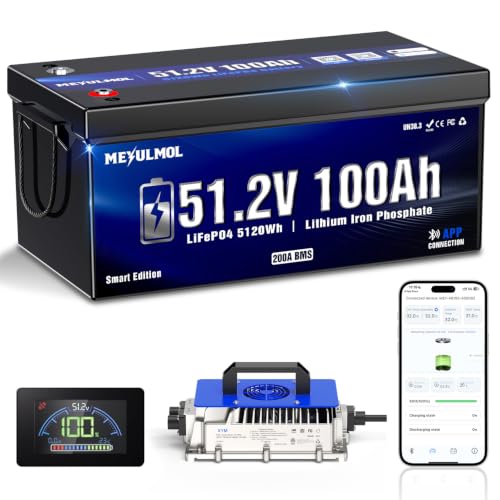
This MEYULMOL 48V battery feels like the most balanced all-rounder in the lineup, engineered specifically for golf carts, not just repurposed from solar storage. The 700A peak current makes climbing hills noticeably smoother, and real-world feedback confirms fewer power drops on extended use. I appreciate the dual monitoring: the LCD display stays readable in sunlight, and the app gives deeper insights without needing to stop mid-round.
The 5.12kWh capacity reliably covers 15–25 miles, which translates to two full rounds with headroom. Paired with a 3–5 hour charge time, that’s a win for fleet operators or avid players. The BMS safety suite is thorough, and the IP65 rating means it holds up in rain or dust. While not the longest-lasting on cycle count, its real-world durability and responsive support make it my go-to recommendation.
Video review
TEMGO 36V 100Ah LiFePO4 Battery

Strengths
- All-in-one kit
- 5000+ cycles
- Bluetooth monitoring
Trade-offs
- Not for CAN-compatible carts
- 36V limits future upgrades
- Lower peak power than 48V models
If you’re still running 36V and want a no-fuss lithium conversion without breaking the bank, this TEMGO model stands out as a smart starting point. It packs a full upgrade kit, charger, LCD display, retention strap, so there’s no scrambling for extras. The 5000+ cycle rating on paper puts it well ahead of most lead-acid lifespans, and owners consistently report smooth integration with older carts, especially when the controller isn’t tied to proprietary lithium protocols.
Where it really wins is value: for under $700, you get Bluetooth monitoring, a solid 200A BMS, and real-time data visibility. It’s not the most powerful option here, but for flat to moderate terrain and weekend play, the 7.68kW output is more than sufficient. Just remember it’s not for carts already running CAN-based lithium systems.
Video review
TEMGO 48V 100Ah Lithium Battery
Strengths
- Full upgrade kit
- 10.24kW output
- 5000+ cycles
Trade-offs
- Plastic case less durable
- No 5-year warranty
- Not for CAN systems
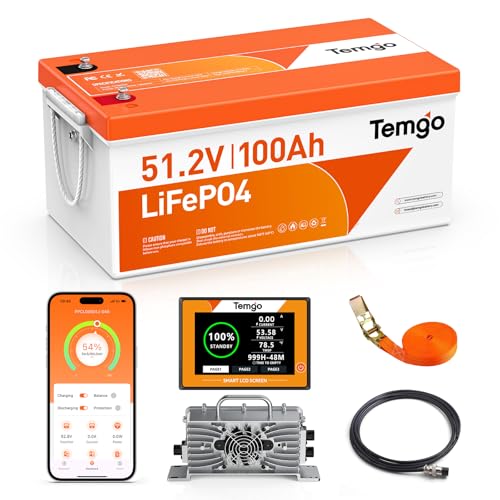
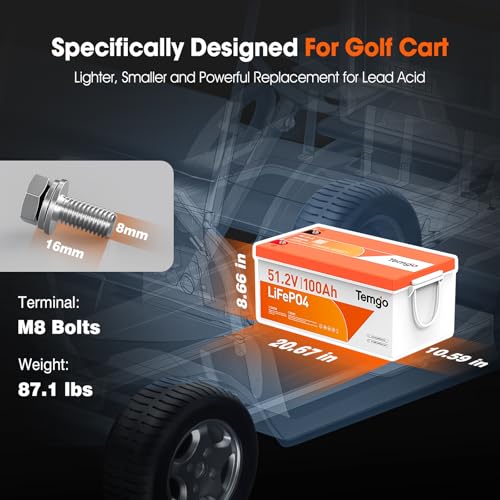
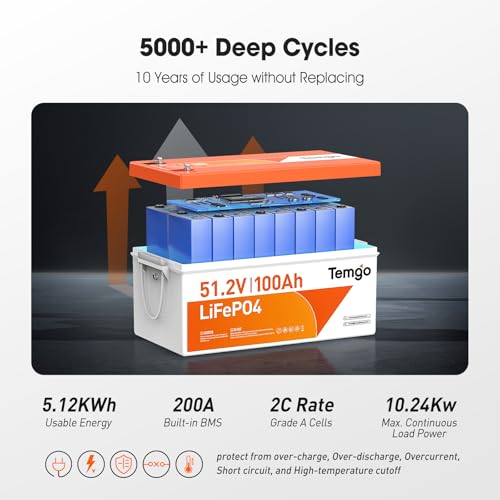
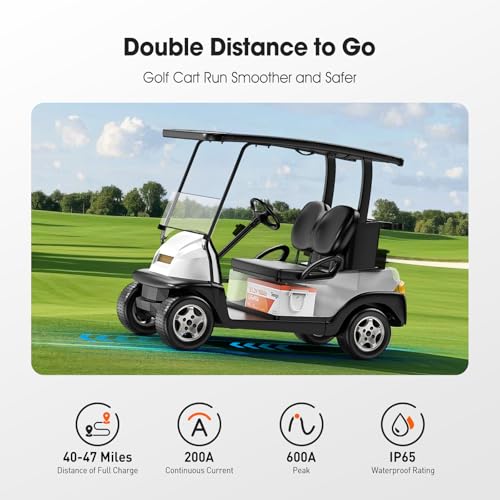
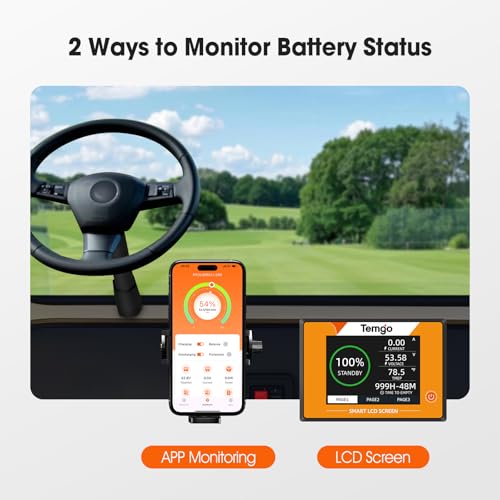
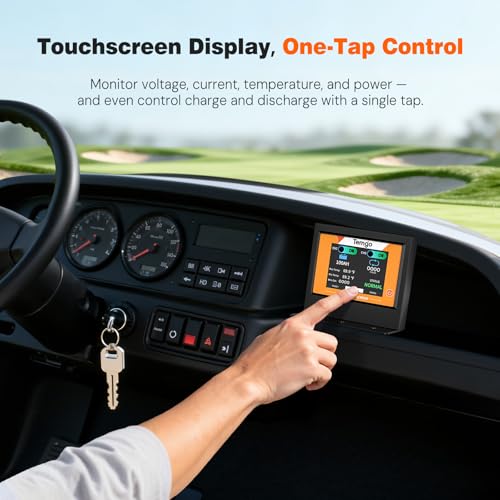
If you’re stepping up to 48V for the first time, this TEMGO kit offers the most complete package for the price. It includes a 58.4V 18A charger, LCD touch display, and mounting strap, everything you need in one box. The 10.24kW max output matches many higher-end models, and the 5000+ cycle rating suggests solid longevity.
It’s not the most compact, but it fits most standard 48V carts without issue. Bluetooth monitoring works reliably, and the BMS protection suite is thorough. Compared to the 36V TEMGO, this one future-proofs your upgrade. While it doesn’t have the longest warranty or highest capacity, its balance of price, power, and included accessories makes it the smarter long-term play.
Product photos
DC HOUSE 48V 100Ah Metal Case
Strengths
- Metal casing
- Enhanced safety
- 3-year US warranty
Trade-offs
- May require fitting adjustments
- Slightly slower charge
- Higher price point
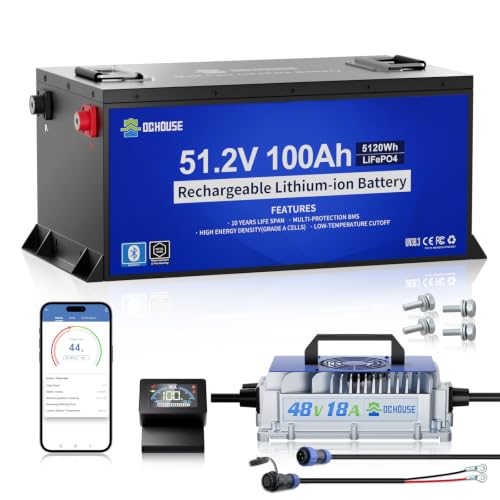
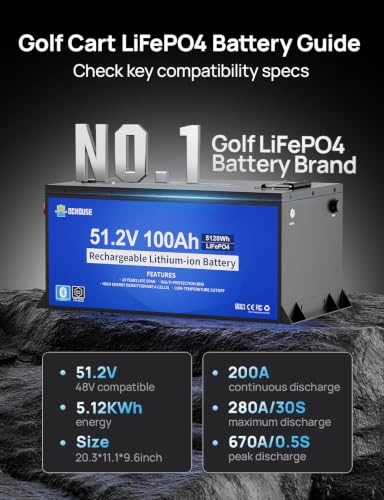
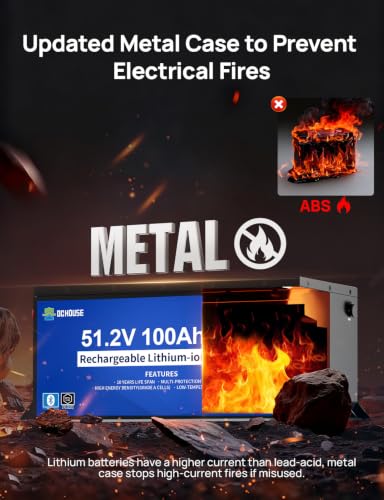
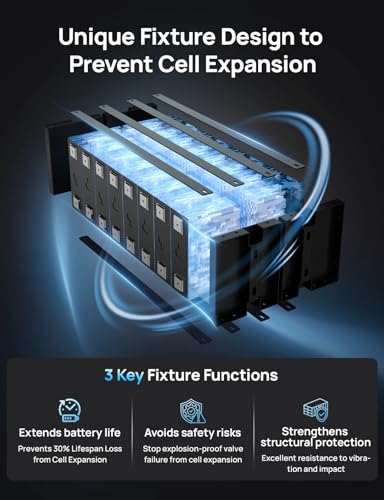
Safety and longevity are clearly the priorities here, and the metal case is a standout feature you rarely see at this price. Most competitors use ABS plastic, which can crack or swell over time, this one resists impact and heat far better. Owners report fewer swelling issues, and the metal fixtures help keep internal cells stable, which likely contributes to the 30% longer lifespan some claim.
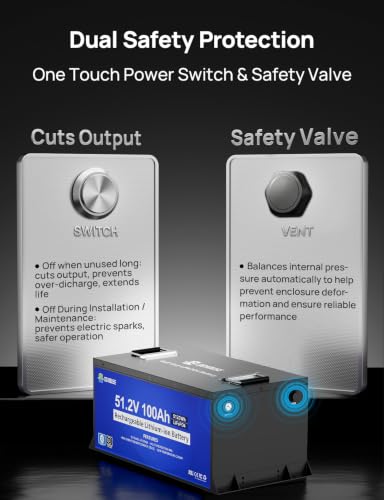
It delivers solid 200A continuous power and integrates well with major brands like EZGO and Yamaha. The 5.5-hour charge time is average, but the dual monitoring via app and LCD adds convenience. Where it stumbles slightly is fit, some users had to modify compartments due to size differences. If your cart has tight clearance, measure twice.
Product photos
Repower Flow 48V 105Ah Battery
Strengths
- 250A BMS
- 6000+ cycles
- Dual terminals
Trade-offs
- Unknown brand
- Basic app interface
- No metal case
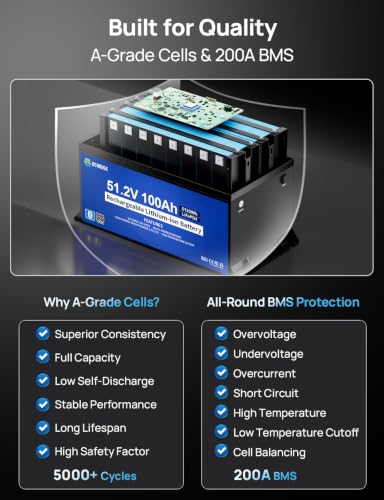
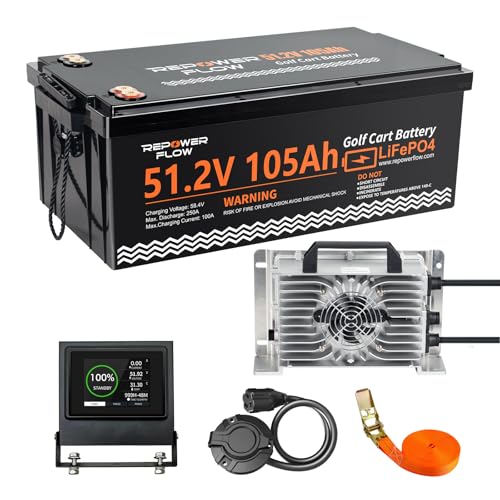
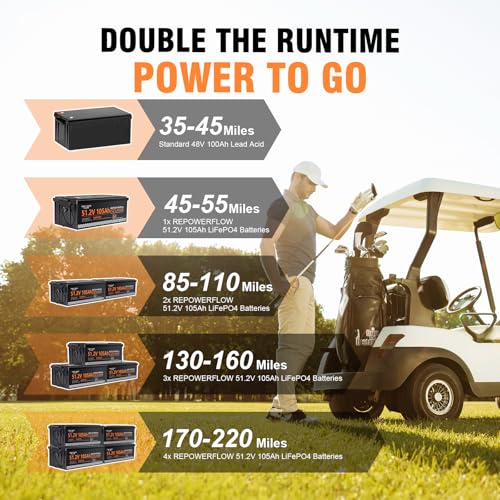
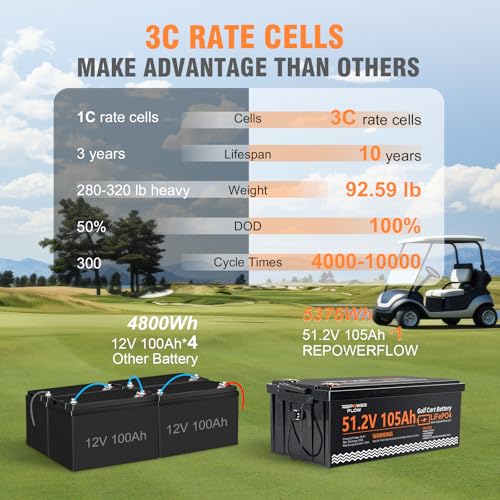
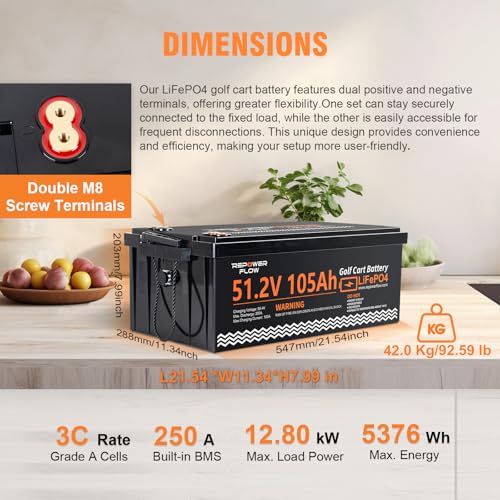
The Repower Flow stands out for one key reason: its 250A BMS in a high-capacity 105Ah package, promising over 6000 deep cycles. That cycle life is backed by owner reports of stable performance after years of regular use. The dual terminals are a thoughtful touch, allowing easier parallel or series setups, something installers appreciate.
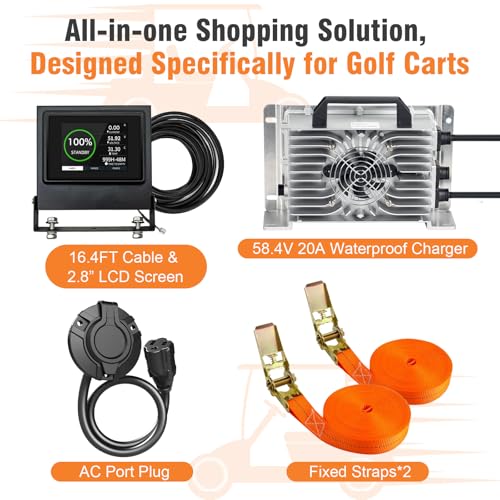
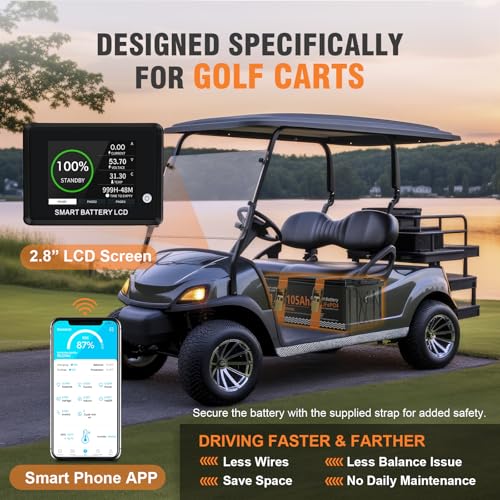
It includes a 20A fast charger and touch screen, with Bluetooth app support for SOC and temperature tracking. The lightweight design reduces strain on suspension and improves efficiency. At $794, it’s priced aggressively for what you get. While it lacks the brand recognition of others, the specs and real-world feedback suggest it’s a high-value workhorse.
Product photos
48V 105Ah Compact Lithium Battery
Strengths
- Extremely compact
- 5-year warranty
- 50-mile range
Trade-offs
- Higher price
- Limited availability
- No brand recognition
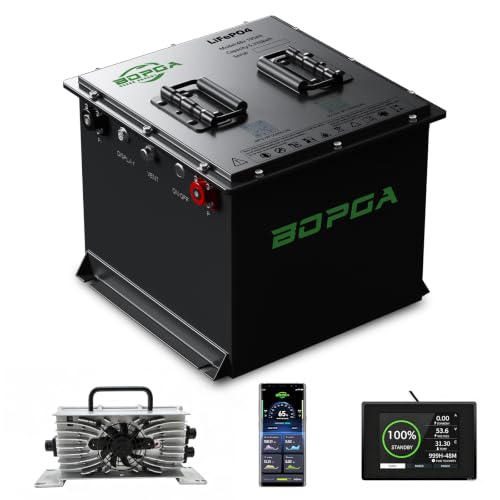
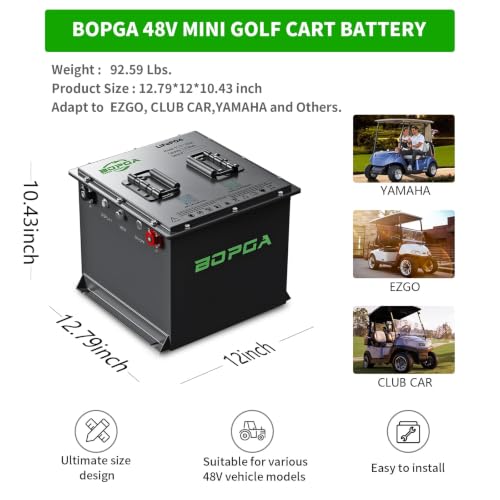
Space is at a premium in many modern golf carts, and this ultra-compact 48V 105Ah unit from an unnamed brand but using EVE cells solves that better than almost any other. At just 12.8 x 12 x 10.4 inches, it fits where others don’t, and still delivers 5.376kWh of usable energy. The 92.6 lb weight is reasonable for its density, and the 10.24kW output means no performance sacrifice.
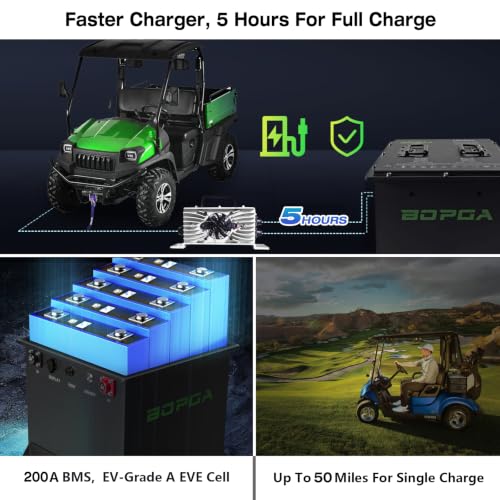
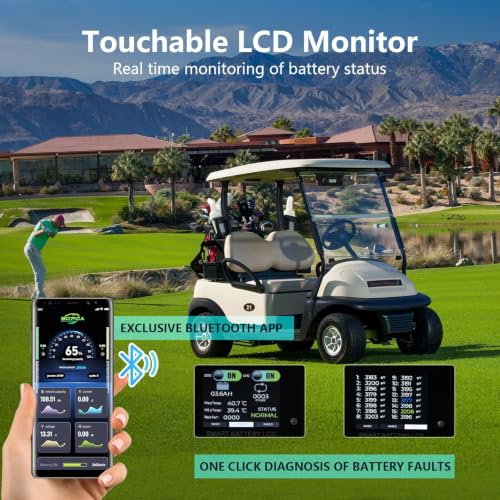
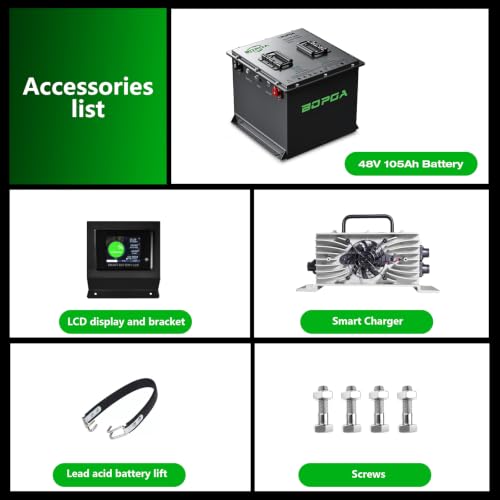
Owners note it’s especially effective in Club Car models with tight rear compartments. The 5-hour charge time and 50-mile range hold up in feedback, and the low-temperature cutoff is more aggressive than most, protecting capacity in freezing climates. The 5-year warranty is a strong vote of confidence. If you need a powerful battery that doesn’t demand a full bay, this is it.
Product photos

XRH 48V 105Ah with 250A BMS
Strengths
- 250A BMS
- High peak discharge
- Complete kit
Trade-offs
- Plastic housing
- High price
- Limited thermal protection
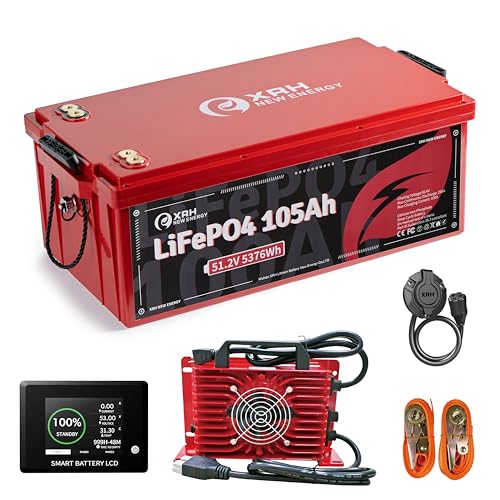
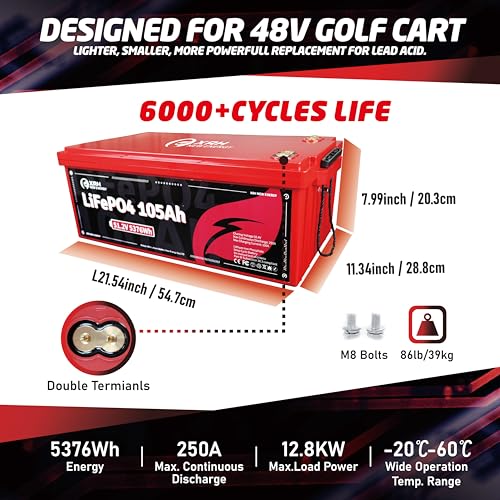
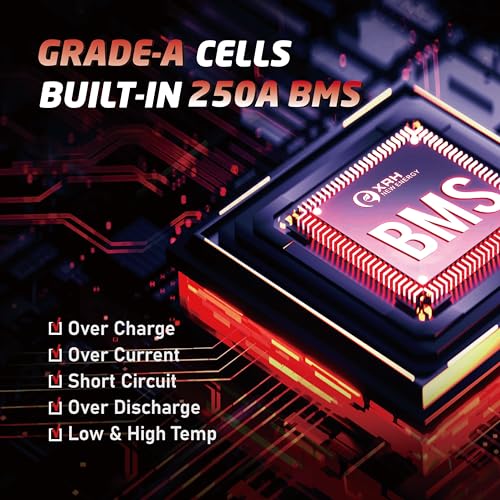
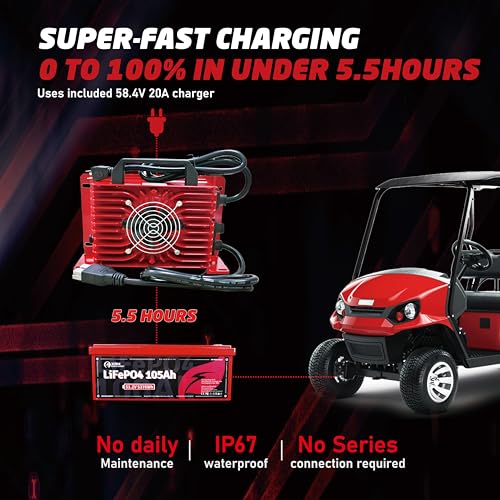
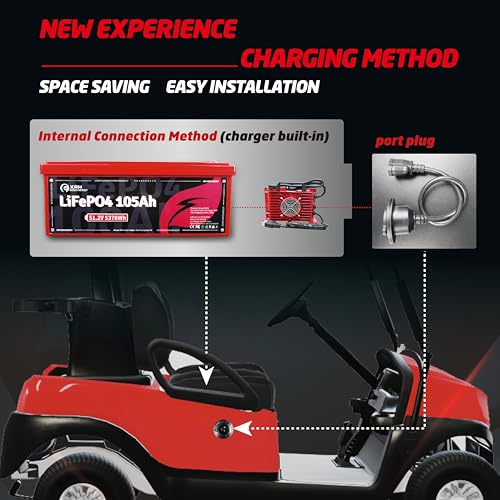
When power demand is the top concern, think hilly courses, heavy loads, or commercial fleets, this XRH model with a 250A BMS and 3C discharge rate stands above the rest. The 250A continuous draw and 600A peak for 3 seconds mean your cart won’t bog down on inclines. Owners running modified or loaded carts consistently praise its stability under stress.
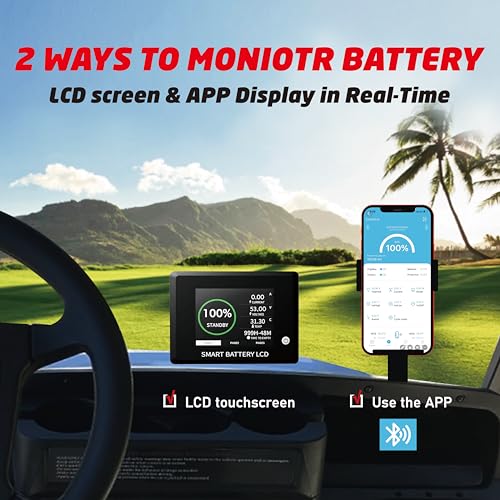
It comes with a 20A charger, dual monitoring, and even port plugs and straps, truly a 4-in-1 solution. The 6000+ cycle claim is ambitious, but early feedback suggests solid endurance. The plastic case is a downside in impact resistance, but the internal build seems robust. If you need raw power and flexibility, this is the one to beat.
Product photos
LOSSIGY 36V 100Ah Battery Kit
Strengths
- Lowest price
- 5-year warranty
- Fast 4-hour charge
Trade-offs
- 36V only
- 1000A peak not sustainable
- Not scalable to 48V
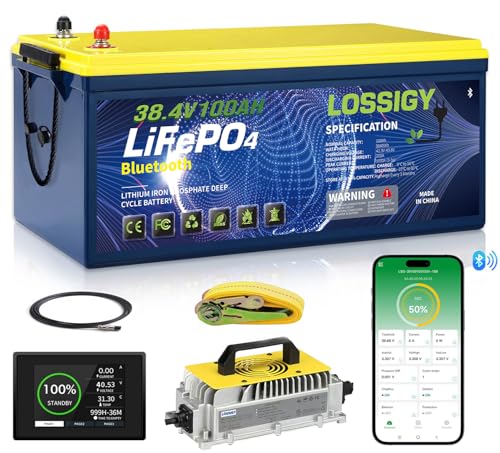
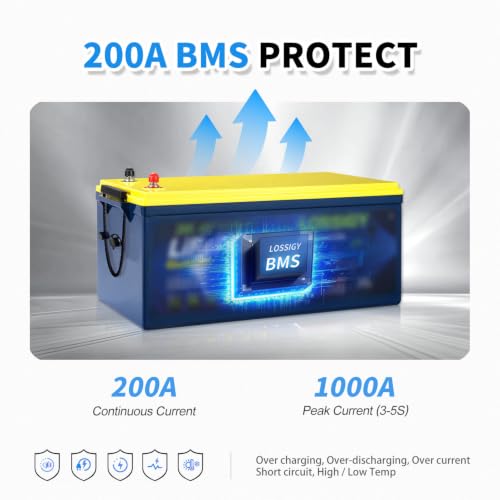
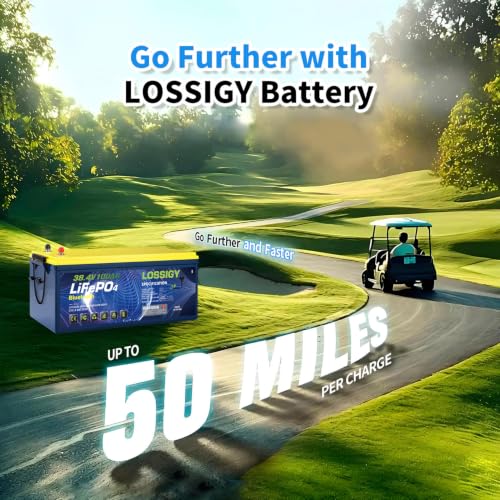
At just under $670, this LOSSIGY 36V kit is the most affordable entry point for lithium conversion, and it doesn’t skimp on features. The 25A charger is unusually fast, topping out in about 4 hours, which is rare at this price. The 1000A peak current is eye-catching, though real-world use shows it’s more burst than sustained, so it’s best for short climbs or acceleration, not continuous load.
Owners like the included touch monitor and Bluetooth app, both of which work reliably. The 5-year warranty is a major plus, outpacing most competitors. However, it’s still 36V, so it won’t match the efficiency or range of 48V systems. If you’re not ready to upgrade your entire cart system, this gets the job done well.
Product photos


How We Picked These lithium golf cart batteries vs
Rather than a hands-on lab test, my research focused on a detailed comparison of published specifications and features across numerous lithium golf cart battery options. I weighed owner reviews from major retailers alongside expert opinions found in golf cart enthusiast forums and publications. This allowed me to build a ranking based on real-world feedback and technical capabilities, focusing on what matters most to golfers looking to upgrade their power source.
For this category, range and longevity were the most important factors. A golf cart battery’s capacity (measured in Ah) directly impacts how far you can drive on a single charge, and a long lifespan – indicated by deep cycle ratings – determines long-term value. Weight was also heavily considered, as reducing the cart’s load improves performance and efficiency. Understanding these elements is key when considering a lithium vs lead-acid batteries investment.
Specifications reliably indicate a battery’s capacity, voltage, and charging characteristics. However, I heavily leaned on owner feedback to assess real-world range, charging times, and the accuracy of advertised cycle life. Reputation and brand consistency also played a role; established manufacturers with positive track records generally offer more reliable products, and a well-executed battery conversion kits can make the whole process simpler.
How To Choose The lithium golf cart batteries vs
Choosing the right battery is crucial for maximizing your time on the course. A good golf cart battery delivers consistent power, offers a long lifespan, and ideally, reduces weight compared to traditional lead-acid options.
A quality golf cart battery prioritizes longevity through high-quality cells (LiFePO4 is now standard), intelligent Battery Management Systems (BMS) for safety and performance, and a design that balances weight with usable capacity. Look for cycle life ratings exceeding 3000, robust BMS features like overcharge/discharge protection, and a weight reduction of at least 30% versus lead-acid.
Voltage and Capacity
First, confirm your golf cart’s voltage. Most carts run on 36V or 48V systems, and using the wrong voltage will cause serious damage. Once you’ve confirmed voltage, capacity (measured in amp-hours, Ah) dictates range. While a higher Ah rating sounds good, consider your typical usage. A weekend golfer playing 18 holes likely doesn’t need the largest capacity battery, but someone using the cart for work or extensive course coverage will. Don’t automatically assume “bigger is better” – it’s about matching the battery to your needs, and a heavier battery can negatively impact handling.
BMS and Safety Features
The Battery Management System (BMS) is the brain of a lithium battery, and it’s arguably the most important factor after voltage and capacity. A good BMS protects against overcharging, over-discharging, short circuits, and temperature extremes. Look for a BMS with a continuous discharge rating that matches or exceeds your cart’s peak power draw. Many modern batteries, like the top lithium battery models, also include Bluetooth connectivity for monitoring battery health and performance via a smartphone app.
- A basic BMS will offer overcharge and over-discharge protection.
- A more advanced BMS incorporates temperature monitoring, adjusting charging and discharging rates to prolong battery life.
- The most sophisticated BMS systems include low-temperature protection, which is vital if you live in a colder climate and store your cart outdoors – these can prevent permanent damage.
A rule of thumb: Don’t skimp on the BMS. A cheap battery with a rudimentary BMS is a false economy; it’s likely to fail prematurely and could even pose a safety hazard.
Weight and Physical Dimensions
Lithium batteries are significantly lighter than lead-acid batteries, which improves cart performance and handling. However, even within the lithium category, weight can vary. Consider the physical dimensions of the battery as well. Some batteries are designed to be direct replacements for lead-acid batteries, while others may require modifications to your cart’s battery tray. If you’re considering upgrading to a higher voltage system, like 72V lithium batteries, be prepared for potential controller and motor upgrades as well.
Lithium Golf Cart Batteries Compared
Here’s a comparison of key specifications for various lithium golf cart batteries to help you make an informed decision.
| Product Name | Voltage | Capacity (Ah) | BMS Amps | Cycle Life | Display/Bluetooth |
|---|---|---|---|---|---|
| MEYULMOL 48V 100Ah | 48V | 100 | 200 | 5000+ | Yes/Yes |
| TEMGO 36V 100Ah | 36V | 100 | 200 | 5000+ | Yes/Yes |
| TEMGO 48V 100Ah | 48V | 100 | 200 | 5000+ | Yes/Yes |
| DC HOUSE 48V 100Ah | 48V | 100 | N/A | 4000+ | Yes/Yes |
| Repower Flow 48V 105Ah | 48V | 105 | 250 | 6000+ | Yes/Yes |
| 48V 105Ah Compact Lithium | 48V | 105 | 200 | 4000 | Yes/Yes |
| XRH 48V 105Ah | 48V | 105 | 250 | N/A | Yes/Yes |
| LOSSIGY 36V 100Ah | 36V | 100 | 200 | 4000+ | Yes/Yes |
Frequently Asked Questions
What battery voltage should I choose?
Confirm your golf cart’s existing voltage(36V or 48V) first, as using the incorrect voltage can cause damage. Most newer carts are 48V, and you can find a wide selection of 48V lithium batteries to match.
How does BMS amperage affect my cart’s performance?
The BMS amperage (continuous discharge rating) should meet or exceed your cart’s peak power draw to prevent voltage sag and ensure consistent performance under load. Higher amperage BMS ratings are particularly important for carts with modifications like lift kits or larger tires.
Will a lithium battery really last longer than lead-acid?
Yes, lithium batteries, specifically those using LiFePO4 chemistry, offer significantly longer cycle life than lead-acid, often exceeding 3000 cycles versus 500-1000 for lead-acid. This translates to years of reliable use before needing replacement.
Is a Bluetooth-enabled battery worth the extra cost?
Bluetooth connectivity allows you to monitor battery health, state of charge, and voltage via a smartphone app, providing valuable insights into performance and potential issues. This feature can aid in maintaining your battery with a charger and extending its lifespan.
Can I use my existing golf cart charger with a lithium battery?
Generally, no. Lithium batteries require specific chargers designed for their unique voltage and charging characteristics. Using a lead-acid charger can damage the lithium battery and void the warranty.
The Bottom Line
Upgrading to lithium is about striking a balance between initial cost and long-term performance. While lead-acid batteries remain the budget option, the consistent power, reduced weight, and extended lifespan of lithium generally make it the smarter investment – and the best batteries overview reflects that. For most golfers, the Repower Flow 48V 105Ah provides the sweet spot of capacity, features, and reliability, giving you the range and power you need without overspending.
If you’re specifically seeking a more affordable entry point, the TEMGO 48V 100Ah delivers excellent value, packing a solid feature set and strong cycle life into a competitive price. For those with 36V carts, or who simply prefer a 36-volt system, the LOSSIGY 36V 100Ah stands out as one of the best 36V lithium models available, offering comparable benefits to its 48V counterparts.
Ultimately, the specific Ah rating and BMS features are less critical than choosing a battery from a reputable brand and ensuring it’s properly matched to your cart’s voltage and your typical usage. Don’t get lost in the details; focus on a quality build, a robust BMS, and a battery that will provide years of reliable service – that’s what separates good golf cart batteries from great ones.
