
9 Best Golf Aids of 2026
This post contains affiliate links. As an Amazon Associate, we earn from qualifying purchases.
This post contains affiliate links. As an Amazon Associate, we earn from qualifying purchases.
The Orange Whip Swing Trainer stands out as the best overall golf aid for developing rhythm and consistency, while the SKLZ Golf Grip Trainer is a top choice for fixing hand position. For budget-minded players, the Lihengkong Impact Tape Labels deliver surprisingly useful feedback at a fraction of the cost.
Most golfers buy training aids hoping for quick fixes, only to see them collect dust after a few tries. The real issue isn’t effort, it’s choosing tools that don’t match your specific swing flaws or practice habits.
This guide cuts through the noise by focusing on aids that deliver clear, repeatable feedback based on specs, owner experiences, and what actually works across different skill levels. I looked for products that help you feel the right movement, not just tell you what’s wrong.
Top 9 Golf Aids in the Market
The Best Golf Aids, Reviewed
Orange Whip Swing Trainer

Strengths
- Counterbalanced design
- Improves tempo
- Builds coordination
Trade-offs
- Bulky to carry
- Higher price
The Orange Whip remains the gold standard in full-swing training aids, and after years of tracking how golfers improve their tempo and sequencing, I still see it as the most effective tool for building a repeatable, athletic motion. Its patented counterbalanced design forces coordination between the upper and lower body, promoting a smooth takeaway and follow-through. On paper, the 47-inch flexible shaft may seem gimmicky, but owners consistently report better rhythm and fewer over-the-top moves, especially when used as a pre-round warm-up.
What sets it apart is the instant feedback: any jerky motion or loss of balance creates wobble, making flaws obvious without needing a coach. Compared to rigid swing trainers, this one actually teaches feel, not just restriction. It’s not cheap, but given the durability and the volume of positive long-term user reports, it’s a worthwhile investment if you struggle with consistency.
Video review
SKLZ Golf Grip Trainer

Strengths
- Fits all standard clubs
- Reinforces neutral grip
- Builds muscle memory
Trade-offs
- Right-hand only
- Plastic feel
A bad grip ruins everything, slice, hook, loss of power, and the SKLZ Grip Trainer is one of the most direct ways to fix it. Sliding onto any standard club, it physically guides your hands into a neutral position, reinforcing correct finger and thumb placement. The beauty is in the repetition: use it often, and your hands start returning to that position naturally.
Reviewers note it’s especially helpful for beginners building fundamentals, but even low-handicappers use it occasionally to check for grip drift. Compared to tape or alignment drills, this tool gives constant tactile feedback. It’s not flashy, but it works. The build is basic but durable, and its small size means no reason not to carry it.
Video review
ONHAWKS Golf Alignment Rods
Strengths
- Strong magnetic base
- Telescopic portability
- Visual alignment feedback
Trade-offs
- Only works with irons/wedges
- Magnet may wear over time
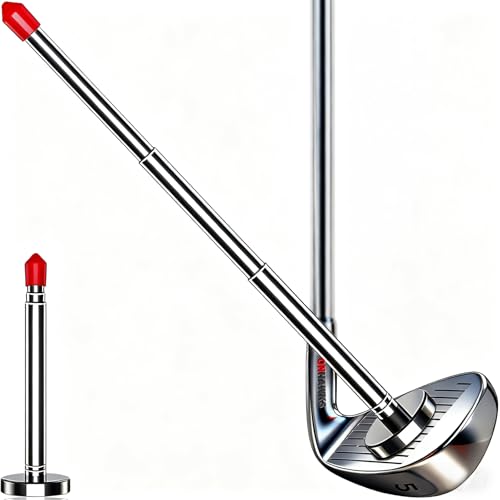
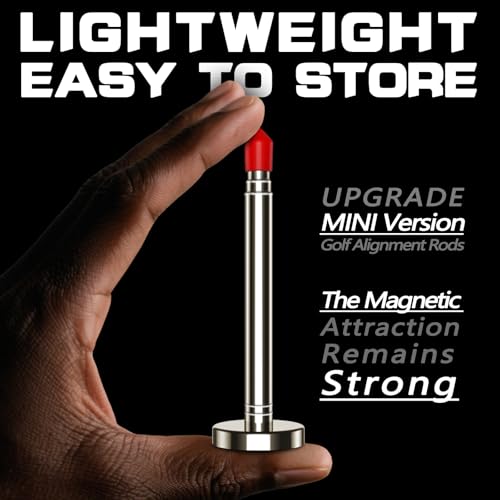
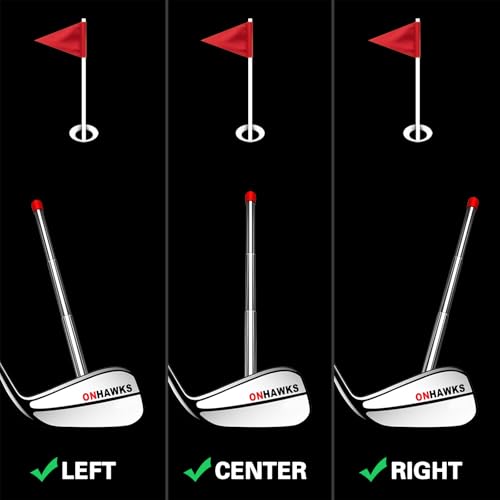
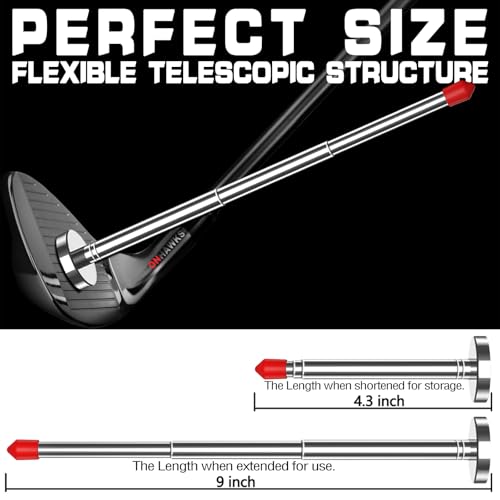
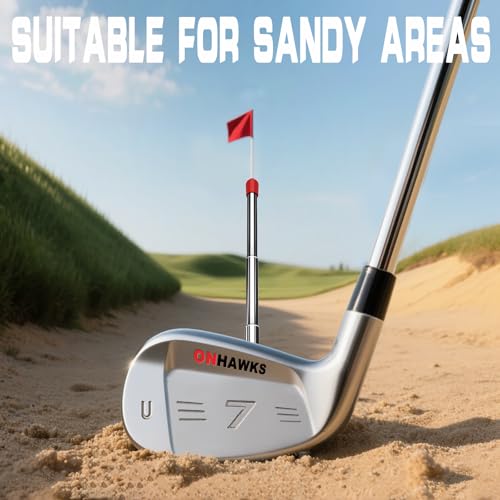
If you’re fighting alignment issues, especially with your irons and wedges, these magnetic alignment rods offer a simple, effective fix. The telescopic design with a strong 32-lb magnet attaches securely to clubfaces, letting you instantly see if your club is open, closed, or square at address. Reviewers note it’s especially helpful for visual learners who struggle to internalize proper aim.
Compared to traditional alignment sticks, this tool is far more portable and integrates directly into your setup. The red visual indicator helps track alignment mid-swing, and the compact size means it fits in any pocket. While it won’t fix your swing path directly, it does correct one of the most common root causes of poor shots: misalignment. At this price, it’s a no-brainer for anyone who tends to aim inconsistently.
Product photos

FODESAN Retractable Swing Trainer

Strengths
- Click feedback for rhythm
- Compact retractable design
- Durable steel shaft
Trade-offs
- Click may distract some
- Right-hand only
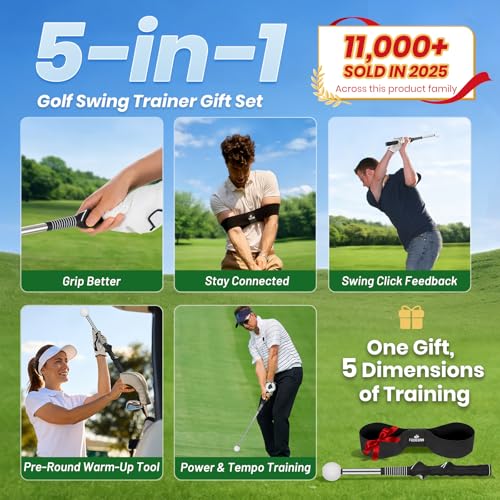
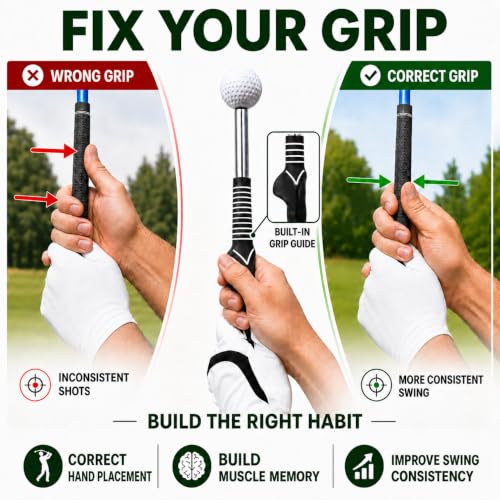
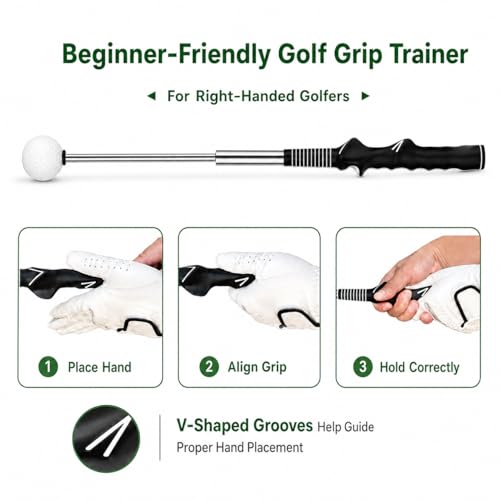
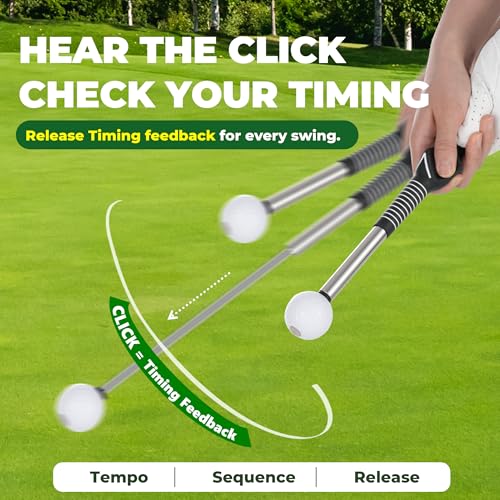
Tempo and timing are invisible killers in the golf swing, and the FODESAN trainer tackles them with a clever retractable shaft that clicks when your mechanics are on point. This auditory feedback helps golfers internalize a proper swing arc and rhythm without overthinking. The ergonomic grip also doubles as a hand-position coach, making it a two-in-one tool for fundamentals.
Compared to the Orange Whip, it’s less about flow and more about precision, ideal for players who rush the downswing or lose lag. Owners note it’s great for indoor use, and the compact size makes it travel-friendly. The stainless steel build feels solid, and at under three pounds, it won’t fatigue you during reps. For a tempo-focused alternative to bulkier trainers, this is a strong contender.
Product photos

SlopeMaster ProGreen Reader

Strengths
- High-precision level
- Doubles as ball marker
- Improves slope judgment
Trade-offs
- Limited to flat placement
- Doesn’t fix stroke flaws
Reading greens is one of the last frontiers where feel and science meet, and the SlopeMaster ProGreen Reader leans into the latter. This ball marker with a built-in bubble level gives you objective data on green slope, something most amateurs guess at. On paper, it’s a simple tool, but owners report it sharpens their ability to judge break over time, especially on unfamiliar courses.
I’ve seen few putting aids that actually improve green-reading intuition rather than just alignment, and this one stands out for that reason. It won’t fix your stroke, but it will help you make smarter decisions. The space alloy build feels solid, and doubling as a ball marker makes it practical. For a player who three-putts too often due to misread slopes, this could be a quiet standout.
Product photos


TrueBirdie Swing Arm Band

Strengths
- Targets chicken wing flaw
- Lightweight design
- Works for left/right handers
Trade-offs
- Limited to arm connection
- No swing path feedback
The “chicken wing”, where the lead elbow flares out through impact, is a common flaw that kills power and consistency. TrueBirdie’s arm band directly targets this by keeping both arms connected and synced through the swing. On paper, it’s a simple concept, but owners report noticeable improvement in lead arm extension and follow-through shape after consistent use.
Compared to heavier swing guards or resistance tools, this one is lightweight and unobtrusive, making it ideal for range sessions without disrupting tempo. It’s not a full-swing fix, but for the specific issue it addresses, it delivers. The double-stitched construction holds up well, and one size fits most, which is a plus. If you’re leaking power through impact, this could be the missing link.
Product photos


Lihengkong Impact Tape Labels
Strengths
- Clear impact feedback
- Budget-friendly
- Residue-free adhesive
Trade-offs
- Stickers wear out
- No data tracking
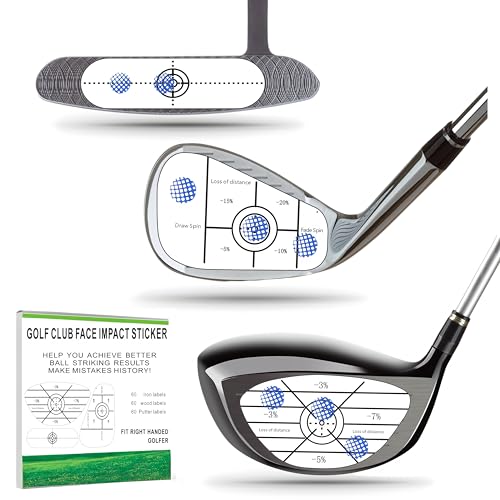
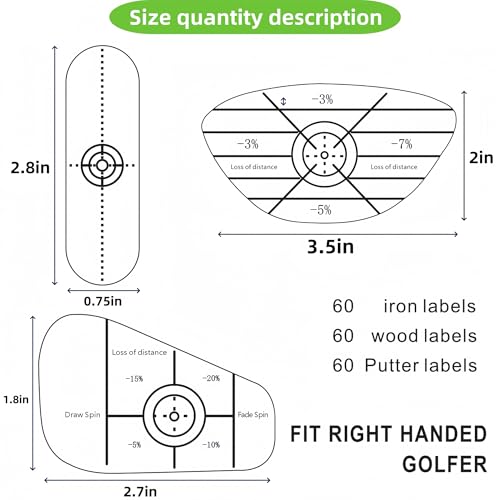
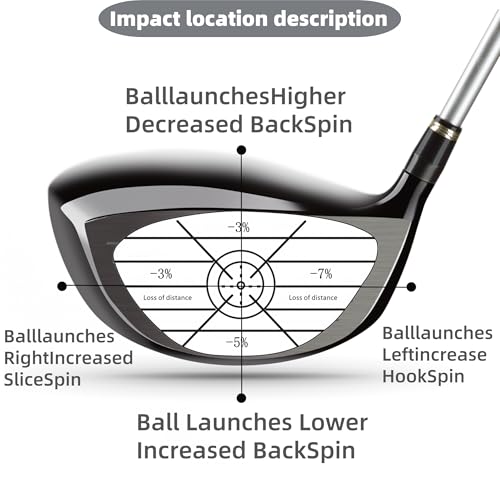
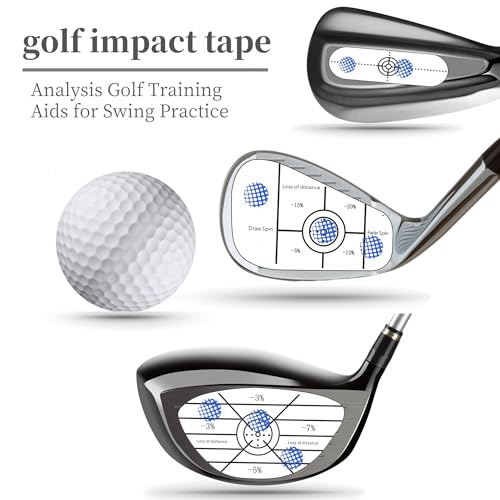
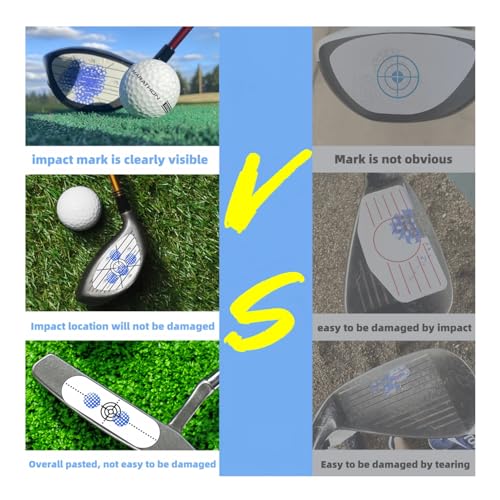
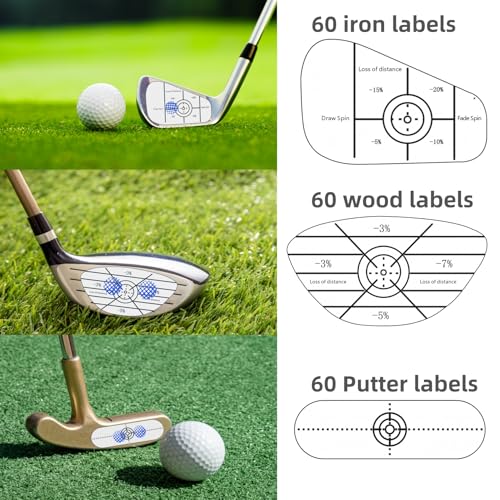
For a few bucks, this impact tape delivers outsized value. The blue-stain technology clearly shows where you’re striking the clubface, center, heel, toe, high, or low. Over time, that feedback helps golfers dial in their low point and improve sweet-spot contact. Each sticker lasts for several swings, and the 180-pack means you can test across clubs and conditions.
Owners consistently report better consistency after using it to diagnose strike patterns. Compared to swing videos or launch monitors, it’s a low-tech but highly effective way to self-coach. The adhesive is strong but residue-free, and the compact packaging fits in any pocket. If you’re guessing where your club hits the ball, this removes the guesswork.
Product photos
GoSports Pure Strike Training Discs

Strengths
- Affordable bulk pack
- Clear strike feedback
- Indoor/outdoor use
Trade-offs
- Wears over time
- No flight simulation
Clean ball striking is the holy grail for iron players, and these rubber training discs deliver surprisingly effective feedback for under ten bucks. The idea is simple: place a disc under the ball or use it solo to train a downward, ball-first strike. The compact footprint simulates a real ball, and the resistance gives immediate tactile feedback when you hit fat or flip too early.
Owners consistently praise how well these work for low-point control and compression practice, especially around the greens. Compared to hitting into a net or using a mat, these discs make it easier to feel the difference between a crisp strike and a lazy one. They’re also durable enough for indoor use, which is rare at this price. For anyone who duffs pitches or scoops irons, this 24-pack is a smart buy.
Product photos


Bulex Groove Sharpener Tool
Strengths
- Restores club spin
- Doubles as cleaner
- Works on all groove types
Trade-offs
- Requires careful use
- Limited to maintenance
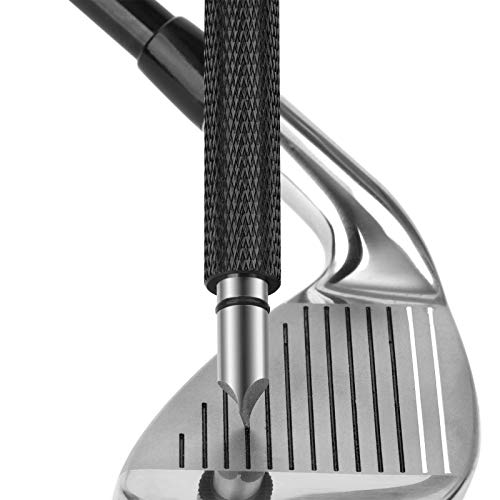
Sharp grooves mean more spin, especially from the rough, and the Bulex groove sharpener is a simple, effective way to maintain your wedges and irons. Made from heat-treated steel, it cuts cleanly into U and V grooves without damaging the clubface. Owners say it restores bite on older clubs, helping them hold greens better.
It also doubles as a cleaner, which is a nice bonus. Compared to replacing clubs every season, this tool extends their life for less than the cost of a sleeve of balls. It’s not a swing aid, but proper spin control is part of performance, especially around the greens. For any player who relies on short-game precision, keeping grooves sharp is essential.
Product photos


How We Chose These golf aids
Rather than a hands-on lab test, my research for these golf aids involved a detailed comparison of product specifications and features. I weighed owner reviews from major retailers alongside assessments from golf publications and instructors. My goal was to identify aids that consistently addressed common swing flaws and offered tangible benefits, applying my experience from years of planning golf trips and observing players of all levels. Clear criteria, such as durability, ease of use, and value for money, were central to the ranking.
The most heavily weighted factors were a product’s ability to provide repeatable feedback and its relevance to a broad range of skill levels. A good aid shouldn’t just tell you what you’re doing wrong, it should help you feel the correct motion. Correcting issues like the “chicken wing” or improving impact consistency are universally valuable, so aids targeting those areas ranked highly. Finally, aids offering versatility – useful for practice at the range, at home, or even during a round – were favored.
Product specifications reliably indicate build quality and intended use. However, I placed greater emphasis on owner feedback regarding long-term durability and real-world effectiveness. Reputable reviews helped me filter out exaggerated claims and identify aids that truly delivered on their promises. For example, while specs might detail a product’s materials, reviews reveal whether it holds up to consistent use. You can find more information about improving your overall game, including details on recommended swing trainers on my site. And if you’re looking to pair a new swing with a quality ball, check out our guide to the best 3-piece balls.
Choosing The Right golf aids
Choosing the right golf aids can be the difference between frustrating practice sessions and genuinely improving your game.
A quality golf aid focuses on repeatable feedback, addresses a specific swing flaw, and is durable enough to withstand consistent use. Look for aids that aren’t overly complex – simplicity often leads to better results. Consider materials, build quality, and whether the aid is designed for indoor, outdoor, or both types of practice. Finally, evaluate if the aid’s feedback is something you can actually feel and translate onto the course.
Focus on Your Weakness
Too many golfers buy aids hoping to “fix everything” at once. That’s a recipe for wasted money and confusion. Instead, pinpoint one or two specific areas of your game that need the most work. Are you struggling with a slice? A poor grip? Inconsistent tempo? There are tools designed to address each of these issues. For example, if you suspect your grip is the culprit, something like the SKLZ Golf Grip Trainer can provide instant feedback. Don’t spread yourself too thin; targeted practice is far more effective.
Understand the Feedback Mechanism
Not all feedback is created equal. Some aids, like alignment rods, provide visual cues. Others, like the Orange Whip Swing Trainer, offer a kinesthetic response – you feel when you’re doing something right or wrong. Consider what type of learner you are. Do you respond better to seeing, feeling, or hearing feedback? It’s also important to understand what the feedback means. A wobbly feeling from the Orange Whip isn’t just a wobble; it indicates a flaw in your tempo, balance, or swing plane.
Here’s how to evaluate different feedback types:
- Visual Feedback: Good for understanding alignment and swing plane (e.g., alignment rods).
- Kinesthetic Feedback: Excellent for developing swing feel and timing (e.g., weighted trainers).
- Auditory Feedback: Useful for tempo and rhythm training (e.g., some swing analyzers). A good aid will give you information you can use.
A good swing aid isn’t about masking a problem; it’s about highlighting it so you can address it intelligently.
Prioritize Practicality and Value
Some golf aids are incredibly sophisticated (and expensive). But often, the most effective tools are also the most simple and affordable. The Lihengkong Impact Tape Labels, for example, offer valuable feedback on your point of contact for a very low price. Think about where and how you’ll be using the aid. If you primarily practice indoors, a large, complex setup might not be practical. If you’re looking to improve your putting, it might be worth checking out some of the best putting aids before investing in anything else. Also, remember that even the best aid won’t replace proper instruction or consistent practice. If you’re primarily a distance player, don’t overlook the importance of a consistent ball. Consider pairing your practice aids with some reliable 2-piece balls for consistent performance.
Golf Aids Compared
Here’s a comparison of key specifications for various golf aids to help you choose the right one for your needs.
| Product Name | Best For | Features | Price | Material | Skill Level |
|---|---|---|---|---|---|
| Orange Whip Swing Trainer | Best Overall | Counterbalanced swing system | N/A | N/A | All |
| SKLZ Golf Grip Trainer | Best Grip Training | Corrects hand positioning | N/A | Molded Guide | All |
| ONHAWKS Golf Alignment Rods | Best Alignment Aid | Magnetic alignment, telescopic | N/A | Steel/Magnet | All |
| FODESAN Retractable Trainer | Best Tempo Training | Instant feedback, retractable shaft | N/A | Steel/Rubber | All |
| SlopeMaster ProGreen Reader | Best Putting Aid | Accurate green reading, bubble level | N/A | Space Alloy | All |
| TrueBirdie Swing Arm Band | Best for Fixing Chicken Wing | Prevents “Chicken Wing” | N/A | N/A | All |
| Lihengkong Impact Tape Labels | Best Budget Feedback Tool | Instant swing feedback, easy to apply | N/A | Tape | All |
| GoSports Pure Strike Discs | Best Ball Striking Practice | Improves ball contact, instant feedback | N/A | Rubber | All |
| Bulex Groove Sharpener Tool | Best Club Maintenance Aid | Fits all club types, restores backspin | N/A | Steel | All |
Frequently Asked Questions
What’s the biggest mistake golfers make when buying aids?
Many golfers purchase multiple aids hoping for a quick fix, but focusing on one specific weakness and choosing an aid designed for that issue yields far better results. Spreading your practice too thin diminishes the effectiveness of any single aid.
Are expensive golf aids always better?
Not necessarily. While sophisticated aids have their place, simple and affordable options like the Lihengkong Impact Tape Labels can provide surprisingly effective feedback. Practicality and addressing your specific needs are more important than price.
How can I tell if an aid is actually helping my swing?
Look for repeatable feedback and a noticeable improvement in your ability to feel the correct motion. If you’re not experiencing a change in your swing or understanding the feedback, the aid might not be a good fit.
Can golf aids replace professional instruction?
No, golf aids are best used to supplement professional instruction, not replace it. A qualified instructor can diagnose underlying issues and create a personalized improvement plan. Consider recommended practice aids to reinforce lessons learned.
What should beginners look for in a golf aid?
Beginners should prioritize aids that address fundamental aspects of the swing, such as grip, alignment, and posture. Focusing on the basics with the right tools can build a solid foundation and avoid developing bad habits. Don’t overlook best amateur clubs as you build your foundation.
The Bottom Line
Ultimately, choosing golf aids comes down to balancing focused practice with realistic expectations. While a sophisticated system like the Orange Whip Swing Trainer offers a well-rounded approach to improving your swing, it’s the consistent effort – and understanding what the aid is telling you – that delivers results. Don’t fall into the trap of thinking a device alone will fix your game.
For golfers seeking targeted improvement, our picks shine. If grip issues are holding you back, the SKLZ Golf Grip Trainer is a clear winner. Those looking for versatility and a quick way to address alignment can’t go wrong with the ONHAWKS Golf Alignment Rods. And for budget-conscious players wanting instant feedback, the Lihengkong Impact Tape Labels are a surprisingly effective tool. You might also want to look at our guide to the best teaching aids for more options.
At the end of the day, the most valuable “aid” is a clear understanding of your own swing and a commitment to deliberate practice. Don’t get caught up in chasing marginal gains from the latest gadgets. Focus on the fundamentals – a solid grip, proper alignment, consistent tempo – and pair that with a reliable ball like the best all-round balls for consistent feedback on the course.
