
8 Best Golf Teaching Aids of 2026
This post contains affiliate links. As an Amazon Associate, we earn from qualifying purchases.
This post contains affiliate links. As an Amazon Associate, we earn from qualifying purchases.
The Orange Whip Swing Trainer stands out as the best overall golf teaching aid, delivering unmatched feedback on tempo and connection. For budget-conscious golfers, the FODESAN Retractable Trainer offers solid performance with instant swing feedback, while the SWING DOCTOR Swing Trainer is a strong pick for those focused on correcting swing path issues.
Most golfers buy teaching aids hoping for quick fixes, but the real challenge is finding one that gives clear, repeatable feedback without overcomplicating your swing. Too many gadgets promise miracles but fail to build real muscle memory.
This guide cuts through the noise. I researched the top options by analyzing specs, durability, adjustability, and what actual users report, focusing on aids that target specific flaws like grip, path, or tempo. These picks are based on consistent owner feedback and practical design, not hype.
Top 8 Golf Teaching Aids in the Market
The Best Golf Teaching Aids, Reviewed
Orange Whip Swing Trainer

Strengths
- Full-body swing training
- Excellent tempo feedback
- Durable, made in USA
- Improves flexibility and power
Trade-offs
- High price
- Takes space
This is the gold standard for a reason, its counterbalanced design creates a unique feel that no rigid trainer can match. The flexible shaft and weighted head force you to develop tempo, balance, and full-body coordination with every swing. Owners consistently report better rhythm and increased clubhead speed after just a few weeks of use.
It’s expensive, yes, but the quality is evident in the smooth flex and durable construction. Compared to rope trainers or click sticks, the Orange Whip gives the most complete feedback across tempo, plane, and kinetic chain activation. For serious players who want one tool that does it all, this is the smarter buy.
Video review
FODESAN Retractable Swing Trainer

Strengths
- Click feedback for tempo
- Compact and portable
- Durable steel shaft
- Ergonomic grip
Trade-offs
- Only for right-handed
- No swing plane guidance
At this price, the click feedback mechanism is the standout feature, owners say it genuinely helps reinforce proper swing tempo and sequencing. The retractable shaft collapses down small, making it one of the most travel-friendly options here, and the stainless steel build feels sturdy enough for daily use. It’s not a full-body trainer like some, but for building rhythm and grip stability, it delivers.
Compared to bulkier swing plane tools, this one excels as a quick warm-up aid. Right-handed players in particular appreciate the ergonomic grip, which mimics a real club well. It won’t fix deep swing flaws, but for beginners or intermediates building consistency, the muscle memory gains add up over time.
Video review
SWING DOCTOR Swing Plane Trainer
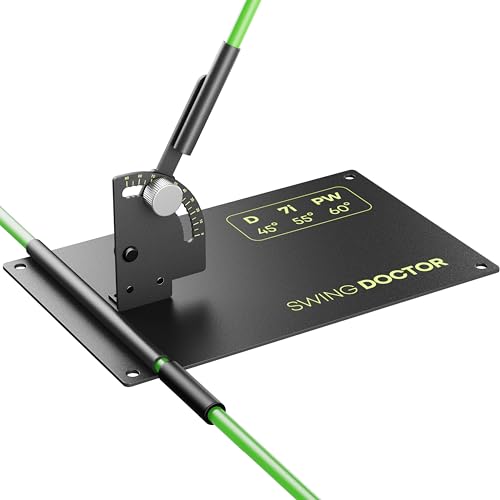
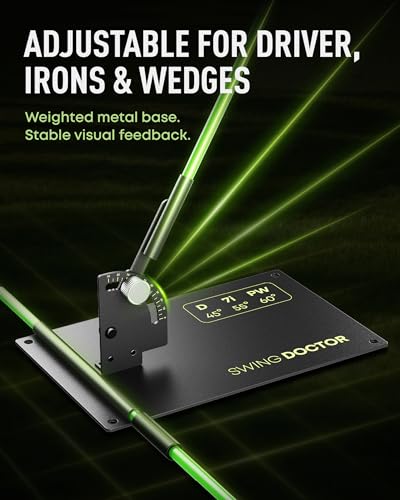
Strengths
- Adjustable for all clubs
- Stable metal base
- Clear visual feedback
- Includes alignment sticks
Trade-offs
- Bulky for travel
- Takes setup time
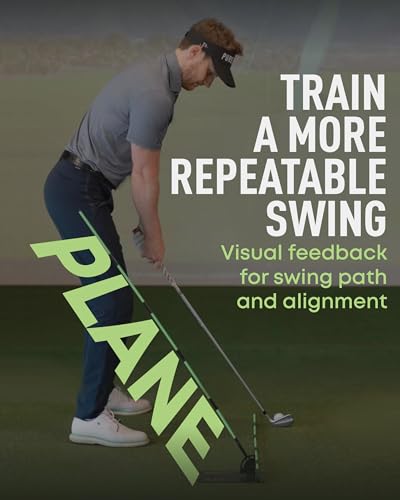
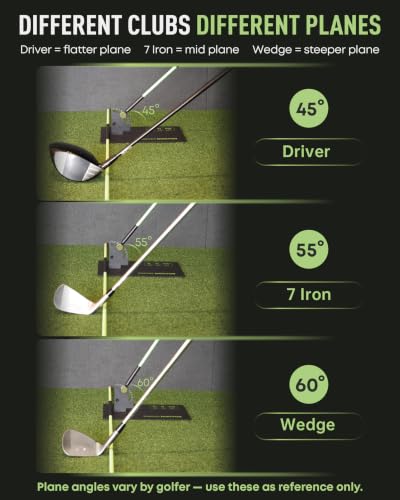
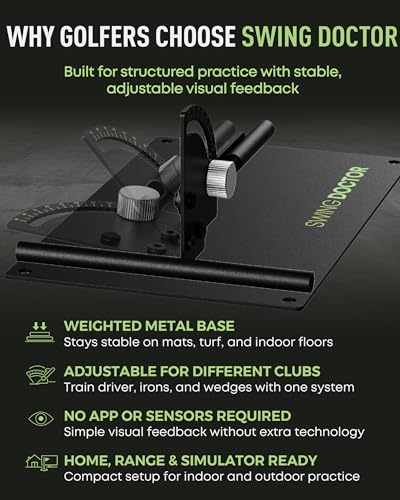
This is the go-to for visual learners who want to groove a consistent swing path without tech overload. The adjustable metal arm lets you set different plane angles for driver versus irons, which is rare at this price. Owners love that the weighted base stays put, even on turf or mats, making it far more reliable than loose alignment sticks.
It’s not flashy, but it’s effective. The included alignment sticks and carry bag make it easy to use at home or the range. Compared to digital trainers, this one forces you to develop body awareness the old-school way, through repetition and visual cues. For players battling an over-the-top move, it’s hard to beat.
Product photos

SKLZ Golf Grip Trainer

Strengths
- Precise hand positioning
- Fits all standard clubs
- Builds grip consistency
- Compact and lightweight
Trade-offs
- Only improves grip
- Plastic feel
If hand position is your weak spot, this is the most direct fix on the list. It physically guides your fingers into a neutral grip, which reviewers consistently praise for eliminating slices caused by improper hand placement. The fact that it fits any standard club means you can use it with your actual irons or driver, no adaptation needed.
It’s basic, yes, but also brilliantly focused. You won’t get swing plane or tempo help here, but for building reliable muscle memory in your grip, this is the tool I’d recommend over bulkier alternatives. At under $20, it’s a no-brainer for anyone fighting grip-related inconsistency.
Product photos


GreenHaven Wrist Hinge Trainer
Strengths
- Affordable wrist training
- Improves hinge mechanics
- Reduces slicing
- Fits most grips
Trade-offs
- Only for right-handed
- Plastic construction
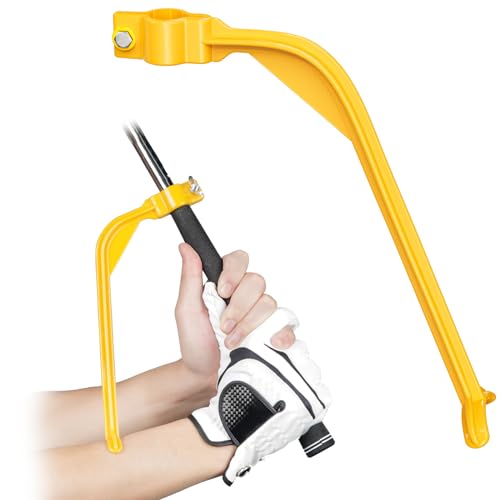
At under $10, this is the cheapest way to address wrist mechanics, and it works. The hinge physically limits forearm angle during the backswing, which helps reinforce proper wrist set and prevents early release. Reviewers note it’s especially useful for eliminating ‘chicken wing’ elbows and improving face control.
It’s basic and takes a minute to install, but for the price, it’s hard to fault. It won’t replace a full swing trainer, but as a targeted drill tool, it delivers. Left-handed golfers will need to source a different model, but right-handers get solid value here.
Product photos


Cusprtm Swing Trainer Rope
Strengths
- Teaches pro-level tempo
- Safe indoor use
- Dual grip options
- Builds lag and power
Trade-offs
- No visual plane guide
- Foam head wears over time
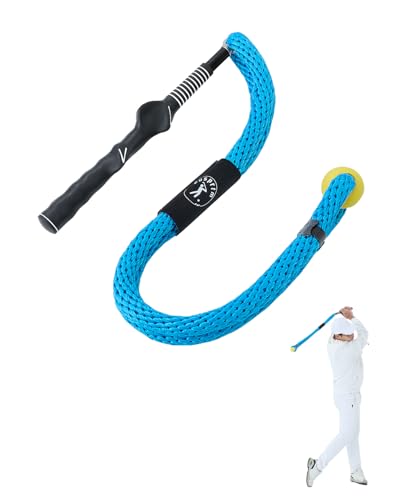
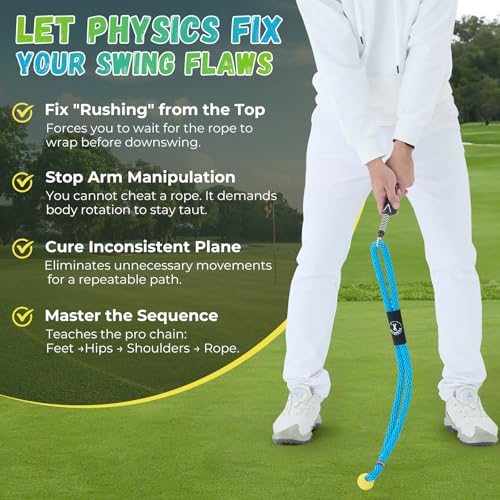
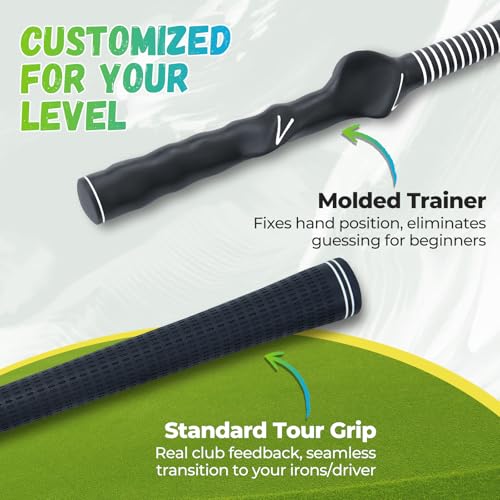
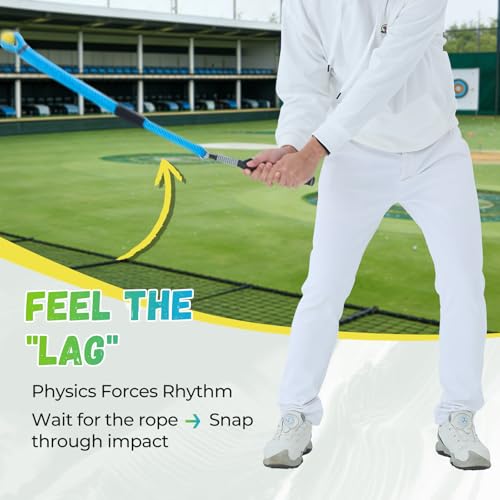
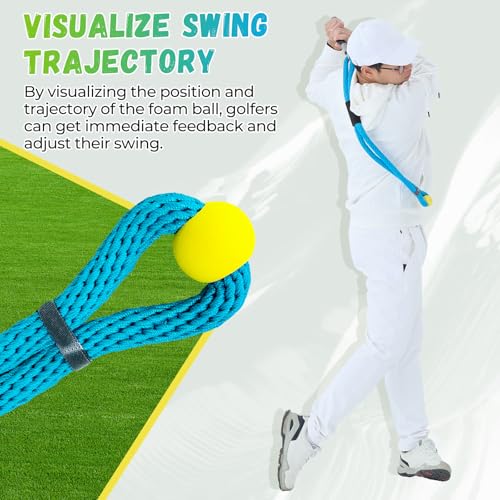
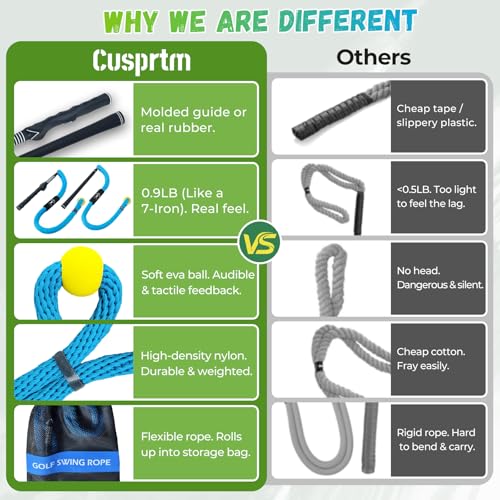
The physics behind this rope are sound, the “whip effect” forces you to wait on the transition, which instantly exposes rushed downswings. The soft foam head makes it safe for indoor use, and the auditory ‘whoosh’ gives clear rhythm feedback. Owners say it’s especially helpful for curing the habit of flipping or casting at the top.
With two grip options, it’s versatile, beginners can lock in hand position, while advanced players can simulate real club feel. It won’t give plane lines like a Swing Doctor, but for developing lag and a smooth 3:1 tempo, it’s surprisingly effective. At under $35, it’s a solid alternative to pricier trainers.
Product photos
Tour Striker Smart Ball

Strengths
- Improves arm-body connection
- Enhances swing sequencing
- Compact and portable
- Works with multiple clubs
Trade-offs
- Not for full swings
- Limited visual feedback
This isn’t a ball you hit, it’s a connection drill tool, and that’s where it shines. The weighted design forces your arms and body to stay synced through the swing, which reviewers say helps eliminate casting and early release. It’s especially effective for rehearsing takeaway and transition, two phases where most amateurs lose power.
While it doesn’t provide external feedback like a camera or sensor, the feel is unmistakable. Use it with wedges or your putter, and you’ll notice better sequencing. It’s not a full swing trainer, but as a pre-round warm-up or daily coordination drill, it’s one of the most efficient tools here.
Product photos


COSPOPTIC Hitting Mat
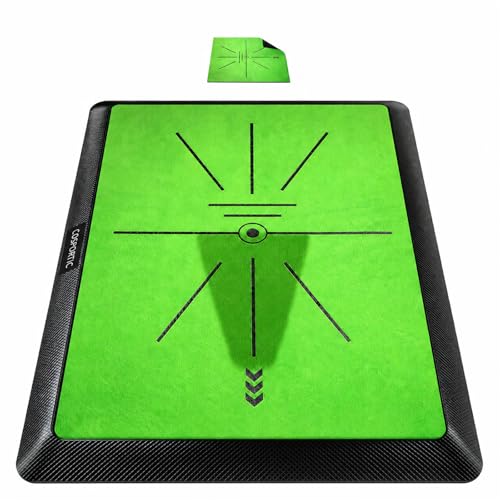
Strengths
- Visual swing feedback
- Extra turf included
- Stable non-slip base
- Portable design
Trade-offs
- Small hitting area
- Not for full driver swings
This mat stands out for giving instant visual feedback on your swing path, something most home practice setups lack. The impact surface clearly shows whether you’re hitting toe, center, or heel, which owners consistently report helps them adjust stance and swing plane without needing video analysis. For a budget-friendly option, that kind of real-time insight is rare.
The heavy-duty rubber base really does stay put, even on slick garage floors, and the extra replaceable turf layer adds noticeable longevity. It’s not going to replicate a premium range experience, but for quick daily reps where you want form feedback, it’s more useful than most fixed mats in this range.
Product photos


How We Picked These golf teaching aids
I approached this guide to golf teaching aids by researching the current market and comparing specifications, features, and price points across numerous options. Rather than a hands-on lab test, this is a research-led comparison of specs and owner feedback gathered from a variety of sources. We weighed owner reviews from major retailers alongside expert opinions found in golf publications and instructional websites to build a well-rounded understanding of each aid’s strengths and weaknesses.
For this category, the most heavily weighted factors were the ability to provide clear, actionable feedback and the versatility to address common swing flaws. A good teaching aid shouldn’t just tell you something is wrong; it should help you understand why and offer a path to correction. The durability and build quality were also key, as golfers need tools that will withstand repeated use and travel. Understanding your skill level and how effective putting training aids can help is also crucial.
Product specifications reliably tell you about the construction materials and intended use, but owner feedback is where the real insights lie. Things like ease of use, the clarity of the feedback provided, and whether the aid actually delivers on its promises are best assessed through the experiences of other golfers. We paid close attention to recurring themes in reviews – consistent praise or complaints – to form a thorough picture of each product’s performance. Ultimately, choosing the right type of golf balls for better players will influence your overall game, and a swing aid can help you get the most out of them.
How To Pick The Right golf teaching aids
Finding the right golf teaching aid can be the difference between frustrating practice sessions and genuine improvement. It’s a crowded market, so knowing what to look for is key.
A quality golf teaching aid focuses on isolating a specific swing flaw, providing repeatable feedback, and encouraging muscle memory development. Look for durable construction, adjustability to suit different clubs and swing types, and clear indications of proper (and improper) technique. Avoid gimmicky devices and prioritize aids endorsed or used by qualified golf instructors.
Understanding Your Swing’s Weaknesses
Before dropping money on any gadget, honestly assess where you struggle. Are you consistently slicing? Is your tempo off? Do you struggle with maintaining a consistent grip? The most effective teaching aid will address your specific issues, not just a general weakness. I’ve seen too many golfers buy the latest trend without understanding if it actually aligns with their needs. Many struggle with grip consistency, and a tool like the SKLZ Golf Grip Trainer could be a great starting point.
Feedback Mechanisms & Adjustability
The best aids aren’t just about telling you what you’re doing wrong; they show you. Instant feedback, whether visual, auditory, or tactile, is crucial for building new muscle memory. Consider how adjustable the aid is. A one-size-fits-all approach rarely works. Can it be adapted for different clubs (driver, irons, wedges)? Can you modify the settings to match your skill level? The Tour Striker Smart Ball, for example, excels at promoting connection, but its benefits are limited if you can’t consistently replicate your swing path.
Here’s what I look for in effective feedback:
- Clear indication of error: A simple visual cue is often best.
- Repeatable results: The aid should consistently demonstrate the same feedback for the same error.
- Versatility: Can it be used for various drills and practice scenarios? A more versatile aid offers better long-term value.
Value, Portability, and Durability
Golf practice often happens on the go. A heavy, cumbersome aid you dread carrying to the range won’t get used. Portability is important, but don’t sacrifice quality. I often recommend considering the long-term cost. A cheaper aid that breaks after a few uses isn’t a bargain. Look for durable materials and solid construction. And don’t forget to consider if your friends might want to borrow it; a good aid is often shared! Sometimes, the best solution is a simple, well-made mat like the COSPOPTIC Hitting Mat, and pairing it with some affordable golf balls for a complete home practice setup.
A swing trainer is only as good as the effort you put into using it. Don’t expect instant results; consistent, focused practice is the key to improvement.
Golf Teaching Aids Compared
Here’s a comparison of key specifications for popular golf teaching aids to help you make an informed purchase.
| Product Name | Best For | Features | Weight | Dimensions | Material | Price |
|---|---|---|---|---|---|---|
| Orange Whip Swing Trainer | Best Overall | Counterbalanced swing system | N/A | N/A | N/A | N/A |
| FODESAN Retractable Trainer | Best Budget Friendly | Instant swing feedback, retractable | 0.7 lbs | 15.5″ collapsed | Steel, Resin, Rubber | N/A |
| SWING DOCTOR Swing Trainer | Best for Swing Path Correction | Visual reference for swing plane | N/A | N/A | Metal, Plastic | N/A |
| SKLZ Golf Grip Trainer | Best for Hand Position | Corrects grip positioning | N/A | N/A | Plastic | N/A |
| GreenHaven Wrist Hinge | Best for Wrist Mechanics | Adjusts wrist hinge angle | N/A | N/A | N/A | N/A |
| Cusprtm Swing Trainer Rope | Best for Tempo & Rhythm | Flexible rope, rhythm correction | N/A | N/A | Rope, Foam | N/A |
| Tour Striker Smart Ball | Best for Connection Drills | Arms and body connection | N/A | N/A | N/A | N/A |
| COSPOPTIC Hitting Mat | Best for Home Practice | Swing path tracking, replaceable turf | N/A | 16″x12″ | Rubber, Turf | N/A |
Frequently Asked Questions
What level golfer will benefit most from using a teaching aid?
Any golfer, from beginner to advanced, can benefit; however, those with a basic understanding of swing fundamentals will likely see quicker results. A teaching aid won’t fix a truly flawed swing without some foundational knowledge, and pairing it with best golf skill trainers can amplify the benefits.
Are expensive teaching aids always better?
Not necessarily. Price often reflects features and build quality, but a simpler, well-designed aid addressing a specific flaw can be more effective than a pricey, multi-functional device you don’t fully use. A focus on targeted improvement is more valuable than simply spending more money.
Can a teaching aid replace lessons from a golf pro?
No. While aids are excellent for focused practice and reinforcing proper technique, they can’t replace the personalized instruction and diagnosis of a qualified golf professional. A pro can identify underlying issues a device won’t detect and tailor a plan to your individual swing.
What should I do if a teaching aid doesn’t seem to be helping?
First, ensure you’re using it correctly and focusing on the intended correction. If the problem persists, it may not be the right aid for your specific swing flaw. Consider consulting with a golf professional to identify the root cause and explore alternative solutions, or perhaps assess whether you are ready for clubs for amateurs.
How important is portability when choosing an aid?
Portability is quite important, particularly if you plan to practice at the driving range or while traveling. A compact and lightweight aid is more likely to be used consistently, maximizing its potential benefits, and it’s more convenient than lugging around bulky training tools.
The Bottom Line
Ultimately, choosing a golf teaching aid comes down to how much you value immediate feedback versus the effort required to interpret it. While many tools promise quick fixes, the Orange Whip Swing Trainer consistently rises to the top as the strongest overall pick, thanks to its ability to promote a natural, connected swing through feel – and that’s what truly translates to the course. It’s an investment, but one that addresses fundamental swing flaws in a way few others can.
For golfers on a tighter budget, or those seeking a specific solution, several excellent options stand out. The FODESAN Retractable Trainer delivers instant visual feedback at a very accessible price point, while the SKLZ Golf Grip Trainer is a fantastic starting point for anyone struggling with hand positioning. If you are looking for versatile golf balls to pair with your new training aid, I’ve found the all-round balls hold up well during practice.
Don’t get caught up in chasing the latest technology or focusing on isolated specs. The most crucial elements remain consistent: understanding your own swing, dedicating time to deliberate practice, and working towards a repeatable motion. A good aid is a tool to facilitate that process, but it’s your commitment to improvement that will unlock your potential and help you achieve top performing golf balls consistency.
