
9 Best Golf Putting Aids of 2026
This post contains affiliate links. As an Amazon Associate, we earn from qualifying purchases.
This post contains affiliate links. As an Amazon Associate, we earn from qualifying purchases.
The Putting Arc MS3D Model stands out as the best overall golf putting aid, delivering unmatched feedback on stroke path and face control. For golfers on a budget, the BIRDIEBLAST Golf Putting Mirror offers real value by fixing posture and alignment fast. And if you want realistic hole feedback that sharpens both pace and accuracy, the PuttOUT Premium Pressure Putt Trainer is hard to beat.
As a golfer who’s played greens from St. Andrews to Scottsdale, I know how often missed putts come down to small, correctable flaws, misalignment, inconsistent stroke, or poor distance control. The right putting aid won’t just occupy space in your garage, it should target your specific weakness and deliver reliable feedback every time.
This guide cuts through the clutter, ranking the top putting aids based on specs, owner experiences, and what actually works for real golfers. We focused on tools that improve alignment, refine stroke mechanics, and simulate on-course conditions, so you can practice with purpose, no matter your skill level or setup.
Top 9 Golf Putting Aids in the Market
The Best Golf Putting Aids, Reviewed
The Putting Arc MS3D Model

Strengths
- Proven arc path training
- Stable non-slip base
- Used by tour players
Trade-offs
- Fixed arc radius
- No face alignment
- Bulky for travel
This is the gold standard for stroke path training, used by tour pros and coaches worldwide. The arc guides your putter along the natural inside-square-inside path, reinforcing a repeatable motion. The MS3D model’s weight and non-slip base keep it stable on carpet or turf, and owners report noticeable improvement in just days.
Compared to free-swing tools like mirrors or gates, this one is more restrictive, but that’s the point. It builds muscle memory through repetition. I’d pick it over the EyeLine Mirror if you need structural stroke correction, though it doesn’t help with eye alignment. At this price, it’s an investment, but it earns its spot as the best overall.
Video review
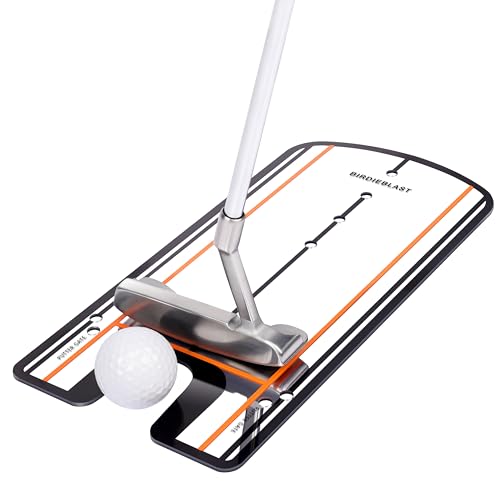
BIRDIEBLAST Golf Putting Mirror
Strengths
- Affordable
- Clear alignment lines
- Portable
Trade-offs
- Flimsy construction
- No stroke gates
- Limited feedback features
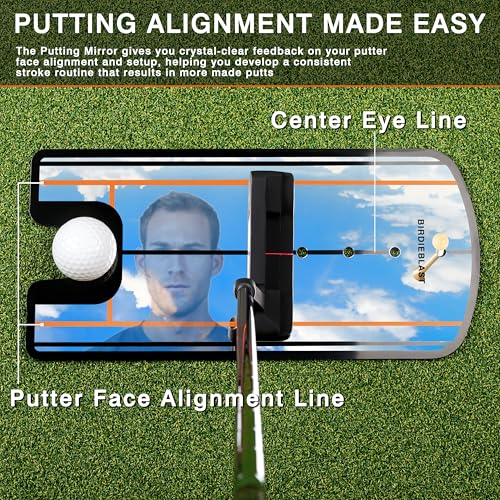
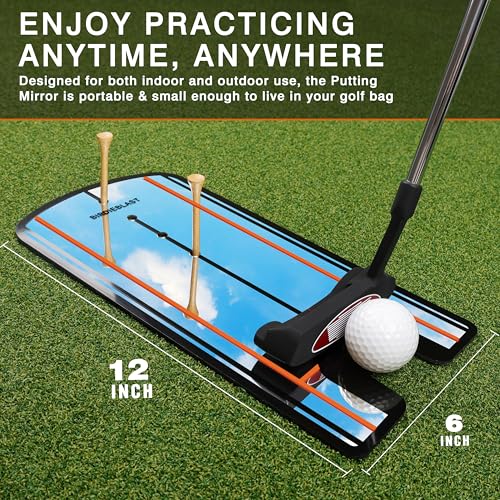
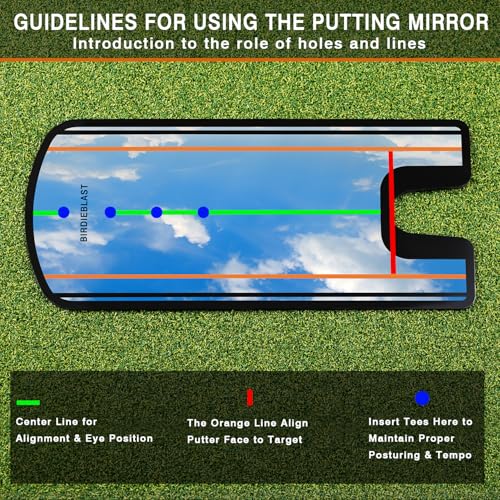
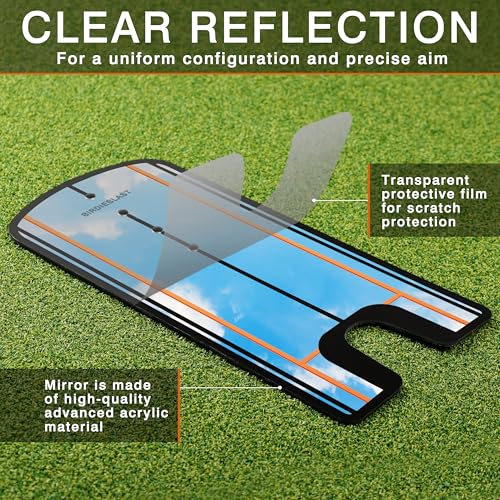
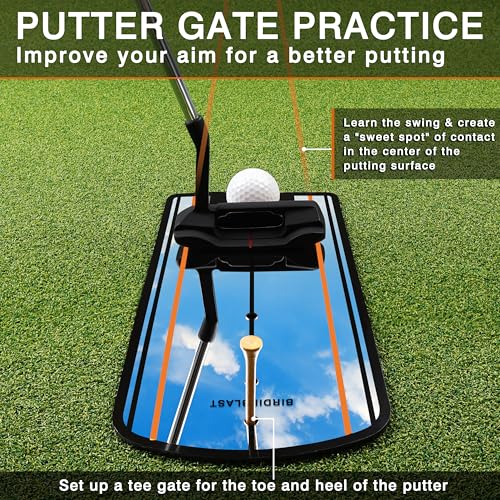
At this price, the BIRDIEBLAST mirror is a steal if you’re just getting into putting fundamentals. It’s basic, but the reflective surface gives instant feedback on eye position and shoulder alignment, two common flaws in amateur strokes. Reviewers note it’s surprisingly effective for such a thin, lightweight piece, and the etched lines help guide proper setup without cluttering the view.
It doesn’t have gates or stroke restrictors like the EyeLine model, and the plastic feels a bit flimsy compared to pricier mirrors. But for beginners or casual players who need a nudge toward better posture, it gets the job done without breaking the bank.
Product photos
PuttOUT Premium Pressure Putt Trainer
Strengths
- Realistic hole feedback
- Rolls back made putts
- Folding design
Trade-offs
- No stroke correction
- Takes up space
- Expensive for target practice
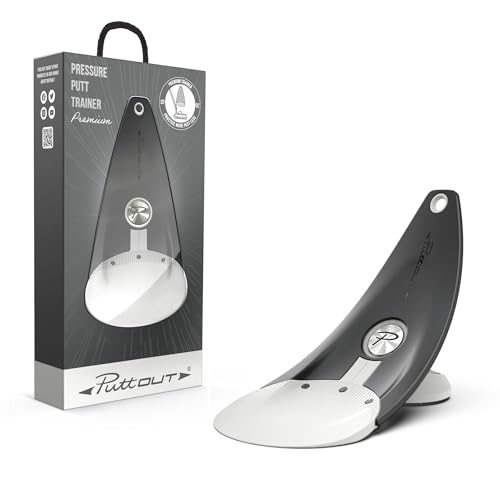
This trainer nails the feel of a real hole like no other. The parabolic ramp returns perfect putts with the same roll they’d have had past the cup, while lipped-out attempts are rejected cleanly. That realistic feedback loop makes practice feel meaningful, owners say it’s addictive, and I can see why. It turns aimless rolling into purposeful drills.
It doesn’t guide your stroke or align your eyes, but for simulating real green conditions, especially pace and entry width, it’s unmatched. Compared to the SKLZ cup, it’s far more sophisticated. If you want to train like you’re on the actual green, this is the closest you’ll get indoors.
Video review
EyeLine Golf Putting Mirror
Strengths
- Clear eye alignment
- Putter gate slots
- Stroke restrictor hole
Trade-offs
- Higher price
- No path guidance
- Mirror scratches over time
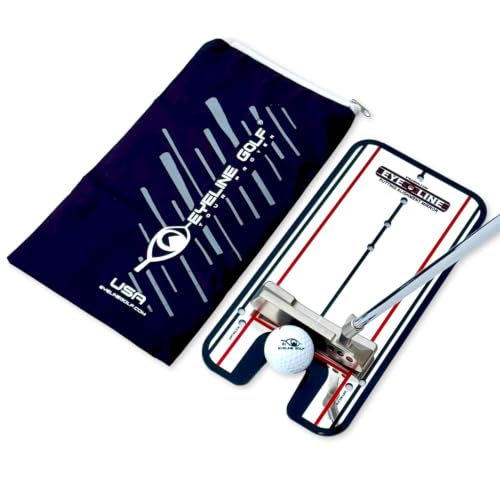
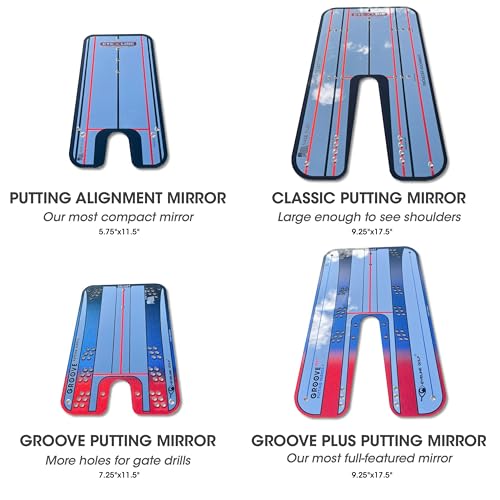
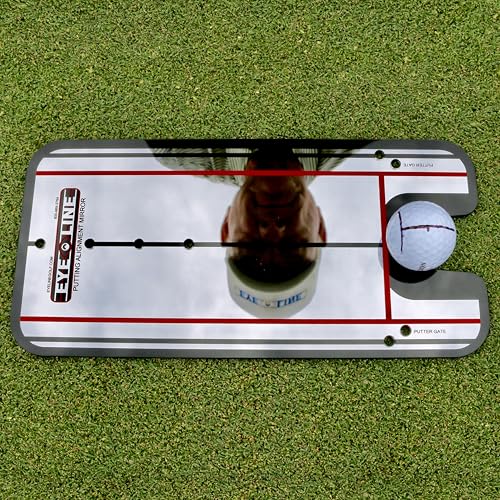
This mirror is the upgrade you want if you’re serious about setup. It shows eye position, ball placement, and putter face alignment all at once, and the built-in gate slots let you customize stroke feedback. Reviewers love the dual function, alignment plus impact checks, and the compact size fits in any golf bag.
Compared to the BIRDIEBLAST, it’s sturdier and more feature-rich, justifying the higher price. The stroke restrictor hole is a subtle but smart addition for taming over-long backswings. If you’re working on consistency at address, this is the one I’d recommend.
Product photos



Swing Minder Perfect Roll Putting Wheels
Strengths
- Real-ball weight
- Instant wobble feedback
- Works on carpet or turf
Trade-offs
- No alignment aid
- Small target area
- Can roll away easily
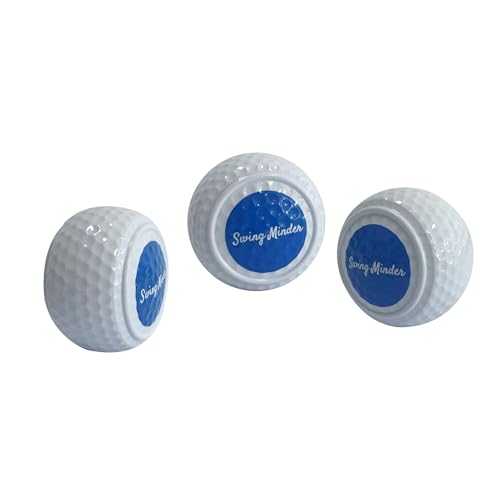
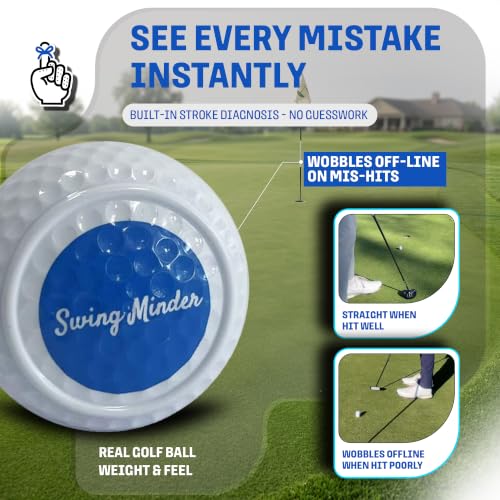
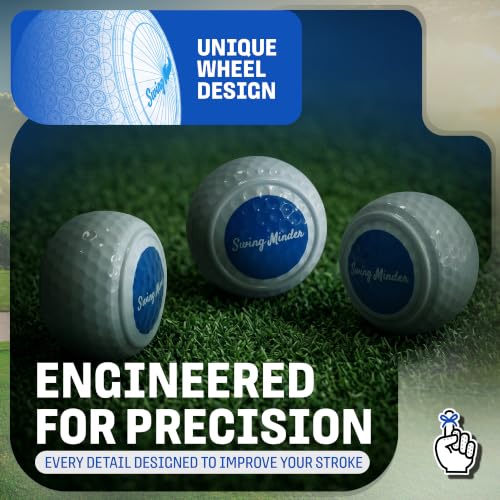
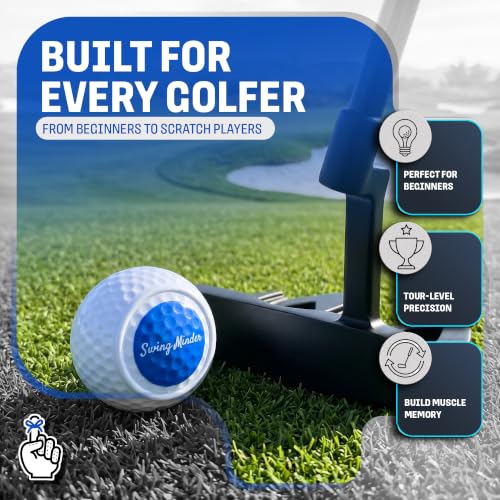
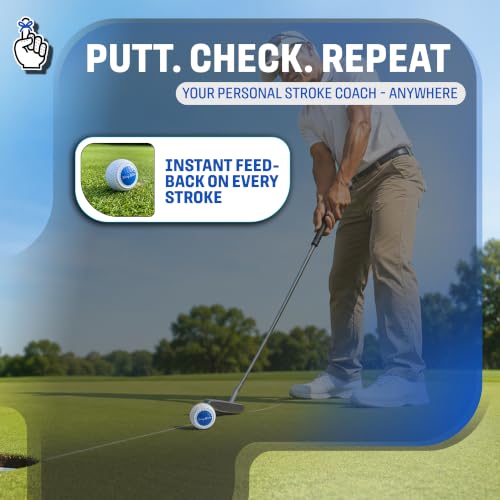
These small, weighted wheels are deceptively effective. They mimic the roll of a real ball but amplify feedback, strike it off-center and it wobbles instantly, showing you where your impact was flawed. Owners love how it exposes subtle face and path errors you might not feel otherwise. It’s like instant truth serum for your stroke.
Compared to static tools like mirrors or gates, this one is dynamic and tactile. I’d pick it over the PuttOUT Gates for feel-based learning, though it doesn’t help with alignment. The set of three lets you space them out for longer rolls, which is a nice touch for building rhythm.
Product photos

PuttOUT Pro Putting Gates
Strengths
- Adjustable gate sizes
- Measurable feedback
- Stable weighted base
Trade-offs
- No path correction
- Requires flat surface
- Narrow focus
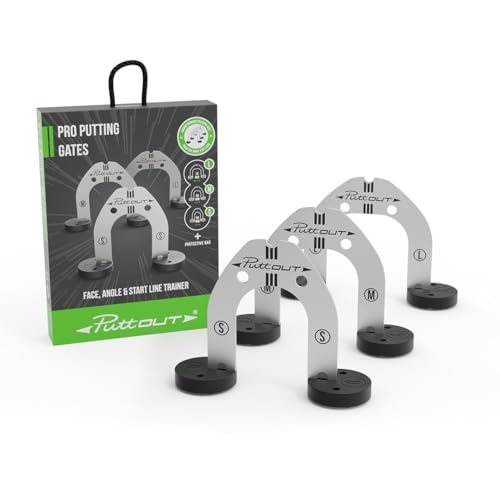
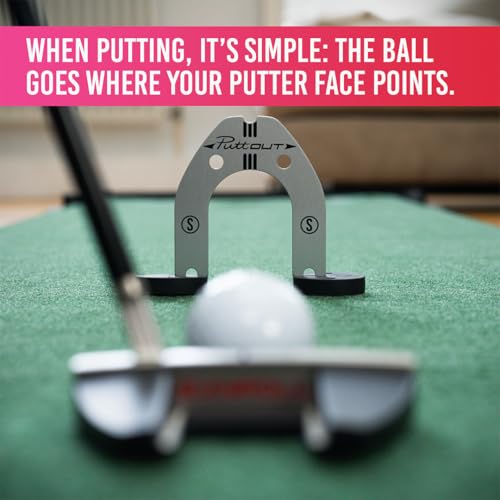
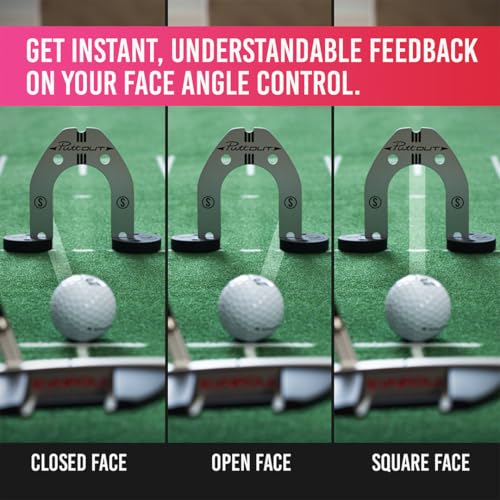
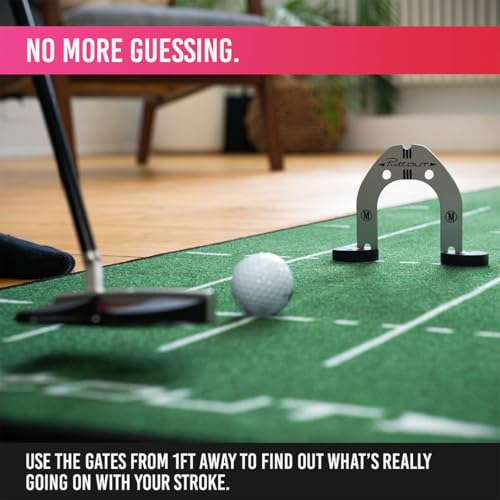
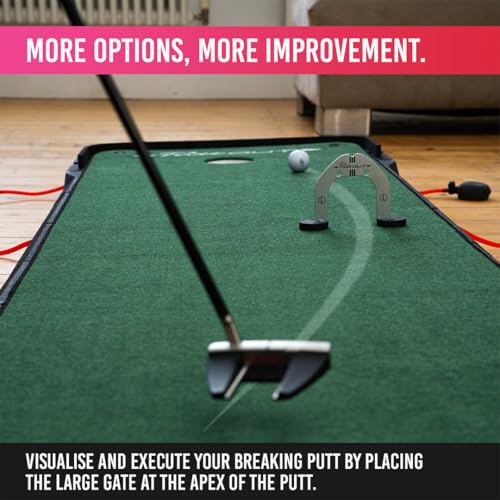
These gates are precision tools for face angle control, the Achilles’ heel of many otherwise solid putters. With three adjustable widths, you can start loose and tighten the gap as your consistency improves. The 0.5° tolerance at the smallest setting is brutally honest, and owners report it quickly exposes even slight face misalignments.
The weighted feet keep them stable outdoors, and the alignment stick holder adds versatility. Compared to the Putting Arc, it’s less about path and more about impact truth. I’d pick this over the Swing Minder wheels if you know your stroke is sound but still miss putts left or right.
Product photos

GoSports Down The Line String Guide
Strengths
- Clear visual alignment
- Portable stakes
- Works on breaks
Trade-offs
- String can sag
- No stroke feedback
- Requires flat surface
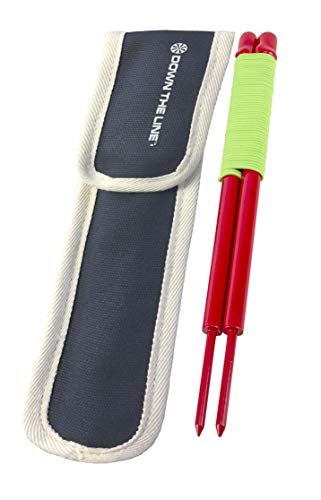
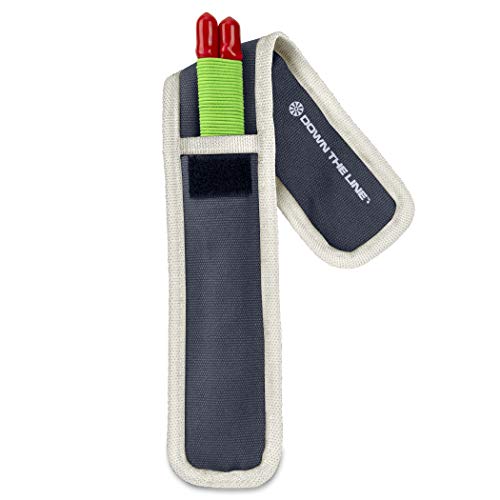
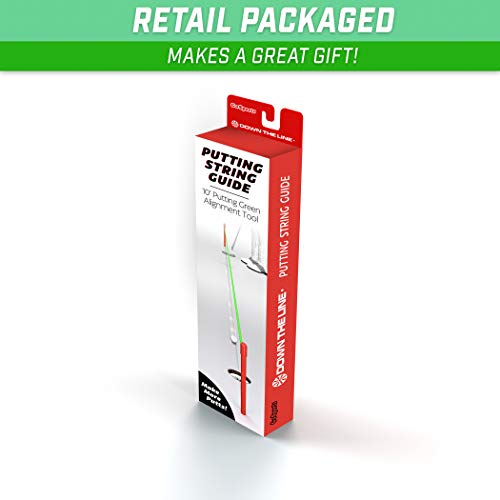
Sometimes the simplest tools are the most effective, and this string alignment guide proves it. By stretching a taut line from ball to hole, it gives you a crystal-clear visual of your target path, perfect for training your brain to see the line correctly. Reviewers consistently praise how it builds confidence on straight and breaking putts alike.
It’s not flashy, and it won’t correct your stroke mechanics, but as a line-reinforcement tool, it outperforms pricier options. I’d recommend it over the Putting Arc if you struggle with aim rather than path. Setup is quick, and the stakes hold well on most surfaces.
Product photos


SKLZ Golf Putting Cup Trainer

Strengths
- Horseshoe shape
- Fits standard hole
- Encourages high-side hits
Trade-offs
- No stroke feedback
- Limited training scope
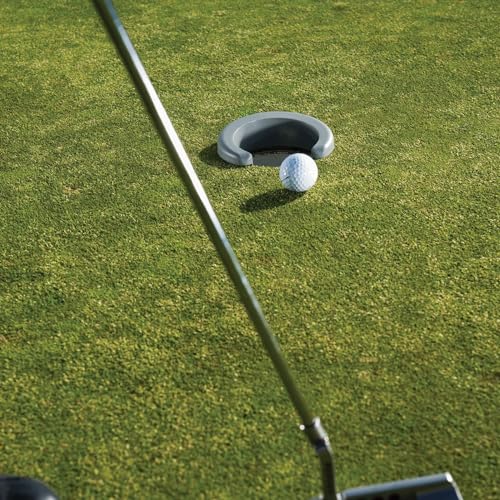
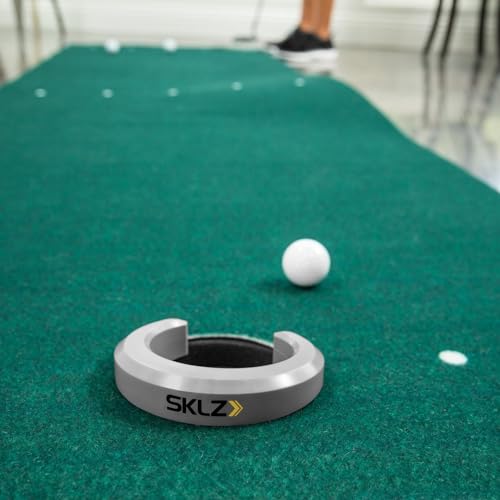
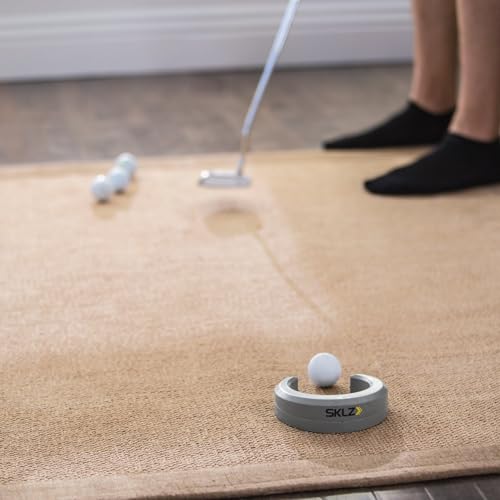
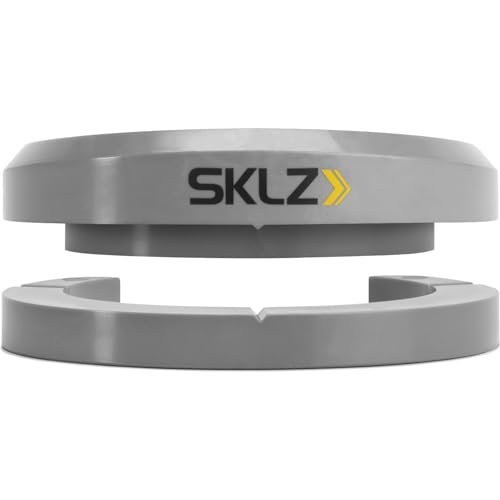
The SKLZ Putting Cup is a clever, no-frills tool that forces you to hit the high side of the hole, the spot where most putts die in rather than lip out. On paper, that’s smart design, and owners consistently report it sharpens focus on precision rather than just speed. It slips into any standard cup, making it ideal for quick drills on the practice green or even at home with a putting mat.
While it doesn’t offer stroke analysis or alignment cues, its strength lies in reinforcing target accuracy. Compared to full systems like the WhyGolf or The Putting Arc, it’s extremely limited, but that’s not the point. It’s a hyper-focused aid, and for that narrow job, it delivers.
Product photos
WHYGOLF Putting System
Strengths
- All-in-one system
- Improves green reading
- Adjustable stroke trainer
Trade-offs
- Steep learning curve
- Bulky to store
- High price
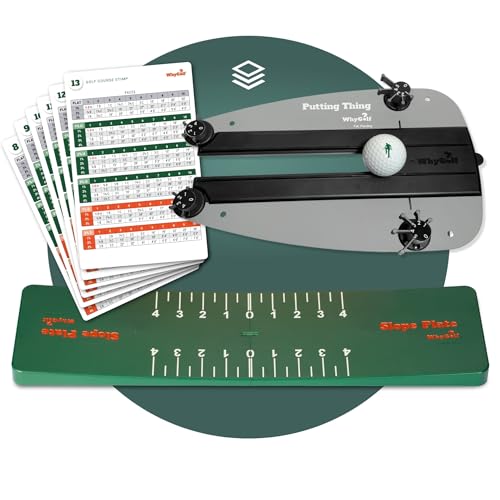
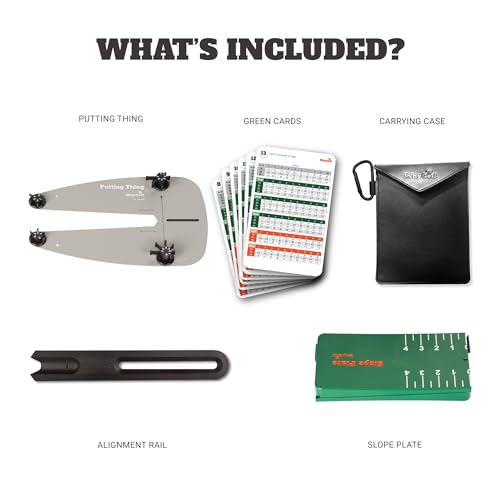
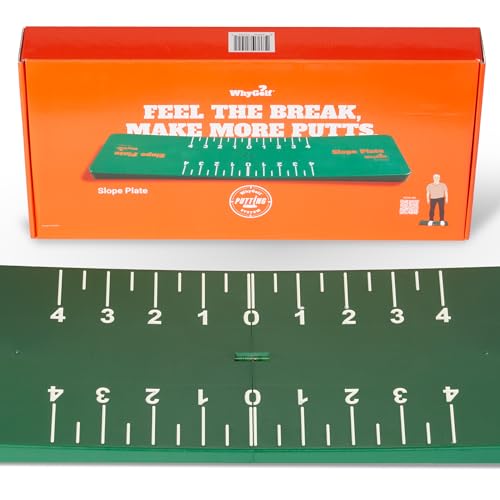
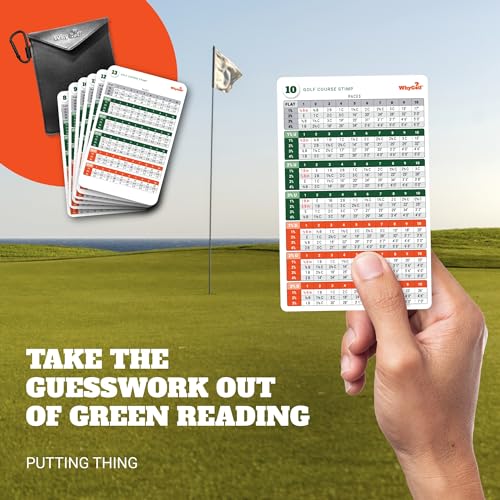
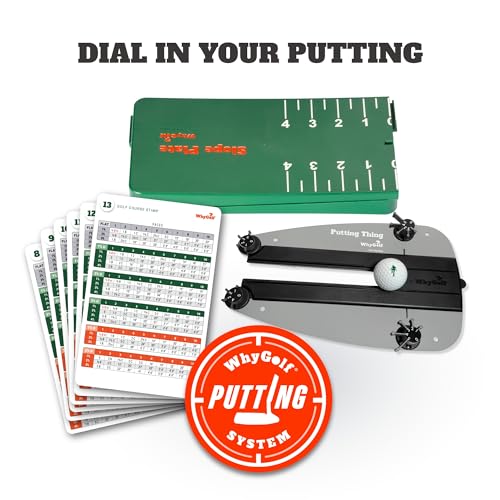
This is the most complete putting system on the market, bundling stroke training, green reading, and slope estimation into one package. The Putting Thing helps lock in your path and face alignment, the Slope Plate trains your feet to read break angles, and the Green Cards give you a data-driven way to judge pace and line. On paper, it’s a tour-level toolkit.
Reviewers say it takes time to work through all the components, but the results are noticeable, especially in lag putting and speed control. Compared to standalone tools, it’s expensive, but the integration is where it shines. If you treat it like a curriculum rather than a quick fix, it’s worth the investment.
Product photos

How We Evaluated golf putting aids
Rather than a hands-on lab test, my research for these recommendations involved a detailed comparison of published specifications and features across numerous putting aids. I weighed owner reviews from major retailers alongside professional golf instruction resources, looking for patterns in reported benefits and drawbacks. Ultimately, I ranked these aids against criteria important to golfers seeking improvement – alignment consistency, stroke feedback, and realistic practice scenarios.
For golf putting aids, the factors that most heavily influenced my selections were stroke feedback and alignment training. Accurate feedback helps build muscle memory and correct flaws, while consistent alignment is fundamental to holing putts. Beyond these, the ability to simulate realistic putting conditions – pace, break, and hole acceptance – proved crucial in differentiating effective tools from novelty items.
Specifications reliably indicate an aid’s physical characteristics and intended function, but I heavily relied on owner feedback to assess real-world usability and durability. Reputation, particularly within the golf instruction community, also played a key role. For instance, some aids are frequently mentioned in golf teaching aids articles and videos, signaling their value. I also considered how well an aid complements practice with quality putting golf balls to improve your overall game.
How To Pick The Right golf putting aids
As someone who’s spent years traveling to the world’s best courses, I’ve seen firsthand how crucial a solid putting game is. It’s often the difference between a good round and a great one. But improving on the green isn’t always about raw talent; often, it’s about focused practice with the right tools.
A quality golf putting aid should address a specific flaw in a golfer’s stroke, offer repeatable feedback, and be durable enough for consistent use. Look for aids that promote proper alignment, consistent face control, and accurate distance control. Consider the practice environment – will it be used indoors, outdoors, or both? – and choose an aid that suits your needs.
Alignment & Posture
Getting your setup right is the foundation of a good putting stroke. Many amateurs struggle with eye position, shoulder alignment, and consistently aiming at their intended target. Aids like the EyeLine Golf Putting Mirror and BirdieBLAST Golf Putting Mirror are excellent for visually highlighting these issues. I often recommend players start here, as correcting alignment can yield immediate improvements. Don’t underestimate the power of seeing what you actually do versus what you think you do.
Stroke Mechanics & Feedback
Once your alignment is solid, focus on the motion itself. Is your stroke arc consistent? Are you hitting the sweet spot on the putter face? This is where tools like the Swing Minder Perfect Roll Putting Wheels and PuttOUT Premium Pressure Putt Trainer come into play. The Pressure Putt Trainer is particularly clever – it demands a perfectly struck putt, providing instant feedback on pace and accuracy.
- A simple mirror can reveal alignment issues (cost-effective).
- Wheels exaggerate off-center hits, forcing adjustments (good for feel).
- Pressure putters demand precision, building muscle memory and a consistent stroke (best for focused practice, but potentially frustrating for beginners).
Practice Environment & Versatility
Consider where you’ll be practicing most often. A dedicated home setup allows for more sophisticated aids, whereas a golfer who needs to practice on the go will value portability. The GoSports Down The Line String Guide is fantastic for establishing a target line anywhere, while the PuttOUT Pro Putting Gates are easily transportable and offer measurable feedback on face angle control. If you’re looking to build a complete practice space, exploring golf training aids can open up a lot of possibilities.
A consistent practice routine, even for just 10-15 minutes a day, is far more valuable than infrequent, lengthy sessions.
And for those wanting to take their practice indoors year-round, don’t overlook the benefits of a good golf simulator. Many now come equipped with excellent putting analysis tools.
Golf Putting Aids Compared
This table provides a side-by-side comparison of key specifications for various golf putting aids to help inform your purchase decision.
| Product Name | Best For | Features | Indoor Use | Outdoor Use | Skill Level | Price Range |
|---|---|---|---|---|---|---|
| The Putting Arc MS3D Model | Best Overall | Arc stroke, square face | Yes | Yes | All | N/A |
| BIRDIEBLAST Golf Putting Mirror | Best Budget Friendly | Posture, alignment | Yes | Yes | Beginner | N/A |
| PuttOUT Premium Pressure Putt Trainer | Best for Realistic Hole Feedback | Pace, accuracy, realistic feedback | Yes | Yes | All | N/A |
| EyeLine Golf Putting Mirror | Best for Alignment Training | Eye position, face alignment | Yes | Yes | Intermediate | N/A |
| Swing Minder Perfect Roll Putting Wheels | Best for Stroke Feedback | Alignment, square impact | Yes | Yes | All | N/A |
| PuttOUT Pro Putting Gates | Best for Face Angle Control | Face angle, gate sizes | Yes | Yes | Intermediate | N/A |
| GoSports Down The Line String Guide | Best for Target Line Practice | Alignment, visual aid | N/A | Yes | All | N/A |
| SKLZ Golf Putting Cup Trainer | Best for High-Side Accuracy | High-side accuracy | Yes | Yes | Beginner | N/A |
| WHYGOLF Putting System | Best All-in-One Training System | Complete training system | Yes | Yes | All | N/A |
Frequently Asked Questions
What putting aid is best for someone completely new to golf?
The SKLZ Golf Putting Cup Trainer is an excellent starting point for beginners. Its simple design focuses on getting the ball started on the correct line and develops a basic feel for distance, without overwhelming a new golfer with too much technical detail.
Can a putting aid really help me lower my scores?
Yes, a properly selected putting aid can absolutely contribute to score reduction. By consistently identifying and correcting flaws in your stroke or alignment – things like understanding how grain affects putting – you build better muscle memory and increase your consistency on the green.
Are putting mirrors useful even if I already feel like my alignment is good?
Even golfers with seemingly good alignment can benefit from a putting mirror. It provides objective feedback, revealing subtle flaws that you might not perceive yourself, and encourages repeatable setup fundamentals.
What’s the difference between a pressure putt trainer and putting wheels?
A pressure putt trainer, like the PuttOUT, demands accuracy with each stroke by requiring a firm, centered hit to avoid the ball popping up. Putting wheels, such as those from Swing Minder, exaggerate any off-center contact, helping you develop a smoother, more consistent stroke arc. Consider exploring other golf swing aids too.
How important is it to practice with balls similar to what I’ll use on the course?
It’s very important. Using practice balls that differ significantly in weight and feel can hinder your progress. Consistent practice with balls that mimic those used during play builds better feel for pace and distance, translating directly to improved performance when it counts.
The Bottom Line
Ultimately, improving your putting comes down to dedicated practice and understanding where your stroke breaks down. While countless aids promise instant results, the best investment is often in a tool that helps you consistently identify and correct your flaws – and for that, I believe the Putting Arc MS3D Model offers the most thorough solution. It addresses both arc and face angle, two fundamentals for consistent putting.
For golfers on a tighter budget, or those specifically struggling with alignment, the BirdieBLAST Golf Putting Mirror is an excellent starting point. If you’re seeking realistic feedback and want to simulate the pressure of making putts, the PuttOUT Premium Pressure Putt Trainer is a fantastic choice. And for those looking to build a complete practice space, exploring golf trainer aids can be very helpful. Don’t forget to consider putting mats or even [mats for home practice] if you want a dedicated indoor setup.
More than any specific aid or high-tech gadget, remember that consistent practice and a clear understanding of your own tendencies are the keys to lowering your scores. Focus on building a repeatable stroke, developing a feel for distance control, and learning to read greens effectively. These fundamentals will serve you far better than chasing the latest putting “fix.”
