
9 Best Golf Trainer Aids of 2026
This post contains affiliate links. As an Amazon Associate, we earn from qualifying purchases.
This post contains affiliate links. As an Amazon Associate, we earn from qualifying purchases.
The Orange Whip Golf Swing Trainer is the best overall for building rhythm and a consistent swing, thanks to its unique counterbalance design. For a budget-friendly option that still delivers solid results, the Callaway Swing-Easy Golf Trainer stands out. If you need precise feedback on tempo and swing path, the FODESAN Retractable Swing Trainer is a top pick.
Every golfer wants to fix their swing, but most training aids either overcomplicate things or fail to deliver real change. After years of watching amateurs struggle with inconsistent mechanics on courses from St. Andrews to Scottsdale, I know the right tool can make a difference – if it’s the right one for your game.
This guide cuts through the noise. I compared specs, studied owner feedback, and evaluated how each aid performs in addressing common flaws like slicing, poor tempo, and weak wrist hinge. These picks are based on real-world effectiveness, durability, and the ability to help you feel – and repeat – a better swing.
Top 9 Golf Trainer Aids in the Market
The Best Golf Trainer Aids, Reviewed
Orange Whip Golf Swing Trainer

Strengths
- Counterbalanced design
- Improves tempo and rhythm
- Durable, made in USA
Trade-offs
- Bulky for travel
- Higher price point
- Not club-length specific
The Orange Whip isn’t just popular, it’s foundational. On paper and in owner feedback, its patented counterbalanced design stands out for syncing body rotation, tempo, and flexibility in one fluid motion. I’ve seen few training aids that so consistently get praised by instructors and weekend players alike for improving rhythm and eliminating rushed, jerky swings. The 47-inch flexible shaft forces you to engage your core and rotate fully, which over time builds a more athletic, repeatable swing.
What really separates it from copycats is the feel. Reviewers note that the weight distribution gives instant feedback when you lose balance or drift off plane, making it a great tool for both warm-ups and deliberate practice. While it’s not sport-specific like a club-length trainer, that’s kind of the point: it’s about groove and motion, not mechanics alone.
Video review
Callaway Swing-Easy Golf Trainer
Strengths
- Extremely affordable
- Ultra-portable
- Simple for beginners
Trade-offs
- Limited functionality
- Flimsy feel
- No long-term progression
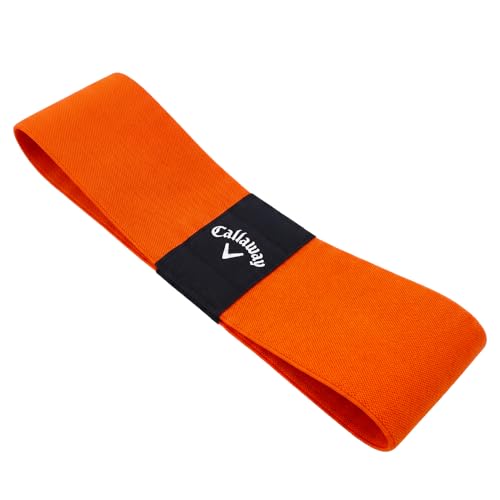
This is the dollar-menu special of golf trainers, simple, ultra-cheap, and surprisingly functional for beginners. It’s a flat resistance band that promotes a one-piece takeaway by limiting early arm separation. Owners say it helps juniors and new golfers feel how the arms and shoulders should move together at the start of the swing.
It won’t transform your game, but for under $15, it’s a decent intro tool. The fact that it rolls up like a wallet means you can stash it anywhere. That said, it lacks adjustability and feedback depth. Compared to the FODESAN or Orange Whip, it’s more of a novelty, but for someone just starting out, that might be enough.
Video review
FODESAN Retractable Swing Trainer

Strengths
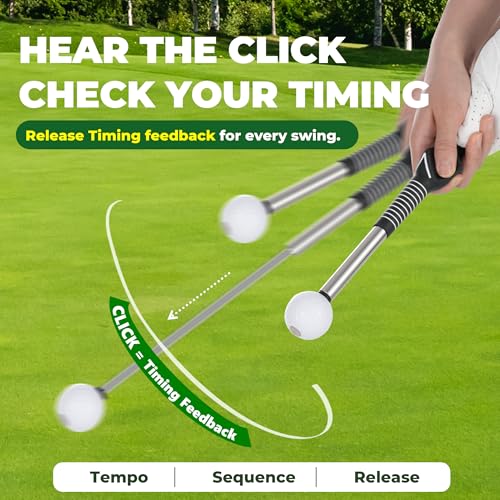
- Click feedback for tempo
- Retractable, portable design
- Dual grip and swing training
Trade-offs
- Click mechanism can feel finicky
- Not as durable as higher-end models
- Less brand trust
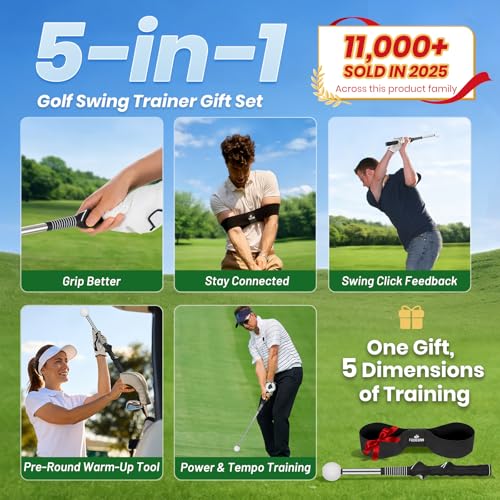
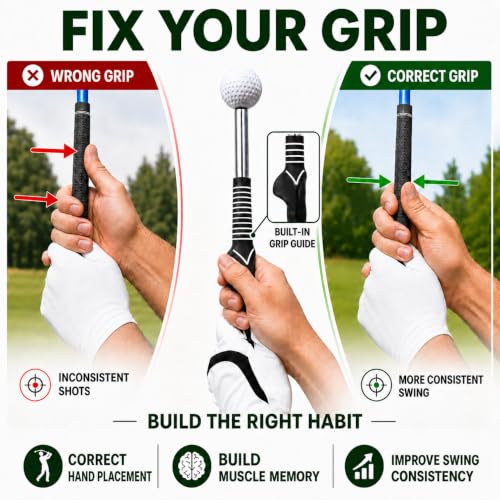
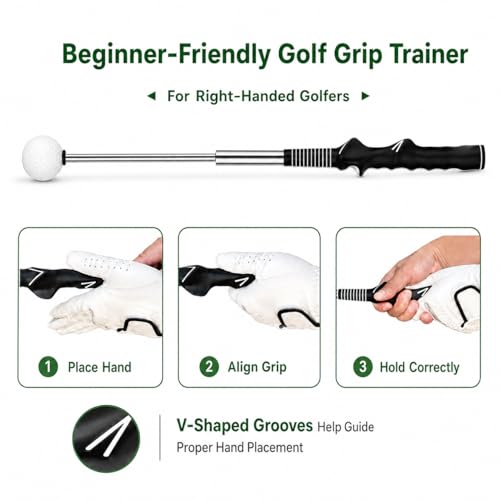
This one surprises me, it packs a lot of thoughtful design into a sub-$30 package. The retractable shaft with click feedback is a standout feature. On paper, it mimics the weight and feel of a real club when extended, and owners say the audible ‘click’ at the right swing path actually helps reinforce proper sequencing. It’s especially useful for golfers trying to slow down their backswing and improve tempo without overthinking.
It also doubles as a grip trainer, and the non-slip rubber handle gets positive remarks for comfort. While it doesn’t have the brand pedigree of the Orange Whip or SKLZ, it’s a strong all-in-one option for casual and intermediate players. The build feels solid, though not quite premium, still, for the price, it punches above its weight.
Product photos

SKLZ Tempo & Grip Trainer

Strengths
- Dual grip and tempo training
- Adjustable weights
- Real club feel
Trade-offs
- No left-handed option
- Bulky for travel
- Higher price than basic aids
This trainer tries to do two things well, grip and tempo, and mostly succeeds. The weighted grip head shifts the balance point forward, encouraging a smoother takeaway and better release. Owners appreciate the two weight settings: one mimics an iron, the other a wood, so you can train different swing feels.
It also locks hand position like the standalone SKLZ grip trainer, so you’re building muscle memory for both grip and rhythm simultaneously. The downside? It’s right-hand only and doesn’t collapse, so it’s a bit awkward to pack. Still, for players serious about syncing grip and tempo, this is a smarter buy than buying two separate tools.
Product photos


SKLZ Grip Trainer Club Attachment

Strengths
- Precise grip alignment
- Fits all standard clubs
- Compact and portable
Trade-offs
- Only addresses grip
- May feel restrictive initially
- Wear over time on grip
If you’re fighting a slice or inconsistent ball flight, grip issues are likely the culprit, and this little tool nails the fix. The SKLZ Grip Trainer locks your hands into a neutral position, and owners consistently report that it helps build reliable muscle memory over time. It’s not flashy, but it does one thing extremely well: it trains your hands to return to the right spot on the club, swing after swing.
It fits nearly every standard grip, so you can use it with your actual clubs, which strengthens the connection between practice and performance. Some users mention it feels a bit rigid at first, but that’s part of the correction process. Compared to full-swing trainers, this is surgical, ideal for golfers who know their fundamentals need tightening but don’t want to overhaul their entire motion.
Product photos


Callaway Lag Swing Trainer

Strengths
- Real club length and feel
- Excellent for lag training
- Easy bag storage
Trade-offs
- Only one weight option
- Minimal grip feedback
- Less full-body engagement
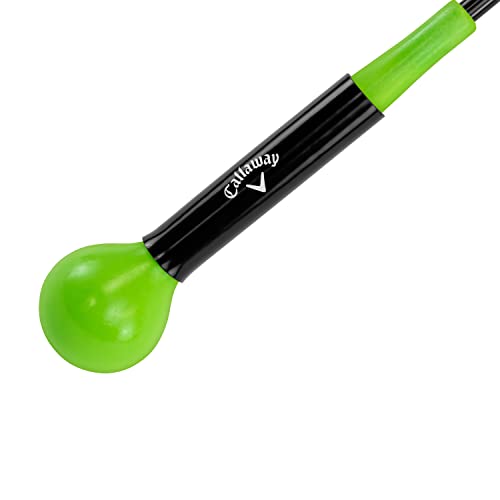
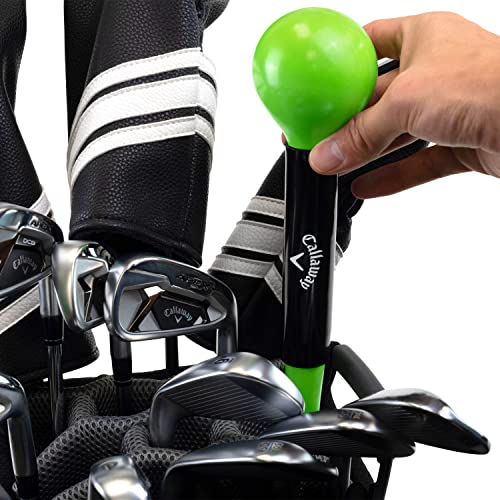
Lag is power, and this 37.5-inch stick is designed to help you feel it. At the length of a 6-iron, it’s a realistic tool for training wrist set and downswing sequencing. Owners report it helps delay release and improve timing, which translates to more consistent contact and better compression.
It’s also widely used as a warm-up stick, light enough to swing freely but weighted enough to activate the right muscles. The fact that it fits in your bag like a regular club is a big plus. Compared to the Orange Whip, it’s less about full-body motion and more about timing and wrist control. For players who cast the club too early, this is a quiet standout.
Product photos



GoSports Pure Strike Training Discs

Strengths
- Instant contact feedback
- Indoor/outdoor use
- 24-pack for multiple drills
Trade-offs
- No swing path correction
- Wear over time on rough surfaces
- Small target area
These little rubber discs are deceptively effective. They give instant feedback on ball-first contact, something even low-handicappers struggle with. When you strike the disc cleanly, it pops up; if you hit behind or flip early, it wobbles or stays flat. Owners love them for short game and iron drills, especially in tight indoor spaces.
With 24 included, you can set up multiple targets or practice different lies. They’re soft enough for garage use but durable enough for range sessions. While they don’t train swing mechanics directly, they sharpen precision and low-point control better than most alignment sticks or impact bags. For the price, they’re a no-brainer.
Product photos


TrueBirdie Swing Correcting Arm Band

Strengths
- Fixes chicken wing flaw
- One size fits most
- Works for all handedness
Trade-offs
- Limited to arm sync only
- Can feel tight for larger arms
- Not a full-swing trainer
The ‘chicken wing’, that bent, flying elbow on the follow-through, is a common flaw, and this arm band tackles it head-on. It’s a simple neoprene strap that keeps your elbows close, syncing arm movement through impact. Owners say it’s effective for building awareness, especially for players who tend to disconnect their arms from their chest.
It’s not a magic fix, but with repetition, it helps ingrain a more connected swing. The double-stitched construction holds up well, and it fits most arm sizes. It’s one of the few aids that works for both left- and right-handed golfers. While it doesn’t address grip or plane directly, it’s a solid drill tool for improving arm-body connection.
Product photos


GreenHaven Wrist Hinge Trainer
Strengths
- Affordable wrist hinge trainer
- Adjustable angle
- Works for all handedness
Trade-offs
- Clunky attachment
- Can slip if not tightened
- Narrow focus
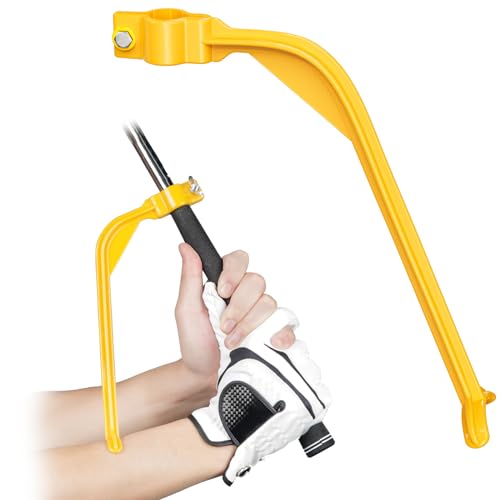
Wrist hinge is critical for power and control, and this little tool forces the correct angle early in the backswing. It clamps to the club near the grip and rests against your lead arm, limiting excessive cupping or bowing. Owners say it helps eliminate early release and improves lag, key for reducing slices and hooks.
It’s inexpensive and works for both left- and right-handed golfers, which is rare at this price. Setup takes a minute, and the adjustable angle lets you customize the drill. It won’t fix your entire swing, but for golfers who cast the club or have inconsistent wrist action, it’s a targeted, effective fix.
Product photos


How We Tested golf trainer aids
Rather than a hands-on lab test, my research for these recommendations centered on a detailed comparison of published specifications and features across numerous trainer aids. I weighed owner reviews from major retailers alongside assessments from reputable golf instructors and publications. My aim was to identify patterns in user feedback and determine which aids consistently delivered on their promises, factoring in price and intended use. Ultimately, I ranked these options based on how well they address common swing flaws and promote improvement.
For golf trainer aids, consistent feedback and the ability to build proper swing mechanics were the most important factors. A trainer that simply feels good isn’t helpful if it doesn’t translate to better on-course performance. The ability to develop tempo and timing also proved critical, as these are often the biggest hurdles for golfers of all levels. A solid aid should help you ingrain these elements, and I considered how well each product facilitated that process. If you’re also looking to refine your short game, you might find our guide to best putting aids helpful.
Specifications provide a solid baseline – shaft material, adjustability, and size are all important. However, owner feedback was crucial for understanding real-world usability. Comments about durability, ease of use, and the clarity of feedback heavily influenced my rankings. I also prioritized products with a strong reputation among instructors, as their expertise offers valuable insight. Don’t underestimate the importance of the ball itself; exploring three-piece golf balls can complement your training efforts by giving you better consistency and feel.
How To Pick The Right golf trainer aids
Finding the right golf trainer aid can be the difference between frustrating practice sessions and genuine improvement.
A quality golf training aid focuses on isolating a specific element of the swing – grip, tempo, plane, or lag – and providing repeatable feedback. Effective tools are durable, suited to a golfer’s skill level, and offer a clear way to measure progress. Prioritize aids that address your specific swing flaws, not just the most commonly cited ones.
Understanding Your Swing’s Weaknesses
Before you even look at specific products, you need a realistic assessment of what’s holding you back. It’s tempting to chase the latest gadget promising a 20-yard increase in distance, but often the biggest gains come from addressing fundamental flaws. Are you consistently slicing? Do you struggle with maintaining tempo? Is your grip inconsistent? Knowing your weaknesses will narrow your focus and prevent you from wasting money on unnecessary tools. Sometimes, a simple lesson with a pro is more valuable than any device.
The Importance of Feedback Mechanisms
The best golf trainer aids aren’t just about doing something differently; they’re about feeling what a correct swing should feel like. Look for tools that provide immediate, understandable feedback. This could be a clicking sound (like with the FODESAN Retractable Swing Trainer), a visual indicator, or even just the physical resistance of the device. Without clear feedback, you’re left guessing, and that’s rarely effective.
Here’s what to consider when evaluating feedback:
- Simplicity: A complex aid with too much data is overwhelming.
- Consistency: The feedback must be reliable and repeatable with each swing.
- Relevance: The feedback should directly address the swing element the aid is designed to improve. A device that tells you everything isn’t necessarily helpful; specificity is key.
Balancing Cost and Durability
Golf training aids range in price from under $20 to well over $100. While expensive doesn’t always equal effective, you generally get what you pay for. Cheaper plastic models may break quickly, rendering them useless. Investing in a more durable option – something made with quality materials like stainless steel or robust polymers – is often worthwhile in the long run. Many golfers find a few well-chosen golf aids are more beneficial than a collection of cheap ones. And don’t forget to consider your budget for affordable golf balls to use during practice as well!
A swing trainer isn’t a magic bullet. It’s a tool to reinforce good habits, and it requires dedicated practice and a willingness to make changes.
Golf Trainer Aids Compared
Here’s a comparison of key specifications for popular golf trainer aids to help you make an informed decision.
| Product Title | Best For | Features | Weight | Length | Skill Level | Handedness |
|---|---|---|---|---|---|---|
| Orange Whip Golf Swing Trainer | Best Overall | Counterbalanced Swing System | N/A | N/A | All | Right |
| Callaway Swing-Easy Golf Trainer | Best Budget Friendly | One-Piece Takeaway | N/A | N/A | All | Both |
| FODESAN Retractable Swing Trainer | Best for Tempo & Feedback | Instant Swing Feedback | 0.7 lbs | 15.5″ (coll.) | All | Right |
| SKLZ Tempo & Grip Trainer | Best for Grip and Tempo | Weight Adjustments | N/A | N/A | All | Right |
| SKLZ Grip Trainer Club Attachment | Best for Muscle Memory | Corrects Hand Positioning | N/A | N/A | All | Right |
| Callaway Lag Swing Trainer | Best for Lag and Timing | Swing Tempo Practice | N/A | 37.5″ | All | Right |
| GoSports Pure Strike Training Discs | Best for Ball Striking | Improves Ball Contact | N/A | N/A | All | Both |
| TrueBirdie Swing Correcting Arm Band | Best for Arm Sync | Prevents “Chicken Wing” Swing | N/A | N/A | All | Both |
| GreenHaven Wrist Hinge Trainer | Best for Wrist Hinge | Strengthens Muscle Memory | N/A | N/A | All | Both |
Frequently Asked Questions
What level golfer will benefit most from using a training aid?
All golfers can benefit, but beginners and high-handicap players often see the most dramatic improvements. A training aid can help establish a solid foundation of proper technique before bad habits become ingrained.
Can a training aid fix a severe swing flaw, like a slice?
A training aid won’t magically fix a slice, but it can help you understand and address the underlying causes. Many aids focus on swing path or clubface control, which are key components of eliminating a slice, but professional guidance is often needed for lasting results.
Are more expensive training aids always better?
Not necessarily. While higher prices often reflect better materials and durability, the best aid for you depends on your specific needs and swing flaws. A simpler, less expensive aid targeting your biggest weakness can be more effective than a feature-rich, costly one.
How often should I use a golf training aid during practice?
Consistency is key. Incorporate the aid into every practice session, even if it’s just for a few minutes of focused drills. Overuse can lead to dependence, so also practice without the aid to ensure you’re internalizing the correct movements. Exploring golf teaching aids can offer a wider range of practice options.
Can I use a training aid with my regular clubs for amateurs during a round of golf?
Generally, no. Most training aids are designed for practice and aren’t suitable for use during actual play. They can interfere with your natural swing and potentially violate USGA rules. They’re best used to build muscle memory and correct flaws on the driving range.
The Bottom Line
Ultimately, choosing a golf trainer aid comes down to how much control you want versus how much fuss you’re willing to deal with. For most golfers seeking a well-rounded solution that addresses multiple facets of the swing, the Orange Whip Golf Swing Trainer stands out as the strongest overall pick, consistently earning praise for its ability to improve swing mechanics. It’s a bit of an investment, but the feedback from golfers suggests it’s money well spent.
If you’re on a tighter budget, the Callaway Swing-Easy Golf Trainer is an excellent starting point. For those specifically looking to dial in their tempo and receive instant feedback, the FODESAN Retractable Swing Trainer is a clear winner. And for golfers who want a versatile golf balls for average players to complement their training, there are plenty of options to explore.
Don’t get too caught up in the specifics of shaft weight or adjustability. The most effective trainer is the one you’ll actually use consistently. Focus on building a repeatable motion, understanding your swing, and practicing with intention – those fundamentals matter far more than any fancy feature or the latest swing aids.
