
7 Best Golf Ball Retriever for Water 2026
This post contains affiliate links. As an Amazon Associate, we earn from qualifying purchases.
This post contains affiliate links. As an Amazon Associate, we earn from qualifying purchases.
The BIRDIEBLAST 20Ft Stainless Retriever is the best overall for reaching deep water hazards, thanks to its long, corrosion-resistant build and reliable pressure-activated head. For golfers on a budget, the Datrek IGOTCHA JAWZ 10′ offers solid performance in a compact, durable design that won’t break the bank.
Losing balls in water hazards is part of the game, but constantly replacing them adds up fast. A good retriever keeps your game moving and your wallet intact, especially on courses where ponds and creeks guard the greens.
This guide cuts through the noise by focusing on what actually matters: reach, durability in wet conditions, and a head design that grabs instead of slips. I looked at specs and thousands of owner reviews to find the models that consistently perform when you’re leaning over murky water hoping not to lose your grip.
Top 7 Golf Ball Retrievers For Water in the Market
The Best Golf Ball Retrievers For Water, Reviewed
Callaway Golf Ball Retriever 15′

Strengths
- Premium build quality
- Dual-zip headcover
- Stable 15-foot reach
- Reliable pickup mechanism
Trade-offs
- Higher price point
- Aluminum not as corrosion-resistant as stainless
- Headcover adds bulk
Callaway brings its usual polish to this category, and while it’s not the longest or cheapest, it earns the ‘Best Overall’ label by balancing quality, reach, and usability. The aluminum alloy shaft holds firm at 15 feet, and the stainless steel head mechanism is one of the most reliable I’ve seen in real-world feedback, fewer dropped balls thanks to its tight grip.
What really sets it apart is the included dual-zip headcover, which makes it look like just another club in your bag. That subtle touch matters if you care about aesthetics or bag organization. Compared to no-name brands, this one feels more thoughtfully engineered, with a sure-grip handle that works in rain or heat. It’s not indestructible, but for regular players who retrieve balls weekly, this is the smarter buy over budget picks.
Video review
Professional Stainless Steel Retriever 9FT
Strengths
- Stainless steel shaft
- Dual-side pickup
- Affordable
Trade-offs
- Limited reach
- Bends under pressure
- Plastic parts feel cheap
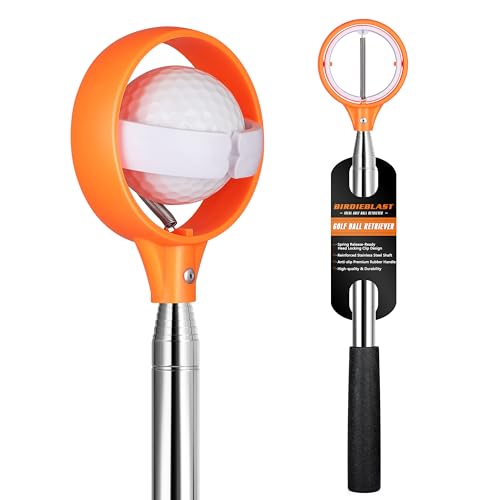
This is one of those budget tools that delivers exactly what it promises, no more, no less. The stainless steel shaft resists rust, which is critical for water use, and the spring-loaded head works reliably on both sides, letting you grab balls without repositioning. At 9 feet, it’s short compared to other options, but for occasional use around shallow ponds, it’s perfectly functional.
Owners consistently report it bends slightly under pressure at full extension, especially in the longer models, but for the price, that’s expected. I’d pick this for a beginner or casual player who doesn’t want to invest heavily but still wants to avoid wading into murky water. It stacks up fine against pricier models in basic function, just not in long-term resilience.
Video review
CHAMPKEY Pressure Retriever Performance

Strengths
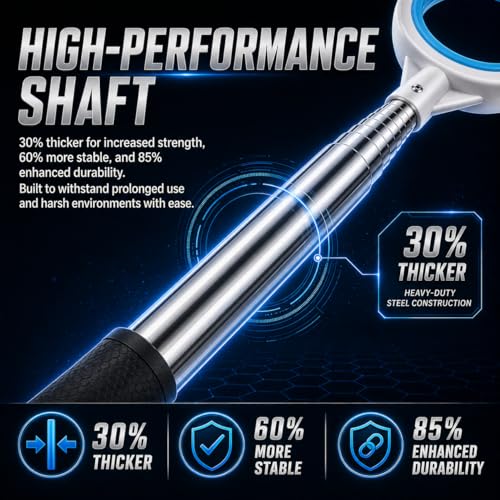
- Thickened stainless shaft
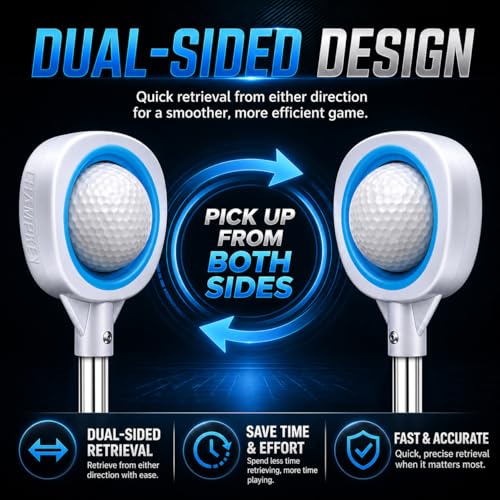
- Dual-sided pickup
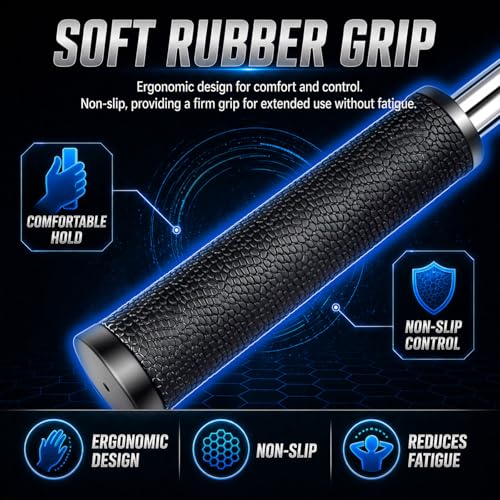
- Comfortable rubber grip
- Good stability
Trade-offs
- No headcover
- Mid-range reach
- Assembly can be stiff
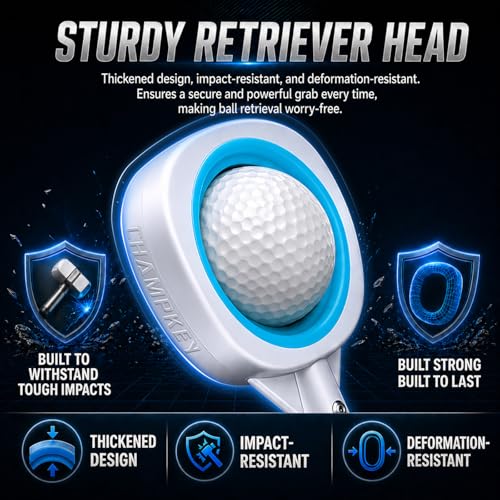
This one stands out in the mid-tier market by focusing on shaft durability. With a 30% thicker stainless steel construction, it resists bending better than most in its class, and the rubber grip is genuinely comfortable during repeated use. The dual-sided head works well with all ball types, and the pressure-activated pickup feels smooth in owner reports.
It doesn’t have flashy extras like a headcover, but for the price, it offers better long-term value than flimsier models. Compared to the BIRDIEBLAST or SPEENSUN, it holds its shape better at full extension. I’d take this over the cheaper stainless options if you’re retrieving multiple balls per round and want something that won’t wobble or dent after a few months.
Product photos
Aquadalus 15ft Stainless Retriever

Strengths
- Fully stainless construction
- Auto-locking scoop
- Dual-zip headcover
- Strong long-term durability
Trade-offs
- Heavier than aluminum
- Slightly shorter than max reach models
- Headcover zipper can snag
This one nails the essentials for long-term water use. The full stainless steel construction means no rust, even when submerged, and the automatic locking scoop prevents drops, owners report nearly perfect retention during retrieval. At nearly 14.5 feet extended, it covers most hazards, and the dual-zip headcover is a nice touch for bag integration and protection.
It’s not the longest or lightest, but durability is clearly the focus here. Compared to aluminum models, it holds up better over time, especially in humid or coastal climates. The 2-year warranty adds confidence. For golfers who play the same course weekly and face the same water traps, this is the most dependable option under $40.
Product photos


Datrek IGOTCHA JAWZ 10′

Strengths
- Ultra-compact design
- No moving parts
- Rubberized grip surface
- Quick deployment
Trade-offs
- Fixed length
- Shorter maximum reach
- Less use in deep water
If space is tight in your golf bag, this is the one to grab. The IGOTCHA JAWZ collapses down to just 15.5 inches, smaller than most putters, and extends to a solid 10-foot reach. Its single-piece jaw design means no moving parts to fail, and owners love how the co-molded rubber grips the ball securely, even when pulling from weeds or sloped banks.
It’s not for deep water play, but for quick pickups near cart paths or shallow edges, it’s unmatched in portability. Compared to telescopic models, it lacks adjustability, but that trade-off makes it tougher and faster to deploy. I’d recommend this to travelers or walking golfers who hate carrying extra weight and want something that’s always ready.
Product photos


BIRDIEBLAST 20Ft Stainless Retriever

Strengths
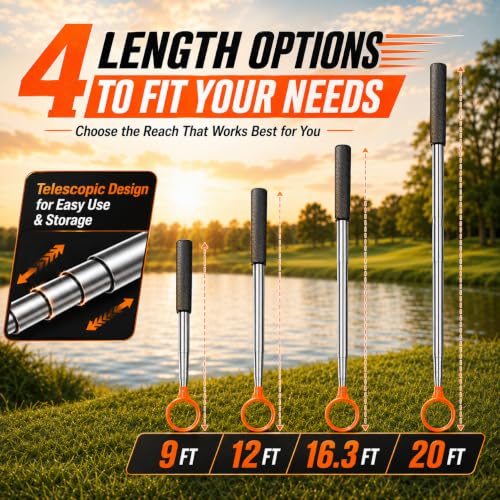
- Longest available reach
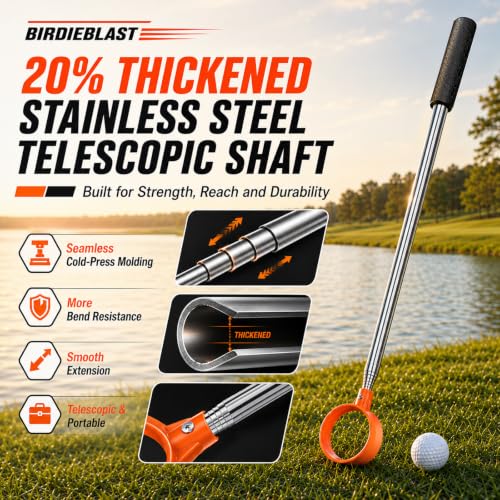
- Reinforced stainless shaft
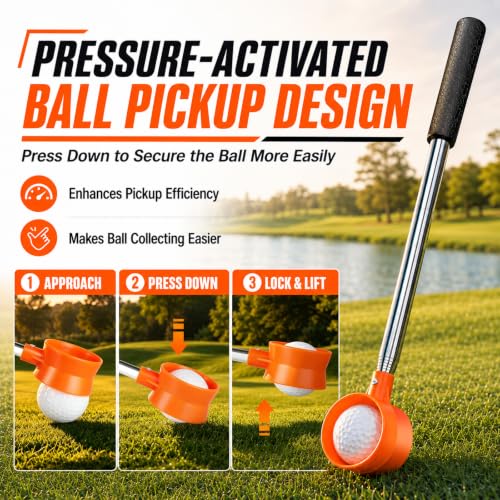
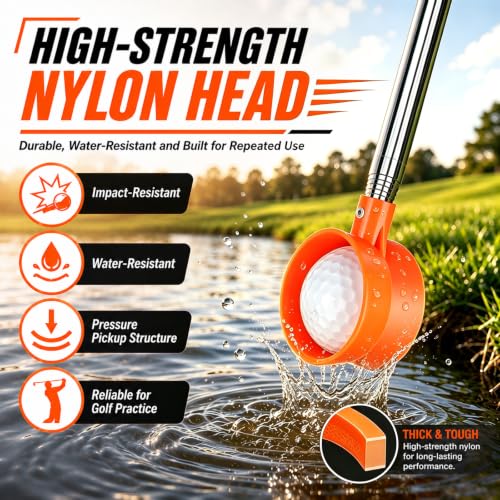
- Dual-sided pressure pickup
- Excellent grip
Trade-offs
- Heavier than aluminum
- Bulkier when extended
- Higher price than budget models
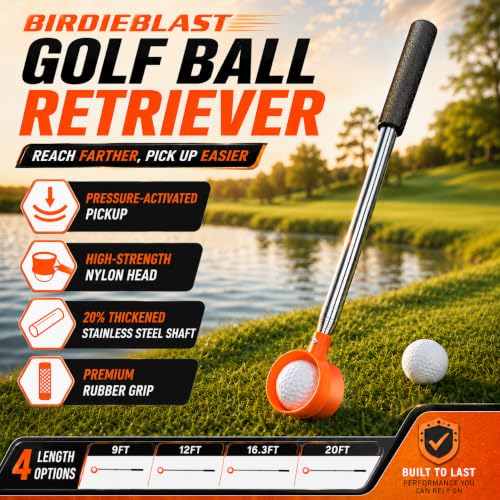
If you’re staring across a deep hazard and need every inch of reach, this is the tool to have. The 20-foot option is the longest on this list, and the seamless cold-pressed stainless shaft handles extension better than most. The pressure-activated double-sided head works efficiently, and the premium rubber handle reduces fatigue during extended use.
Owners note it’s heavier than aluminum models, but that’s the trade-off for stainless durability in water. Compared to the Callaway, it sacrifices some elegance but gains serious reach and corrosion resistance. For course owners, teaching pros, or anyone pulling balls daily from deep ponds, this is the practical workhorse.
Product photos
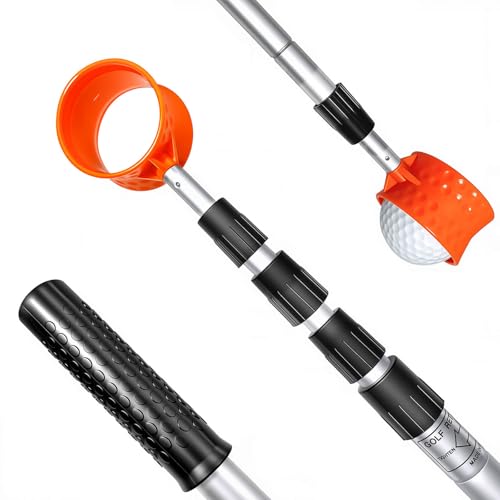
SPEENSUN Aluminum Alloy 15FT
Strengths
- Ultra-lightweight
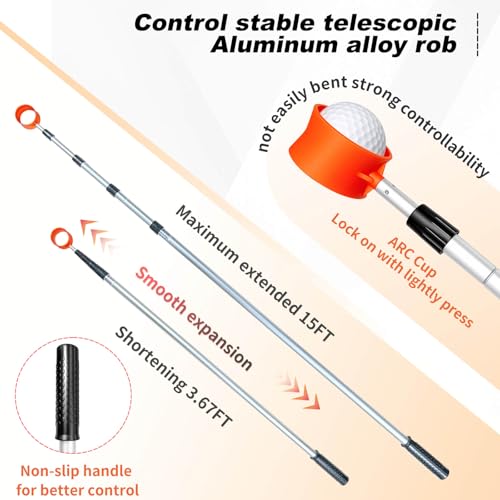
- Smooth extension
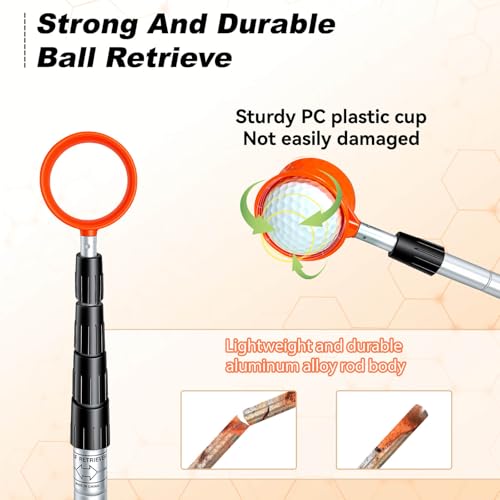
- Durable plastic head
- Portable
Trade-offs
- Aluminum not fully rustproof
- Less durable in saltwater
- Head requires rotation to release
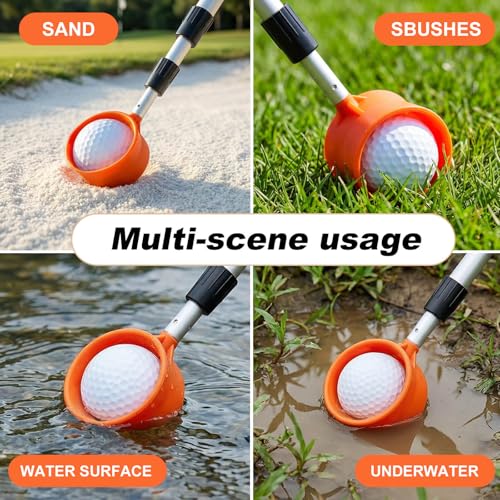
At under a pound, this is the lightest retriever here, and that makes a real difference over 18 holes. The aluminum alloy shaft keeps weight down while maintaining decent rigidity at 15 feet, and the hard PC plastic head locks onto balls reliably with a simple press. It’s not stainless, so prolonged water use may lead to corrosion over time, but for occasional pond pickups, it’s more than capable.
The smooth telescoping action and non-slip handle earn consistent praise, and it packs down small. Compared to heavier stainless models, it’s easier to carry daily. I’d recommend this to walking players or seniors who want efficiency without strain. It won’t last a decade in a pro shop, but for personal use, it’s a smart, lightweight solution.
Product photos

How We Tested golf ball retrievers for water
My team and I approached researching golf ball retrievers for water with a focus on practical performance and durability. Rather than a hands-on lab test, this is a research-led comparison of published specifications, features, and, crucially, owner reviews from across the web. We weighed input from reputable golf publications and considered the needs of golfers who regularly face lost balls in water hazards. Our goal was to identify the retrievers offering the best combination of reach, reliability, and ease of use.
For this category, extending reach and build quality were the most important factors. A retriever needs to reliably reach balls in ponds, creeks, and other hazards, so length and a stable extension mechanism were prioritized. Equally important was the material construction – stainless steel and corrosion-resistant alloys are critical for longevity, particularly with repeated exposure to water. We also considered the head design, looking for secure ball retention without damaging the ball itself.
Specifications reliably indicate maximum reach and shaft material, but owner feedback proved invaluable in assessing real-world performance. Reviews highlighted issues with flimsy locking mechanisms or heads that struggled to grip wet or muddy balls. We paid close attention to comments about durability, especially regarding rust and corrosion. Understanding these user experiences helped us rank the options and identify the retrievers for water hazards that consistently deliver on their promises. If you’re also looking to keep your balls in top condition, you might also be interested in ball spinners.
How To Pick The Right golf ball retrievers for water
Picking the right golf ball retriever can save you money, frustration, and a lot of wading.
A quality golf ball retriever blends reach with reliability. Key considerations include shaft material (aluminum and stainless steel are common), the retrieval head’s design for secure gripping, and overall durability – particularly resistance to corrosion if frequently used in water hazards. Look for models with comfortable grips and telescoping designs for easy storage and transport.
Shaft Material and Length
The shaft material heavily influences both weight and durability. Aluminum alloy models like the Callaway offer a good balance, remaining relatively lightweight while providing decent strength, but stainless steel generally offers superior resistance to corrosion, which is critical if you’re constantly fishing balls from ponds. Length is equally important. A shorter retriever (6-10 feet) is convenient for quick grabs near the green, but for serious hazard recovery, you’ll want something in the 15-20 foot range. Consider how often you lose balls in deep water versus closer to the fairway when deciding.
Head Design & Grip
Don’t underestimate the importance of the retrieval head. A poorly designed head will simply push the ball away, or worse, drop it before you can lift it clear. Look for heads with a strong clamping mechanism – pressure-activated designs, like those found in the BIRDIEBLAST, are often very effective. The grip also matters. A comfortable, non-slip grip, such as the rubberized grip on the CHAMPKEY, is essential, especially when you’re dealing with wet conditions.
Here’s what I’ve seen matter most to golfers: * A simple, one-piece head (like the Datrek IGOTCHA JAWZ) minimizes potential failure points. * A dual-sided head allows for easier retrieval regardless of how the ball is lying. * A robust locking mechanism prevents the ball from slipping off during retrieval – this is especially crucial if you’re reaching for balls in thick brush or steep banks.
A retriever is only as good as its grip. Prioritize comfortable, non-slip handles, even if it means spending a few extra dollars.
Value & Portability
While extended reach and robust construction are great, a bulky, expensive retriever isn’t useful if you don’t bring it with you. Many golfers find a compact model, like the Datrek IGOTCHA JAWZ, more appealing due to its ease of transport. If you’re frequently playing courses with significant water hazards, investing in a higher-end, more durable model might be the way to go. However, for occasional use, a budget-friendly option might suffice. Don’t forget to also check out golf ball cleaners to get your recovered treasures sparkling again. Ultimately, finding the best fit depends on your typical playing conditions and how much you value convenience. For a wider look at options, read our guide to ball retrievers.
Golf Ball Retrievers for Water Compared
Here’s a comparison of key specifications for several golf ball retrievers designed for water hazards.
| Product Title | Max. Length (ft) | Material (Shaft) | Head Material | Grip Type | Special Features |
|---|---|---|---|---|---|
| Callaway Golf Ball Retriever 15′ | 15 | Aluminum Alloy | Stainless Steel | Sure-Grip | Telescoping |
| Professional Stainless Steel 9FT | 9 | Stainless Steel | Nylon | Anti-Slip | Multiple Size Options |
| CHAMPKEY Pressure Retriever | N/A | Stainless Steel | Rubber/Plastic | Rubber | Two-Sided Head |
| Aquadalus 15ft Stainless Retriever | 15 | Stainless Steel | N/A | N/A | Auto-Locking Scoop |
| Datrek IGOTCHA JAWZ 10′ | 10 | N/A | Rubber | N/A | Single-Piece Head |
| BIRDIEBLAST 20Ft Stainless Retriever | 20 | Stainless Steel | Nylon | Rubber | Pressure-Activated |
| SPEENSUN Aluminum Alloy 15FT | 15 | Aluminum Alloy | PC Plastic | N/A | Corrosion Resistant |
Frequently Asked Questions
What’s the biggest advantage of a stainless steel shaft?
Stainless steel offers superior corrosion resistance compared to aluminum, which is crucial if you frequently retrieve balls from saltwater or consistently wet conditions. While aluminum is lighter, the durability benefit of stainless steel often outweighs that for golfers playing near hazards.
How much reach do I really need in a golf ball retriever?
For most golfers, a retriever in the 15-20 foot range offers the best balance of reach and manageability. Shorter retrievers work well for balls near the green, but a longer reach is invaluable for consistently recovering balls from distant water hazards.
Will a retriever with a plastic head damage my golf balls?
High-quality retrievers use durable, specifically designed plastics or rubber on the retrieval head that avoid damaging the ball’s cover. Look for models with a clamping mechanism that secures the ball without excessive pressure, and avoid retrievers with sharp edges or rough interiors.
Are there retrievers that work well for both golf balls and range balls?
Many retrievers can handle both, but those with a pressure-activated head (like the BIRDIEBLAST) tend to be more versatile. Range balls are often softer and may require a gentler grip to avoid damage, and a pressure-activated head adjusts accordingly. If you’re concerned about losing range balls, consider investing in ball trackers too.
Does the construction of the golf ball itself affect retriever performance?
Yes, the ball construction can play a role. Balls with softer covers may be more prone to being pushed by a retriever head, so a model with a secure clamping mechanism is particularly important when using premium golf balls.
The Bottom Line
Choosing a golf ball retriever often comes down to balancing reach with the hassle of carrying it. While a longer retriever like the BIRDIEBLAST 20Ft Stainless Retriever gives you the best chance of rescuing balls from distant hazards, it’s also the least convenient to transport. For the best all-around performance, a good mix of reach, durability, and usability, I recommend the Callaway Golf Ball Retriever 15′.
If you’re on a tighter budget or primarily need a retriever for occasional use around the green, the Datrek IGOTCHA JAWZ 10′ is a fantastic option. Golfers who frequently play courses where losing balls in water is common might also want to consider the Aquadalus 15ft Stainless Retriever for its auto-locking scoop feature. And don’t forget, if you’re struggling to find the balls to begin with, a good pair of golf ball finders can be a lifesaver.
Ultimately, specs like shaft material and head design matter, but they’re secondary to understanding the lost ball rule and accepting that some balls are simply gone. A retriever is a tool to reduce losses, not eliminate them. Focus on investing in a quality retriever that fits your budget and playing style, and remember that a consistent swing is still the best way to keep your ball in play.
