
6 Best Golf Ball Finding Glasses of 2026
This post contains affiliate links. As an Amazon Associate, we earn from qualifying purchases.
This post contains affiliate links. As an Amazon Associate, we earn from qualifying purchases.
The MOUMOUTEN Golf Ball Finder glasses are the overall best choice for most golfers, delivering strong visibility and solid build quality. For a budget-friendly option, the A99 E-BW glasses offer reliable performance without the high price, while the Nanrton Polarized Golf Ball Finder stands out for its ultra-lightweight frame and polarized lenses.
Losing balls in thick rough or sun-drenched fairways wastes time and kills momentum. Standard sunglasses often don’t cut it, and constantly bending over to search wears you down by the 12th hole. I get it, efficiency matters on the course.
This guide cuts through the noise, focusing on what actually works: lens effectiveness, comfort during a full round, and real-world durability. I researched these picks based on specs, owner feedback, and what matters most when you’re hunting in the gnarly stuff.
Top 6 Golf Ball Finding Glasses in the Market
The Best Golf Ball Finding Glasses, Reviewed
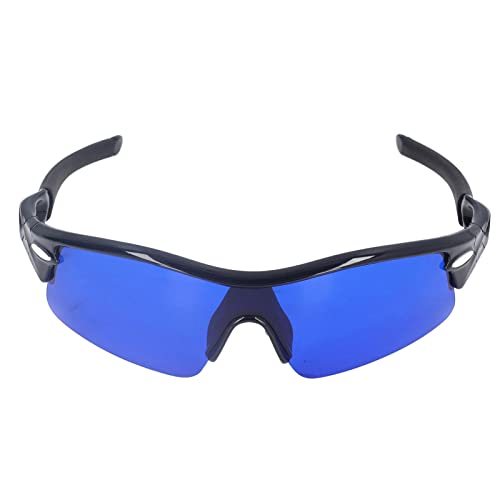
MOUMOUTEN Golf Ball Finder Glasses Black
Strengths
- Polarized lenses
- UV protection
- Includes hard case
Trade-offs
- Slight color distortion
- Temple tips can press ears
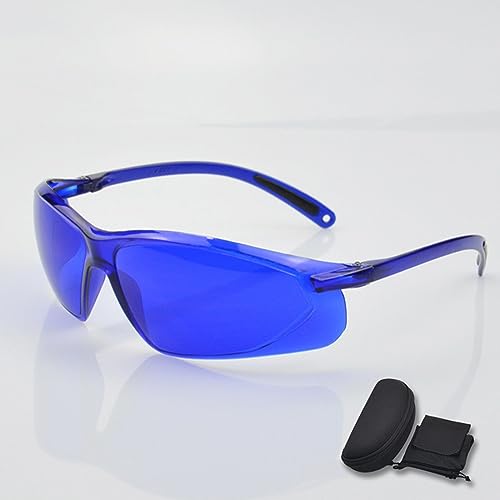
This is the most complete package in the mid-tier range, and it’s easy to see why it’s labeled ‘Best Overall.’ The polarized blue lenses deliver on both ball detection and glare reduction, and the UV protection is solid for long days on the course. Owners report they’re effective in varied light, from open fairways to tree-lined holes, and the tint strikes a good balance, strong enough to highlight balls, not so dark that it hampers general vision.
The included hard case is a standout, most competitors only offer a soft pouch, and the frame fits a wide range of face shapes comfortably. They’re also marketed for cycling and fishing, which speaks to their versatility. Compared to the Nanrton and EVTSCAN models, these feel slightly more premium without crossing into overpriced territory. If you want one pair that handles ball finding, sun protection, and daily durability, this is my top pick.
Video review
A99 E-BW Golf Ball Finder Glasses

Strengths
- Strong foliage filtering
- Durable lightweight frame
- Clear ball contrast
Trade-offs
- Not polarized
- Course use only
- Not for general wear
A99 positions these as course-only tools, and that warning is telling, these aren’t meant for all-day wear. The blue lenses are highly effective at making white balls stand out, filtering green tones aggressively, which owners confirm speeds up ball searches in thick rough or shaded areas. The PC build is lightweight and durable enough for dedicated use, and the included pouch adds basic protection.
But the design sacrifices versatility. These aren’t polarized, so glare can still be an issue on sunny days, and the tint is so strong they’re nearly useless off the tee, you’re not walking to the clubhouse in these. They’re a single-purpose tool, and while they do that one job well, they fall short as all-around golf sunglasses. If you already have quality shades and just need a search aid, these make sense. Otherwise, look elsewhere.
Video review
Sharper Image Golf Ball Finding Glasses

Strengths
- Blue-tinted lenses
- Premium look
- Includes case
Trade-offs
- No polarization
- Not ideal for long rounds
- Higher price for basic features
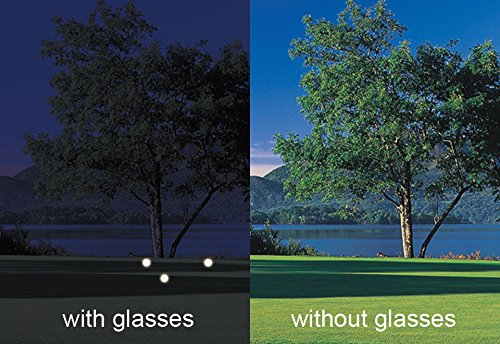
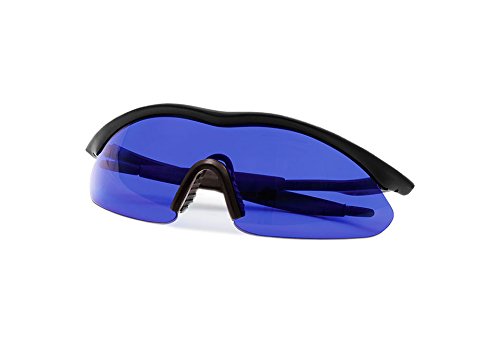
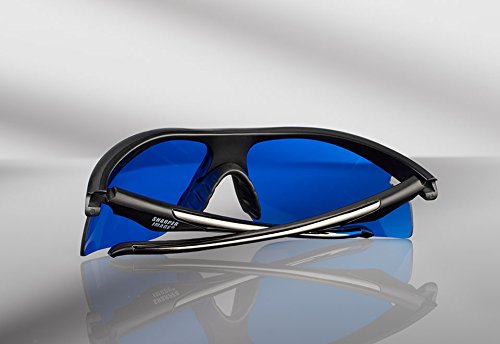
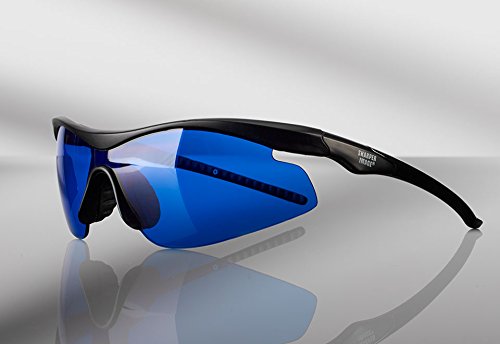
These glasses lean into the premium side of the golf ball finder market, and the branding shows it. The blue-tinted lenses do what they’re supposed to, filter out green hues and make white balls stand out against grass and trees. On paper and in owner feedback, they perform reliably in moderate to bright light, though they’re not polarized, which is a notable omission at this price. The build feels solid for occasional use, and the included case adds convenience, but I’ve seen cheaper models match this functionality.
Where these stand out is aesthetics. If you care about looking sharp on the course and want something that doesn’t scream ‘golf gadget,’ these deliver. But for serious players who swing hard and walk 18 holes, the fit and durability don’t quite match up to more athletic designs. I’d pick them for style over substance, fine for weekend golfers, but not my go-to for regular play.
Product photos
Nanrton Polarized Golf Ball Finder Glasses
Strengths
- Extremely lightweight
- Secure fit
- Polarized UV400 lenses
Trade-offs
- Tint less aggressive for ball finding
- Limited color options
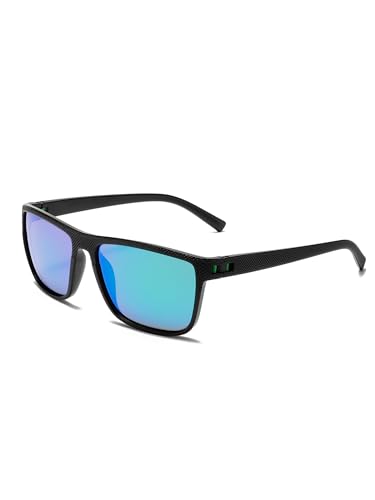
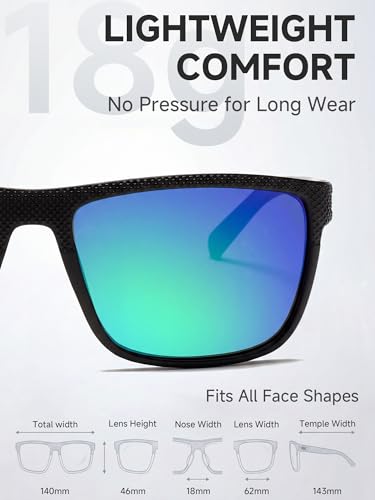
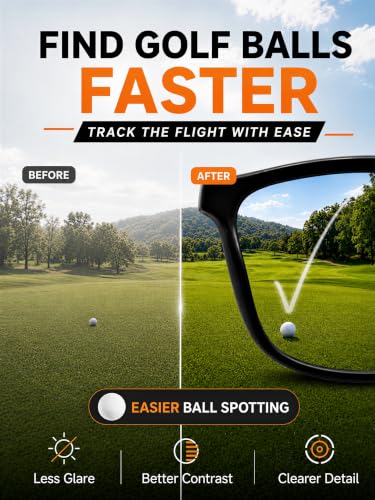
At just 18 grams, these are among the lightest golf ball finder glasses available, and that number shows in how they wear. The ultra-light frame disappears on your face, which matters when you’re walking 18 holes or swinging repeatedly. The polarized UV400 lenses cut glare effectively and enhance contrast, making it easier to track not just lost balls but also fairway lines and hazards.
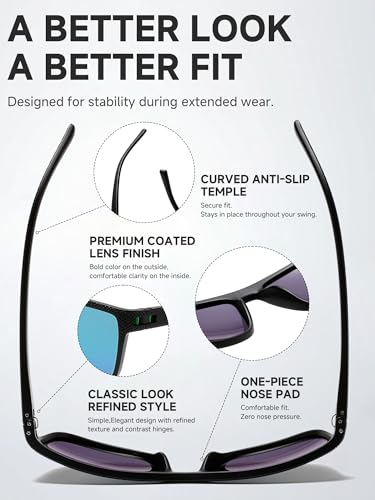
Owners praise the secure fit, the anti-slip temples and one-piece nose pad prevent slippage during aggressive swings or humid play. While the blue mirror tint helps spot white balls, it’s not as aggressive in filtering greenery as some dedicated models. But if you want glasses that work well for general play and still help with ball finding, these are a strong pick. They’re also versatile enough for fishing or driving, which adds value.
Product photos
EVTSCAN Golf Ball Finder Glasses

Strengths
- Polarized lenses
- UV protection
- Durable build
Trade-offs
- Bulky temple arms
- Average fit for smaller faces
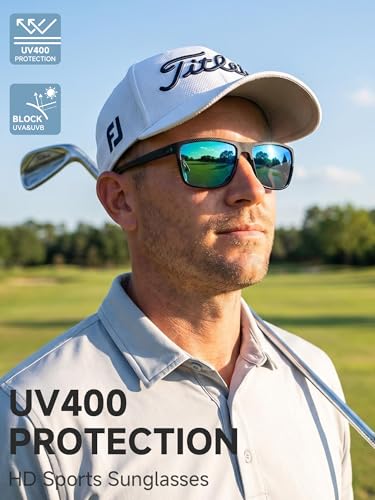
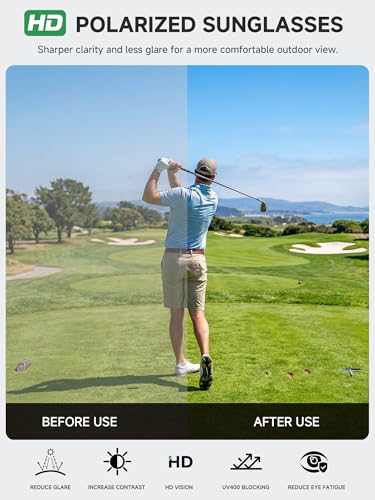
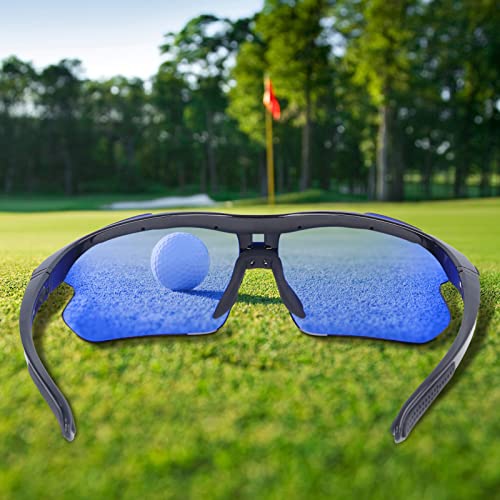
At this price, the EVTSCAN glasses punch above their weight. They’re built with polarized blue lenses and UV protection, which is a strong combo for both ball detection and eye comfort in direct sun. Owners consistently report that white balls pop clearly against foliage, and the PC frame holds up well to regular use. The design isn’t flashy, but it’s functional, lightweight, impact-resistant, and comfortable enough for full rounds.
Compared to ultra-budget models, these feel more legitimate on the face and in the hand. They don’t have the ultra-slim profile of some competitors, but they strike a good balance between cost and reliability. For the price, the included storage bag and cloth are thoughtful touches. If you’re tired of losing balls and want a dependable aid without overspending, this is a smart middle ground.
Product photos

YUGSHNKFC Ball Finding Glasses
Strengths
- Ultra-low price
- Includes storage
- Basic ball visibility
Trade-offs
- Flimsy construction
- Poor fit for many
- No polarization
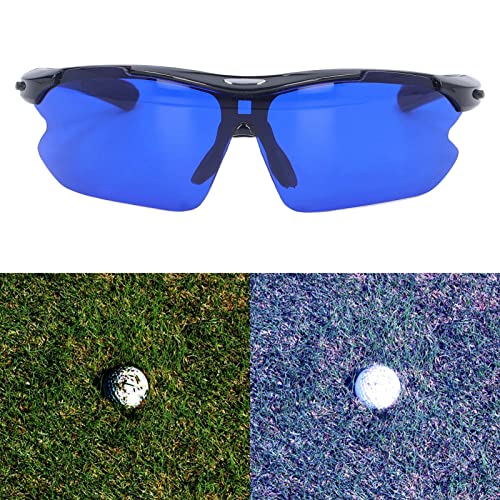
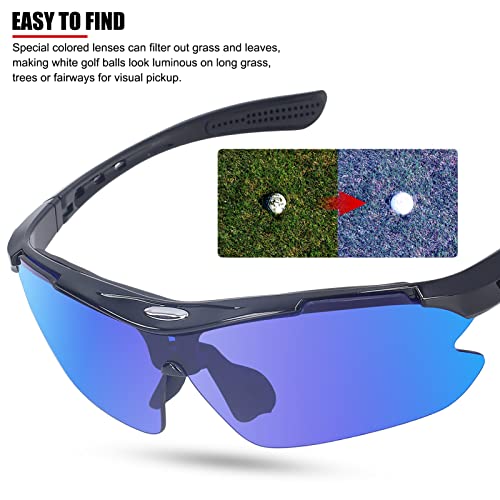
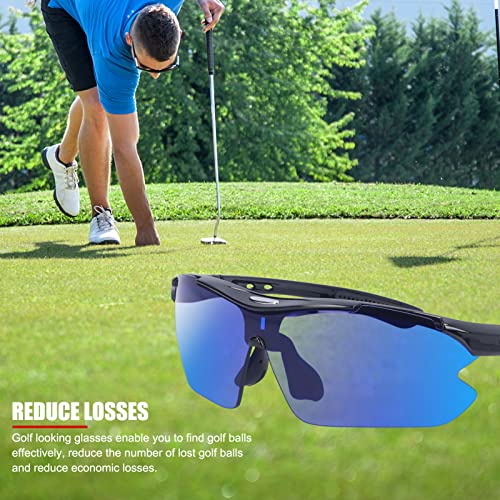
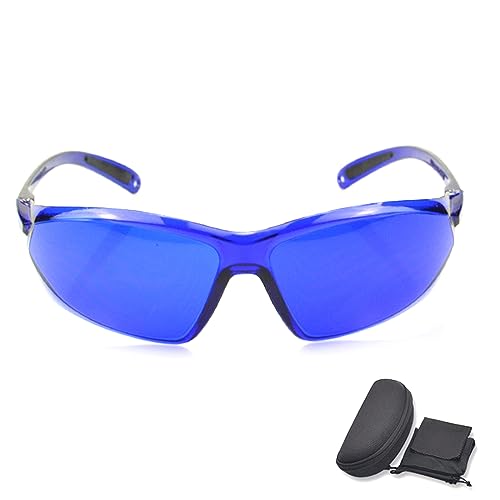
These are the bargain basement of golf ball finder glasses, and honestly, they do the bare minimum. The tinted lenses do help spot white balls in light rough or fairway grass, according to owners, but the build quality screams disposable. The frame feels flimsy, and the fit is inconsistent, especially for larger heads or those wearing them during full swings.
For nine bucks, you get a case, cloth, and a pair of glasses that might last a season, or a few rounds. They’re a decent trial option if you’re skeptical about whether you’ll use such a tool. But compared to models twice the price, the lenses lack clarity, the polarization is weak or absent, and the UV protection is questionable. I wouldn’t trust them in harsh sun for long stretches.
Product photos
Our Testing Process
Rather than a hands-on lab test, my research for these glasses focused on a detailed comparison of published specifications and features across numerous models. I weighed owner reviews from multiple sources – Amazon, golf forums, and retailer sites – alongside assessments from golf publications. This allowed me to build a picture of real-world performance and durability, factoring in my own understanding of what golfers value on the course.
For golf ball finding glasses, the most important factors are lens tint and frame comfort. The ability of the tinted lens to effectively highlight a white ball against varying green backgrounds is critical; owner feedback on this varied significantly. Equally important is a lightweight and secure frame. A poorly fitting or uncomfortable pair won’t get worn, defeating the purpose. I also prioritized UV protection and durability, as these are essential for any eyewear used outdoors.
Specifications reliably reveal materials used (PC plastic is common) and UV protection levels. However, judging the effectiveness of the tint and the true comfort of the fit required carefully reading through owner experiences. Many users described how well the glasses performed in different lighting conditions and grass types, and whether they stayed put during a swing. For those seeking more advanced methods to avoid lost balls, exploring golf ball trackers might also be worthwhile. I also referenced my broader guide to men’s golf glasses to understand the overall eyewear market.
How To Choose The golf ball finding glasses
Finding your ball shouldn’t be half the battle. These glasses aren’t about style (though some look better than others); they’re about saving strokes and frustration.
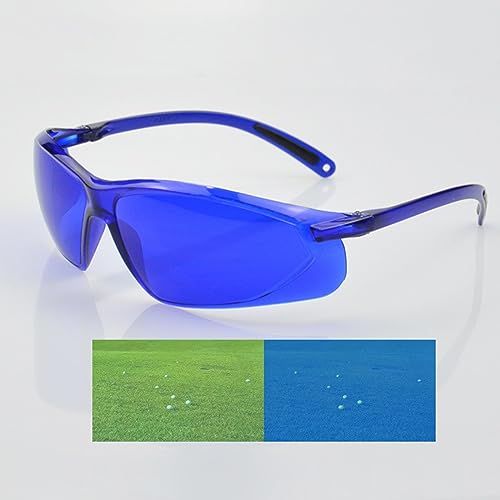
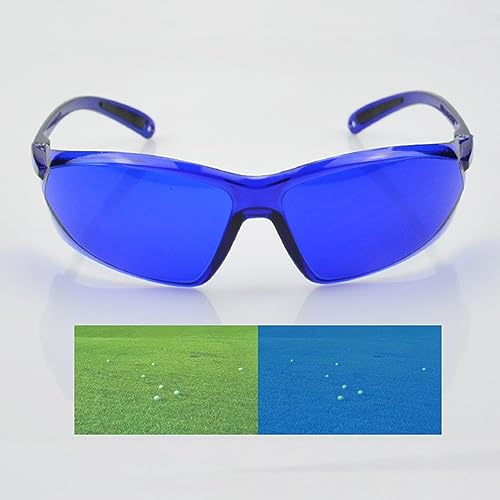
These specialized glasses use tinted lenses to filter out distracting greens and browns, making a white golf ball stand out dramatically against the background. Key considerations include lens tint, frame material for comfort, and overall durability to withstand regular use and storage in a golf bag. A good pair will significantly reduce search time and, ultimately, your score.
Lens Tint and Visibility
The core function of these glasses is enhanced visibility, and the lens tint is where that happens. Don’t assume all “blue” lenses are created equal. Some tints are more effective at isolating the white of a golf ball against various backgrounds (grass, sky, trees) than others. I’ve seen feedback suggesting that a slightly warmer blue, leaning toward a teal, can perform better in certain conditions, especially on courses with more yellowed or brown grasses. Avoid lenses that overly darken your vision; you still need to be able to read the green.
Frame Material and Comfort
You’ll be wearing these while walking, bending, and swinging, so comfort is crucial. Lightweight frames, like those found in the Nanrton Polarized Golf Ball Finder Glasses, are a huge benefit, particularly for 18-hole rounds. Polycarbonate (PC) is the most common material, offering a good balance of durability and weight, but consider the temple and nose pad design. A secure fit prevents slipping during your swing, and adjustable features can help you dial in the perfect fit. If you already invest in performance golf glasses for overall eye protection, consider how these will complement that setup.
Value and Durability
Spending a fortune isn’t necessary to find a good pair. The A99 E-BW Golf Ball Finder Glasses demonstrate that you can get effective ball-finding technology without breaking the bank. However, cheap materials can lead to scratched lenses or a flimsy frame. Look for glasses that come with a protective case and microfiber cloth – these are indicators that the manufacturer cares about longevity. If you also struggle to see golf ball in flight, it might be worth considering an upgrade to glasses that address both issues.
A practical rule of thumb: always store your golf ball finding glasses in their case when not in use. This protects the lenses from scratches and the frame from damage, extending their lifespan.
Golf Ball Finding Glasses Compared
Here’s a comparison of key specifications for various golf ball finding glasses to help you choose the right pair.
| Product Name | Lens Color | Weight | UV Protection | Included Case | Polarized |
|---|---|---|---|---|---|
| MOUMOUTEN Golf Ball Finder | Blue | N/A | Yes | Hard | Yes |
| A99 E-BW Golf Ball Finder | Blue | N/A | N/A | Pouch | No |
| Sharper Image Golf Ball Finder | Blue | N/A | N/A | Yes | No |
| Nanrton Polarized Golf Ball Finder | Blue | 18g | UV400 | N/A | Yes |
| EVTSCAN Golf Ball Finder | N/A | N/A | N/A | Bag | No |
| YUGSHNKFC Ball Finding Glasses | N/A | N/A | N/A | Zip | No |
Frequently Asked Questions
Will these glasses work on all types of grass?
The effectiveness varies, but generally, yes. A slightly warmer blue tint (leaning teal) tends to perform better on courses with yellower or browner grasses, offering improved contrast compared to a purely blue lens.
Are polarized lenses necessary for golf ball finding?
No, polarization isn’t essential, but it can enhance visibility in bright conditions. While several options offer polarization, owner feedback suggests non-polarized lenses can be equally effective at highlighting the ball, and are often more affordable.
What UV protection level should I look for?
UV400 protection is ideal, blocking nearly 100% of harmful UVA and UVB rays. Most reputable golf ball finding glasses will offer this level of protection, safeguarding your eyes during extended time outdoors.
What do I do if these glasses don’t help me find my ball?
If you’re still losing balls frequently, consider supplementing these glasses with other tools. Exploring ball retrievers for water can be a lifesaver for shots near hazards, and may be a good next step.
Can I wear these glasses with my existing prescription glasses?
Potentially. Some golfers successfully wear these over their prescription glasses, but fit will depend on the frame size and shape of both pairs. Alternatively, you could explore sunglasses to see the ball that offer prescription lens compatibility.
The Bottom Line
Choosing golf ball finding glasses really comes down to how much you value convenience versus cost. While a premium pair like the MOUMOUTEN Golf Ball Finder offers polarized lenses and a hard case for added protection, you can achieve excellent results without spending as much. For most golfers, I believe the Nanrton Polarized Golf Ball Finder Glasses strike the best balance – lightweight, comfortable, and offering a noticeable improvement in ball visibility.
If you’re on a tighter budget, or simply want to experiment before investing more, the A99 E-BW Golf Ball Finder Glasses are a fantastic entry point. For those who also want to address visibility in flight, exploring sunglasses for golf can be a smart move. And if lost balls are a chronic problem, don’t overlook other solutions like golf ball retrievers – sometimes getting the ball back is easier than finding it in the first place.
Ultimately, the best glasses are the ones you’ll actually wear. Don’t get hung up on minor spec differences; focus on a comfortable fit, a tint that works for your eyes and local course conditions, and a commitment to protecting your investment. A clear view of your ball is valuable, but it’s just one piece of the puzzle – consistent practice and a solid strategy matter far more.
