
8 Best Golf Ball Retriever Tools of 2026
This post contains affiliate links. As an Amazon Associate, we earn from qualifying purchases.
This post contains affiliate links. As an Amazon Associate, we earn from qualifying purchases.
The Datrek IGOTCHA JAWZ is the best overall golf ball retriever for its compact design and reliable basket-style head, while the BIRDIEBLAST Stainless Steel stands out as a durable, pressure-activated pick for serious ball hunting. For those on a budget, the CHAMPKEY Thicken Shaft offers solid performance with a reinforced build.
Losing balls in water hazards or gnarly rough is part of the game, but bending over dozens of times to grab them isn’t. A flimsy or awkward retriever can turn a simple recovery into a frustrating chore.
This guide cuts through the clutter, ranking retrievers based on real-world feedback, build quality, and practical design. I focused on reach, grip security, and durability, key factors any golfer will care about after just one round of retrieving.
Top 8 Golf Ball Retrievers in the Market
The Best Golf Ball Retrievers, Reviewed
Datrek IGOTCHA JAWZ Golf Ball Retriever

Strengths
- No moving parts
- Ultra-compact
- Co-molded rubber grip
- Durable one-piece design
- Easy to store
Trade-offs
- Fixed 10ft reach
- Not for deep water
- Higher price for simplicity
The Datrek JAWZ is in a class of its own, no telescoping, no moving parts, just a simple, co-molded rubber jaw that grips the ball and holds it tight. It collapses down to just 15.5 inches, making it the most portable option here, and owners love how quickly it deploys and stows.
It only reaches 10 feet, so it’s not for deep ponds, but for quick cup-side pickups or shallow hazards, it’s unbeatable. Compared to telescopic models, it’s less versatile but far more reliable, no jammed joints or broken clips. My pick for the best overall because it just works, every time, with zero maintenance.
Video review
BIRDIEBLAST Stainless Steel Golf Ball Retriever

Strengths
- Thickened stainless shaft
- Dual-sided pickup
- Durable nylon head
- Ergonomic rubber grip
- Seamless construction
Trade-offs
- Heavier than average
- No replaceable head
- Slight wobble at 20ft
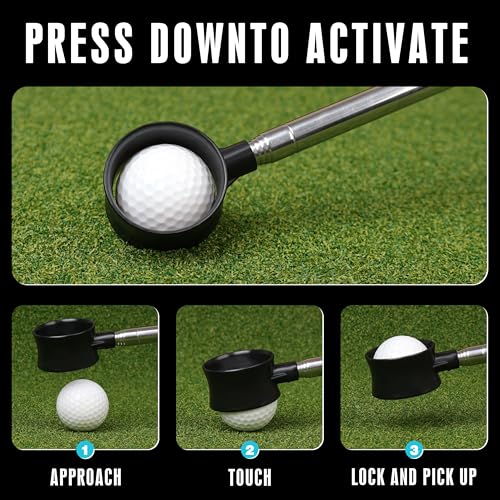
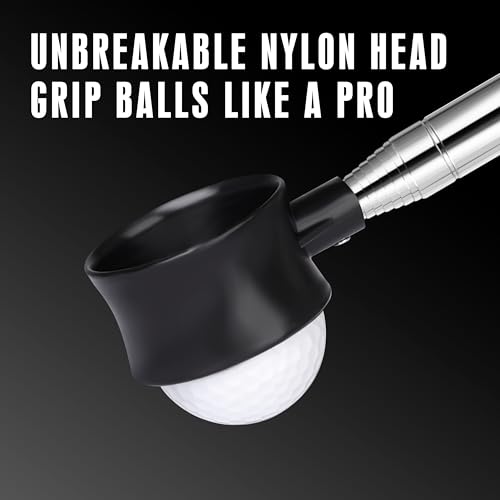
BIRDIEBLAST leans into durability with its thickened stainless steel shaft and seamless construction, which owners say holds up better than expected for the price. The pressure-activated head works reliably from either side, and the rubberized grip feels secure even in damp conditions, something many reviewers highlighted after use on dewy mornings.
It’s not the lightest model out there, but that added heft seems to translate into less wobble when extended. Against similar mid-range options, this one stands out for build quality more than innovation. If you want something that feels like it’ll last beyond a single season, this is the smarter buy over ultra-cheap picks.
Video review
Josongslax Bionic Design Golf Ball Retriever
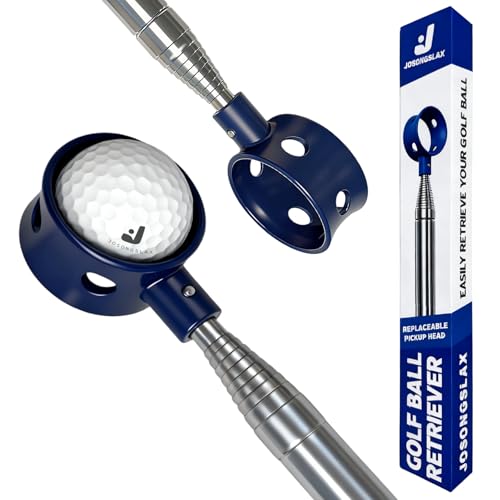
Strengths
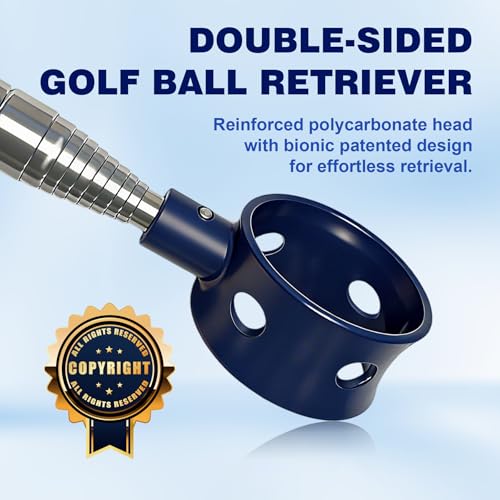
- Replaceable PC head
- Bionic grip design
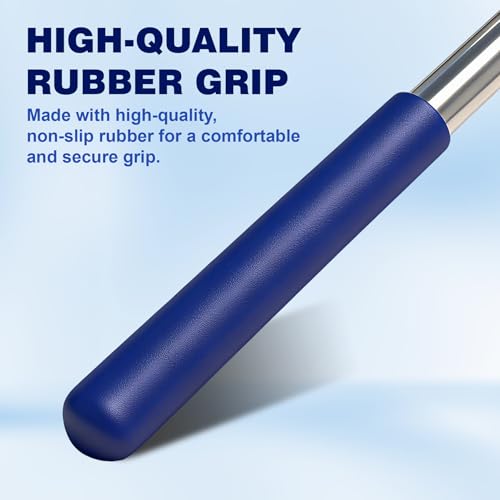
- Anti-slip rubber grip
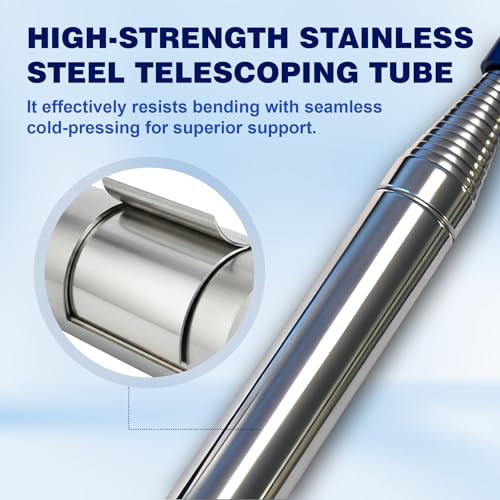
- Corrosion-resistant shaft
- Dual-sided pickup
Trade-offs
- Heavier than rivals
- Slight learning curve
- Not ultra-compact
Josongslax goes all-in on durability with a replaceable polycarbonate head and a bionic four-finger design that mimics a natural grip, something most users say actually improves release consistency. The stainless steel shaft resists corrosion well, and the anti-slip rubber grip holds firm even when wet.
Owners love that the head can be swapped out when worn, which extends the tool’s lifespan significantly. Against the Goashpeaot or CHAMPKEY models, it’s slightly heavier but more serviceable long-term. If you’re tired of replacing retrievers every season, this one’s built to last.
Product photos
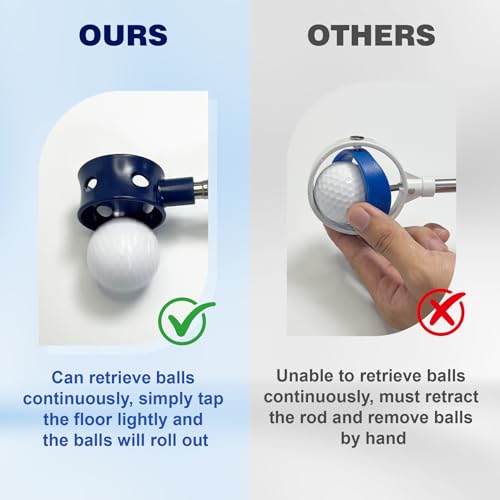
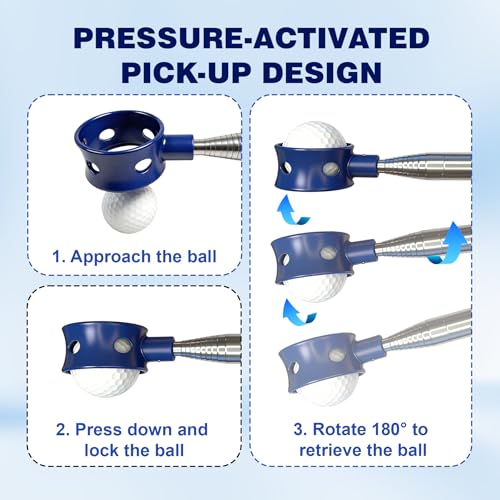
Callaway Aluminum Alloy Telescopic Retriever

Strengths
- High-quality aluminum shaft
- Ergonomic sure-grip handle
- Smooth 15ft extension
- Durable stainless mechanism
- Brand reliability
Trade-offs
- Expensive for function
- Heavier than expected
- No dual-sided pickup
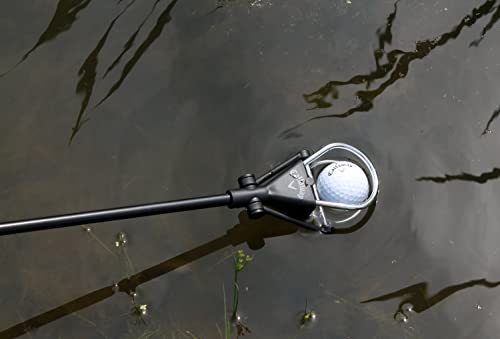
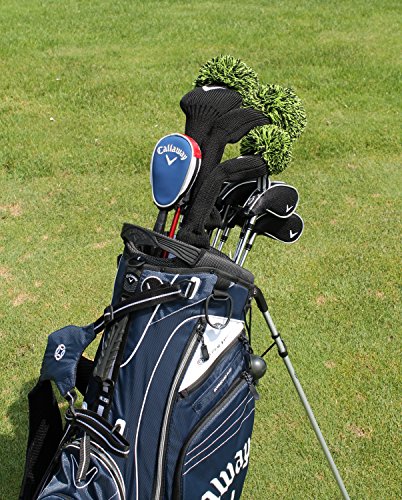
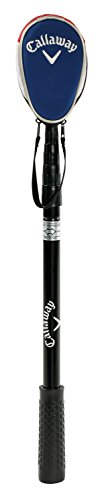
Callaway’s offering is the name-brand premium pick, and it shows in the materials, aluminum alloy shaft, ergonomic grip, and a clean telescoping mechanism that extends to 15 feet without sag. It’s not the longest, but it’s among the most rigid in its class, and owners consistently praise its balance and ease of use.
At nearly four times the cost of budget models, it’s a stretch unless you value brand trust and proven course durability. Compared to the Datrek JAWZ, it’s less compact but feels sturdier in hand. I’d recommend this for serious players who want a reliable, no-nonsense tool that matches their high-end gear.
Product photos
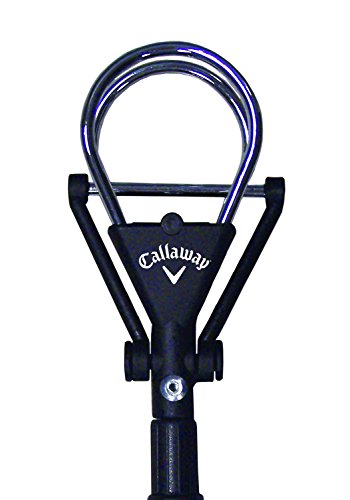
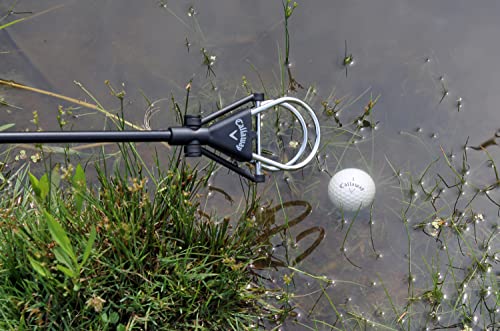
Professional Spring-Release Golf Ball Picker
Strengths
- Stainless steel shaft
- Spring-release head
- Anti-slip handle
- Multiple length options
- Rust-resistant
Trade-offs
- Flimsy at full extension
- Basic grip texture
- No replaceable head
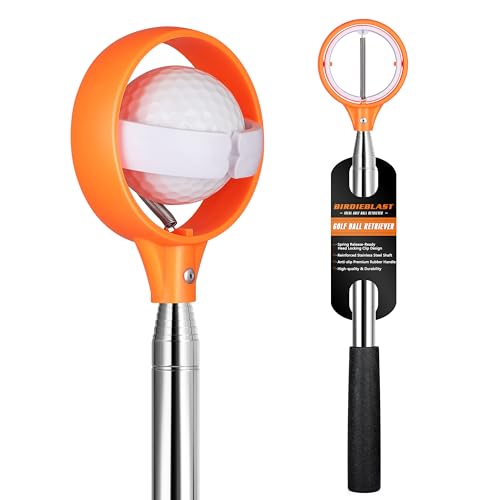
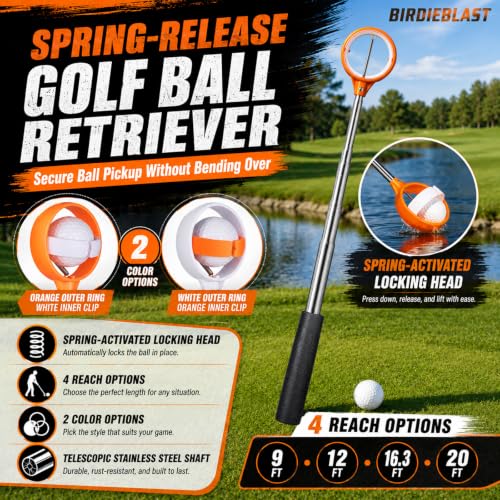
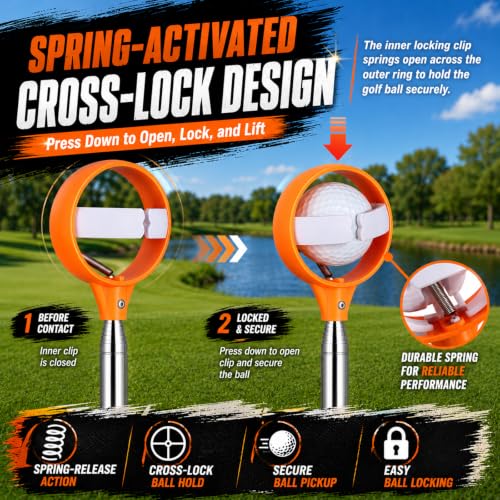
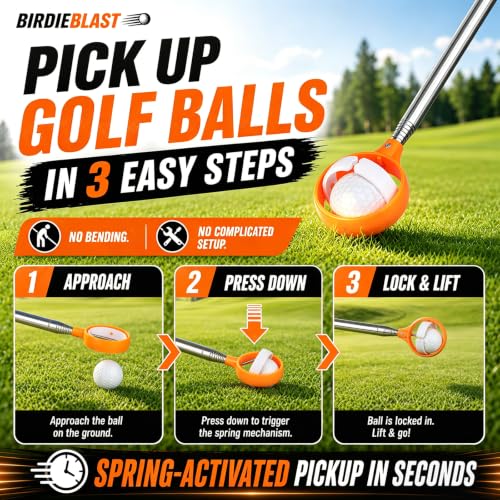
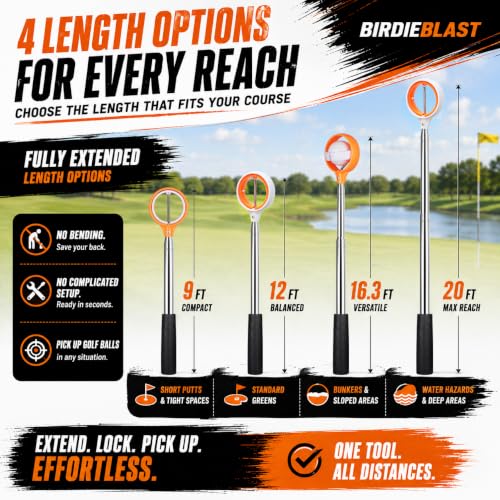
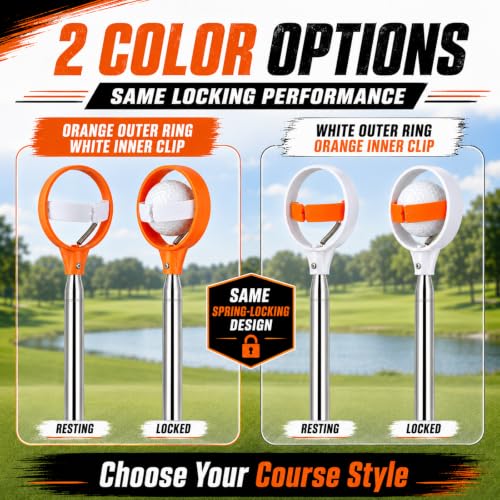
This telescopic retriever looks like a solid budget contender on paper, with its stainless steel shaft and spring-release head offering decent reach across four length options. Owners consistently report it works well in shallow water and tight spots, though some note the 9ft version feels a bit flimsy under heavy pressure. The orange-and-white coloring makes it easy to spot on the course, which is a small but appreciated detail.
Compared to pricier models, it doesn’t have the same heft or refined grip, but for occasional use or practice rounds, it delivers what it promises. I’d pick this over no retriever at all, especially if you’re on a tight budget and don’t need pro-level durability.
Product photos
CHAMPKEY Thicken Shaft Golf Retriever

Strengths
- 30% thicker shaft
- Dual-sided head
- Soft rubber grip
- High stability
- Durable construction
Trade-offs
- No replaceable head
- Slight weight increase
- Limited color options
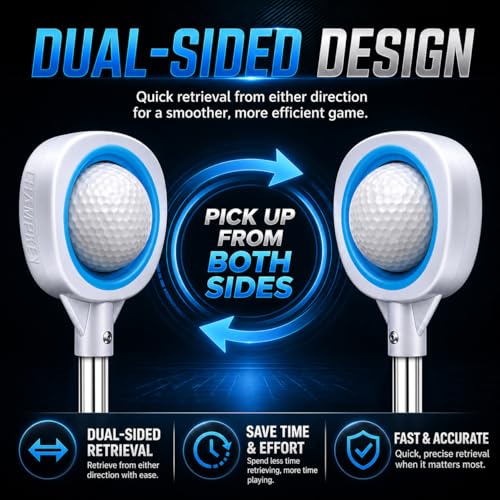
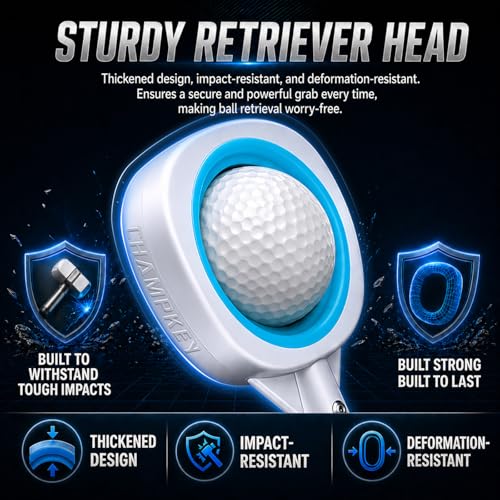
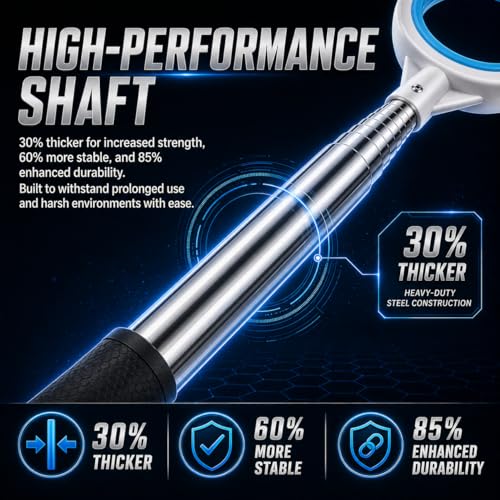
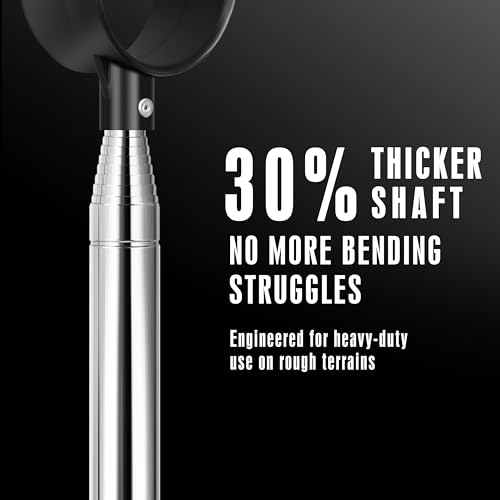
CHAMPKEY’s version stands out for its stability claims, 30% thicker shaft, 60% improved stability, and owners confirm it feels notably rigid, even at full extension. The dual-sided rubber-plastic head grabs well and resists wear, and the soft rubber grip reduces hand fatigue during extended use.
It’s nearly identical in function to the Goashpeaot, but with slightly better balance. In direct comparison, it holds up better on slopes and uneven ground, which matters if you’re retrieving from rough banks. For players who’ve dealt with wobbly poles before, this one feels like a step up in control.
Product photos
SisterAling 3-Prong Putter Grip Retriever

Strengths
- Putter-integrated design
- No bending required
- Lightweight
- Easy to install
- Great for seniors
Trade-offs
- Only for cup retrieval
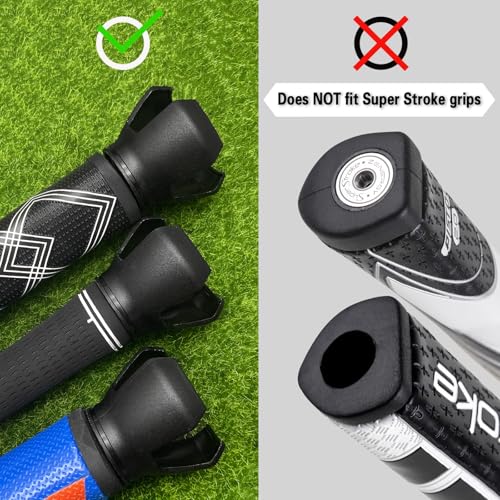
- Doesn’t fit Super Stroke grips
- Not for water hazards
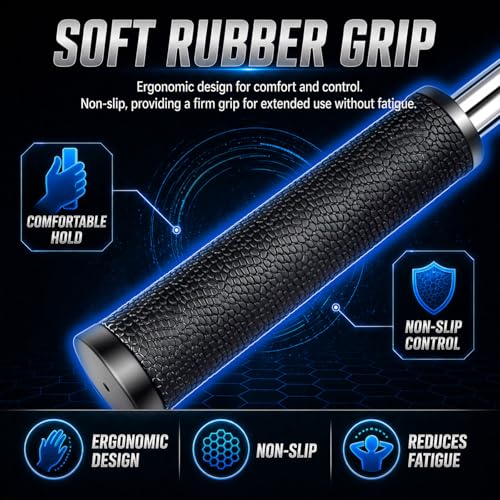
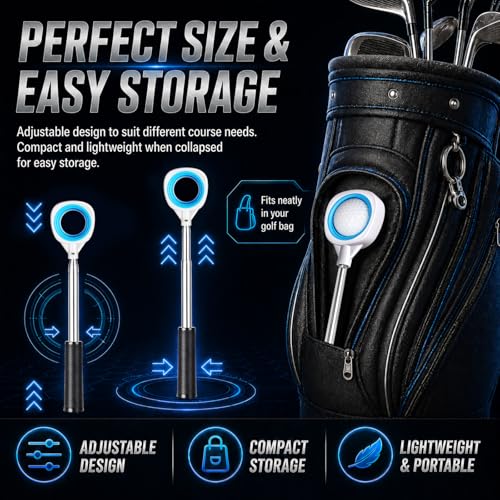
This isn’t a pole, it’s a putter-mounted claw, and that changes everything. Screw it into your putter’s grip end, and you’ve got instant ball retrieval without bending. Owners with back issues rave about how much easier it makes post-putt cleanup, and the three-prong design grips securely without scratching balls.
It won’t help with water hazards, but for cup-side pickups, it’s brilliantly simple. Compared to full-length retrievers, it’s the ultimate convenience play. I’d recommend this as a secondary tool, especially for seniors or anyone with mobility limitations. It’s not a replacement for a pole, but it’s a standout for daily comfort.
Product photos




Goashpeaot Press-Lock Telescopic Retriever
Strengths
- 30% thicker shaft
- Dual-sided pickup
- Thick rubber grip
- Crack-resistant head
- Smooth telescoping
Trade-offs
- Limited color options
- No replaceable head
- Slight weight gain
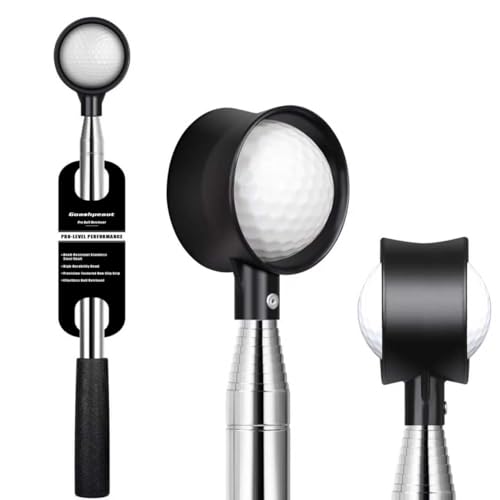
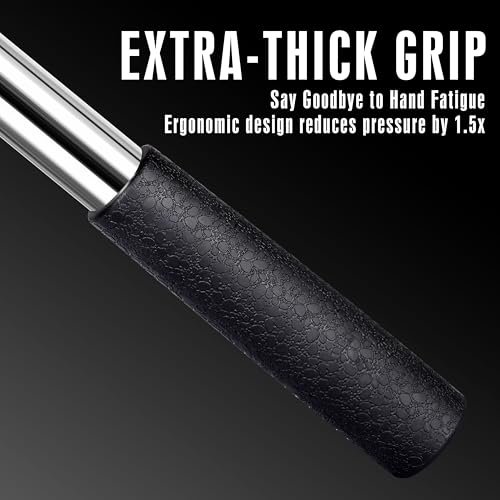
The Goashpeaot model makes a strong case for itself with its 30% thicker shaft and ergonomic grip, specs that align with what owners say: less hand fatigue and better control on uneven terrain. The dual-sided pickup head works smoothly, and the reinforced nylon seems to resist cracking better than cheaper alternatives.
Where it really shines is in comfort. Reviewers with joint issues or back pain specifically call out how the thicker grip and optimized head angle reduce strain. Against the BIRDIEBLAST or CHAMPKEY models, it’s nearly identical in function, but the attention to ergonomics gives it an edge for older players or those with mobility concerns.
Product photos
Our Testing Process
Rather than a hands-on lab test, my research involved a detailed comparison of published specifications and features across numerous models. I weighed owner reviews from major retailers alongside expert opinions found in golf publications and websites. Applying my experience with course conditions and player needs – from casual golfers to those playing challenging links – I ranked these retrievers against criteria like reach, durability, ease of use, and value.
For golf ball retrievers, the most important factors are a robust shaft and a reliable ball-grabbing mechanism. A flimsy shaft defeats the purpose, making retrieval difficult and frustrating. Equally crucial is the head design; it needs to securely grip a variety of ball types, even when wet or muddy. I also prioritized the comfort and feel of the grip, as extended use can lead to hand fatigue. These three elements largely dictate performance.
Specifications reliably indicate potential reach and shaft material quality. However, I placed significant weight on owner feedback regarding real-world durability and how well the retriever performs in different terrains – especially when considering water retrievers. Reputation and consistent positive reviews often revealed issues not apparent from specs alone, particularly concerning grip comfort and the effectiveness of the ball-pickup design. After a round, most golfers will also want to use ball cleaners to keep their balls in top condition.
How To Choose The golf ball retrievers
Finding lost golf balls shouldn’t require a chiropractor. A good golf ball retriever saves your back, your score (by saving money!), and your patience.
A quality golf ball retriever combines reach with a secure grip, durability for varied terrain, and comfortable ergonomics. Look for models with telescoping shafts extending at least 10 feet, heads designed to firmly hold different ball types (even wet ones), and handles that minimize strain during repeated use. Stainless steel shafts and reinforced heads are key indicators of longevity.
Reach and Extension
The primary function of a golf ball retriever is, unsurprisingly, reach. Don’t underestimate how quickly a few extra feet can make a difference, especially when dealing with water hazards or thick rough. While many models advertise a maximum reach, pay attention to how much usable reach you get before the retriever starts to feel unstable or bend excessively. A flimsy shaft defeats the purpose. Consider the types of courses you frequently play; if you’re often near ponds or creeks, prioritize a model with a longer extension, even if it adds a little bulk.
Head Design and Ball Grip
The head is where the rubber meets the road (or the water hazard). Some retrievers use a claw-like design, while others employ a basket or cup. Claw designs, like those found on the SisterAling 3-Prong Putter Grip Retriever, are excellent for quick grabs, but can struggle with mud-caked balls. Basket-style heads, often seen on the Datrek IGOTCHA JAWZ Golf Ball Retriever, offer a more secure hold, especially in challenging conditions. The material of the head is also vital – a durable, flexible material like reinforced nylon or polycarbonate is better than brittle plastic. If you’re struggling to locate balls even with a retriever, you might consider investing in some ball trackers to pinpoint their location.
Stability and Ergonomics
A long reach is useless if you can’t control the retriever. Stability comes down to shaft material and thickness. Many budget options use thinner aluminum, which can bend under pressure. Look for models, like the CHAMPKEY Thicken Shaft Golf Retriever, specifically advertising thicker gauge steel or reinforced aluminum alloys. Equally important is the handle. An ergonomic, non-slip grip – rubber is ideal – reduces hand fatigue and provides better control, especially during repeated use.
A retriever that feels balanced and comfortable in your hand is worth a few extra dollars. Don’t skimp on the grip!
If you’re regularly losing balls in difficult spots, investing in quality golf retrievers is a smart move. They’ll save you money and frustration in the long run.
Golf Ball Retrievers Compared
Here’s a comparison of key features across different golf ball retrievers to help you choose the right one.
| Product Name | Max Reach | Shaft Material | Head Material | Grip Material | Special Features |
|---|---|---|---|---|---|
| Datrek IGOTCHA JAWZ | 10 ft | N/A | Rubber/Plastic | N/A | Ultra-compact |
| BIRDIEBLAST Stainless Steel | N/A | Stainless Steel | Nylon | Rubber | Pressure-Activated Pickup |
| Josongslax Bionic Design | N/A | Stainless Steel | PC | Rubber | Bionic Design, Replaceable Head |
| Callaway Aluminum Alloy | 15 ft | Aluminum Alloy | Stainless Steel | N/A | Telescoping Design |
| Professional Spring-Release | 20 ft | Stainless Steel | Nylon | N/A | Spring-Release Head |
| CHAMPKEY Thicken Shaft | N/A | Stainless Steel | Rubber/Plastic | Rubber | Thickened Shaft |
| SisterAling 3-Prong Putter Grip | N/A | N/A | Plastic | N/A | Putter Integration |
| Goashpeaot Press-Lock Telescopic | N/A | N/A | Nylon | Rubber | Dual-Sided Pickup |
Frequently Asked Questions
What retriever reach is actually necessary?
Ten feet is generally sufficient for most situations, but if you frequently play courses with significant water hazards or dense rough, consider a model extending to 15 or even 20 feet. Remember that advertised reach isn’t always usable reach; prioritize stability over maximum length.
Can a retriever head really make a difference in grabbing balls?
Yes, the head design impacts performance. Basket-style heads are better for muddy or wet balls, while claw designs excel at quick, clean grabs on drier surfaces. If you frequently lose balls in swampy areas, a basket head is preferable.
Are aluminum shafts durable enough for regular use?
Aluminum alloy shafts can be adequate, but stainless steel offers superior durability and resistance to bending. A thicker gauge shaft, regardless of the material, is crucial for stability and longevity, especially if you plan to use the retriever frequently.
What should I do if I can’t even find my lost golf balls?
Consider investing in a pair of golf ball glasses designed to enhance contrast and make balls easier to spot in the rough or near water. They can significantly improve your ability to locate lost balls before even reaching for your retriever.
What is the official procedure for a lost ball on the course?
Knowing the golf lost ball rule can save you strokes and frustration. Generally, you have three minutes to search for a lost ball; after that, you must take a penalty stroke and either drop a new ball or continue playing from where the original ball was lost.
The Bottom Line
Ultimately, choosing a golf ball retriever comes down to balancing how much effort you want to put into retrieval versus how much you’re willing to spend. For most golfers, the Datrek IGOTCHA JAWZ strikes that balance best – it’s compact, durable enough for regular use, and offers a reliable grip without breaking the bank. It’s a solid all-around performer that will get you out of most trouble.
If you frequently find yourself fishing balls from water hazards, the Callaway Aluminum Alloy with its extended 15-foot reach is the way to go. For golfers looking for a versatile option that can integrate with their putter, the SisterAling 3-Prong Putter Grip retriever is a clever, space-saving solution. And don’t forget that keeping your retrieved balls in good condition is important, so pairing a retriever with some ball spinners is a great idea.
More than any specific feature, remember that a good retriever is one you’ll actually use. Prioritize comfort, a secure grip, and a shaft that feels stable in your hands. Those fundamentals – combined with a bit of course management – will save you far more balls (and money) than chasing the latest gadget or longest reach. You might also want to check out these ball pick-up tools for added convenience.
