
Understanding Golf’s Lost Ball Rule: Penalty & Search Time
This post contains affiliate links. As an Amazon Associate, we earn from qualifying purchases.
This post contains affiliate links. As an Amazon Associate, we earn from qualifying purchases.
A ball is lost under the Rules of Golf if it is not found within three minutes of starting the search. The penalty is stroke-and-distance: you add one penalty stroke and must play from the spot of your previous shot. For casual play, Model Local Rule E-5 offers an alternative, two penalty strokes and a drop near the fairway edge.
That three-minute clock is the whole game. It starts the second you or your caddie begin looking, and it doesn’t pause for much. The official procedure is non-negotiable, but the 2019 rules introduced a practical shortcut that keeps weekend rounds moving.
What follows: how the search clock actually works, the exact penalty sequence, when you must, and must not, use the local rule alternative, and the gear that can buy you a few extra seconds in the rough.
Key Takeaways
- You get exactly three minutes to search for a ball before it’s officially lost. The clock starts when you or your caddie begins looking.
- The standard penalty is stroke-and-distance: one penalty stroke, and you must replay from your previous spot.
- Model Local Rule E-5 is a common alternative for casual play: take two penalty strokes and drop within two club-lengths of the fairway edge.
- If your ball might be lost, play a provisional ball immediately. It saves the walk back.
- A ball lost in a penalty area is governed by different rules; you don’t use the lost ball procedure.
The 3-Minute Search Clock (and When It Stops)
The search time isn’t a suggestion. It’s a hard limit written into USGA Rule 18 and R&A Rule 18. You have 180 seconds from the moment you or your caddie starts actively looking.
The player is allowed three minutes to search for their ball before it becomes lost. The clock starts when the player or their caddie begins to search. Time spent walking to the area is not counted, but once the search begins, the clock runs continuously with few exceptions.
The intent is to keep pace of play. Everyone has watched a foursome poke around in the fescue for ten minutes. The rule stops that.
What resets the clock? Almost nothing. If you accidentally move your ball while searching, there’s no penalty, you just replace it. But the clock keeps ticking. If play is officially suspended by the committee, the clock still runs. You could be searching during a horn blast and lose your ball anyway when the three minutes elapse.
The only real pause happens if you need to identify a found ball. If you find a ball within three minutes but can’t immediately tell if it’s yours, you get a “reasonable time” to check. That’s not extra search time; it’s identification time. If you can’t confirm it’s yours within that reasonable window, the ball is lost.
Stroke-and-Distance: The Standard Penalty
When the clock hits zero and the ball is lost, the procedure is automatic. This is stroke-and-distance relief.
Here’s what that means in plain terms: you are penalized one stroke, and your next shot must be played from where you hit your previous one. If you lost your tee shot, you’re hitting again from the tee. If you lost your second shot from the fairway, you’re playing your fourth shot from that same fairway spot.
| Shot Sequence | Action | Score Count |
|---|---|---|
| 1 | Tee shot is lost. | +1 penalty stroke |
| 2 | Next shot from tee (stroke-and-distance). | Hitting 3rd shot from tee |
| 3 | Ball lands in fairway. | Now playing 4th shot to green |
The “distance” part is what hurts. It’s not just the stroke; it’s the lost yardage. This is why the provisional ball rule exists, it’s a pre-emptive stroke-and-distance play that saves the long walk back.
Common mistake: Searching for more than three minutes because “it’s just a casual round.” That habit kills your pace and your handicap integrity. Put the clock on your phone. Enforce it.
Your Two Relief Options: Standard vs. Local Rule E-5
You have two paths after a lost ball. The first is the standard rule above. The second is Model Local Rule E-5, an optional rule now common at many courses.
This local rule trades a heavier penalty for the convenience of not going back. Instead of one stroke and returning, you take two penalty strokes. You then estimate where your ball was lost, find the nearest point of fairway edge no closer to the hole, and drop within two club-lengths of that point.
| Option | Penalty | Where to Play From | Best For |
|---|---|---|---|
| Standard Stroke-and-Distance | 1 stroke | Original previous spot | Tournament play, purists, when a provisional was played |
| Model Local Rule E-5 | 2 strokes | Fairway edge near where ball was lost | Casual rounds, pace of play, courses with thick native areas |
You cannot use both. If you’ve already hit a provisional ball, you must play it. Local Rule E-5 is off the table. The rule is designed for when you didn’t expect to lose the ball, not as a strategic choice after a bad shot.
Also, committees are advised not to use E-5 in elite competitions. It’s a pace-of-play tool for everyday golfers, not a way to soften the penalty for professionals.
When a Lost Ball Isn’t Actually a “Lost Ball”
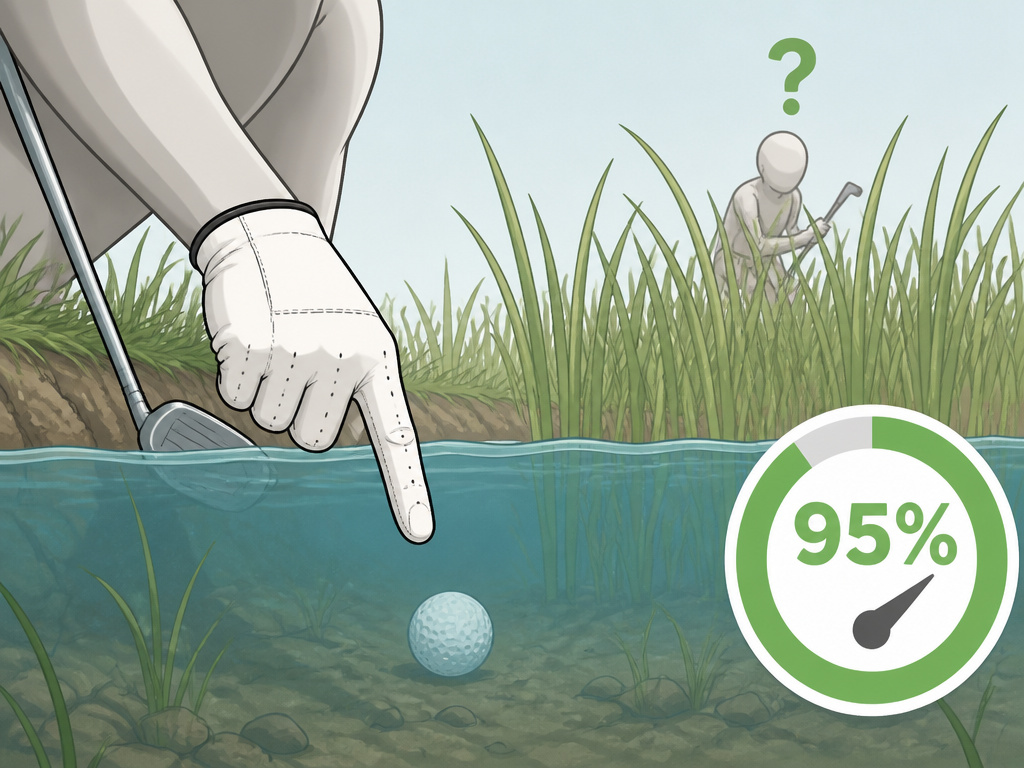 The rules hinge on certainty. If you are “known or virtually certain” your ball is in a penalty area, you don’t use the lost ball rule. You use the penalty area relief rules (Rule 17), which often give you options to drop laterally.
This is a critical distinction. “Virtually certain” means at least 95% sure. You saw it splash, or it’s the only place it could be. If you’re just guessing it might be in the water, the clock starts and the lost ball rule applies.
Another edge case: an outside influence. If you see a spectator pick up your ball, it’s not lost. It’s moved by an outside influence. You replace it without penalty. But if a natural force like water in a penalty area carries your ball out of bounds, that’s stroke-and-distance. Water isn’t an outside influence.
Where this goes sideways: Assuming a ball in a penalty area is automatically a lateral drop. If you’re not “virtually certain” it’s in there, you must search and risk the lost ball penalty. That uncertainty costs a group 5-10 minutes every weekend.
Gear That Buys You Time (And When It Doesn’t)
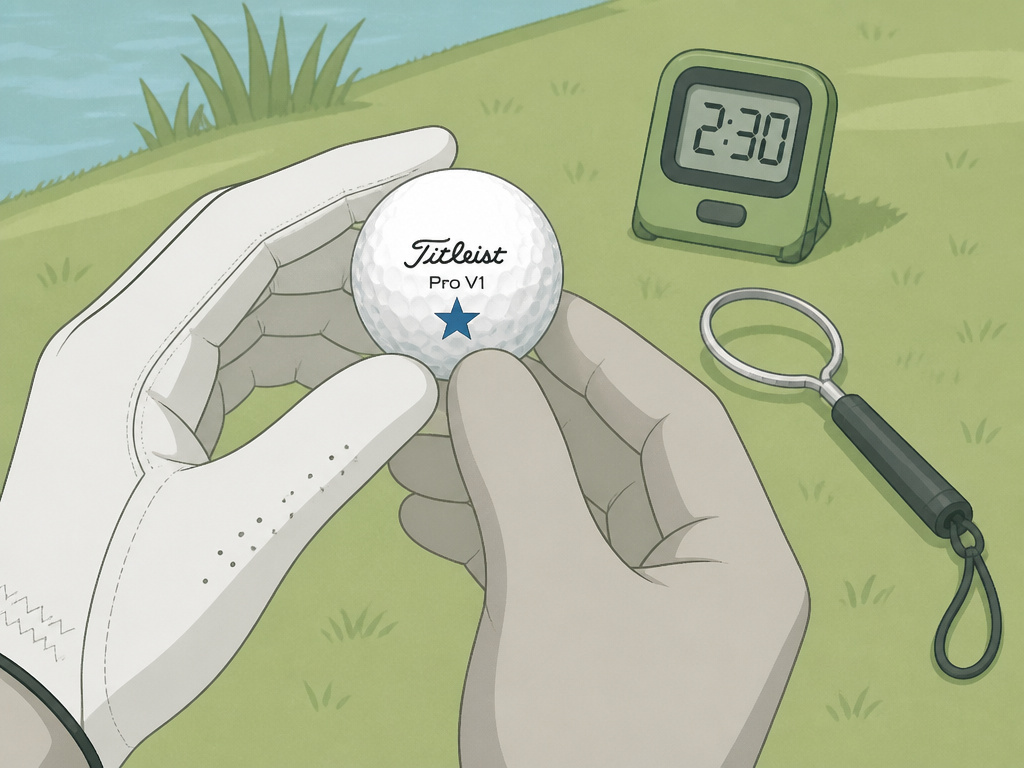 The three-minute clock is tight. A few tools can make your search more efficient, but they don’t stop the timer.
A good pair of ball finder glasses (like those from Callaway or Birdie) use polarized lenses to cut glare, making white balls pop against green grass or brown leaves. They help you scan faster. An electronic ball tracker or a golf ball retriever for water hazards are for recovery, not search extension. Using a ball retriever to fish out a ball from a pond happens after you’ve taken penalty relief.
Marking your ball uniquely is the best time-saver. A distinct ball stamp or personalized ball markings means you can identify your Pro V1 in two seconds instead of twenty. If you and your partner both play a Titleist 1 with a black dot, you’ve wasted a third of your search time before you even start.
The Smart Play: Always Hit a Provisional
The single best way to manage the lost ball rule is to avoid its worst consequence, the walk back.
If your shot might be out of bounds or lost outside a penalty area, announce you’re hitting a provisional ball. Say it out loud: “I’m playing a provisional.” Then hit from the same spot. This ball is your stroke-and-distance relief in advance. If you don’t find your first ball, your provisional is already in play and you keep moving.
If you do find your original ball in bounds and playable within three minutes, you simply pick up your provisional. No penalty. It’s pure insurance.
Skipping the provisional because you’re “sure you’ll find it” is how a 5-minute hole becomes a 15-minute ordeal. Just hit it.
Frequently Asked Questions
Does lost ball mean a two-stroke penalty?
Not by the standard rule. A lost ball is a one-stroke penalty, plus you lose the distance. You are hitting again from your previous spot, so you are effectively playing your third shot from that location. The two-stroke penalty only applies if your course has adopted Model Local Rule E-5 and you choose that option.
Can you drop where you think the ball was lost?
Only under Model Local Rule E-5. Under the standard lost ball rule in golf, you must go back to your previous spot. Dropping where you think it was lost without using E-5 is playing from a wrong place, which carries an additional two-stroke penalty in stroke play.
What if you find the ball after three minutes?
It’s still lost. The three-minute limit is absolute. Once time expires, the ball is no longer in play. You must proceed under penalty, even if you then spot it sitting in the fairway. This is why managing the search time is critical.
Is a lost ball the same as out of bounds?
The procedure is identical: stroke-and-distance relief. The difference is definitional. A ball is out of bounds when it’s outside the course boundary. A ball is lost when it’s not found in three minutes. Both result in the same penalty.
What’s the difference between a lost ball and an unplayable lie?
An unplayable lie is for a ball you have found but decide you cannot play. You have several relief options, all for one penalty stroke. A lost ball is for a ball you cannot find. Your only standard option is stroke-and-distance.
Before You Go
The lost ball rule boils down to a clock and a choice. Respect the three-minute search. Know that the standard penalty costs a stroke and all your distance. For casual play, understand if your course uses Model Local Rule E-5, that two-stroke drop by the fairway keeps groups moving.
The real pro move isn’t a trick. It’s hitting a provisional the moment you have doubt. It saves your scorecard and your playing partners’ afternoon. Now you know what to do when your ball disappears, so you can spend less time searching and more time hitting.
