
5 Best Golf Balls for Amateur Golfers 2026
This post contains affiliate links. As an Amazon Associate, we earn from qualifying purchases.
This post contains affiliate links. As an Amazon Associate, we earn from qualifying purchases.
The Callaway Supersoft (2025) stands out as the best overall golf ball for amateur golfers, combining soft feel, solid distance, and reliable performance. For those watching their budget, the TaylorMade Distance+ delivers surprising quality at a lower price, while the Vice Pro Plus offers more spin and control for amateurs with developing short games.
Most amateur golfers lose confidence when their ball doesn’t respond predictably off the clubface, especially on mishits or around the greens. The right ball can help smooth out inconsistencies and make the game more enjoyable.
This guide cuts through the marketing noise. I compared specs, construction, and real-world feedback to find models that genuinely suit moderate swing speeds, prioritize forgiveness, and balance feel with distance. These picks aren’t just popular, they’re proven choices for players working to improve.
Top 5 Golf Balls For Amatuer Golfers in the Market
The Best Golf Balls For Amatuer Golfers, Reviewed
Callaway Supersoft Golf Balls (2025, White)

Strengths
- Softest feel
- Balanced performance
- Improved spin
Trade-offs
- Not tour-level control
- Cover less durable than surlyn
Callaway’s 2025 Supersoft takes the formula a step further with a refined cover system aimed at better greenside control without losing the soft, distance-friendly core. On paper, it’s the most complete package in the Supersoft line, faster ball speed, softer feel, and noticeably improved spin on approach shots compared to the 2023 model. Reviewers highlight the consistency in flight and the confidence it builds around the green, especially for amateurs trying to stop the ball on faster surfaces.
It still sits firmly in the high-comfort, moderate-performance category, so elite players will want more, but for the average amateur, this might be the best overall choice. Compared to the Vice Pro Plus, it’s less precise but more forgiving; against the TaylorMade Distance+, it offers better short-game response. If you want one ball that does everything decently well without overspending, this is it.
Video review
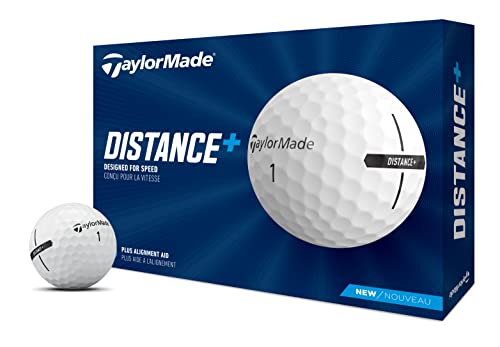
TaylorMade Distance+ Golf Balls
Strengths
- Great distance
- Affordable
- Alignment aid
Trade-offs
- Low spin
- Basic short game
The TaylorMade Distance+ is the go-to when you want a no-frills, max-distance ball that won’t drain your wallet. With a REACT Speed Core and Extended Flight Dimple Pattern, it’s engineered purely for long drives and straight flight, ideal if your priority is getting more yardage off the tee without complexity. The two-piece construction and ionomer cover make it durable and consistent, and the alignment aid on the side is a small but useful touch for putting setup.
Owners love how far it goes, especially in windy conditions, but it’s clearly not built for finesse. Spin is minimal, and the greenside control lags behind even the Supersoft. Still, for casual players or those just starting out, it delivers solid performance for the price. Compared to the Nitro, it feels a bit smoother and flies truer, making it the smarter budget pick if you’re not ready to step up to urethane.
Video review
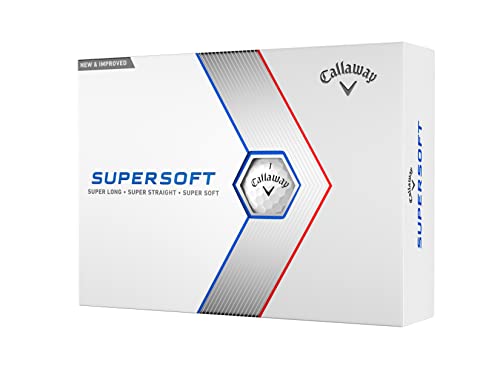
Callaway Supersoft Golf Balls (2023)
Strengths
- Very soft feel
- Good distance
- Durable hybrid cover
Trade-offs
- Moderate spin
- Not for low handicaps
The 2023 Supersoft strikes a smart balance between soft feel and reliable distance, making it a strong value upgrade for mid- to high-handicappers who don’t want to splurge on urethane-covered balls. The HyperElastic core delivers fast ball speed without sacrificing that plush sensation at impact, and the hybrid cover keeps durability in check while still offering decent greenside control. Reviewers note it performs well in real-world conditions, consistent flight, good roll on the greens, and a forgiving nature on mishits.
It’s not going to match the spin of a Vice Pro Plus, but that’s not the point. For amateurs still working on consistency, the Supersoft keeps things simple: hit it, watch it fly, and don’t worry about scuffing. Compared to the newer 2025 version, the 2023 model holds up well on feel and flight, though it lacks some of the refined short-game tweaks. My recommendation? If you’re upgrading from a basic distance ball, this is a logical next step.
Product photos


Vice Pro Plus Golf Balls

Strengths
- Urethane cover
- High short-game spin
- Excellent feel
Trade-offs
- Less durable than surlyn balls
- Best with faster swings
If you’re an amateur with a decent swing and want tour-level performance without the $50 price tag, the Vice Pro Plus Gold should be on your radar. On paper, it’s built like a premium ball, thin cast urethane cover, high spin around the greens, and solid distance off the tee, which mirrors what you’d expect from a Titleist Pro V1 or TaylorMade TP5. Owners consistently report that the feel is soft and responsive, especially with wedges, and the spin control is noticeably better than most two-piece balls in this price range.
Still, this isn’t a magic fix for inconsistent short games or high handicappers who struggle with mishits. The thinner cover means it scuffs more easily than surlyn-covered balls, and the performance edge really only shows up if you’re generating decent clubhead speed. Compared to the Supersoft models, it’s less forgiving off-center strikes, but that’s the trade-off for precision.
Product photos


Nitro Maximum Distance Golf Balls

Strengths
- Extremely affordable
- Very durable
- Long distance
Trade-offs
- Harsh feel
- Minimal spin
At this price, the Nitro ball is hard to ignore if you lose a few per round or are just starting out. The titanium core and surlyn cover are built for explosive distance and toughness, owners consistently praise how far they go and how well they hold up, even after rough shots or cart path dings. It’s a classic two-piece distance ball, so don’t expect much spin or softness, but for beginners, that’s not the priority.
It’s not as refined as the TaylorMade Distance+ in flight consistency or feel, and the branding feels a bit dated, but you’re paying for quantity and resilience. The USGA approval means it’s legal for any course, and the 12-pack makes it easy to keep extras on hand. If you’re hacking around the course more than shaping shots, this is the ball to grab.
Product photos


How We Chose These golf balls for amatuer golfers
Rather than a hands-on lab test, my research focused on comparing published specifications and features across numerous models. I weighed owner reviews from major retailers against assessments from golf publications, looking for consistent themes in performance and value. Ultimately, I ranked these golf balls based on how well they address the typical needs and priorities of amateur golfers – those still developing their skills and seeking enjoyment on the course.
For amateur golfers, I gave the most weight to feel and forgiveness. A ball that offers a softer feel builds confidence, especially around the greens. Forgiveness – meaning the ability to maintain distance and control even on off-center hits – is crucial as consistency improves. Finally, distance is always a factor, but not at the expense of control; many golfers benefit more from accuracy than outright power, and exploring balls for beginners is a good starting point.
Specifications reliably indicate core construction and cover materials, giving a good sense of expected feel and spin characteristics. However, I heavily considered owner feedback to gauge real-world durability and performance consistency. Reputation, particularly regarding value for money, also played a large role. While specs can tell you a ball should perform a certain way, reviews reveal how it actually holds up over a full round – and whether it delivers those distance golf balls benefits.
How To Choose The golf balls for amatuer golfers
Finding the right golf ball can shave strokes off your game, and it’s a surprisingly individual pursuit.
A quality golf ball for the amateur golfer balances distance, feel, and spin. Construction (layers), cover material (urethane or ionomer), and dimple patterns are key factors. Look for balls designed for moderate swing speeds and offering forgiveness on off-center hits. Understand your typical shot – do you prioritize distance, or do you struggle more around the green?
Understanding Core Construction
The core is where a golf ball’s personality begins. For most of us, a two-piece construction offers the best blend of performance and value. These affordable two-piece balls tend to deliver excellent distance because energy transfer is maximized. Three-piece and even four-piece balls offer more nuanced performance – spin control, feel – but those benefits are harder to unlock without a faster swing speed and consistent contact. Don’t chase complexity if your priority is simply hitting the ball farther and straighter.
Decoding Cover Materials
The cover is the last point of contact, and dramatically impacts feel and spin. Urethane covers, like those found on the Vice Pro Plus, are softer and provide significantly more greenside spin. This is valuable if you’re skilled at shaping shots and controlling your short game. However, ionomer covers, commonly found in distance-focused balls like the TaylorMade Distance+, are more durable and resist cuts, making them a smart choice for less-than-perfect swings. Consider how often you scuff or damage your golf balls; durability is a real cost saver.
- A softer cover feels better, but isn’t always faster.
- Ionomer covers are tougher, extending the life of the ball, especially for higher handicap players.
- Urethane offers exceptional spin control, but it’s a feature best appreciated with consistent contact and a developed short game – and comes at a higher price point.
Balancing Distance and Feel
Distance is tempting, but don’t sacrifice all feel for a few extra yards. A ball that feels good in your hands inspires confidence, and a little bit of feedback helps you understand what’s happening at impact. Many golfers find the Callaway Supersoft, a perennial favorite among golf balls for amateurs, strikes a great balance.
A good rule of thumb: if you struggle to get the ball airborne, prioritize a low-compression ball designed for higher launch.
Golf Balls for Amateur Golfers Compared
Here’s a comparison of key specifications for golf balls suited for amateur players.
| Product Name | Core Material | Cover Material | Construction | Dimple Pattern | Best For |
|---|---|---|---|---|---|
| Callaway Supersoft (2025) | HyperElastic | Hybrid | N/A | N/A | Best Overall |
| TaylorMade Distance+ | REACT Speed | Ionomer | Two-Piece | Extended Flight | Best Budget |
| Callaway Supersoft (2023) | HyperElastic | Hybrid | N/A | N/A | Best Value |
| Vice Pro Plus | N/A | Urethane | N/A | N/A | Spin & Control |
| Nitro Maximum Distance | Titanium | Surlyn | Two-Piece | Aerodynamic | Best for Beginners |
Frequently Asked Questions
What golf ball compression should I look for?
Lower compression balls, like the Callaway Supersoft, are generally better for amateur golfers because they compress more easily on impact, launching the ball higher and requiring less swing speed for distance. Higher compression balls need faster swing speeds to realize their benefits.
Are expensive golf balls always better?
Not necessarily. While premium urethane balls offer exceptional spin and feel, many amateur golfers won’t fully benefit from those features and will find similar performance from less expensive ionomer balls. Prioritize a ball that feels good to you and fits your swing.
How often should I replace my golf balls?
It depends on your consistency and the course conditions. However, even a durable ball like the TaylorMade Distance+ will show wear after a few holes, especially if you hit into trees or off hard surfaces. Scratches and scuffs affect aerodynamics, so replacing balls regularly is a good practice.
Do dimple patterns really matter?
Yes, dimple patterns influence the ball’s flight characteristics. More modern designs, like those on the Vice Pro Plus, aim to reduce drag and increase lift, resulting in greater distance and stability. However, the impact is subtle and often less noticeable than core and cover materials.
What’s the best option if I frequently lose balls?
If you’re prone to losing balls, focusing on balls for high handicappers is smart. Opt for a durable and affordable ball like the Nitro Maximum Distance so you can keep playing without breaking the bank. Considering [forgiving balls for high handicaps] can also help.
The Bottom Line
Choosing golf balls always involves a trade-off between outright performance and practicality. While a tour-level urethane ball can offer more spin and control, for most amateur golfers, the consistency and value of a well-designed two- or three-piece ball are more beneficial. In my view, the Callaway Supersoft (2025) strikes that balance exceptionally well – it’s a fantastic all-around performer that will help you score without breaking the bank.
If you’re specifically looking to stretch your budget, or are newer to the game, the TaylorMade Distance+ is a clear winner. For those prioritizing versatility and wanting to explore more advanced ball characteristics, the Vice Pro Plus delivers exceptional spin and feel, though it’s best suited to players with more consistent swings. And for players looking for balls for average golfers, the Callaway Supersoft (2023) remains a strong contender offering excellent value.
Ultimately, the best golf ball isn’t about chasing the latest technology or highest price tag. It’s about finding a ball that inspires confidence, provides consistent performance on your typical shots, and allows you to enjoy the game. Prioritize feel, forgiveness, and durability – those fundamentals matter far more than any single specification when you’re out on the course seeking golf balls that are long and forgiving.
