
7 Best Golf Drivers for Slice 2026
This post contains affiliate links. As an Amazon Associate, we earn from qualifying purchases.
This post contains affiliate links. As an Amazon Associate, we earn from qualifying purchases.
The TaylorMade SIM 2 MAX stands out as the best golf driver for slicers, combining advanced draw bias with exceptional forgiveness. For those on a tighter budget, the Intech Behemoth Draw delivers strong performance at a fraction of the cost, while the Orlimar Slice Killer is a top choice for golfers dealing with a severe slice who want maximum correction.
If you’re fighting a persistent slice, you’re not alone, it’s one of the most common struggles in golf. That mis-hit fade that turns into a full-blown banana ball kills distance and confidence off the tee. After comparing the field and analyzing specs, owner feedback, and design technologies, I focused on drivers that actively counteract slicing through smart engineering. This guide breaks down the key features that matter most and highlights the models that deliver real results, so you can make an informed choice and start finding more fairways.
Top 7 Golf Drivers For Slice in the Market
The Best Golf Drivers For Slice, Reviewed
Performance Golf SF1 Driver

Strengths
- Square Face Technology
- Counterbalanced shaft
- Aggressive toe closure
- Modern crown design
- Premium look
Trade-offs
- Limited independent testing
- No adjustability
- Niche performance focus
The SF1 stands out by flipping the script, instead of chasing raw distance like tour-level drivers, it’s built entirely around directional control. The Square Face Technology and AeroSquare Crown are engineered to speed the toe closed through impact, helping slicers square the face with less effort. It’s an intriguing concept, borrowing from race car dynamics to influence club rotation, and early owner feedback suggests it works better than most marketing claims.
It’s also one of the few budget-to-mid-tier drivers that doesn’t sacrifice looks for function. The premium counterbalanced shaft and clean aesthetics make it feel like a higher-end club. When stacked against the Rife RX7 or Bullet B52, the SF1 feels more complete, both in design and execution. I’d pick this over the Rife if you want a modern, confidence-inspiring driver that’s actually built for real-world slicers.
Video review
Intech Behemoth Draw Driver

Strengths
- 520cc oversized head
- High MOI design
- Offset hosel
- Budget price
- Beginner-friendly
Trade-offs
- Non-conforming size
- Aluminum construction
- Mediocre sound and feel
The Behemoth is a budget slicer fix that takes a brute-force approach: a 520cc head, 13% over USGA limits, gives it a massive sweet spot and extreme forgiveness. That non-conforming size, paired with 6061 aluminum construction, makes it one of the most forgiving drivers under $100. It’s not legal for tournament play, but for practice, resort rounds, or casual games, that trade-off makes sense.
The offset hosel and draw bias help close the face, and owners consistently say it reduces slice severity dramatically. It won’t feel as crisp as titanium drivers, and the sound is a bit hollow, but for a beginner or senior player needing confidence off the tee, it’s a smart pick. Compared to the Bullet B52, it offers more forgiveness at a similar price.
Video review
Orlimar Slice Killer Driver
Strengths
- Closed face angle
- Offset hosel
- Heel weighting
- High COR titanium
- Headcover included
Trade-offs
- No adjustability
- Limited feedback on feel
- Not tour-appealing
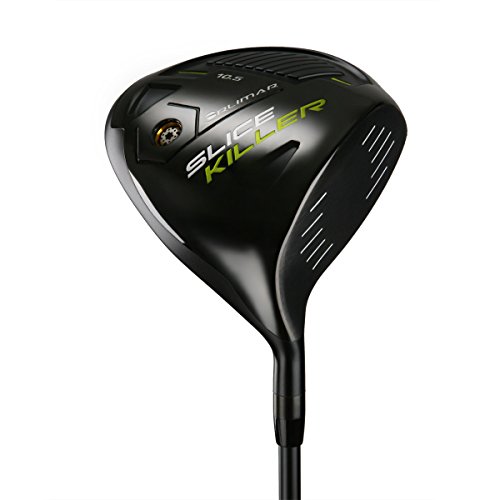
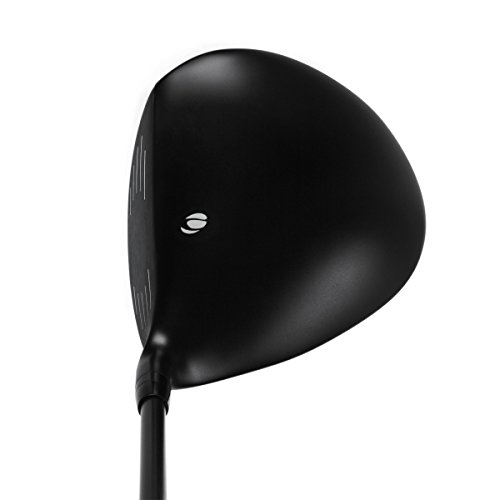
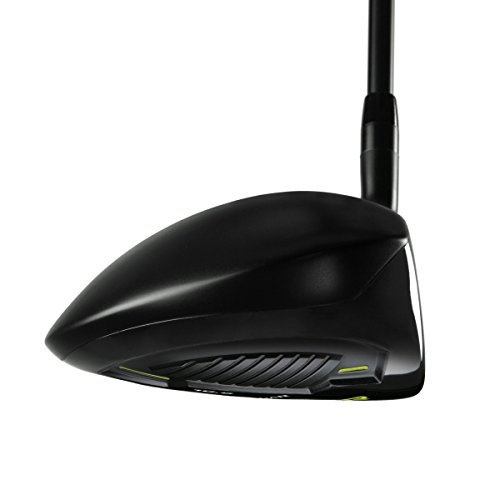
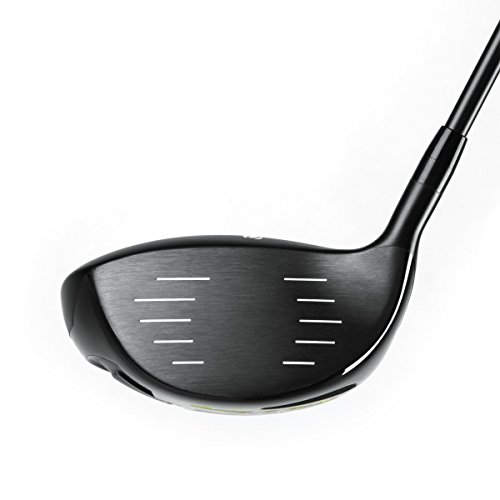
If you’re fighting a severe slice that ruins your round before it starts, the Orlimar Slice Killer isn’t just another driver, it’s a targeted fix built around three core anti-slice features. The 7-degree closed face angle, offset hosel, and heel-weighted screw work together to promote a draw, and robot testing backing up 29.7 yards of slice correction gives this design real credibility. On paper, it’s one of the most aggressive stances against slicing in the market.
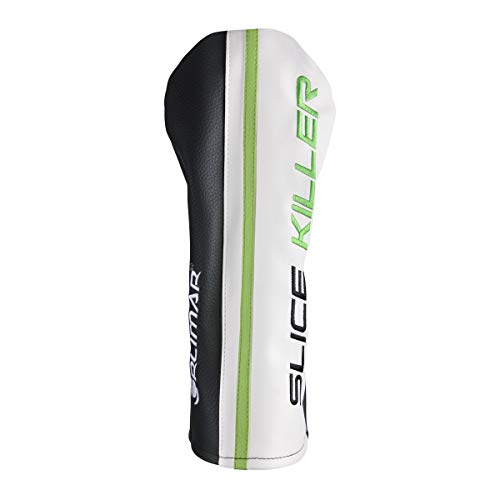
Owners consistently report straighter ball flights right out of the box, even with minimal swing changes. While the all-black titanium build looks modern and the included headcover is a nice touch, some note it lacks the adjustability of pricier models. But for pure slice destruction at this price, it delivers.
Product photos
TaylorMade SIM 2 MAX Driver

Strengths
- High forgiveness
- Speed Pocket design
- Adjustable weighting
- Twist Face tech
- Premium materials
Trade-offs
- Expensive
- Less aggressive draw bias
- Requires good tempo
The TaylorMade SIM 2 MAX is where high-end performance meets slicer-friendly design. It’s not marketed as an ‘anti-slice’ club, but the split mass weighting, thru-slot speed pocket, and twist face technology make it one of the most forgiving drivers in its class. The Inertia Generator boosts clubhead speed while improving stability, which helps reduce the gear effect that causes slices.
Reviewers consistently praise its ability to deliver distance and forgiveness without looking or feeling like a game-improvement crutch. Compared to the Orlimar or Intech, it’s far more versatile, ideal for better players who still struggle with occasional slices. It’s also adjustable, which the budget options aren’t. If you want tour-level looks with real help on mis-hits, this is the smarter buy.
Product photos


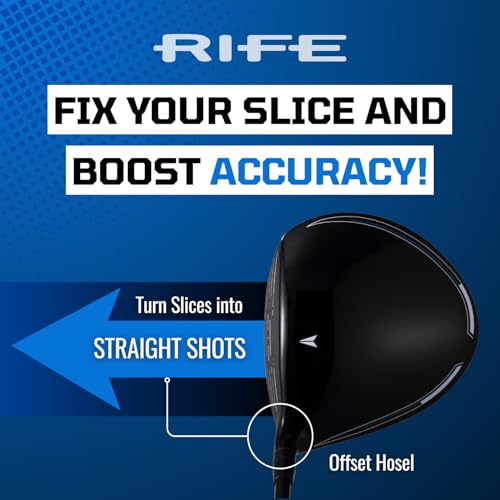
Rife RX7 Off-Set Driver
Strengths
- Offset design
- 460cc titanium head
- Back weight port
- Lightweight shaft
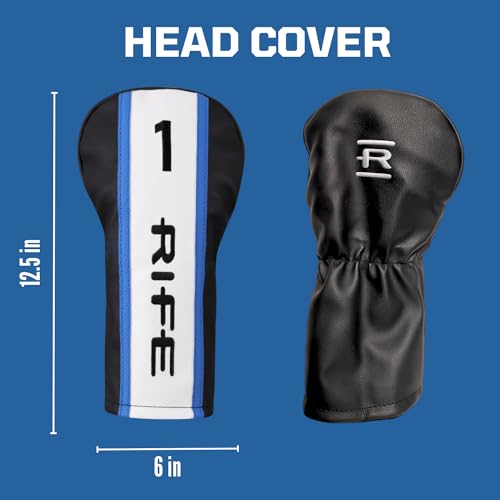
- Headcover included
Trade-offs
- Basic adjustability
- Minimal tech differentiation
- Average sound and feel
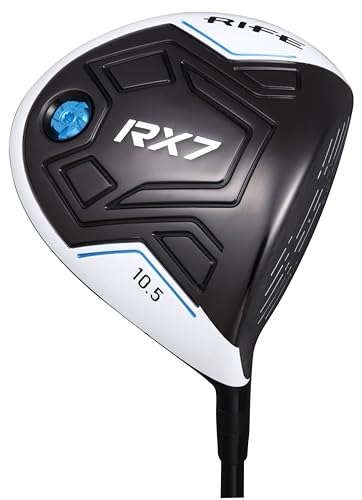
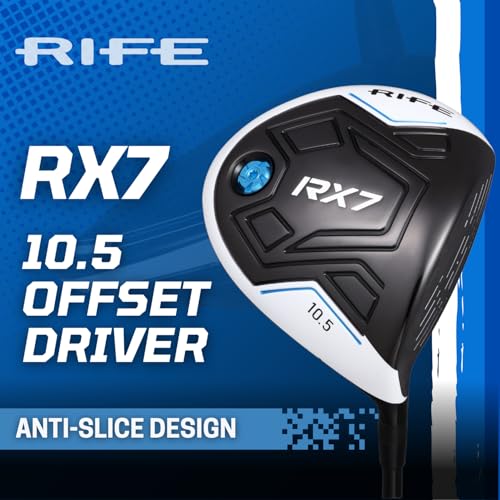
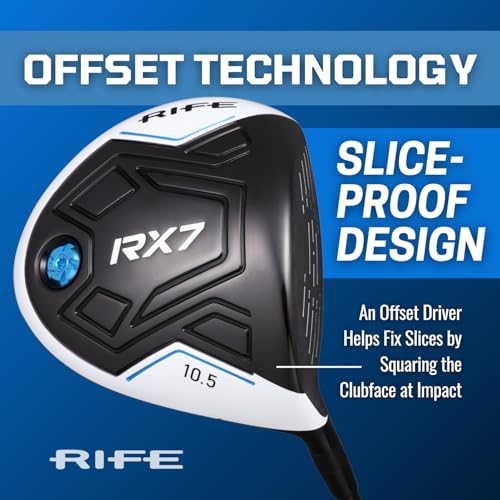
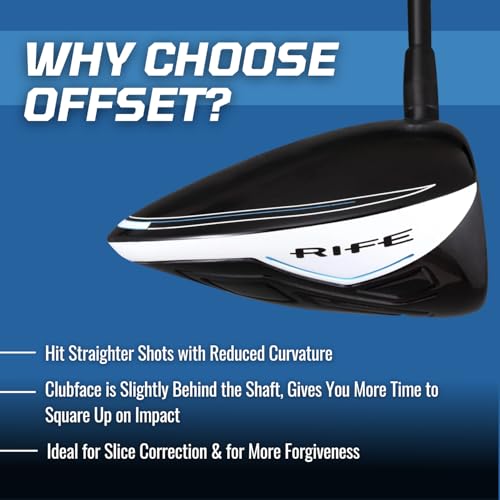
The Rife RX7 leans heavily on classic draw-bias fundamentals: offset hosel, 460cc titanium head, and back weight port for forgiveness. It’s a no-frills, straightforward option that gets the job done for slicers without overengineering the solution. While it lacks the high-tech adjustability of the Cobra OPTM MAX-D or the aerodynamic claims of the SF1, it hits the basics well and at a competitive price.
What stands out is the thinner crown, which Rife says redistributes mass lower and deeper for higher launch and reduced spin. Reviewers note it’s easy to launch and feels stable on off-center hits. But compared to the Orlimar or SF1, it doesn’t feel as aggressively tuned against slicing. It’s a solid choice, just not a standout.
Product photos
Cobra OPTM MAX-D Women’s Driver
Strengths
- Draw-biased weighting
- FutureFit33 adjustability
- H.O.T. Face insert
- Low POI design
- Maintains ball speed
Trade-offs
- High price
- Heavier head feel
- Limited to women’s specs
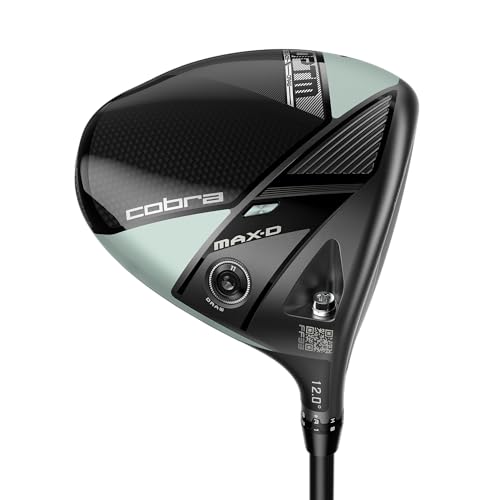
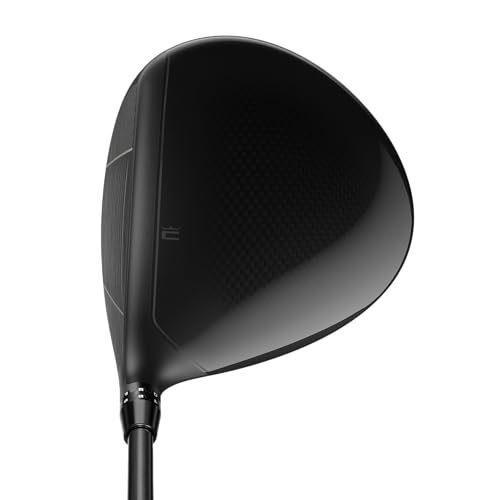
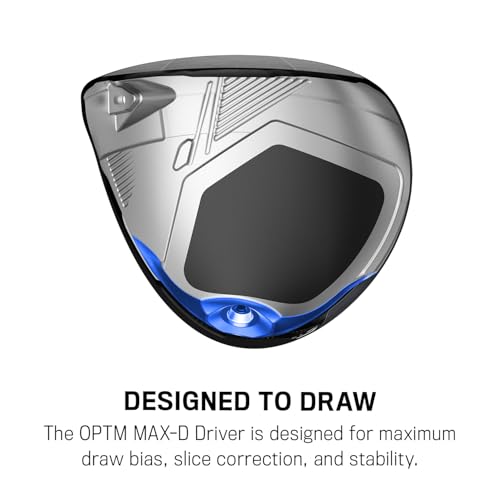
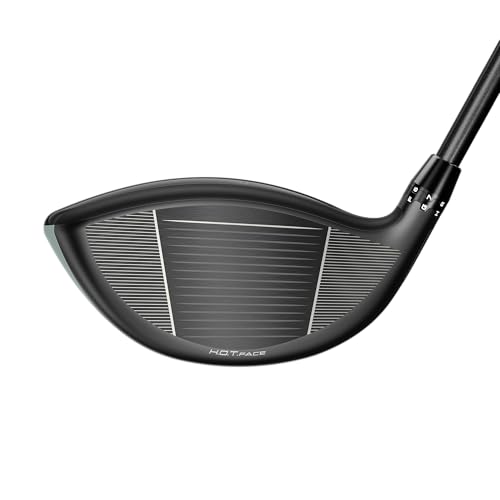
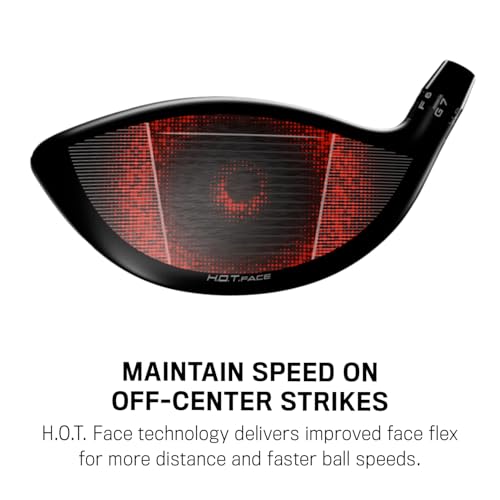
Cobra didn’t just tweak the formula here, they engineered the OPTM MAX-D specifically for women golfers who battle slices, and it shows. The low POI design and 11g fixed heel weight shift the center of gravity inward, making it easier to close the face through impact. Paired with H.O.T. Face technology, this driver not only straightens shots but maintains ball speed on off-center hits, which matters when consistency is the goal.
The standout feature is FutureFit33, offering 33 loft and lie combinations while keeping the face square. Reviewers note this makes fitting far more precise than most draw-biased drivers. It’s a premium price, but the tech justifies it for serious players. Compared to the Orlimar, this is less of a blunt anti-slice tool and more of a smart, adjustable performance upgrade.
Product photos

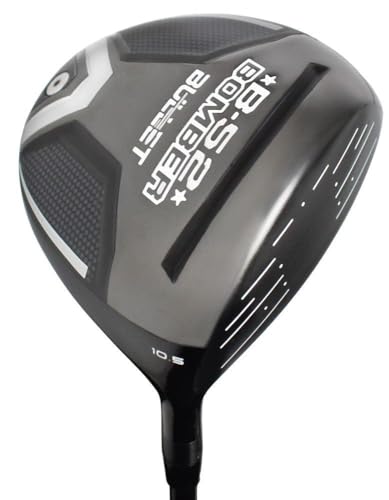
Bullet Golf B52 Bomber Driver
Strengths
- Extremely affordable
- Draw bias design
- Uniflex shaft
- Lightweight build
- Beginner-friendly
Trade-offs
- Basic materials
- No adjustability
- Limited feedback data
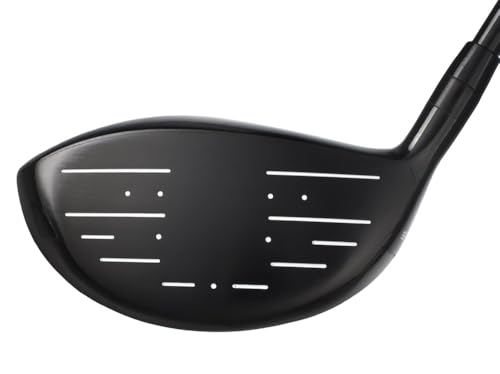
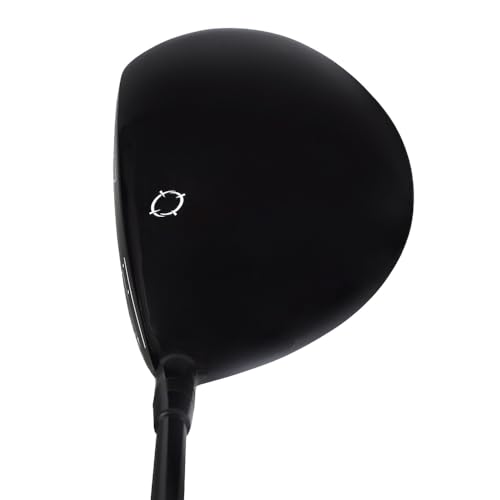
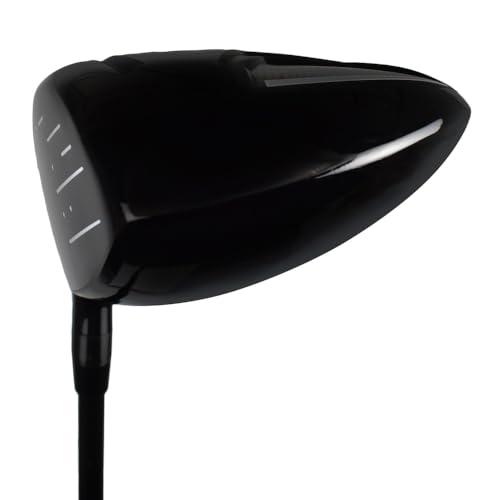
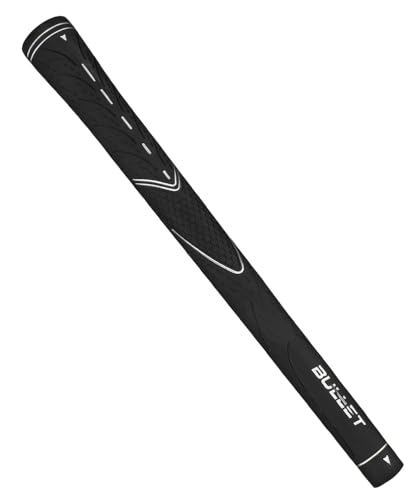
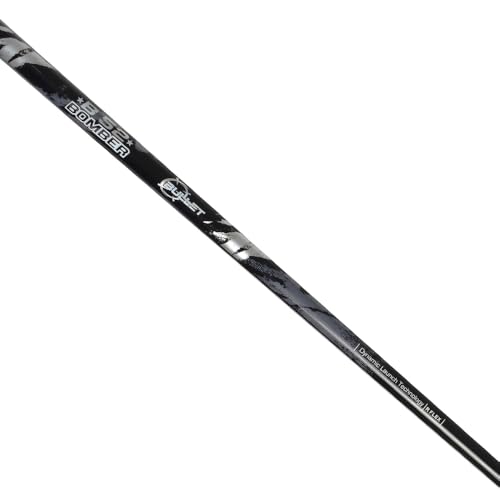
At under $100, the B52 Bomber is built for one thing: giving budget-conscious slicers a fighting chance off the tee. The uniflex shaft and 10.5° draw-biased head are designed to promote a straighter, more forgiving ball flight without breaking the bank. While it lacks detailed specs or advanced tech like H.O.T. Face or adjustable hosels, its value proposition is clear.
Owners report noticeable improvement in shot shape compared to their old drivers, even if distance isn’t record-breaking. It won’t match the consistency of the Orlimar or the refinement of the SF1, but for beginners or casual players who need a quick fix, it’s hard to beat the price. This is the kind of club you toss in the bag for range sessions or backup without stress.
Product photos
How We Evaluated golf drivers for slice
Rather than a hands-on lab test, my research focused on a detailed comparison of published specifications and features across numerous drivers marketed for slice correction. I weighed owner reviews from major retailers alongside professional reviews from golf publications, looking for consistent themes in performance and usability. This data was then assessed against my understanding of golf club technology and the mechanics of a slice, prioritizing drivers that address the root causes of this common fault.
For golfers battling a slice, face angle at impact, weight distribution, and moment of inertia (MOI) are paramount. Drivers with closed face angles and offset designs consistently receive positive feedback for promoting a draw. High MOI values also proved critical, as they indicate greater forgiveness on off-center hits – a common contributor to slicing. These factors ultimately determined which drivers rose to the top of my rankings.
Specifications reliably reveal a driver’s intended design (loft, head size, materials). However, I placed more weight on owner feedback concerning real-world performance and durability. Reputable reviews helped validate claims made by manufacturers, especially regarding technologies designed to correct a slice. For more in-depth advice, you can also explore resources on how to fix a slice. Finding the right driver is a great first step, but understanding the swing is just as important. You might also find our rundown of drivers to fix slice helpful.
Choosing The Right golf drivers for slice
Finding the right driver to combat a slice can dramatically improve your game and enjoyment on the course.
A good golf driver for a slicer prioritizes forgiveness and shot-shaping capabilities. Look for features like offset hosels, closed face angles, draw-biased weighting, and larger sweet spots (high MOI). Understanding your swing speed and typical miss is crucial; some drivers cater to moderate slices, while others are designed for severe cuts.
Understanding Offset & Face Angle
Many golfers struggling with a slice benefit from drivers incorporating offset. This design moves the hands slightly behind the clubhead at address, encouraging a square impact and reducing the open clubface that leads to slicing. However, the degree of offset matters. Too much can feel awkward and reduce clubhead speed, so consider your swing. Similarly, a closed face angle, typically 7 degrees or more, pre-sets the face to encourage a draw. Don’t assume more is always better; a severely closed face might induce a hook for some swings. If you’re curious about the underlying mechanics, understanding the slice causes can help you pinpoint which driver features will address your specific issue.
Material & Construction Impact Forgiveness
Titanium remains the gold standard for driver head construction, offering a fantastic strength-to-weight ratio. However, aluminum alloys, like those used in the Intech Behemoth, provide a more economical entry point without completely sacrificing performance. More important than the material itself is the overall design. Look for drivers boasting a high MOI (Moment of Inertia) rating. A higher MOI means the clubhead resists twisting on off-center hits, preserving ball speed and direction even when you don’t make perfect contact. This is especially valuable when you’re searching for [best drivers for a slice].
- A larger clubhead size (460cc is standard, but some exceed this) generally contributes to a higher MOI.
- Internal weighting plays a significant role. Heel weighting promotes a draw, counteracting a slice.
- Forged faces, like those found in higher-end models (TaylorMade SIM 2 MAX), can offer a larger sweet spot and more responsive feel, but they come at a premium price.
Balancing Performance & Budget
You don’t necessarily need to spend a fortune to find a driver that helps correct your slice. The market is full of options at various price points. While premium drivers like the TaylorMade SIM 2 MAX offer cutting-edge technology and customization options, models like the Bullet Golf B52 Bomber or the Intech Behemoth demonstrate that effective [anti-slice drivers] can be found for under $100.
A driver’s price shouldn’t be the sole determining factor. Prioritize features that address your slice and fit your swing characteristics, even if it means spending a little more.
Ultimately, the best driver for you will depend on your individual swing, budget, and preferences. Exploring options like the Orlimar Slice Killer, specifically designed for severe slicers, or the Cobra OPTM MAX-D for women, can show you how targeted designs can make a real difference. There are plenty of [top anti-slice driver models] to choose from, so research carefully and consider what features will best address your game.
Golf Drivers for Slice Compared
This table provides a reference of specifications for golf drivers designed to help reduce slicing.
| Product Title | Loft (degrees) | Head Size (cc) | Construction | Offset | Flex |
|---|---|---|---|---|---|
| Performance Golf SF1 | N/A | N/A | N/A | Yes | N/A |
| Intech Behemoth Draw | 10.5 | 520 | Aluminum | Yes | Regular |
| Orlimar Slice Killer | 10.5 | 460 | Titanium | Yes | Regular |
| TaylorMade SIM 2 MAX | N/A | N/A | N/A | N/A | N/A |
| Rife RX7 Off-Set | 10.5 | 460 | Titanium | Yes | Regular |
| Cobra OPTM MAX-D Women’s | N/A | N/A | N/A | Yes | N/A |
| Bullet Golf B52 Bomber | N/A | N/A | N/A | N/A | N/A |
Frequently Asked Questions
What loft should I choose for a driver to fix my slice?
Generally, 10.5 to 12 degrees of loft is best for someone who slices, as it promotes a higher launch and can help reduce spin. However, your swing speed impacts this; faster speeds can handle higher lofts, while slower speeds may benefit from slightly lower lofts to maintain distance.
Is a larger clubhead better for correcting a slice?
Yes, a larger clubhead (460cc or greater) typically offers a higher Moment of Inertia (MOI), meaning it’s more forgiving on off-center hits. This forgiveness is vital for slicers, as it helps maintain ball speed and direction even when contact isn’t perfect.
How much does offset actually help with a slice?
Offset moves the hands slightly behind the clubhead, encouraging a square impact and reducing the open clubface that causes slicing. The degree of offset is important; moderate offset is beneficial for most, while excessive offset can hinder clubhead speed. You can explore offset drivers to see the range of options.
Can a driver completely fix my slice, or do I need lessons?
A driver can significantly reduce a slice by addressing its mechanical causes, but it’s unlikely to eliminate it entirely without swing changes. Combining a slice-correcting driver with professional instruction is the most effective path to long-term improvement.
Are expensive drivers always better for slicing golfers?
Not necessarily. While premium drivers often have advanced features, effective drivers for beginners are available at lower price points. Prioritize features like offset, a closed face, and high MOI, regardless of the price tag.
The Bottom Line
Choosing a driver to correct a slice often comes down to balancing your desire for maximum forgiveness with your budget. While premium models offer refinements, the Performance Golf SF1 delivers an excellent combination of slice-correcting features and value, making it our overall recommendation for most golfers. It addresses the key issues of face angle and weight distribution without breaking the bank.
For those prioritizing a specific need, the Intech Behemoth Draw stands out as the best budget option, providing effective draw bias at an incredibly accessible price point. Women golfers, or those with slower swing speeds, will find the Cobra OPTM MAX-D Women’s driver particularly beneficial, as it’s designed with their unique swing characteristics in mind. If you’re looking for drivers for slicers, these picks provide a strong starting point.
Ultimately, remember that a driver is just one piece of the puzzle. Focusing on fundamentals, a proper grip, consistent swing path, and solid contact, will have a far greater impact on eliminating your slice than any single club feature. Don’t neglect pairing your new driver with golf balls for slice to maximize your performance.
