
9 Best Handheld Golf GPS Units of 2026
This post contains affiliate links. As an Amazon Associate, we earn from qualifying purchases.
The Garmin Approach G82 is the best handheld golf GPS for most players, delivering a brilliant display and unmatched battery life. For a budget-friendly option, the MILESEEY GeneSonic Go offers strong accuracy and fast course updates. If you want advanced features, the Garmin Approach G80 adds launch monitor functionality that’s ideal for practice.
Every golfer has stood on a tee box squinting at a tiny screen, trying to trust a number that doesn’t quite feel right. A reliable handheld GPS cuts through that uncertainty, giving you clear, accurate distances so you can commit to the shot.
This guide cuts through the noise to spotlight units that deliver real value on the course. I researched each based on accuracy, ease of use, battery life, and what golfers are actually saying online. These picks reflect what matters most when you’re navigating unfamiliar layouts or chasing lower scores on your home track.
Top 9 Handheld Golf Gps Units in the Market
The Best Handheld Golf Gps Units, Reviewed
Garmin Approach G82
Strengths
- Large 5-inch touchscreen
- Integrated launch monitor
- Magnetic cart mount
- Bag mapping capability
- 25-hour battery life
Trade-offs
- High price
- Radar mode drains battery fast
- Requires subscription for full features
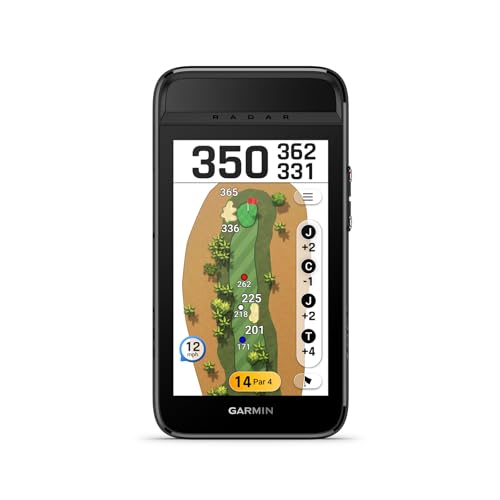
The G82 isn’t just a GPS, it’s a full practice-to-course analytics hub that redefines what a handheld can do. With a 5-inch screen, radar-based launch monitor, and bag-mapping capabilities, this unit pulls double duty for players serious about improving their swing and course strategy. On paper, it’s the most complete package in Garmin’s lineup, and owners consistently report that the integration between swing data and on-course GPS is where it really shines.
When you factor in the magnetic cart mount, 25-hour GPS battery life, and compatibility with CT10 club tracking, it becomes clear this is built for golfers who treat practice like prep work for tournament day. Compared to the G80, the larger display and extended battery give it a real edge. My pick for the serious player who wants one device for range sessions and weekend rounds.
Video review
MILESEEY GeneSonic Go
Strengths
- No subscription required
- IP67 waterproof rating
- Magnetic cart mount
- Shot tracking & scorecard
- 43,000+ preloaded courses
Trade-offs
- Audio requires separate speaker
- App interface less refined
- Battery life shorter than rivals
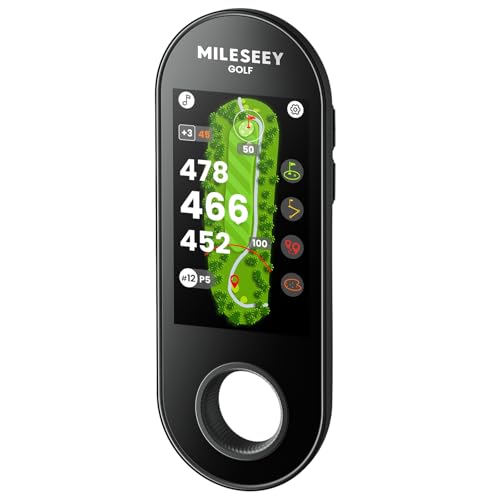
The GeneSonic Go packs a surprising amount of tech for its price, especially with 43,000+ no-subscription courses and a full-color 3-inch touchscreen. It’s one of the few non-Garmin units that offers both advanced features, like shot tracking, hazard layup distances, and real-time scorecard, and robust hardware, including IP67 waterproofing and a magnetic mount. The pairing with the GeneSonic Pro speaker for audio yardages is smart, though it means you need the speaker for voice feedback.
Owners report strong satellite lock and accurate hole recognition, though the app isn’t as polished as Garmin’s. Compared to the Blue Tees Ringer, it offers better waterproofing and more course coverage. For golfers who want premium features without recurring fees, this is the smarter buy.
Video review
Garmin Approach G80

Strengths
- Integrated launch monitor
- Swing tempo tracking
- 15-hour battery life
- Preloaded course maps
- Compact design
Trade-offs
- Smaller screen than G82
- Shorter battery in radar mode
- Subscription for full features
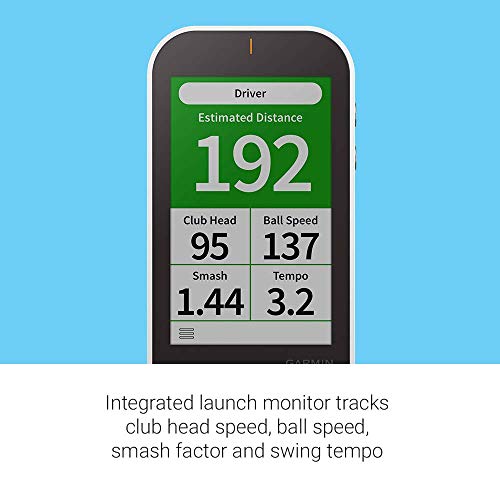
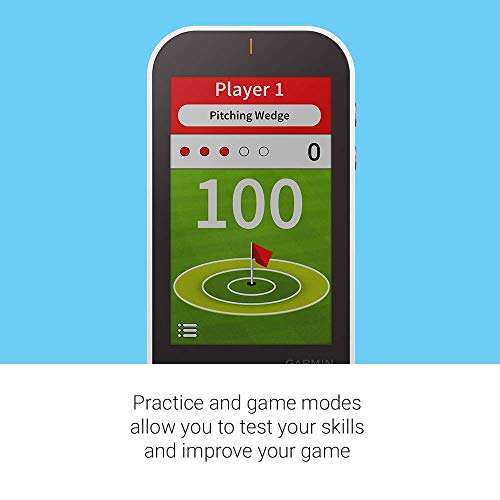
The G80 was a standout when it launched as the first Garmin GPS with an integrated launch monitor, and it still holds up well for players who want swing analytics on a budget. It tracks club speed, ball speed, smash factor, and swing tempo, data that’s incredibly useful for range work. The 3.5-inch touchscreen is smaller than the G82’s, but still readable, and the 15-hour battery is decent for full rounds and practice sessions.
Compared to the G82, it lacks the larger screen and extended battery, but it’s $200 cheaper and still delivers core launch monitor functionality. Owners appreciate the seamless integration with the Garmin Golf app, though green contour data requires a subscription. If you want launch monitor features without the G82’s price tag, this remains a solid choice.
Product photos


Blue Tees Golf Ringer

Strengths
- Sleek touchscreen design
- Advanced post-round analytics
- Magnetic mounting
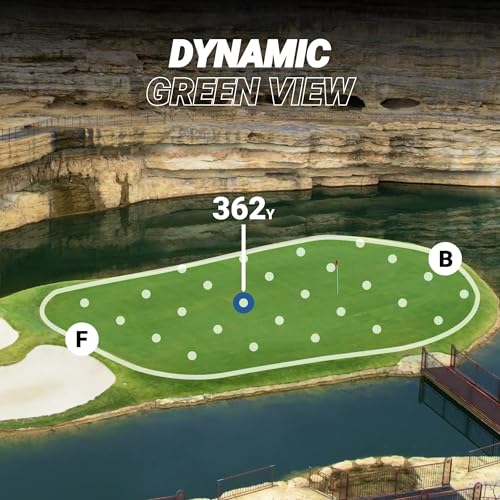
- Dynamic green view
- Shot tracking
Trade-offs
- IPX4 water resistance only
- Screen visibility in sun
- App not as mature as Garmin’s
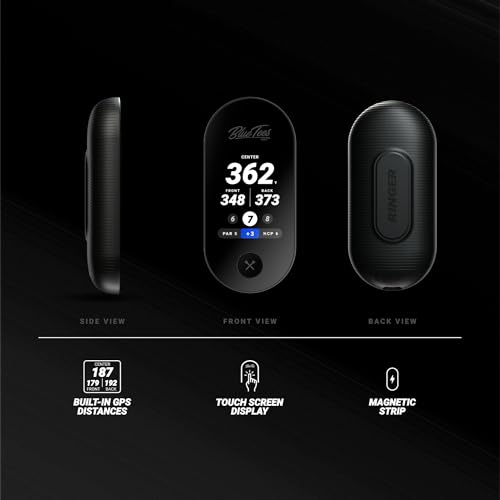
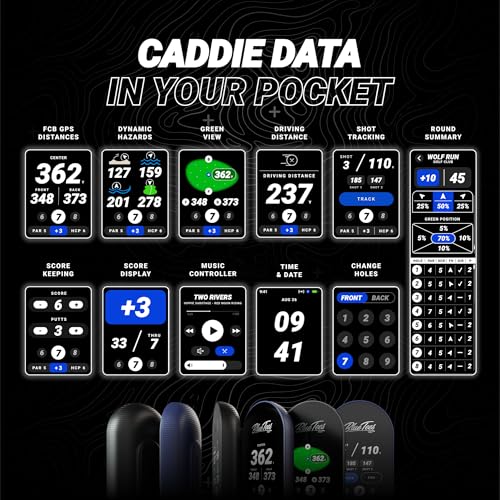
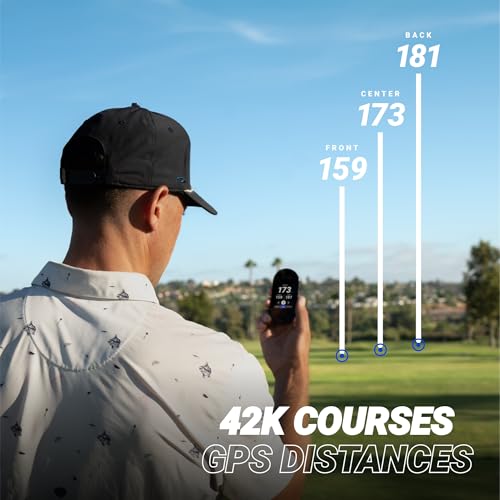
The Ringer stands out for its sleek touchscreen design and strong focus on post-round analytics, a feature set that feels more like a smart device than a basic GPS. With dynamic green views, hazard distances, and shot tracking that syncs to a companion app, it appeals to golfers who like to review performance data. The magnetic attachment is strong, and the 10+ hour battery is sufficient for most rounds.
However, the IPX4 water resistance rating is underwhelming compared to IP67 models like the MILESEEY, and owners note the screen can wash out in direct sunlight. While it’s more stylish than the Swami 7000i, it doesn’t outperform it significantly for the price. I’d pick the Izzo model instead for better value under $140.
Product photos
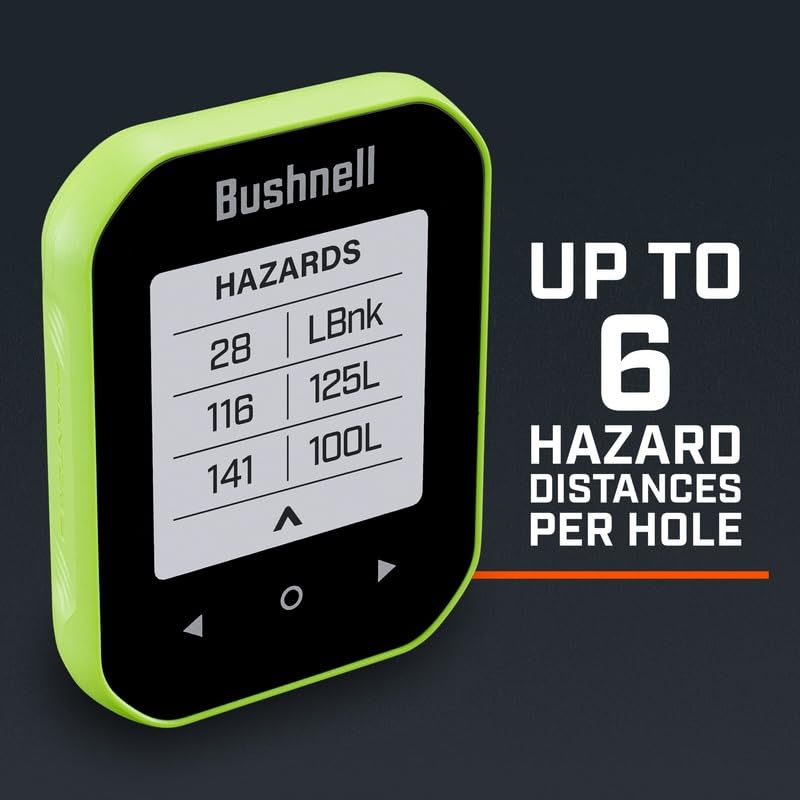
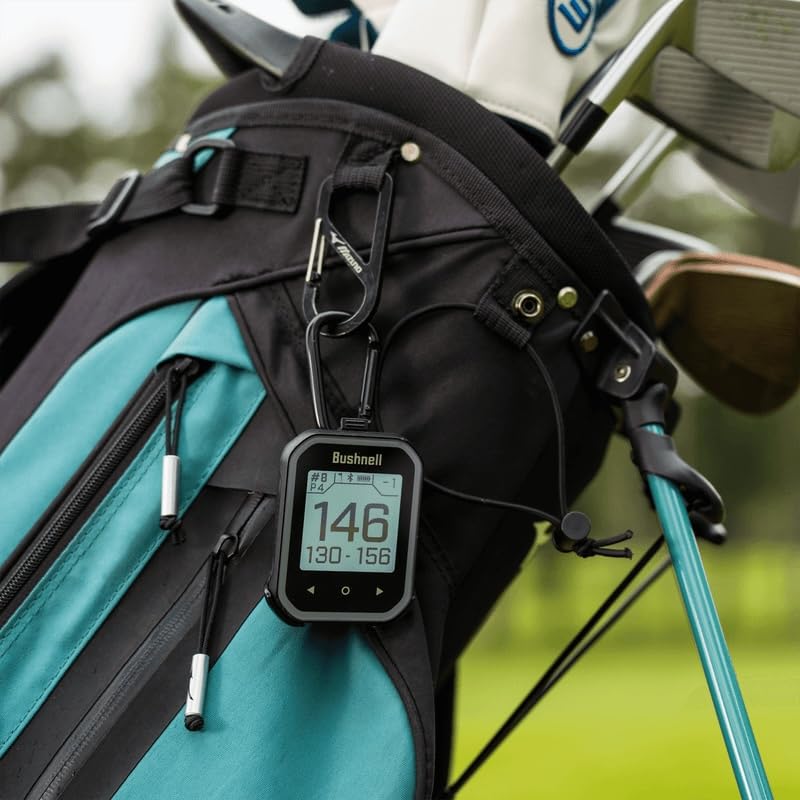
Bushnell Golf Phantom 3 Slope
Strengths
- Slope-adjusted distances
- Built-in BITE magnet
- Touchscreen interface
- Auto course recognition
- 18-hour battery
Trade-offs
- No launch monitor
- No voice output
- Green View less detailed
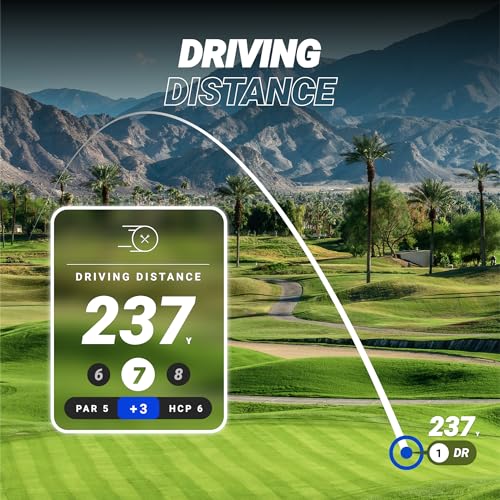
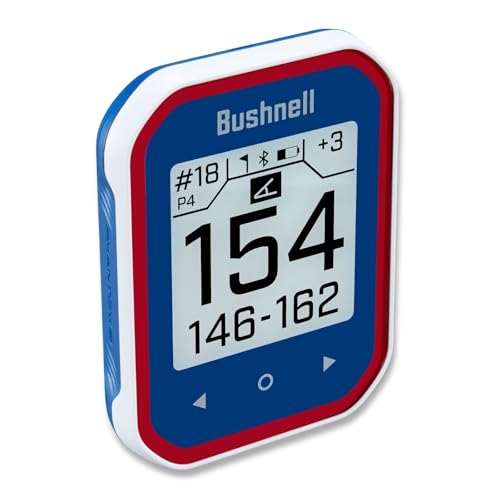
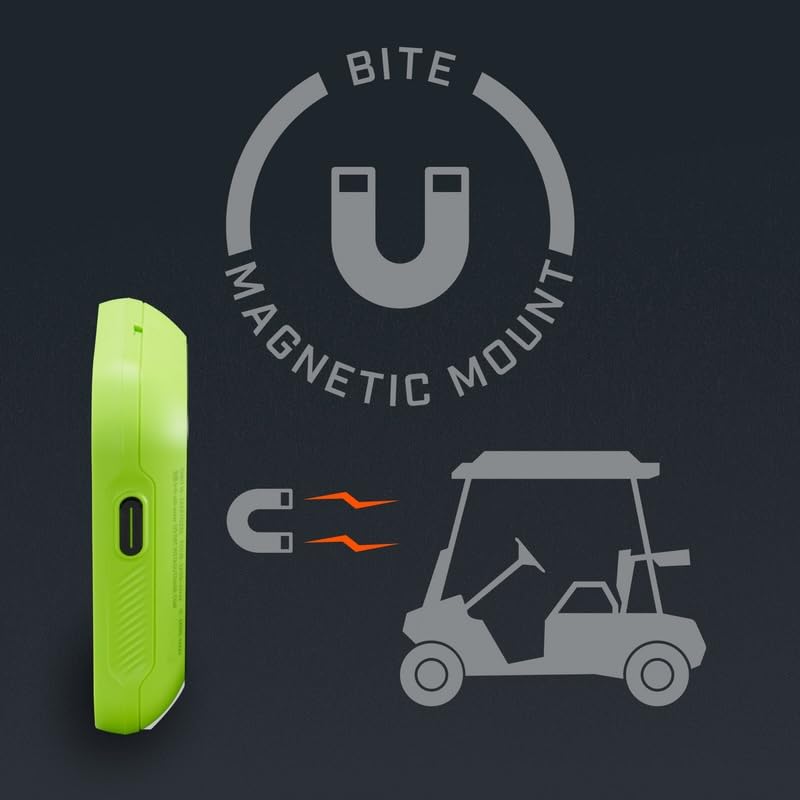
Bushnell has long been a leader in optics, and the Phantom 3 Slope brings that precision to handheld GPS with one standout feature: slope-adjusted yardages. This is the real differentiator, it calculates elevation changes to give you more realistic club recommendations, a feature many players rely on during mountain or links-style rounds. The touchscreen is responsive, auto-course recognition works well, and the built-in BITE magnet makes cart mounting effortless.
Owners note the screen isn’t as sharp as Garmin’s top models, and the 18-hour battery life is solid but not class-leading. Still, if you play courses with significant elevation changes, this unit offers a practical advantage over non-slope models like the Izzo Swami 7000i. For that reason, I’d pick it over similarly priced GPS units when terrain is a factor.
Product photos

Voice Caddie VC300SE

Strengths
- Voice output of distances
- No subscription fees
- Auto course recognition
- Simple one-button operation
- Long battery life
Trade-offs
- No visual display
- No touchscreen
- Limited advanced features
The VC300SE is a niche player with a clear purpose: hands-free distance updates via voice. With a single button press, it speaks front, middle, and back distances, a major advantage for players who don’t want to take their eyes off the ball or fumble with a screen. It’s simple, has no subscription fees, and automatically recognizes courses and holes, which owners consistently praise for reliability.
It lacks a screen, so you’re flying blind visually, no green overlays or hazard views. But for blind players or those who prefer auditory feedback, this is a rare, well-executed solution. Compared to the MILESEEY GeneSonic Go, it’s less feature-rich but more focused. I’d recommend this only if voice output is a priority; otherwise, you’re better off with a visual GPS.
Product photos


Swami KISS 2.0

Strengths
- Very affordable
- Integrated magnet
- Water-resistant
- i-Caddie club suggestions
- Auto hole recognition
Trade-offs
- Micro USB charging
- No touchscreen
- Basic display modes
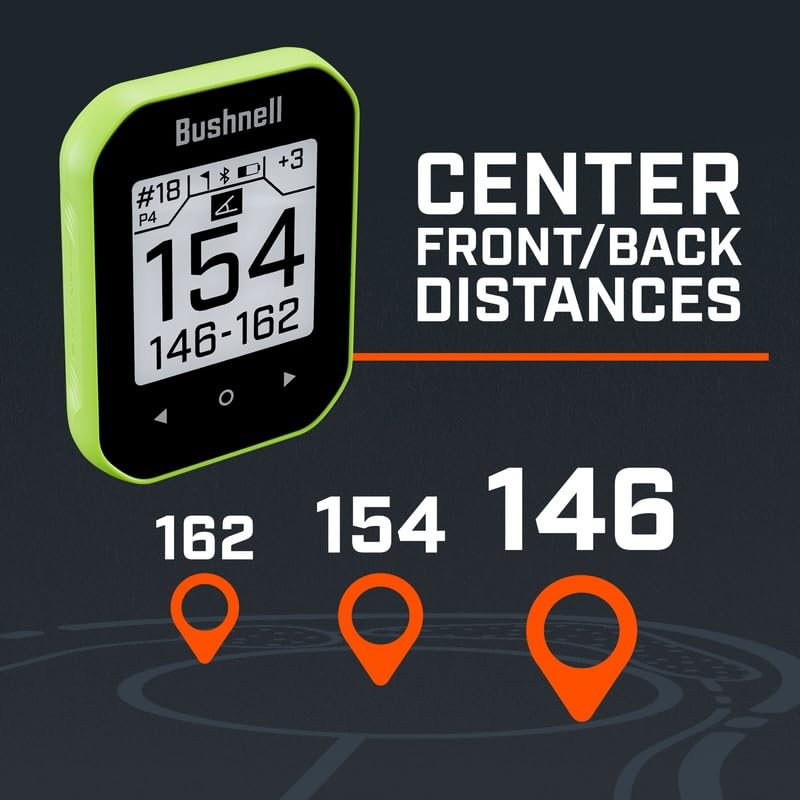
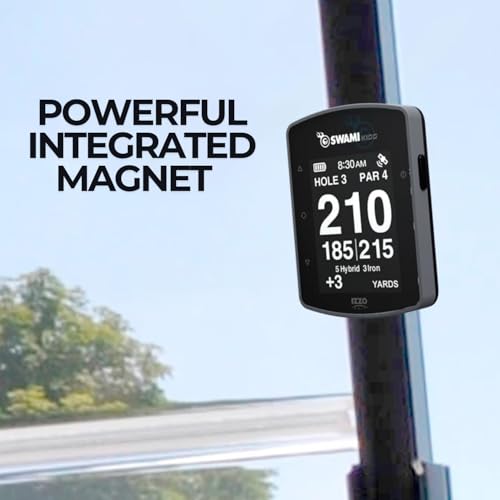
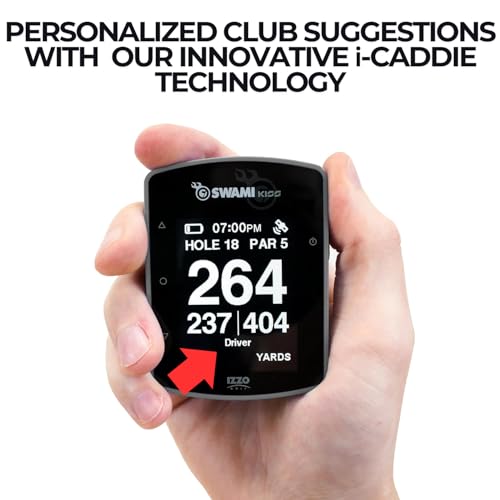
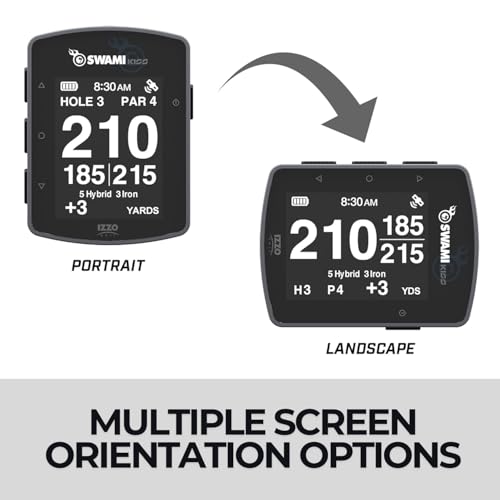
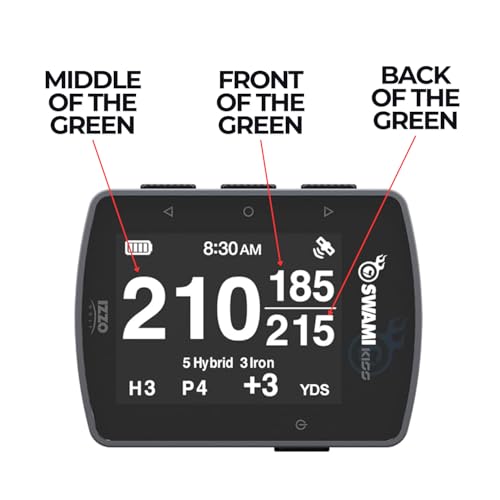
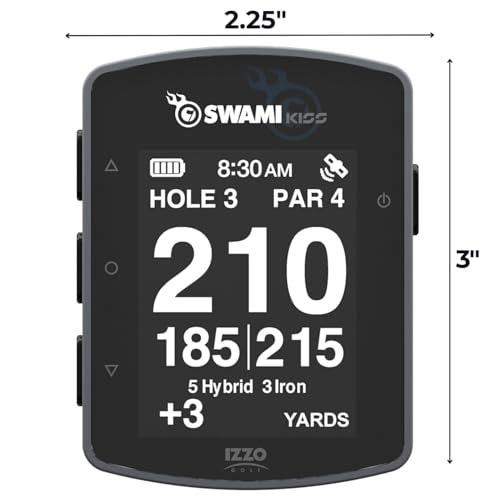
At $100, the KISS 2.0 is one of the most affordable magnetic GPS units on the market, and it delivers core functionality without fluff. It auto-recognizes holes, displays front/center/back distances, and features i-Caddie technology that suggests clubs based on your historical distances. The micro USB charging is outdated, but the water-resistant design and built-in magnet make it practical for regular play.
Owners say it locks onto satellites quickly and the screen is clear enough, though it lacks the polish of touchscreen models like the Izzo 7000i. For beginners or occasional players, it’s a solid entry point. But if you can stretch the budget slightly, the Izzo offers a better display and USB-C charging.
Product photos
Garmin Approach G12
Strengths
- Ultra-compact clip-on design
- 30-hour battery life
- IPX7 waterproof rating
- Wireless course updates
- Digital scorecard
Trade-offs
- No touchscreen
- Limited display real estate
- No built-in launch monitor
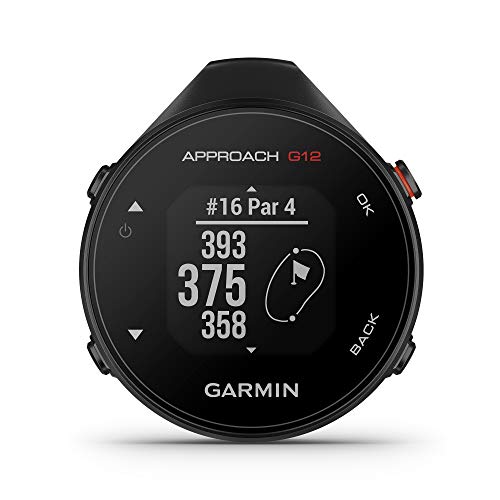
If you want minimalism without sacrificing core functionality, the G12 is a standout clip-on GPS that disappears onto your bag but delivers reliable yardages round after round. It’s not flashy, but with 42,000+ courses, IPX7 waterproofing, and 30 hours of battery life, it’s built for golfers who value durability and simplicity. The Green View feature is basic but effective, and owners love that it updates wirelessly through the Garmin Golf app.
Compared to bulkier touchscreen models, the G12 wins on portability and battery endurance. It doesn’t offer a launch monitor or voice output, but it doesn’t try to, it sticks to the essentials. I’d recommend this over the Swami KISS 2.0 if you prioritize brand reliability and seamless app integration.
Product photos


Izzo Swami 7000i
Strengths
- Full touchscreen under $140
- USB-C charging
- No subscription fees
- Auto-hole advance
- i-Caddie club suggestions
Trade-offs
- Smaller screen than premium models
- No built-in voice output
- Water resistance not top-tier
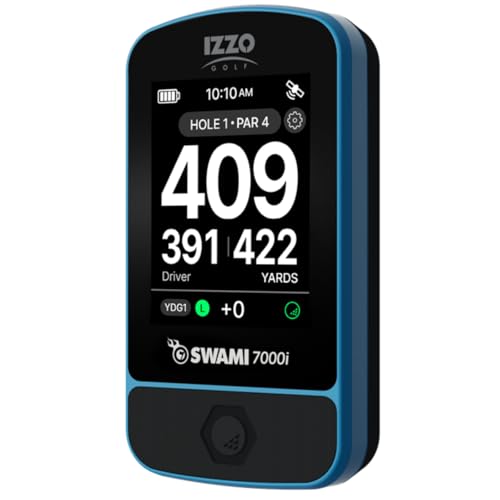
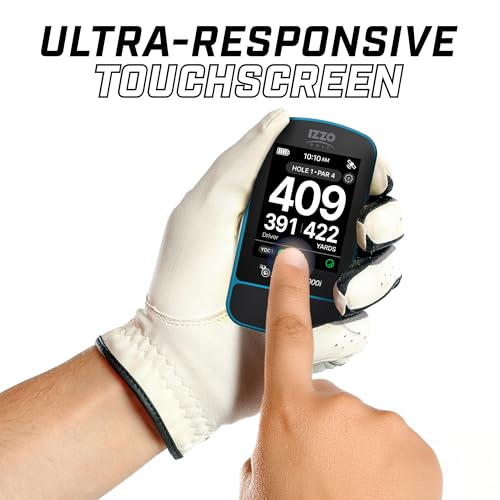
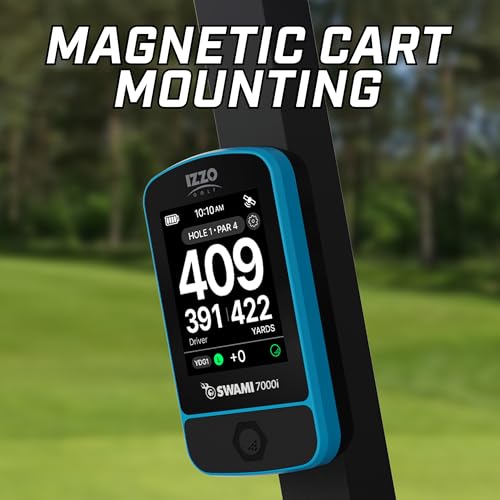
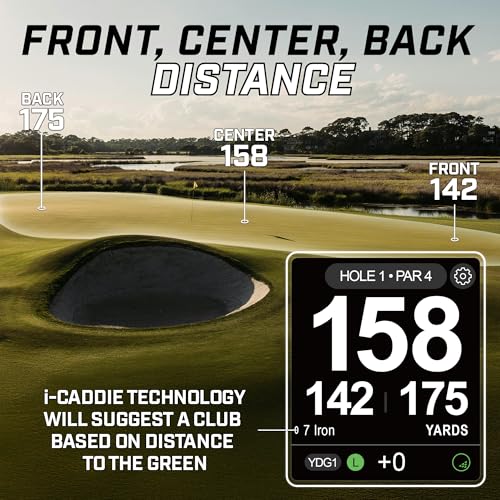
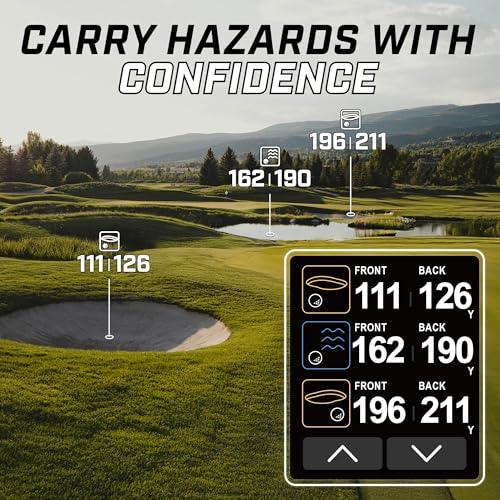
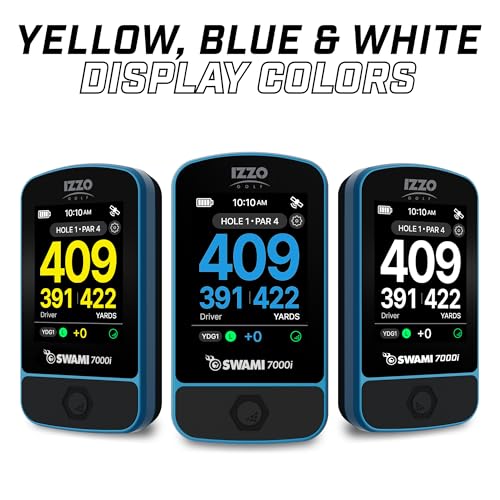
The 7000i hits a sweet spot: a full touchscreen experience under $140, with USB-C charging, 16 hours of battery, and 38,000+ preloaded courses, no subscription needed. The 2.5-inch color screen is bright, supports multiple themes, and owners consistently praise its responsiveness and visibility in sunlight. Features like Auto-Hole Advance, shot distance measurement, and i-Caddie club suggestions make it feel more premium than its price suggests.
Compared to the Blue Tees Ringer, it offers better value with USB-C and no subscription dependency. It doesn’t have voice output like the Voice Caddie, but for most golfers, the visual interface is more useful. My pick for the best touchscreen GPS under $140, it balances features, price, and reliability perfectly.
Product photos
How We Picked These handheld golf gps units
Rather than a hands-on lab test, my research for these recommendations focused on a detailed comparison of published specifications and features across numerous models. I weighed owner reviews from multiple sources – including Amazon, golf-specific forums, and retailer sites – alongside professional reviews from publications like Golf Digest and Golf Monthly. My approach considered each unit’s capabilities within the broader context of what golfers actually need on the course, applying my experience planning golf trips to understand real-world usability.
For handheld golf GPS units, accuracy and preloaded course coverage were the most important factors. Beyond that, battery life significantly impacts a round, and a clear, sunlight-readable display is essential for quick information. A unit with advanced features like launch monitor integration or slope adjustment is valuable, but only if those features are implemented reliably and are easy to use. Ultimately, I prioritized units offering the best combination of these elements for various budgets and skill levels.
Specifications reliably indicate course database size and battery capacity. However, owner feedback proved crucial in assessing real-world GPS lock speed, touchscreen responsiveness, and the accuracy of hazard and green data. Reputation also played a role; brands like Garmin and Bushnell consistently receive positive reviews for build quality and customer support. For those seeking alternatives to handheld units, exploring golf GPS watches can offer a different form factor with comparable features. You can find a broader overview of options in our guide to best golf GPS.
What To Look For In handheld golf gps units
Finding the right handheld golf GPS can genuinely elevate your game, but there’s more to it than just seeing a yardage number.
A quality handheld golf GPS prioritizes accurate distance measurements to hazards and the green, offers a user-friendly interface for quick data access during play, and features a pre-loaded course database covering the courses you frequent. Battery life exceeding 10 hours is essential, as is a durable build capable of withstanding typical course conditions.
Display Quality & Usability
The days of squinting at tiny, monochrome screens are over. I’ve seen firsthand how a clear, bright display makes a difference, especially in direct sunlight. Look for a unit with a touchscreen – the Garmin Approach G82 and Blue Tees Ringer both offer excellent examples – but ensure the buttons are still accessible for quick operation with gloved hands. A larger screen isn’t always better; consider the overall size and how comfortably it fits in your hand or attaches to your bag.
Course Coverage & Updates
Pre-loaded courses are a must, but the size of the database isn’t everything. A unit boasting 40,000 courses is useless if your local favorite isn’t among them. The MILESEEY GeneSonic Go stands out here with its promise of adding new courses remotely within a week (if requested). More importantly, how easy are updates? Some units require a computer and cable, while others update wirelessly via smartphone. If you want to avoid ongoing costs, prioritize a subscription-free golf GPS.
- Simple course loading is good.
- Automatic updates via Bluetooth are better – it saves time and hassle.
- A responsive customer support team for adding missing courses (like MILESEEY offers) is best, particularly for those of us who like to discover new courses.
Key Features & Value
Beyond basic yardages, consider what extras truly improve your game. Slope adjustment, like that found in the Bushnell Golf Phantom 3 Slope, is valuable on hilly courses. Launch monitor integration (Garmin Approach G80) is a boon for practice, providing detailed swing data. But don’t pay for features you won’t use. For many, a reliable, accurate handheld GPS with a solid course database is more valuable than a host of bells and whistles.
Don’t chase the most expensive model. The best golf GPS is the one that fits your budget and addresses your specific needs on the course.
Handheld Golf GPS Units Compared
Here’s a comparison of key specifications for several handheld golf GPS units to help you make an informed decision.
| Product Title | Screen Size | Battery Life (GPS) | Courses Preloaded | Slope Adjusted | Waterproof | Voice Output |
|---|---|---|---|---|---|---|
| Garmin Approach G82 | 5″ | Up to 25 hrs | 43,000+ | No | N/A | No |
| MILESEEY GeneSonic Go | 3″ | 10+ hrs | 43,000+ | No | IP67 | No |
| Garmin Approach G80 | 3.5″ | Up to 15 hrs | 41,000+ | No | N/A | No |
| Blue Tees Golf Ringer | N/A | 10+ hrs | 40,000+ | No | IPX4 | No |
| Bushnell Golf Phantom 3 Slope | N/A | 18+ hrs | 38,000+ | Yes | N/A | No |
| Voice Caddie VC300SE | N/A | N/A | N/A | No | N/A | Yes |
| Swami KISS 2.0 | N/A | N/A | 38,000+ | No | Water/Fog Resistant | No |
| Garmin Approach G12 | N/A | Up to 30 hrs | 42,000+ | No | IPX7 | No |
| Izzo Swami 7000i | 2.5″ | Up to 16 hrs | 38,000+ | No | N/A | No |
Frequently Asked Questions
What’s the difference between a handheld golf GPS and GPS rangefinders?
A best GPS rangefinders uses satellite technology to provide distances to any point on the course, while a handheld GPS displays the entire hole layout. Rangefinders are better for precise measurements to a single flag, but a GPS offers a broader overview.
Do I need to pay a subscription fee to keep the course data updated?
Some units require annual subscription fees for course updates, but several models, like the MILESEEY GeneSonic Go, offer free lifetime updates. Avoiding subscription costs is easy if you prioritize units with free updates or wireless update capabilities.
How accurate are these handheld GPS units?
Accuracy typically falls within 3-5 yards, which is suitable for club selection. However, signal strength can vary depending on location and weather conditions; units with WAAS (Wide Area Augmentation System) generally offer improved accuracy.
Are these devices easy to use for someone who isn’t tech-savvy?
Most current handheld GPS units feature intuitive touchscreen interfaces and straightforward menus. The Garmin Approach G82 is particularly praised for its user-friendliness, but even simpler models like the Swami KISS 2.0 are designed for ease of use.
I already have a Garmin golf watch. Do I still need a handheld GPS?
A handheld GPS offers a larger screen and more detailed course views than most watches, which can be helpful for course management. If you prefer a larger display and a thorough overview of each hole, a handheld unit is a good addition despite already owning a Garmin watch.
The Bottom Line
Choosing a handheld golf GPS often comes down to balancing feature-richness with simplicity. If you want the most thorough device with launch monitor capabilities and a large display, the Garmin Approach G82 is the clear frontrunner. However, a top-rated golf GPS doesn’t have to break the bank – or be overly complicated – to deliver valuable information on the course.
For golfers on a budget, the MILESEEY GeneSonic Go provides an excellent feature set at a very competitive price, while the Blue Tees Golf Ringer is a strong pick for those who want a compact unit with a focus on essential distances. If you’re seeking the benefits of slope adjustment, the Bushnell Golf Phantom 3 Slope is a solid choice. You can also explore other GPS devices if you’re unsure of what you’re looking for.
Ultimately, the best handheld golf GPS isn’t about chasing the latest tech. Prioritize accuracy, a reliable course database, and a display you can easily read in all conditions. Focus on these fundamentals, and you’ll be well-equipped to make smarter decisions and enjoy your time on the course, whether you’re playing a familiar local track or discovering new Garmin golf destinations.
