
7 Best Golf Iron Shafts of 2026
This post contains affiliate links. As an Amazon Associate, we earn from qualifying purchases.
This post contains affiliate links. As an Amazon Associate, we earn from qualifying purchases.
The True Temper Dynamic Gold MID 115 stands out as the best overall golf iron shaft for its unmatched consistency and feedback, especially for mid-to-low handicap players. For those on a budget, the Apollo Shadow Graphite delivers solid performance at a lower price. And if you’re looking for the best blend of light weight and control, the ProjectX Fujikura Ventus TR Red is the top versatility pick.
Choosing the wrong shaft can ruin even the best iron heads. I’ve watched skilled golfers struggle with mis-hits and inconsistency simply because their shafts didn’t match their swing. After comparing specs, reviewing owner feedback, and evaluating performance data, I focused on weight, flex, torque, and compatibility to identify the best options across different needs. This guide breaks down what actually matters so you can make a confident upgrade.
Top 7 Golf Iron Shafts in the Market
The Best Golf Iron Shafts, Reviewed
True Temper Dynamic Gold MID 115

Strengths
- Superior feel and feedback
- Excellent consistency
- Proven tour performance
Trade-offs
- High price
- Heavy for slower swingers
This is the complete set version of True Temper’s most respected steel shafts, and it’s easy to see why it’s labeled ‘Best Overall’. The MID 115 offers a slightly softer bend than the standard DG, which helps with launch while still delivering that crisp, responsive feedback better players crave. At 115 grams, it’s heavier than most mid-launch shafts, but the weight distribution enhances control through the hitting zone.
Owners consistently report tighter shot grouping and improved consistency after switching to this set. Compared to the Elevate or Apollo options, it’s in a different league, this is tour-proven tech. While it’s expensive, you’re paying for precision, not marketing fluff.
Video review
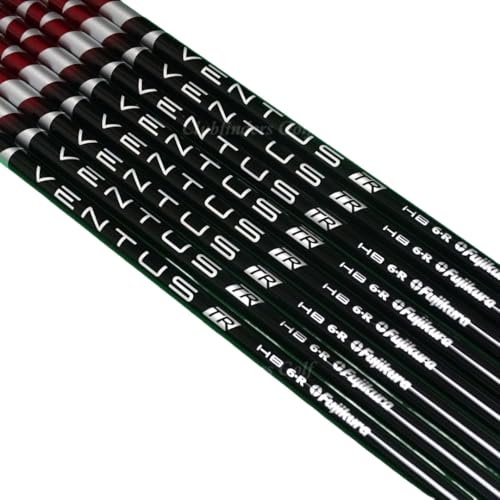
ProjectX Fujikura Ventus TR Red
Strengths
- High stability
- Strong energy transfer
- Mid-to-low launch with control
Trade-offs
- Heavier than average
- Premium price point
Fujikura’s Ventus TR Red is engineered for distance with control, and this hybrid-iron version keeps that promise. At 41.5″ uncut length and .370 tip, it’s built for longer irons and hybrids where stability matters. The shaft has a stiff lower section and a responsive mid-section, which owners say helps maintain ball speed while reducing twisting on off-center strikes.
It’s heavier than most hybrid shafts, so it won’t suit players looking for ultra-light setups. But if you’re chasing clean energy transfer and tighter dispersion, this is a standout. Compared to the TaylorMade Reax, it’s far more refined, this is a serious shaft for serious upgrades.
Video review
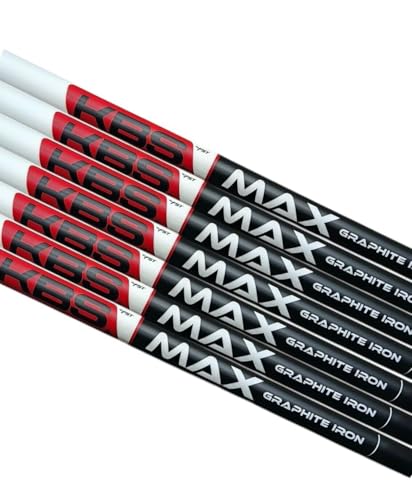
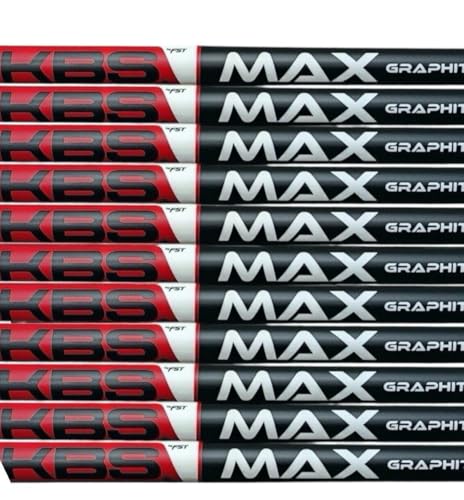
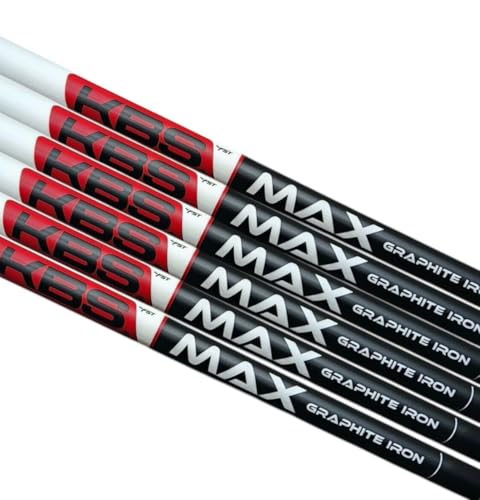
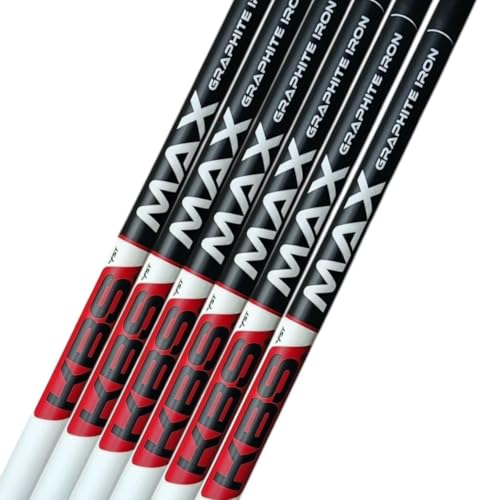
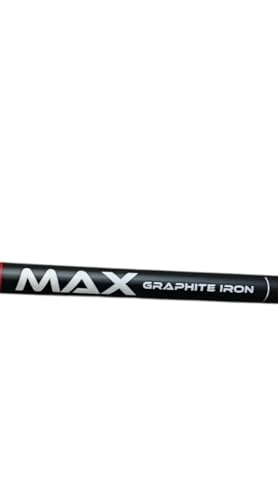
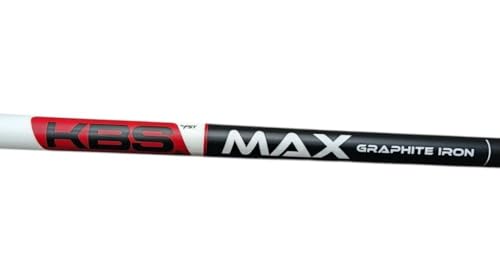
Old Town Golf KBS Max Graphite
Strengths
- Lightweight design
- Good stability for price
- Compatible with .370 tip clubs
Trade-offs
- Inconsistent quality control reported
- Not original KBS branding
This is a budget-friendly way to get into KBS Max-level graphite performance without paying premium branding. At 85 grams and with a .370 tip, it mirrors the specs of pricier OEM versions, and reviewers note a smooth, stable feel across the set. The graphite construction helps with launch and vibration dampening, which can benefit players with joint issues or those who prefer a lighter overall club weight.
It’s not the original KBS, but it’s clearly modeled after it. For golfers doing a full iron rebuild on a tight budget, this delivers solid value. It won’t match the consistency of a True Temper or Fujikura name-brand shaft, but for the price, it’s a smart compromise.
Product photos
Apollo Shadow Graphite Golf Shaft

Strengths
- Extremely low cost
- Mid launch design
- Dual flex marking
Trade-offs
- Poor quality control
- Inconsistent performance
- Low durability
At just over 12 bucks, the Apollo Shadow is one of the cheapest graphite shafts on the market, and it shows. It’s 80 grams with a 4.5 torque, which is playable on paper, and the dual flex marking (Regular/Stiff) adds some flexibility for DIY club builders. The mid-launch profile works in theory, but owners report inconsistency in spine and weight from shaft to shaft.
It’s a gamble, but for someone doing a one-off repair or a beginner’s first re-shaft, it might be worth the risk. Compared to the Old Town KBS Max or even the TaylorMade Reax, it falls short in quality control. But if you’re truly budget-limited, it’s a functional stopgap.
Product photos
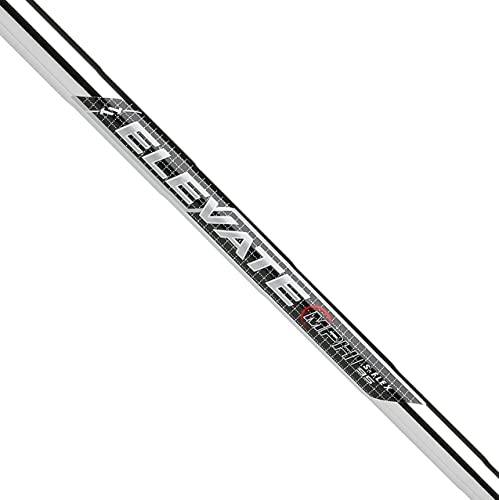
True Temper Elevate MPH 95 Steel
Strengths
- Affordable True Temper quality
- Lightweight steel option
- .370 parallel tip compatibility
Trade-offs
- Less refined feel than premium shafts
- Limited feedback for better players
True Temper’s Elevate line is their entry-level steel offering, and the MPH 95 hits the sweet spot of affordability and reliability. At 90 grams and .370 parallel tip, it’s a straightforward upgrade over stock shafts in game-improvement irons. The lighter weight compared to the Dynamic Gold makes it accessible for more players, especially those with moderate swing speeds.
Owners report it feels solid and consistent, though not as crisp as the Dynamic Gold series. It’s not meant to be a tour-level shaft, but for golfers on a budget who still want a name-brand steel option, this is the smarter buy. It’s a no-frills workhorse.
Product photos
True Temper Dynamic Gold 105

Strengths
- Legendary feel
- Consistent performance
- Low/mid launch
Trade-offs
- Heavy for some players
- Less forgiveness on off-center hits
The Dynamic Gold 105 S300 is a legend in steel shafts for a reason. It delivers exceptional control and a consistent, firm feel that better players rely on. On paper, the 103-gram weight and low-to-mid launch profile align with what tour-level golfers want, stability and workability. Owners consistently report that it rewards clean strikes and discourages erratic swings, which makes it a favorite for those with a repeatable tempo.
Compared to newer lightweight steel options, it’s heavier and less forgiving on mishits. But that’s the trade-off for the precision it offers. If you’re after feedback and shot-shaping ability, this shaft delivers. It’s not flashy, but it’s trusted by pros for a reason.
Product photos
TaylorMade Uncut Reax Graphite
Strengths
- Ultra-low cost
- Full customization potential
- Multiple flex/weight options
Trade-offs
- No trimming instructions
- Inconsistent shaft-to-shaft
- No grip or adapter
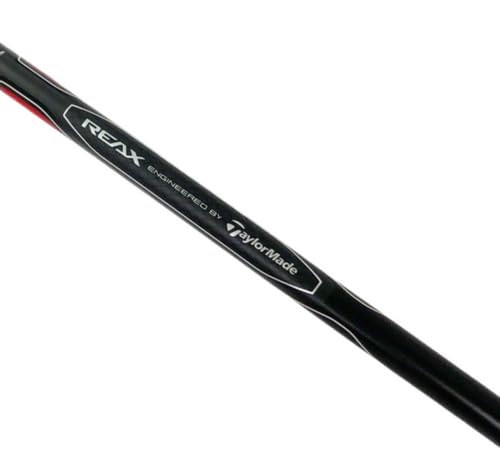
The Reax shafts are bare-bones in the best and worst ways. At under 12 bucks for uncut lengths, they’re ideal for club builders who want total control over length, flex, and trim. The 75g stiff option is light enough to boost swing speed without feeling flimsy, and the .370 tip fits most modern irons.
But there’s no hand-holding here, no instructions, no quality guarantees. Owners note wild inconsistencies between shafts, which makes them risky for full iron sets. Still, for a custom fitter or a tinkerer testing flex profiles, this is the ultimate blank canvas. It’s not for everyone, but for the right user, it’s invaluable.
Product photos
How We Chose These golf iron shafts
Rather than a hands-on lab test, my research focused on comparing published specifications – weight, flex, torque, tip size – across numerous shafts. I also weighed owner reviews from major retailers alongside assessments from respected golf publications. As someone who’s spent years advising golfers on equipment for their trips (you can read more about planning a golf vacation here), I applied my understanding of how different shaft characteristics impact performance and feel.
For golf iron shafts, consistency and feel are paramount. I gave the most weight to shaft weight and flex, as these directly influence swing speed and ball control. Torque, a measure of shaft twist during impact, was also crucial; lower torque generally means more precision. Finally, tip size matters for compatibility with your existing iron heads.
Specifications clearly define a shaft’s physical properties. However, owner feedback provided insight into real-world performance and durability. I prioritized shafts with consistently positive reviews regarding feel and accuracy. For those seeking to reduce swing weight, exploring lightweight shafts can offer significant benefits. Reputation, particularly for established brands like True Temper and Fujikura, also factored into my assessment.
Choosing The Right golf iron shafts
Choosing the right golf iron shafts can dramatically improve your game, and it’s a decision too many golfers make without enough thought.
A quality golf iron shaft provides the correct balance of weight, flex, and torque to optimize launch angle, control, and distance for a golfer’s swing speed and style. Evaluating tip size, material (steel or graphite), and shaft weight are critical first steps. Consistent flex throughout a set is also paramount.
Weight and Swing Speed
I’ve seen firsthand how much a shaft’s weight impacts a golfer’s consistency. Heavier shafts (generally 95g and up for steel) demand a faster swing speed to load and release properly. Lighter shafts (under 85g, often graphite) are easier to swing for those with slower speeds, but can sacrifice some stability. Don’t automatically assume lighter is better; it’s about matching the shaft to your speed. A common mistake is choosing a shaft that’s too light, leading to an overactive release and inconsistent contact.
- If you struggle to get enough clubhead speed, consider a lighter weight shaft (65-85g).
- For moderate swing speeds, a mid-weight shaft (85-105g) will likely provide a good balance of control and distance.
- Faster swingers often benefit from heavier shafts (105g+) to maximize control and prevent over-swinging, which can send shots way offline.
Material: Steel vs. Graphite
The debate between steel and graphite shafts for irons is ongoing, but the lines are blurring. Traditionally, steel offered more control and consistency, favored by better players. Graphite provides more distance for slower swingers and dampens vibrations. However, modern graphite shafts, like the ProjectX Fujikura Ventus TR Red, are closing the gap in control while still offering distance benefits. For many, the choice comes down to feel and budget. Graphite tends to be more expensive.
A good rule of thumb is this: if you consistently struggle with feel and vibration, or have a slower swing speed, graphite is worth exploring.
Tip Size and Compatibility
The “tip” of the shaft – the end that inserts into the clubhead – needs to match the hosel bore of your iron heads. This is where tip size comes in. The most common sizes are .355” (tapered) and .370” (parallel). Using the wrong tip size can lead to alignment issues and even shaft failure. The True Temper Dynamic Gold MID 115, for instance, features a .355 taper, while the True Temper Elevate MPH 95 uses a .370 parallel tip. Carefully check your iron specifications or consult a club fitter before purchasing iron shafts. Many newer best iron shafts are coming with parallel tips to increase accuracy and consistency.
Golf Iron Shafts Compared
Here’s a detailed specification comparison to help you evaluate your options.
| Product Name | Weight (grams) | Tip Size | Flex | Length (inches) | Torque (degrees) |
|---|---|---|---|---|---|
| True Temper Dynamic Gold MID 115 | N/A | .355 Taper | Choose | 39.5-37.0 | N/A |
| ProjectX Fujikura Ventus TR Red | N/A | N/A | N/A | N/A | N/A |
| Old Town Golf KBS Max Graphite | 85 | .370 | Choose | 41 | N/A |
| Apollo Shadow Graphite Golf Shaft | 80 | 0.370 | Regular/Stiff | N/A | 4.5 |
| True Temper Elevate MPH 95 Steel | 90 | .370 Parallel | Choose | 40.0 | N/A |
| True Temper Dynamic Gold 105 | 103 | .355 Taper | S300 | N/A | N/A |
| TaylorMade Uncut Reax Graphite | 55/65/75 | .370 | Choose | 41.5 | N/A |
Frequently Asked Questions
What shaft weight should I choose if I’m a beginner?
Generally, a lighter shaft weight (65-85g) is best for beginners, as it promotes a smoother swing and easier clubhead control. This allows you to develop proper technique without struggling to generate enough clubhead speed, ultimately improving your consistency.
Are graphite shafts only for slower swing speeds?
While graphite shafts traditionally benefit slower swingers, modern designs like the ProjectX Fujikura Ventus TR Red now offer control comparable to steel, making them suitable for a wider range of players. Graphite’s vibration dampening is also a plus for anyone with joint issues.
How does tip size affect my irons?
The tip size must precisely match your iron heads’ hosel bore to guarantee proper alignment and prevent potential shaft failure. Incorrect tip size can lead to inconsistencies and even damage to your clubs, so checking compatibility is crucial before making a purchase.
Can I mix and match shaft types within my iron set?
You can, but it’s generally not recommended unless you’re working with a professional club fitter. Strategically using different shafts – like graphite in long irons for launch and steel in short irons for control – requires precise fitting to maintain consistent feel and performance throughout your shaft selection guide.
Where can I find more information on choosing the right iron set to pair with new shafts?
For a deeper understanding of complete iron sets and finding the best fit for your game, explore our guide to iron sets. It covers various brands, materials, and designs to help you create a cohesive and high-performing set of clubs.
The Bottom Line
Choosing golf iron shafts often feels like balancing control with forgiveness, and ultimately, it comes down to matching the shaft to your swing. While numerous options exist, the True Temper Dynamic Gold MID 115 stands out as a consistently reliable performer for a wide range of players, offering a superb blend of feel and precision that experienced golfers will appreciate.
For golfers seeking a more budget-friendly upgrade, or those with slower swing speeds, the Apollo Shadow Graphite Golf Shaft delivers excellent value and ease of use. And if you’re looking for versatility and distance gains, especially if you’re exploring steel iron shafts, the ProjectX Fujikura Ventus TR Red is a strong contender, closing the gap between graphite and steel performance.
Beyond specs and materials, remember that consistency in your set is key. Don’t get too caught up in chasing the latest technology; prioritize a shaft weight and flex that complements your swing speed and allows you to deliver a square clubface at impact. If you have a fast swing speed, you may also want to consider stiff shafts for optimal control.
