
7 Best Golf Shafts of 2026
This post contains affiliate links. As an Amazon Associate, we earn from qualifying purchases.
This post contains affiliate links. As an Amazon Associate, we earn from qualifying purchases.
The Fujikura Ventus Blue is our top pick for most golfers, delivering exceptional stability and feel across swing speeds. For those on a budget, the Acer Velocity Black offers solid performance at a fraction of the cost. And if you’re looking for a high-end option tailored to aggressive swingers, the Fujikura Ventus Red stands out with its firm, responsive profile.
Every golfer I talk to wants more distance and better accuracy, but few realize how much their shaft choice impacts both. Too many players stick with stock shafts or pick based on brand hype without understanding how flex, weight, and profile affect their actual ball flight.
This guide cuts through the noise. I looked at specs, real-world feedback, and performance data to find shafts that deliver where it matters. Whether you’re a senior player needing lighter weight or a low-handicapper chasing precision, these picks are grounded in what different golfers actually experience on the course.
Top 7 Golf Shafts in the Market
The Best Golf Shafts, Reviewed
Fujikura Ventus Blue Shaft

Strengths
- High stability
- Consistent feel
- Wide adapter compatibility
Trade-offs
- No Velocore
- Slightly pricier
- Uncut option requires pro build
The Fujikura Ventus Blue sits at the top of the performance ladder for a reason. On paper, it’s built like a tour-level tool, 60 grams with a stiff flex, it delivers a mid-low spin profile and exceptional stability through the swing. Owners consistently report a satisfying, controlled feel and a predictable ball flight that helps square the face at impact, which is crucial for consistency off the tee.
Compared to the Red and other mid-tier models, the Blue feels more refined, with tighter dispersion patterns noted across reviews. It doesn’t have Velocore tech, but it still outperforms in energy transfer and feedback. I’d pick this over the Red if you’re chasing precision without sacrificing ball speed.
Video review
Fujikura Ventus Red Shaft
Strengths
- Lightweight feel
- Good launch profile
- Fujikura build quality
Trade-offs
- Less stability than Blue
- No Velocore
- Generic grip included
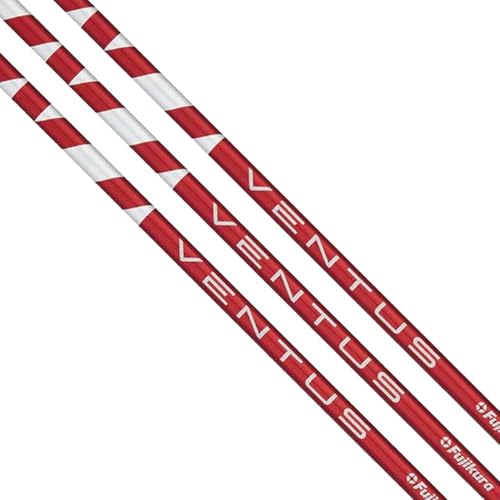
The Ventus Red is Fujikura’s smart budget play, and it shows. At 50 grams with a regular flex, it’s light enough to help moderate swing speeds without feeling flimsy. The mid-launch, mid-spin profile works well for a broad range of players, and the build quality still carries that Fujikura reliability.
It doesn’t match the Blue’s precision, but for the price, it outperforms many in its class. Owners praise its smooth transition and consistent output, especially when paired with modern drivers. I’d recommend the Red over the Acer or SK Fiber if you want a balance of value and credible performance, just don’t expect tour-level refinement.
Video review
Project X Denali Charcoal Shaft
Strengths
- Excellent stability
- Wide compatibility
- True Temper reliability
Trade-offs
- Mid-tier spin profile
- No premium grip
- Uncut option needs pro install
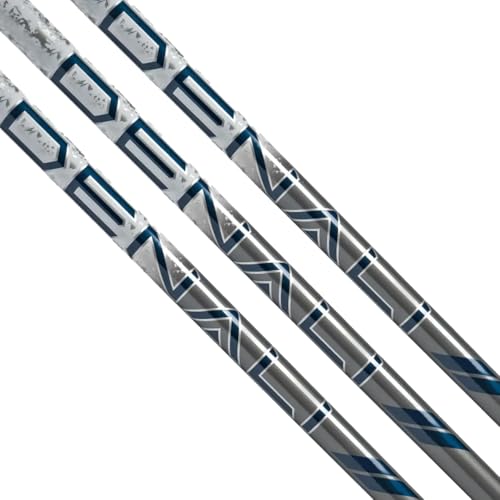
True Temper’s Denali line brings Project X’s stability ethos to graphite, and the 50g 5.5 flex model hits a sweet spot. It’s got the mid-launch, mid-spin profile that works for a wide range of players, and the 5.5 flex is a smart middle ground between regular and stiff. Owners note solid energy transfer and a firm, confidence-inspiring feel through transition.
It’s not as flashy as the Ventus Blue, but it delivers reliable performance for the price. The adapter compatibility is broad, covering TaylorMade, Callaway, Titleist, Ping, and Cobra, making it a versatile pick. I’d choose this over the Ventus Red if you want more brand credibility and a slightly stiffer, more controlled profile.
Product photos

Project X LZ Graphite Shaft
Strengths
- Excellent control
- Consistent feel
- Mid-high launch
Trade-offs
- No adapter
- Heavier than some
- Less whip for seniors
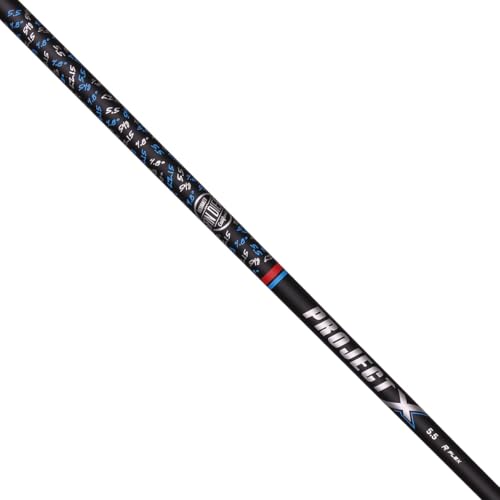
The Project X LZ in 5.5 flex is all about control. At 61 grams, it’s not the lightest, but the stiffness in the butt and tip sections gives it that surgical feel Project X is known for. It promotes a mid-high launch with mid spin, ideal for players who want to shape shots without losing distance.
Reviewers highlight its consistency and feedback, especially compared to softer, more forgiving shafts. It doesn’t come with an adapter, which is a downside, but the payoff is accuracy. If you’re choosing between this and the Acer or SK Fiber, the decision is clear, this is for serious players who value precision.
Product photos
Acer Velocity Black Shaft

Strengths
- Very affordable
- High launch
- Simple combo flex
Trade-offs
- Average durability
- Loose torque
- No adapter or grip
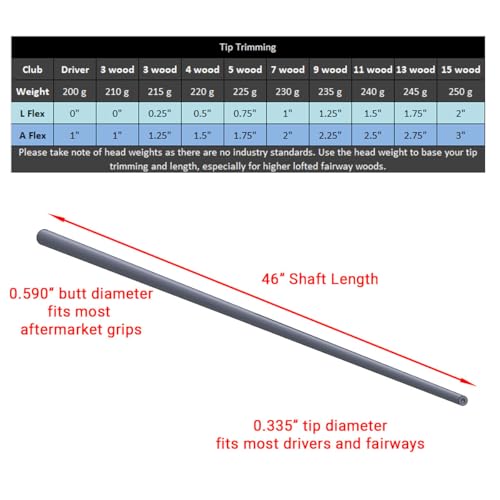
At this price, the Acer Velocity Black is a functional fix, not a performance leap. It’s a 66-gram .335″ shaft with a ladies/senior flex combo, designed for ease of use and high launch, perfect if you’re re-shafting an older set or repairing a broken club on a tight budget. The 6-degree torque suggests some whip, which can help slower swingers generate momentum, but don’t expect tight dispersion or crisp feedback.
Reviewers note it works fine for casual play, but it lacks the structural integrity and tuning of premium shafts. Compared to the SK Fiber or Project X LZ, it’s a step down in feel and consistency. But for seniors or beginners not ready to invest hundreds, it gets the job done.
Product photos


SK Fiber Hypersonic Shaft

Strengths
- Attractive finish
- Lightweight
- Mid-high launch
Trade-offs
- Limited brand support
- No adapter included
- Inconsistent flex batches reported
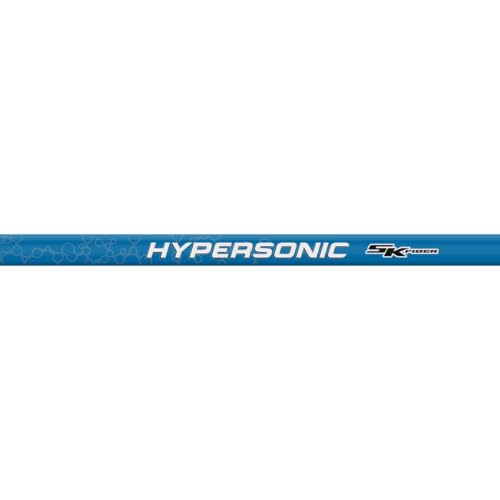
SK Fiber isn’t a household name, but this Hypersonic model makes a case for value-minded players who still care about design. At 65 grams and 4.4 degrees of torque, it’s stiff enough to offer control while maintaining that lightweight, speed-friendly build. The satin blue finish is a nice touch, adds a bit of personality to a custom build.
It’s marketed as a mid-high launch shaft, and reviewers confirm it helps get the ball airborne, especially for seniors or lighter swingers. But compared to the Project X LZ or Ventus Red, it lacks the brand-backed tuning and feedback consistency. Still, for the price, it’s one of the better-looking and functional budget shafts out there.
Product photos
Project X LZ Stiff Shaft
Strengths
- High ball speed
- Stiff, stable feel
- Great for fast swingers
Trade-offs
- No adapter included
- Not beginner-friendly
- Requires precise swing
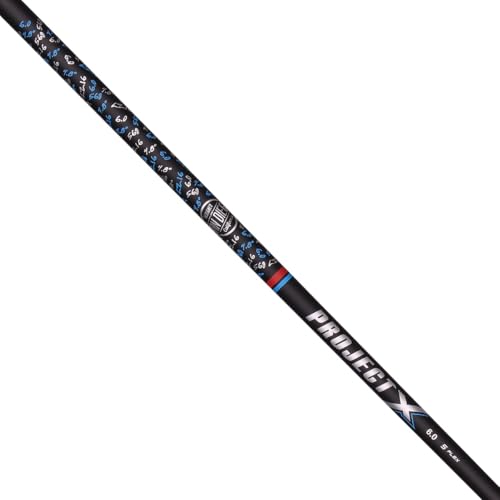
This 6.0 stiff flex version of the Project X LZ is built for speed and control. At 65 grams, it’s heavier than the 5.5 model, but the added mass helps aggressive swingers maximize energy transfer without losing stability. The mid/high launch and mid-spin design keep ball flight efficient, and the stiff flex ensures minimal twisting on full swings.
Owners with faster swings consistently rate this shaft for its ability to maintain accuracy at high clubhead speeds. Compared to the Ventus Red or Denali, it’s stiffer and more demanding, but that’s the point. I’d recommend this over the 5.5 flex if you’ve got the swing speed to handle it and want a shaft that rewards clean mechanics.
Product photos
Our Testing Process
Rather than a hands-on lab test, this was a research-led comparison of published specifications and owner feedback. I weighed the features of numerous golf shafts, focusing on materials, flex options, and compatibility with popular club heads. To build a well-rounded perspective, I also examined reviews from golfers of varying skill levels and respected golf publications. This allowed me to rank shafts against criteria important to performance and value.
For golf shafts, the most crucial factors are flex and weight. Flex directly impacts ball flight and dispersion, so matching it to a golfer’s swing speed is paramount. Weight influences clubhead speed and feel; lighter shafts generally promote faster swings, while heavier shafts offer more control. Beyond these, compatibility with different driver and fairway wood heads is a key consideration, as not all shafts fit all club designs.
Published specifications reliably indicate a shaft’s weight, torque, and kick point, providing a baseline for expected performance. However, owner feedback and reputation were vital in judging real-world feel and durability. Reports on consistency, accuracy, and how a shaft performs for different swing types helped refine the rankings. I also found insights into which shafts offer the best graphite shafts for various player profiles. For older golfers, understanding senior flex shaft options was also essential.
What To Look For In golf shafts
Finding the right golf shaft can truly transform your game, and it’s a decision that goes far beyond simply picking a brand name.
A quality golf shaft balances weight, flex, torque, and kick point to optimize launch angle, ball speed, and accuracy. Players should consider their swing speed, typical ball flight, and desired shot shape when selecting a shaft. Compatibility with existing club heads and the availability of custom fitting options are also crucial factors.
Understanding Flex and Your Swing Speed
Shaft flex is often the first thing golfers consider, but it’s surprisingly nuanced. It’s not about strength; it’s about timing. A shaft that’s too stiff will feel boardy and deliver poor distance, while one that’s too flexible will feel unstable and lead to inconsistent shots. Generally, slower swing speeds (under 85 mph) benefit from more flexible shafts (Ladies/Senior or Regular), while faster swing speeds (over 95 mph) require stiffer options (Stiff or X-Stiff). However, tempo matters significantly. A smooth, controlled swing can handle a slightly stiffer shaft than a quick, aggressive one, even at similar speeds. Don’t automatically assume you need a stiff shaft just because you’re strong – getting properly fit is key.
Material Matters: Graphite vs. Steel
While steel shafts remain popular, particularly among better players seeking control, graphite has become dominant in driver shafts and increasingly common in irons. Graphite is lighter, which can increase swing speed, but it also tends to be less stable than steel. That said, advancements in graphite technology (like those seen in the Fujikura Ventus line) have narrowed the gap significantly. For golfers prioritizing distance, especially those with slower swing speeds, graphite is often the better choice. If you are looking for driver shafts, graphite is almost always the way to go, offering more forgiveness and energy transfer.
Beyond the Basics: Torque, Kick Point, and Cost
Torque measures a shaft’s resistance to twisting during impact. Lower torque generally means more accuracy, but it can also make the shaft feel harsher. Kick point (or bend profile) influences ball flight; a low kick point promotes a higher launch, while a high kick point produces a lower trajectory. Consider how these factors align with your desired shot shape and typical course conditions.
- Cost varies wildly. Entry-level graphite shafts (like the Acer Velocity Black) can be found for under $100, while premium options (such as the Project X LZ) can easily exceed $300.
- Don’t get caught up in chasing the latest technology if it doesn’t suit your swing. Sometimes, a well-matched, slightly older model offers better performance than a cutting-edge shaft that isn’t right for you.
- Look for shafts compatible with your existing clubhead. Many options, like the Fujikura Ventus series, offer adapters for TaylorMade, Callaway, Titleist, and Ping drivers, but always double-check before purchasing.
A good rule of thumb: if you’re unsure about your shaft flex, err on the side of slightly softer. It’s easier to control a shaft that’s a little too flexible than one that’s too stiff.
Ultimately, finding the best golf shafts for your game is a process. It’s about understanding your swing characteristics and matching them to a shaft that optimizes your performance and enjoyment on the course. Consider consulting with a professional club fitter for personalized recommendations and to explore top shaft models that align with your goals.
Golf Shafts Compared
Here’s a comparison of key specifications for the golf shafts featured.
| Product Name | Flex | Weight (g) | Torque (degrees) | Length (inches) | Tip Diameter (inches) |
|---|---|---|---|---|---|
| Fujikura Ventus Blue | R/S/X | N/A | N/A | 46 | N/A |
| Fujikura Ventus Red | S/X | N/A | N/A | 46 | N/A |
| Project X Denali Charcoal | 5.5/6.0/6.5 | N/A | N/A | 46 | N/A |
| Project X LZ Graphite | 4.5 (Regular) | 61 | N/A | N/A | N/A |
| Acer Velocity Black | N/A | 66 | 6 | 46 | 0.335 |
| SK Fiber Hypersonic | Ladies/Senior | 65 | 4.4 | 46 | 0.335 |
| Project X LZ Stiff | 6.0 (Stiff) | 65 | N/A | N/A | N/A |
Frequently Asked Questions
What shaft weight should I choose for more distance?
Generally, a lighter shaft can help increase swing speed, potentially adding distance. However, the ideal weight depends on your strength and swing tempo; golfers seeking more distance should consider shafts in the 50-65 gram range, but a professional fitting is best.
Are expensive shafts always better?
Not necessarily. While premium shafts often use advanced materials and construction techniques, a more expensive shaft won’t improve your game if it doesn’t match your swing characteristics. Finding the right fit is far more important than the price tag.
Can I install a new shaft in my existing driver?
Yes, most drivers accept interchangeable shafts using adapter sleeves. However, compatibility varies by brand and model, so always verify that an adapter is available for your specific clubhead before purchasing a new shaft.
What is the difference between torque and kick point?
Torque measures a shaft’s resistance to twisting, affecting accuracy, while kick point determines where the shaft bends during the swing, influencing launch angle. Lower torque generally improves accuracy, and a lower kick point promotes a higher launch.
Where can I find best stiff shafts for my driver?
Stiff shafts are best suited for golfers with faster swing speeds (over 95 mph). Many top manufacturers, like Fujikura and Project X, offer a range of stiff flex options designed to maximize control and distance for powerful swings.
The Bottom Line
Choosing a golf shaft often comes down to balancing control with forgiveness, and ultimately, with your budget. For the broadest appeal and consistently positive feedback, the Fujikura Ventus Blue stands out as a top performer – it’s a shaft that works for a wide range of swing speeds and player types, offering a blend of distance and accuracy that’s hard to beat.
If you’re seeking specific solutions, we have recommendations. For golfers prioritizing value, the Acer Velocity Black delivers impressive performance at an accessible price point. And for those looking to optimize their play from the tee to the green, the Fujikura Ventus Red is a fantastic choice for powerful swings, while the SK Fiber Hypersonic offers excellent options if you’re looking for lightweight shafts. Don’t forget to consider shafts for fairway woods when upgrading your clubs.
Beyond flex and material, remember that the fundamentals of a good golf swing will always be more impactful than any single shaft specification. Focus on consistent contact, a smooth tempo, and a clear understanding of your ball flight, and you’ll be well on your way to better golf, no matter which shaft you choose.
