
8 Best Golf Practice Tools of 2026
This post contains affiliate links. As an Amazon Associate, we earn from qualifying purchases.
This post contains affiliate links. As an Amazon Associate, we earn from qualifying purchases.
The Orange Whip Swing Trainer stands out as the best overall tool for building rhythm and correcting swing flaws, while the Seticek Golf Alignment Sticks offer unbeatable value for precise setup and alignment. For targeted feedback on swing path, the COSPOPTIC Golf Hitting Mat is a strong contender.
Most golfers struggle to make practice time translate to real improvement on the course. Without clear feedback, you can repeat the same mistakes for years. I know this from watching countless players on trips and at ranges, good intent doesn’t always lead to good results.
This guide cuts through the noise by focusing on tools proven to deliver measurable progress. I researched each based on owner experiences, build quality, and how well it addresses common swing issues. These picks aren’t the flashiest, they’re the ones that earn their spot in your bag.
Top 8 Golf Practice Tools in the Market
The Best Golf Practice Tools, Reviewed
Orange Whip Swing Trainer

Strengths
- Counterbalanced design
- Improves tempo
- Durable USA build
Trade-offs
- Bulky for travel
- Higher price
The Orange Whip remains the gold standard in swing training aids, and for good reason. On paper, its patented counterbalanced design delivers what most golfers struggle with: tempo, balance, and connection between upper and lower body. The 47-inch flexible shaft forces you to feel any breakdowns in your swing, wobbling means you’re rushing or losing control. Reviewers consistently report improved rhythm and a smoother takeaway after just a few sessions, which tracks with how top instructors use it as a warm-up and mobility tool.
It’s not a quick fix for slice or hook, but it builds the athletic foundation those fixes depend on. Compared to rigid swing trainers, the Orange Whip’s feedback is more holistic, training motion rather than just path or grip. At its price, it’s an investment, but owners note it lasts for years with regular use. I’d pick this over shorter, click-based trainers if you want to rewire your entire swing feel.
Video review
Seticek Golf Alignment Sticks
Strengths
- Affordable
- Foldable design
- Lightweight and portable
Trade-offs
- Basic functionality
- No added features
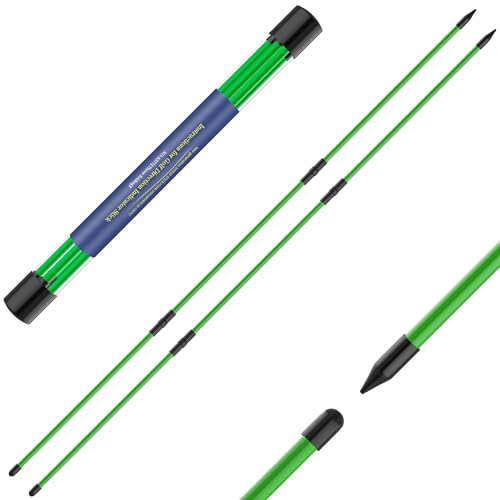
For the price, these collapsible alignment sticks punch above their weight. At under ten bucks for a two-pack, they offer serious value, especially with the included carry tube. The 48-inch fiberglass sticks fold down to just 17 inches, making them easy to stash in a golf bag or suitcase. Owners consistently note how well they hold up on range mats and turf, and the pointed tip makes setup quick.
They don’t have fancy attachments or magnets, but they do the core job well: helping you align feet, hips, and shoulders parallel to target. Compared to bulkier systems, these are ideal for on-course practice or quick checks before a round. If you’re new to alignment training, this is the most affordable way to start.
Video review
COSPOPTIC Golf Hitting Mat
Strengths
- Clear swing path feedback
- Replaceable turf
- Stable non-slip base
Trade-offs
- Small impact area
- Not for full power swings
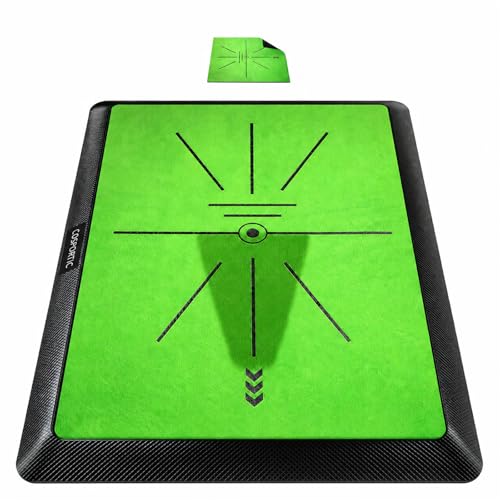
If you’re serious about understanding your swing path without a launch monitor, this mat delivers real value. The surface clearly marks where the club bottoms out, heel, center, or toe, giving instant visual feedback that most basic mats don’t. Owners appreciate how the heavy-duty rubber base stays put on hardwood, concrete, or carpet, which is rare at this price. The included spare turf layer extends its life, and the 16″x12″ size fits neatly in a garage corner or even under a desk.
It won’t replicate fairway conditions, and it’s not meant for full driver swings indoors, but for iron work, chipping, and short swing drills, it’s effective. Compared to pricier turf mats, it holds up well to repeated use. For someone building a home practice station without spending hundreds, this is a smart middle ground.
Product photos


ONHAWKS Magnetic Alignment Rod
Strengths
- Magnetic club attachment
- Telescopic design
- Compact and visible
Trade-offs
- Only works with irons
- Magnet may wear
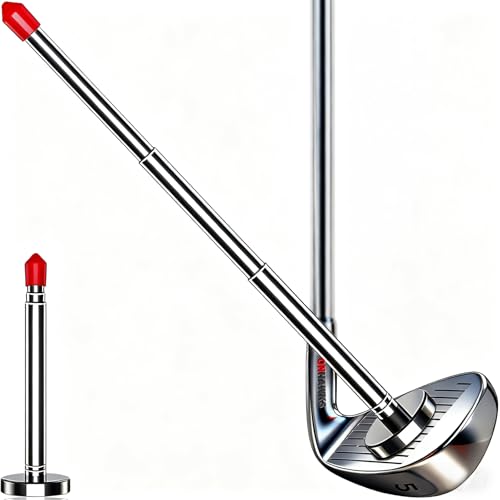
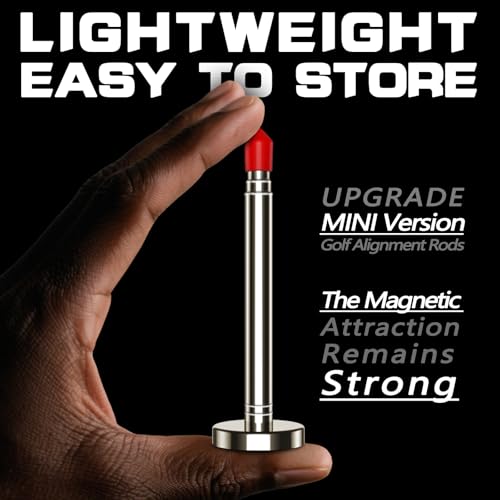
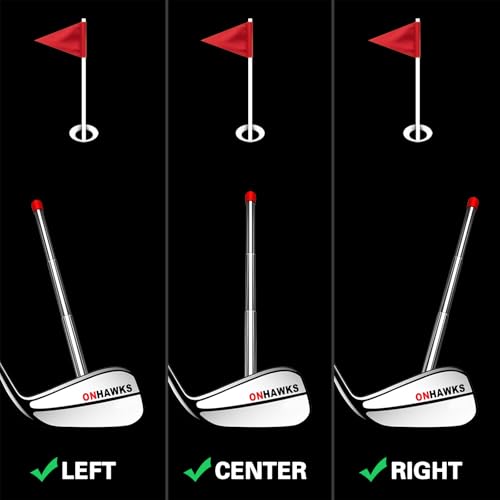
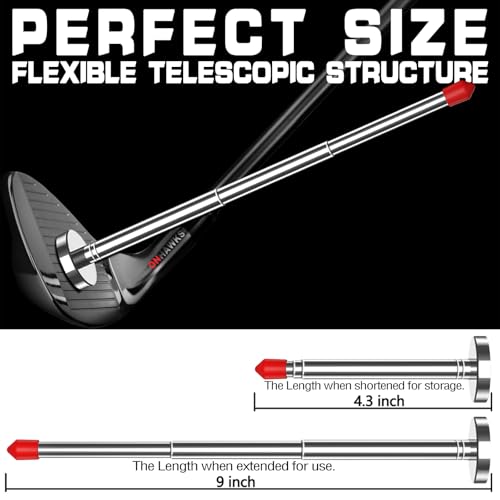
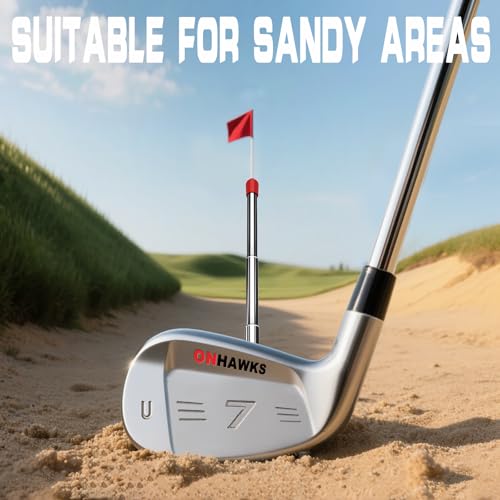
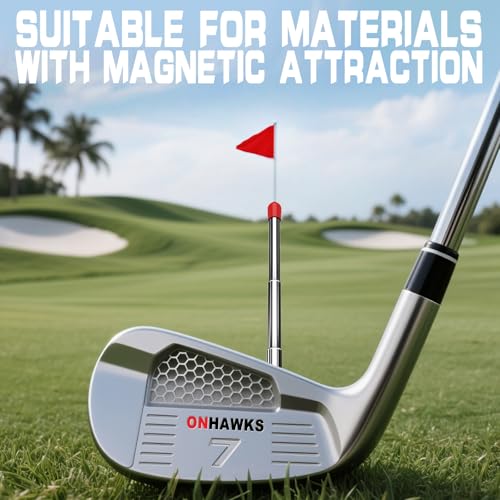
What sets the ONHAWKS rods apart is the magnetic telescopic design that attaches directly to your irons. This lets you visualize club face alignment at address and impact, critical for fixing pushes, pulls, and slices. The 32-lb magnet holds strong, even on uneven lies, and the red tip adds visibility. The telescoping feature means it adjusts to different club lengths, which is smart for players using multiple irons or wedges in practice.
Owners appreciate how compact it is, under 4.3 inches when collapsed, so it fits in a pocket or small pouch. Compared to standard sticks, this gives more precise feedback on face angle, not just body alignment. I’d pick this over basic rods if you’re working on club face control, especially in your short game.
Product photos
TrueBirdie Swing Arm Band

Strengths
- Fixes chicken wing
- Builds muscle memory
- Works for left and right hand
Trade-offs
- Single-purpose tool
- Only for practice
The “chicken wing”, where the lead elbow flares out at impact, is a common flaw that kills power and consistency. This arm band physically connects both arms to keep them synchronized through the swing. On paper, it’s a simple concept, but owners report it helps build muscle memory faster than verbal cues or video drills. The double-stitched neoprene holds up to repeated use, and it fits most arm sizes comfortably.
It’s not something you’ll wear all round, but as a drill aid, it works. Compared to video analysis or coach feedback, it offers real-time physical correction. I’d recommend it over vague swing thoughts for players struggling with lead arm breakdown. It won’t fix your takeaway, but it will help you deliver the club with a connected finish.
Product photos


FODESAN Retractable Swing Trainer

Strengths
- Compact and portable
- Click feedback
- Good grip training
Trade-offs
- Limited full-swing training
- Feedback is narrow
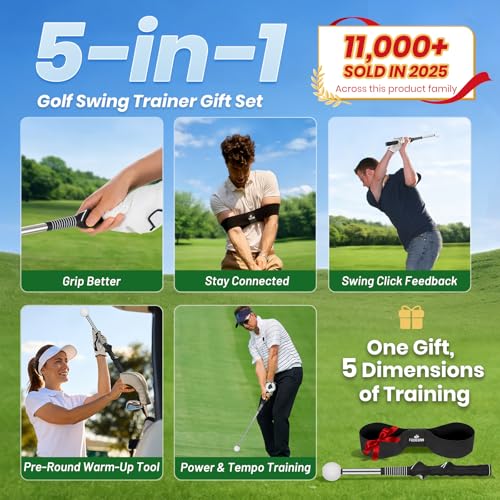
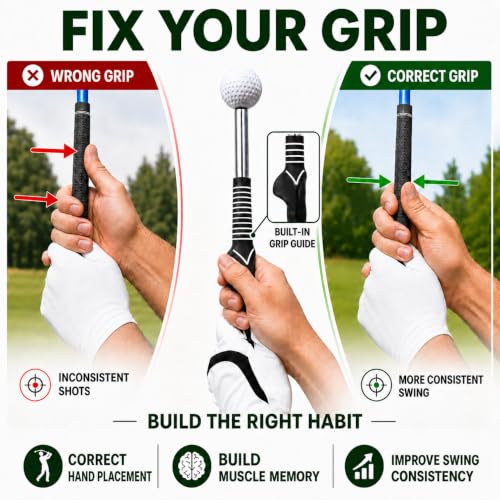
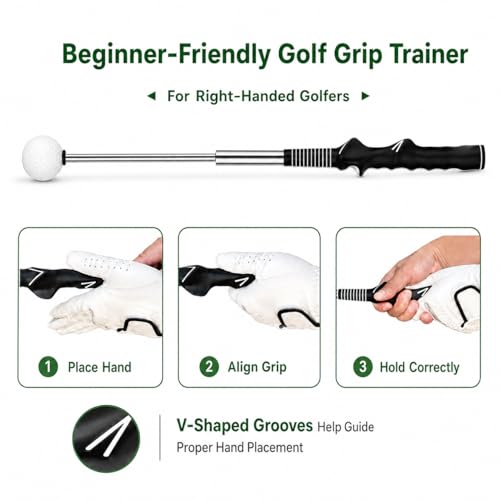
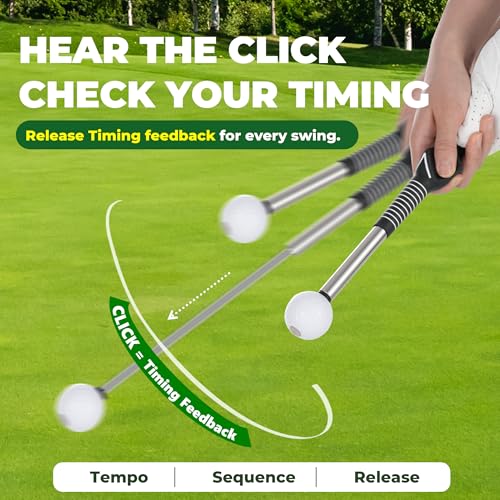
This compact trainer stands out for delivering click-based feedback in a travel-ready design. The retractable shaft extends to simulate a club’s length and clicks when your swing path and tempo are on point. On paper, that’s a smart way to reinforce correct mechanics without overthinking. Owners say the click sound helps lock in a consistent rhythm, especially for beginners or players rushing their downswing. The ergonomic grip also promotes proper hand placement, which aligns with what coaches stress for consistent ball striking.
At just under 16 inches when collapsed, it’s far more portable than the Orange Whip. But it doesn’t offer the same full-body coordination training. I’d recommend this over bulkier tools for someone focused on tempo and swing repeatability, but not as a standalone fix for deeper swing issues.
Product photos

Golf Alignment Sticks Holder
Strengths
- Adjustable swing angle
- Protective padding
- Stable base
Trade-offs
- Bulky setup
- More complex
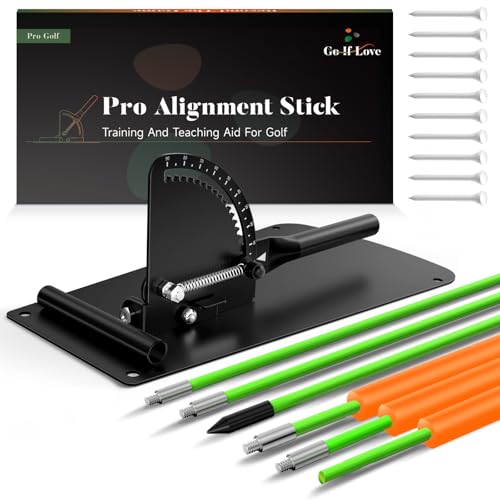
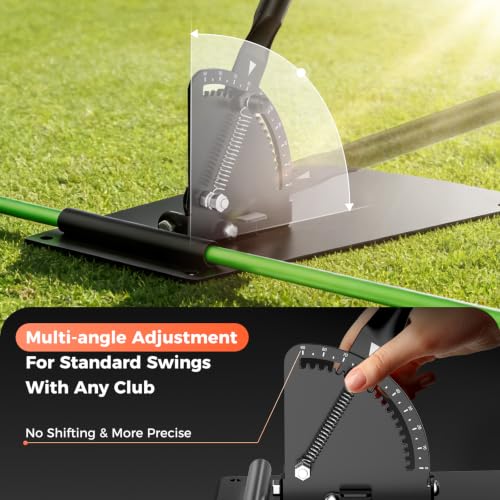
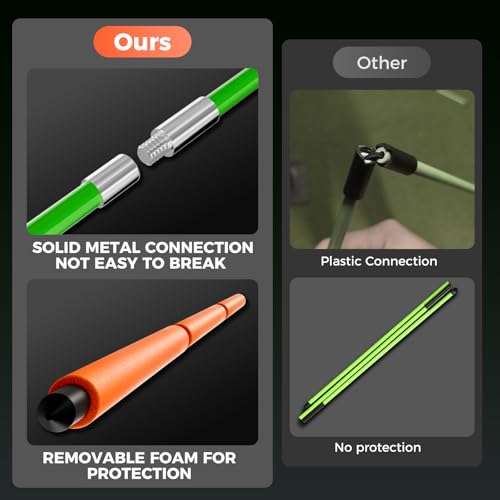
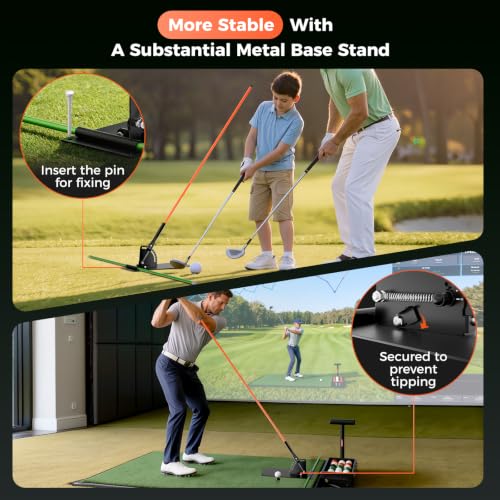
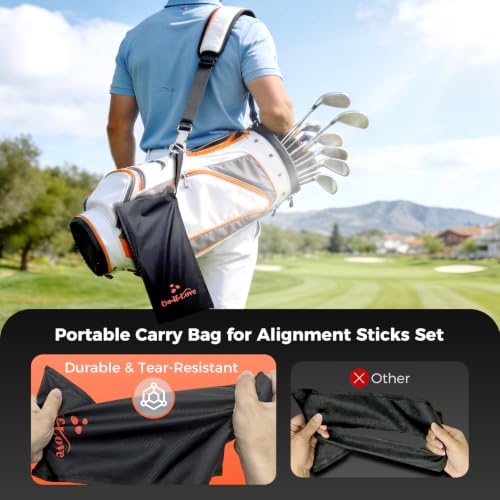
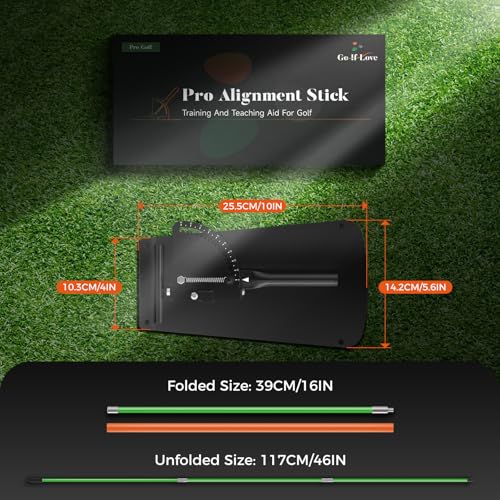
This system goes beyond basic alignment sticks by adding an adjustable-angle base and padded rod to train posture and swing plane. The protractor lets you set precise angles from 0 to 90 degrees, which is useful for drills that target specific swing flaws like over-the-top moves or hip sway. The metal plate anchors solidly with tees, and the fiberglass stick with foam padding reduces club damage, something many users praise.
It’s more involved than tossing down a couple of sticks, but that also means it’s better for structured practice. Compared to simpler kits, this one builds real discipline in setup and swing path. I’d pick this for someone working with a coach or following online drills that require strict plane control. The learning curve is steeper, but the feedback is more precise.
Product photos
GoSports Pure Strike Discs

Strengths
- Inexpensive
- Clean contact feedback
- Portable and durable
Trade-offs
- Limited to impact drills
- No swing path correction
At under ten dollars, this 24-pack of rubber discs is one of the most cost-effective ways to sharpen ball-striking skills. Each disc mimics a golf ball’s footprint, forcing you to make clean, ball-first contact, especially with irons and wedges. Owners love using them for compression drills and low-point control, which are critical for consistent iron play. The soft rubber works indoors or on mats without damage, and the quantity means you can set up multiple targets or share with a playing partner.
They don’t fix swing mechanics directly, but they highlight flaws instantly: fat or thin contact is obvious. Compared to alignment or tempo tools, these are hyper-focused on contact quality. For that narrow but vital skill, they’re unmatched at the price.
Product photos


How We Evaluated golf practice tools
Rather than a hands-on lab test, my research for these recommendations involved a detailed comparison of published specifications and features across numerous tools. I weighed owner reviews from major retailers alongside assessments from reputable golf instructors and publications. As someone who’s spent years planning golf trips and observing players of all levels, I applied my understanding of swing mechanics and common practice challenges to rank these tools against clear criteria: effectiveness, durability, and value.
The factors I weighted most heavily were a tool’s ability to provide actionable feedback, its versatility for different skill levels, and its build quality. Clear, immediate feedback is crucial for developing muscle memory and correcting flaws. Versatility ensures the tool remains useful as a player improves, and a durable build guarantees it will withstand repeated use without falling apart. Ultimately, a tool’s ability to translate to on-course improvement decided its ranking.
Specifications reliably indicate a tool’s construction and potential durability. However, I placed significant weight on owner feedback to understand real-world performance and longevity. For example, reports on how well a mat stays put during swings, or how easily an alignment stick breaks, are invaluable. I also considered the reputation of the brand – established names often deliver consistent quality, but innovative newcomers can offer unique benefits. To further enhance your training, exploring effective practice techniques is vital. And, don’t underestimate the importance of quality practice mats for consistent, realistic practice.
What To Look For In golf practice tools
Finding the right tools can accelerate your improvement on the course. We’ll break down what to look for when adding to your practice setup.
A truly effective golf practice tool doesn’t just offer a way to hit balls; it provides clear, repeatable feedback on a specific element of your swing. Look for tools that isolate a key mechanic (like swing path or face alignment), are durable enough for consistent use, and offer a way to measure progress. Consider whether the tool is suited for indoor or outdoor practice, and if it’s adaptable to different skill levels.
Understanding Swing Feedback
One of the biggest hurdles in golf is feeling what you think you’re doing versus what you’re actually doing. Tools that provide instant feedback are invaluable. The Orange Whip, for example, is popular because its counterbalanced design immediately reveals imbalances in your swing. If you feel a wobble, you know your tempo or plane is off. Don’t underestimate the power of simple tools here; a well-used alignment stick can be just as revealing.
Focusing on Consistency and Repetition
Golf is a game of repetition, and your practice tools should facilitate that. The COSPOPTIC Golf Hitting Mat, with its visual feedback on swing path, is an excellent example. It allows for countless repetitions focused on a specific issue – heel strikes, toe strikes, etc. – without the need for constant ball retrieval. Similarly, if you’re looking to build consistency with your full swing, you might also consider investing in some quality practice nets for regular backyard sessions.
Balancing Quality and Value
You don’t need to spend a fortune to improve. The Seticek Golf Alignment Sticks demonstrate that effective training aids can be remarkably affordable. However, I’ve seen too many cheap alignment sticks snap under pressure. Look for fiberglass construction over flimsy plastic.
A good rule of thumb: spend a little more on tools that will directly impact your swing mechanics (like alignment aids or swing trainers) and less on accessories.
Consider supplementing your practice with practice golf balls – especially if you’re working on your short game. They allow for frequent drills without the worry of damaging your premium balls.
Golf Practice Tools Compared
Here’s a comparison of key specifications for popular golf practice tools to help you make an informed purchase.
| Product Name | Best For | Features | Dimensions | Material | Price |
|---|---|---|---|---|---|
| Orange Whip Swing Trainer | Best Overall | Counterbalanced, Flexible Shaft | N/A | Steel, Rubber | N/A |
| Seticek Golf Alignment Sticks | Best Budget Friendly | Foldable, Versatile | 48in (unfolded) | Fiberglass | N/A |
| COSPOPTIC Golf Hitting Mat | Best for Swing Path Feedback | Impact Surface Tracking, Replaceable Turf | 16″x12″ | Rubber, Velvet Turf | N/A |
| ONHAWKS Magnetic Alignment Rod | Best for Club Face Alignment | Magnetic, Telescopic | <4.3in (collapsed) | Steel, Magnet | N/A |
| TrueBirdie Swing Arm Band | Best for Fixing Chicken Wing | Arm Synchronization | One Size | Fabric, Elastic | N/A |
| FODESAN Retractable Swing Trainer | Best for Tempo Training | Click Feedback, Retractable Shaft | 15.5in (collapsed) | Steel, Rubber | N/A |
| Golf Alignment Sticks Holder | Best for Posture/Swing Plane | Adjustable Angle, Stable Base | N/A | Metal, Foam | N/A |
| GoSports Pure Strike Discs | Best for Ball Striking Practice | Ball Contact Feedback | N/A | Rubber | N/A |
Frequently Asked Questions
What’s the difference between a swing trainer and an alignment aid?
A swing trainer, like the Orange Whip, focuses on improving your swing mechanics through feel and repetition, while an alignment aid, such as the Seticek sticks, helps you set up correctly and maintain proper swing plane. Choosing between them depends on whether you’re addressing a fundamental flaw or refining existing technique.
Are expensive golf practice tools always better?
Not necessarily. While higher price tags often reflect better materials and durability, several affordable options, like alignment sticks, can be remarkably effective for specific drills. Focus on a tool’s function and how well it addresses your individual needs rather than simply its cost.
Can I really improve my swing without taking lessons?
Yes, you can absolutely see improvement with consistent practice using the right tools, but a good instructor can accelerate your progress. Tools help you feel changes, but a coach can diagnose issues and create a personalized plan. Consider golf training tools as a supplement to lessons, not a replacement.
What’s the best way to use a golf hitting mat?
A hitting mat is most effective when paired with focused drills. Rather than simply hitting balls, concentrate on a specific aspect of your swing – like maintaining your spine angle or achieving a proper weight shift – and use the mat’s markings to monitor your progress. You can also practice with foam practice balls for indoor use.
How do I choose the right size practice net?
The size of a net depends on your available space and the clubs you’ll be using. A smaller net is suitable for chipping and short game practice, while a larger, heavy-duty net is necessary for full swing practice with a driver. Be sure to check the net’s specifications to ensure it can handle the speed of your swings.
The Bottom Line
Choosing the right golf practice tools often comes down to how much focused control you want versus how much convenience you’re willing to sacrifice. If you’re serious about dialing in your swing and don’t mind dedicated practice time, the Orange Whip Swing Trainer stands out as the most effective overall tool for identifying and correcting imbalances. It consistently receives high marks from instructors and players alike for its immediate feedback.
For golfers on a tighter budget, or those with specific needs, there are excellent options. The Seticek Golf Alignment Sticks offer incredible value for improving alignment and swing plane, while the COSPOPTIC Golf Hitting Mat is ideal for those wanting detailed feedback on their swing path – a key component of a complete practice setup. If you’re short on space, the ONHAWKS Magnetic Alignment Rod is a versatile choice for focused drills, and also works well for golf practice at home.
Ultimately, the most expensive tool won’t magically fix your game. The fundamentals of consistent practice, focused repetition, and understanding your swing are far more important than any single gadget. Prioritize tools that provide clear feedback and encourage deliberate practice, and remember that improvement takes time and effort – whether you’re practicing with a full golf net and mat combos or just a few alignment sticks.
