
7 Best Golf Rangefinders with Stabilization 2026
This post contains affiliate links. As an Amazon Associate, we earn from qualifying purchases.
This post contains affiliate links. As an Amazon Associate, we earn from qualifying purchases.
The Nikon COOLSHOT PROIII STABILIZED is the overall best golf rangefinder with stabilization, offering crisp optics and reliable performance where it counts. For golfers on a tighter budget, the TecTecTec ULT-S delivers impressive stabilization and accuracy at a fraction of the cost.
As someone who’s played courses from the Highlands to the Sonoran Desert, I know how quickly changing terrain and wind can throw off your distance judgment. A shaky hand at the moment of ranging can cost you a shot, and that’s where stabilization makes a real difference.
This guide cuts through the noise, focusing on models that deliver consistent accuracy and effective stabilization, based on specs, owner feedback, and what matters most on the course. I looked at how well each unit locks onto targets quickly, holds a steady image, and fits into a golfer’s real-world needs, whether you’re chasing tournament precision or just want more confidence on your next trip.
Top 7 Golf Rangefinders With Stabilization in the Market
The Best Golf Rangefinders With Stabilization, Reviewed
Nikon COOLSHOT PROIII STABILIZED

Strengths
- Stabilized optics
- Hyper Read speed
- Dual lock confirmation
- Tournament legal mode
- Weatherproof design
Trade-offs
- High price
- Limited magnification
- Heavier than some
The Nikon COOLSHOT PROIII STABILIZED stands out in the high-end rangefinder market with its genuinely effective image stabilization. On paper and in owner feedback, the stabilization system delivers a noticeably steadier view than non-stabilized competitors, which translates to more consistent pin acquisition, especially on hilly courses or when your hands aren’t perfectly still. The Hyper Read system is another strong point, locking distances in just 0.1 seconds, and the dual Locked ON Quake feedback (both visual and tactile) gives real confidence you’re measuring the flag, not a tree behind it.
Its Slope Compensation is well-implemented, with a clear toggle between Golf and Actual Distance Modes, and the USGA-compliant mode makes it tournament-ready. While it’s expensive, the 6X optics are sharp, the build is compact and weather-resistant, and reviewers consistently praise its durability and clarity across lighting conditions. For serious players who value precision and stability above all, this one earns its place at the top.
Video review
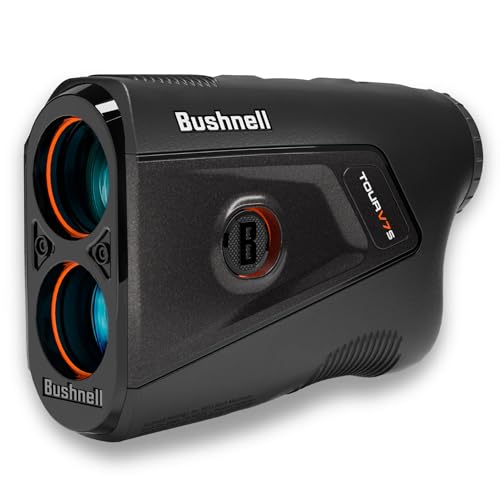
Bushnell Tour V7 Shift
Strengths
- Dual-color OLED
- Yardage recall
- LINK connectivity
- Tour-trusted slope
- Premium build
Trade-offs
- Very high price
- No USB-C charging
- Battery not rechargeable
The Tour V7 Shift is Bushnell’s play for tour-level performance, and it shows. The dual-color OLED display is a major upgrade, showing slope-adjusted yardage in green and actual distance in red, which helps you make faster club decisions. The Yardage Range Recall feature is surprisingly useful, letting you double-check your last shot without re-measuring. And with LINK-enabled technology, it syncs with Foresight and other Bushnell systems to suggest clubs based on your actual distances, a feature pros and data-driven amateurs will appreciate.
The PinSeeker with Visual JOLT remains one of the best flag-lock systems on the market, and the stabilization is top-tier. It’s expensive, but owners consistently report it feels worth it, especially with the full Patriot Pack included. If you want the closest thing to a pro’s tool, this is it.
Video review
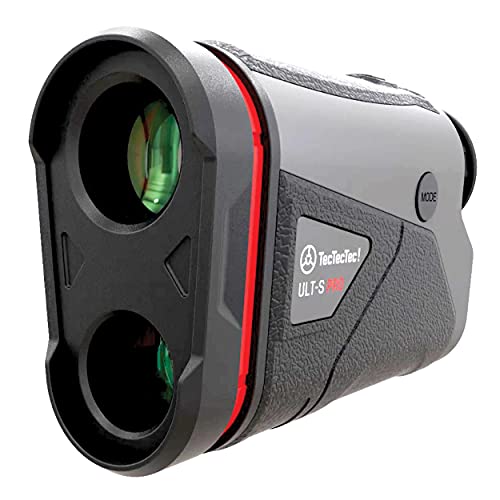
TecTecTec ULT-S Pro
Strengths
- TOLED display
- True stabilization
- Fog mode
- Slope on/off
- Vibration feedback
Trade-offs
- No app connectivity
- Average ergonomics
- Limited support network
The ULT-S Pro takes the solid foundation of the ULT-S and adds a high-contrast red TOLED display, which is a standout in bright sunlight. This is where it justifies the $30 premium, it’s far easier to read on sunny afternoons than standard LCDs, and the improved visibility pairs perfectly with the built-in stabilization and Hyper Read tech. The fog mode and vibration lock remain, and owners report excellent flag acquisition even on hazy mornings.
Like its sibling, it offers slope with a tournament-legal off switch and delivers reliable 1200-yard performance. For this price, the inclusion of TOLED in a stabilized unit is exceptional. It doesn’t have the brand recognition of Bushnell, but it matches or exceeds them in core features. If you want premium visibility without the Bushnell tax, this is the pick.
Product photos
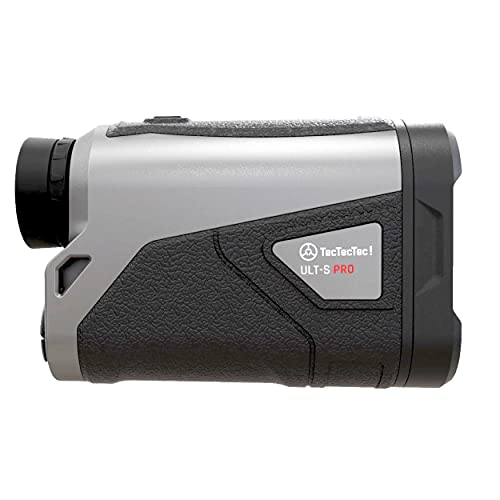
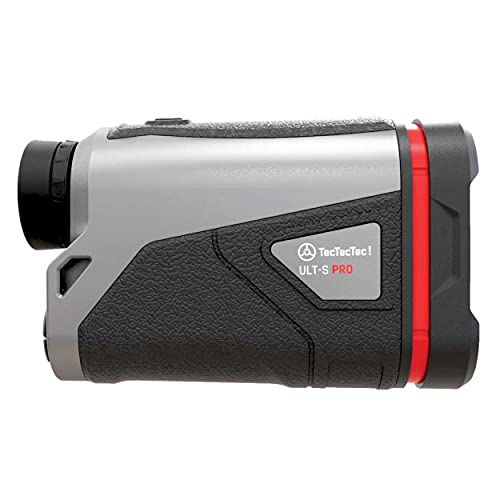


TecTecTec ULT-S

Strengths
- True stabilization
- Fog mode
- Slope switch
- Vibration feedback
- Affordable
Trade-offs
- LCD display
- Build quality average
- Limited brand support
The TecTecTec ULT-S is the budget pick that actually includes real stabilization, which is rare under $120. That tech, combined with Hyper Read delivering readings in under 0.3 seconds, makes it a strong contender for golfers who want pro-level features without the pro price. Owners consistently note how much easier it is to steady the image compared to non-stabilized models, especially on longer holes. The vibration lock works well, and the fog mode is a thoughtful addition for early rounds or damp climates.
It lacks the premium feel of top-tier brands, and the LCD display isn’t as sharp as OLED alternatives, but it covers the essentials: slope on/off for tournament play, 6X magnification, and solid 1200-yard range. For the price, it’s hard to beat if you’re after stabilization without breaking the bank.
Product photos


Acer Golf Rangefinder with Slope

Strengths
- Affordable price
- USB-C rechargeable
- 6 modes
- Vibration lock
- Magnetic mount
Trade-offs
- Basic optics
- No true stabilization
- Plastic build
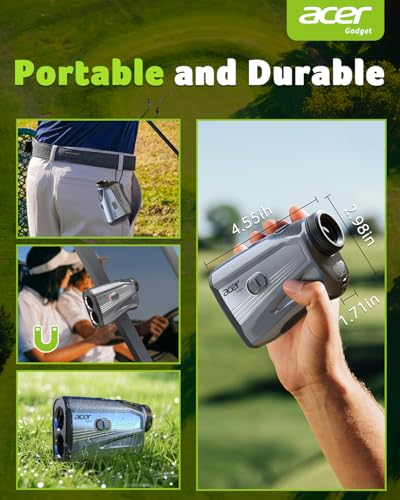
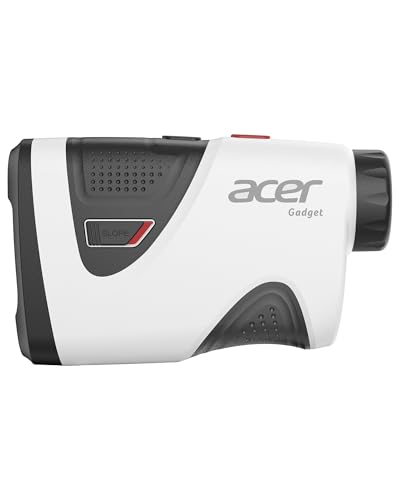
At under $90, the Acer Golf Rangefinder punches above its weight. The anti-shake tech isn’t full stabilization like in premium models, but owners report it significantly reduces wobble, making targeting easier, especially for beginners or in windy conditions. It locks onto flags quickly with ±0.5 yard accuracy and offers vibration feedback, which many find helpful for confirming the right target. The 6X HD optics are decent for the price, though not as crisp as higher-end units in low light.
Where it really shines is versatility. With six modes, including slope, angle, speed, and scan, it’s useful beyond the course, appealing to hunters or outdoor enthusiasts. The USB-C charging and 20,000-shot battery life are standout features at this price, and the magnetic attachment adds convenience. It won’t match a Bushnell or Nikon in optical clarity, but for the cost, it’s a solid, feature-rich option.
Product photos


Acer Pro Golf Rangefinder
Strengths
- 7X magnification
- External slope switch
- Magnetic mount
- USB-C charging
- Full accessory kit
Trade-offs
- No true stabilization
- Transflective LCD dim in shade
- Build not premium
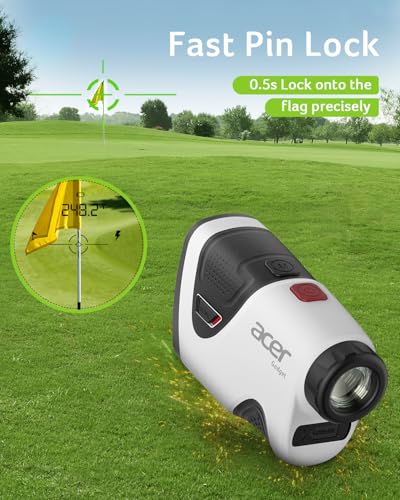
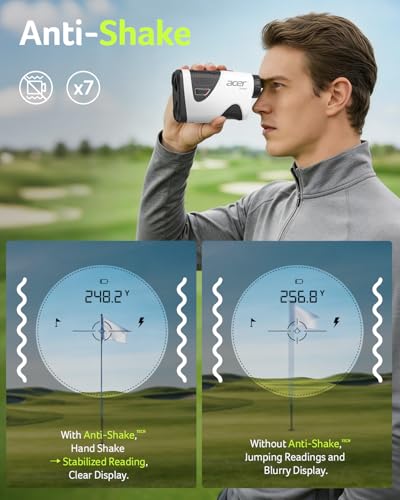
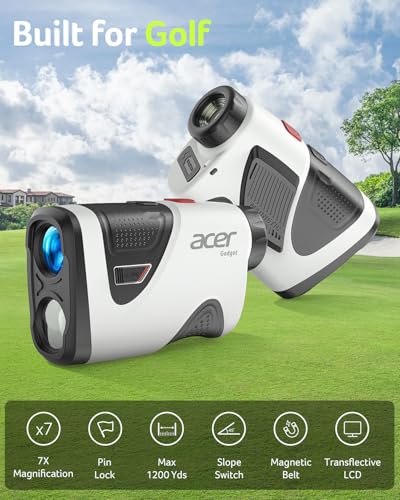
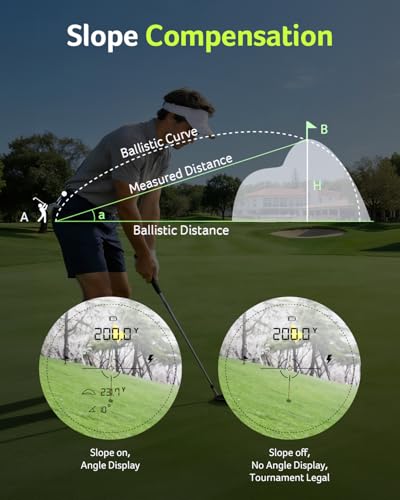
The Acer Pro feels like a clear step up from the base Acer model, and at just over $90, it’s positioned as the ideal budget upgrade. The jump to 7X magnification makes a noticeable difference in clarity, and the anti-shake tech works well enough to keep the image stable for most users. The external slope switch is a big plus, it’s tactile and easy to use, and turning slope off keeps the display clean for tournament compliance.
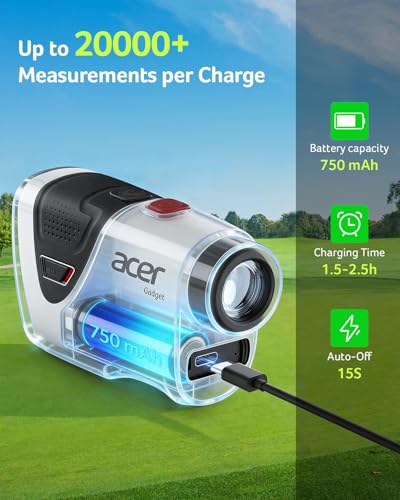
Owners praise the magnetic stripe and USB-C charging, which add real convenience on the course. The vibration lock is reliable, and the kit includes a full set of accessories, making it gift-ready. While it still doesn’t have true image stabilization, the combination of better optics, solid accuracy, and rugged IP54 rating makes this the smarter buy over the base model if you can spare the extra $10.
Product photos
Bushnell Tour V6 Shift

Strengths
- BITE magnetic mount
- Visual JOLT lock
- 1300-yard range
- Tournament legal
- Durable build
Trade-offs
- No yardage recall
- Older display tech
- No app pairing
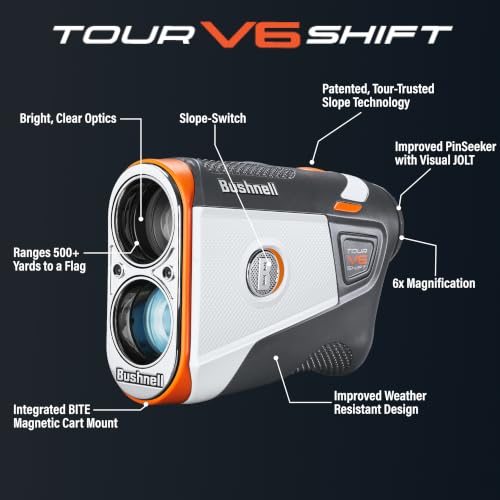
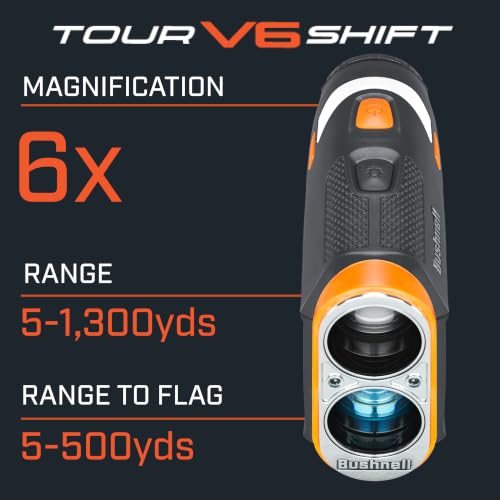
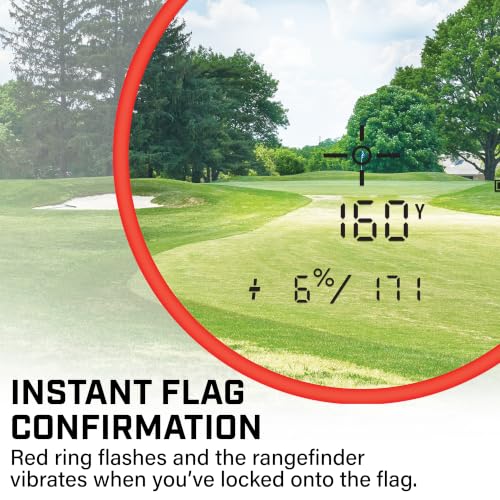
The Bushnell Tour V6 Shift is built for golfers who value convenience and cart play. The BITE magnetic mount is a standout, owners love being able to stick the rangefinder to their cart and grab it one-handed. It’s not just a gimmick; it keeps your device secure and within reach, which adds up over 18 holes. The PinSeeker with Visual JOLT delivers strong flag confirmation through both vibration and a flashing red ring, reducing misreads.
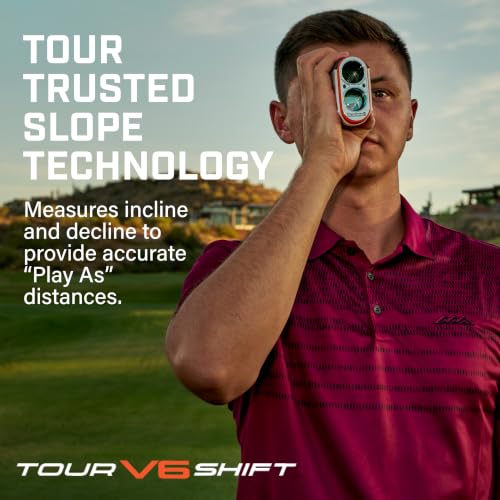
Optically, it’s solid: 6X magnification and 1300-yard range give it an edge over shorter-range models, and the stabilization is effective. It’s tournament-legal with a slope switch, and the build quality feels durable. While newer models like the V7 offer more, the V6 remains a strong pick, especially if you spend a lot of time on cart paths or prefer not to dig through a bag.
Product photos

How We Chose These golf rangefinders with stabilization
Rather than a hands-on lab test, my research focused on a detailed comparison of published specifications and features across numerous models. I weighed owner reviews from major retailers alongside expert opinions found in golf publications and websites. This allowed me to build a ranking based on how well each rangefinder meets the needs of golfers seeking accuracy and consistency. Ultimately, the goal was to identify the models that consistently deliver reliable performance, based on real-world user experiences.
For golf rangefinders with stabilization, I prioritized fast target acquisition and the clarity of the stabilized image. These are critical for quickly and accurately getting yardage to the pin, especially in windy conditions or with a less-than-steady hand. Slope compensation and the ability to quickly switch it off for tournament play were also heavily weighted, as they impact both casual and competitive golfers. Finding a balance between these performance features and overall value was key.
Specifications reliably indicate a rangefinder’s magnification, objective lens size, and maximum range. However, I placed more emphasis on owner feedback regarding the effectiveness of the stabilization technology and the speed of target lock. Reputation and consistent positive reviews concerning accuracy and durability were crucial in determining the final recommendations. You’ll find more information about a wider selection of options in our guide to the best golf rangefinders. If you’re specifically interested in a well-known brand, check out our rundown of Bushnell rangefinders.
What To Look For In golf rangefinders with stabilization
As someone who’s spent years crisscrossing the globe in search of the best golf experiences, I’ve seen firsthand how a quality rangefinder can shave strokes off your game. Stabilization, in particular, is becoming increasingly important.
A truly effective golf rangefinder with stabilization delivers consistently accurate distances, even with slight hand tremors. Key features to look for include optical stabilization, fast target acquisition, clear display readability in varying light conditions, and reliable slope compensation when permitted by the rules of play. Accurate ranging, ease of use, and build quality are also paramount.
Understanding Stabilization Technology
The core benefit of stabilization isn’t just about steadying the image; it’s about ensuring the laser consistently hits the intended target. Without it, even small movements can lead to inaccurate readings, especially at longer distances. Don’t assume all “stabilized” models are created equal. Some use digital image stabilization (which can sometimes introduce lag), while others employ optical stabilization – generally preferred for its responsiveness. Consider how your hands feel during a swing; if you naturally have a bit of a shake, optical stabilization is the way to go. Understanding how rangefinders work is also helpful to appreciate the importance of a stable platform for the laser.
Prioritizing Accuracy & Range
While a long advertised range is appealing, focus on realistic accuracy at the distances you typically play. Most recreational golfers rarely need to measure beyond 300 yards, so a unit that excels in that range with pinpoint accuracy is more valuable than one boasting 1,200 yards but struggling with consistency closer to the green. Look for models utilizing “Pinseeker” or similar technology (Bushnell’s name is the industry standard) that rapidly identifies and locks onto the flag, even with hazards in the background.
- A range of 200-300 yards is sufficient for most courses.
- Accuracy within 1 yard is ideal, but anything within 2 yards is generally acceptable.
- Consider the quality of the optics. Clear glass and coatings will make a significant difference, especially in low-light conditions or when dealing with glare.
Balancing Features & Value
Features like slope compensation, multiple targeting modes, and weatherproof construction all add value, but at a cost. Think about which features you genuinely need versus those that are simply nice to have. If you play competitive golf, you’ll want a model with a quickly accessible slope switch to ensure compliance with USGA rules. For casual play, slope compensation is a huge benefit. I’ve noticed a trend toward magnetic mounting systems (like the Bushnell Tour V6 Shift), which are incredibly convenient and prevent you from dropping your rangefinder. If you’re prone to shaky hands, exploring rangefinders for shaky hands could be a worthwhile investment.
Don’t overspend on features you won’t use. A simple, accurate rangefinder is better than a feature-packed one you don’t fully understand.
Golf Rangefinders with Stabilization Compared
This table provides a detailed specification comparison of several golf rangefinders featuring stabilization technology.
| Product Name | Stabilization | Max Range (Yards) | Slope Switch | Display Type | Battery Type |
|---|---|---|---|---|---|
| Nikon COOLSHOT PROIII STABILIZED | Yes | 1200 | Yes | LCD | CR2 |
| Bushnell Tour V7 Shift | N/A | N/A | Yes | OLED | CR2 |
| TecTecTec ULT-S Pro | Yes | N/A | Yes | TOLED/LCD | AAA |
| TecTecTec ULT-S | Yes | N/A | Yes | LCD | AAA |
| Acer Golf Rangefinder with Slope | Yes | 1200 | Yes | LCD | Rechargeable |
| Acer Pro Golf Rangefinder | N/A | 1200 | Yes | LCD | Rechargeable |
| Bushnell Tour V6 Shift | N/A | 1300 | Yes | LCD | CR2 |
Frequently Asked Questions
What battery types are most common in stabilized rangefinders?
Most stabilized rangefinders use either CR2 batteries or AAA batteries. Some newer models, like the Acer Pro Golf Rangefinder, are moving toward rechargeable batteries, offering convenience and reducing waste. Battery life varies by model and usage, but expect around several rounds per battery charge or replacement.
How does stabilization affect the price of a rangefinder?
Stabilization significantly increases the price; you’ll typically pay at least $200-$300 for a model with effective stabilization. The added cost reflects the more complex optics and technology required to counteract hand movement and maintain accuracy. However, the benefit of consistent readings can be worth the investment.
Can a stabilized rangefinder help with shaky hands?
Yes, a stabilized rangefinder is specifically designed to mitigate the effects of shaky hands. Optical stabilization, in particular, minimizes the impact of movement on the laser’s accuracy, providing a more reliable reading. If you struggle with tremors, it’s a worthwhile feature to prioritize over models without it.
Are stabilized rangefinders legal for tournament play?
Many stabilized rangefinders offer a quick and easy way to disable the stabilization feature and/or slope compensation, making them USGA-compliant for tournament play. Always check the specific tournament rules and ensure your rangefinder meets those requirements before use. You can find more information about precise laser rangefinders that meet these standards.
Do I really need stabilization if I have a fairly steady hand?
While stabilization is most beneficial for those with tremors, even golfers with steady hands can experience inaccuracies due to slight movements, especially at longer distances. It provides an extra layer of confidence in your yardage readings, ensuring greater consistency. If you also enjoy other outdoor activities, consider versatile rangefinders for multiple uses, you may find the stabilization helpful in other contexts.
The Bottom Line
Choosing a golf rangefinder with stabilization often comes down to balancing control with convenience. If you prioritize having the absolute clearest, steadiest image and don’t mind a higher price, the Nikon COOLSHOT PROIII STABILIZED is an excellent choice. It consistently receives high marks for its optical stabilization and overall accuracy.
For golfers seeking a blend of performance and value, or those already familiar with the Bushnell ecosystem, the Bushnell Tour V7 Shift stands out. If you’re considering alternatives, exploring GPS rangefinders might broaden your options, though they offer a different approach to course measurement. Budget-conscious players will appreciate the TecTecTec ULT-S, which delivers respectable stabilization and features at a more accessible price point.
Ultimately, the best rangefinder isn’t about the flashiest specs, but about consistently providing accurate distances you can trust. A clear view of the pin, fast target lock, and a reliable slope function (or the ability to quickly disable it) are far more valuable than maximum range or a host of rarely-used features. Don’t forget to also explore rangefinders with slope if that’s a key feature for your game.
