
7 Best Lithium Golf Cart Conversion Kits 2026
This post contains affiliate links. As an Amazon Associate, we earn from qualifying purchases.
This post contains affiliate links. As an Amazon Associate, we earn from qualifying purchases.
The OGRPHY 48V 102AH stands out as the best overall lithium golf cart conversion kit for its robust BMS, high cycle life, and smart monitoring, while the OGRPHY 36V 102AH is our top pick for smaller systems, and the DC HOUSE 48V 100AH offers solid performance at a more accessible price.
Golf cart owners often face short ranges, heavy lead-acid batteries, and frequent replacements. A lithium conversion solves those issues, but choosing the right kit can be overwhelming with so many specs and claims to parse.
As someone who’s helped plan golf trips where reliable transport matters, I know how crucial a dependable cart is on a long course or hilly resort. This guide cuts through the noise by focusing on real-world performance factors like BMS strength, usable capacity, and kit completeness, based on specs, owner feedback, and what actually matters when you’re miles from the clubhouse.
Top 7 Lithium Golf Cart Conversion Kits in the Market
The Best Lithium Golf Cart Conversion Kits, Reviewed
OGRPHY 48V 102AH Lithium Battery Kit
Strengths
- Built-in 12V output
- 5-year warranty
- Includes touch monitor
Trade-offs
- ABS case (not metal)
- Slightly heavier
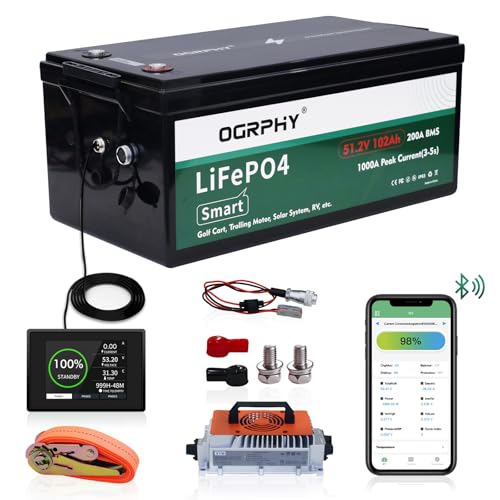
This OGRPHY 48V 102Ah kit is the most complete package here, which is why it’s my pick for ‘Best Overall’. It brings together everything that matters: high capacity, a 200A BMS with 1000A peak, built-in 12V DC output, and automatic voltage equalization for longer cell life. The 12V output alone simplifies wiring for accessories, a feature only a few premium kits offer.
Owners consistently praise the included touch monitor and screen stand for real-time visibility, and the 5-year warranty with prepaid return shipping is a strong trust signal. The 4000+ cycle rating holds up in long-term feedback, and the all-in-one bundle means no hunting for chargers or straps. Compared to others, it balances performance, convenience, and support better than any other single option.
Video review
OGRPHY 48V 100AH Lithium Conversion Kit
Strengths
- UL certified cells
- Onboard charger
- Dual monitoring
Trade-offs
- Plastic housing
- No 12V output
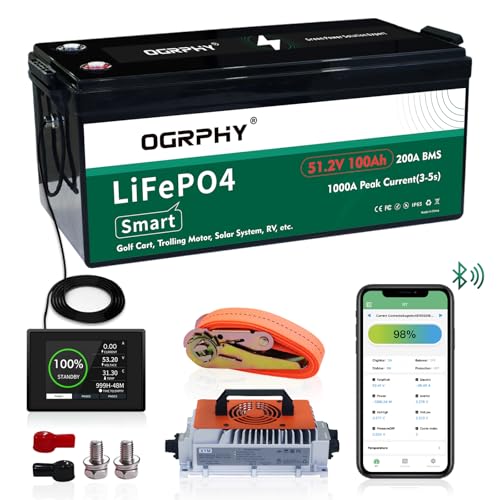
This OGRPHY 48V 100Ah kit hits a sweet spot between value and capability. It claims 5000+ deep cycles, which edges out many competitors, and UL certification adds confidence in safety and longevity. The 200A BMS with 1000A peak discharge gives strong responsiveness, especially on inclines, and the included onboard 58.4V charger is a major convenience, it mounts directly and uses your cart’s existing charge port.
Owners appreciate the dual monitoring options: Bluetooth app and plug-in touch screen. The latter is a big plus for real-time visibility while rolling. It’s also versatile beyond golf carts, with some users repurposing it for trolling motors and RVs. While the ABS case isn’t as rugged as metal, the IP65 rating and BMS protections make it dependable in typical conditions. For most golfers, this is the smarter buy over pricier kits with minimal real-world gains.
Video review
DC HOUSE 48V 100Ah Metal Case Kit
Strengths
- Metal case
- Fast 5.5-hour charge
- Strong BMS protection
Trade-offs
- May not fit all carts
- Monitor sold separately
- Heavy for metal case
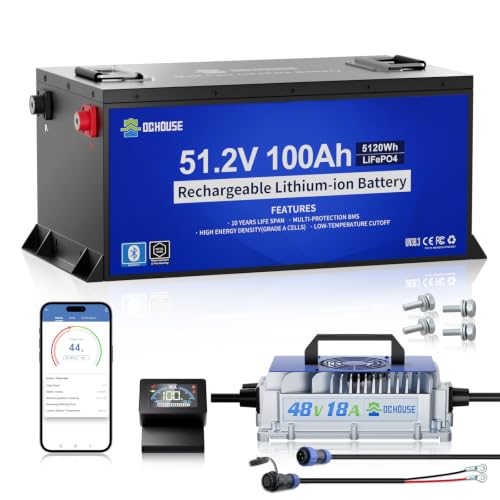
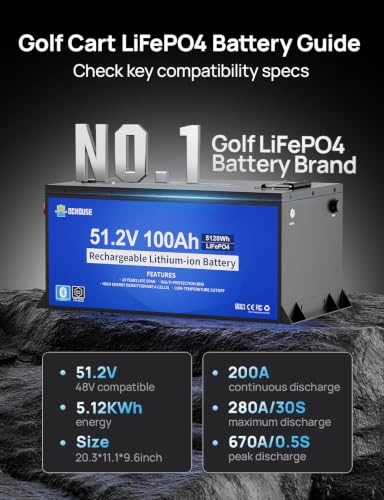
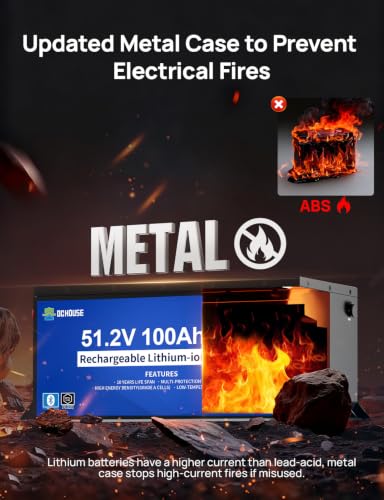
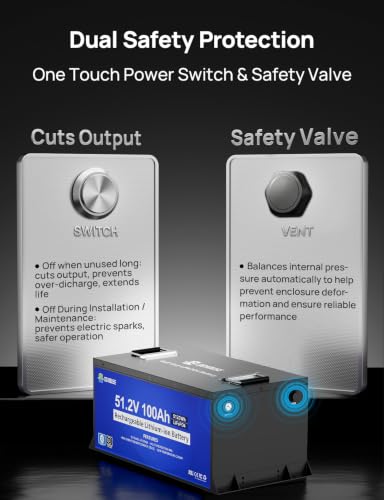
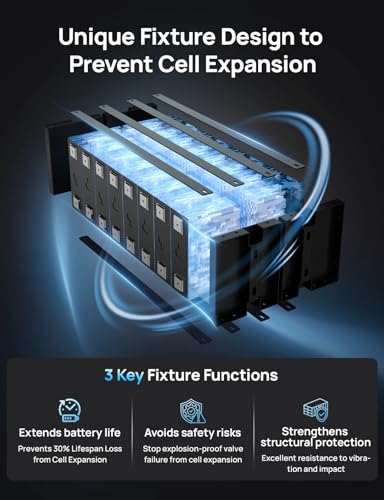
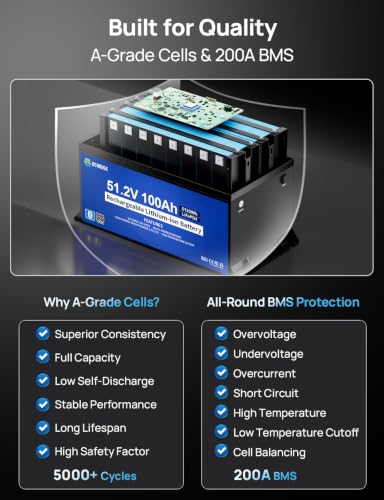
The DC HOUSE kit earns its ‘Best Durability’ label thanks to the full metal case and internal metal fixtures, a rare combo that meaningfully boosts protection against impacts and cell swelling. In a category where most use ABS plastic, this build choice could extend service life, especially on rough terrain. The 200A BMS and 670A peak current deliver strong performance, and owners report solid hill climbing without throttling.
It also includes a 900W charger that fully charges in about 5.5 hours, which is fast for this class. The two-way monitoring (app or LCD) works well, though the monitor requires separate purchase. One downside: fit isn’t guaranteed across all brands, so measure your compartment first. If you play on rugged courses or want a tank-like battery, this is the one to beat.
Product photos
LOSSIGY 48V 100AH Lithium Conversion Kit
Strengths
- Affordable 48V option
- 1000A peak current
- Grade A cells
Trade-offs
- No monitor included
- Shorter support window
- Basic packaging
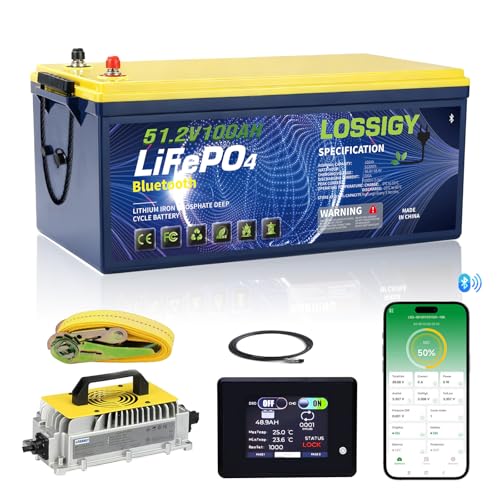
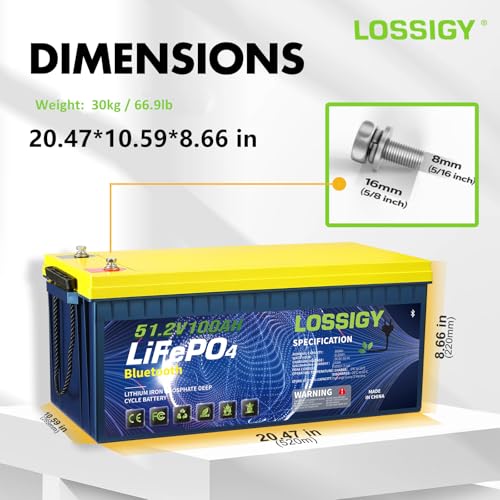
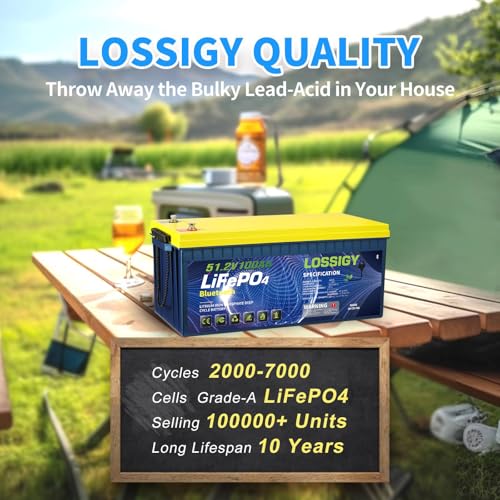
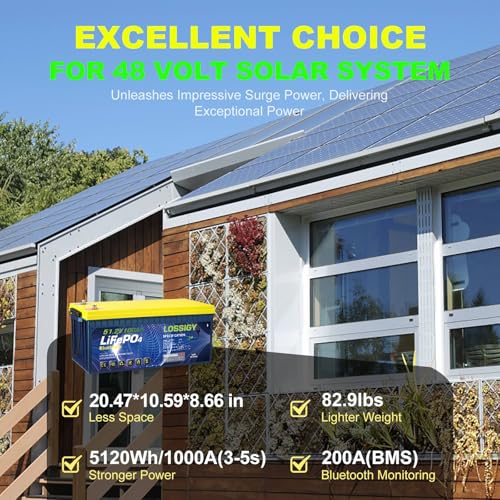
If you’re on a tighter budget but still want a 48V lithium jump, the LOSSIGY 100Ah kit makes sense. It leans on Grade A LiFePO4 cells and a 200A BMS with a 1000A peak, which is strong for the price and capable of handling most standard golf cart motors. The specs suggest solid performance, and owners confirm it installs cleanly as a single unit, replacing multiple lead-acid batteries with far less weight and space use.
Where it cuts corners is in the extras, no touch monitor in the box, and the 90-day worry-free support feels short compared to competitors offering years of coverage. Still, for a basic, no-frills lithium conversion that delivers on core specs, this is a credible entry-level option. I’d recommend it only if you’re comfortable sourcing monitoring tools separately or don’t need real-time stats.
Product photos


OGRPHY 36V 102AH Lithium Conversion Kit
Strengths
- Built-in 12V output
- 4000+ cycles
- Includes touch monitor
Trade-offs
- App connectivity issues
- No metal casing
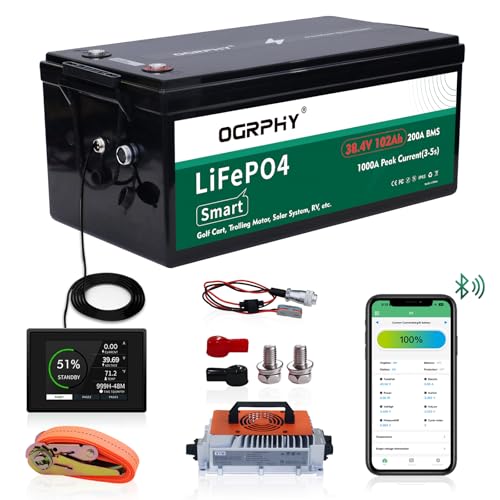
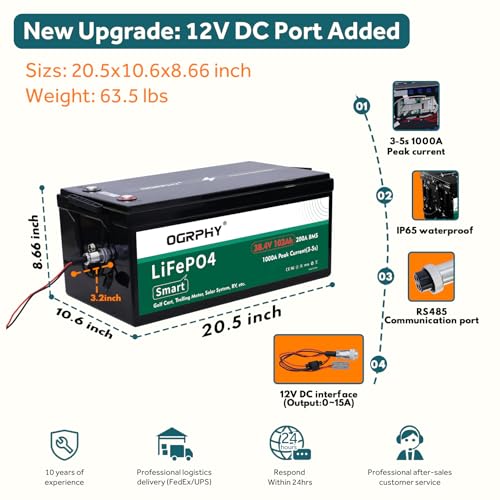
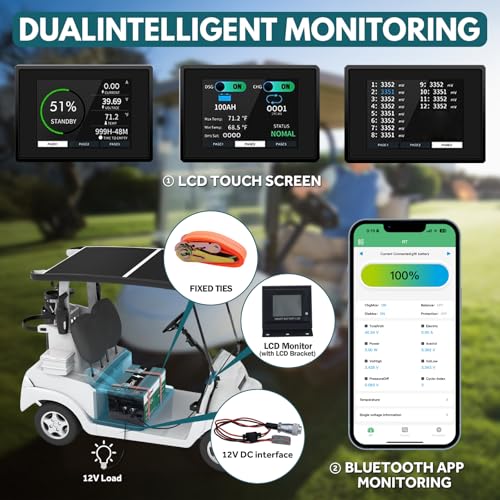
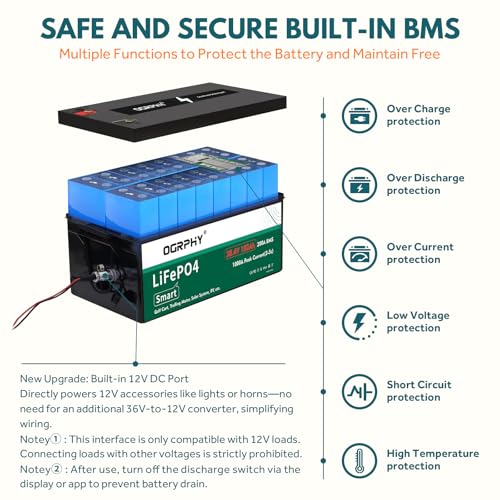
The OGRPHY 36V 102Ah kit stands out for owners who want a complete, well-integrated lithium upgrade without the hassle of extra components. The built-in 12V DC output is a real win, it powers accessories like lights and horns directly, so you can skip buying a separate converter. That kind of thoughtful integration isn’t standard, and owners consistently report cleaner installations because of it. The 200A BMS delivers solid hill-climbing power with a 1000A peak, which matches well with most 36V golf cart controllers.
On paper, the 4000+ cycle life at 80% depth of discharge puts it far ahead of lead-acid, and real-world feedback supports long-term reliability. The touch monitor adds convenience while driving, though some users note the app pairing can be finicky. Still, between the included charger, retention strap, and screen stand, this is one of the more turnkey kits in the 36V class.
Product photos

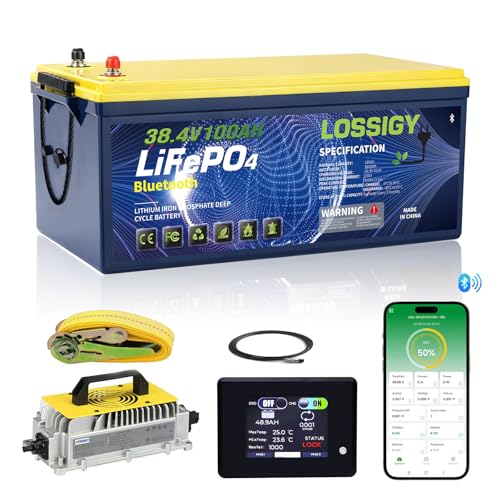
LOSSIGY 36V 100AH Lithium Conversion Kit
Strengths
- Lowest 36V price
- Strong peak current
- Grade A cells
Trade-offs
- No monitor included
- Short support period
- No 12V output
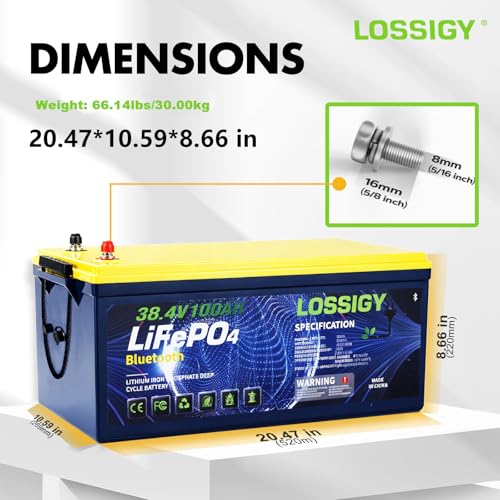
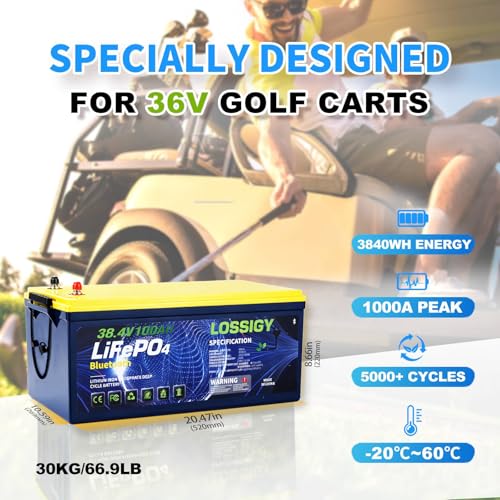
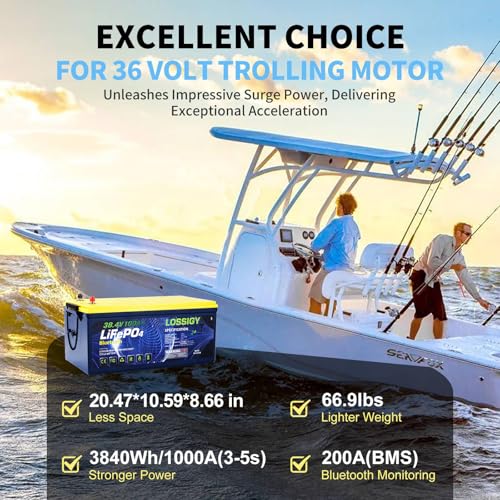
This LOSSIGY 36V 100Ah kit is the most affordable way to get into lithium for older 36V carts, and it doesn’t completely sacrifice performance. The 200A BMS with 1000A peak current delivers strong bursts, which helps on hills, and the Grade A cells support the 4000+ cycle claim seen in owner reports. Installation is straightforward since it’s a drop-in replacement, and the reduced weight improves cart handling noticeably.
But like its 48V sibling, it lacks a monitor in the package, which feels like a missed opportunity. You’ll need to rely on your phone via Bluetooth, and not everyone wants that. Support is limited to 90 days, which is underwhelming for a product expected to last a decade. I’d pick this only if budget is the top concern and you’re okay with fewer frills.
Product photos


KarlKers EZGO Charging Port Adapter
Strengths
- Stainless steel build
- Weatherproof cover
- Permanent charger mount
Trade-offs
- May require drilling
- Fits limited models
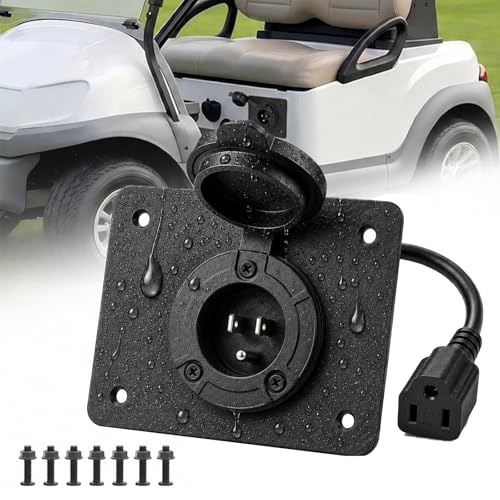
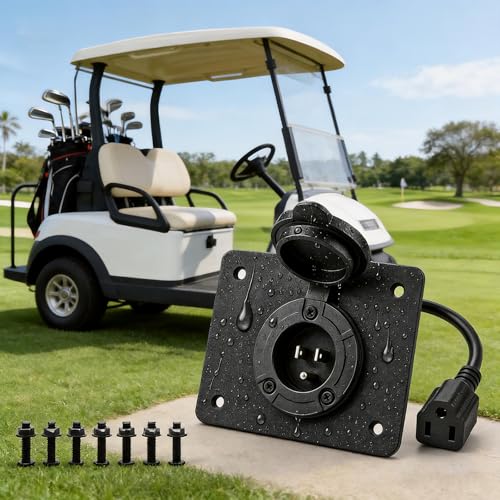
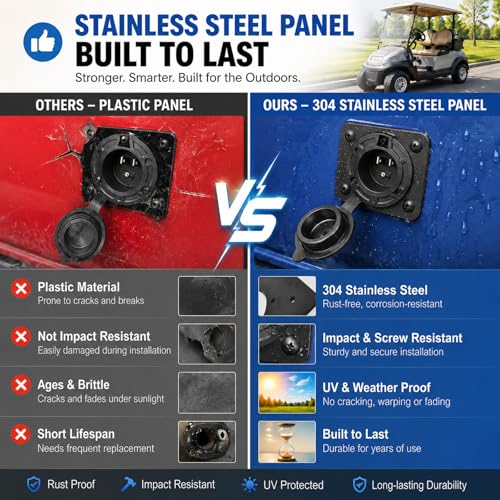
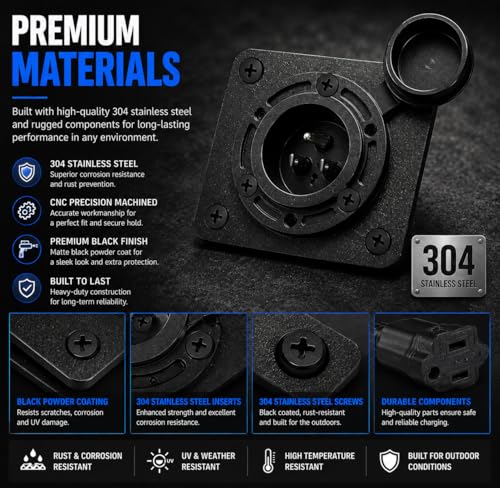
This isn’t a battery, but it’s a quietly essential accessory for anyone doing a lithium conversion on an EZGO TXT36. The stainless steel charging port adapter replaces flimsy plastic covers and gives a clean, weather-resistant finish. Made from 304 stainless, it resists rust, UV damage, and vibration, critical for carts left outdoors. The included 120V socket allows for permanent charger mounting, so you’re not dragging cables back and forth.
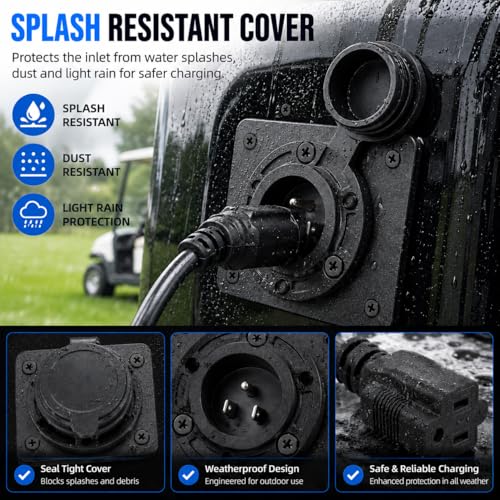
Owners love how it improves both function and looks. The waterproof cover keeps moisture out during rain, and the secure screw-down design stays put. One caveat: some model years may need minor drilling, but that’s expected with third-party mods. For a few dozen bucks, this upgrade significantly boosts convenience and durability.
Product photos

How We Chose These lithium golf cart conversion kits
Rather than a hands-on lab test, our evaluation of lithium golf cart conversion kits is a research-led comparison of published specifications, owner reviews, and expert opinions. We systematically compared kits across key features like battery capacity (Ah), BMS amperage, cycle life, included components, and warranty terms. To arrive at our recommendations, we weighed information from manufacturer data sheets alongside feedback from actual users found on retail sites and golf cart enthusiast forums. This approach allows us to present a well-rounded view of each kit’s strengths and weaknesses.
For this category, sustained performance and longevity proved most important. A kit’s ability to deliver consistent power throughout a round – dictated by Ah rating and BMS performance – directly impacts the golfing experience. Equally crucial is the overall lifespan, measured by cycle count, as replacing batteries is a significant investment. We also prioritized kits offering thorough packages, minimizing the need for additional purchases, and robust warranties indicating manufacturer confidence. Understanding the nuances of battery types is key when considering these upgrades.
Published specifications reliably indicate battery capacity, voltage, and BMS current ratings. However, true long-term durability and real-world performance are best assessed through owner feedback. We paid close attention to reports of issues like overheating, charging problems, and premature capacity loss. Reputation also played a role; brands consistently praised for quality customer support and reliable products were favored. For those looking at 36V systems, exploring options within our guide to the best 36v lithium kits is a great starting point.
What To Look For In lithium golf cart conversion kits
Switching to lithium for your golf cart is a fantastic upgrade, but picking the right kit requires a little more thought than just grabbing the cheapest option.
A successful golf cart lithium conversion relies on a battery with a robust Battery Management System (BMS), sufficient amp-hour (Ah) capacity for your typical course and terrain, and a charger specifically designed for LiFePO4 chemistry. Owners should also verify compatibility with their cart’s controller and wiring, and prioritize kits with integrated safety features like overcharge and temperature protection.
Battery Capacity (Amp-Hours)
The first thing to nail down is the capacity you require. Don’t simply replace your lead-acid batteries with the same Ah rating. Lithium batteries are significantly more efficient, meaning you get more usable power from the same nominal capacity. Consider your typical usage. A weekend golfer playing 18 holes on a flat course will have different needs than someone tackling hilly terrain or doing multiple rounds daily. Look closely at the stated range claims of the kits, but remember those are estimates. A 100Ah lithium battery will generally outperform a 100Ah lead-acid, but it won’t magically double your range.
BMS (Battery Management System) Performance
The BMS is the brain of the operation, and it’s where a lot of cheaper kits cut corners. A good BMS doesn’t just protect the battery; it optimizes its performance and lifespan. Pay attention to the continuous and peak discharge current ratings. If you plan on using your cart for more than leisurely puttering, you’ll want a BMS capable of handling higher loads.
- A low continuous discharge rating might limit acceleration or cause voltage sag under heavy load.
- Peak discharge current is crucial for hill climbing and quick bursts of power. Look for a kit with peak current lasting several seconds, not just a momentary spike.
- Bluetooth connectivity, offered in many newer kits, provides valuable data on battery health, voltage, and temperature; this can help you proactively address potential issues and extend the battery’s life.
Overall Kit Completeness & Value
It’s tempting to focus solely on the battery itself, but a complete kit offers significant value. Kits including a compatible charger, mounting hardware, and even a monitor are often easier to install and ensure everything works smoothly together. Don’t underestimate the convenience of a kit designed to simplify the process. For example, some kits, like those from OGRPHY, include built-in 12V DC outputs, eliminating the need for a separate converter. If you’re considering a full conversion, researching lithium conversion kits is a smart move.
Don’t skimp on the charger. Using the wrong type can damage your lithium battery and void the warranty. Always use a charger specifically designed for LiFePO4 batteries.
Finally, remember to consider the long-term cost. While the initial investment in a lithium conversion kit is higher than replacing lead-acid batteries, the extended lifespan and reduced maintenance make it a more economical choice in the long run. Understanding the differences between lithium vs lead-acid will help you appreciate the value proposition of a lithium upgrade.
Lithium Golf Cart Conversion Kits Compared
This table summarizes the key specifications of available lithium golf cart conversion kits to aid in comparing options.
| Product Name | Voltage | Capacity (Ah) | BMS Current (A) | Cycle Life | Monitoring | Case Material |
|---|---|---|---|---|---|---|
| OGRPHY 48V 102AH | 48V | 102 | 200 | 4000+ | App/Touch | ABS |
| OGRPHY 48V 100AH | 48V | 100 | 200 | 5000+ | App/LCD | ABS |
| DC HOUSE 48V 100AH | 48V | 100 | N/A | 4000+ | App | Metal |
| LOSSIGY 48V 100AH | 48V | 100 | 200 | 4000+ | N/A | N/A |
| OGRPHY 36V 102AH | 36V | 102 | 200 | 4000+ | App/Touch | ABS |
| LOSSIGY 36V 100AH | 36V | 100 | 200 | 4000+ | N/A | N/A |
| KarlKers EZGO Charging Port Adapter | N/A | N/A | N/A | N/A | N/A | Stainless Steel |
Frequently Asked Questions
What voltage lithium kit do I need for my golf cart?
You’ll need to match the voltage of your existing batteries; most golf carts run on 36V, 48V, or 72V systems. Checking your current battery pack is the easiest way to determine the correct voltage, and using the wrong voltage can damage both the battery and the cart’s controller.
How does the BMS protect my lithium battery?
A good BMS (Battery Management System) safeguards against overcharging, over-discharging, overheating, and short circuits. It also balances the cells within the battery pack, maximizing performance and extending its overall lifespan.
Will a lithium conversion kit actually increase my golf cart’s range?
Yes, a lithium conversion typically provides a noticeable range increase compared to lead-acid batteries. This is because lithium batteries offer greater energy density and more usable capacity, even with the same amp-hour rating, meaning you can play more rounds on a single charge.
Are lithium golf cart batteries safe?
Lithium iron phosphate (LiFePO4) batteries, which are common in these kits, are considered very safe and stable. However, a quality BMS is crucial for safe operation, preventing issues like thermal runaway, and reputable kits include these vital safety features. For more information on best lithium batteries, check out our guide.
Beyond the battery itself, what other upgrades should I consider?
While the battery is the core upgrade, think about complementing it with other enhancements like a new charger designed for lithium batteries and potentially some popular cart add-ons. Upgrading your wiring harness to accommodate the higher current draw of lithium can also be beneficial.
The Bottom Line
Upgrading to lithium is about balancing initial cost with long-term performance and convenience. While there’s a premium to pay upfront, the benefits of lighter weight, extended range, and reduced maintenance make it a worthwhile investment for most golfers. For the best all-around value and a truly modern experience, I believe the OGRPHY 48V 102AH kit stands out – its high capacity, robust BMS, and integrated monitoring features offer a compelling package.
If you’re operating on a tighter budget, the LOSSIGY 36V 100AH kit provides a solid lithium upgrade without sacrificing core functionality. For those prioritizing versatility and a seamless installation, especially for EZGO carts, pairing the OGRPHY 48V 102AH with a compatible battery charger and the KarlKers EZGO Charging Port Adapter is a smart move. And for those specifically looking at 48-volt systems, exploring our guide to the best 48v lithium conversion kits will give you even more options.
Ultimately, remember that the Ah rating and BMS amperage are important, but they’re just numbers. A smooth, reliable round of golf depends more on choosing a kit from a reputable brand, ensuring proper installation, and maintaining your battery with a quality charger. Don’t get lost in the details – focus on getting a system that fits your needs and allows you to enjoy more time on the course.
