
The Gil Hanse Golf Course Restoration Process & Cost Explained
This post contains affiliate links. As an Amazon Associate, we earn from qualifying purchases.
This post contains affiliate links. As an Amazon Associate, we earn from qualifying purchases.
Gil Hanse golf course restoration is a three-phase process of historical research, infrastructure modernization, and strategic design reinstatement. It’s not a cosmetic update. A full restoration like those at Baltusrol or Oakmont involves rebuilding greens, replacing irrigation and drainage, and can cost around $22 million per course, funded through club reserves and long-term borrowing without member assessments.
The scale is the first thing that hits you. It’s not moving a few bunkers. It’s 2,200 new irrigation heads, 20 miles of drainage, and nearly 100 people on site. The goal is to return a course to its original strategic intent while equipping it with subsurface systems that will last fifty years.
What follows is a breakdown of Hanse’s method, the staggering numbers behind famous projects, and why his approach has become the gold standard for clubs with historic designs and championship ambitions.
Key Takeaways
- Hanse’s work is a historic restoration, not a renovation. He uses archival research to guide design decisions, prioritizing the original architect’s intent over his own ideas.
- Infrastructure is the silent majority of the budget. Projects like Baltusrol’s Upper Course install over 2,000 sprinkler heads and miles of new HDPE pipe, upgrades you never see but that define course health.
- Costs are measured per course, not per project. Top-tier restorations run approximately $22 million per 18 holes, financed through club reserves and debt to avoid direct member assessments.
- The timeline is aggressive but phased. Projects like Oakmont are completed in under eight months by closing nine holes at a time, minimizing total member disruption.
- Hanse’s philosophy is one of restraint. He acts as a conduit for the original architect, famously avoiding the “slippery slope” of correcting perceived Golden Age design mistakes.
The Hanse Restoration Process: A Three-Phase Blueprint
How does a Gil Hanse restoration actually work? It follows a disciplined sequence that separates it from a simple renovation. The process starts long before a bulldozer arrives and continues until the last piece of sod is laid with surgical precision.
The Hanse team’s restoration of Southern Hills was termed a “historic restoration.” Hanse clarified they don’t renovate or purely restore. “We’re not putting bunkers back exactly in the same location… it was more using Maxwell’s original ideas and just updating it to the modern game.”
Phase 1: The Archaeological Dig
The first step is exhaustive historical research. Hanse and his partner, Jim Wagner, immerse themselves in archives. This means studying original construction photos, aerial shots from the 1930s, tournament programs, and any handwritten notes from the architect.
At Southern Hills, club historian Clyde Chrisman provided crucial early aerial photographs of the Perry Maxwell design. This research answers the fundamental question: what was the original sense of place and strategic intent? For a Donald Ross course like Worcester Country Club, the goal was to rediscover the subtleties of his 1913 routing, often using high-altitude aerials from the mid-1930s as the primary guide. This phase defines the entire project’s architectural philosophy.
Phase 2: The Subsurface Overhaul
Once the plan is set, the unseen work begins. Modern golf course design is impossible without modern infrastructure. This phase is the most expensive and least glamorous.
- Irrigation & Drainage: A course’s circulatory system is replaced. At Baltusrol’s Upper Course, this meant a new system with 2,200 heads and over 20 miles of drainage pipe. Old, brittle PVC connections are swapped for flexible HDPE piping.
- Green Reconstruction: Push-up greens are rebuilt to modern USGA specifications. This is about creating a stable, sand-based rootzone that ensures consistent firmness and drainage. At Worcester CC, greens were expanded by an average of 13%, recovering nearly 1,000 square feet of lost hole locations per green.
- Bunker Modernization: Bunkers are rebuilt using systems like Better Billy Bunker liner, a semi-permeable fabric that prevents washouts and reduces maintenance.
This work requires a fleet of machines and a small army. At the peak of the Baltusrol Upper project, there were nearly 100 construction workers on site, not including the club’s own grounds crew. The sound is a constant, low-grade industrial hum, beeping tractors and the deep rumble of earth movers.
Phase 3: The Strategic Reinstatement
Finally, the visible architecture is restored. Using the historical blueprint, Hanse’s shapers recontour fairways, reposition bunkers, and expand green surfaces to their original sizes. The key here is restraint.
Hanse famously avoids second-guessing the original architect. “It’s a very slippery slope, once you start guessing or thinking, ‘That’s not quite right,'” he has said. His role is to interpret and re-present, not to correct. Bunkers might be moved slightly “downrange” to challenge modern driving distances, but their style and placement remain faithful. The result is a course that feels timeless, not tweaked.
Case Study: Baltusrol’s $44 Million Transformation
Baltusrol Golf Club provides the perfect lens to understand the scale, cost, and outcome of a top-tier Hanse restoration. The club undertook a two-course project, tackling the Lower Course first (completed 2022) and the Upper Course second (reopened mid-2025).
| Aspect | Lower Course Restoration | Upper Course Restoration |
|---|---|---|
| Primary Goal | Undo decades of “Open Doctor” modifications and return to A.W. Tillinghast’s 1922 design. | Restore a course that had been left more alone, requiring less earth movement but critical infrastructure. |
| Key Infrastructure | PrecisionAire HVAC for greens, full irrigation replacement. | New irrigation (2,200 heads), 20+ miles of drainage, HDPE piping, Better Billy Bunker liners. |
| Green Work | Rebuilt and expanded to original sizes, restoring lost hole locations. | Existing sod carefully stripped, saved, and relaid on new USGA structures after a 32% expansion. |
| Reported Cost | ~$22 million | ~$22 million |
| Outcome | A bolder, more aggressive Tillinghast test, ready for the 2029 PGA Championship. | A more restrained, classic design that many architecture fans consider the club’s superior layout. |
The financial model is critical. The roughly $44 million total was funded through club reserves, anticipated revenue, and long-term borrowing. Notably, there was no special assessment or dues hike for members, a strategic decision to maintain membership morale and attract new interest. As noted in a Golfweek interview with Gil Hanse, the club’s leadership provided unwavering support, even when plans evolved mid-stream, such as the decision to restore two side-by-side greens on the Upper’s 14th hole.
The difference between the two courses also highlights Hanse’s adaptability. The Lower had been heavily altered for championships, so the restoration was more intensive. The Upper was a “sleepier” course closer to Tillinghast’s original. Hanse noted the Upper was “a joy” because they felt closer to the architect’s initial work. This kind of nuanced understanding is what separates a template-driven renovation from a genuine historic restoration.
Why Clubs Choose Hanse: More Than Just Aesthetic
Any architect can move dirt. Clubs hire Gil Hanse for a specific blend of historical fidelity, project management, and a philosophy that puts the course’s legacy ahead of personal signature.
First, his process is transparent and collaborative. He uses detailed, scaled plans, each box representing a 10-yard square, a method Donald Ross himself employed. This clarity allows club committees to understand the vision without micromanaging every bunker edge. It builds trust.
Second, he delivers on time and with minimal disruption. Look at the timelines: * Oakmont: Started March 2023, finished by Halloween 2023. They did it by closing the front nine first, reopening it by early summer, then closing the back nine after Labor Day. * Worcester Country Club: Started August 2023, mostly finished by year’s end. Play was never fully shut down, instead rotating through 15, 12, then 9-hole closures. * The Olympic Club Lake Course: Began November 2022, opened September 2023 despite a punishingly wet California winter.
This phasing is a logistical ballet. It shows respect for the membership’s desire to play and demonstrates that his team, often led by contractors like Total Turf Golf Services, can execute complex plans under pressure.
Where this goes sideways: Prioritizing cosmetic changes over infrastructure. A club can spend millions reshaping bunkers, but if the 40-year-old irrigation pipes underneath are failing, the course will never play consistently. Hanse’s projects reverse that priority.
Finally, his philosophy is about subtraction, not addition. At Southern Hills, a key change was the removal of nearly all rough and 300 trees, reopening Maxwell’s intended wide corridors and strategic angles. He expands short grass areas to promote ground play and recovers green surface to restore pinning options. This commitment to a course’s essential design elements often means undoing well-intentioned but cluttering changes made over decades.
The Architect’s Toolkit: Technology Meets Tradition
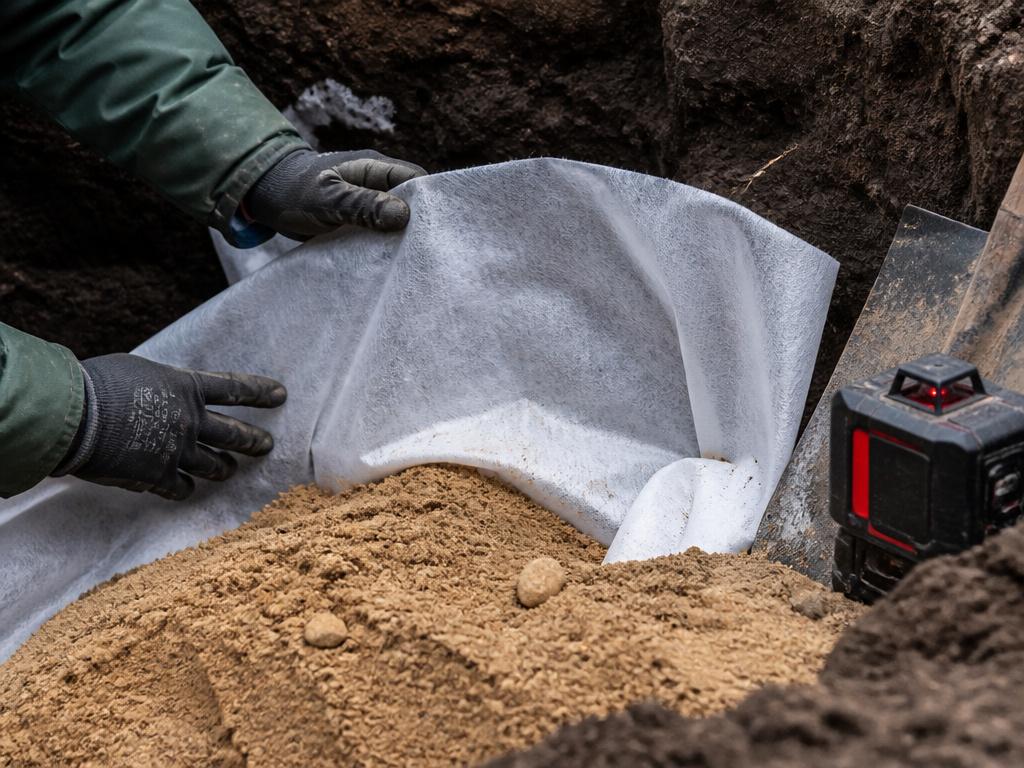
Hanse’s sites look like a blend of a historical dig and a civil engineering project. The toolkit is split between old-world craftsmanship and modern agronomy.
Modern Agronomy & Tech:
- Better Billy Bunker: This liner system is now standard. It creates a stable, porous layer between the sand and the soil, preventing contamination and reducing washouts by 90%. It’s a forever fix.
- PrecisionAire & Sub-Air Systems: Installed under greens, these networks of pipes can suck moisture out or blow air through the rootzone. They’re the ultimate defense against soft, muddy conditions, ensuring firm and fast surfaces regardless of weather. Baltusrol’s Lower Course uses this.
- Laser Grading & GPS: While the shaping is done by eye and feel, initial earthmoving and final grading for drainage rely on precision technology. It ensures that the 20 miles of new pipe actually has the fall to work.
Traditional Craftsmanship:
- The Shaper’s Eye: The final contours of a green complex or the ragged edge of a bunker are shaped by skilled operators like Hanse’s lead shaper, Shaymus Maley. This is an art form, not a software output. It’s what gives a restored bunker the same “look” as a 1920s original.
- Sod Preservation: At Baltusrol Upper, instead of reseeding greens, the existing sod was carefully stripped, stored, and relaid after the new subsurface was built. This preserved the mature, desirable grass blend (Poa/bentgrass) and accelerated recovery.
This hybrid approach is what makes a Hanse restoration durable. The technology ensures the course can be maintained at a high level with reasonable resources, while the craftsmanship ensures it retains its soul. It’s a practical application of sustainable maintenance principles for the 21st century.
Frequently Asked Questions
What’s the difference between a Gil Hanse restoration and a renovation?
Renovation imposes the modern architect’s vision onto the course. A Hanse historic restoration uses the original architect’s plans as the primary guide. He sees himself as a conduit, not an author. The work at Southern Hills is a classic example, using Perry Maxwell’s ideas updated for the modern game, not replacing them.
How long does a typical Hanse restoration take?
For an 18-hole course, the construction phase typically takes 8-12 months. The total project, including planning and grow-in, is 2-3 years. The active construction is aggressively phased, like at Oakmont, where the course was never fully closed, minimizing disruption to club golf facility management.
Why are these projects so expensive? Where does the money go?
The bulk of the cost, often 60-70%, is in infrastructure you never see: new irrigation systems (2,000+ heads), miles of drainage pipe, rebuilt USGA greens, and bunker liners. The visible shaping and landscaping is the smaller portion. A figure like $22 million per course reflects this complete, ground-up overhaul.
Do club members have to pay special assessments for these projects?
Not necessarily. Premier clubs like Baltusrol finance these projects through a combination of existing capital reserves, future operating revenue, and long-term borrowing. The explicit goal is to avoid direct member assessments, which can cause division. The Worcester CC project, at $3.7 million, was funded similarly with no dues hike.
Has Hanse ever declined a restoration project?
Yes. He initially hesitated before visiting Southern Hills, unsure about restoring a Perry Maxwell course in a region where he’d never worked. He only commits after the historical research phase proves the project has a clear, restorable architectural identity worth championing.
What is Gil Hanse’s design philosophy?
It is fundamentally minimalist and historically respectful. He believes in a course’s natural routing and strategic intent. He avoids adding features for the sake of difficulty or his own signature, focusing instead on revealing the original design’s brilliance. This aligns with the minimalist design philosophy of other modern greats but is applied through a restorative lens.
The Bottom Line
Gil Hanse’s restorations work because they solve two problems at once. They return strategic clarity and character to classic courses, and they install the hidden mechanical systems that ensure those courses thrive for another fifty years. The cost is a capital investment in a club’s core asset, not an expense.
If your club is considering a restoration, the first question is about archives. Do you have the historical photographs, the original plans, the clear vision of what you once were?Without that, you’re just renovating. With it, you can embark on the kind of transformative project that turns a great course back into the top-tier course its architect first envisioned.
The proof is in the playing. The restored courses are more interesting, more varied, and more resilient. They remind us that the best golf course architecture isn’t about constant change, but about a faithful, clear-eyed return to first principles.
