
Understanding Tom Doak’s Philosophy for Golf Course Design
This post contains affiliate links. As an Amazon Associate, we earn from qualifying purchases.
This post contains affiliate links. As an Amazon Associate, we earn from qualifying purchases.
Tom Doak’s golf course design philosophy is a consistent, ground-first minimalist approach focused on using the natural site, designing for the ball on the ground, and prioritizing strategic interest around the greens. His philosophy, solidified with his first solo design at High Pointe in 1989, intentionally moves minimal earth, often uses native soil over USGA-spec greens, and creates courses that feel discovered, not manufactured.
That 1989 starting point is the anchor. Doak’s execution has sharpened over 35 years, but the core belief, that you work with the land you’re given, hasn’t shifted. This isn’t just an aesthetic choice; it’s a functional one that dictates how a course is built, how it drains, and ultimately, how it plays for the majority of golfers who can’t stop the ball on a dime.
What follows is a breakdown of the three pillars holding up Doak’s work, a look at the courses that define it, and the specific, sometimes contrarian, choices, like skipping cart paths and standard greens, that separate his philosophy from the pack.
Key Takeaways
- Doak’s philosophy is built for the 50-80% of golfers who play a significant amount of their golf along the ground, making ground contour and approach angles critical.
- True minimalism, in Doak’s view, isn’t a ban on earthmoving but a mandate to move earth only when it serves the routing and natural flow of the course, and to conceal that work completely.
- He actively argues against USGA-spec greens on sites with good native soil, as seen at Pacific Dunes and St Andrews Beach, viewing the standard as a solution for poor sites, not a universal upgrade.
- The most important and challenging design work happens within 50 yards of the green, where strategic options and recovery shots are crafted for all skill levels.
- A Doak course is designed to evolve and mature over 15-20 years with tree growth and changing maintenance, not remain a static, manufactured landscape.
The Three Pillars of Doak’s Minimalism
Tom Doak’s design philosophy isn’t a loose collection of ideas. It’s a system built on three interlocking principles that dictate every decision from the initial walk-through to the final grass seed. Understanding these pillars is the fastest way to see what makes a Doak course different.
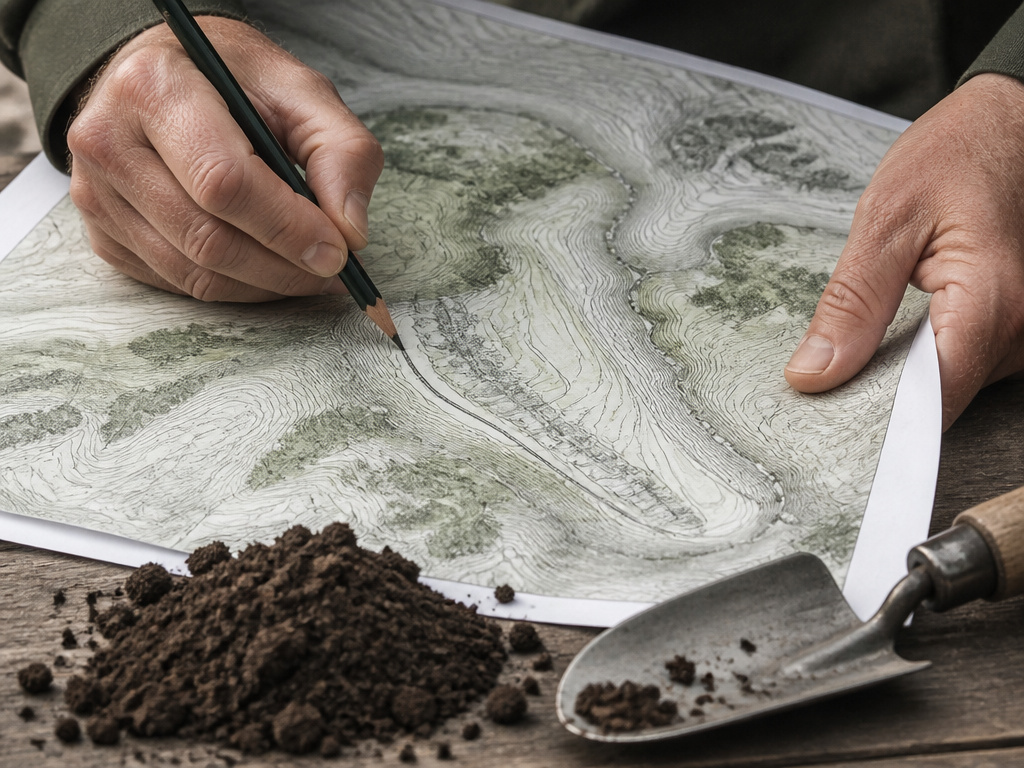
A minimalist design uses the natural movement of the land as its primary strategic tool. The architect’s role is to find the best routing within that land, build putting surfaces that fit the context, and then get out of the way, allowing the inherent slopes and contours to dictate the game. This approach prioritizes drainage, firm playing conditions, and a sense of timelessness.
The first pillar is Site Over Sculpture. Doak looks for the golf course that already exists in the land. His ideal site has natural movement, good drainage, and interesting features. The skill isn’t in creating something from nothing, but in seeing the potential and connecting the dots with a clever routing. This is why he’s drawn to sandy, rolling terrain, it provides the canvas. On a dead-flat or severely challenging site, the minimalist approach becomes even more valuable because moving less earth is the only way to stay on budget and create something that looks natural.
Where this goes sideways: Forcing a “signature” earth-moving feature onto a quiet piece of land. The result feels implanted, drains poorly, and often becomes a maintenance headache within five years as settling occurs.
The second pillar is The Ground Game. Doak operates on a specific statistic: somewhere between 50 and 80 percent of golfers play a fair amount of their golf along the ground. They can’t hit high, spinning shots that stop quickly. Therefore, what happens to the ball after it lands is the primary strategic tool. Fairways feed toward or away from hazards. Greens accept running shots. Bunkers are placed to catch misjudged run-outs, not just aerial misses. This philosophy directly connects to the classic strategic design principles of the Golden Age, where options mattered more than pure punishment.
The third pillar is Greens as the Arena. If the ground game is the journey, the greens and their surrounding complexes are the destination. Doak believes the average golfer shouldn’t be punished too harshly between tee and green. The real challenge, and the real artistry, is saved for the short game. This is where his creativity is most visible. He builds greens with multiple sections, subtle contours, and open entrances that allow for various types of shots. The difficulty scales with the player’s ambition. This focus on the green complex is what makes his courses endlessly interesting for players of all levels, a key element in any great golf course.
| Pillar | Core Principle | What It Rejects |
|---|---|---|
| Site Over Sculpture | Use the natural landforms; routing solves most problems. | Massive, signature earthmoving for its own sake. |
| The Ground Game | Design for the ball on the ground (50-80% of players). | Aerial-target golf that only rewards the elite ball-striker. |
| Greens as the Arena | Concentrate strategic interest and challenge within 50 yards of the hole. | Uniformly punishing players from tee to green. |
Signature Projects & Design Evolution
Doak’s philosophy is best understood through the courses he’s built. Each one serves as a case study, refining the principles while adapting to unique sites. His career arc shows a consistent philosophy, not a changing one.
His first solo design, High Pointe Golf Club in Michigan (1989), established the template. It was here his work was first labeled the foundation of a new “minimalist movement.” The course was built on a modest budget with a focus on the natural rolling terrain. Decades later, after a period of abandonment, Doak returned to renovate it, a full-circle moment that proved the longevity of his initial ideas. This project connects directly to the work of other famous architects from the Golden Age who also worked with the land, not against it.
The breakout project was Pacific Dunes at Bandon Dunes (2001). Here, on a spectacular oceanfront site, Doak’s philosophy found its perfect expression. The routing winds through massive natural dunes with minimal earthmoving. Crucially, he used native soil greens instead of importing USGA-spec mixes, arguing the existing sandy soil was superior for drainage and character. Pacific Dunes demonstrated that minimalism could produce a world-class, championship-caliber course that felt ancient.
Perhaps the purest expression is St Andrews Beach in Australia. Doak calls it “the highest expression of my minimalist philosophy.” The list of what it doesn’t have is telling: no USGA greens (using perfect native soils), no cart paths, and a simple irrigation system. The fairways are a mix of grasses to create a “fuzzier” surface, preventing the ball from always running to the bottom of hollows. This course is a direct rebuttal to the over-commercialized, cart-centric model of American golf. The entire construction process for a course like this is leaner, focusing on shaping what’s there rather than importing materials.
Later projects like Ballyneal in Colorado and CommonGround in Denver (a reversible course) show adaptability. Ballyneal is a wild, rugged course in the sandy prairie, while CommonGround is a smart, accessible public course. Both adhere to the pillars: natural routing, ground-game focus, and intricate greens. CommonGround, in particular, highlights Doak’s collaborative side and his belief in affordable, quality golf course architecture.
The Nuances: What “Minimalism” Really Means
 The term “minimalist” can be misleading. It suggests a hands-off, almost passive approach. For Doak, it’s a disciplined, active philosophy with clear boundaries and specific exceptions. Knowing these nuances separates a superficial understanding from a real grasp of his design principles.
First, minimal earthmoving is a guideline, not a dogma. Doak is clear that if major earthmoving on a few holes is the “best solution for the course as a whole,” you do it. The skill lies in knowing when it’s necessary and, more importantly, in concealing the work so the finished product looks untouched. On a terrible site, the ability to move less earth is the most important skill of all.
Second, he holds strong contrarian views on industry standards. His preference for native soil greens over USGA-spec builds is a major one. He views the USGA green profile as an invention for sites with bad soil, not a superior alternative for good sites. This stance affects playability, cost, and long-term character. Similarly, he is skeptical of the golf cart’s dominance, seeing it as sales-driven “progress” that removes exercise and walkability from the game, except for those who physically need it.
Common mistake: Equating minimalism with low cost or simple design. The intricate contouring of a Doak green complex or the precise shaping of a fairway hollow requires immense skill and attention to detail. The “minimal” part refers to the volume of dirt moved, not the intellectual effort.
Finally, Doak views a golf course as a living entity that will evolve. He knows that a course designed to be expansive and firm can, over 15 years, become tight and soft due to tree growth, changed mowing lines, and new grass varieties. The initial design must account for this maturation. This long-term perspective is why his courses often feel like they’ve been there for decades shortly after opening. It’s a central concept in sustainable golf course architecture.
How Doak’s Philosophy Shapes the Golfer’s Experience
 You don’t need to know the theory to feel its effects. Playing a Doak course delivers a distinct experience that flows directly from his three pillars. It’s why I’ve come to appreciate his work, even as someone who focuses on swing mechanics. Good golf should feel less complicated the more you understand it, and his designs reinforce that.
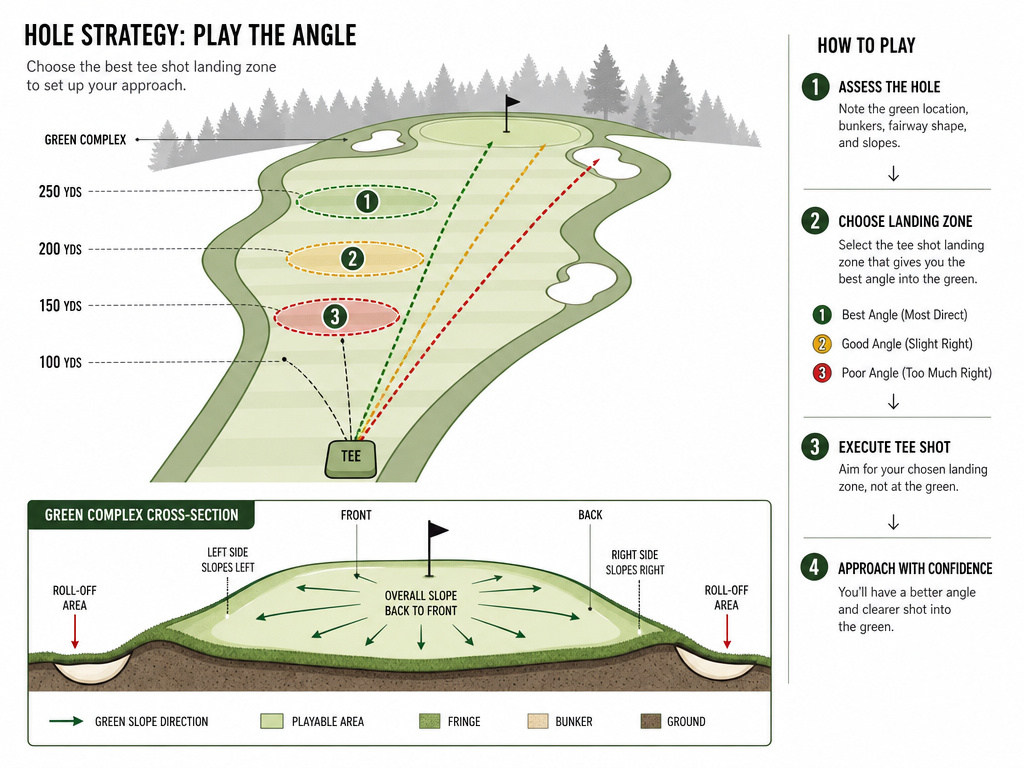
Off the tee, you’ll find width and options. Fairways are often generous, aligning with the principle of not punishing the average golfer excessively on the long shots. But the strategic bite comes from the angle of approach. The best position on the fairway is usually the one that opens up the green, not just the shortest one. This makes you think about placement, not just distance.
On the approach, you’re engaging with the ground. You can’t just fly the ball at every pin. You have to consider slopes, firmness, and where a missed shot might end up. Can you run it up? Should you land it short? This engages a part of the game that modern, soft, aerial-target golf often neglects. It’s a more creative and thoughtful challenge.
I’ve relied on the simple ‘pitch and catch’ drill for tempo for over a decade because it connects the swing to a natural, rhythmic feeling. Playing a Doak course feels like an extension of that principle, it connects your game to the ground in a rhythmic, natural way, rather than forcing everything through the air.
Around and on the greens is where the personality shines. The greens themselves are rarely flat. They have tiers, rolls, and subtle breaks that demand your full attention. Miss the green, and you face a recovery shot that is a test of touch and imagination. You might have a bump-and-run, a flop shot, or a putter from 20 yards off the green as valid options. This short-game arena is where scores are separated and where the course feels most alive. It exemplifies the strategic philosophy that offers choices instead of just penalties.
| Course Phase | Doak Design Signature | Player Experience |
|---|---|---|
| Tee Shot | Wide fairways with strategic angle requirements. | Feel of freedom, but need for planning. |
| Approach | Contoured ground that accepts running shots. | Engagement with terrain; multiple shot options. |
| Short Game | Intricate green complexes with open entrances. | Test of creativity, touch, and course management. |
The Doak Design Process: Routing First, Details Last
The sequence of how a Doak course comes to life is as important as the final product. It all starts with the routing, the sequence of holes across the property. Doak considers this the most critical step in golf course design. A great routing finds the natural holes, minimizes long walks between greens and tees, and presents a varied journey through the land’s best features. He’ll walk a site dozens of times, often for weeks, to find it. This intensive routing phase is why his courses feel so effortlessly woven into the landscape.
After the routing is set, the focus shifts to green sites. He stakes out the putting surfaces first, choosing locations that fit the natural landforms. Then, he and his team shape the immediate surrounds, bunkers, hollows, and collection areas. The fairways are often simply the corridors left between these green complexes, lightly shaped to enhance drainage and add subtle strategic contour. This “inside-out” method ensures the most important and detailed work gets the most attention.
Finally, there’s a focus on buildability and longevity. Doak’s Renaissance Golf Design team is known for having architects who also understand construction. They work closely with shapers on-site to ensure the subtle contours in their plans are executed perfectly. They specify grasses and construction methods, like those native soil greens, that will ensure the course plays firm and fast for decades. This hands-on, builder/architect model is a direct link to the practices of the Golden Age architects, who were also deeply involved in construction.
Frequently Asked Questions
What is Tom Doak’s most famous golf course?
Pacific Dunes at Bandon Dunes Golf Resort is arguably his most famous and influential work. Its dramatic routing through natural dunes and its championship caliber proved that minimalist design could compete on the world stage. Other iconic designs include Ballyneal, Barnbougle Dunes in Tasmania, and the newer Pinehurst No. 10.
Is Tom Doak a minimalist architect?
Yes, but with crucial nuance. He is the figure most associated with the modern minimalist movement in golf architecture. His philosophy prioritizes using the natural site, moving minimal earth, and emphasizing ground-game strategy. However, he does not dogmatically oppose earthmoving if it’s essential for the routing or overall quality of the course.
What makes Doak’s greens different?
Doak’s greens are often built with native soils on suitable sites, contrary to the standard USGA specification. They are also famously contoured with multiple tiers and sections, making them highly strategic and demanding precise approach shots. The complexes around them are designed to offer a variety of recovery options, emphasizing short-game creativity.
How does Doak’s work compare to Coore and Crenshaw?
Doak and the team of Coore and Crenshaw are the twin pillars of modern minimalism and share deep philosophical similarities: a reverence for natural sites, minimal earthmoving, and strategic design. Their styles are often distinguished by subtleties in shaping and green design, with Doak’s work sometimes exhibiting more dramatic contouring. Both firms are deeply influenced by the same Golden Age principles.
What is the “Doak Scale”?
The Doak Scale is a 0-10 course rating system created by Tom Doak and published in his Confidential Guide to Golf Courses. It evaluates courses on the quality of their design, setting, and overall experience. A “10” is considered a masterpiece, and the scale is highly influential among architecture enthusiasts for its critical, opinionated perspective.
The Bottom Line
Tom Doak’s philosophy is a 35-year argument for simplicity, intelligence, and respect for the ground you play on. It’s not about building less; it’s about building smarter, with the majority of golfers, those who play the ball along the ground, firmly in mind.
If you want to understand it, remember two numbers: 1989 and 50-80%. The first is High Pointe, the start of a consistent vision. The second is the range of golfers he designs for, which reframes every fairway contour and green complex. This focus is why his courses work for everyone, from the tour pro to the weekend player.
The real test of his philosophy isn’t in a magazine ranking, but in how a course feels after the first decade. Does it look like it belongs? Does it play better as it matures? By that measure, Doak’s minimalist rule isn’t just a style. It’s the most reliable way to build a golf course that lasts.
