
The Definitive Guide on How to Fix a Hook in Your Golf Swing
This post contains affiliate links. As an Amazon Associate, we earn from qualifying purchases.
This post contains affiliate links. As an Amazon Associate, we earn from qualifying purchases.
To fix a hook in golf, you must address the relationship between your swing path and clubface. The hook is caused by a closed clubface relative to an in-to-out swing path. The permanent fix involves a six-step process: weaken your grip, check your alignment, move the ball forward, shallow your downswing, control your lead wrist, and ensure your equipment isn’t draw-biased.
That relationship is the entire game. A hook feels powerful because you’re hitting from the inside, but the face slams shut. The fix isn’t about swinging less from the inside; it’s about keeping the face square to that path.
What follows is the diagnostic checklist, the six mechanical adjustments, and the specific drills that make the change stick. You’ll also learn the one rule about adjustable drivers that can get you penalized if you miss it.
Key Takeaways
- A hook is defined by a closed clubface at impact relative to an in-to-out swing path. A pull-hook starts left and curves further left.
- Weakening a “strong” grip is the most immediate fix, moving your lead hand so you see only 1-2 knuckles at address.
- Ball position is critical: playing the ball too far back promotes an exaggerated in-to-out path. Move it forward in your stance.
- Your lead wrist should be flat or slightly bowed at impact, not cupped. A cupped lead wrist opens the face and can cause a slice; excessive bowing closes it.
- Never adjust an adjustable club during a round if it was loose at the start. The USGA and R&A’s Equipment Rules only permit repairs for damage that occurs during the round.
What Is a Golf Hook (And What’s a Pull-Hook)?
A hook is a specific ball flight for a right-handed golfer. The ball starts to the right of the target and then curves aggressively to the left. It often feels solid because the swing path is from the inside, but the result is a loss of control and distance as the ball dives into trouble.
A pull-hook is a different, more destructive animal. This shot starts left of the target and then curves even farther left. It’s the product of an out-to-in swing path combined with a severely closed clubface. If your bad shot is a violent snaphook that never had a chance, you’re dealing with a pull-hook.
The Technical Snippet: A golf hook is caused by a closed clubface orientation at the moment of impact relative to the club’s swing path. For a right-handed player, a face that is pointed left of the path imparts a counter-clockwise spin on the ball, producing the characteristic right-to-left curve. The severity of the hook is determined by the difference between the face angle and the path direction.
Understanding this distinction is your first diagnostic tool. Where does your ball start? If it starts right and then curves, you have a standard hook rooted in an in-to-out path. If it starts left and curves further left, your primary issue is an out-to-in path, and you need to look at faults like coming over the top.
| Shot Shape | Start Direction | Curve Direction | Primary Cause |
|---|---|---|---|
| Hook | Right of Target | Left | In-to-Out Path + Closed Face |
| Pull-Hook | Left of Target | Further Left | Out-to-In Path + Severely Closed Face |
| Slice | Left of Target | Right | Out-to-In Path + Open Face |
| Draw | Right of Target | Gentle Left | In-to-Out Path + Slightly Closed Face |
The 6-Step Process to Fix a Hook
This sequence addresses the root causes in order of impact. Start at Step 1 and move down only after you’ve made the change.
1. Weaken Your Grip
Your hands are the only connection to the club. A “strong” grip, where your lead hand (left hand for righties) is rotated too far to the right on the handle, is the most common hook catalyst. You’ll see three or more knuckles at address. This grip position makes it incredibly easy to rotate the face closed through impact.
The Fix: Weaken your lead hand grip. Rotate your hand to the left so you only see one or two knuckles. Your trail hand should mirror this, sitting more on top of the club rather than underneath it. This small change feels unnatural at first, but it physically restricts your ability to slam the face shut.
2. Check Your Alignment and Stance
Your body instinctively follows where you’re aimed. If you’re aligned to the right, your swing path will naturally move more to the right, an in-to-out path. Combine that with a closed face, and the hook is guaranteed.
The Fix: Place a club on the ground parallel to your target line. Align your feet, hips, and shoulders to that club. Most chronic hookers are shocked to see how far right they’re actually aimed. For a deeper dive on how your feet position affects the shot, our guide on open vs. Closed stance breaks down the mechanics.
3. Move the Ball Forward in Your Stance
A ball played too far back, toward your right foot, forces you to swing excessively from the inside to make contact. This amplifies the in-to-out path.
The Fix: With your driver, the ball should be inside your lead heel. With irons, play it in the center of your stance. Moving it forward encourages a shallower, more neutral path and gives you time to square the face without over-rotating.
4. Shallow Your Downswing
A downswing that is too steep from the inside creates a “stuck” position, where your hands are trapped behind your body. The only way to hit the ball is with a violent release of the hands, closing the face.
The Fix: Feel like your hands drop straight down at the start of the downswing, rather than pulling inward. The “shallowing” motion keeps the clubhead outside your hands longer, promoting a neutral path. This directly counters the casting motion that often accompanies a hook.
5. Control Your Lead Wrist
This is the micro-adjustment that seals the deal. At impact, your lead wrist should be flat or slightly bowed. A cupped lead wrist (bent backward) opens the clubface; a severely bowed wrist (bent forward) closes it.
The Fix: Practice half-swings focusing on keeping the back of your lead hand flat facing the target through impact. Tools like HackMotion provide biofeedback on this exact metric, but you can use the feeling of “covering the ball” with your lead hand.
Where this goes sideways: Trying to hold the face open through impact with your hands. You’ll block shots way to the right. The goal is a neutral release, not a manipulated hold-off.
6. Check Your Equipment
You might be fighting technology designed to help a slicer. Many modern drivers and fairway woods have adjustable hosels with “draw” settings. These actually promote a closed face at impact.
The Fix: Check your driver’s hosel setting. If it’s in “D” or “Draw,” change it to “Neutral” or “Standard.” Also, ensure you’re not using a draw-biased driver model if your miss is consistently left. The fundamentals of how to hit a driver start with neutral equipment.
Common Hook Fixes and What to Avoid
The internet is full of quick tips. Some help, some hurt. Here’s the breakdown of what actually works versus what makes the problem worse.
| Fix | Why It Works | The Risk If Overdone |
|---|---|---|
| Weaken Grip | Limits hand rotation, prevents face from closing. | Can lead to a weak slice if hands become too passive. |
| Ball Forward | Encourages neutral path, allows time to square face. | Can cause thin or topped shots if weight stays back. |
| “Swing Left” Feel | Counteracts the extreme in-to-out path. | Can ingrain an over-the-top move if not paired with face control. |
| Flat Lead Wrist | Delivers a square clubface at impact. | Can become a “hooding” motion, delofting the club and hitting low bullets. |
The part nobody mentions: Aiming further right to “allow for the hook” is the worst thing you can do. It reinforces the faulty in-to-out path and makes the hook more extreme. Always align to your target.
A hook and a slice are opposites on the ball flight laws spectrum. If you understand the causes of a slice, you can better understand the mirror-image fault in your hook. The same principles apply, just in reverse.
When Your Equipment Is the Problem (And the Rules)
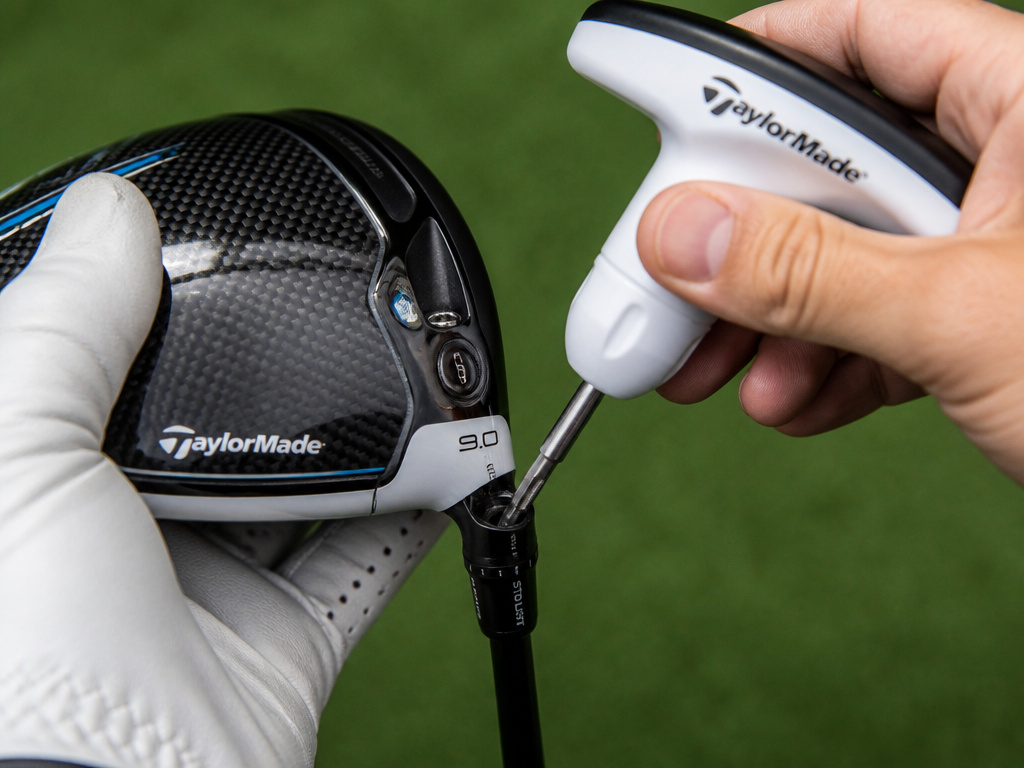
Sometimes the hook isn’t in your swing. A loose clubhead can cause inconsistent contact and twisting at impact, leading to erratic ball flight. The telltale sign is a clicking sound or a feeling of instability.
If you have an adjustable driver and a screw feels loose, you must know the rule. According to The R&A and USGA Equipment Rules 2024 v1.3, Rule 4.1a(2), you may repair a club damaged during a round. However, if the screw was loose before the round started, you cannot tighten it. Doing so would be altering your club’s characteristics during the round, which is a penalty.
Before you start: If a clubhead is loose, do not play with it. The epoxy bond is failing, and a head can fly off, posing a serious safety risk. This is a workshop fix, not a range-side adjustment.
For persistent head issues, the problem may be a damaged shaft or hosel, moving the repair into the realm of professional golf club reshafting. Repeated failures indicate a deeper build flaw.
Frequently Asked Questions
Why do I hook my driver but not my irons?
This is usually a combination of setup and swing length. With the driver, the ball is forward, the club is longer, and swings are more aggressive. This amplifies any in-to-out path tendency. You may also be using a stronger grip with the driver or have it set in a draw bias. Check your driver’s setup and settings first.
Can a strong grip ever work?
Yes, but it requires exceptional hand timing to square the face. Many tour players use a strong grip (e.g., Dustin Johnson) but pair it with a specific wrist action (lead wrist bowing) to control the face. For amateurs, a neutral grip is far more reliable. Exploring different golf grip types can help you find a comfortable, neutral position.
Is fixing a hook easier than fixing a slice?
Generally, yes. A hook means you have an underlying power source, an in-to-out path, which is a good thing. You just need to control the face. Fixing a slice often requires rebuilding the swing path from the ground up, which is a larger mechanical change.
What’s the one drill to stop hooking?
The “Gate Drill.” Place two alignment sticks or clubs on the ground just wider than your clubhead, parallel to your target line and about a foot in front of your ball. Practice hitting shots without touching the gates. This forces a neutral path and immediate feedback. If you hook it, your club is exiting too far to the left.
Before You Go
Fixing a hook is a process of subtraction, not addition. You already have the power move. Your job is to remove the excess rotation that closes the face. Start with your grip, weaken it until you see only two knuckles. Then check your alignment; you’re probably aimed too far right. Move the ball up and focus on a flat left wrist through impact.
The hook feels good until you see where it finishes. A straight shot feels controlled and finishes where you’re looking. That’s the trade. Do the six-step checklist in order. The change will feel wrong for a week, then it will start to feel solid. Then it will just be your swing.
