
The Self Taught Swing and Enduring Legacy of Lee Trevino
This post contains affiliate links. As an Amazon Associate, we earn from qualifying purchases.
This post contains affiliate links. As an Amazon Associate, we earn from qualifying purchases.
Lee Trevino’s self-taught swing and legacy are defined by a technique built for absolute predictability. He developed a unique, repeatable motion hitting thousands of balls off bare Texas hardpan in windy conditions, which produced a reliable controlled fade and eliminated the destructive hook. This method, criticized by instructors, won him six major championships and proved that functional consistency beats textbook form.
The mechanics weren’t an accident. They were a direct adaptation to his environment. Trevino needed a ball flight he could trust under any pressure, and he built a system of compensations, a strong grip, an open stance, a bowed left wrist, that locked in that result.
What follows is a breakdown of how that swing worked, why it held up under major championship pressure, and the practical lesson it leaves for every golfer: knowing where your ball is going matters more than how your swing looks.
Key Takeaways
- Trevino’s swing was forged on “Texas hardpan”, bare, windy ground, which demanded a low, penetrating ball flight and eliminated any margin for a fat shot.
- His signature controlled fade was a strategic choice to remove the hook, golf’s most destructive miss, from his repertoire entirely.
- Key mechanical compensations included a very strong grip, an open stance, and a bowed left wrist at the top, which created a repeatable, though unorthodox, clubface delivery.
- He credited watching Ben Hogan practice with inspiring his move to a fade and emphasizing lower-body control.
- Trevino’s legacy is the validation of self-reliance and functional repeatability, challenging the idea that there is only one “correct” way to swing a golf club.
How Did Lee Trevino Develop His Self-Taught Swing?
The conditions were the teacher. Trevino didn’t learn on manicured fairways; he practiced on what locals called “Texas hardpan”, bare dirt with little grass, often in strong wind. This environment dictated everything. A fat shot was impossible; the club would bounce into the ball. He needed a shallow, sweeping strike that produced a low, penetrating ball flight he could control in the breeze.
Trevino estimated hitting at least 300 practice balls a day in these conditions. The constant wind and unforgiving surface taught him to control curvature and trajectory through feel and repetition, not theory.
He started as a caddie and worked at Hardy Greenwood’s driving range in Dallas. With no formal instruction, his entire focus was on outcome: making the ball go where he intended. This trial-and-error process under pressure, he famously played for bets using a heavily taped 26-ounce Dr. Pepper bottle, forced efficiency. The goal was never aesthetics. It was reliability.
The Mechanics of a Repeatable Fade
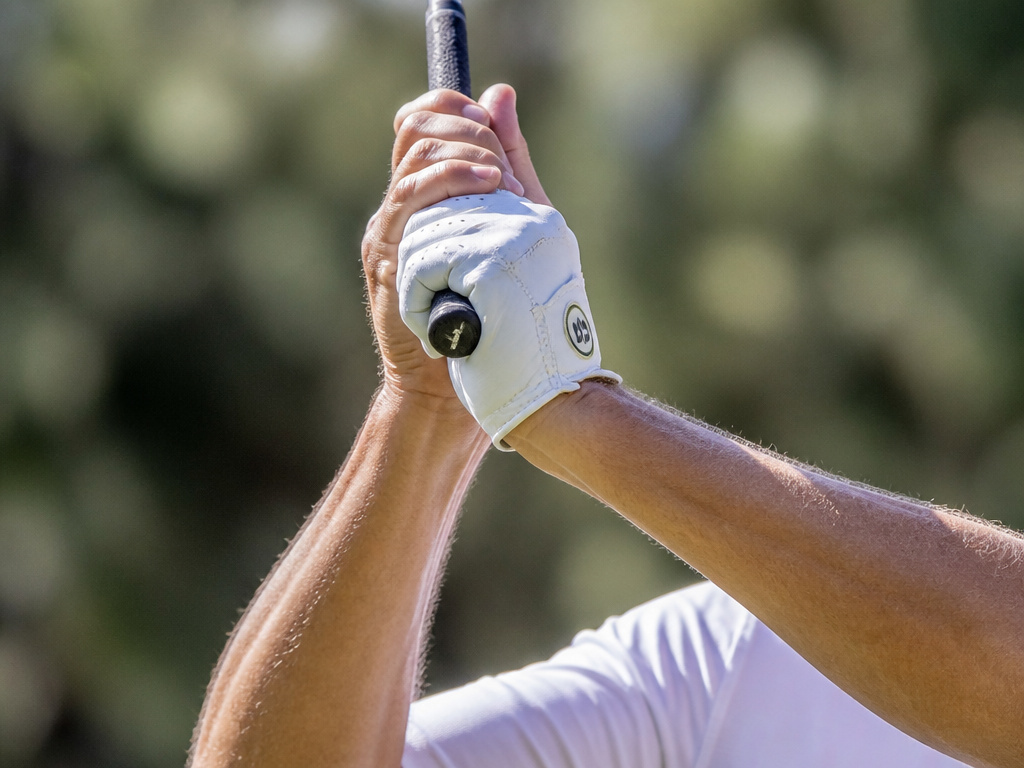
Instructors of his era saw multiple “flaws.” His stance was wide open. His grip was unusually strong. His backswing was compact. But these weren’t mistakes; they were interconnected parts of a system designed for one thing: a predictable left-to-right ball flight.
| Compensation | Typical Result | Trevino’s Adjusted Result |
|---|---|---|
| Strong Grip | Promotes a closed face, causing a hook. | Combined with a bowed left wrist, it stabilized the face. |
| Open Stance | Can lead to an out-to-in swing path and a slice. | Aligned his body for his desired fade path from the start. |
| Bowed Left Wrist | Can deloft the club and encourage a hook. | Counteracted the strong grip, keeping the face slightly open. |
The genius was in the combination. This system made a hook structurally very difficult to produce. Peter Finch, a respected teaching professional, later analyzed Trevino’s swing on video and noted its incredible consistency. “The beauty of it is that he does it every single time.” For Trevino, that repeatability was the whole point. He built a golf swing rhythm that was entirely his own.
The feel of this swing is distinct. On hardpan, you hear a sharp click at impact, not a soft thump. The ball gets out quickly, with a lower trajectory that holds its line in the wind. It’s a sensation of brushing the ground, not taking a divot.
The Ben Hogan Influence and a Strategic Shift
While entirely self-taught, Trevino had a pivotal moment watching an idol. In the early 1960s, he saw Ben Hogan practicing at Shady Oaks Country Club. Hogan was hitting balls with a caddie barely having to move to retrieve them. Trevino noticed how Hogan used his lower body aggressively to control a fade.
At the time, Trevino played a draw. Inspired, he deliberately weakened his grip and worked on leading more with his hips. This shift was strategic. It moved him toward the controlled fade that would define his career. As detailed in his Britannica biography of Lee Trevino, this transformation helped turn him into one of the game’s elite ball-strikers. It wasn’t about copying Hogan’s swing, but adopting a philosophy: control the ball with your body, not just your hands.
Proof Under Pressure: The 1971 Summer
The ultimate test of any method is performance. In the summer of 1971, Trevino put on a 20-day display that may never be matched. He defeated Jack Nicklaus in an 18-hole playoff to win the U.S. Open at Merion. Two weeks later, he won the Canadian Open. The next week, he claimed The Open Championship at Royal Birkdale.
Three national opens in three weeks. His self-built, repeatable swing held firm under the greatest pressure. Nicklaus later admitted, “When Lee is playing well, there is no one in the world I would rather not face.” This stretch proved his self-taught golf method wasn’t just functional; it was championship-proof.
Where this goes sideways: Trying to graft one piece of Trevino’s swing onto a conventional motion. His mechanics were a closed, interdependent system. Isolating his strong grip without his bowed wrist will cause a hook.
The Practical Lesson: Consistency Over Aesthetics
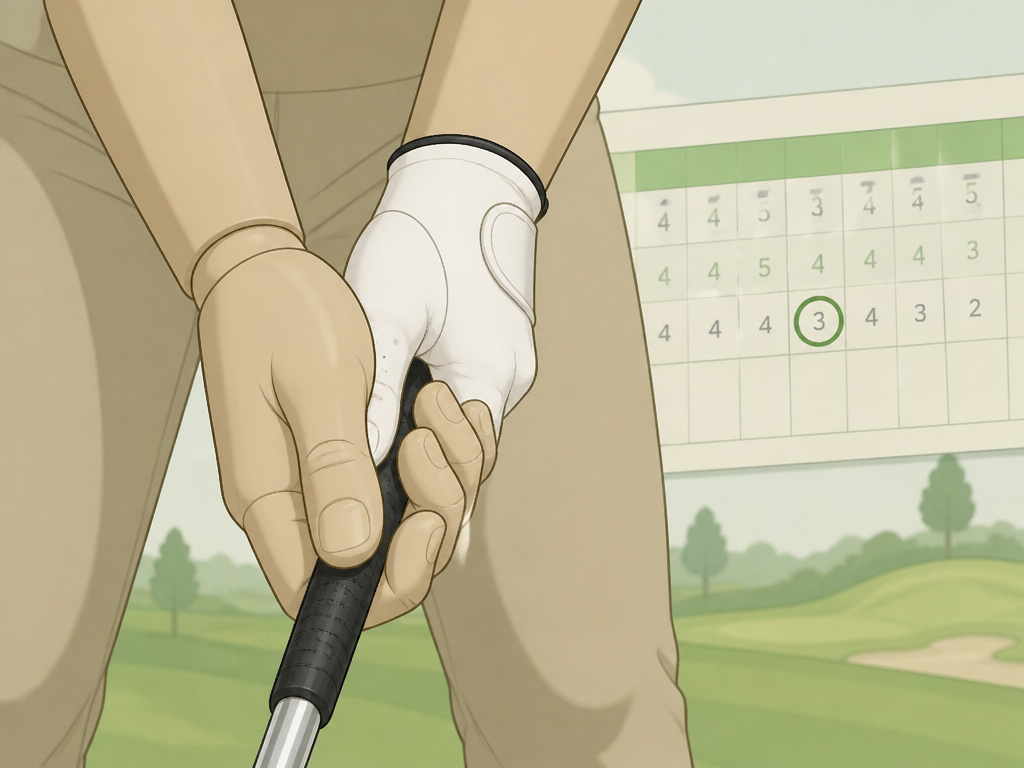
Trevino’s legacy isn’t that you should open your stance 30 degrees. It’s a more fundamental principle about learning and trust. “Who can say I have a bad swing?” he said. “The only thing that matters in golf is the score you put on the board.”
I used to believe playing blades would make you a better ball-striker, until I saw how they shattered confidence for mid-handicappers. The pursuit of a “pro” look over a playable result cost them strokes. Trevino’s career is the ultimate example of this. He favored a shot shape he could trust absolutely, which is why many modern swing trainers focus on building that kind of repeatable motion, not a picture-perfect position.
For amateurs, the takeaway is to prioritize predictability. A repeatable 10-yard fade beats a draw you only hit 7 times out of 10. This is why effective swing aids often work on groove and feel, not total reconstruction. Better golf comes from simpler, repeatable movements.
Trevino’s Lasting Impact on Golf
Lee Trevino’s success permanently broadened the conversation about swing technique. He proved there isn’t a single orthodoxy. His Wikipedia page for Lee Trevino documents six majors and 29 PGA Tour wins, all achieved with the swing “that wasn’t supposed to work.”
He championed self-reliance and problem-solving. “The great thing about being self-taught,” he said, “is that you can correct yourself on the course.” This empowered a generation of golfers to think for themselves, using tools and drills to understand their own games. It shifted the focus from how a swing looks to what it produces, a philosophy that underpins modern swing tempo training and functional fitness programs.
His influence is everywhere. It’s in the coach who prioritizes a player’s natural athleticism over rigid positions. It’s in the amateur who stops overthinking your swing and just plays. Trevino showed that the scorecard is the only judge that matters.
Frequently Asked Questions
Was Lee Trevino really entirely self-taught?
Yes. Trevino received no formal golf lessons. He learned by hitting thousands of balls at a driving range and while working as a caddie, developing his swing through trial and error on the tough Texas ground.
What was so unusual about Lee Trevino’s golf swing?
Classic instructors noted several “flaws”: a very strong grip, a stance dramatically open to the target line, a compact backswing, and unusual footwork. However, these elements worked together to produce his reliable controlled fade.
How many major championships did Lee Trevino win?
Lee Trevino won six major championships: the U.S. Open in 1968 and 1971, The Open Championship in 1971 and 1972, and the PGA Championship in 1974 and 1984.
What is Lee Trevino’s most famous quote about his swing?
One of his most definitive statements is: “No one who ever had lessons would have a swing like mine.” He also said, “You don’t have to look pretty out there, you have to win.”
Did Lee Trevino ever use training aids?
While he didn’t use modern gadgets, his early practice with a taped Dr. Pepper bottle was a form of unconventional training. His career validates the focus on feel and repetition that many weighted swing trainers aim to provide.
Before You Go
Trevino’s story isn’t about ignoring instruction. It’s about the primacy of function. The next time you’re on the range, ask one question: do I know where this ball is going? If the answer is no, the solution isn’t necessarily more swing speed. It might be simplifying your move until the outcome becomes predictable.
Chase that feeling of knowing. It’s the same feeling Trevino had hitting off hardpan, and the same feeling that won him six majors. Good golf should feel less complicated the more you understand it.
