
Master Strokes Gained Off the Tee & Why Distance Dominates
This post contains affiliate links. As an Amazon Associate, we earn from qualifying purchases.
This post contains affiliate links. As an Amazon Associate, we earn from qualifying purchases.
Strokes gained off the tee (SG:OTT) measures how many strokes your tee shots on par 4s and par 5s save or cost you compared to a benchmark, like the PGA Tour average. It uses the PGA Tour’s ShotLink data to assign a value to every drive based on both the distance you gain and the lie you finish in, not just whether you hit the fairway.
That last part is where most amateur understanding stops. The real insight is that the combination of distance and accuracy is lopsided. For a tour pro, distance contributes roughly 60-65% of the strokes gained from driving, while accuracy accounts for about 30-35%.An extra 20 yards of carry is worth close to 0.75 strokes per round. That reframes every driving decision you make.
What follows is a breakdown of the math, the evidence that flips old beliefs, and a straightforward plan to use this stat without getting lost in data. You’ll see why a 285-yard drive in the fairway can be statistically equal to a 325-yard bomb in the rough, and how to find your own driving priority.
Key Takeaways
- Distance dominates. Mark Broadie’s analysis shows distance accounts for 60-65% of strokes gained off the tee, accuracy for 30-35%. Chasing straight alone leaves strokes on the table.
- It’s a benchmark, not a score. SG:OTT compares your result to an average from that exact yardage and lie. A negative number for an amateur is normal and expected.
- Two paths, one result. Rory McIlroy (324 yards, 34% fairways) and Collin Morikawa (285 yards, 84% fairways) have posted identical SG:OTT numbers in wins. The stat values outcome, not style.
- Find your leak first. Use a shot-tracking app for 5 rounds. If your SG:OTT is your biggest negative, your practice focus shifts overnight.
- Equipment matters, but swing matters more. The leaders use different drivers (Mizuno, TaylorMade, Callaway), but their common thread is a repeatable, powerful motion fitted to their tools.
How Strokes Gained Off the Tee is Calculated
The system starts with a massive dataset. The PGA Tour’s ShotLink system has recorded hundreds of thousands of shots, establishing an “expected strokes to hole out” from every conceivable distance and lie on a course.
The formula is mechanical: Strokes Gained = (Expected strokes from START) – (Expected strokes from FINISH) – 1.
Let’s walk a real example from the tour data. From the tee on a 460-yard par 4, the average pro needs about 4.17 strokes to hole out. You hit a 320-yard drive into the fairway, leaving 140 yards to the pin. From 140 yards in the fairway, the tour average is about 2.91 strokes to finish.
Plug it in: (4.17) – (2.91) – 1 = 0.26. That single drive gained just over a quarter of a stroke on the field. Do this for every par 4 and par 5 tee shot in a round, sum the results, and you have your total strokes gained off the tee.
This calculation is the core of the strokes gained metric. It moves past binary results like “fairway hit” and assigns a precise value based on the quality of the position you created.
The “minus 1” accounts for the stroke you just used. If your shot leaves you in a position that’s worse than where you started, the number turns negative, you’ve lost strokes. This same strokes gained calculation applies to putting, approach shots, and short game, creating a unified language for performance.
The 60/35 Split That Changed Driving Forever
For decades, golf instruction was stuck in a loop: “Accuracy first, distance second.” The old fairways hit statistic reinforced this. Strokes gained data cut through the noise.
Mark Broadie’s analysis revealed the actual weights: distance explains 60-65% of strokes gained off the tee, while accuracy explains 30-35%. The remaining sliver accounts for things like extreme penalty situations. This is a description of what actually leads to lower scores at the highest level.
Common mistake: Sacrificing 20 yards to find the short grass. For a tour pro, that trade costs about 0.75 strokes per round. For an amateur, the cost is even higher because your next shot from the rough is relatively more difficult.
Why does distance hold so much power? It’s arithmetic. A longer drive leaves a shorter club for the approach shot. Every PGA Tour proximity chart shows the same thing: as the distance to the hole decreases, the average shot gets closer. A 9-iron from the rough will often finish nearer the pin than a 5-iron from the fairway.
This doesn’t mean you should spray the ball everywhere. It means your driving goal should be “maximum playable distance.” If you have a 30-yard wide fairway, your optimal line is the one that allows your longest controlled shot, not the one that guarantees the center.
| Drive Outcome | Old Mindset (Fairways Hit) | SG:OTT Mindset |
|---|---|---|
| 300 yds, Light Rough | “Missed Fairway” – Negative | Evaluates lie & remaining distance. Could be a net gain. |
| 260 yds, Fairway Center | “Fairway Hit” – Positive | Evaluates remaining distance. Could be a net loss vs. Longer hitters. |
| 280 yds, Fairway | “Fairway Hit” – Positive | Quantifies the exact value of those extra 20 yards over the 260-yard drive. |
What the Tour Data Reveals: Wolff, Fitzpatrick, and the Two Paths
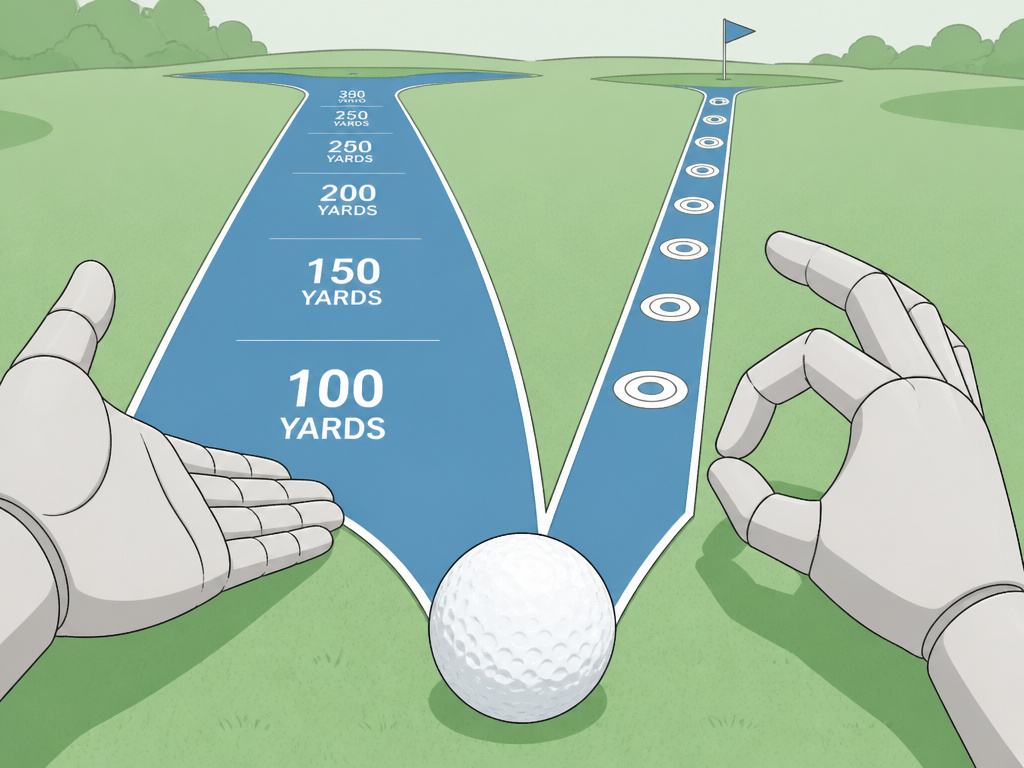
The proof lives in the player comparisons. Looking at the 2021 PGA Tour season exposes the myth of a single “correct” way to drive.
Matthew Wolff ranked 8th in driving distance at 312.8 yards. Yet, he ranked 170th in SG:OTT, losing 0.274 strokes per round off the tee. His distance was negated by erratic dispersion that led to recovery shots and penalties.
Conversely, Matt Fitzpatrick ranked 13th in SG:OTT while being T132 in distance (292.2 yards). His calculated “par” SG:OTT based on his distance was +0.013. His actual was +0.247. He gained over two-tenths of a stroke through superior accuracy and strategy, squeezing every ounce of value from his drives.
Where this goes sideways: Assuming your driving style must mimic a tour pro’s. The data shows two valid models: the Power Player (McIlroy) and the Precision Player (Morikawa). Your job is to identify which one you’re closer to and maximize it.
The most telling examples are tournament wins. Rory McIlroy won with a driving week of 324.5 yards average and 34% accuracy. Collin Morikawa won with 285.5 yards and 84% accuracy. Both posted an identical +0.57 SG:OTT for the week. The strokes gained analytics valued the final outcome equally, regardless of how they got there.
This is the power of moving beyond traditional stats. It lets you see your game in three dimensions.
How the Pros Do It: A Look at the SG:OTT Leaders

The players who lead this stat are efficient. They pair power with a reliable pattern.And yes, their equipment choices are a window into their strategy.
As of recent tours, Keith Mitchell led SG:OTT at +0.966. His tool of choice is a Mizuno STX-230 driver with a ProjectX Hzrdus T1100 shaft. He’s also a rare tour holdout using Golf Pride Victory full cord grips, suggesting a preference for absolute feel and control.
Scottie Scheffler, a perennial leader, uses a TaylorMaker Stealth2 Plus driver with a Fujikura Ventus Black 7X shaft. The common thread among leaders isn’t the brand; it’s the combination of a low-spin driver head and a stout, stable shaft that allows them to swing aggressively while maintaining their desired shot shape.
Another top performer, Kevin Yu, games a Callaway Paradym Triple Diamond driver. The “Triple Diamond” designation is Callaway’s lowest-spin, most workable model, again pointing to a preference for controlling trajectory over maximum forgiveness.
The lesson here is that elite driving requires a fitted relationship between your swing, the head, and the shaft. A driver that reduces your spin and tightens your dispersion will do more for your SG:OTT than simply adding clubhead speed.Getting the correct tee height for a driver is a free first step in this optimization.
A 3-Step Plan to Use SG:OTT in Your Game
You don’t have ShotLink. That’s fine. The principle is what matters. Here’s how to apply it.
1. Gather Your Data (5 Rounds Minimum).
You need a shot-tracking system. Apps like Arccos, Shot Scope, or Garmin Golf automatically calculate SG:OTT for you, comparing your shots to a database of players at your handicap levels. This is essential. Guessing where you lose strokes is a waste of time.
2. Identify Your Priority.
After 5 rounds, look at your strokes gained breakdown: Off-the-Tee, Approach, Around the Green, and Putting. The category with the largest negative number is your biggest leak. If it’s SG:OTT, you now know exactly how many strokes your driving is costing you per round.
3. Practice with Purpose.
If SG:OTT is your leak, diagnose further. Is your distance below average for your handicap? Is your dispersion causing penalty strokes? Don’t just “hit drivers.” * For Distance: Focus on speed training with a radar (like PRGR or Swing Speed Radar) and improving strike location on the face. Smash factor is a multiplier. * For Accuracy: Hit drivers to a 40-yard wide channel, not a fairway. Practice your stock shot shape relentlessly. A predictable miss is manageable; a two-way miss is a round-killer.
I learned this focus from a student who struggled for years. We spent a whole session not hitting chips, but just learning a consistent wrist hinge. Once he felt that one movement, his short game anxiety vanished. The same applies to driving: find one key, like starting the downswing with your lower body, and drill it until it’s automatic. Good golf comes from simpler, repeatable movements.
Frequently Asked Questions
What’s a good strokes gained off the tee number?
For a PGA Tour player, anything positive is good. Winners often average around +0.66 for the week. For amateurs, your number should be compared to benchmarks for your handicap. Using apps like Arccos, a 10-handicap might average -1.5 to -2.0 SG:OTT versus a scratch benchmark. The goal is to move that number toward zero.
Is strokes gained off the tee the same as strokes gained driving?
Yes, they are interchangeable terms. Both refer to the statistic measuring tee shot performance on par 4s and par 5s.
Why aren’t par 3s included in SG:OTT?
Par 3 tee shots are considered approach shots, as they are played directly at the green. They fall under the strokes gained approach category to keep the driving stat purely about setting up longer holes.
Can I calculate strokes gained off the tee by hand?
Technically, yes, if you have access to the expected strokes tables for every yardage and lie. In practice, it’s impossible without a massive database. This is why shot-tracking apps are essential, they do the strokes gained calculation instantly.
Does this mean I should always hit driver?
No. It means you should make strategic decisions based on the value of the position. If a hazard takes the “maximum playable distance” line out of play, the smart move might be a club that guarantees a full shot into the green from the fairway. SG:OTT helps quantify that risk/reward.
The Bottom Line
Strokes gained off the tee is a lens that corrects a century of flawed golf intuition. It tells you that distance is your greatest asset off the tee, that accuracy matters but less than you think, and that there are multiple blueprints for success.
Your next step is to download a shot-tracking app and commit to five rounds of data collection. Until you see the numbers, you’re practicing in the dark.The strokes gained concept will show you, in strokes per round, exactly what to work on first. For most amateurs, improving your driving is the fastest route to lower scores. Now you have the tool to do it intentionally.
