
What is Pace of Play? Ready Golf Rules Explained to Speed Play
This post contains affiliate links. As an Amazon Associate, we earn from qualifying purchases.
This post contains affiliate links. As an Amazon Associate, we earn from qualifying purchases.
Pace of play and ready golf are about managing time on the course. Pace of play is the total duration of a round, while ready golf is a stroke-play tactic where players hit when ready, not strictly by distance, to keep that duration down. The governing bodies, the USGA and The R&A, explicitly encourage ready golf under Rule 6.4 to support the prompt play mandated by Rule 5.6.
That encouragement comes with a clock. For groups officially timed in competition, the first player to hit gets a maximum of 50 seconds for key shots; subsequent players get 40 seconds. This isn’t a suggestion for your weekend game, but it defines what “prompt” means at the highest level. Your local course’s four-hour expectation is the practical echo.
What follows breaks down the official stance, the real-world tactics, and the one format where ready golf is a hard no. By the end, you’ll know how to read the course’s pace, when to play out of turn, and why a simple pre-shot routine is the single biggest lever you control.
Key Takeaways
- Ready golf is for stroke play only. The strategy inherent to match play makes playing out of turn inappropriate and against the rules.
- The 50-second shot clock (for the first player) and 40-second clock (for subsequent players) are official competition limits that define “prompt” play for everyday golfers.
- A group is “out of position” if it finishes a hole after the maximum allotted time and fails to keep the starting interval with the group ahead.
- A Golf Australia survey found 94% of clubs promoting ready golf saw pace improvements, with a quarter calling the results “satisfying success.”
- Your biggest pace saver is a repeatable pre-shot routine executed while others are playing, not after your turn starts.
What Is the Official Definition of Ready Golf?
There isn’t one. That’s the first thing to get straight. The R&A’s Pace of Play Manual states clearly there is “no official definition of the term.” It’s a catch-all phrase for a mindset, not a single rule.
Think of it as the opposite of traditional “honors” play, where the player farthest from the hole always hits first. Ready golf flips that: you hit when you are ready and it is safe, even if someone else is technically away. The goal is to eliminate dead time while others deliberate. This is explicitly sanctioned in stroke play under Rule 6.4b(2), which allows playing out of turn in a safe and responsible way to save time.
“Ready golf” is a term used in stroke play, which indicates that players should play when they are ready to do so, rather than strictly following the procedure of “farthest from the hole should play first” in the Rules of Golf.
Where does this fit into your broader understanding of on-course behavior? It’s a core component of modern golf etiquette. Knowing when and how to apply it separates considerate players from those who unknowingly cause delays.
Ready Golf in Action: 8 Concrete Examples
The manuals provide specific scenarios. These aren’t theoretical; they are the documented behaviors that shave minutes off a round. 1. Shorter hitters play first from the tee or fairway if longer hitters have to wait. 2. Hit your shot if the player with the honor is delayed in being ready to play. 3. Play your stroke when a player farther away is facing a challenging shot and is taking time to assess their options. 4. Hit before searching. Play your next shot before helping someone look for a lost ball. 5. Putt out completely, even if it means standing close to another player’s line, to avoid multiple trips around the green. 6. Play while they rake. If a player who just played from a bunker is still farthest away but delayed raking, hit your shot. 7. Chip while they walk. If a player’s ball is over the back of the green, a player closer but chipping from the front should play while the other walks to their ball. 8. Mark scores on the next tee. Record scores immediately upon reaching the next tee box, except for the first player to tee off, who marks after hitting.
Why Pace of Play Is a Rule, Not a Courtesy
Slow play isn’t just annoying; it’s a documented barrier to enjoyment. The R&A’s global survey found 60% of regular golfers would enjoy the sport more if rounds were faster. This isn’t about rushing, it’s about eliminating wasted time that adds nothing to the game.
Rule 5.6, “Prompt Pace of Play,” is the backbone. It states that players must play promptly and encourages a stroke to be made in no more than 40 seconds after they are able to play. The USGA’s major rules change in 2019 modernized this rule to affirmatively encourage the ready golf behaviors we just covered. This shifted pace of play from a soft guideline to a fundamental rule of golf everyone is expected to follow.
The consequence of ignoring it is a two-stroke penalty in stroke play or loss of hole in match play for undue delay. While rarely enforced in casual play, it frames pace as a non-negotiable part of the sport’s integrity.
Ready Golf in Stroke Play vs. Match Play: The Critical Divide
This is the most important distinction most weekend golfers miss.
In stroke play, ready golf is not just allowed; it’s encouraged. Since you’re playing against the course and the field, the order of play has minimal strategic impact. Playing out of turn to save time is the entire point.
In match play, ready golf is inappropriate. The R&A manual is unequivocal: it’s “not appropriate in match play due to the strategy involved between opponents.” Who plays first is a tactical decision. Your opponent’s shot can directly influence your club selection and strategy. Playing out of turn can constitute giving advice or conceding a strategic advantage, which is against the basic rules governing that format.
| Format | Is Ready Golf Appropriate? | Primary Reason | Governing Rule |
|---|---|---|---|
| Stroke Play | Yes, encouraged | Saves time without strategic consequence. | Rule 6.4b(2) |
| Match Play | No | Order of play is a core strategic element. | Rule 6.4a |
Where this goes sideways: Applying ready golf in a friendly match play game. You might think you’re helping pace, but you’re breaking the agreed-upon rules of golf for that format and potentially affecting the match’s outcome. Save it for your weekend stroke-play rounds.
The 50-Second and 40-Second Shot Clocks
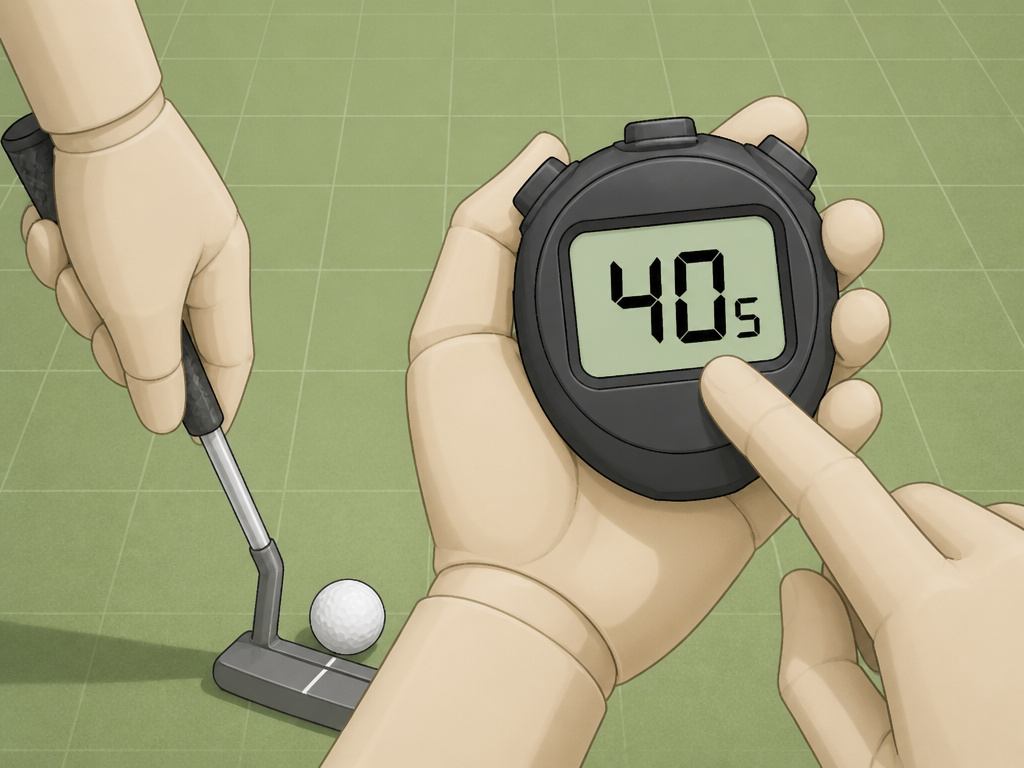
Where does the “40 seconds” from Rule 5.6 come from? It’s the public guideline. The competition reality is stricter. The R&A 2025 Pace of Play Policy details what happens when a group is officially timed for being “out of position.”
The first player in the group to play a shot gets 50 seconds. This applies to specific shots: tee shots, approach shots, lay-ups, chips, and putts. Every subsequent player to play from that same area gets a maximum of 40 seconds. The clock starts when it’s your turn, you can play without distraction, and you’ve had reasonable time to reach your ball.
This policy isn’t just for majors. It’s the model for any committee running a competition. It defines the ceiling of acceptable time. For your game, it means if you’re routinely taking over 40 seconds to play a routine shot after your turn begins, you are the problem.
When Is a Group “Out of Position”?
You can’t be timed unless you’re out of position. The official definition has two parts: 1. The group completes a hole later than the maximum allowable time set by the committee. 2. It has not maintained the starting interval with the group ahead.
In practice, marshals use simpler cues. You’re likely out of position if: * You reach a clear par-3 and the group ahead has already teed off on the next hole. * You reach a par-4 and the group ahead clears the green before your group has all teed off. * Your group is still within 100 yards of the tee on a reachable par-5 when the group ahead clears the green.
How to Actually Play Ready Golf (Beyond the Theory)
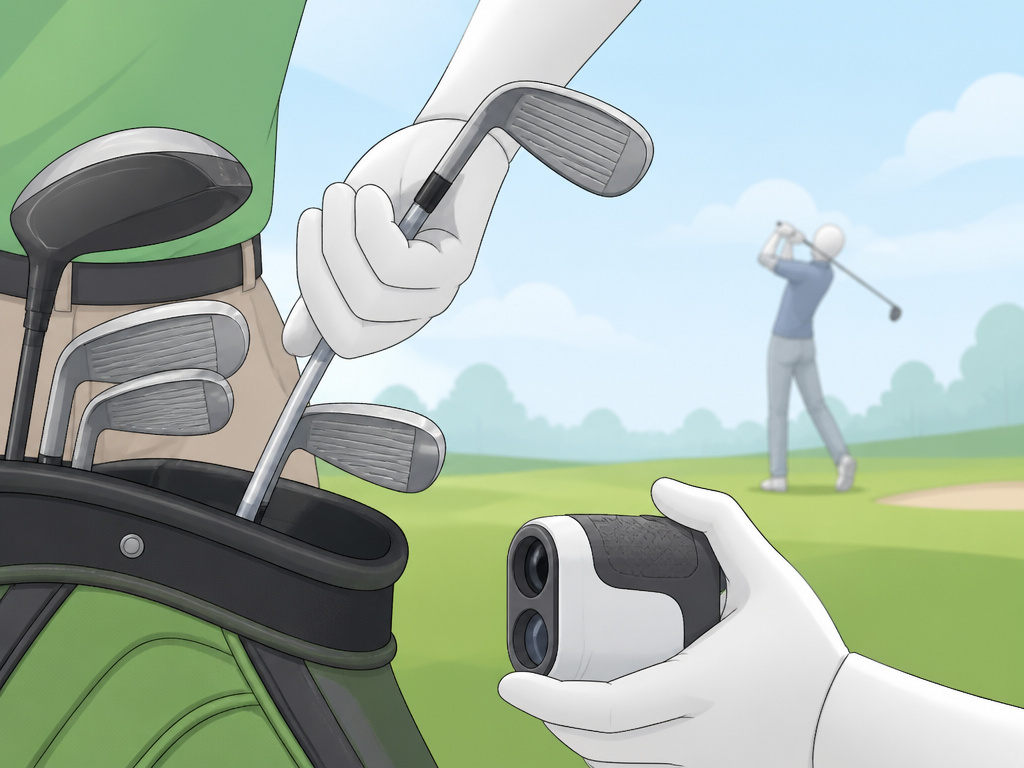
Knowing the rule is one thing. Applying it without being rude is another. It hinges on preparation and awareness.
Do your work while others are playing. This is the golden rule. Your 40-second clock should start with you already knowing your yardage, having selected your club, and understanding your shot. When it’s your turn, you should be walking to your ball, taking a practice swing, and hitting. Your pre-shot routine must be efficient and rehearsed.
Manage your equipment and cart smartly. This is basic cart etiquette. Drop your partner at their ball with their club, then proceed to yours. Park the cart on the side of the green closest to the next tee. Never leave your bag or cart in front of the green.
Be decisive, not fast. Ready golf doesn’t mean rushing your shot. It means eliminating the dithering. Take one look, make a decision, and commit. A confident, slightly imperfect swing is faster and often better than a hesitant “perfect” one. This is a core strategic approach for enjoyable golf.
A 4-Hole Ready Golf Scenario
Let’s walk through how this cuts time on a typical front nine. 1. Par 5, 1st Hole: Player A and B hit drives. Player C, a shorter hitter, is ready first on the second shot. They hit their lay-up while A and B are still calculating risk. Time saved: 90 seconds. 2. Par 3, 2nd Hole: All balls are on the green. Player D is farthest but marking and cleaning their ball. Player A, who is ready, putts out. Time saved: 60 seconds. 3. Par 4, 3rd Hole: Player B’s drive might be lost. Players A, C, and D hit their second shots before joining the search. Time saved: 3-4 minutes. 4. Par 4, 4th Hole: The group ahead clears the green. Player C’s cart is parked at the back. They putt out, then drive the cart to the next tee while others finish, and start marking scores. Time saved: 2 minutes.
That’s over 7 minutes saved in four holes without anyone feeling rushed.
What the Data Says: Does Ready Golf Actually Work?
It’s not just theory. The R&A pace of play manual cites a Golf Australia survey of clubs that actively promoted ready golf. The results are compelling: * 94% of clubs reported some degree of success in improving pace. * 25% of clubs achieved what they termed “satisfying success.”
This isn’t a marginal gain. When a quarter of implementing organizations are fully satisfied with the outcome, the tactic proves itself. The USGA pace improvement tips heavily feature ready golf principles because they are the lowest-cost, highest-impact change a group of players can make.
The Golfer’s Responsibility: More Than Just Ready Golf
While ready golf is the headline, your overall pace is a sum of parts. Several other articles on this site cover complementary skills. Good distance control means fewer long walks past your ball and fewer duffed chips. A target golf mindset focuses on smart misses that keep you in play and avoid time-consuming recoveries. Even your golf dress code choices matter, comfortable, appropriate clothes let you move freely and stay focused.
Ultimately, pace is about respect. Respect for the course, the players behind you, and the game itself. It’s the logical extension of all golf etiquette rules.
Frequently Asked Questions
Is ready golf against the rules of golf?
No. In stroke play, Rule 6.4b(2) explicitly allows and encourages players to play out of turn in a safe and responsible way to save time, which is the definition of ready golf. It is against the traditional procedure but fully within the modern rules.
What is the 40-second rule in golf?
Rule 5.6 recommends that a player should make a stroke in no more than 40 seconds after they are able to play without interference. This is a guideline for prompt play. In official competition, a group that is “out of position” may be subject to timing, where the first player gets 50 seconds and subsequent players get 40 seconds per shot.
Can you play ready golf in a fourball match?
No. Ready golf is not appropriate in any form of match play, including fourball. The order of play is a strategic element between sides, and playing out of turn can constitute a breach of the rules regarding giving advice or gaining an unfair advantage.
How can I encourage my slow-playing partner to speed up?
Focus on behaviors, not their skill. Suggest tactical ready golf plays: “Why don’t you go ahead and hit your lay-up while we figure this out?” or “I’ll putt out so we can all leave the green together.” Lead by example with a crisp, prepared routine. Frame it as a team effort to let the group behind play through.
What is the biggest misconception about pace of play?
That it’s only about walking fast. Pace is mostly about eliminating dead time between shots. The walk is fixed; the 30 seconds of club selection, the minute of looking for a lost ball alone, the extra trip around the green, that’s what adds the hour to your round.
The Bottom Line
Pace of play and ready golf aren’t about rushing your swing. They’re about eliminating the empty minutes that make a four-hour round stretch to five. The rules now actively support this. Play ready golf in every stroke-play round, hit when you’re ready, putt out, and prepare while others play. Remember, it’s for stroke play only.
Your pre-shot routine is your personal pace-of-play policy. Do the work before it’s your turn. That single habit, more than any other, keeps you and everyone behind you moving. The goal isn’t to set a speed record. It’s to finish with enough daylight to replay the good shots over a drink, not the long waits.
