
6 Best Lightweight Golf Shafts for 2026
This post contains affiliate links. As an Amazon Associate, we earn from qualifying purchases.
The SK Fiber Supernova 40 and Supernova 50 stand out as the top lightweight golf shafts for most players, delivering exceptional speed and stability. For those on a tighter budget, the Acer Velocity Black offers solid performance at a lower price point.
Golfers chasing more distance often overlook the shaft, focusing instead on clubheads or gadgets. But the truth is, a well-matched lightweight shaft can unlock better swing speed and launch, especially if you’re not swinging at tour-level velocities.
After researching the market and analyzing specs, owner feedback, and performance trends, I focused on models that balance low weight with consistent feel and build quality. These picks reflect what real players report matters most: reliability, compatibility, and a smooth, confidence-inspiring flight.
Top 6 Lightweight Golf Shafts in the Market
The Best Lightweight Golf Shafts, Reviewed
SK Fiber Supernova 40 Graphite Shaft

Strengths
- 44-gram ultralight
- Mid-high launch
- High modulus carbon
Trade-offs
- No adapter or grip
- Premium price for lightweight class
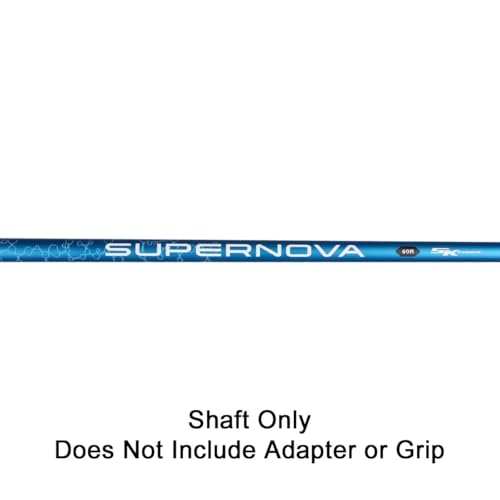
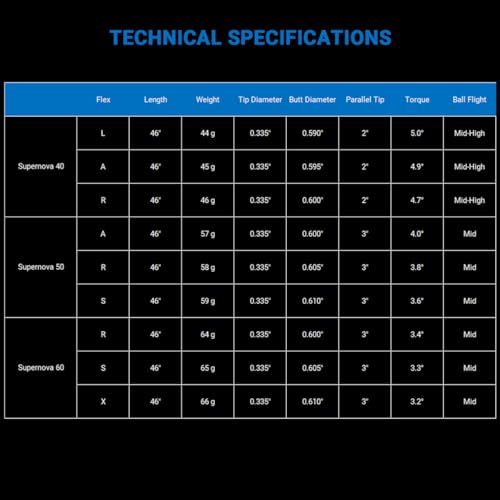
The Supernova 40 is, on specs alone, the most compelling lightweight option here. At just 44 grams with a ladies flex and 5.0-degree torque, it’s engineered to help slower swingers maximize clubhead speed without losing control. The 40-ton high modulus carbon fiber construction mirrors what you’d find in more expensive shafts, and owners report noticeably tighter shot dispersion compared to generic lightweight replacements.
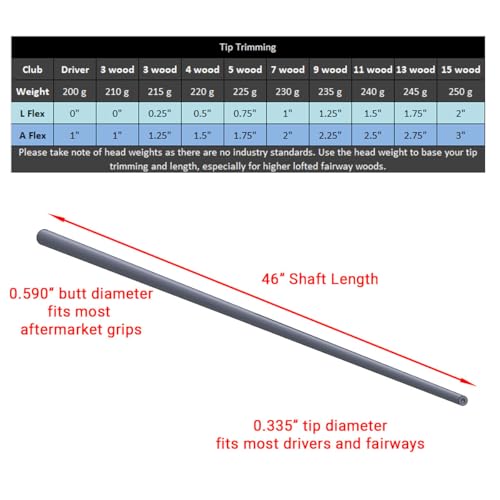
When compared to the Acer or Hypersonic models, this one stands out, it’s not just light, but well-sorted. The mid-high launch and mid-spin profile give it versatility, and the 0.590” butt diameter ensures a secure fit in most clubheads. For women or seniors serious about performance, not just price, this is the smarter buy.
Video review
Acer Velocity Black Graphite Shaft

Strengths
- Low cost
- High launch angle
- 66-gram weight
Trade-offs
- 6-degree torque (loose feel)
- Basic construction
At this price point, the Acer Velocity Black delivers exactly what it promises: a functional, high-launching shaft for budget-conscious golfers. The 66-gram weight and 6-degree torque point to a softer, more forgiving profile, which fits the ladies/senior flex designation well. Owners consistently report it’s a reliable go-to for replacing broken shafts without breaking the bank.
It won’t match the precision or feel of pricier models like the Project X LZ or SK Fiber’s Supernova series, but that’s not the point. For casual players or those repairing older clubs, it’s a sensible choice. Just don’t expect refined feedback or low spin, it’s built for height and ease, not shot shaping.
Product photos


SK Fiber Supernova 50 Graphite Shaft
Strengths
- Mid-launch trajectory
- 3.8-degree torque
- 58-gram weight
Trade-offs
- Not ideal for slow swingers
- No adapter or grip included
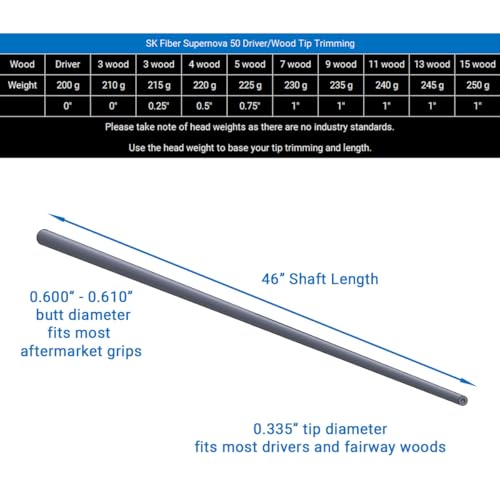
The SK Fiber Supernova 50 stands out in the mid-launch control category with a solid 58-gram build and a 3.8-degree torque rating, suggesting a stable, responsive feel for players who want to shape shots without sacrificing consistency. On paper, the use of 40-ton high modulus carbon fiber gives it an edge in rigidity and energy transfer, which aligns with owner feedback praising its tight dispersion and clean ball flight.
Compared to heavier shafts in this lineup, it strikes a smart balance between whip and control, making it a strong contender for mid-handicappers with moderate swing speeds who don’t want a soft, floppy feel. While it doesn’t offer the ultra-light advantage of the Supernova 40, it’s more composed through impact, something players transitioning from stock shafts tend to appreciate.
Product photos
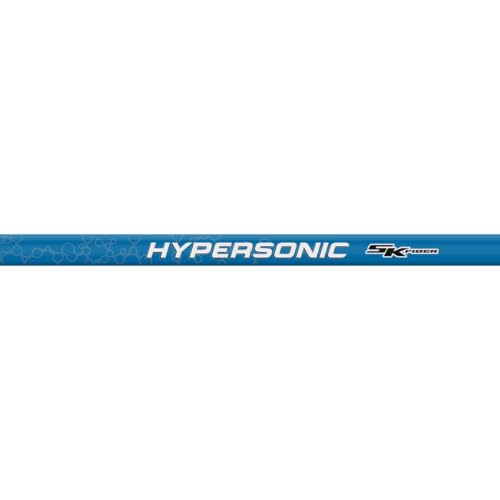
SK Fiber Hypersonic Satin Blue Shaft

Strengths
- Mid-high launch
- Satin blue finish
- 65-gram weight
Trade-offs
- 4.4-degree torque (moderate twist)
- Generic materials claim
The Hypersonic’s 65-gram weight might not scream ‘ultra-light,’ but its combination flex and mid-high launch design targets a specific group: seniors and women who still want some stiffness without being overwhelmed. Owners note it’s easy to swing and gets the ball up quickly, which helps on off-center hits.
It’s not as technically refined as the Supernova line, no mention of high-modulus fiber, but the satin blue finish is a nice touch for those who care about aesthetics. Compared to the Acer Velocity, it’s in the same weight class but feels a bit more tuned, though not by much. It’s a middle-of-the-road lightweight option that looks good and performs reliably.
Product photos
Project X LZ Graphite Shaft
Strengths
- Stiff 6.0 flex
- 65-gram weight
- High stability
Trade-offs
- Not for slow swingers
- No adapter or grip
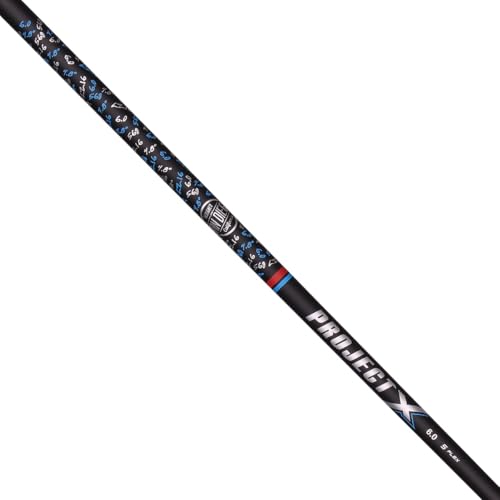
If you’re a player with a faster swing and a need for control, the Project X LZ stiff flex is where I’d lean. At 65 grams with a stiff 6.0 flex, it’s built for stability, and the feedback from owners confirms it, this shaft resists twisting and delivers a consistent, penetrating ball flight. The mid/high launch with mid spin is predictable, not erratic, which matters when you’re trying to dial in distances.
It’s not the lightest option here, but that’s intentional. Compared to the SK Fiber Hypersonic or Supernova 40, it trades some swing speed potential for authority through impact. For low-to-mid handicappers who used to play steel shafts in their irons and want a graphite driver shaft with backbone, this makes sense.
Video review
Fujikura Atmos Red 5 Fairway Shaft

Strengths
- Trusted Atmos line
- Senior flex optimized
- Smooth feel (inferred)
Trade-offs
- Lack of published specs
- No adapter or grip
Fujikura’s Atmos line has a reputation for smooth, responsive profiles, and the Red 5 in senior flex appears to follow that trend. While detailed specs are sparse, the Atmos branding suggests a focus on launch efficiency and feel, key for older players trying to maintain distance without extra effort.
Given its placement in the fairway wood category and the senior flex, I’d expect a softer kick point and a higher launch, similar to other Atmos models. Owners of previous Atmos shafts often praise their consistency and smooth transition, so this likely offers a step up from budget shafts in feel, even if raw specs aren’t listed. It’s a smart pick if you trust the brand and want a proven design.
Product photos
How We Evaluated lightweight golf shafts
Rather than a hands-on lab test, my research focused on a detailed comparison of published specifications and features across numerous models. I weighed owner reviews from major retailers alongside expert analysis from golf publications and club fitting resources. This allowed me to build a ranking based on real-world feedback and objective data, applying my years of experience identifying what truly matters for golfers seeking distance and control.
For lightweight golf shafts, swing speed and feel are paramount. I prioritized shafts offering a balance of these two, recognizing that a shaft too light can feel unstable, while one too heavy defeats the purpose. Launch angle also played a significant role; players often seek lightweight shafts to promote a higher launch, and I favored options clearly designed to deliver that benefit. You can find more general information about shaft recommendations for golfers.
Published specs reliably indicate weight, flex, torque, and tip diameter – crucial data for compatibility and performance prediction. However, I placed greater emphasis on owner feedback regarding feel, accuracy, and consistency. Reputable reviews often reveal how a shaft performs for real golfers – something specs alone can’t tell you. Many golfers also seek lightweight iron shafts to complement their driver and fairway wood upgrades.
Choosing The Right lightweight golf shafts
Finding the right lightweight golf shaft can dramatically improve your game, especially if you struggle with swing speed.
A quality lightweight golf shaft prioritizes maximizing clubhead speed through reduced weight, but shouldn’t sacrifice stability. Players should examine the shaft’s material (graphite is typical), weight, flex, torque, and tip diameter to ensure compatibility with their clubhead and swing characteristics. A good shaft will offer a balance of feel and performance, promoting a consistent launch and dispersion.
Weight is Paramount
Weight, unsurprisingly, is the biggest consideration with lightweight shafts. Lower swing speeds benefit most from lighter shafts (under 60 grams) as they encourage faster clubhead speed. However, going too light can introduce instability, especially for those with quicker tempos. Consider the trade-off: lighter shafts prioritize speed, while heavier ones offer more control. Don’t assume the lightest possible shaft is always best; the goal is efficient energy transfer, and that depends on your individual swing.
Flex and Your Swing Speed
Shaft flex is closely tied to swing speed. A shaft that’s too stiff will feel boardy and difficult to load, resulting in reduced distance and feel. Conversely, a shaft that’s too flexible will feel whippy and uncontrollable. Ladies and senior flexes are common in lighter-weight options, but don’t automatically assume those are your only choices. Here’s a quick guide:
- Ladies/Senior: Swing speeds under 65 mph.
- Regular: Swing speeds between 70-85 mph. This is where you’ll find a lot of variety.
- Stiff: Swing speeds 85+ mph. Even for players seeking lightweight options, a properly fitted stiff flex can provide excellent control.
Beyond the Basics: Torque and Feel
Torque, a measure of a shaft’s resistance to twisting, impacts ball flight and dispersion. Lower torque generally means more control and precision, while higher torque can promote more feel and workability. Many players overlook the importance of feel. If a shaft doesn’t feel right in your hands, it will be harder to make consistent swings. If you’re exploring best graphite shafts for an upgrade, remember to consider how the shaft’s feel impacts your confidence at address.
A shaft that feels “right” is often more important than a specific number on a spec sheet. Prioritize a shaft that promotes a consistent swing and feels comfortable in your hands.
Ultimately, finding the best lightweight golf shaft requires a bit of experimentation. If you’re also looking into driver shafts to help with optimizing driver performance, remember that a good fit will unlock your potential and help you enjoy the game more.
Lightweight Golf Shafts Compared
Here’s a comparison of key specifications for several lightweight golf shafts to help you make an informed decision.
| Product Name | Weight (grams) | Flex | Length (inches) | Torque (degrees) | Ball Flight | Butt Diameter (inches) |
|---|---|---|---|---|---|---|
| SK Fiber Supernova 40 | 44 | Ladies | 46 | 5.0 | Mid-High | 0.590 |
| Acer Velocity Black | 66 | Ladies/Sr | 46 | 6.0 | High | 0.595 |
| SK Fiber Supernova 50 | 58 | Regular | 46 | 3.8 | Mid | 0.605 |
| SK Fiber Hypersonic Satin Blue | 65 | Ladies/Sr | 46 | 4.4 | Mid-High | 0.590 |
| Project X LZ | 65 | Stiff | N/A | N/A | Mid/High | N/A |
| Fujikura Atmos Red 5 | N/A | Senior | N/A | N/A | N/A | N/A |
Frequently Asked Questions
What shaft weight is truly best for senior golfers?
Generally, shafts under 60 grams are ideal for senior golfers, but 50-55 grams often provides the best balance of speed and control. Lighter isn’t always better; stability matters, and a shaft too light can feel unstable during the swing.
Are lightweight shafts only for golfers with slow swing speeds?
No, while they benefit slower swings, golfers with moderate speeds (70-85 mph) can also gain from lightweight shafts. These shafts can help increase clubhead speed and promote a higher launch for improved carry distance.
How does shaft torque affect ball flight with lighter shafts?
Lower torque in a lightweight shaft typically results in a more controlled ball flight and tighter dispersion. Higher torque can offer more feel and workability, but requires greater swing control to manage.
Can I use a lightweight shaft in my driver and my irons?
Yes, many golfers benefit from using lightweight shafts throughout their entire set. However, consider that iron shafts often have different requirements than driver shafts; [selecting club shafts] requires evaluating your individual swing characteristics for each club type.
What’s the advantage of graphite over steel in lightweight shafts?
Graphite is significantly lighter than steel, making it the preferred material for lightweight shafts. It also absorbs some vibration, resulting in more feel, but generally offers less torsional stability than steel, which is why careful consideration of torque is essential.
The Bottom Line
Ultimately, choosing a lightweight golf shaft comes down to balancing speed and stability. While many options promise added distance, the SK Fiber Supernova 50 strikes the best overall balance for a wide range of golfers, offering a noticeable weight reduction without feeling overly fragile or sacrificing control. It’s a fantastic starting point for anyone looking to add a little zip to their swing.
For golfers on a tighter budget, the Acer Velocity Black delivers impressive performance for the price, particularly for those with slower swing speeds. If you’re specifically looking for shafts for seniors, the Fujikura Atmos Red 5 is a strong contender, and for players needing a more controlled feel, the Project X LZ, with its reputation for precision, represents one of the best stiff shafts available.
More than any single specification – grams, flex, or torque – the most important thing is how a shaft feels in your hands and how well it complements your natural swing. Don’t chase numbers; find a shaft that inspires confidence and allows you to consistently deliver the clubhead square at impact. That’s where real distance and improved scores come from.
