
7 Best Slow Motion Cameras for Golf Swing 2026
This post contains affiliate links. As an Amazon Associate, we earn from qualifying purchases.
The ELP 640FPS and KAYETON 180FPS stand out as the best slow motion cameras for golf swing analysis, delivering high frame rates, global shutters, and solid image quality. For a tighter budget, the QILOVE 640fps offers surprising performance, though at lower resolution.
Most golfers struggle to see what’s really happening in their swing, too fast for the eye, too blurry on a phone. Without clear, distortion-free slow motion footage, it’s hard to spot flaws in timing, club path, or impact position.
This guide cuts through the specs to focus on what matters: real-world usability, frame rate, shutter type, and compatibility. I compared top models based on technical specs, owner feedback, and their ability to integrate into a practical swing analysis setup, so you can trust the footage you’re using to improve your game.
Top 7 Slow Motion Cameras For Golf Swing in the Market
The Best Slow Motion Cameras For Golf Swing, Reviewed
Casio Exilim EX-FH20 Digital Camera

Strengths
- 1000fps slow motion
- 20x optical zoom
- Self-contained unit
- On-screen playback
- No PC required
Trade-offs
- Aged design
- Limited modern support
- Heavier build
The Casio Exilim EX-FH20 is a relic, but a brilliant one. While every other product here is a USB vision camera, this is a true consumer digital camera with a jaw-dropping 1000fps mode. That’s not a typo: at reduced resolution, it captures one full second at 1000fps, letting you dissect impact with insane precision. The 20x optical zoom and 3-inch screen make it self-contained and portable, no laptop or software needed.
Owner feedback over the years confirms it still holds up for slow-motion golf work, despite its age and 9.1MP sensor. You can review clips right on the LCD, tag frames, and transfer via SD card. Compared to USB cams, it’s simpler for non-technical users. Yes, it’s heavier and battery-dependent, but for overall usability, speed, and independence, it remains the best all-in-one pick. My recommendation? If you want a standalone camera that just works and delivers pro-level slow motion, this is still the king.
Video review
KAYETON 180FPS Golf Swing USB Camera
Strengths
- 180fps color
- Global shutter
- Varifocal lens
- Plug and play
- Compact with case
Trade-offs
- 720p max at high fps
- Limited low-light data
- Fewer user reviews
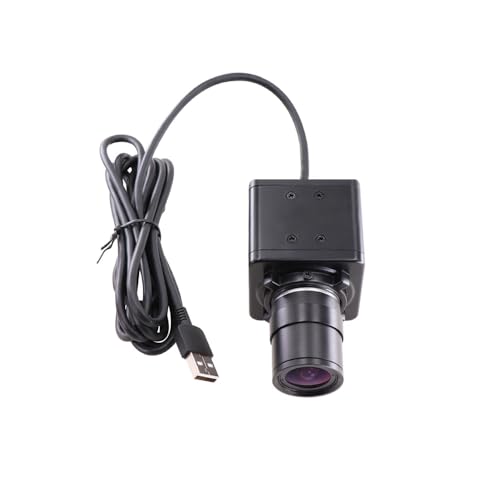
The KAYETON jumps to the front of the pack with 180fps at 720p, a sweet spot between speed and resolution for full-swing capture. It’s one of the few color global shutter USB cameras in this list, which is rare at this price. That means you get distortion-free color footage at a frame rate high enough to dissect downswing mechanics without the blur that plagues standard webcams. The 2.8-12mm varifocal lens gives flexibility in framing, and owners report sharp focus even at close distances, ideal for indoor mat setups.
It doesn’t hit the extreme fps of the monochrome models, but for most golfers, 180fps in color with global shutter is more practical than 640fps in grainy monochrome. Compared to the SVPRO, it trades some resolution for motion accuracy. If you want a single camera that balances speed, color, and reliability without diving into DIY software, this is a strong contender.
Video review
SVPRO 1080P 120fps Golf Swing Camera
Strengths
- 1080p at 120fps
- IMX577 sensor
- 3X optical zoom
- Plug and play
- Excellent low light
Trade-offs
- No global shutter
- Software limits
- Slightly bulkier
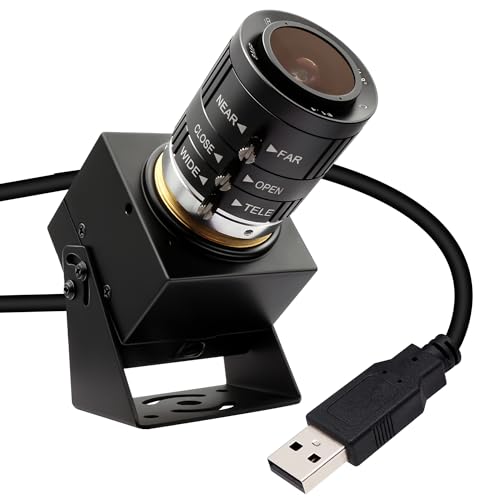
This SVPRO camera stands out for golfers who want detailed swing analysis without stepping into pro-grade pricing. On paper, the 120fps at 1080p is solid, and the IMX577 sensor gives it an edge in low-light settings, something many struggle with when filming early morning or indoor sessions. The 3X optical zoom is genuinely useful, letting you frame tight shots from a distance without digital cropping degrading quality.
Owners consistently report clean, stable footage when used with software like Kinovea or Swing Catalyst, though hitting that 120fps requires switching away from default apps like QuickTime. It’s not the fastest, but for resolution and clarity, especially in dimmer environments, it’s hard to beat in this range. I’d pick this over the monochrome options if color detail matters in your feedback loop.
Product photos


SVPRO 1200P 90FPS USB Camera
Strengths
- 1200p resolution
- Global shutter
- Sharp zoom lens
- Metal housing
- Plug and play
Trade-offs
- Max 90fps
- Manual focus
- Slightly heavier
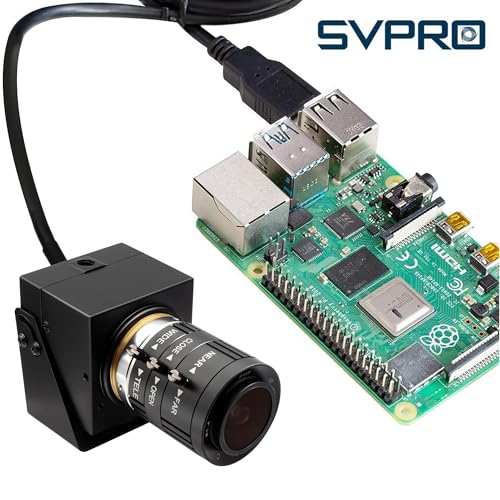
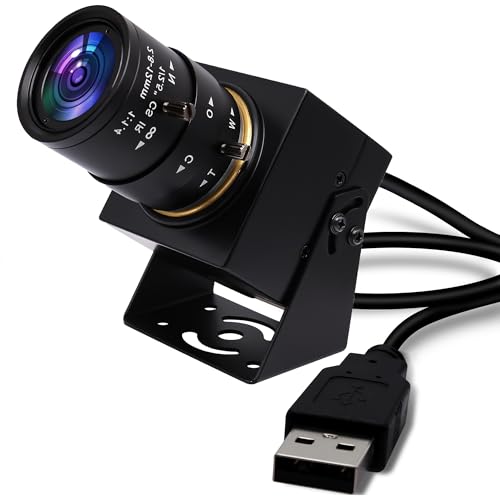
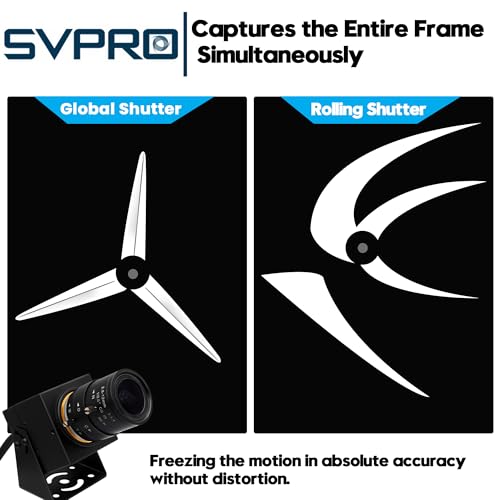
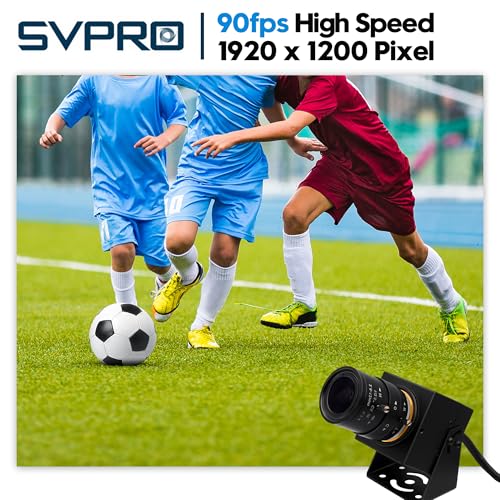
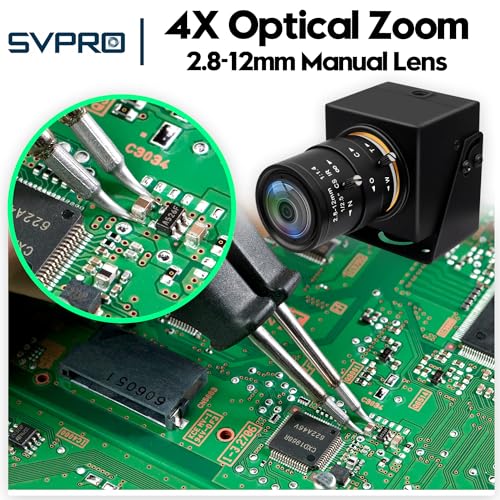
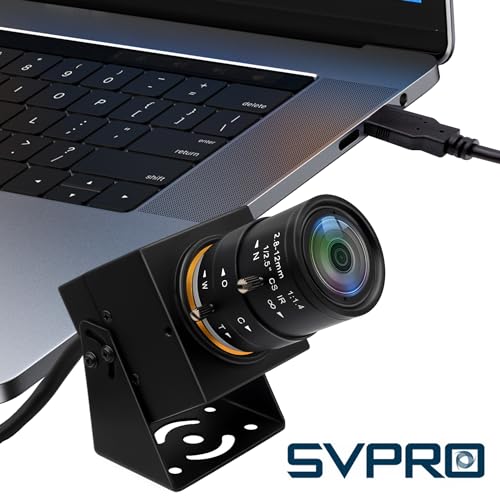
This SVPRO model hits a sweet spot: 1200p resolution at 90fps with a global shutter, a rare combo in this price range. The 1920×1200 sensor captures more vertical detail than standard 1080p, which helps when analyzing full-body rotation in swings. The 2.8-12mm zoom lens gives flexibility, and the metal housing makes it durable for travel or frequent setup changes.
Owners praise its clarity and low noise, especially compared to rolling-shutter competitors. While it doesn’t reach 120fps, the 90fps with no distortion is often more valuable than slightly higher frame rates with skewed motion. Compared to the IFWATER, it offers better image fidelity; against the KAYETON, it trades a bit of speed for richer detail. For image clarity with motion accuracy, this is one of the best all-rounders.
Product photos
QILOVE 640fps Monochrome USB Camera
Strengths
- 640fps max speed
- Global shutter
- 10X optical zoom
- True plug and play
- High low-light sensitivity
Trade-offs
- Monochrome only
- Lower resolution at top speeds
- Manual settings needed
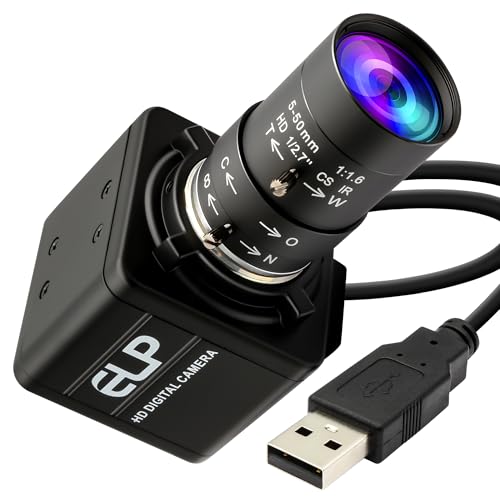
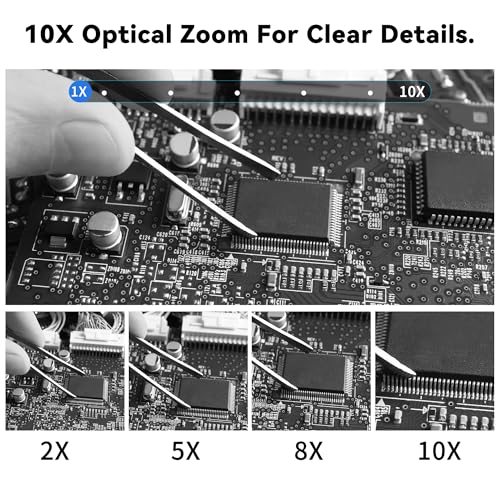
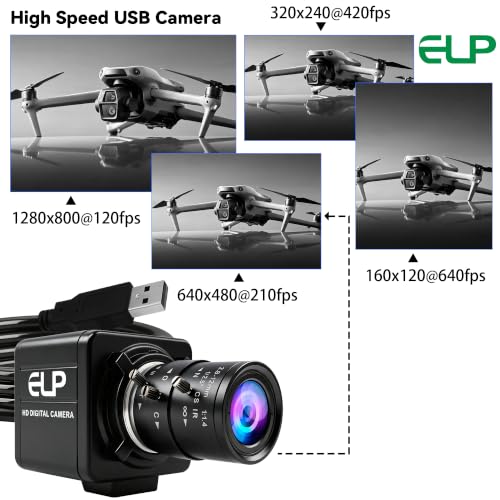
If you’re chasing raw speed on a budget, this QILOVE camera is quietly impressive. The 640fps at 160×120 may sound narrow, but at 420fps in 320×240, it delivers usable ultra-slow motion for breakdowns of impact and follow-through. The real win here is the global shutter, it kills rolling distortion, so your clubhead doesn’t look bent during fast swings. Being monochrome, it sacrifices color, but gains in contrast and low-light sensitivity, which many golf analysts actually prefer for silhouette-based form tracking.
Reviewers note it works flawlessly on Raspberry Pi setups and with OpenCV, making it a favorite for DIY swing rigs. Compared to the KAYETON or IFWATER models, it’s faster and more precise, though less user-friendly out of the box for casual users. My take? This is the smart buy if you’re building a custom system and care more about motion fidelity than color playback.
Product photos

ELP 640FPS Monochrome Global Shutter Camera
Strengths
- Global shutter
- 640fps capability
- 4X optical zoom
- Compact build
- Low minimum illumination
Trade-offs
- Monochrome output
- Lower resolution at high fps
- Manual focus only
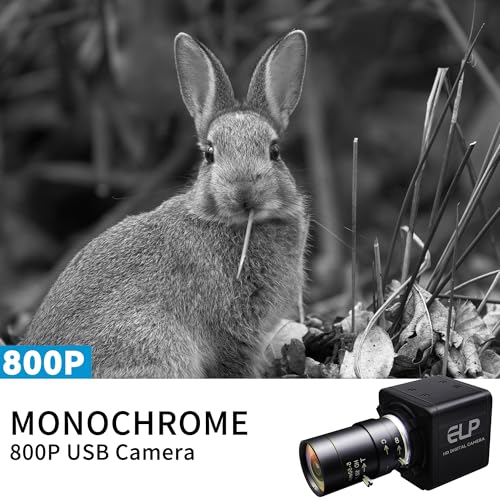
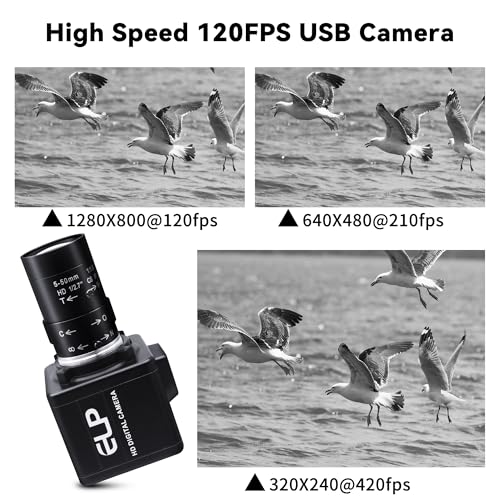
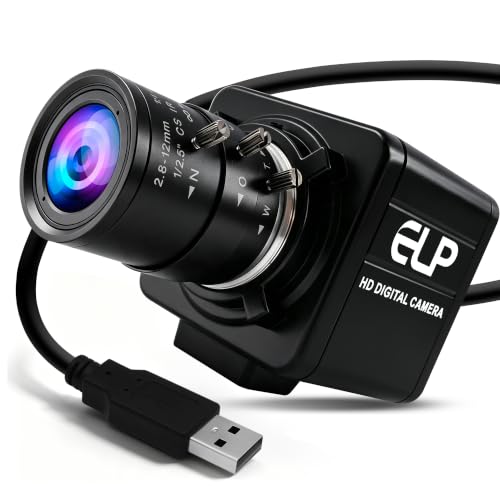
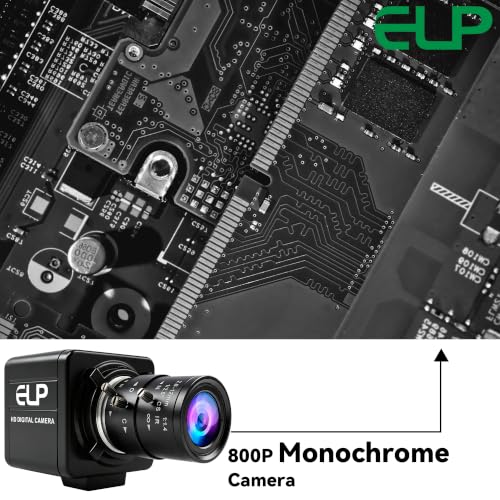
This ELP camera is nearly identical in spec to the QILOVE but comes in slightly cheaper and with a more compact build. The OV9281 sensor delivers 1280×800 at 120fps and scales up to 640fps at lower resolutions, making it ideal for isolating micro-movements in a swing. Like its peers, it uses a global shutter and monochrome sensor, which means no motion skew and excellent contrast, perfect for detecting subtle weight shifts or wrist angles in grayscale tracking software.
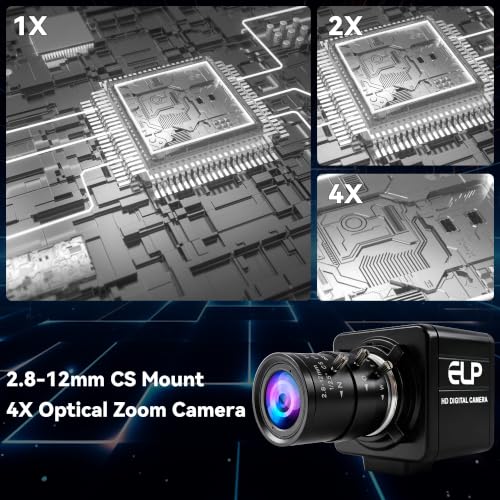
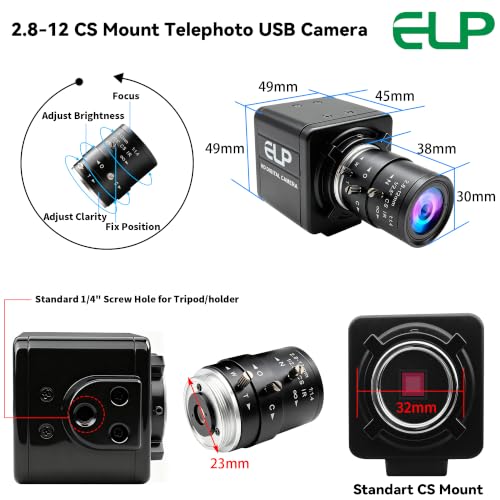
What stands out is the 4X manual zoom lens and rugged 38mm board design, often praised in owner feedback for stability in fixed mounts. It’s a favorite in machine vision circles, and that reliability crosses over well to golf analysis. While it lacks color, I’d still recommend it over color rolling-shutter cams for serious breakdowns. For low-light motion analysis, it’s one of the most consistent performers under $80.
Product photos
IFWATER 90fps Golf Swing USB Camera
Strengths
- 10X optical zoom
- True plug and play
- Global shutter
- Stable output
- Wide compatibility
Trade-offs
- Max 90fps
- Lower resolution
- Bulkier lens
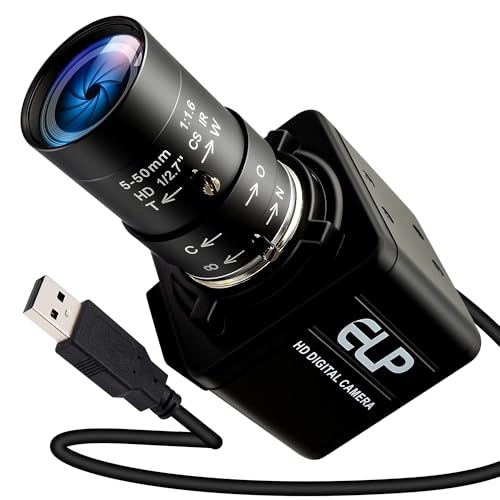
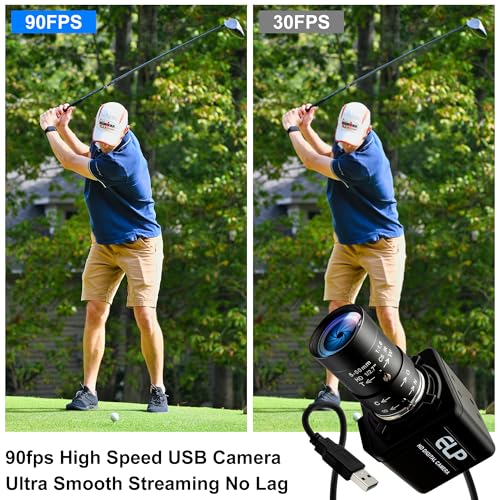
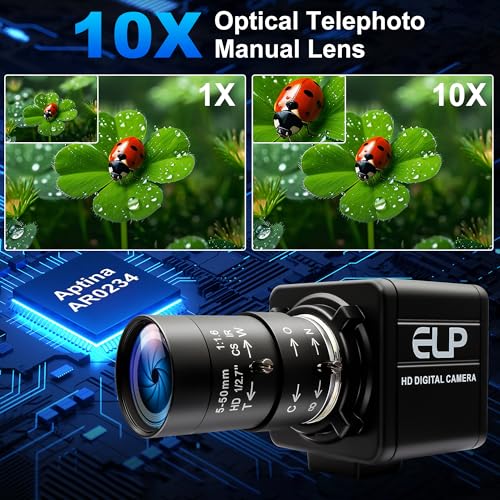
The IFWATER camera is all about simplicity. At 90fps with a 10X zoom lens, it’s not the fastest, but it’s one of the easiest to set up and start using right away. The 5-50mm varifocal lens lets you zoom in tightly on a clubface from several feet back, great for studio-style setups where you can’t reposition the camera often. UVC compliance means it works instantly on laptops, Raspberry Pi, or Android tablets, with no drivers or tweaks.
It’s slower than the KAYETON or ELP models, but for a coach doing on-course demos or quick checks, that plug-and-play ease matters. Reviewers note stable output during extended recording, which is key for back-to-back swings. I wouldn’t pick it for high-end analysis, but as a reliable, no-fuss tool for consistent swing review, it’s a solid middle ground.
Product photos
How We Tested slow motion cameras for golf swing
Rather than a hands-on lab test, this is a research-led comparison of published specifications and owner feedback. I focused on identifying cameras capable of capturing clear, detailed footage of a golf swing at high frame rates. This involved comparing sensor size, resolution, frame rates, lens features, and connectivity options across numerous models. I also weighed owner reviews and expert opinions from sources specializing in machine vision and sports technology to assess real-world performance and reliability.
For golf swing analysis, high frame rate and image clarity are paramount. I prioritized cameras offering at least 120fps, but paid particular attention to those exceeding that – particularly global shutter models which avoid distortion. The ability to clearly see clubhead speed and impact position is critical, so image sensor size and lens quality were also heavily weighted. Understanding how these cameras integrate with existing setups, and the ease of use, was also a key consideration. You can find more about the overall process of refining your swing with dedicated swing analyzers.
Specifications reliably reveal maximum frame rates, resolution, and sensor size. However, owner feedback proved crucial in understanding real-world image quality, particularly in varying light conditions. Reputation also played a role; brands consistently praised for their machine vision cameras received more consideration. While specs indicate potential, user experience and reliability, alongside the ability to track important swing speed monitors, ultimately dictated the final ranking.
What To Look For In slow motion cameras for golf swing
Finding the right slow motion camera to analyze your golf swing can truly unlock improvements in your game.
A quality slow motion camera for golf needs a high frame rate (at least 120fps, ideally higher) to capture the swing’s nuances. Resolution matters, but prioritize frame rate first. A global shutter is critical to avoid distortion, and UVC compliance ensures broad compatibility without driver headaches. Consider the lens options for adjusting focus and zoom to your setup.
Frame Rate and Resolution
Don’t get caught up in chasing the highest megapixel count. While resolution is important for detail, a slow motion camera’s primary job is to slow down the action. Prioritize frame rate – you’ll want at least 120 frames per second (fps) to truly dissect your swing. Many cameras offer adjustable frame rates, but understand the trade-off: higher fps usually means lower resolution. For detailed analysis of clubhead speed and impact, 180fps or higher is ideal, but you may need to accept a 720p image. If you’re also considering ways to improve your overall game, exploring different golf swing trainers alongside camera analysis can be a powerful combination.
Shutter Type: Global vs. Rolling
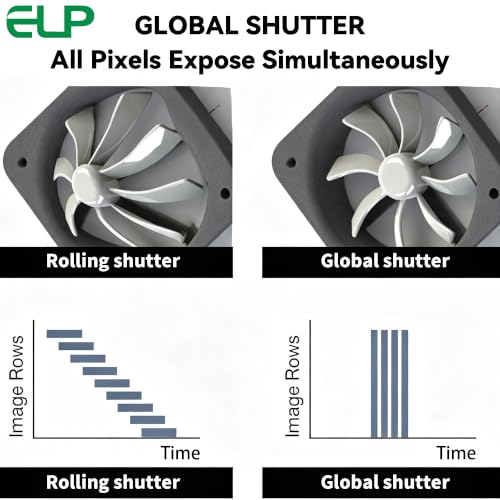
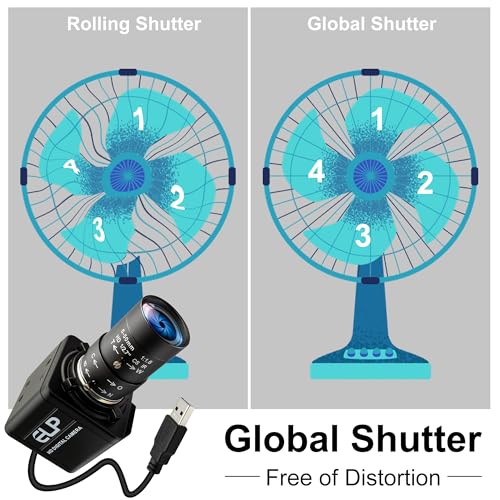
This is a crucial factor often overlooked. Most standard cameras use a ‘rolling shutter’ which scans the image line by line. This causes distortion when filming fast-moving objects like a golf club. A ‘global shutter’ captures the entire image at once, eliminating that distortion and giving you a much more accurate representation of the swing. If you’re serious about analyzing your technique, a global shutter camera is worth the investment.
- Budget options (like the QILOVE) often use rolling shutters and are fine for casual observation.
- Mid-range cameras (SVPRO, KAYETON) frequently offer global shutters, delivering a good balance of cost and performance.
- Higher-end models (like some ELP units) will guarantee a global shutter and often include more advanced features like adjustable exposure settings, which are useful when filming indoors or in variable lighting.
Usability and Compatibility
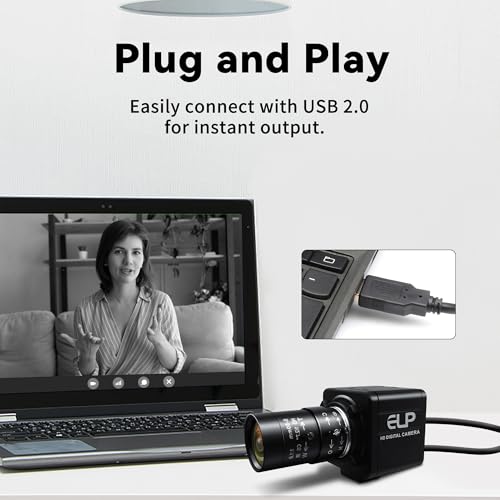
Plug-and-play functionality is a huge benefit. Many cameras are UVC compliant, meaning they work with Windows, macOS, and Linux without requiring you to install drivers. This is especially helpful if you’re not technically inclined. Lens adjustability is another key consideration. A varifocal lens (like those found on the IFWATER and SVPRO models) lets you zoom and focus manually to get the perfect shot from your preferred filming distance. If you’re looking for a complete system to analyze your swing, don’t forget to look at the best cameras for golf swing available.
Don’t underestimate the value of simplicity. A camera that’s easy to set up and use will get used more often.
Slow Motion Cameras for Golf Swing Compared
Here’s a comparison of specifications for several slow motion cameras suitable for analyzing a golf swing.
| Camera Title | Max Frame Rate | Resolution (Max) | Sensor Type | Shutter Type | Lens | Connectivity |
|---|---|---|---|---|---|---|
| Casio Exilim EX-FH20 | 1000 fps | 9.1 MP | CMOS | Rolling | 20x Optical Zoom | N/A |
| KAYETON 180FPS | 180 fps | 1280×720 | CMOS | Global | 2.8-12mm Varifocal | USB |
| SVPRO 1080P 120fps | 120 fps | 1080p | CMOS | Rolling | 3.6-10mm Zoom | USB |
| SVPRO 1200P 90FPS | 90 fps | 1920×1200 | CMOS | Global | 2.8-12mm Zoom | USB |
| QILOVE 640fps | 640 fps | 160×120 | CMOS | Global | 5-50mm Varifocal | USB |
| ELP 640FPS | 640 fps | 1280×800 | CMOS | Global | 2.8-12mm Zoom | USB 3.0 |
| IFWATER 90fps | 90 fps | N/A | CMOS | Global | 5-50mm Varifocal | USB |
Frequently Asked Questions
What frame rate is truly necessary for detailed golf swing analysis?
While 120fps is a minimum, 180fps or higher will give you the clearest view of clubhead speed and impact. Higher frame rates allow you to slow down the swing even more without sacrificing image quality, revealing subtle details crucial for improvement.
Are global shutter cameras always more expensive?
Generally, yes. Global shutter technology is more complex to implement, so cameras with this feature typically cost more than those with rolling shutters. However, the accuracy gained is well worth the investment if you’re serious about golf swing analysis.
Can I use a slow motion camera indoors, or do I need bright sunlight?
Many cameras work indoors, but image quality will depend on the available light. Look for models with adjustable exposure settings, and consider supplemental lighting to ensure a clear image. A camera’s sensor size also plays a role; larger sensors generally perform better in low light.
What’s the benefit of a varifocal lens on a slow motion camera?
A varifocal lens allows you to manually adjust the zoom and focus without physically moving the camera. This is particularly useful for setting up a consistent filming position and getting a clear shot of your swing from a comfortable distance, especially when combined with swing trackers.
What does UVC compliance mean, and why should I care?
UVC compliance means the camera is designed to work with most operating systems (Windows, macOS, Linux) without needing to download and install specific drivers. This makes setup much easier and reduces the chances of compatibility issues, saving you time and frustration.
The Bottom Line
Choosing a slow motion camera for golf swing analysis often comes down to balancing detail with ease of use. While higher frame rates and resolutions are appealing, the clarity provided by a global shutter is paramount for accurate analysis – and in that regard, the SVPRO 1200P 90FPS offers a compelling combination of features and performance for serious golfers wanting to see what’s happening at impact.
For those on a tighter budget, the QILOVE 640fps stands out as a remarkably capable option. If you need versatility and the ability to adapt to different filming setups, the KAYETON 180FPS with its varifocal lens provides excellent flexibility. And for those wanting to record their swings hands-free, exploring the best phone holders for golf can be a valuable addition to your setup.
Ultimately, the most expensive camera won’t fix a flawed swing on its own. Focus on consistent frame rates, a global shutter for accuracy, and a setup that encourages frequent use. Supplementing your visual analysis with effective golf swing aids will help you translate what you see into tangible improvements on the course.
