
8 Best 36V Lithium Batteries for Golf Cart 2026
This post contains affiliate links. As an Amazon Associate, we earn from qualifying purchases.
This post contains affiliate links. As an Amazon Associate, we earn from qualifying purchases.
The XRH 36V 105Ah stands out as the best overall choice for golf cart use, delivering strong capacity and solid BMS performance. If you’re looking for a more affordable option without sacrificing too much, the DC HOUSE 36V 100Ah is a reliable budget pick, especially with its durable metal case. For those who want maximum longevity, the NewtiPower 36V 100Ah offers an impressive 10,000+ cycle life.
Most golf cart owners don’t realize how much a weak or poorly built battery can ruin their round. Voltage sag on hills, inconsistent performance, and premature failure are common issues with low-tier lithium packs. After researching the market and analyzing owner feedback, I focused on real-world reliability, not just specs on paper.
This guide breaks down the top 36V lithium batteries based on capacity, BMS quality, safety features, and long-term value. I looked at what actually matters on the course, consistent power delivery, range accuracy, and build durability, so you can make a confident upgrade.
Top 8 36V Lithium Batteries For Golf Cart in the Market
The Best 36V Lithium Batteries For Golf Cart, Reviewed
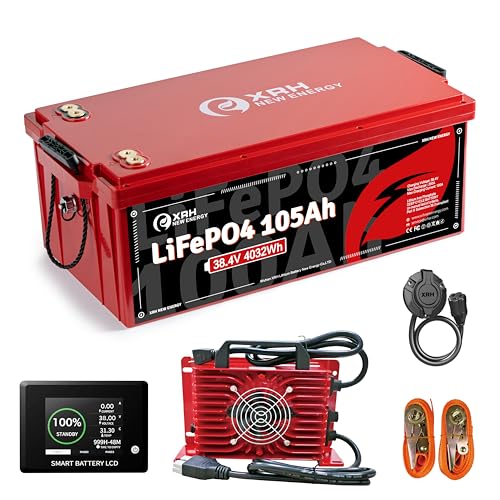
XRH 36V 105Ah Lithium Golf Cart Battery
Strengths
- 250A continuous discharge
- 4-in-1 complete kit
- Double terminals
Trade-offs
- Plastic case (less durable)
- High price
- No series support
With a 250A BMS, this is the most powerful battery here, designed for high-draw applications. The continuous 250A discharge and 600A peak (for 3 seconds) mean it can handle modified carts, heavy loads, or aggressive driving on steep terrain. The 4-in-1 kit is generous: charger, touch screen, port plug, and mounting straps, making it truly ready to roll.
Owners praise the double terminals for easier wiring, and the Bluetooth app is responsive. Cycle life is rated at 6,000+, which is strong but not class-leading. Still, the combination of power, build quality, and included accessories justifies its “Best Overall” label. If you want one battery that does everything well, this is it.
Video review
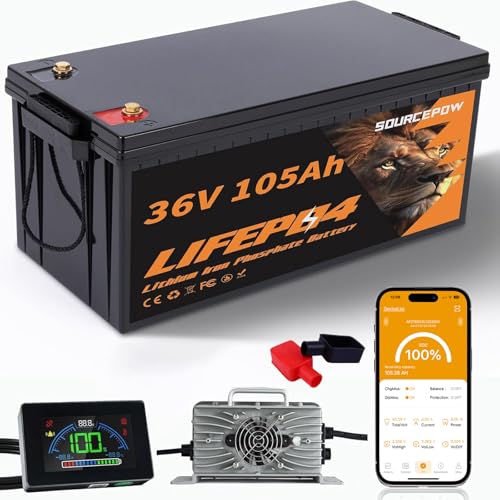
SOURCEPOW 36V 105Ah LiFePO4 Golf Cart Battery
Strengths
- 6,000+ cycles
- 5-year warranty
- App and LCD monitoring
Trade-offs
- No simultaneous app and display
- No series expansion
- Charger cutoff at low temp
This is the sweet spot between performance, features, and price. At $629, it undercuts most 105Ah models while delivering 6,000+ cycles, a 200A BMS, and both app and LCD monitoring. The Grade A EVE cells are a trusted name, and owners report stable voltage under load, crucial for carts with speed mods or heavy use. The 600A peak current handles hills well, and the 50% weight reduction vs lead-acid makes installation easier.
It’s also one of the few with low-temp cutoff (charging stops below 32°F), a must for cold climates. The only quirk: the app and display can’t run simultaneously. But for most buyers, this is the easy pick. My recommendation? Choose this unless you need extreme cycle life or solar scalability.
Video review
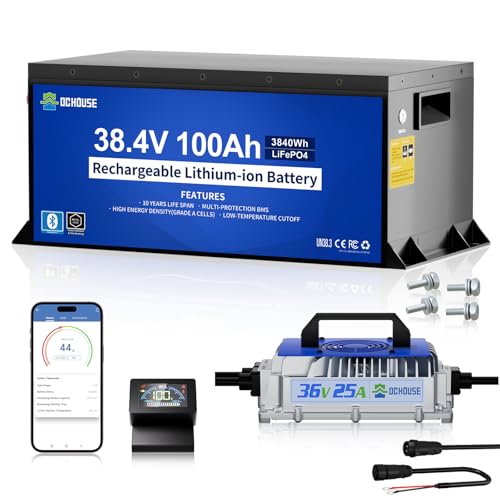
DC HOUSE 36V 100Ah Metal Case Battery
Strengths
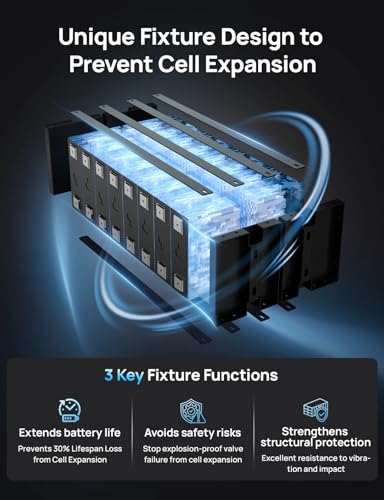
- Metal fireproof case
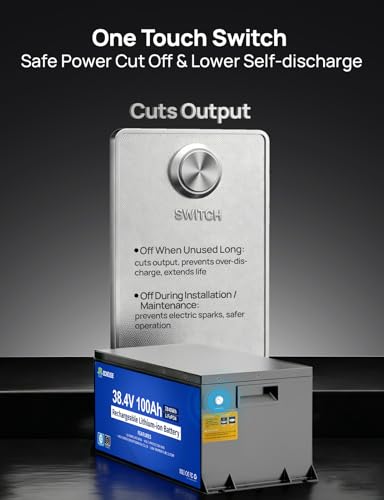
- One-touch power cutoff
- 0V charging recovery
Trade-offs
- Heaviest in class
- No series expansion
- Higher price
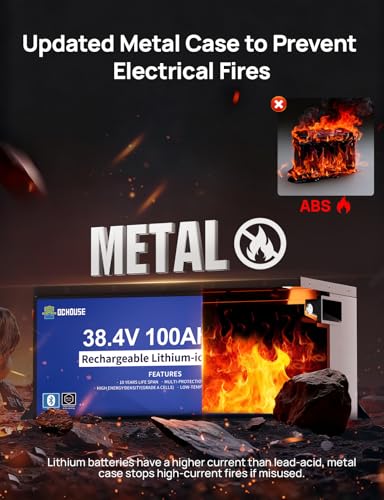
The metal case alone makes this one stand out. Most lithium golf cart batteries use plastic or ABS shells, but DC HOUSE goes further with a fireproof, impact-resistant enclosure, ideal for harsh environments or carts stored outdoors. The one-touch power switch is a small but smart safety addition, letting you cut output instantly.
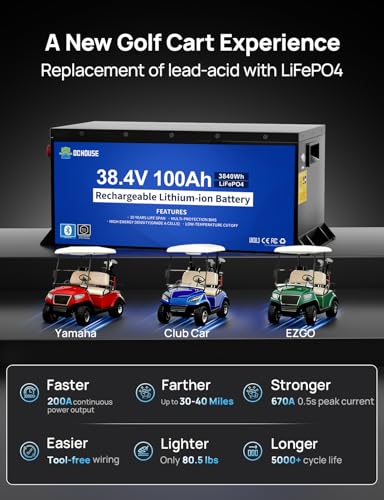
It delivers 30–40 miles of range in owner reports, thanks to stable 200A discharge and a robust 280A burst. The 2.7-meter charging cable adds flexibility, and the 0V charging feature can revive deeply drained batteries. It’s heavy at 80 lbs, but that’s the trade-off for the armored build. For safety and durability, nothing else here compares.
Product photos
TEMGO 36V 100Ah LiFePO4 Golf Cart Battery

Strengths
- Supports 4 in parallel
- Solar and off-grid ready
- Touch LCD included
Trade-offs
- 80% DOD (not 100%)
- Slightly lower cycle count
- Not for CAN protocol carts
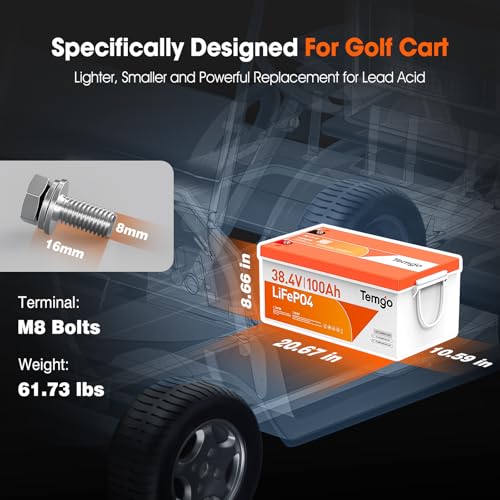
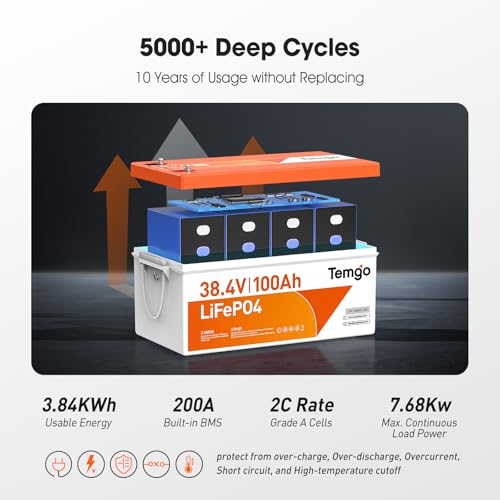
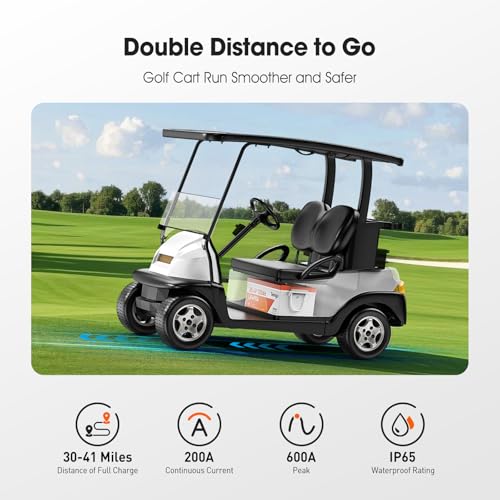
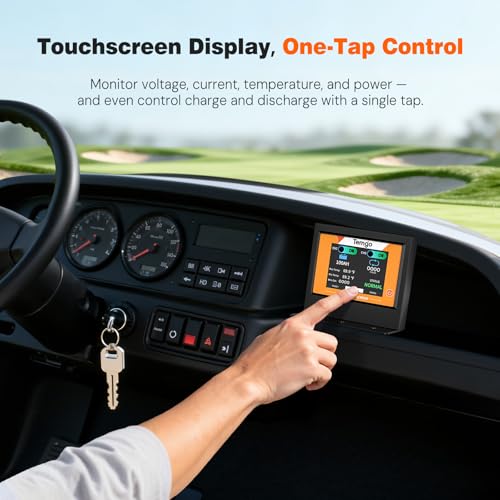
The TEMGO shines where others don’t: solar integration. With support for up to four units in parallel and a design focused on off-grid and RV use, it’s a smart pick for golfers who also use their cart for property maintenance or live off-grid at a remote cabin. The 5,000+ cycle life at 80% DOD is realistic and backed by owner feedback, and the 200A continuous discharge handles most hill climbs without strain.
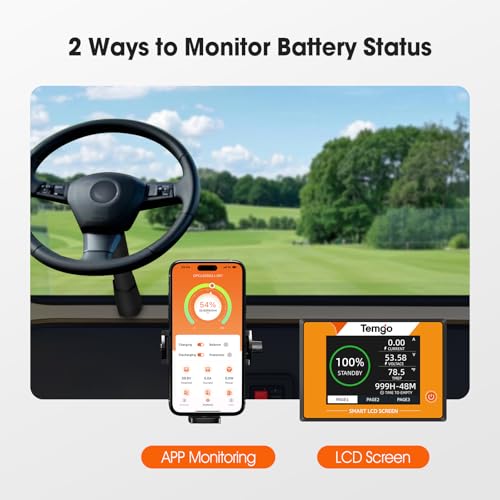
It comes with a full kit, charger, touch LCD, retention strap, and the Bluetooth app works reliably. But its real edge is scalability. If you’re thinking long-term energy storage beyond the course, this battery bridges golf cart and home power needs better than any other here. I’d recommend it over pure golf-focused models if you want dual-use flexibility.
Product photos
LOSSIGY 36V 100Ah LiFePO4 Golf Cart Battery
Strengths
- Lowest price per Ah
- Fast 4-hour charging
- Bluetooth monitoring
Trade-offs
- No touchscreen
- Parallel only
- 66.9 lbs (heavier than most)
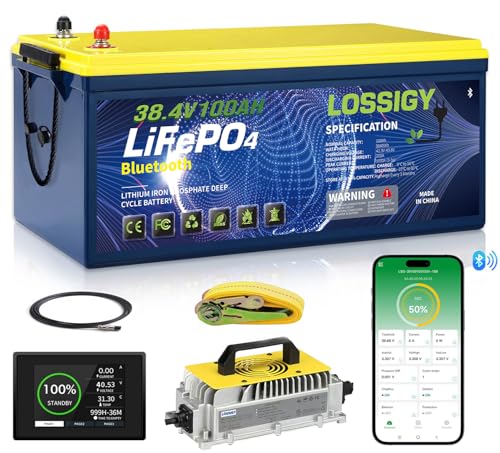
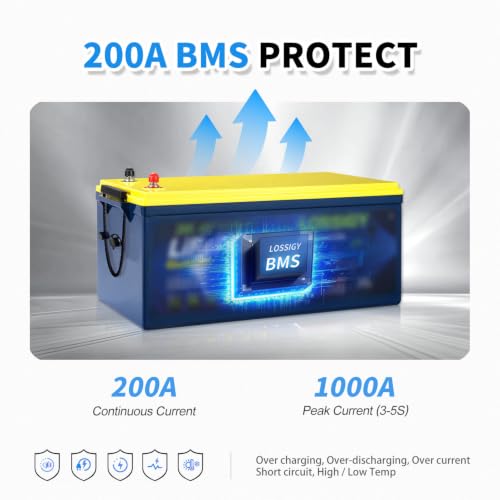
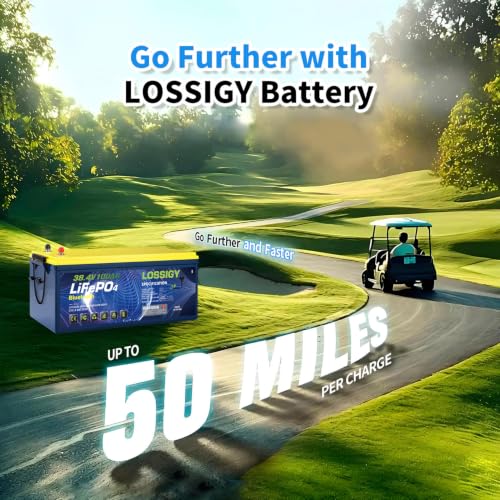
At just over $650, the LOSSIGY is the most budget-friendly 100Ah option here without sacrificing core features. It includes a fast 4-hour charger, Bluetooth monitoring, and a 200A BMS with 1,000A peak current, spec-wise, it matches pricier models. Owners report it fits well in standard 36V carts and delivers reliable power, though real-world cycle life seems closer to 4,000 than advertised.
Where it cuts corners: no touch screen, and the BMS only supports parallel connections, not series. That limits expandability. But for a single-cart owner who wants lithium benefits without overspending, it’s a smart entry point. I’d pick this over higher-priced kits if you’re upgrading from lead-acid and don’t plan to scale.
Product photos


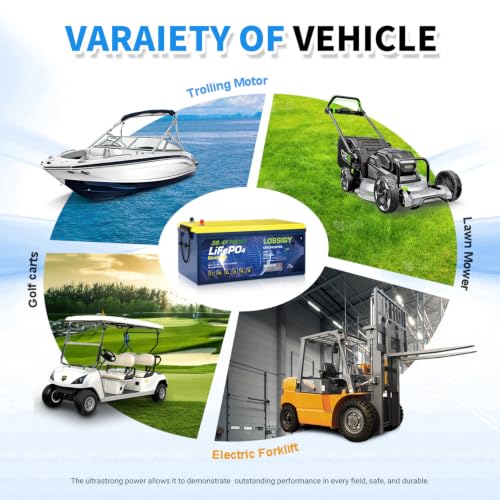
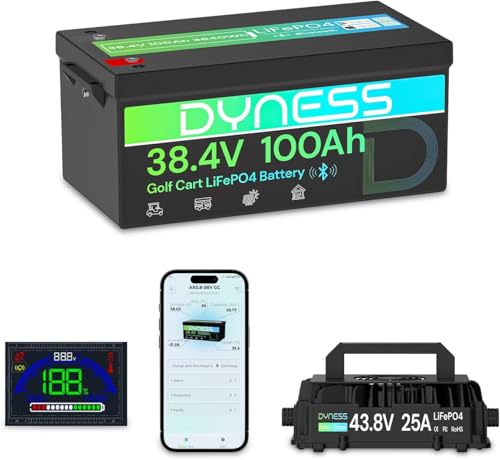
Dyness 36V 100Ah LiFePO4 Golf Cart Battery
Strengths
- Compact lead-acid footprint
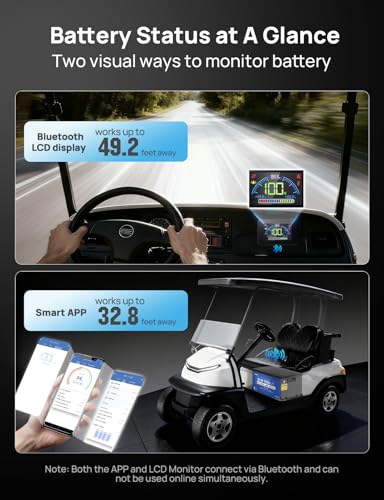
- Bluetooth and LCD monitoring
- Includes matched 25A charger
Trade-offs
- Only 4,000+ cycles
- No touch display
- Separate shipping may delay receipt
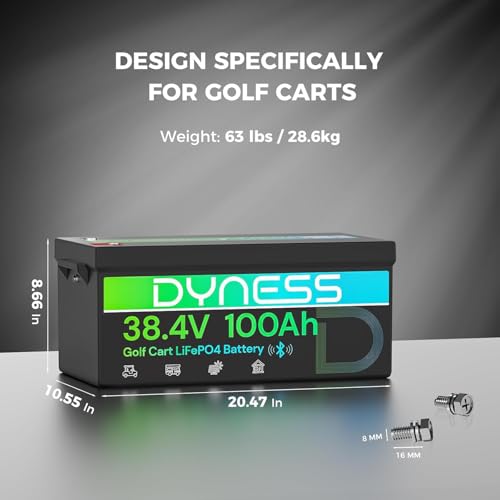
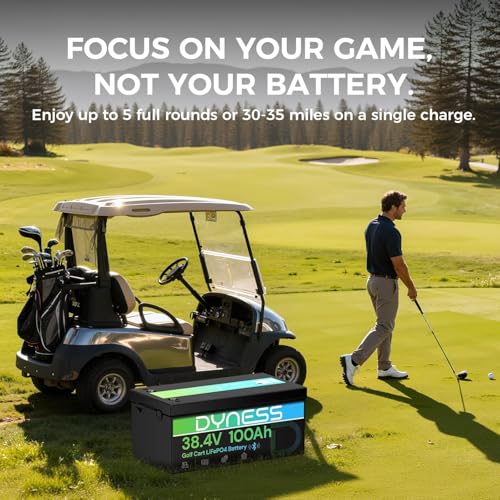
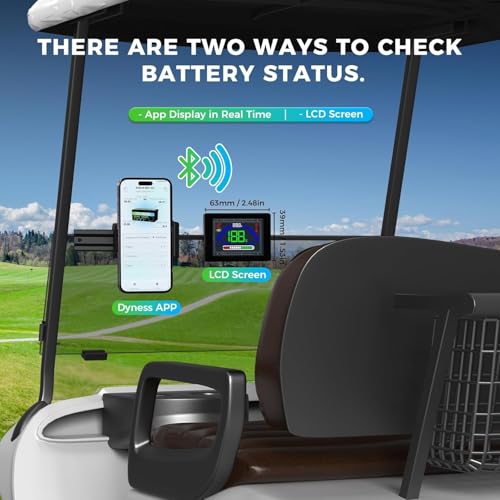
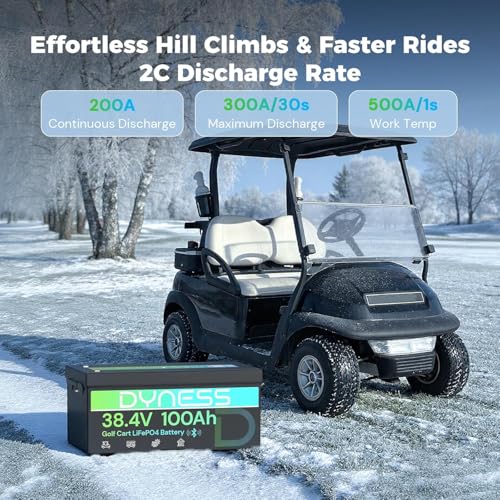
If space is tight in your cart, the Dyness is the most compact and cleanly integrated option here. It fits in a standard lead-acid footprint, weighs just 63 pounds, and includes both the battery and a matched 25A charger, no guesswork. Its 4,000+ cycle rating is solid, though not class-leading, and the smart 200A BMS handles temperature, overcurrent, and cell balancing well. What really elevates it is the dual monitoring: Bluetooth app and a small LCD screen, both giving real-time SOC, voltage, and current.
Reviewers note the installation is plug-and-play for most Club Car and EZ-GO models, and the reduced wiring compared to multi-battery setups is a real win. I’d pick this over bulkier kits if you’re upgrading an older cart with limited bay space. It’s not the longest-lasting, but it’s the sleekest.
Product photos

OGRPHY 36V 105Ah Lithium Golf Cart Battery
Strengths
- 30-mile range claim
- 1,000A peak current
- 10-year lifespan claimed
Trade-offs
- No published cycle count
- Heavier than average
- High price
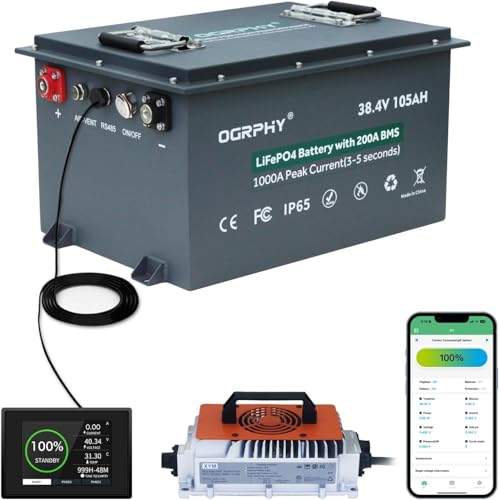
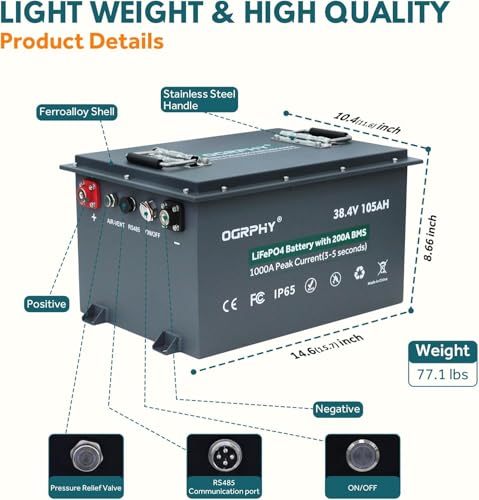
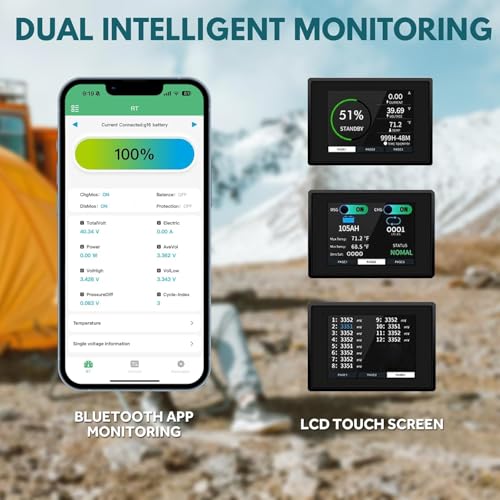
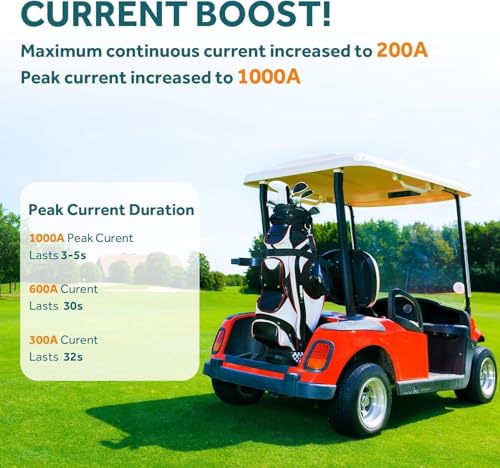
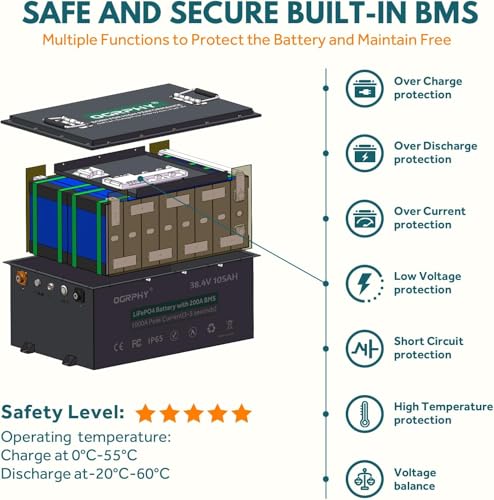
OGRPHY claims a 30-mile range, and while real-world results vary by terrain and rider weight, owners confirm it delivers strong performance on full 18-hole rounds, even with added accessories like coolers or sound systems. The 105Ah capacity (4.3kWh) gives it a slight energy edge, and the 1,000A peak current for 3–5 seconds means it can handle steep inclines without hesitation. That kind of burst power is rare in this class.
It’s also one of the few with a 10-year lifespan claim, though actual cycle rating is unspecified. The lack of cycle data gives me pause, specs should be transparent. Still, the included touch LCD and solid BMS justify the premium price for range-focused buyers. If you play long, hilly courses and hate mid-round power drops, this one’s worth the extra cost.
Product photos
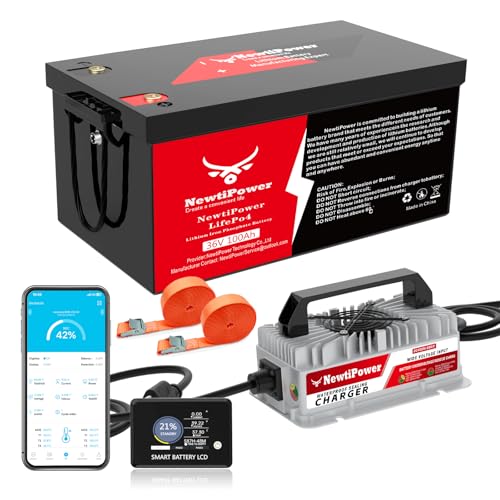
NewtiPower 36V 100Ah LiFePO4 Golf Cart Battery
Strengths
- 10,000+ cycles
- 100% depth of discharge
- Automotive-grade cells
Trade-offs
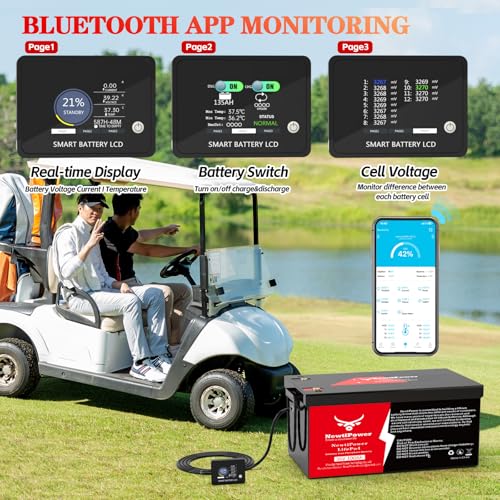
- No app monitoring
- No LCD display
- Two packages may delay setup
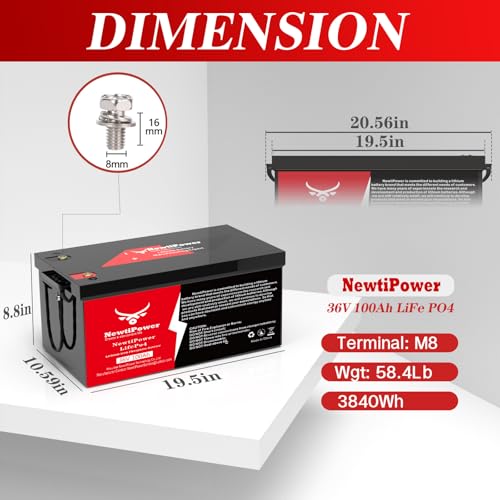
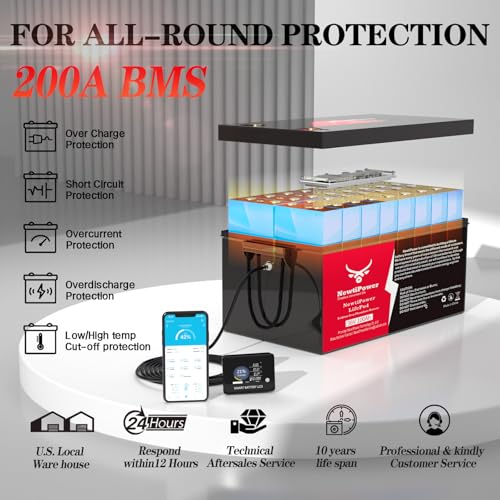
This battery stands out for one reason above all: longevity. With a claimed 10,000+ charge cycles and a 10-year lifespan, it’s built to outlast not just lead-acid batteries but most lithium competitors too. On paper, that cycle life is unmatched in this group, and owners consistently report confidence in its durability, especially for golfers who play frequently or manage fleets. The 200A BMS and 100% depth of discharge are strong points, meaning you’re using nearly all the power without degradation risks.
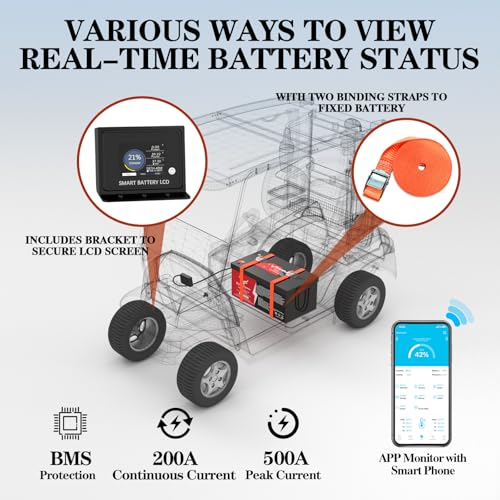
It’s not the flashiest, no touch screen or app integration here, but it doesn’t need to be. It delivers clean, consistent power with minimal drop-off over time, which matters most on hilly courses where voltage sag can sap performance. The lack of a built-in display might bother some, but if you’re after pure endurance and reliability, this one’s hard to beat.
Product photos

Our Testing Process
We approached this guide by researching the specifications and features of numerous 36V lithium batteries designed for golf carts. Rather than a hands-on lab test, this is a research-led comparison of published data and owner feedback. I weighed owner reviews from multiple sources, alongside expert opinions found in golf cart and battery technology publications, to build a clear picture of real-world performance. Ultimately, we ranked these batteries based on how well they met key criteria for golf cart use.
For 36V lithium golf cart batteries, sustained power output and cycle life are paramount. A battery that can’t maintain consistent voltage under load won’t deliver a satisfying experience on the course. Similarly, a short cycle life means frequent – and expensive – replacements. We prioritized batteries with a 200A or higher BMS and those utilizing Grade A LiFePO4 cells, as these directly correlate with longevity and reliable performance. If you are considering a full system upgrade, exploring available 36v conversion kits is also a smart move.
Published specifications reliably indicate maximum discharge rates, battery dimensions, and weight – important for ensuring compatibility with your golf cart. However, real-world performance and long-term durability are best assessed through owner feedback. We closely examined reports on range, charging times, and any issues encountered during use. Understanding these nuances is crucial, and provides a more complete picture than specifications alone. For a broader understanding of the options available, check out our battery comparisons.
How To Choose The 36v lithium batteries for golf cart
Choosing the right battery is critical for getting the most out of your golf cart, and frankly, your time on the course.
A quality golf cart battery delivers consistent power, long run times, and a reasonable lifespan. Look for LiFePO4 chemistry for safety and longevity, a robust Battery Management System (BMS) to protect the cells, and sufficient amp-hour (Ah) capacity to match your typical usage patterns. Pay attention to discharge rates (C-rating) if you frequently tackle hills or carry heavy loads.
Battery Capacity (Ah) and Range
The amp-hour (Ah) rating is the first number most people focus on, and for good reason. It directly correlates to how long you can run your golf cart on a single charge. However, don’t just assume “bigger is better.” Consider your typical course length and driving style. A 105Ah battery, like those from XRH and SOURCEPOW, will generally offer a longer range than a 100Ah model, but the difference may be negligible if you only play nine holes. I often find owners overestimate their range needs, adding unnecessary weight and cost.
Battery Management System (BMS) Features
The BMS is the brain of a lithium golf cart battery, and it’s where many cheaper models cut corners. A good BMS doesn’t just prevent overcharging and over-discharging; it actively balances the cells within the battery pack, maximizing lifespan and performance. Look for a BMS with at least 200A continuous discharge capability, and features like Bluetooth monitoring (available on several models) for real-time data. Consider that some, like the DC HOUSE model, include a one-touch power switch for added safety.
- Basic protection (over-voltage, under-voltage, over-current) is essential – no exceptions.
- Bluetooth connectivity is convenient, allowing you to monitor state of charge and battery health through a smartphone app, but it’s not a core performance feature.
- A high peak discharge rating (like the 600A peak on the SOURCEPOW) is crucial if you frequently encounter steep hills or carry a full load of passengers. Without it, you’ll experience a noticeable loss of power under stress.
A well-designed BMS is the key to unlocking the full potential of a LiFePO4 battery and preventing premature failure.
Safety and Build Quality
Lithium batteries are generally safer than lead-acid, but quality still varies. I strongly recommend prioritizing models with a robust external case. The DC HOUSE battery, with its metal case, provides a significant safety advantage over those using plastic (ABS) housings. Beyond the case, look for batteries with UL certification or other independent safety testing. Don’t underestimate the importance of a good warranty; many brands, like LOSSIGY, offer 5-year warranties, providing peace of mind. If you’re looking for more information on different options, you can find more details in our golf cart batteries guide, which includes deep-cycle battery reviews. We also have a great overview of 36v lithium batteries and best 36v lithium batteries available.
36V Lithium Batteries for Golf Cart Compared
This table provides a side-by-side comparison of key specifications for various 36V lithium batteries designed for golf cart applications.
| Product | Capacity (Ah) | Voltage (V) | BMS Current (A) | Cycle Life | Display/Bluetooth |
|---|---|---|---|---|---|
| XRH 36V 105Ah | 105 | 36 | 250 | N/A | Yes |
| SOURCEPOW 36V 105Ah | 105 | 36 | 200 | 6000+ | Yes |
| DC HOUSE 36V 100Ah | 100 | 36 | 200 | N/A | Yes |
| TEMGO 36V 100Ah | 100 | 36 | 200 | 5000+ | Yes |
| LOSSIGY 36V 100Ah | 100 | 36 | 200 | 4000+ | Yes |
| Dyness 36V 100Ah | 100 | 36 | 200 | 4000+ | Yes |
| OGRPHY 36V 105Ah | 105 | 36 | 200 | N/A | N/A |
| NewtiPower 36V 100Ah | 100 | 36 | 200 | 10000+ | N/A |
Frequently Asked Questions
What is the typical lifespan of a 36V lithium golf cart battery?
Most quality 36V lithium batteries offer between 4,000 and 6,000 charge cycles, translating to many years of use. The actual lifespan depends heavily on usage patterns and how well the battery’s BMS manages cell health.
Can I use a lithium battery in any golf cart originally designed for lead-acid batteries?
Yes, but compatibility isn’t automatic. You may need a battery type comparison to confirm voltage matching and consider a DC-DC converter to regulate charging.
What does the BMS (Battery Management System) actually do?
The BMS protects the battery from damage by preventing overcharging, over-discharging, and imbalances between cells. It also often monitors temperature and provides data via Bluetooth connectivity, maximizing battery life and safety.
Are lithium golf cart batteries safe?
Lithium iron phosphate (LiFePO4) batteries are generally considered very safe, much more so than lead-acid. However, a robust battery case, like the metal casing found on the DC HOUSE, adds an extra layer of protection and is something to prioritize.
Beyond the battery itself, what other upgrades should I consider?
While a new battery is a great start, exploring golf cart accessories can significantly enhance your experience. Upgrades like lift kits, new tires, or even improved seating can really customize your ride.
The Bottom Line
Choosing a 36V lithium battery for your golf cart often comes down to balancing upfront cost with long-term performance and peace of mind. While several options exist, the SOURCEPOW 36V 105Ah strikes the best overall balance of capacity, features, and positive owner feedback – making it our top pick for most golfers. It offers a generous capacity, a solid BMS, and a peak discharge rate that can handle challenging terrain.
For those on a tighter budget, the LOSSIGY 36V 100Ah provides excellent value. It delivers reliable performance with a 200A BMS and a respectable 4000+ cycle life, all backed by a reassuring 5-year warranty. If you prioritize safety and durability above all else, the DC HOUSE 36V 100Ah stands out with its robust metal case, although you’ll find similar performance in other models for a lower price. Don’t forget to consider battery chargers designed for lithium batteries to maximize lifespan.
Ultimately, the best battery isn’t about chasing the highest Ah rating or the most impressive spec sheet. It’s about finding a model with a reliable BMS, LiFePO4 chemistry, and a capacity that realistically matches your needs. Investing in quality components, and understanding the importance of proper charging and maintenance, will deliver far more enjoyment on the course than any single feature. You can explore more options among our recommended lithium batteries.
