
6 Best Golf Sunglasses to See the Ball 2026
This post contains affiliate links. As an Amazon Associate, we earn from qualifying purchases.
This post contains affiliate links. As an Amazon Associate, we earn from qualifying purchases.
The Tifosi Intense Golf Sunglasses Iron and Tifosi Optics Navar FC stand out as the best overall choices for seeing the ball, thanks to their clarity-enhancing lenses and secure fit. For a budget-friendly option that still delivers solid performance, the BLAITEJUS HD Non-Polarized Golf sunglasses are a strong contender.
Every golfer has squinted through glare, lost a ball in the sky, or misread a putt under harsh light. It’s frustrating and it costs strokes. After comparing the field and analyzing specs, owner feedback, and design intent, I focused on models that prioritize true visual contrast and stay put from tee to green.
This guide breaks down the lens tech, frame comfort, and tint strategies that actually help you track the ball and read greens, so you can pick a pair that works with your game, not against it.
Top 6 Golf Sunglasses To See The Ball in the Market
The Best Golf Sunglasses To See The Ball, Reviewed
Tifosi Intense Golf Sunglasses Iron

Strengths
- Lightweight at 23g
- Good fog resistance
- Non-slip grip when sweaty
Trade-offs
- Basic lens contrast
- No included case
For a budget-friendly option that still delivers solid optical performance on the course, the Tifosi Intense stands out. The green GT lenses boost contrast well enough to help track a white ball against green fairways, and owners consistently report they make spotting landed shots easier under bright conditions. The vented design helps reduce fogging, which matters when you’re walking 18 holes in humid weather, and the non-polarized lens preserves depth perception, critical for reading greens accurately.
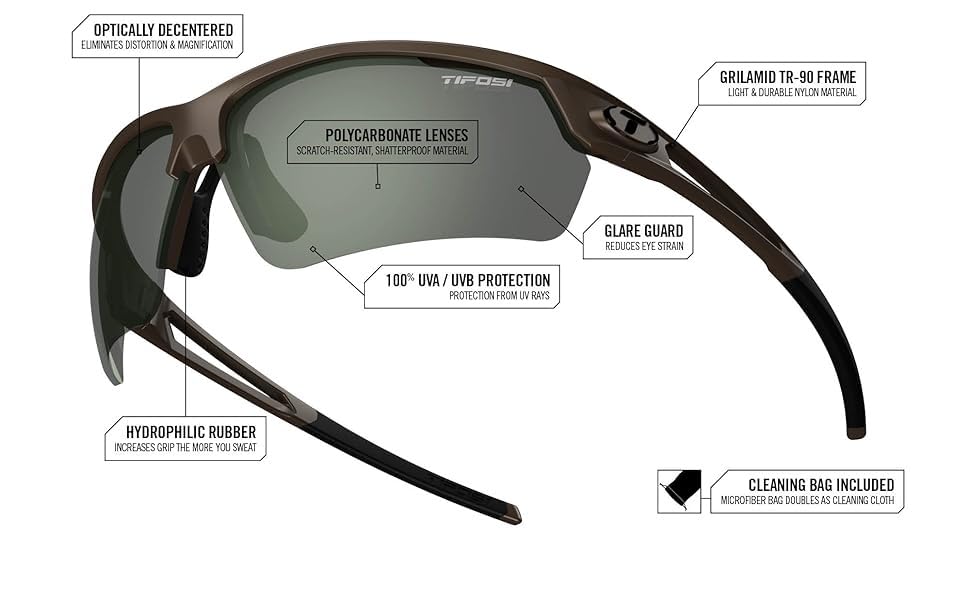
At just 23 grams, the Grilamid frame disappears on your face, and the hydrophilic nose pads really do grip better as you sweat, a feature backed by numerous reviews from golfers who play full rounds in heat. While the lens isn’t as finely tuned as pricier models, it’s impressive for the cost. I’d pick this over similarly priced fashion sunglasses any day for actual course use.
Video review
BLAITEJUS HD Golf Ball-Finding Sunglasses
Strengths
- Excellent ball contrast
- Semi-rimless for clear view
- Stays put when sweaty
Trade-offs
- Flash coating may scratch
- Limited frame color options
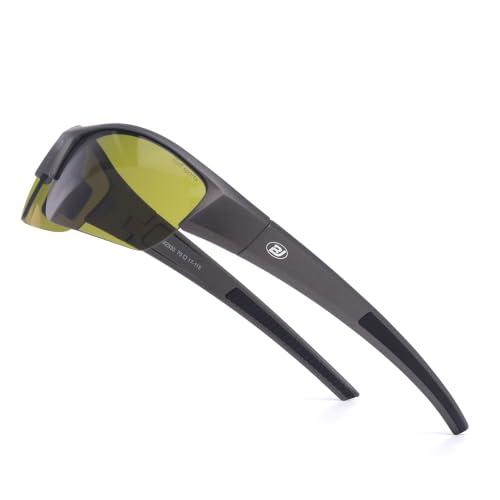
These BLAITEJUS sunglasses are built with one goal in mind: make the ball jump off the fairway. The non-polarized HD lens blocks 95% of blue light, which cuts haze and amplifies contrast between the white ball and both sky and turf. On paper and in owner feedback, that translates to faster ball acquisition mid-flight and after landing, something higher handicappers and aging eyes will appreciate. The semi-rimless design is a smart touch, giving an unobstructed downward view for putting and chipping, a detail many overlook.
Weighing just over 30 grams, they’re among the lightest full-coverage frames here, and the TPR grip zones on nose and temples hold firm even when wet. Several reviewers noted they forget they’re wearing them by the 12th hole. Compared to polarized options, these maintain natural depth cues on the green, which I always recommend for serious putting. My pick for players who prioritize ball tracking over style.
Video review
BLAITEJUS HD Non-Polarized Golf Sunglasses

Strengths
- Accurate depth perception
- Comfortable all-day wear
- Great for driving too
Trade-offs
- Similar lens to other BLAITEJUS models
- No micro venting
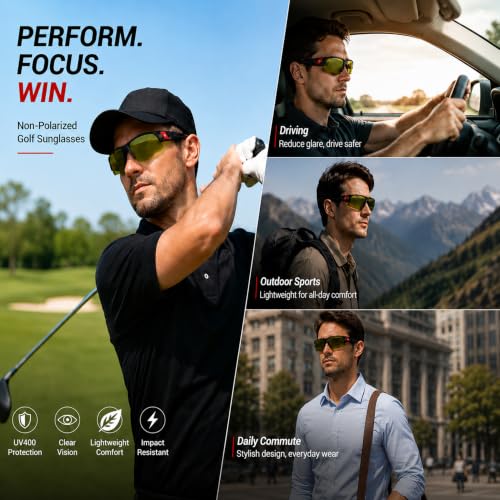
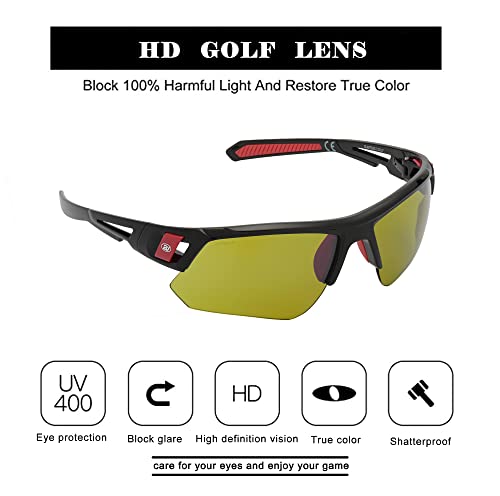
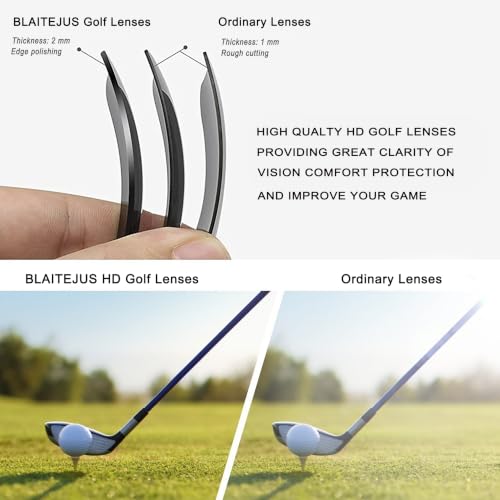
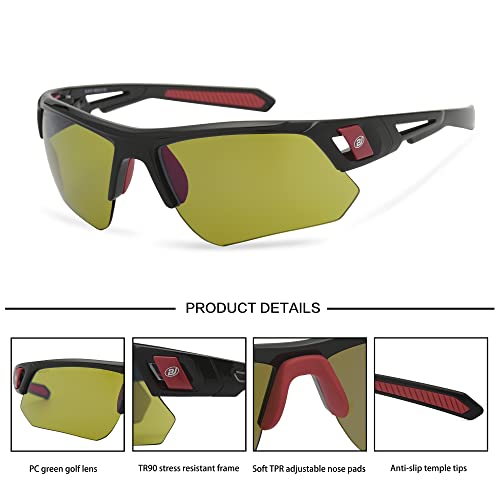
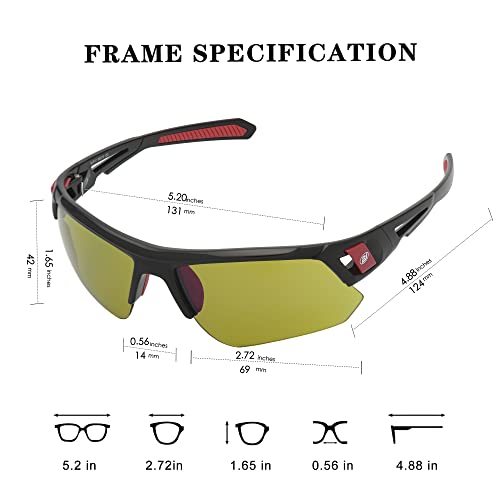
This second BLAITEJUS model shares DNA with the B0H4KM44YQ but leans harder into green reading. The non-polarized HD lens emphasizes true depth perception, which reviewers say helps them judge roll and landing zones more accurately, especially on fast, tiered greens. The lens blocks blue light effectively, reducing haze without oversaturating colors, and the UV400 protection is standard across the board.
It’s just as lightweight and grippy as its sibling, with the same TR90 frame and TPR contact points. But where it shines is versatility: owners report using them just as much for driving as for golf, thanks to reduced road glare and sharp contrast. Compared to polarized sunglasses, these maintain a more natural view of terrain. If you play in varied conditions and want one pair that excels at both ball tracking and distance judgment, this is a strong contender.
Product photos
maivnz Golf Ball Finder Sunglasses Gun
Strengths
- Strong ball contrast
- Non-polarized for green accuracy
- Comes with pouch and warranty
Trade-offs
- No lens venting
- Fit may be loose for some
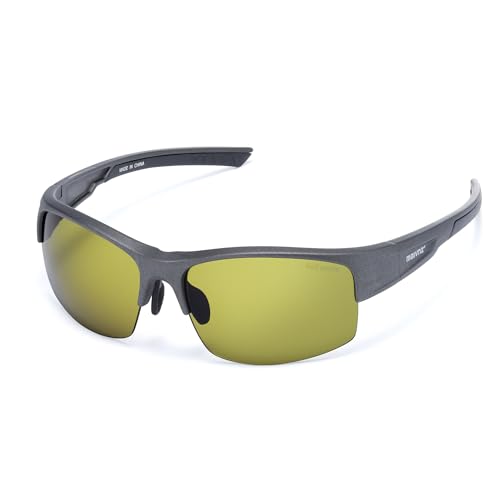
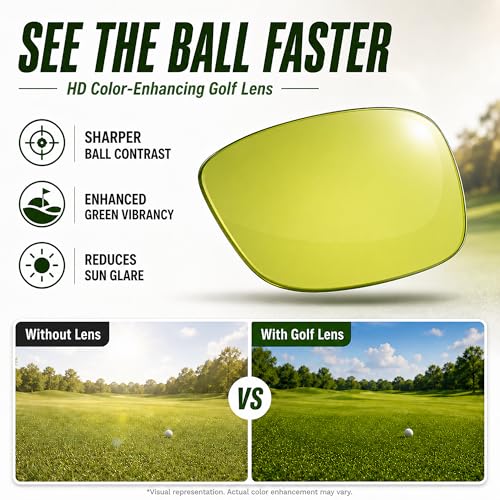
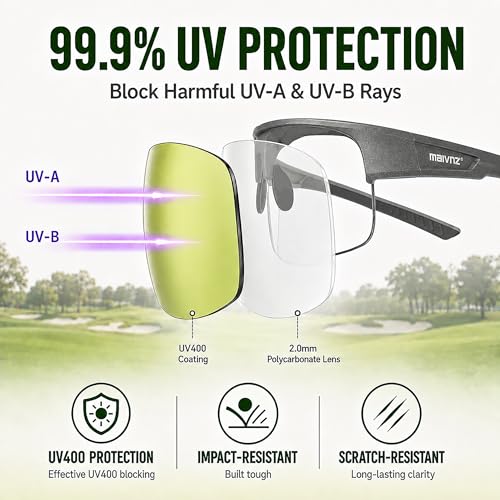
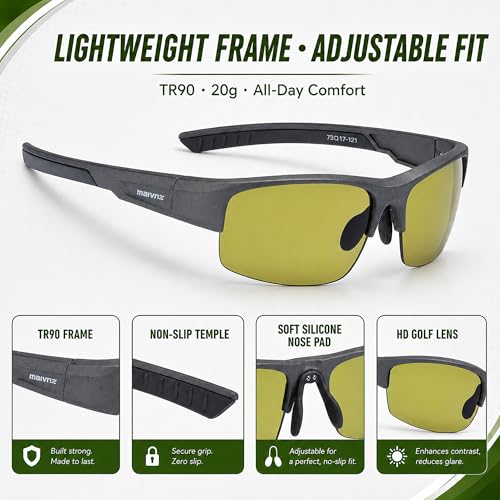
The maivnz sunglasses punch above their price point with a lens that’s clearly designed for golf, not just repurposed from generic sports styles. The HD green tint does a solid job enhancing white-on-green contrast, and multiple owners say it helps them spot balls faster in rough and shadows. The non-polarized design is a win, it keeps GPS rangefinders readable and doesn’t flatten depth perception on approach shots or putts.
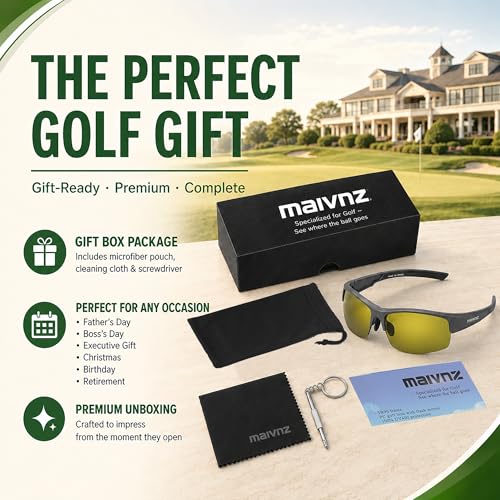
The frame is lightweight and holds well during swings thanks to soft silicone pads, though it lacks the advanced venting found on Tifosi models. Some users mentioned minor fogging in muggy conditions. It comes with a nice gift-ready pouch and a 2-year warranty, which adds value. While the lens isn’t as refined as the Tifosi Enliven, it’s one of the best budget-focused options that still feels purpose-built.
Product photos
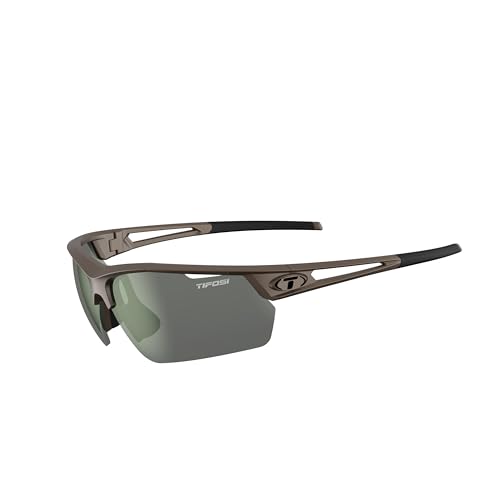
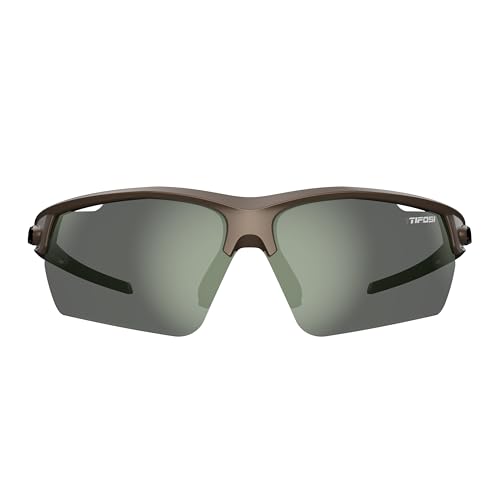
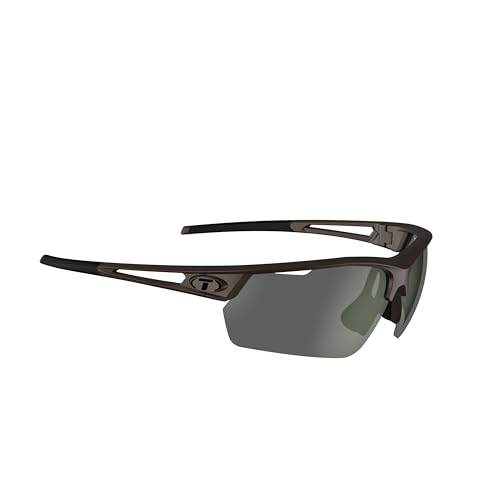
Tifosi Optics Navar FC Sunglasses
Strengths
- Superior green contrast
- Optically clear lens
- Secure anti-bounce fit
Trade-offs
- Higher price than entry models
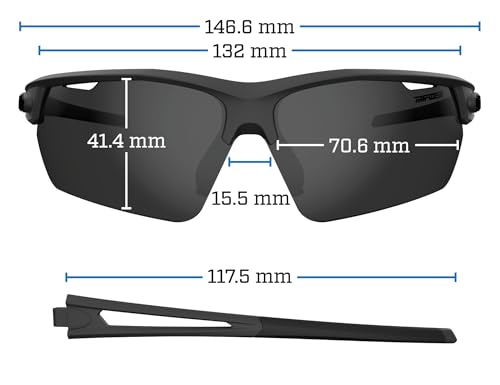
- Only fits medium to large faces
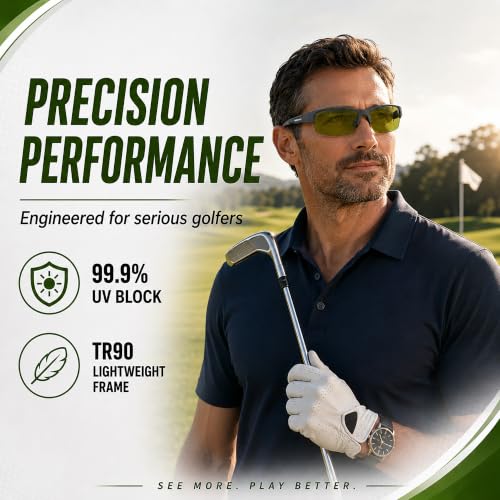
If you’re serious about green reading, the Enliven Golf lens in the Navar FC is worth the step up in price. With a 16% VLT and a color-enhancing green tint, it’s engineered to highlight subtle breaks and grass texture, owners say it makes undulations more visible without distorting contours. That’s a big deal when you’re lagging from 40 feet and need to judge speed and slope. The full-coverage lens also provides excellent side protection, and the venting works well to prevent fog during brisk morning rounds.
The frame is nearly identical to the Intense, same 24g weight, Grilamid build, and sweat-activated nose pads, so you get proven comfort and stability. But the lens is the real upgrade. Compared to basic GT lenses, the Enliven delivers richer contrast and better color fidelity. For the golfer who treats putting like a science, this is the smarter buy.
Product photos
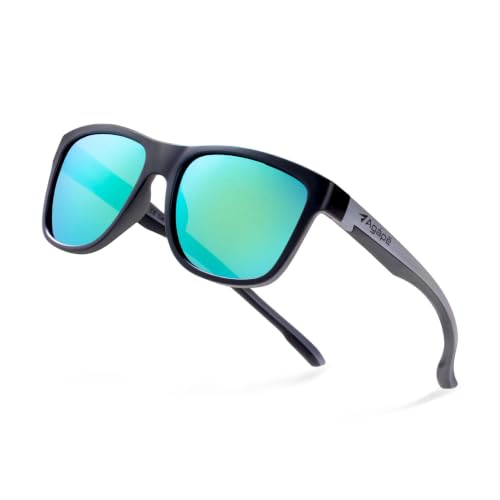
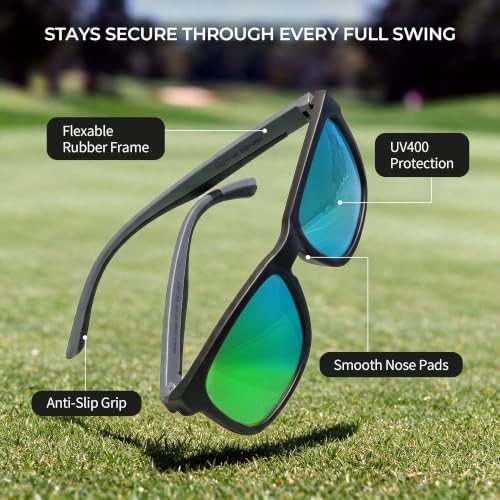
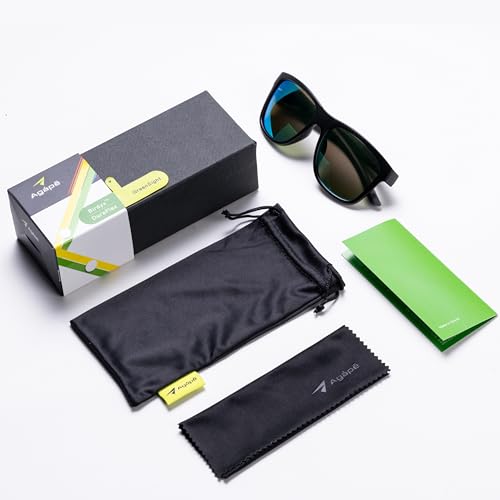
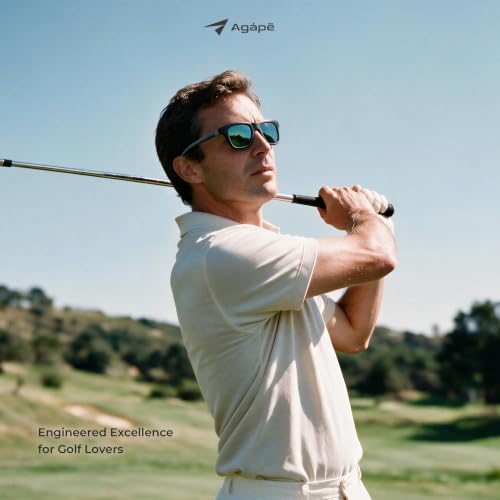
agape Birdyx DuraFlex Red Lens Sunglasses
Strengths
- High green contrast
- Polarized glare reduction
- Durable flexible frame
Trade-offs
- Polarization may affect green reading
- Limited fit for narrow faces
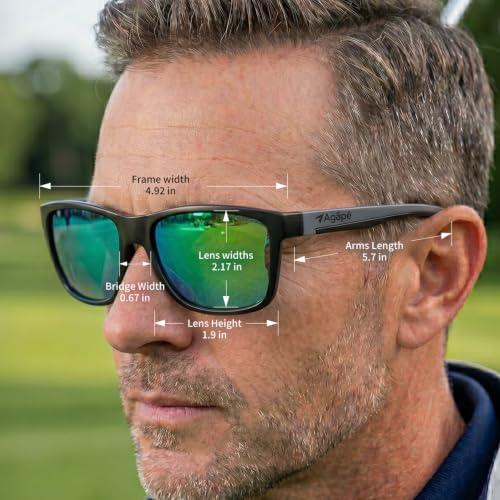
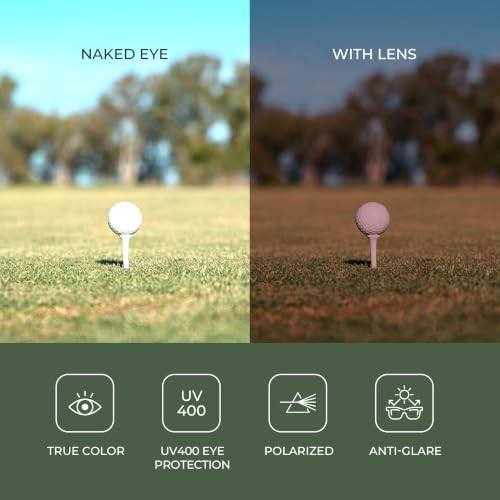
The copper/red lenses here are where this model stands apart. With 18% light transmission, they boost green contrast more aggressively than most green-tinted options, making grass texture and ball position pop in bright sunlight. Polarized, yes, but these are designed to minimize the green-flattening issue many golfers hate. Some owners say they still read breaks well, though others report slight distortion on subtle slopes. It’s a trade-off: you get excellent glare reduction on fairways and water hazards, but potentially less reliable putting feedback.
The DuraFlex frame is impressively flexible and grippy, surviving rough handling according to long-term reviewers. It’s also one of the few here with a square shape, which may suit wider faces better. But polarization remains a limitation for purists. If you play in very bright, reflective conditions and value glare control over pure putting precision, these make sense. Otherwise, I’d lean non-polarized.
Product photos
How We Evaluated golf sunglasses to see the ball
Rather than a hands-on lab test, my research focused on a detailed comparison of published specifications and features across numerous models. I weighed owner reviews from major retailers alongside expert opinions found in golf publications and online gear reviews. Ultimately, I ranked these sunglasses against criteria important for golfers – clarity, contrast, comfort, and durability – to arrive at these recommendations.
For golf sunglasses, the most important factors are lens technology and frame fit. A lens that accurately portrays green contours and helps you track the ball is paramount, and that often means steering clear of heavily polarized options. A secure, lightweight frame that won’t shift during your swing is equally vital, as discomfort can quickly ruin a round. Understanding golf sunglass lens colors is key to making the right choice.
Specifications reliably indicate UV protection and lens material (polycarbonate is a must for impact resistance). However, I placed greater emphasis on owner feedback regarding real-world comfort, how well the glasses stay in place during a swing, and the actual improvement in ball visibility. Reputation and long-term durability are also areas where owner reviews provide valuable insight, complementing the technical details. I also considered whether the benefits of polarized golf sunglasses outweighed the potential drawbacks for golfers.
Choosing The Right golf sunglasses to see the ball
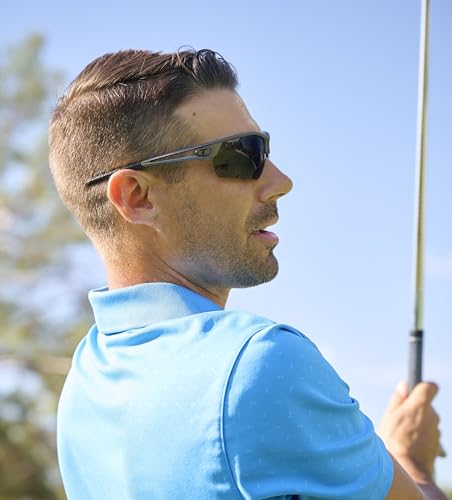
Finding the right pair of golf sunglasses can dramatically improve your game and comfort on the course. It’s more than just blocking glare; it’s about enhancing your vision to truly see the ball and the green.
A quality pair of golf sunglasses should prioritize optical clarity, contrast enhancement, and a secure fit. Look for lenses specifically designed for golf, not just tinted versions of everyday shades. UV protection is a must, and lightweight frames will minimize distraction during your swing. Consider lens technology – polarized vs. non-polarized – and how it will impact your ability to read greens.
Lens Technology: Polarized vs. Non-Polarized
The biggest debate when choosing golf sunglasses centers around polarization. While polarized lenses excel at cutting glare from water and pavement, they can actually hurt your golf game. They can flatten your depth perception, making it difficult to accurately judge distances and read the subtle undulations of the green. Many golfers, especially those who rely on their ability to assess slope, prefer non-polarized lenses. I’ve seen players struggle with putting accuracy after switching to polarized lenses, finding it harder to “read” the break. If you’re someone who prioritizes seeing the green as it truly is, and you don’t play a lot of courses with significant water hazards, a non-polarized lens is often the better choice.
Frame Fit and Comfort
A comfortable frame is critical, especially during a long round. You want something lightweight that won’t slip or bounce as you swing. Look for frames made from materials like Grilamid TR-90, which are both durable and flexible. Hydrophilic nose pads – like those found on Tifosi Optics models – are a fantastic feature, as they actually increase their grip the more you sweat. Beyond the materials, the frame’s coverage matters. A fuller frame provides better protection from sun and wind, but can sometimes interfere with your peripheral vision. Finding the right balance is key.
Here’s what to consider when evaluating frame fit:
- Weight: Under 25 grams is ideal for all-day wear.
- Adjustability: Nose pads and temple tips that can be adjusted are a plus.
- Hat Compatibility: Ensure the frame sits comfortably under your preferred hat or visor; some bulkier frames can create pressure points.
A secure fit is paramount. If your sunglasses are constantly sliding down your nose, you’ll be more focused on adjusting them than on your swing.
Color Enhancement and Lens Tint
The right lens tint can dramatically improve your ability to track the ball in flight and discern details on the green. Many golfers swear by tints designed to enhance contrast. For example, copper or rose-colored lenses can make the white golf ball “pop” against the green background. The best tints for golf depend on the conditions you typically play in. If you’re often on courses with bright sunlight, a darker tint will reduce overall brightness. If you play in overcast conditions, a lighter tint will provide sufficient visibility. I often recommend exploring options that enhance color perception, as this can significantly improve your ability to see golf ball sunglasses against various backgrounds. Don’t overlook the importance of UV protection, regardless of the tint you choose.
Golf Sunglasses Compared
Here’s a comparison of key specifications for golf sunglasses designed to help you see the ball more clearly.
| Product Name | Lens Color | Weight (grams) | UV Protection | Frame Material | Lens Technology |
|---|---|---|---|---|---|
| Tifosi Intense Golf Sunglasses Iron | Green GT | 23 | 100% UVA/UVB | Grilamid TR-90 | Vented |
| BLAITEJUS HD Golf Ball-Finding | N/A | 30.45 | 100% UVA/UVB | TR90 | Non-Polarized, HD |
| BLAITEJUS HD Non-Polarized Golf | N/A | N/A | UV400 | TR90 | Non-Polarized, HD |
| maivnz Golf Ball Finder Sunglasses Gun | N/A | N/A | 99.9% UV-A/UVB | N/A | Color-Enhancing |
| Tifosi Optics Navar FC Sunglasses | Green Enliven | 24 | 100% UVA/UVB | Grilamid TR-90 | Shatterproof, Vented |
| agape Birdyx DuraFlex Red Lens | Copper/Red | N/A | 100% UV | DuraFlex Rubber | Polarized |
Frequently Asked Questions
What level of UV protection should I expect from golf sunglasses?
100% UVA and UVB protection is essential, as prolonged sun exposure can significantly damage your eyes. Look for sunglasses labeled with UV400 protection, which blocks wavelengths up to 400 nanometers, covering all harmful UV rays.
Are expensive golf sunglasses always better?
Not necessarily. While higher price points often reflect premium materials and advanced lens technology, a comfortable and effective pair can be found at various price levels. Focusing on the right lens tint and a secure fit is more important than simply spending more.
Can I wear the same sunglasses for golf and other sports?
You can, but I recommend considering multi-sport sunglasses if you participate in activities where glare is a major concern, like tennis or watersports. Golf benefits from lenses that enhance contrast, while those other sports often prioritize polarization.
What’s the best way to clean golf sunglasses without damaging the lenses?
Use a microfiber cloth specifically designed for optics and avoid harsh chemicals or abrasive cleaners. Gently wipe the lenses to remove dirt and smudges; a lens cleaning solution formulated for golf sunglasses can help with stubborn marks.
How do I know if a frame will fit comfortably with my hat?
Frame compatibility with hats is crucial. Look for a frame’s dimensions (temple length and lens width) and compare those to the fit of your current sunglasses and preferred golf hats. Many golfers find that models with adjustable nose pads and temple tips offer the most versatile fit, as detailed in my guide to choosing golf sunglasses.
The Bottom Line
Choosing golf sunglasses often comes down to balancing control and convenience. You can spend a lot to get every bell and whistle, or focus on the essentials that truly impact your game. For the best overall performance, I recommend the Tifosi Intense Golf Sunglasses Iron. They strike a fantastic balance between optical clarity, lightweight comfort, and a secure fit, making them a solid choice for most golfers.
If you’re on a tighter budget, the BLAITEJUS HD Golf Ball-Finding sunglasses offer surprisingly good performance for the price. And for those who specifically want to enhance their ability to locate errant shots, exploring options like dedicated golf ball finder glasses can be worthwhile. Alternatively, if you’re concerned about glare but still want to read greens effectively, consider researching non-polarized golf sunglasses – sometimes, avoiding polarization is the smartest move.
Ultimately, the best golf sunglasses aren’t about the latest technology or highest price tag. They’re about finding a pair that helps you see the ball clearly, stay comfortable on the course, and trust your vision when it matters most. Prioritize a secure fit, impact-resistant lenses, and a tint that enhances contrast, and you’ll be well on your way to improving your game.
