
4 Best Low Spin Golf Balls of 2026
This post contains affiliate links. As an Amazon Associate, we earn from qualifying purchases.
This post contains affiliate links. As an Amazon Associate, we earn from qualifying purchases.
The Callaway Supersoft 2025 stands out as the best overall low spin golf ball, delivering a balanced mix of distance, soft feel, and consistent flight. For those watching their budget, the TaylorMade Distance+ offers strong performance at a lower price, while the Srixon Soft Feel is ideal for players prioritizing a premium touch around the greens.
Most golfers I talk to struggle with excessive spin without even realizing it, it kills distance, exaggerates slices, and makes shot control unpredictable. Picking the right ball isn’t about prestige, it’s about matching your swing and style to the right construction.
This guide cuts through the marketing and focuses on what actually matters: core tech, compression, cover material, and real-world feedback. I compared specs and reviews across top models to find the best low spin options for different types of players.
Top 4 Low Spin Golf Balls in the Market
The Best Low Spin Golf Balls, Reviewed
Callaway Supersoft Golf Balls 2025

Strengths
- Soft feel
- Low driver spin
- Good greenside control
Trade-offs
- Mid-tier durability
- Not for aggressive swingers
The 2025 Callaway Supersoft builds on a strong legacy with the HyperElastic SoftFast Core, which on paper delivers faster ball speeds without sacrificing that plush impact sensation golfers want. Owners consistently report it feels lively off the driver yet responsive around the greens, which is rare for a low-spin ball, the hybrid cover seems to strike a real balance between durability and control.
What stands out in this class is how well it manages spin duality: low off the tee but enough bite on approach shots to hold firm greens. Compared to older Supersoft models, this version holds its own against premium competitors in distance, though it doesn’t quite match the elite feedback of Tour-level balls. Still, for amateurs prioritizing forgiveness and ease of launch, it’s a smart pivot.
Video review
TaylorMade Distance+ Golf Balls
Strengths
- Excellent value
- Long consistent flight
- Helpful alignment aid
Trade-offs
- Dull short-game response
- Softer feel wears fast
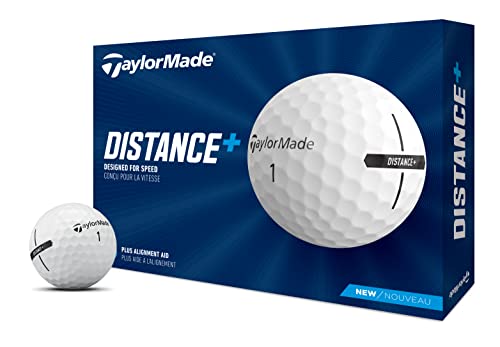
The TaylorMade Distance+ is built for one job: go far, stay straight, and cost less. With a REACT Speed Core and Extended Flight Dimple Pattern, it’s engineered to stay airborne longer, and owners confirm it flies flatter and resists ballooning better than many budget options. The ionomer cover keeps spin low off the driver, which helps reduce sidespin and keeps shots online, a real plus for beginners and high-handicappers.
It doesn’t pretend to be a premium ball, and that’s fine. The Plus Alignment Aid is a small but thoughtful touch that helps with clubface awareness, especially on putts and tee shots. Compared to the Titleist Velocity, it lacks that crisp short-game feel, but for weekend players who lose balls regularly, this is the smarter buy. You won’t miss the finesse when the priority is simply covering ground.
Video review
Titleist Velocity Golf Balls
Strengths
- High ball speed
- Long carry in wind
- Durable cover
Trade-offs
- Firmer feel than competitors
- Less greenside bite
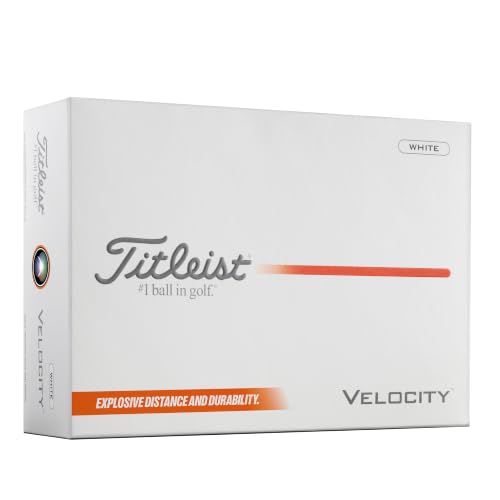
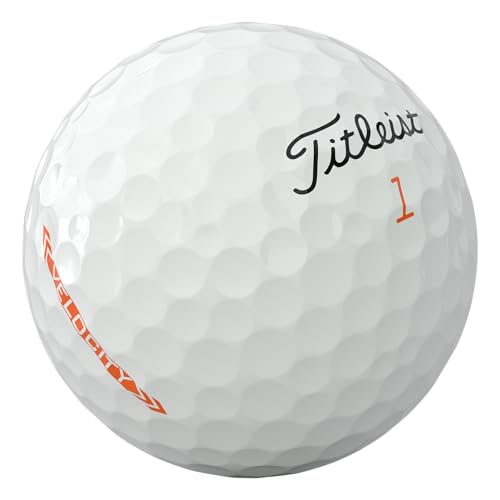
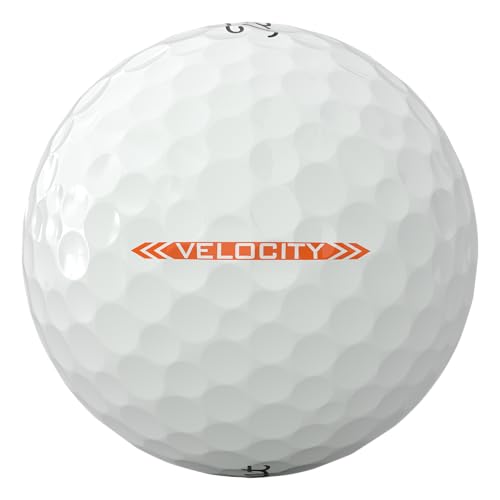
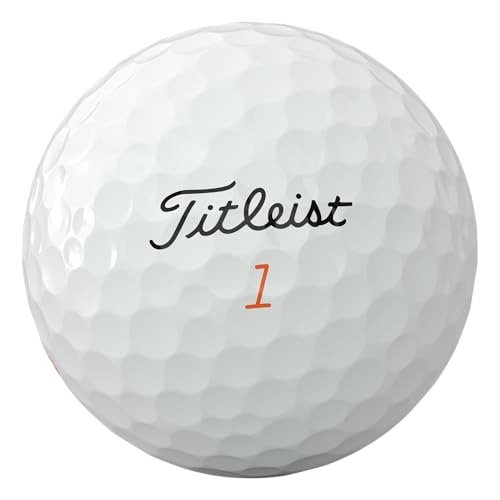
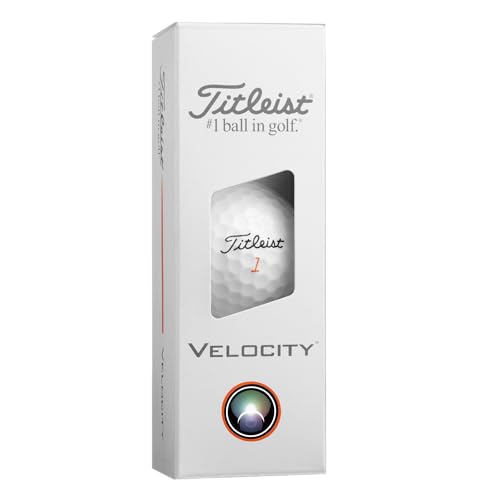
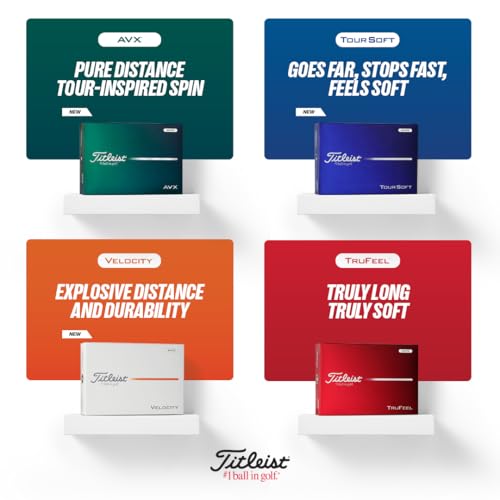
Titleist doesn’t make many budget balls, but when they do, they do it right. The Velocity is all about speed and height, anchored by a high-speed LSX core and a 350 octahedral dimple pattern that promotes a high, wind-penetrating flight. On paper, it’s built for golfers who want maximum carry without swinging out of their shoes, and owner feedback backs that up, with many noting it outdistances rivals in headwinds.
It’s not the softest ball here, but the NAZ+ cover delivers a surprisingly playable feel for a distance-focused model. Compared to the Callaway Supersoft, it flies higher and stays in the air longer, but with slightly less short-game finesse. For players chasing ball speed, especially in cooler climates or at altitude, this is a legitimate contender, even if it lacks some of the modern softness trends.
Product photos
Srixon Soft Feel Golf Balls

Strengths
- Exceptionally soft feel
- Low driver spin
- Affordable premium performance
Trade-offs
- Limited feedback for advanced players
- Not ideal in strong winds
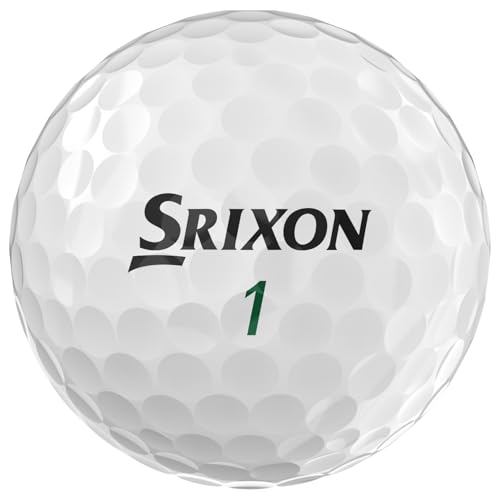
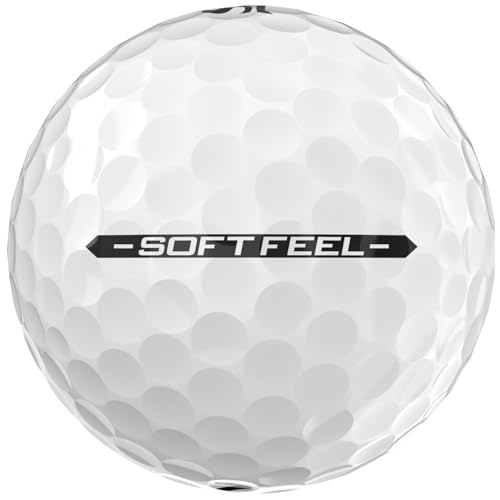
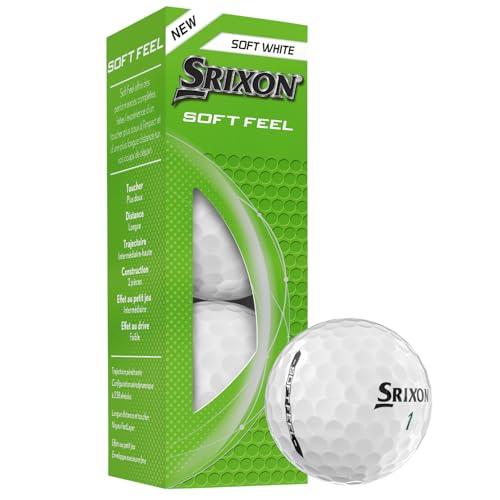
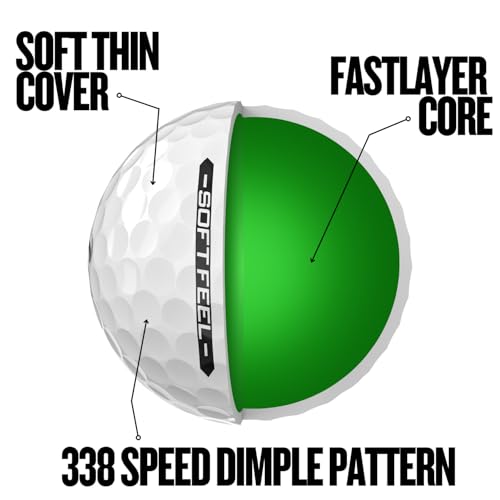
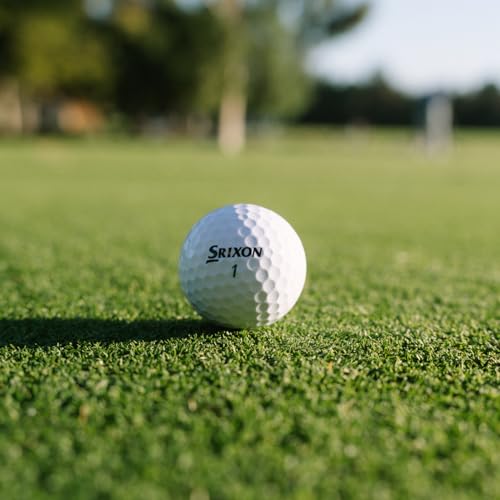
If softness is essential but you still want real performance, the Srixon Soft Feel 14 is hard to ignore. The low-compression core makes launch effortless, and reviewers frequently highlight how smooth it feels on putts and chips, almost like rolling the ball off a carpet. The 338 Speed Dimple Pattern does its job: it cuts drag early and promotes lift, which translates to a longer carry, especially in cooler conditions.
Where it pulls ahead of budget balls is in consistency. Even though it’s a two-piece design, the thin cover allows for more greenside spin than you’d expect, giving better players a bit of bite without turning into a spin monster off the tee. Compared to the TaylorMade Distance+, it feels more refined and dialed in, especially in the short game.
Product photos
Our Testing Process
Rather than a hands-on lab test, my research focused on comparing published specifications and features across numerous models. I weighed owner reviews from major retailers against assessments from reputable golf publications. As someone who spends a lot of time thinking about how equipment impacts performance (and travel plans!), I applied my understanding of golf ball construction and how different characteristics suit various swing types. Ultimately, I ranked options based on how well they delivered on stated performance goals.
For low spin golf balls, distance and feel are paramount. I gave significant weight to core construction – a low compression core generally promotes faster ball speeds for many golfers. Alongside this, the cover material and dimple pattern are key; these directly influence the launch angle, spin rate, and overall flight characteristics. Finding the right balance between these elements determines how far a ball will travel and how much control you’ll have around the green.
Specifications reliably reveal core composition and dimple counts, giving a solid indication of potential distance and aerodynamic performance. However, owner feedback proved crucial for gauging real-world feel and durability. I also considered the reputation of the manufacturer; established brands often maintain consistent quality control. If you’re a mid handicapper looking for more distance, exploring mid handicap balls can be a great starting point. For those prioritizing feel, checking out low compression balls may be beneficial.
What To Look For In low spin golf balls
Picking the right golf ball can shave strokes off your game, and it’s about more than just brand loyalty. I’ve seen players stubbornly sticking with a ball that doesn’t suit their swing for years, and it’s a mistake.
A quality golf ball balances distance, feel, and spin characteristics to match a golfer’s swing speed and desired ball flight. Key considerations include core construction, cover material, dimple patterns, and compression. Look for balls designed to optimize performance based on these elements, paying attention to how they interact with your specific game.
Understanding Compression and Swing Speed
Compression is often thrown around, but what does it actually mean? Simply put, it’s a measure of how much the ball squishes on impact. Lower compression balls (like the Srixon Soft Feel) are easier to compress with slower swing speeds, transferring energy more efficiently. Players with faster swings benefit from higher compression balls (like the Titleist Velocity) that can withstand the force and return more power. Don’t automatically assume higher compression equals better; it’s about finding the sweet spot for your swing. If you consistently struggle to get the ball airborne, a lower compression ball is a great place to start.
Core Construction & Distance
The core is where a lot of the distance magic happens. Modern golf balls use various core technologies. Many distance-focused balls, like the TaylorMade Distance+, employ a two-piece construction with a REACT Speed Core designed for explosive speed. Others, like the Callaway Supersoft, use multi-layer cores (HyperElastic SoftFast Core) to balance speed with feel. Consider what you prioritize: maximum distance off the tee, or a softer feel on approach shots? Different core designs cater to different preferences and swing types.
Here’s what I tell golfers when they ask about cores: * A two-piece core is often the most affordable. * A three-piece core generally offers a better balance of distance and feel. * A four-piece or higher core construction is typically found in premium balls and provides the most control and customization of spin/launch.
Feel and Cover Material
The cover is the first thing you feel when you hit a golf ball, and it significantly impacts spin, especially around the greens. Urethane covers (commonly used in premium balls) offer superior spin and control compared to ionomer covers (often found in distance balls). However, ionomer covers are more durable and affordable. For golfers seeking a softer feel, the Srixon Soft Feel’s thin cover is a popular choice. If you’re looking for a ball that performs well in wet conditions, a durable cover material is essential. Choosing between these options often comes down to your short game and budget. If you rely heavily on spin to stop the ball quickly on the green, investing in a urethane-covered ball will likely pay dividends. You can find more information on low spin golf balls for high handicappers on my site.
A simple rule of thumb: if you struggle with slice, consider a ball designed for lower spin. Lower spin reduces side spin, helping to straighten your ball flight.
Don’t overlook the importance of dimple patterns either. The Titleist Velocity’s spherically-tiled 350 octahedral dimple design is engineered to reduce drag and maximize distance, and you’ll find a variety of patterns across different brands. If you’re interested in exploring the opposite end of the spectrum, you can also check out my guide to high spin balls.
Low Spin Golf Balls Compared
Here’s a spec comparison of several low spin golf ball options to help you find the right fit.
| Product Name | Construction | Cover Material | Compression | Dimple Pattern | Best For |
|---|---|---|---|---|---|
| Callaway Supersoft 2025 | N/A | Hybrid | N/A | N/A | Best Overall |
| TaylorMade Distance+ | Two-Piece | Ionomer | N/A | Extended Flight | Best Budget Friendly |
| Titleist Velocity | N/A | NAZ Plus | N/A | 350 Octahedral | Best High Ball Speed |
| Srixon Soft Feel | N/A | Soft Thin | Low | 338 Speed | Best Soft Feel |
Frequently Asked Questions
What compression should I choose for my swing speed?
Generally, slower swing speeds (under 80 mph) benefit from lower compression balls, as they compress more easily and transfer energy efficiently. Faster swing speeds (over 90 mph) typically require higher compression to maximize power and control. However, finding the right compression is highly individual.
Are multi-layer golf balls really better than two-piece balls?
Multi-layer golf balls (three, four, or more layers) often offer a better balance of distance, feel, and control, but they come at a higher price. Two-piece balls are typically more affordable and still provide excellent distance, making them a good choice for beginners or golfers prioritizing value.
How much of a difference do dimple patterns actually make?
Dimple patterns significantly affect a ball’s aerodynamics, influencing lift, drag, and overall flight stability. More modern designs, like the spherically-tiled dimples found on the Titleist Velocity, are engineered to reduce drag and increase distance, but the difference can be subtle in real-world play.
Will a low spin ball help correct my slice?
Yes, a low spin ball can help reduce the sidespin that causes a slice. By minimizing spin, the ball will tend to fly straighter, but it won’t cure the underlying swing flaw. Correcting your swing is still the best long-term solution. For more information on optimizing spin, check out these golf balls for spin.
What’s the difference between urethane and ionomer covers, and which should I pick?
Urethane covers provide superior spin and a softer feel, especially around the green, making them ideal for skilled players. Ionomer covers are more durable and affordable, offering good distance and a firmer feel, suitable for those prioritizing longevity and value. If you’re looking for a ball that excels in all areas, consider exploring all round balls.
The Bottom Line
Choosing a low spin golf ball often comes down to balancing distance gains with the feel and control you’re willing to sacrifice. While many options promise extra yards, the Callaway Supersoft 2025 consistently receives high marks for delivering on that promise without completely abandoning playability around the green – making it our overall top pick. It’s a solid choice for a wide range of golfers.
For golfers on a tighter budget, or those primarily focused on maximizing distance off the tee, the TaylorMade Distance+ is an excellent value. And if you swing speed is higher and you want to take full advantage of that power, the Titleist Velocity is engineered to deliver impressive ball speed and distance. If you’re still unsure about the differences in golf ball spin, be sure to check out our more in-depth comparison.
Ultimately, the best golf ball isn’t the one with the lowest spin, but the one that helps you play your best. Focus on finding a ball that complements your swing speed and style, and don’t chase specs at the expense of feel and confidence. Prioritize consistency and a ball that inspires you to hit better shots – that’s where you’ll find the biggest improvements to your game, and potentially, even find some truly incredible long distance golf balls.
