
7 Best Non-Polarized Golf Sunglasses of 2026
This post contains affiliate links. As an Amazon Associate, we earn from qualifying purchases.
This post contains affiliate links. As an Amazon Associate, we earn from qualifying purchases.
The Tifosi Intense Golf Sunglasses stand out as the best overall non polarized golf sunglasses, delivering sharp optics and a secure fit. For budget-conscious players, the Nanrton Lightweight Sunglasses offer solid performance at a lower price, while the BLAITEJUS HD Golf Sunglasses provide excellent contrast enhancement for tracking the ball in flight.
Golfers often buy sunglasses for the course only to find they blur details, slip during the swing, or make greens look flat. The wrong pair can hurt your game more than help it.
This guide cuts through the noise by focusing on what actually matters: lenses that preserve depth perception, frames that stay put, and real-world feedback from players who wear them round after round. I researched each model based on optical performance, comfort, and features proven to enhance play, not just marketing claims.
Top 7 Non Polarized Golf Sunglasses in the Market
The Best Non Polarized Golf Sunglasses, Reviewed
Tifosi Intense Golf Sunglasses

Strengths
- Ultra-light 23g frame
- Vented anti-fog lenses
- Lifetime warranty
Trade-offs
- Lens not as color-optimized as Prizm
- Limited premium feel
The Tifosi Intense is the complete package at a fraction of the cost of premium brands. At only 23 grams, it’s lighter than most, with a Grilamid TR-90 frame that’s both durable and comfortable for full 18-hole rounds. The vented lenses are a standout, owners consistently praise them for preventing fog, even in humid conditions or during rapid transitions from shade to sun. The hydrophilic nose pads get grippier as you sweat, a small but game-changing detail for serious players.
The Green GT lens enhances contrast well, though not quite as sharply as Oakley’s Prizm. But for the price, the performance is outstanding. Paired with a lifetime warranty against defects, this is the kind of value that makes it hard to justify spending more. Compared to the maivnz or BLAITEJUS, it’s more refined in fit and function. My recommendation? This is the smarter buy for most golfers.
Video review
Oakley Prizm Dark Golf Sunglasses
Strengths
- Prizm Dark Golf lens
- Crisp depth perception
- Sleek full-rim design
Trade-offs
- Minimal ventilation
- No adjustable nose pads
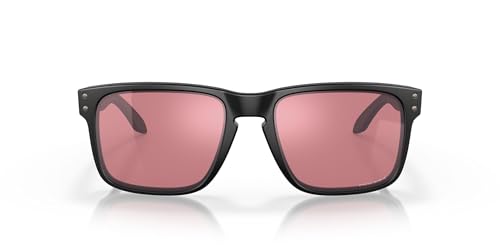
Oakley’s Prizm Dark Golf lens is legendary for a reason, it’s engineered specifically to make greens, shadows, and ball flight pop, and in this non-polarized version, it keeps depth perception intact while filtering glare. The lens doesn’t rely on polarization, which means your rangefinder and cart displays stay visible, a critical win on the course. The matte black frame with full rim gives it a classic performance look, and the 57mm lens width fits most medium to large faces well.
That said, while the Prizm optics are top-tier, the frame lacks some of the ventilation and sweat management features found in purpose-built golf models like the Tifosi Intense. Reviewers note it’s comfortable for 18 holes, but not quite as breathable. It’s a premium pick with elite lens tech, but it leans more lifestyle-performance than dedicated golf-first.
Video review
BLAITEJUS HD Golf Ball-Finding Sunglasses

Strengths
- Superior ball tracking
- Lightweight TR90 frame
- Secure wet-weather grip
Trade-offs
- Minor peripheral distortion
- Lens clarity not top tier
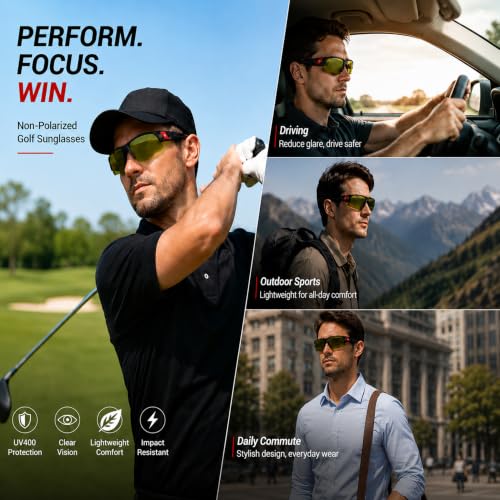
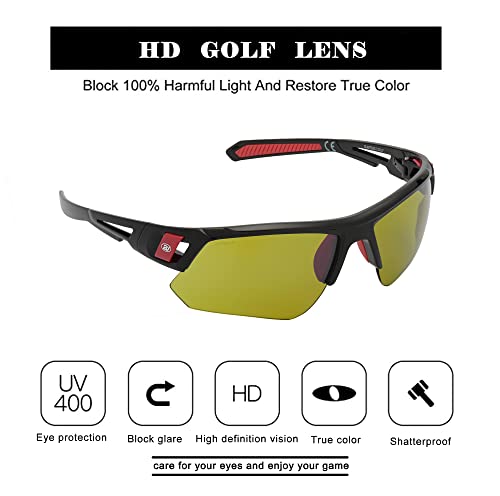
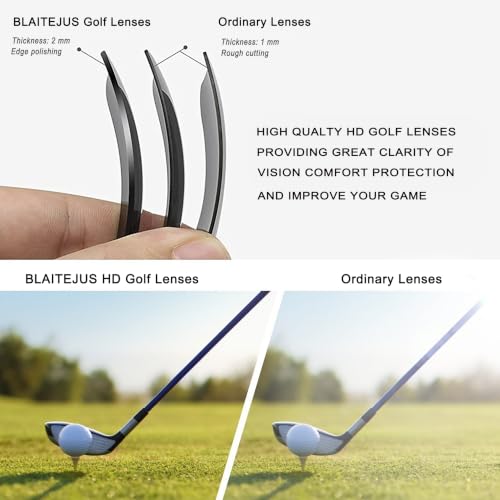
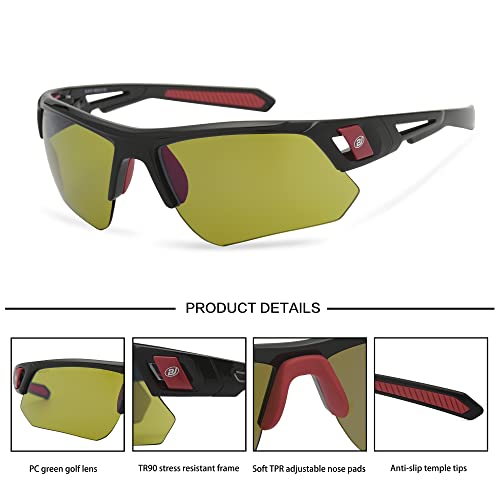
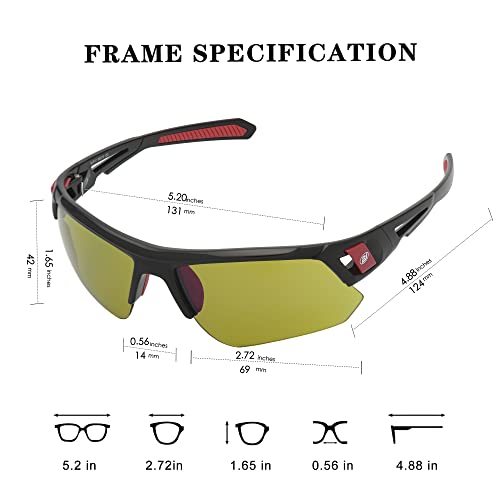
The BLAITEJUS glasses are built around one idea: help you see the ball better. The HD non-polarized lenses target blue light reduction and boost contrast between the ball, sky, and grass, owners say it makes shots easier to follow mid-flight and faster to locate after landing. The TR90 frame with TPR grips is flexible and holds firm, even when you’re sweating, which is a big deal during summer rounds. It’s also extremely lightweight, so you forget you’re wearing them, a plus over bulkier models like the PeakVision SL9.
Where it falls short is lens material, polycarbonate isn’t as optically pure as glass or high-end plastics. Some reviewers note slight distortion at the periphery. But for pure ball tracking and secure fit, it’s one of the most focused budget options. It’s not as versatile as the Nanrton for multi-sport use, but on the course, it delivers where it counts.
Product photos
maivnz Golf Ball Finder Sunglasses
Strengths
- Excellent ball contrast
- All-day comfort
- Affordable price
Trade-offs
- Basic frame finish
- Limited style options
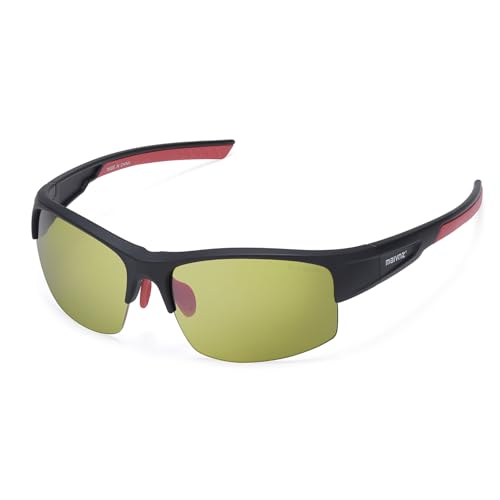
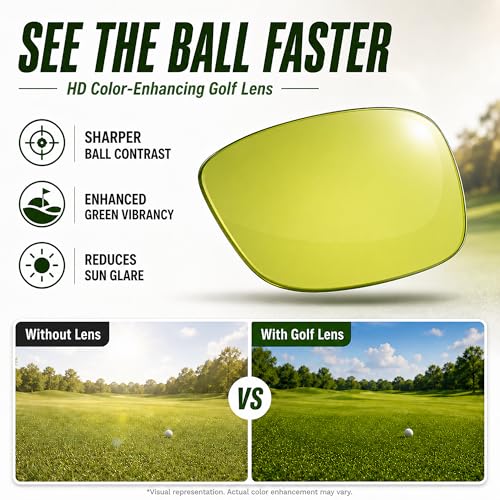
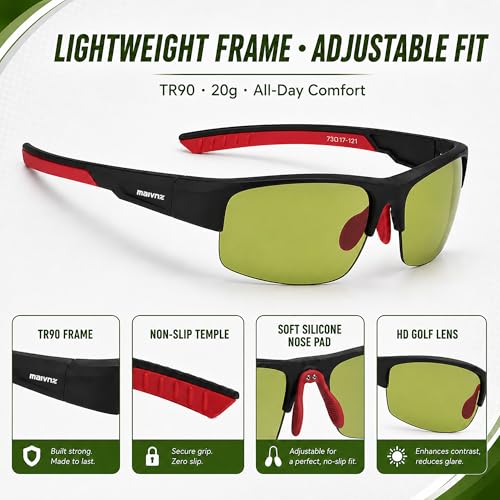
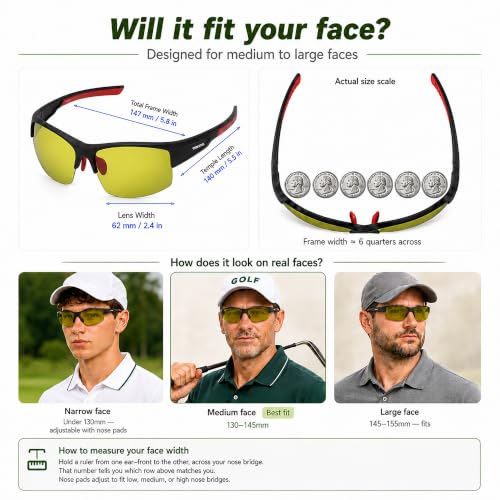
At this price, the maivnz glasses punch above their weight. The HD color-enhancing lens is tuned to amplify the contrast between white golf balls and green fairways, a real help when your ball vanishes into the rough. It’s not magic, but owners say it makes a noticeable difference in ball tracking, and the non-polarized design keeps depth cues accurate for reading greens and using GPS devices. The polycarbonate lens is impact-resistant and delivers solid UV400 protection, which is standard but well-executed here.
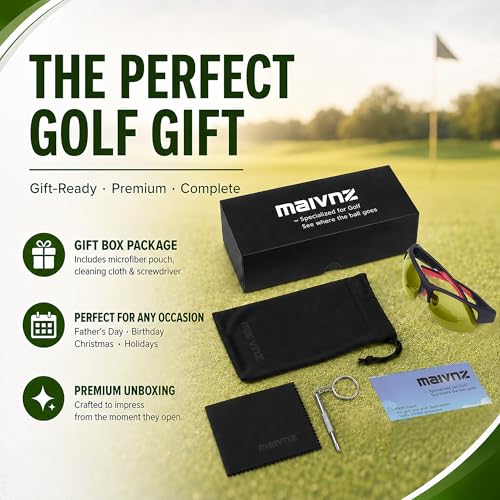
The frame is lightweight and comes with soft silicone nose pads and non-slip temples, so it stays put during a full swing. It’s not as refined as the PeakVision or Oakley, but for beginners or casual players who want functional golf-specific optics without overspending, this is a smart entry point. Compared to the BLAITEJUS model, it’s slightly less refined in lens clarity but more widely praised for comfort.
Product photos

Nanrton Lightweight Sports Sunglasses
Strengths
- Extremely lightweight
- Affordable price
- Multi-sport versatility
Trade-offs
- Basic lens performance
- No anti-fog vents
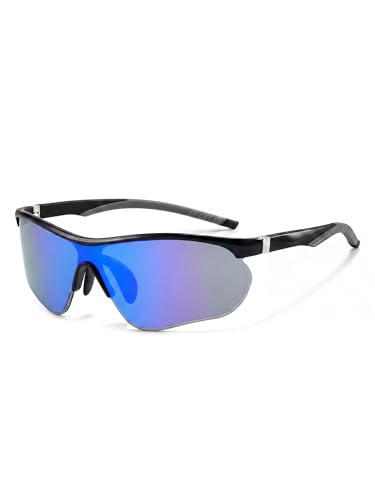
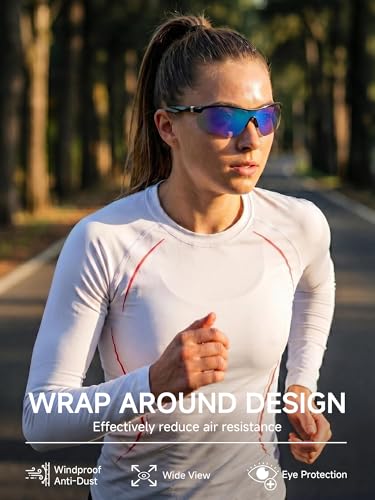
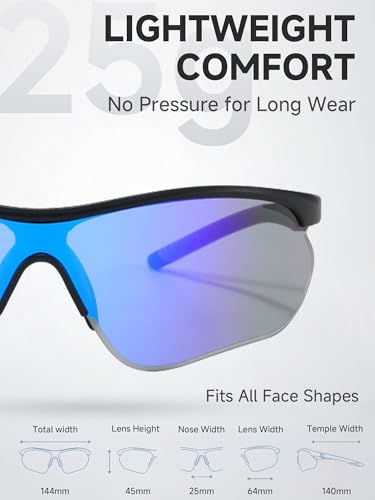
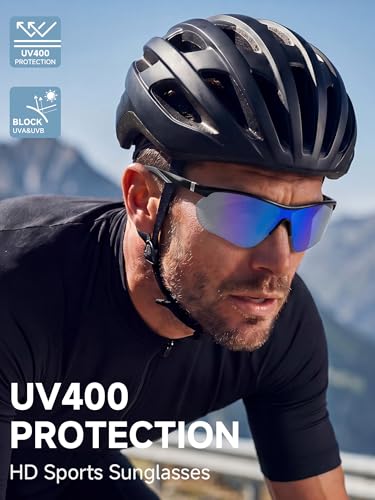
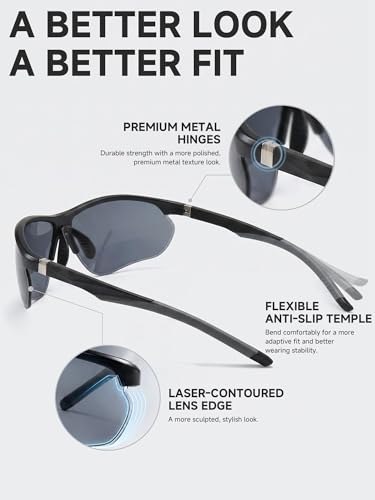
At just 25 grams, the Nanrton sunglasses are among the lightest in this category, and that’s their biggest selling point. They’re designed for all-day wear across sports, and that versatility shows, comfort is excellent, with flexible hinges and a wraparound fit that suits a wide range of face shapes. The UV400 PC lenses do their job in blocking glare and harmful rays, and the non-polarized design keeps your depth perception honest on the greens.
But don’t expect golf-specific tuning. The lenses don’t enhance ball contrast like the maivnz or BLAITEJUS models, and there’s no venting to prevent fogging. It’s a solid multi-sport option, but compared to the Tifosi Intense, it lacks purpose-built golf features. Still, for the price, it’s a functional, lightweight pair that works well if you play multiple sports and want one pair for golf, running, and driving.
Product photos
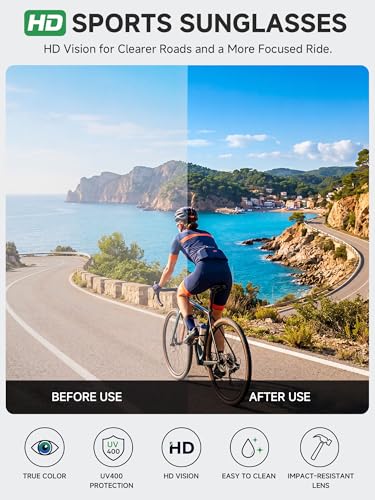
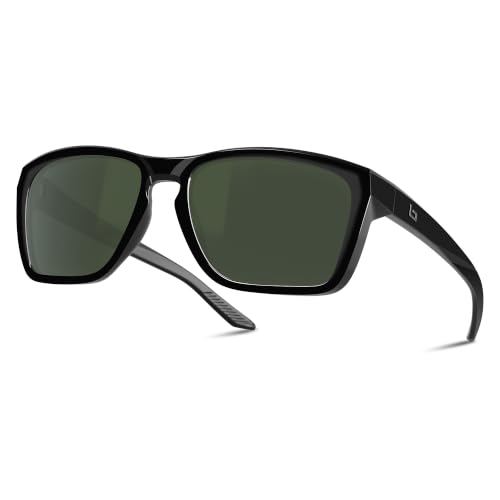
B.N.U.S Corning Glass Lens Sunglasses
Strengths
- Corning glass clarity
- Zero distortion
- Hypoallergenic frame
Trade-offs
- Heavier than plastic lenses
- Less impact resistant
Glass lenses in a golf sunglass? That’s rare, but B.N.U.S pulls it off with genuine Corning glass, renowned for zero distortion and long-term scratch resistance. If optical clarity is your top priority, this one stands alone. The non-polarized design preserves natural light transmission, so dashboard screens and rangefinders stay visible, and the various tint options let you fine-tune for different conditions. The unpainted nylon frame is a subtle win for sensitive skin, avoiding chemical peeling common in coated plastics.
But glass is heavier and less impact-resistant than polycarbonate, so it’s a trade-off. It’s not the best choice for aggressive swingers or players who move quickly between sun and shade. Compared to Tifosi or Oakley, it feels more like a precision optic than a sport frame. But if you value lens purity above all, this is the dark horse.
Product photos
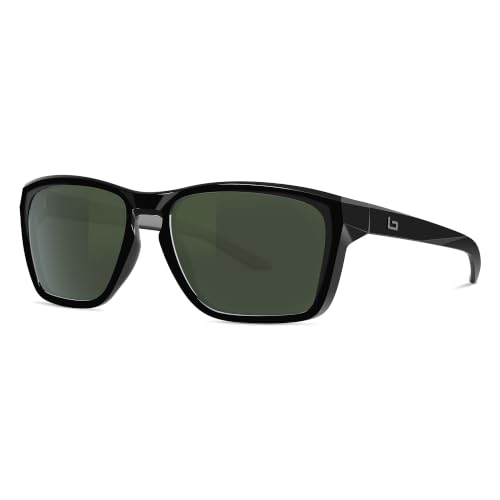
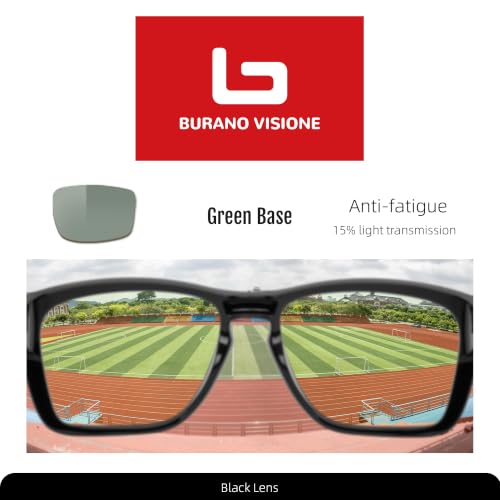

PeakVision SL9 Non-Polarized Golf Sunglasses
Strengths
- Dual-zone lens
- Zero distortion
- Secure rubber grip
Trade-offs
- Bulky for small faces
- Premium price
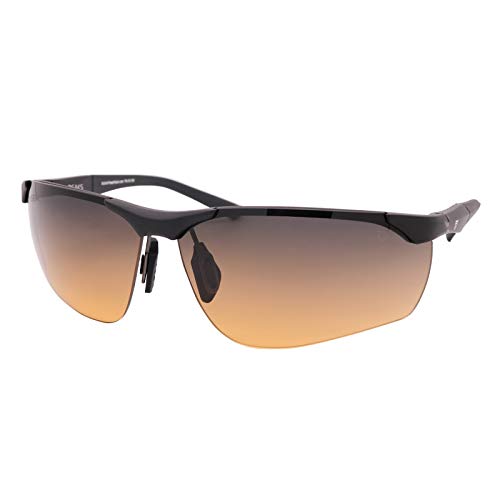
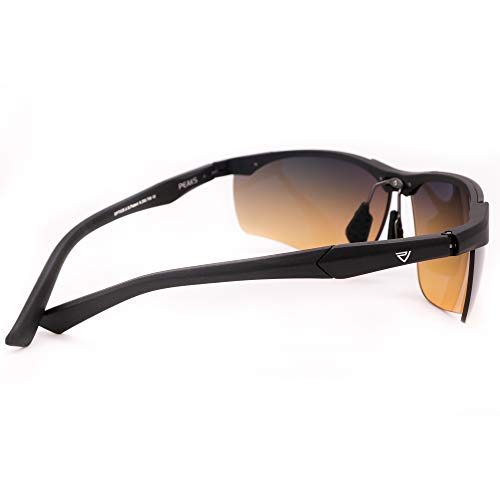
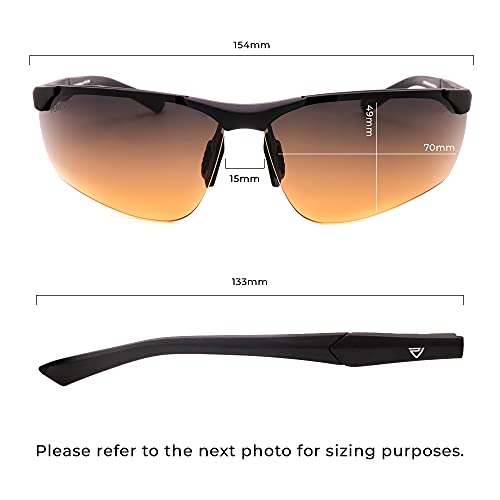
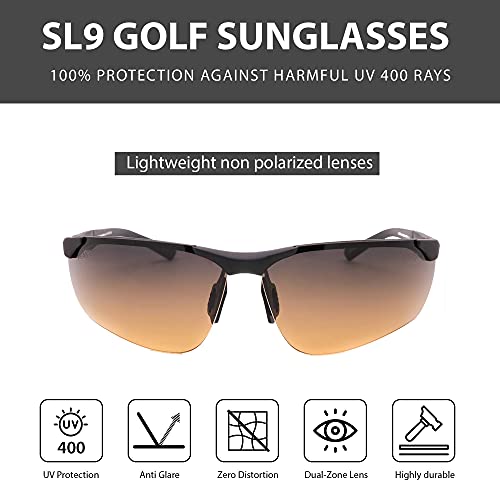
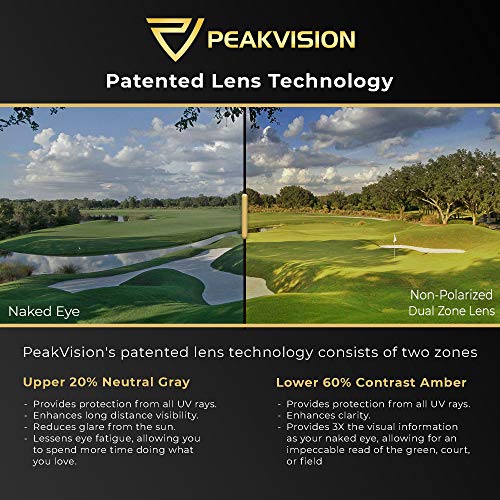
The PeakVision SL9 stands out in the non-polarized golf sunglass market with its patented Dual-Zone lens tech, a 20% neutral gray for reduced eye strain and a 60% contrast amber that seriously boosts visual information on the course. On paper, that combination is smart: it enhances ball tracking without flattening depth perception, which some polarized lenses do. Owners consistently report clearer vision in mixed light, and the built-in RA filter on the lens backside helps knock down glare from all angles, not just horizontal bounce.
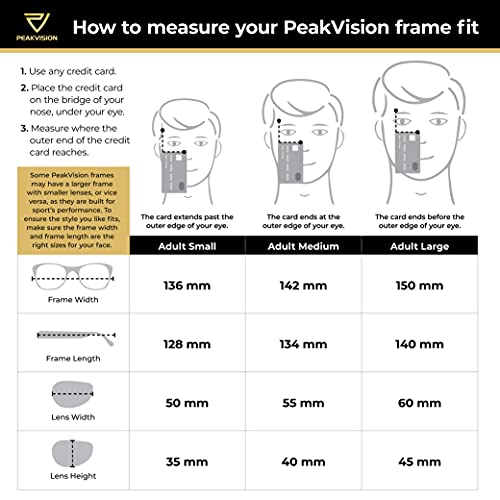
It’s not a lightweight frame, but the adjustable nose pads and rubberized temple grips make up for it with a secure, customizable fit. The large size category and full peripheral coverage work well for aggressive swings and windy conditions, though some wearers with smaller faces say they feel a bit oversized. Compared to Oakley’s Prizm, it doesn’t have the same brand polish, but it delivers a unique visual advantage that’s hard to ignore.
Product photos
How We Evaluated non polarized golf sunglasses
My research into non-polarized golf sunglasses began with a detailed comparison of published specifications and features across numerous models. I then weighed owner reviews from major retailers alongside expert opinions found in golf publications and online gear reviews. As someone who’s spent years advising golfers on gear for travel, I applied my understanding of what truly matters on the course to rank these options against a set of clear criteria – optical clarity, comfort, and performance-enhancing features. Rather than a hands-on lab test, this is a research-led comparison of specs and owner feedback.
For non-polarized golf sunglasses, depth perception and contrast enhancement are paramount. I prioritized lenses that golfers reported didn’t distort the green or impact their ability to judge distance – a common complaint with polarized lenses. Equally important was frame comfort and security; a constantly slipping pair of sunglasses is a distraction no golfer needs. Those two factors heavily influenced the final rankings, as they directly impact scoring and enjoyment.
Specifications reliably provided information on lens material (polycarbonate vs. glass), UV protection levels, and frame dimensions. However, I found owner feedback to be crucial for assessing real-world comfort, durability, and the effectiveness of features like anti-glare coatings and ball-tracking technology. Understanding the subtleties of sunglass lens colors and functional lens tints was also essential in evaluating each model’s suitability for different playing conditions.
Choosing The Right non polarized golf sunglasses
Finding the right golf sunglasses can dramatically improve your game and comfort on the course.
A quality pair of golf sunglasses should prioritize optical clarity, a comfortable and secure fit that won’t interfere with your swing, and specific lens technology designed to enhance contrast and depth perception on the course. Avoid polarized lenses, as they can sometimes distort depth and affect your ability to read greens. Look for UV400 protection as a baseline and consider frame materials for lightweight all-day wear.
Lens Technology Is Key
The biggest mistake I see golfers make is treating golf sunglasses like standard everyday shades. The course demands something more specialized. Forget about fashion for a moment and focus on what the lens does. Many golfers are seeking ways to enhancing ball flight visibility and a lens designed to boost contrast between the ball and the background is crucial. Brands like BLAITEJUS and maivnz specifically market “HD” lenses for this purpose, and while the marketing can be overblown, the principle of enhancing contrast is sound. Look for lenses that emphasize a color spectrum that makes a white ball pop against green grass and blue sky.
Frame Fit & Comfort Matter
A fantastic lens is useless if the sunglasses don’t stay put. Golf swings are dynamic, and sunglasses that slip or bounce are incredibly distracting. The Tifosi Intense model, for example, boasts hydrophilic nose pads and “Glide” technology for a secure, anti-bounce fit. Beyond that, consider frame weight. Spending five hours in the sun with heavy sunglasses is a recipe for a headache. Nanrton, for instance, focuses on remarkably lightweight frames (around 25 grams).
Here’s what to look for in a comfortable, secure fit:
- Adjustable Nose Pads: A small detail, but makes a big difference for a customized fit.
- Wrap-Around Style: Offers better peripheral coverage and helps keep the glasses from sliding.
- Rubberized Temple Grips: Especially important if you sweat a lot, these grips will keep the temples (arms) firmly in place.
Material Quality & Long-Term Value
Don’t automatically assume a higher price tag equals better quality, but be wary of extremely cheap sunglasses. Lens material is a significant differentiator. Polycarbonate is common and impact-resistant, but glass lenses, like those offered by B.N.U.S, provide superior optical clarity and scratch resistance. Frame material is also important. TR-90 nylon is a popular choice for its flexibility, durability, and lightweight nature. Ultimately, investing in a pair of durable sunglasses will save you money in the long run versus repeatedly replacing cheaper models. As a trip planner, I often recommend polarized sunglasses for general travel, but for the course itself, the non-polarized lenses are often superior.
A good rule of thumb: If the sunglasses feel flimsy or the lenses distort your vision even slightly, keep looking. Your eyes (and your golf score) will thank you.
Non Polarized Golf Sunglasses Compared
Here’s a comparison of features across several non-polarized golf sunglasses.
| Product Name | Frame Type | Lens Color | Weight (grams) | Lens Material | UV Protection | Key Features |
|---|---|---|---|---|---|---|
| Tifosi Intense Golf Sunglasses | N/A | Green GT | 23 | Polycarbonate | UVA/UVB | Vented lenses, Hydrophilic nose pads |
| Oakley Prizm Dark Golf Sunglasses | Full Rim | N/A | N/A | N/A | N/A | Square model, for Oval/Round faces |
| BLAITEJUS HD Golf Sunglasses | N/A | HD Golf | N/A | Polycarbonate | UV400 | Ball tracking, Non-polarized HD lenses |
| maivnz Golf Ball Finder Sunglasses | N/A | Color-Enhancing | N/A | Polycarbonate | UV400 | Preserves depth perception, clear GPS view |
| Nanrton Lightweight Sunglasses | N/A | Smoke/Mirrored | 25 | PC | UV400 | Lightweight, flexible hinged temples |
| B.N.U.S Corning Glass Lens | N/A | Gray/Brown/Green | N/A | Corning Glass | N/A | True non-polarized, scratch resistant |
| PeakVision SL9 Golf Sunglasses | N/A | Amber/Gray | N/A | N/A | UVA/UVB/UVC | Adjustable nose pads, rubberized temples |
Frequently Asked Questions
What level of UV protection should I expect from non polarized golf sunglasses?
UV400 protection is the standard you should look for; this means the sunglasses block 100% of UVA and UVB rays. While many brands advertise UV protection, ensuring it meets the UV400 standard is vital for long-term eye health on the course.
Are glass lenses really that much better than polycarbonate for golf?
Yes, glass lenses like those from B.N.U.S offer superior optical clarity and scratch resistance compared to polycarbonate. However, they are heavier and more prone to shattering, so consider your priorities and risk tolerance when making your decision.
How do “HD” lenses in sunglasses like BLAITEJUS actually improve my game?
“HD” lenses aim to enhance contrast between the golf ball and the background, making it easier to track the ball in flight. While the marketing claims can be overstated, many golfers find this contrast enhancement helpful, particularly in varying light conditions.
What if I have a very wide or narrow face – will standard sizes fit?
Proper fit is critical, and standard sizes won’t work for everyone. Look for sunglasses that offer adjustable nose pads and temple grips, or specifically advertise themselves as fitting larger or smaller head sizes to ensure a secure and comfortable fit.
Where can I find more general information on choosing golf sunglasses beyond just non-polarized options?
My website offers a broader guide to golf sunglasses, covering polarized versus non-polarized, lens tints, frame materials, and other important considerations to help you find the perfect pair for your needs and playing style.
The Bottom Line
Choosing golf sunglasses always comes down to balancing what you’re willing to spend with the level of performance you demand. While a premium price doesn’t guarantee a better game, the Tifosi Intense sunglasses strike an excellent balance, offering vented lenses and a secure fit at a reasonable cost. They’re a solid all-around choice for most golfers looking to improve their visual clarity and comfort on the course.
If you’re specifically hunting for a budget-friendly option or need something exceptionally lightweight, the Nanrton Lightweight Sunglasses and the BLAITEJUS HD Golf Sunglasses both deliver on those fronts. For golfers prioritizing exceptional clarity and durability, even if it means a higher investment, the B.N.U.S. Corning Glass Lens sunglasses are a standout choice, offering the benefits of true glass lenses. Finding the right sunglasses for seeing the golf ball can be a big help.
Ultimately, the best non-polarized golf sunglasses aren’t about chasing the latest technology or a flashy brand name. They’re about finding a pair that fits well, provides clear, undistorted vision, and enhances your ability to read the course, allowing you to focus on your swing and enjoy your round. Don’t underestimate the value of a secure fit and comfortable frame, as those fundamentals will make a bigger difference than any lens tint or material.
